
Reviewed · ARCHITECTURE TOURS
Rotterdam Architecture Highlights Walking Tour
Rotterdam’s city center feels like a living lesson in how a city can start over. This two-hour architecture walk connects the rebuilt Central Station, striking new buildings, market halls, experimental housing, and the Maas riverfront. Your guide explains not only what the buildings look like, but also why Rotterdam chose such a bold direction after World War II.
I like the small group limit of 15 and the fact that your guide is an architect. Guides including Tania, Tanja, and Silvia are praised for explaining both design and Rotterdam’s postwar reconstruction, while also answering questions about city life and politics. I also like the route’s mix of famous buildings and open public spaces.
The main thing to consider is walking distance. One participant estimated nearly 12,000 steps, and the tour can feel exposed on a cold or windy day. Also, the Cube Houses may be viewed from the route rather than entered, so you should not book this expecting a full interior visit.
Key points about this Rotterdam walk
- A postwar city told through its buildings: You learn how Rotterdam was rebuilt after wartime destruction and why modern design became central to its identity.
- Architect-led explanations: Guides such as Tania and Silvia bring professional design knowledge, along with personal insight into Rotterdam’s present-day challenges.
- A compact route with varied stops: The walk links Centraal Station, Schouwburgplein, Timmerhuis, Markthal, the Cube Houses area, and Boompjeskade.
- Good value for a small group: At $54.31 per person, the price pays for a focused two-hour tour rather than a large sightseeing march.
- Useful for first-time visitors: The route gives you a clear introduction to central Rotterdam, though it pays much more attention to the modern city than the older streets.
- Plan for the weather: The riverfront can feel cold and windy, and the experience requires a moderate level of fitness.
Why Rotterdam’s modern center is worth seeing
Rotterdam is not a city where the oldest-looking building automatically tells the most important story. Much of the center was destroyed during World War II, and the rebuilding that followed created a city of experiments: bold angles, unusual materials, open plazas, and buildings designed to meet new social needs.
That makes an architect-led walk especially useful. You can look at a strange roof or tilted structure on your own, but a guide can explain the choices behind it. You’ll hear about reconstruction, urban planning, public space, and the pressures facing the city today.
I like that this experience is not limited to polished design talk. The guides have discussed social activism, city policy, and the social purpose of buildings as well as their appearance. If you want only technical notes about materials and construction, the tour may sometimes feel broader than expected. If you want to understand how architecture affects daily life, that wider approach adds value.
The tour is offered in English, though the guide may be multilingual. Tania, Tanja, and Silvia are among the guides named in the feedback, and Silvia in particular is described as adapting her explanations to the group’s interests and nationalities. That matters on a small walking tour, since you have a better chance to ask questions instead of simply following a script.
More Architecture Tours in Rotterdam
- Rotterdam: Architectural Highlights Guided Walking Tour
★ 4.8 · 215 reviews - Rotterdam Walk: Hilights, Gems, Architecture & WWII | 2 or 3hrs
★ 5.0 · 149 reviews - Rotterdam Must Do Tour: Highlights, History, WW2 and Architecture
★ 5.0 · 20 reviews
Starting at Rotterdam Centraal Station
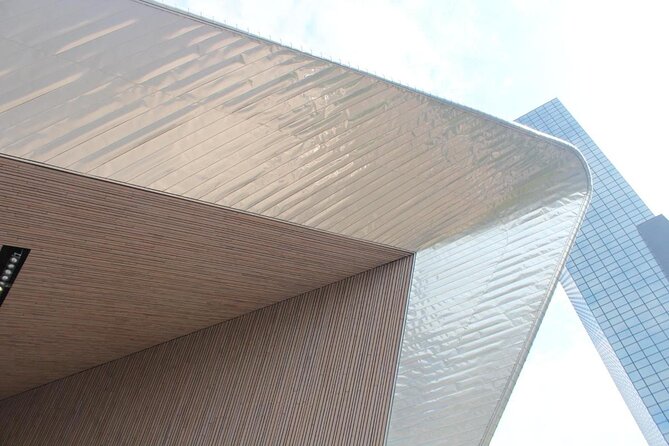
The tour begins at Rotterdam Central Station, the city’s main rail gateway. This is a practical meeting place, especially if you arrive by train from Amsterdam or another Dutch city. The station itself is the first architectural lesson: a newly built entrance to Rotterdam with a strong, forward-looking design.
You spend about 10 minutes here. That sounds brief, but the station gives your guide an efficient way to explain Rotterdam’s modern image before you head into the center. You’ll look at how a major transport hub presents the city and how newer construction connects with the surrounding streets.
The meeting point deserves a little care. One person found the address and map confusing, with the listed address differing from the actual meeting location. I would arrive early and check the precise meeting instructions rather than assuming every part of the station is close together.
Centraal Station is also a good place to use the restroom, adjust your clothing, and make sure you have water before the walk. The tour ends by the river, not back at the station, so you’ll want to keep track of where you are going afterward.
Schouwburgplein and Rotterdam’s public stage
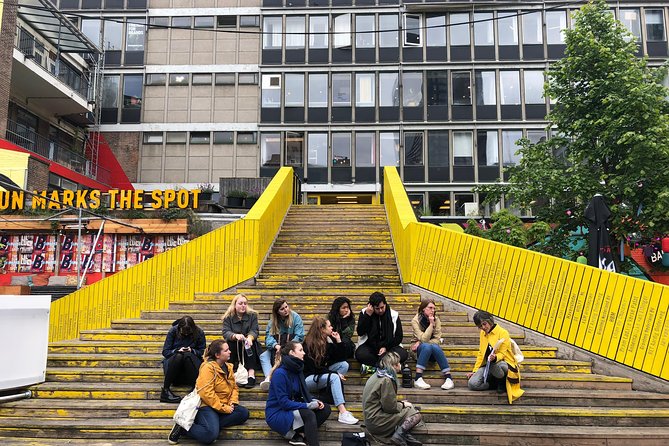
From the station, the walk continues toward Schouwburgplein, a large cultural square often described as Rotterdam’s cultural podium. You spend around 10 minutes here, looking at a space designed for public life rather than simply passing through it.
A square like this can seem empty or overly hard-edged if you view it only as a place to cross. With an architect guide, you get more context about how the space works, how people use it, and how modern public areas can reflect the city’s social goals.
This is also where the tour begins to show its wider theme. You are not simply ticking off famous buildings. You are considering how architecture shapes movement, gathering, culture, and the character of the city.
The route includes a postwar national monument in this part of the walk, though the supplied details do not identify it by name. Your guide provides the context on site. This is one reason the tour works better as a guided experience than as a self-guided list of addresses.
Timmerhuis and the OMA connection
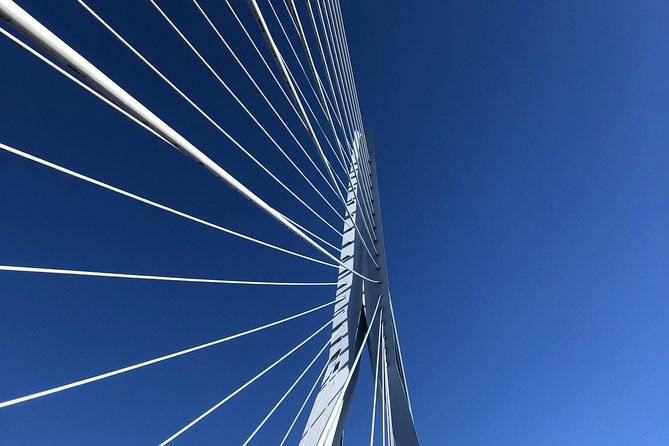
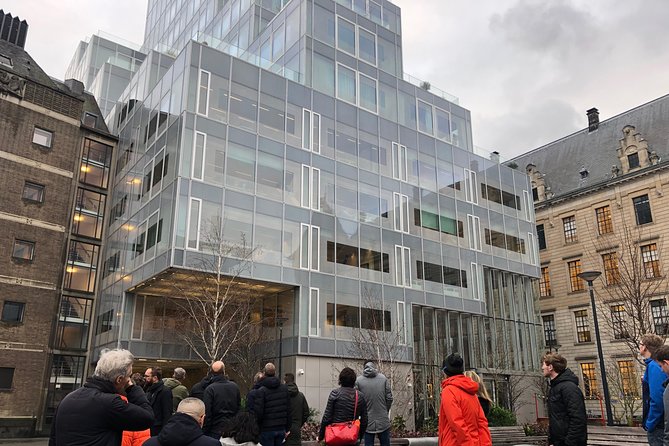
The next named stop is Timmerhuis, a modern architecture icon designed by OMA. You spend about five minutes here, which is enough for a focused exterior explanation rather than a long visit inside.
Timmerhuis is useful for understanding Rotterdam’s willingness to build in a contemporary style right in the city center. The design gives your guide a chance to discuss how new structures can fit into an established urban setting while still looking unmistakably modern.
Because the stop is short, you should expect a visual reading of the building and its role in Rotterdam, not a full architectural seminar. The strongest part of this tour is the way several stops connect to one another. Timmerhuis makes more sense after you have discussed reconstruction and public space at the earlier stops.
If you are an architect or design student, you may want more detail about construction methods and technical decisions. One participant specifically hoped for more focus on constructability and design mechanics. The guide’s professional background helps, but the discussion also includes history, politics, and social use.
More Walking Tours in Rotterdam
- Rotterdam: Highlights & Gems Walking Tour with Dutch Local
★ 5.0 · 133 reviews - Walking Rotterdam Food Tour
★ 5.0 · 89 reviews - Rotterdam: City Center Walking Tour
★ 4.5 · 88 reviews - Rotterdam Walking Tour and Harbor Cruise
★ 4.7 · 59 reviews
Markthal, Rotterdam’s indoor showpiece
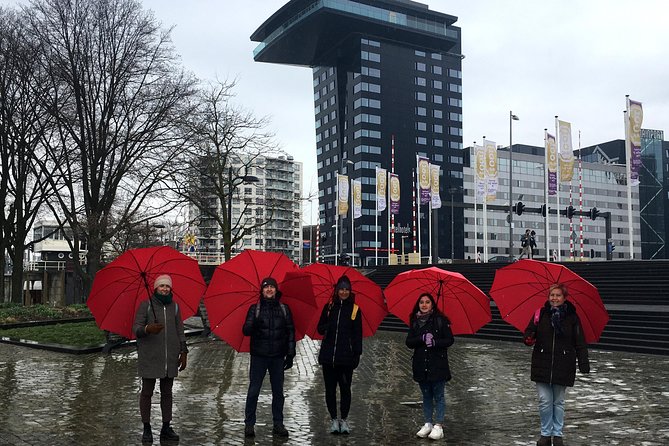
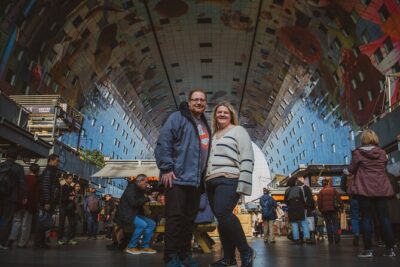
The walk then reaches Markthal, described on the tour as one of the world’s fanciest indoor markets. You spend about 15 minutes here, making it one of the longer stops.
Markthal is an easy place to appreciate even if you are not an architecture specialist. Its scale, shape, and combination of market activity with housing make it a natural talking point. Your guide can help you read the building as more than a colorful food hall, explaining how commercial activity and residential life are brought together in one structure.
This stop also gives the tour a change of pace. After stations, squares, and office architecture, Markthal adds a busy public interior and a more everyday connection to food and shopping. You can take photographs here, though the tour’s purpose is still explanation rather than free time for a full meal.
Fifteen minutes is enough to understand the building and hear its main ideas, but not enough for a relaxed market visit. If you want to browse stalls or eat, plan to return on your own after the tour. The guide’s schedule continues toward the river.
The Cube Houses question
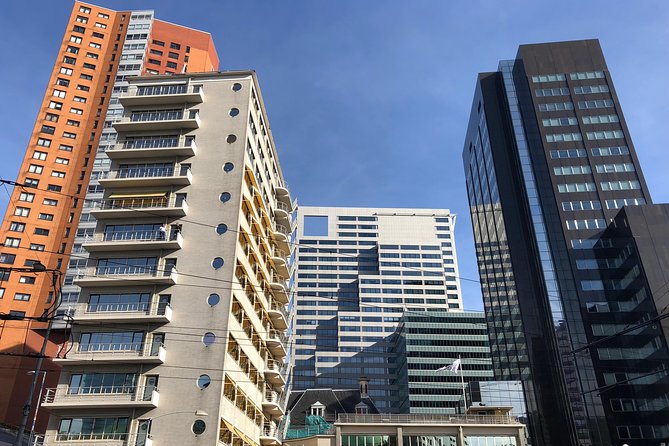
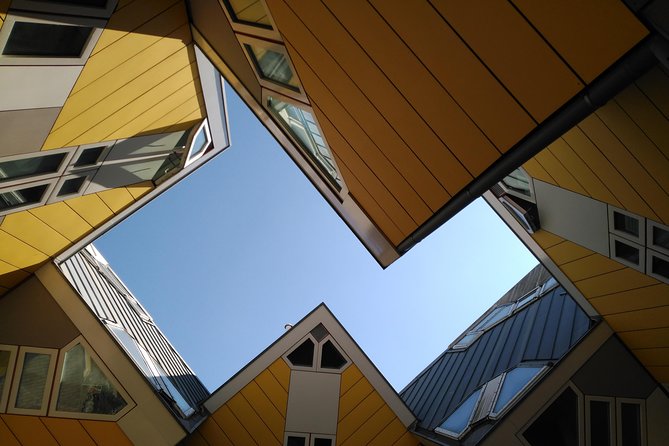
The Cube Houses are included among the architectural highlights associated with the experience, but you should clarify what that means before booking. The route information names them as a place to see, while one detailed account says the group passed by them at a distance rather than walking through the complex.
That distinction matters. If you want to see Rotterdam’s famous tilted homes and hear why they were designed that way, the tour can help. If you specifically want to enter a Cube House, this walk may not meet that goal.
I would treat the Cube Houses as part of the route’s wider architectural story, not as a guaranteed interior visit. The listing does not promise admission to a home, and the tour includes no paid entrance tickets. Ask the operator ahead of time if seeing the interiors is important to you.
This is also a good example of the tour’s limits. It provides a brisk overview of several major places, rather than giving every building a long, technical inspection. You gain range, but you may sacrifice depth at individual sites.
Finishing at Boompjeskade and the Maas
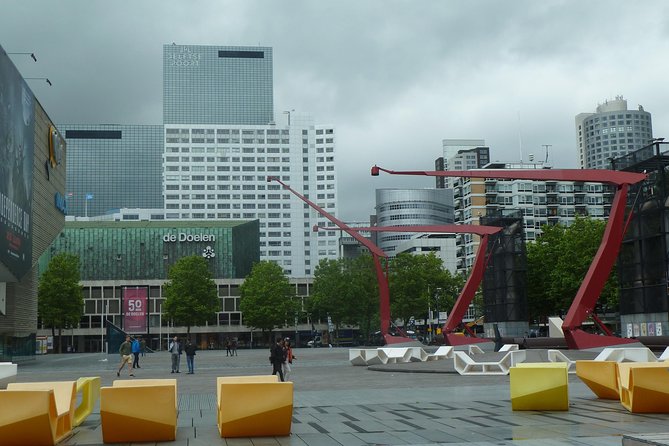
The tour ends at Boompjeskade, beside the Maas river. You spend about 15 minutes here, with views across the water toward Rotterdam’s south bank.
This is a strong final stop because it lets you step back from individual buildings and see the city as a whole. The riverfront gives you a sense of Rotterdam’s scale, its relationship with water, and the contrast between the central district and the south side.
The open setting also creates the tour’s most weather-sensitive moment. A cold breeze can make the riverfront unpleasant, especially in winter or on a gray day. Dress for the forecast, and bring a warm layer even if the city center feels mild when you start.
The finish is convenient if you want to continue exploring along the river, but it is not the same as ending at the station. Plan your next stop before you leave. The guide may offer restaurant suggestions or other ideas, and several people valued those personal recommendations.
How much value do you get for $54.31?
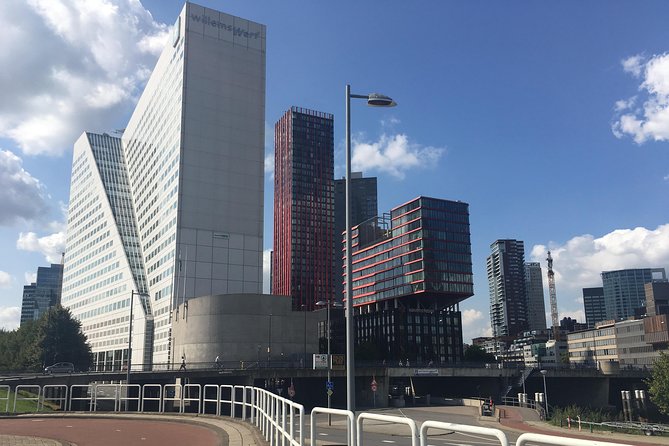
At $54.31 per person, this is not the cheapest way to look at Rotterdam’s buildings. You can walk between several of these places for free. The value comes from having an architect explain the choices, setbacks, and social questions behind them.
The small-group format helps justify the price. With a maximum of 15 people, you have a better chance of hearing clearly and asking questions than on a large bus or standard city walk. Some departures may be even smaller, and a booking of only two people can feel close to a private tour.
The two-hour length is also useful for a short visit. You get a structured introduction without giving up a whole day. People using Rotterdam as a day trip from Amsterdam can fit it into a larger plan, provided they allow time for the train and for finding the starting point.
The tour does not include hotel pickup, drop-off, food, or paid admissions. That keeps the arrangement simple, but you should budget separately for anything you want to eat at Markthal or visit after the walk.
Who should book this tour?
I would choose this tour if you want to understand why Rotterdam looks the way it does, not simply photograph unusual buildings. It suits first-time visitors, architecture fans, urban-planning enthusiasts, and anyone interested in how a city rebuilds after destruction.
It is also a good choice if you enjoy asking questions. Guides such as Tania and Silvia are described as friendly, engaged, and willing to spend extra time when the schedule allows. That personal exchange is one of the better reasons to choose a small group.
You should think twice if you want a tour devoted only to technical architecture. The guide may discuss politics, social use, activism, and the city’s current challenges. That makes the experience broader, but not always as design-focused as an architect might expect.
You should also be comfortable walking for two hours. The exact number of steps will vary, but one account put the distance near 12,000 steps. There is no mention of a shortened route, and the tour calls for moderate physical fitness. Service animals are allowed, and the route is near public transportation.
The minimum age is 12, and at least two people are required per booking. Group discounts are available, and confirmation arrives when you book. Free cancellation is available up to 24 hours before the start time. Changes or cancellations inside that window are not accepted for a refund, and poor weather can lead to a new date or a full refund.
My recommendation
I would book the Rotterdam Architecture Highlights Walking Tour if you have a couple of hours and want a clear introduction to the city’s modern identity. The combination of Centraal Station, Schouwburgplein, Timmerhuis, Markthal, the Cube Houses area, and the Maas gives you a useful cross-section of Rotterdam.
The strongest reason to go is the guide. An architect who can connect design with Rotterdam’s wartime rebuilding, city policy, and everyday life gives you far more than a list of building names. The main cautions are the long walk, exposed riverfront, occasional meeting-point confusion, and the possibility that the Cube Houses are viewed from outside.
Book it for the city’s postwar story and thoughtful explanations. Skip it only if you need interior access, a short stroll, or a strictly technical architecture lecture.
FAQ
How long does the Rotterdam Architecture Highlights Walking Tour last?
The tour lasts approximately two hours.
Where does the tour start?
It starts at Rotterdam Central Station, 3013 AJ Rotterdam, Netherlands.
Where does the tour end?
The tour ends at Boompjeskade, 3011 Rotterdam, on the riverside.
What language is the tour offered in?
The tour is offered in English. It may sometimes be operated by a multilingual guide.
How much does the tour cost?
The listed price is $54.31 per person. Group discounts are available.
What places are included on the route?
The route includes Rotterdam Centraal Station, Schouwburgplein, Timmerhuis, Markthal, the Cube Houses area, and Boompjeskade. It also includes a postwar national monument, though the supplied tour details do not name it.
Are entrance tickets included?
The walking tour and professional architect guide are included. The listed stops have no admission ticket charge, and no separate hotel pickup or drop-off is included.
Is there a minimum age or group size?
The minimum age is 12. A minimum of two people is required per booking, and the tour can have a maximum of 15 participants.
What happens if the weather is poor?
The experience requires good weather. If it is canceled because of poor weather, you will be offered another date or a full refund.
Just added around Rotterdam
- The Netherlands: WW2 Private Day Trip★ 5.0 · 4 reviews
- Rotterdam: Guided Food Tour★ 4.4 · 16 reviews
- Rotterdam: UNESCO Van Nelle Factory Guided Tour★ 4.5 · 94 reviews
- Rotterdam: Summer Cocktail Cruise★ 4.7 · 18 reviews
- Rotterdam: Summer Evening Cruise with Live Entertainment★ 4.8 · 5 reviews
- Rotterdam: Trompenburg Botanical Gardens Entry Ticket★ 4.1 · 77 reviews
- Rotterdam: Pub Cruise with Drinks and Bites★ 3.8 · 16 reviews
- Rotterdam: Private Tour with a Local★ 4.7 · 47 reviews
Architecture Tours, compared.
Rotterdam Walk: Hilights, Gems, Architecture & WWII | 2 or 3hrs
Read our review →
The rise of Haarlem: Culture, History, Art and Architecture Walking Tour
Read our review →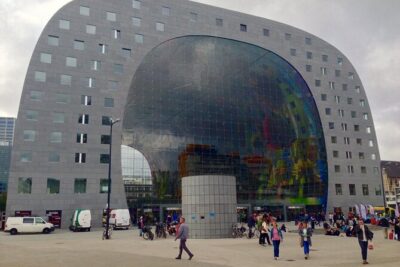
Rotterdam Must Do Tour: Highlights, History, WW2 and Architecture
Read our review →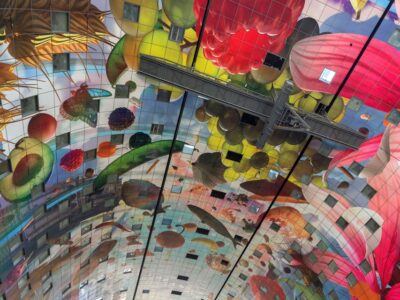
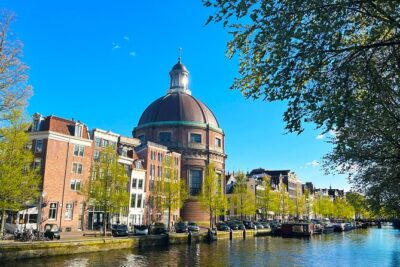
Walking Tour about Golden Age Architecture, private local guide
Read our review →
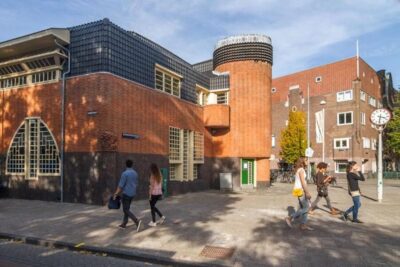
Architecture Museum Het Schip Entry Ticket & Tour
Read our review →Browse the lists this tour appears in