
Reviewed · WWII HISTORY TOURS
Rotterdam Must Do Tour: Highlights, History, WW2 and Architecture
Rotterdam’s most interesting story is written in its buildings. The city center was heavily destroyed in World War II, then rebuilt with a boldness that produced the Cube Houses, Markthal, Luchtsingel, and wide modern shopping streets. This tour connects those sights to the city’s painful past instead of treating them as separate photo stops.
I like the small maximum of 15 people, which gives a local guide room to answer questions. I also like the clear focus on WWII, reconstruction, and architecture, subjects that help Rotterdam make sense. The drawback is pace: two hours is enough for an introduction, but not enough for long visits inside each place, and one account describes a shortened tour as rather fast.
Key points at a glance
- Postwar Rotterdam in one walk: See how bombing reshaped the center and how the city chose modern design for its second life.
- A strong lineup of landmarks: The route includes Rotterdam Centraal, Lijnbaan, Luchtsingel, Laurenskerk, Markthal, Old Harbour, and the Cube Houses.
- Small-group format: The group is capped at 15 people, a useful size for conversation and questions.
- Guides with different strengths: Susan is praised for personal help and building details, while Edwin, Michel, Ed, John, and Stephan are all named as guides who bring their own style.
- Good value at $29.41: You get two hours with a local guide and no separate admission charge for the walking route.
- Best for first-time visitors: It gives you a quick city orientation, though architecture fans may want extra time afterward.
Why Rotterdam’s rebuilding makes this tour worthwhile
Rotterdam is not a city where the oldest-looking street automatically tells the whole story. The center was bombed during World War II, and much of the old shopping district disappeared. Instead of rebuilding every street as it had been, Rotterdam created a modern city of open spaces, unusual forms, pedestrian routes, and large public buildings.
That decision is the heart of this walk. At the Groot Handelsgebouw, you see one of the first major buildings completed after the bombing, finished in 1953. At the Lijnbaan, you see a new kind of shopping street, designed as a pedestrian area for the rebuilt center.
The guide’s role matters here. A quick look at the Cube Houses tells you they are unusual. A good explanation tells you why Rotterdam kept making room for experiments after the war. The strongest reports from this tour praise guides such as Edwin, Michel, Ed, John, Susan, and Stephan for linking buildings to the city’s past rather than simply naming them.
You should expect a conversational walk, not a formal lecture. Susan is described as especially helpful with building details and local shopping suggestions, while Ed is praised for little-known facts. Edwin’s focus is the reconstruction after WWII, and Michel is noted for explaining the essential story of the city in a clear way. Your guide may differ, so the emphasis and humor can change.
More Architecture Tours in Rotterdam
- Rotterdam: Architectural Highlights Guided Walking Tour
★ 4.8 · 215 reviews - Rotterdam Walk: Hilights, Gems, Architecture & WWII | 2 or 3hrs
★ 5.0 · 149 reviews - Rotterdam Architecture Highlights Walking Tour
★ 5.0 · 66 reviews
Starting at Rotterdam Centraal Station
The meeting point is Stationsplein 10, outside Rotterdam Centraal Station. This is a practical place to begin because the station is easy to reach by public transport and gives the guide an immediate architectural subject.
Allow yourself time to find the meeting point. The station area can feel large and open, and the tour begins with an introduction to Rotterdam’s architecture before the walk moves into the center. That opening helps you notice that the city’s modern design starts before you reach the famous attractions.
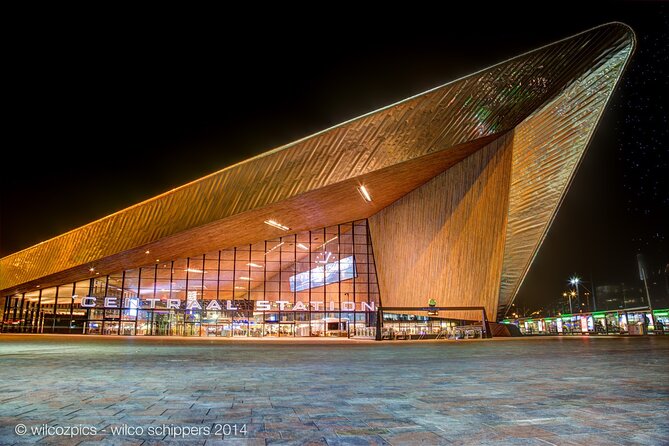
Rotterdam Centraal itself sets the tone. You are not beginning beside a medieval gate or a quiet canal. You are beginning at a major piece of contemporary city design, then moving through streets built at different points in Rotterdam’s recovery.
The tour ends back at the meeting point. That is useful if you are taking public transport afterward, though the route’s main sights are spread through the center and the walk may feel brisk by the end. The activity is offered in English, and a mobile ticket makes arrival simpler.
Groot Handelsgebouw and the first chapter of reconstruction
The Groot Handelsgebouw was completed in 1953. Its importance is not just architectural. It was one of the first major structures built after Rotterdam’s wartime destruction, making it a marker of the city’s decision to rebuild quickly and on a large scale.
This stop gives the WWII story a physical anchor. You are not only hearing that Rotterdam was damaged. You are looking at one of the buildings that helped the city restart its commercial life.
The tour does not include a separate admission charge here, and the stop is short. I would treat it as a visual lesson rather than a full building visit. Listen for the guide’s explanation of how the postwar city took shape, then keep that idea in mind as the newer landmarks appear.
West-Kruiskade and Lijnbaan: shopping after the war
The Kruiskade and West-Kruiskade are central shopping streets, and they show Rotterdam as a lived-in city rather than a collection of design objects. You pass commercial streets where the scale and movement differ from the grander public buildings.
Then comes the Lijnbaan, opened in 1953 as the main pedestrian street in the new shopping district. The older shopping area had been destroyed in the bombing, so the Lijnbaan was part of a fresh plan for how people would move and shop.
This is one of the tour’s most useful contrasts. You can compare a normal shopping street with an early postwar pedestrian design. The guide can explain why the Lijnbaan mattered when it opened, and why it remains part of Rotterdam’s identity.
The drawback is that a brief stop cannot offer much time for browsing. If you want gifts, food, or a longer look at the shops, return after the tour. Susan’s guidance about places to find gifts was particularly useful for one visitor, so you can ask your own guide for suggestions.
More WWII Tours in Rotterdam:
- The Netherlands: WW2 Private Day Trip
★ 5.0 · 4 reviews - Amsterdam: Life of Anne Frank and World War II Walking Tour
★ 4.8 · 10,467 reviews - Amsterdam: Dutch WWII Resistance Museum Entry Ticket
★ 4.7 · 951 reviews - Oranjehotel World War II Prison Entrance Ticket
★ 4.6 · 708 reviews
Luchtsingel and a revived northern connection
The Luchtsingel is a 390-meter wooden pedestrian bridge linking Rotterdam North with the center. It crosses an area that had suffered from vacancy and neglect, giving people a new route through a part of the city that had been overlooked.
This is a fine example of Rotterdam’s habit of using design to solve urban problems. The bridge is not simply a sculptural object. It reconnects areas and helps bring activity to a neglected district.
You will not spend long on this stop, so pay attention to the guide’s explanation of the area’s change. The Luchtsingel works best when you understand its purpose, not just its color and length.
Because the tour covers many stops, you may not walk the full 390 meters at leisure. If the bridge interests you, note its location and return later. The tour gives you the idea and the view, while a separate visit lets you enjoy the structure at your own pace.
Nieuwe Delftse Poort and the memory of an older city
The Nieuwe Delftse Poort offers a glimpse of Rotterdam before the modern rebuild. The original Delftse Poort was a city gate, with the last version built in 1764. A later steel reconstruction by artist Cor Kraat was placed near the original site on Pompenburg.
This stop is valuable because it complicates the usual picture of Rotterdam as entirely modern. The city lost much of its historic center, but it has not abandoned every link to its earlier form. The reconstructed gate is a reminder that memory can survive through reinterpretation.
The stop is short, so do not expect a long historical presentation. It works as a bridge between the postwar city and the one that existed before the bombing.
Laurenskerk, the medieval survivor
The Grote of Sint-Laurenskerk, usually called the Laurenskerk, is the only surviving remnant of medieval Rotterdam. That makes it one of the most important stops on the route, even if its exterior is less flashy than the Markthal or Cube Houses.
The church is Protestant, and you can enter for free. If the schedule allows, step inside. A few minutes indoors can make the city’s destruction more understandable. This is the rare place on the walk that gives you a direct sense of Rotterdam’s prewar and medieval past.
Do not assume the tour will provide a long interior visit. The scheduled stop is brief, and the guide must keep the group moving. If the church catches your interest, plan to return after the walk for a slower look.
Markthal: Rotterdam’s showpiece interior
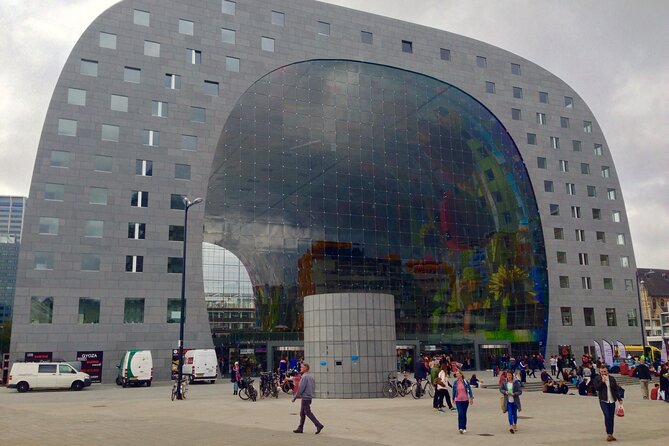
The Markthal is one of the tour’s major visual rewards. Designed by MVRDV, it has a large horseshoe form faced in gray natural stone. Inside, an enormous artwork covers the arch with enlarged fruit, vegetables, seeds, fish, flowers, and insects.
The outside is striking, but the interior is the real reason to linger. Restaurants and food stalls give the building an everyday purpose, while the ceiling artwork turns shopping into a grand visual experience.
The tour includes the Markthal without a separate admission fee. That does not mean you will have time for a meal. Food and drinks are not included, and the stop is part of a larger route. If you want to eat here, schedule extra time after the walk.
One account found the Markthal and its artistic setting impressive but felt the guide did not explain the architecture fully. That is a fair caution. The building deserves more than a quick glance, so listen carefully at this stop and return later if design interests you.
Old Harbour and the Cube Houses
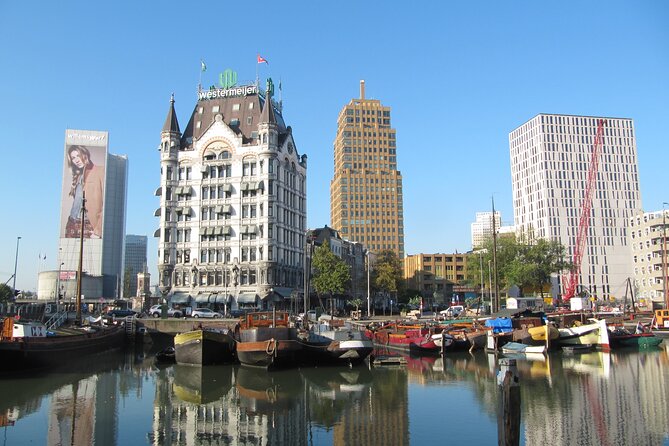
The Oude Haven, or Old Harbour, is the historic center’s key waterside area. It has developed into a lively part of Rotterdam north of the Maas River and is also where you find the famous Cube Houses.
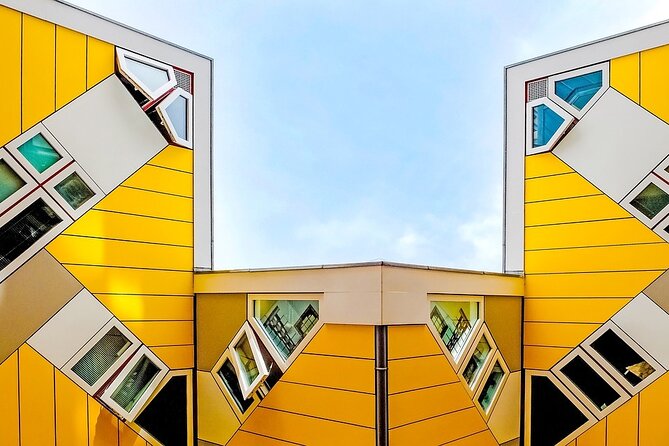
The Cube Houses are easy to recognize and hard to forget. Their tilted forms challenge the usual idea of what a home should look like. The tour uses them as part of a wider explanation of Rotterdam’s architectural character, not as an isolated novelty.
This is a good place to ask questions. You can discuss how practical homes can also become city symbols, and how Rotterdam uses design to create identity after losing so much of its older center.
The Old Harbour also gives the walk a change of mood. After broad shopping streets, reconstructed gates, and large modern buildings, the harbor area offers a more compact setting. You may want to stay here after the tour, especially if you want time for photographs or a closer look at the Cube Houses.
What two hours really gives you
Two hours is enough to see the major sights and understand the main story. It is not enough to tour every building, stop for a full meal, spend long inside the church, and study each architectural detail.
The published stop lengths are best treated as approximate. The route includes a 30-minute introduction and Markthal visit, a 20-minute stop at the Old Harbour, and several shorter ten-minute stops. In practice, the guide must adjust the rhythm so the group returns to the meeting point on time.
The small group helps. With no more than 15 people, you are more likely to hear the guide and ask a question without interrupting a large crowd. The experience is still a group tour, though, not a private walk. If you want to set the route or linger at every building, a private option would suit you better, but that is not what this activity offers.
One person joined late because a cruise ship arrived behind schedule and needed a shortened walk before returning to the ship. The local contact helped arrange a practical solution, and Susan adjusted the tour. That shows useful flexibility, but it also shows the risk of pairing a fixed two-hour walk with a delayed ship arrival. Give yourself a buffer if you are visiting from a cruise.
Price, group size, and who gets good value
At $29.41 per person, the tour offers solid value if you want a guided introduction to Rotterdam. You are paying for two hours with a local English-speaking guide, and the route includes many of the city’s major sights without separate entry fees.
The value is strongest for first-time visitors. In one walk, you get the WWII story, postwar planning, shopping streets, public art, a medieval church, a market hall, a harbor, and modern housing. That range can save you time and help you decide where to return.
Architecture fans will also get good value, provided they accept the short stops. You will see a lot, but you may want a second visit to the Markthal, Laurenskerk, Luchtsingel, or Cube Houses.
The tour has a 4.8 rating from 20 reviews, with 95 percent recommending it. The repeated praise centers on guides who are personable, clear, and proud of Rotterdam. The one lower rating points to an important issue: the quality of the explanation can depend on the individual guide, and a changed meeting point caused frustration on one occasion.
You can cancel for a full refund up to 24 hours before the start time. Changes or cancellations inside that window are not accepted for a refund. The activity also needs a minimum number of participants, so a cancellation by the operator can lead to another date, another experience, or a full refund.
Who should book this Rotterdam walk
I would choose this tour if you are in Rotterdam for one day, arriving by train, or trying to understand why the center looks so different from Amsterdam, Delft, or Utrecht. It gives you a strong first orientation without requiring a full day.
It also suits visitors who enjoy architecture but want history included. The tour does not treat design as decoration. It connects buildings to bombing, rebuilding, commerce, public space, and the city’s changing neighborhoods.
Families and mixed-age groups may appreciate the variety. You move between shopping streets, a bridge, a church, a market hall, a harbor, and striking homes. Most people can participate, and service animals are allowed.
I would hesitate only if you want a slow photographic walk or a detailed interior tour. The schedule is full, the stops are short, and the experience depends partly on the guide assigned that day.
Should you book it?
Book this tour if you want Rotterdam to make sense quickly. The best part is the connection between wartime destruction and the city’s daring rebuild, with the Laurenskerk, Lijnbaan, Markthal, Luchtsingel, Old Harbour, and Cube Houses filling out the story.
If you book, arrive ready to walk, ask questions, and note the places you want to revisit. Expect a well-packed introduction, not a deep visit to every landmark. At $29.41, the tour is a sensible choice for first-time visitors who value context, local stories, and a manageable two-hour route.
FAQ
How long does the Rotterdam Must Do Tour last?
The tour lasts approximately two hours.
Where does the tour begin?
It begins at Stationsplein 10, 3013 AJ Rotterdam, at Rotterdam Centraal Station.
Where does the tour end?
The activity ends back at the meeting point.
Is the tour offered in English?
Yes. The tour is offered in English.
What landmarks are included?
The route includes Rotterdam Centraal Station, Groot Handelsgebouw, West-Kruiskade, Lijnbaan, Luchtsingel, Nieuwe Delftse Poort, Laurenskerk, Markthal, Old Harbour, and the Cube Houses.
Is food or drink included?
No. Food and drinks are not included.
How many people can join the tour?
The maximum group size is 15 people.
More History Tours in Rotterdam
- Rotterdam: Kinderdijk UNESCO World Heritage Entry Ticket
★ 4.6 · 1,477 reviews - Rotterdam: Harbor Cruise on a Historic Ship
★ 4.2 · 812 reviews - Amsterdam Food and Cultural Tour with Tastings
★ 5.0 · 2,442 reviews - The Hague: Hop-on Hop-off Old-Fashioned Heritage Tram Tour
★ 4.4 · 1,083 reviews
Just added around Rotterdam
- The Netherlands: WW2 Private Day Trip★ 5.0 · 4 reviews
- Rotterdam: Guided Food Tour★ 4.4 · 16 reviews
- Rotterdam: UNESCO Van Nelle Factory Guided Tour★ 4.5 · 94 reviews
- Rotterdam: Summer Cocktail Cruise★ 4.7 · 18 reviews
- Rotterdam: Summer Evening Cruise with Live Entertainment★ 4.8 · 5 reviews
- Rotterdam: Trompenburg Botanical Gardens Entry Ticket★ 4.1 · 77 reviews
- Rotterdam: RIB Speedboat Sightseeing Cruise★ 4.8 · 192 reviews
- Rotterdam: Pub Cruise with Drinks and Bites★ 3.8 · 16 reviews
WWII History Tours, compared.

Life of Anne Frank and World War II Walking Tour
Read our review →
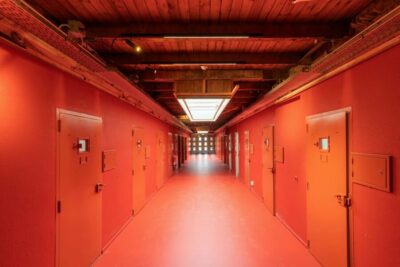
Oranjehotel World War II Prison Entrance Ticket
Read our review →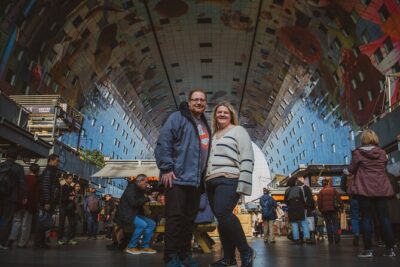
Rotterdam Walk: Hilights, Gems, Architecture & WWII | 2 or 3hrs
Read our review →
Small Group Tour to Nazi WWII concentration camp from Amsterdam
Read our review →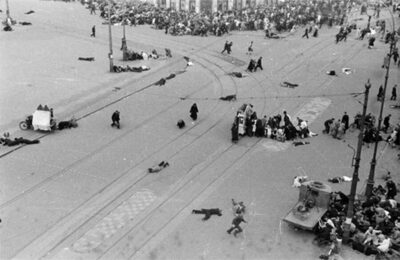
Anna Frank and World War II History Walking Tour
Read our review →
Anne Frank and World War II Walking Tour (TOP RATED)
Read our review →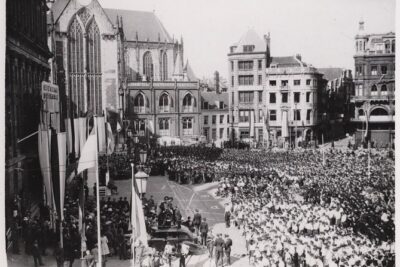
Browse the lists this tour appears in