
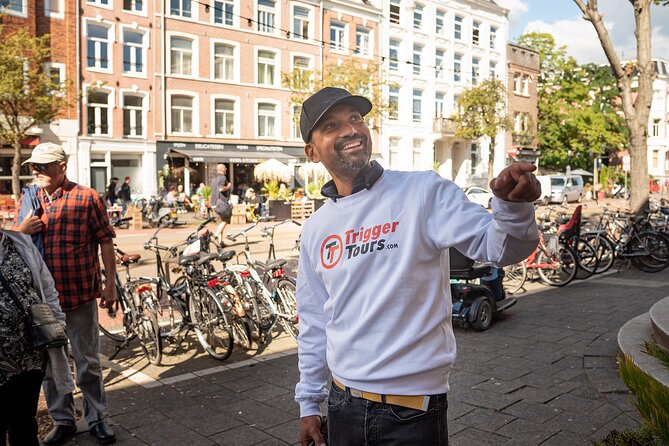
Reviewed · ANNE FRANK TOURS
Amsterdam: Anne Frank and World War II Walking Tour (TOP RATED)
Amsterdam’s Jewish Quarter tells a story that reaches far beyond Anne Frank. In about two hours, this walking tour links the Portuguese Synagogue, wartime memorials, deportation sites, Dam Square, and the Spinoza Monument, giving you a wider view of Jewish life and persecution in Amsterdam.
I like the small group limit of 15 people, which gives you room to ask questions. I also like the use of several outdoor sites rather than one narrow stop. Guides such as James, Keese, Misha, Stan, and Aaron are praised for clear explanations, personal stories, and strong knowledge of local Jewish history.
The main point to understand before booking is simple: Anne Frank House entry is not included. The title may lead you to expect a museum visit, but this is a walking tour about Anne Frank, her family, World War II, and Amsterdam’s Jewish Quarter. You will not enter the Anne Frank House as part of the €? price listed here, which is about $29.45 per person.
Key points to know before you book
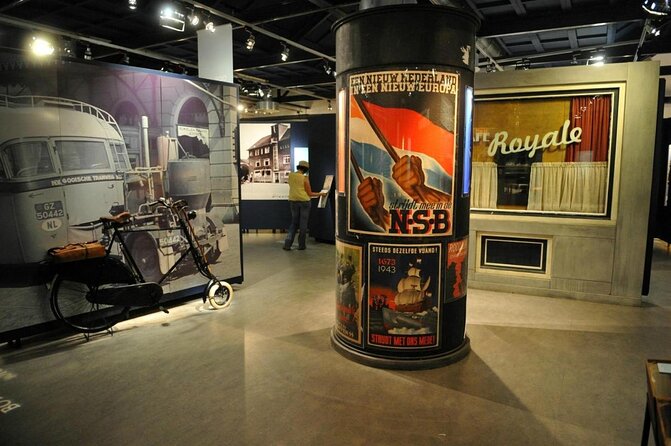
- The tour visits real memorials and historic places, including the Portuguese Synagogue, Auschwitz Monument, Hollandsche Schouwburg, and Schaduwkade.
- Anne Frank House tickets are separate, so arrange that visit on its own if you want to go inside.
- The walking route lasts about two hours, with roughly ten minutes at each named stop.
- The small group size matters, especially for questions and conversation with the guide.
- Guides bring different strengths, from James’s personal stories to Keese’s family connection and Aaron’s wider World War II background.
- The subject is serious, with a focus on deportation, persecution, resistance, and remembrance.
Why this walk works better than a museum visit alone
A museum can give you documents, photographs, and preserved rooms. This walk gives you place. You move through the streets where Amsterdam’s Jewish community lived, prayed, worked, resisted, and faced deportation.
That physical movement helps connect separate parts of the story. The Portuguese Synagogue points to a Jewish community that flourished during the Dutch Golden Age. The Hollandsche Schouwburg and Auschwitz Monument turn the story toward persecution and murder. Dam Square then places those events within the city’s best-known public space.
I like that the tour does not treat Anne Frank as an isolated figure. Her story matters, but it makes more sense when you understand Amsterdam’s Jewish life before the war and the machinery of deportation during it.
The strongest guides appear to make this connection well. James is praised for combining key facts with personal stories. Keese brings family history into the discussion. Aaron is described as going beyond Anne Frank and World War II, which may suit you if you want a wider historical setting instead of a single biography.
More Walking Tours in Amsterdam
- Anne Frank’s Story – Guided Walking Tour through Amsterdam
★ 5.0 · 11,619 reviews - Amsterdam: Life of Anne Frank and World War II Walking Tour
★ 4.8 · 10,467 reviews - Absolutely Amsterdam – the Essential Introductory Walking Tour
★ 5.0 · 3,629 reviews
Portuguese Synagogue: Amsterdam before the war
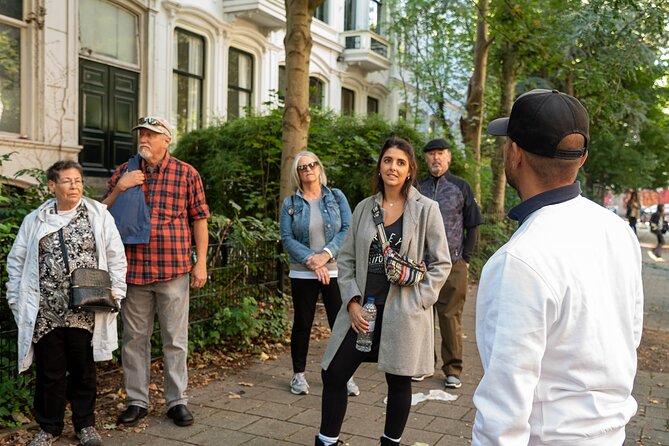
The walk begins at the Portuguese Synagogue, also called the Portugese Synagoge in the supplied meeting information. You spend about ten minutes here discussing Amsterdam’s Sephardic Jewish community and its place in the Dutch Golden Age.
This is an important opening because it shows Jewish life as more than a prelude to tragedy. Amsterdam’s Sephardic community was one of the largest and wealthiest Jewish communities in Europe during that period. The large synagogue reflected its size and standing.
The synagogue remains an active place of worship and is also a visitor attraction. The tour information lists no admission charge for this stop, but the walk does not promise an interior visit. You should expect the guide to use the site as a setting for explanation rather than assume that you will receive a full synagogue tour.
Ten minutes is enough for an introduction, but not enough for a long architectural visit. If you want to explore the synagogue in detail, allow extra time outside this experience.
Auschwitz Monument and the meaning of deportation
The Auschwitz Monument provides a quiet place to discuss Jewish deportation. The stop lasts about ten minutes, and the guide explains the monument and the people sent away during the war.
This part of the walk carries the heaviest emotional weight. You are not simply hearing dates in a classroom. You are standing at a memorial designed to keep deportation and murder in public memory.
A good guide needs to handle this section with care, and the strongest feedback points to guides who are serious without losing clarity. The tour’s subject is painful, so it is best suited to adults and older children who can manage a difficult account of wartime persecution.
The tour does not present this as entertainment. Its value comes from helping you pause, look, and think about what happened to Amsterdam’s Jewish population.
Verzetsmuseum and the Jewish resistance
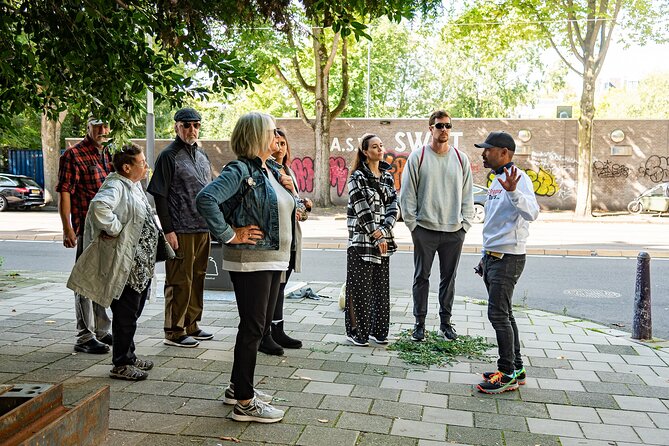
At the Verzetsmuseum Amsterdam, the guide discusses resistance within the Jewish community. The stop is listed at about ten minutes and does not include museum admission.
That distinction matters. You are seeing the area and hearing the guide’s account, not taking a full museum visit as part of the tour. If you enjoy museums, you might choose to return later, but the walking experience itself is built around outdoor interpretation and movement through the city.
This stop also broadens the wartime story. The Holocaust is often taught through victims and perpetrators, but resistance adds another necessary part. A short explanation cannot cover every form of resistance, yet it can help you understand that Jewish life during the war was not defined only by helplessness.
Several guides are praised for making the history easy to follow and answering questions. That is useful here, since the subject can raise difficult issues that a fixed script may not address fully.
More WWII Tours in Amsterdam
- Amsterdam: Dutch WWII Resistance Museum Entry Ticket
★ 4.7 · 951 reviews - Small Group Tour to Nazi WWII concentration camp from Amsterdam
★ 5.0 · 112 reviews - Amsterdam: Anna Frank and World War II History Walking Tour
★ 4.8 · 86 reviews - Amsterdam in World War II Tour
★ 5.0 · 63 reviews
Hollandsche Schouwburg and the deportation camps

The Hollandsche Schouwburg is one of the most important stops on the route. The guide explains its connection to deportation camps, again with about ten minutes at the site.
The value of stopping here is the link between city life and the camp system. Deportation did not begin at some distant border. It passed through recognizable places in Amsterdam, and this site helps make that process more concrete.
I would pay close attention to the guide’s explanation here. The tour is short, so the detail you receive will depend on the guide and the questions asked by the group. The small group limit helps, since you have a better chance to ask for clarification than you would on a large city tour.
This is also one reason to avoid scheduling the walk too tightly before another activity. The formal duration is about two hours, but the pace may vary, and the subject deserves more than a rushed exit.
De Plantage: a change of pace
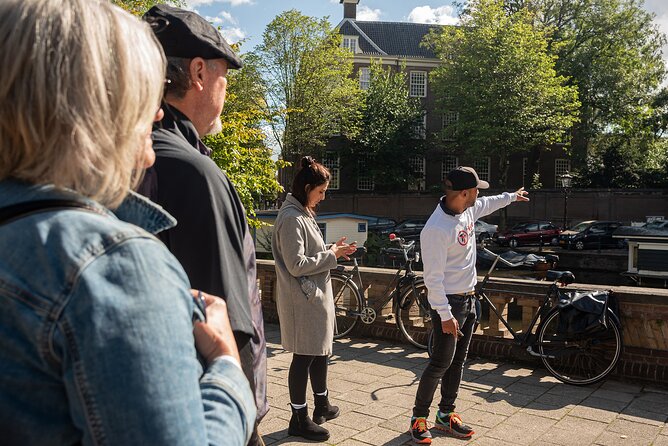
The Plantage area gives the walk a different rhythm. The guide points out the area’s beauty and history, spending about ten minutes here.
That pause matters. A tour focused only on memorials can become difficult to absorb. Moving through an attractive neighborhood while hearing how the area fits into Amsterdam’s past gives you a fuller sense of the city.
The supplied details do not specify a single building or event in De Plantage, so do not expect one central attraction at this stop. Its purpose is to connect the broader neighborhood with the historical story.
The route creates chances for photographs, but the tone remains respectful. This is not a sightseeing walk built around postcard views. The visual interest supports the history rather than replacing it.
Spinoza Monument and ideas in public space
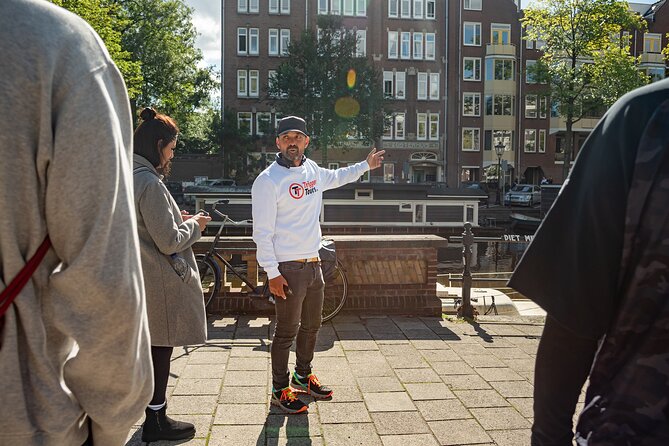
The Spinoza Monument is another brief stop, with about ten minutes devoted to the monument and its meaning.
The stop adds an intellectual and cultural note to a route centered on war and persecution. Spinoza is part of Amsterdam’s Jewish story, and a monument dedicated to him gives the guide another way to discuss Jewish identity, thought, and public memory.
The information supplied does not promise a detailed biography or a long lecture, so keep your expectations measured. You will receive an explanation of the monument as part of the walking route, not a separate academic talk.
This is the sort of stop where a small group is especially useful. If the guide invites questions, you can ask how the monument relates to the surrounding neighborhood and the larger story of Amsterdam.
Walking toward Dam Square
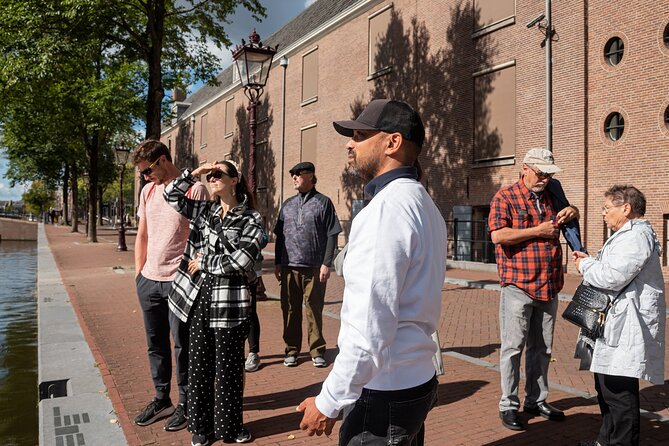
The route then continues on foot toward Dam Square and the Royal Palace. This section links the Jewish Quarter to the city’s central public space.
The walk itself is part of the experience. You are not being moved between attractions by bus, so you see the city in between the formal stops. That can make the tour feel more connected, though it also means the route may be tiring for some people.
One family found the walk long for children aged eight and ten. That is a practical warning. The tour is only about two hours, but a steady city walk can feel demanding, especially after an emotionally serious morning. Wear comfortable shoes and consider the age and energy of everyone in your group.
Dam Square and Schaduwkade
At Dam Square, the guide discusses the monument, with about ten minutes listed for the stop. The Royal Palace is part of the walk toward the square, but the experience does not include a palace entrance.
Dam Square gives the tour a major public setting. It is a place where Amsterdam’s national memory, civic life, and daily movement meet. The guide can use the monument to connect the wartime story to the wider city.
The final listed stop is Schaduwkade, described as a monument stop, also with about ten minutes. The route ends back at the meeting point according to the tour details, although the stop sequence and walking route may make the timing feel flexible.
Because the walk includes several locations rather than one enclosed attraction, you should expect outdoor conditions. The experience requires good weather. If poor weather cancels it, you are offered another date or a full refund.
The guides make the biggest difference
The clearest strength of this experience is the guide. Names that appear in the supplied material include James, Keese, Misha, Aaron, Stan, Peter, Josha, and Maša. The exact guide you receive will depend on the departure.
James is praised for combining local history, modern perspective, and personal stories. Keese is noted for connecting the subject with his own family history. Aaron is described as having a broad grasp of Anne Frank, World War II, and related subjects.
Misha is described as flexible with the timing and route, while Peter is praised for speaking clearly and explaining Anne Frank and the surrounding area in an accessible way. Stan is singled out for strong knowledge of Anne Frank and Jewish history.
Those differences are worth keeping in mind. A walking tour is not a recorded audio program. The pace, depth, and feel depend heavily on the person leading it. The overall rating is 4.7 from 72 ratings, and 90 percent of customers recommend it, but one serious service failure is recorded: a guide did not arrive, leaving the group waiting for 30 minutes.
That problem appears to be unusual compared with the many positive accounts, but it is still relevant. If your schedule is tight, leave some room after the tour rather than booking an immediate train, museum entry, or boat.
Price, group size, and what you receive
At about $29.45 per person, this is a reasonable price for a two-hour guided walk in central Amsterdam, especially if you value explanation and questions. You are paying for a local English-speaking guide, not admission to a museum or memorial.
The maximum group size is 15. That is small enough to hear the guide without the feel of a large crowd, though a private upgrade is available if you want more personal attention.
A private tour could suit families, couples, or groups with a particular interest in family history. It may also help if you want to slow down at certain memorials or ask more questions. The standard group tour offers better value if your main aim is a clear introduction to Amsterdam’s Jewish Quarter and World War II sites.
Food and drinks are not included. Service animals are allowed, and the meeting point is near public transportation. Most people can participate, but the long walk and serious subject matter are worth considering for young children or anyone with limited stamina.
The Anne Frank House warning is essential
The biggest booking trap is the title. Anne Frank is central to the theme, but this is not an Anne Frank House entrance tour.
The tour can give you background on Anne Frank, her diary, her family, and the world around them. It does not include an entrance ticket to the Anne Frank House. Several people misunderstood this, so treat the distinction as a booking requirement, not a minor footnote.
If you want to visit the house, arrange that separately and do not assume tickets will be available at the last minute. The walking tour can work well before or after that visit, since it adds the wider Jewish and wartime setting that a single house cannot provide.
Who should book this walking tour?
I would choose this tour if you want:
- A guided introduction to Amsterdam’s Jewish Quarter
- More context around Anne Frank than a single-site visit can provide
- Outdoor memorials and neighborhood history
- A small group with time for questions
- A serious, educational experience rather than light sightseeing
I would hesitate if you want to enter the Anne Frank House, avoid a long walk, or prefer a fully private and highly detailed historical tour. The standard experience is short, and some stops receive only about ten minutes.
Free cancellation is available up to 24 hours before the start time. Changes or cancellations inside that window are not accepted for a refund, and poor weather can lead to a new date or full refund.
Should you book it?
Book this tour if you want to understand Anne Frank’s story within the larger history of Amsterdam’s Jewish community, wartime deportation, resistance, and remembrance. The best guides, including James, Keese, Aaron, Misha, Peter, and Stan, appear to add clear explanation and personal depth to the route.
Do not book it expecting entry to the Anne Frank House. Think of this as a guided memorial and neighborhood walk, priced fairly for about two hours, with enough variety to make the history feel connected to the city around you. Add comfortable shoes, allow extra time, and be ready for a serious experience.
FAQ
How long does the walking tour last?
The tour lasts approximately two hours.
What language is the tour offered in?
The tour is offered in English.
Is the Anne Frank House included?
No. Entrance to the Anne Frank House is not included.
Where does the tour start?
The meeting point is Amstel 51C, 1018 EJ Amsterdam, Netherlands.
Where does the tour end?
The activity ends back at the meeting point.
What locations are included?
The route includes the Portuguese Synagogue, Auschwitz Monument, Verzetsmuseum Amsterdam, Hollandsche Schouwburg, De Plantage, Spinoza Monument, Dam Square, and Schaduwkade. The walk also goes toward Dam Square and the Royal Palace.
How many people can join the group?
The tour has a maximum of 15 travelers.
Can I cancel for a full refund?
Yes, if you cancel at least 24 hours before the experience start time. Cancellations or changes made less than 24 hours in advance are not refunded. If poor weather cancels the experience, you are offered another date or a full refund.
More Anne Frank and Wartime Walks
- Amsterdam: Anne Frank Guided Small Group Walking Tour
★ 4.8 · 2,722 reviews - Amsterdam: Anne Frank Walking Tour – Guided in EN/DE/IT/ES
★ 4.9 · 2,676 reviews - Anne Frank Walking Tour Amsterdam Including Jewish Cultural Quarter
★ 5.0 · 1,879 reviews - Anne Frank’s Last Walk & See Anne Frank House in Virtual Reality
★ 5.0 · 957 reviews
Just added around Amsterdam
- Private sightseeing tour to Bruges and chocolate from Amsterdam★ 5.0 · 11 reviews
- Amsterdam: Rijksmuseum (Private Tour & Priority Access)★ 5.0 · 27 reviews
- Amsterdam: Private Romantic Evening Canal Cruise + Bubbles/Snacks★ 5.0 · 46 reviews
- Amsterdam Private Shopping Experience★ 5.0 · 7 reviews
- Rijksmuseum Amsterdam Private Guided Tour★ 5.0 · 57 reviews
- Amsterdam Rijksmuseum PRIVATE TOUR with a Local Private Guide★ 5.0 · 159 reviews
- Private Photo Session in Amsterdam★ 5.0 · 15 reviews
- Private One way Transfer Amsterdam Airport to Amsterdam★ 3.5 · 42 reviews
Anne Frank Tours, compared.
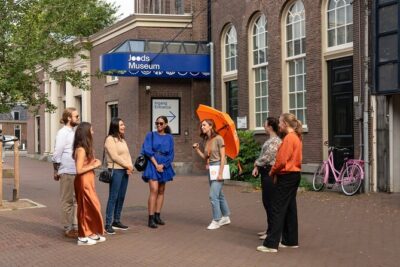
Anne Frank’s Story – Guided Walking Tour through Amsterdam
Read our review →
Life of Anne Frank and World War II Walking Tour
Read our review →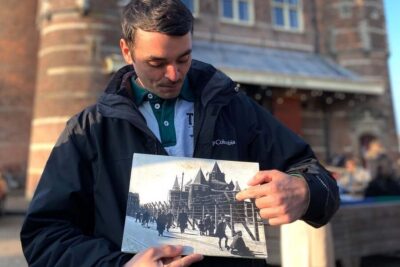

Anne Frank Walking Tour – Guided in EN/DE/IT/ES
Read our review →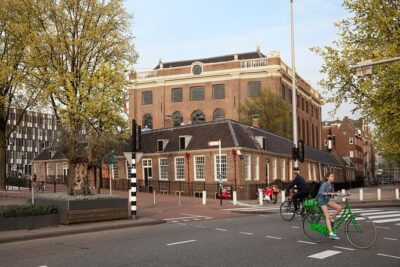
Anne Frank Walking Tour Amsterdam Including Jewish Cultural Quarter
Read our review →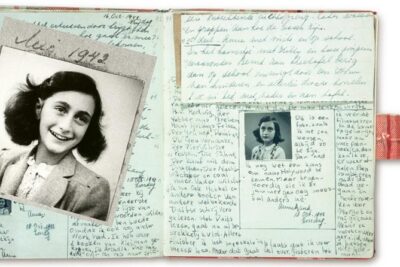
Anne Frank’s Last Walk & See Anne Frank House in Virtual Reality
Read our review →
Anne Frank and Jewish Quarter Amsterdam Private Walking Tour
Read our review →
Browse the lists this tour appears in