
Reviewed · WWII HISTORY TOURS
Amsterdam in World War II Tour
Amsterdam’s World War II story is told best on foot, where ordinary streets reveal what happened during the German occupation from 1940 to 1945. This walk links Anne Frank House, Dam Square, the former city hall, and the city’s Jewish quarter with stories of resistance, deportation, collaboration, and liberation.
I like the small maximum of eight people, which gives you a real chance to ask questions. I also like the use of period photographs, maps, logbooks, and other printed material, which helps you compare modern Amsterdam with the city under occupation. The main consideration is that you do not enter Anne Frank House, and the subject matter is often painful.
The walk is led by one of three retired historians, including Peter and Ben, whose calm, personal style suits the topic. You move slowly over roughly three to three and a half hours, so this is less a quick sightseeing stroll and more a focused history lesson outdoors.
Key points to know before booking
- Anne Frank House is the starting point, not an included museum visit: You hear about the German attack, Jewish refugees, and Anne Frank’s story outside the building.
- The group is limited to eight people: That makes it easier to hear the guide and ask about particular families, places, and events.
- Peter and Ben use original-style visual material: Period photographs, maps, notebooks, and copies help make the wartime streets easier to understand.
- Dam Square is treated as a major historical stage: The tour covers the 1940 occupation, wartime recruitment, the May 7, 1945 shooting, and Dutch remembrance.
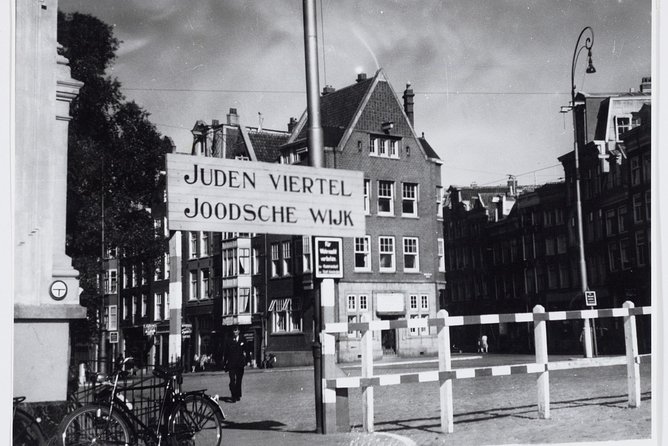
- The walk finishes near the Holocaust Names Monument: You end in Amsterdam’s former Jewish quarter, close to the Portuguese Synagogue and city hall.
- The price is $46.44 per person: For a three-hour private-feeling history walk with no museum admission included, that is a fair price for the right audience.
Why Amsterdam’s wartime story works as a walking tour
Amsterdam can seem cheerful and polished at street level, with canals, narrow houses, and busy shopping streets. During the walk, those same places take on another meaning. A bridge, post office, square, or government building becomes evidence of how occupation affected daily life.
That local scale is the strength of this experience. You are not only hearing about military campaigns far from the city. You are learning what happened at Amsterdam addresses, how Dutch officials responded, how Jewish families were targeted, and how residents faced German control.
The guides focus on the German occupation of the Netherlands rather than trying to explain every event of the Second World War. That keeps the walk focused. You hear about the German attack, the years of occupation, the Holocaust, Dutch resistance, collaboration, liberation, and the uneasy days that followed the German surrender.
I would not choose this walk if you want light sightseeing or a fast route through the center. I would choose it if you want the city’s streets to explain the past. The subject is serious, but the guides also add ordinary details about Amsterdam and show how the city changed after the war, which gives the experience some breathing room.
More WWII Tours in Amsterdam
- Amsterdam: Life of Anne Frank and World War II Walking Tour
★ 4.8 · 10,467 reviews - Amsterdam: Dutch WWII Resistance Museum Entry Ticket
★ 4.7 · 951 reviews - Small Group Tour to Nazi WWII concentration camp from Amsterdam
★ 5.0 · 112 reviews
Starting outside Anne Frank House
The meeting point is Prinsengracht 263, outside Anne Frank House, with a 9:30 a.m. start. This is a sensible place to begin because the building immediately connects the city to the story of Jewish persecution and hiding during the occupation.
The guide explains the German attack on the Netherlands and the arrival of Jewish refugees before moving into the wider wartime story. You should allow yourself a moment to take in the setting, but remember that entrance to Anne Frank House is not included.
That distinction matters. If you want to visit the museum, you need a separate ticket and arrangement. This walk gives you context from outside, but it does not take you through the Secret Annex or the museum displays.
For many people, this opening is emotionally heavy. The guide’s role is not simply to repeat Anne Frank’s biography. It is to place her experience within the larger story of Amsterdam’s Jewish population, the German occupation, and the fate of Jewish refugees. That broader framing is one reason to pair this walk with a separate museum visit if Anne Frank House is a major priority.
Raadhuisstraat, Singel, and the changing city
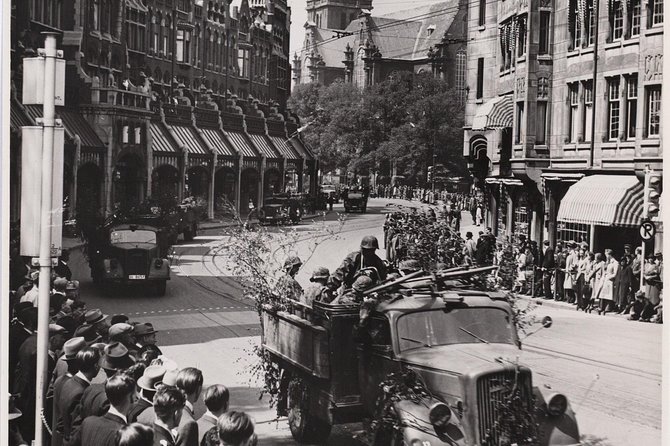
From the canal near Anne Frank House, the walk continues toward the Raadhuisstraat and the bridge over the Singel. Here, the guide uses the streets to show how Amsterdam changed after World War II.
This stop is less about a single famous event and more about reading the city. A modern street can hide the scale of wartime disruption, and period photographs help you picture the same area when German forces controlled the Netherlands.
I find this kind of stop useful because it prevents the tour from becoming a string of solemn names and dates. You get a sense of Amsterdam as a living place, not just a collection of memorials. The guide may also answer questions about how the city developed in the decades after the war.
The walking pace is deliberately slow. That helps if you want time to listen, look at photographs, and keep up without rushing through crowded streets. It also means the tour may run closer to three and a half hours when the group has questions.
Magna Plaza and the wartime post office
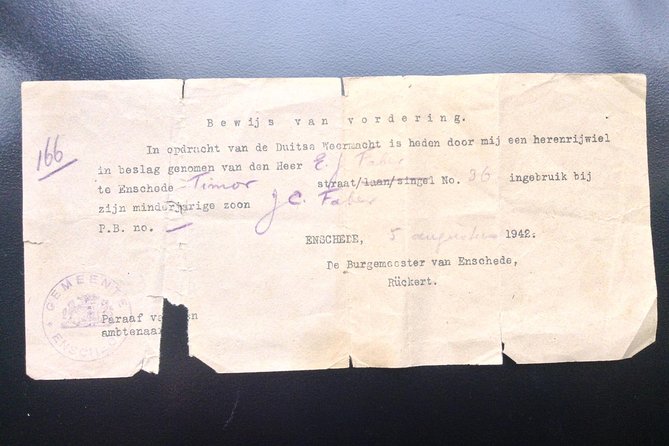
Magna Plaza now houses shops, but the building served as Amsterdam’s post office during World War II. The guide explains how Dutch postmen became involved in the occupation story and how some were executed by the Germans.
This is a short stop, but it makes an important point: occupation reached into ordinary public services. Mail, government offices, transport, and communications were not separate from the war. They became part of the machinery of control, and resistance could carry a high price.
The building’s current use can make the stop especially striking. You are looking at a familiar commercial site while hearing about a very different Amsterdam. I appreciate this contrast because it asks you to notice how a city can preserve buildings while losing the visible signs of what happened inside them.
Same base, a completely different sort of day:
- Amsterdam: Van Gogh Museum Ticket
★ 4.7 · 52,054 reviews - Amsterdam Classic Saloon Boat Cruise with Drinks and Cheese
★ 5.0 · 31,825 reviews - Amsterdam Luxury Canal Cruise + Unlimited Drinks & Bites option
★ 5.0 · 30,518 reviews - Amsterdam: Heineken Experience Ticket
★ 4.6 · 30,055 reviews
Nieuwe Kerk and the Mozes en Aäronstraat story
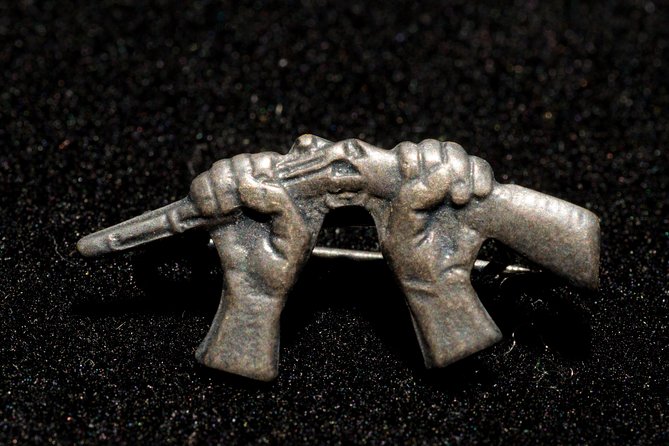
Near Nieuwe Kerk, the guide points out the street between the Royal Palace and the church, known as Mozes en Aäronstraat. The stop lasts only a few minutes, but it adds another layer to the city’s wartime geography.
You will not spend the entire morning inside major monuments. Instead, the guide uses small locations to connect religion, public space, occupation, and Amsterdam’s Jewish history. That approach rewards close attention. The significance may not be obvious if you are walking alone.
Because this is an outdoor tour, you should expect to stand on streets and squares while the guide speaks. On a cold or windy morning, warm clothing will make a real difference. One past group enjoyed a coffee break on an unpleasant day, but coffee and tea are not included in the tour price.
Dam Square, from occupation to liberation
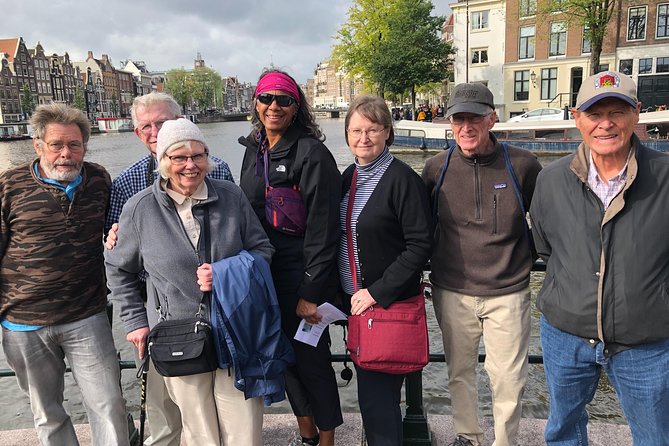
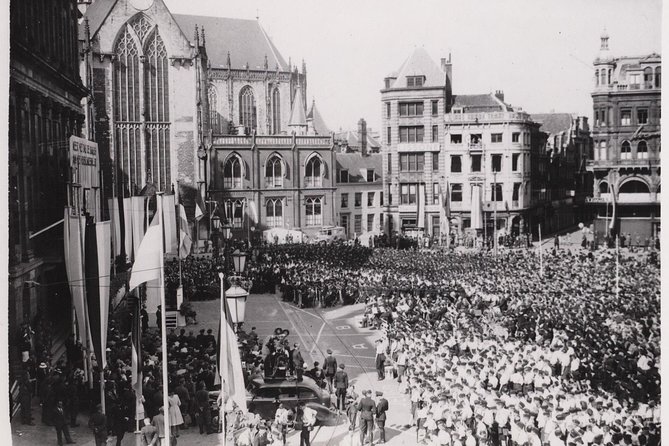
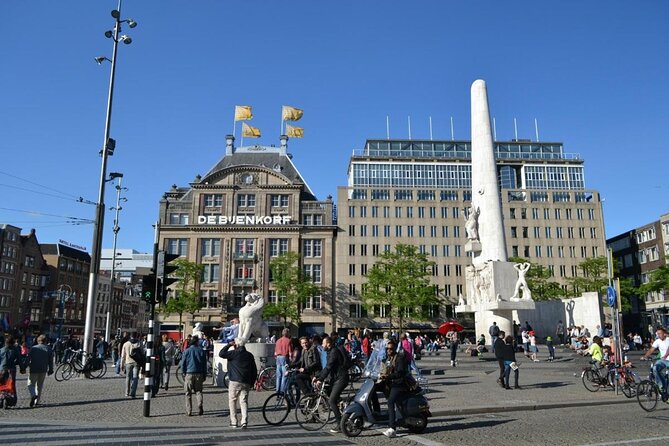
Dam Square receives the longest single stop, and rightly so. This is the heart of Amsterdam, and several major wartime stories meet here.
The guide explains what happened during the occupation, including the recruitment of Dutch volunteers for the crusade against Bolshevism. You also hear about the shooting on May 7, 1945, two days after the German surrender. That detail is a useful reminder that liberation did not produce instant calm. Violence and confusion continued even after the formal end of German rule.
The square also connects the wartime past with Dutch remembrance. The guide discusses May 4, the national day of remembrance, and the World War II monument. This gives you a sense of how the country publicly recalls occupation, death, resistance, and liberation.
Dam Square is busy in modern Amsterdam, so you may notice a sharp contrast between its present-day role and the events being described. That contrast is part of the experience. The guide asks you to look beyond the shops, crowds, and traffic and imagine the square as a place of political pressure, military presence, public gathering, and mourning.
This is also a good point to ask questions. The group limit helps here. With no more than eight people, you are not trying to catch a guide’s voice over a large crowd, and the guide can spend a little longer on topics that interest you.
The former city hall at The Grand
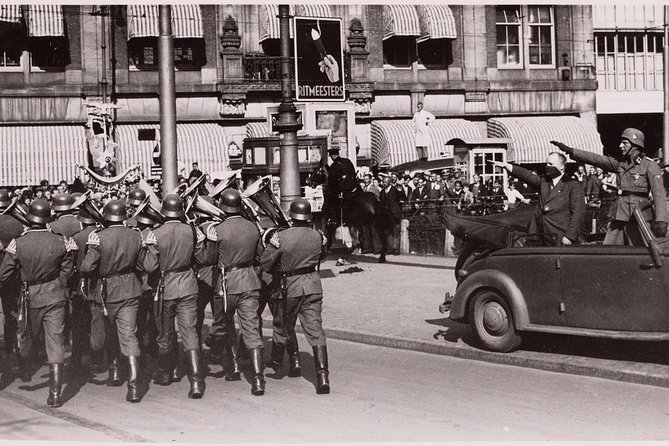
The walk then reaches Sofitel Legend The Grand Amsterdam, a hotel that served as Amsterdam’s city hall during the war. The guide explains that German troops were welcomed there by Dutch civil servants on May 15, 1940.
It is a brief stop, but it raises a difficult question about occupation: how much of the existing administration continued to function under German rule? The story is not reduced to a simple division between heroes and villains. Civil servants, officials, residents, and resistance members faced different choices and pressures.
That kind of detail is valuable because it gives you a more realistic picture of wartime life. Occupation was enforced by German power, but it also depended on local systems and people. The guide’s attention to names, buildings, and specific dates makes this part easier to follow than a broad lecture about wartime politics.
The building’s present-day identity as a hotel adds another visual contrast. You can stand outside a comfortable modern property while hearing how the same site operated as a civic center during a dangerous period.
Finishing at the National Holocaust Names Monument
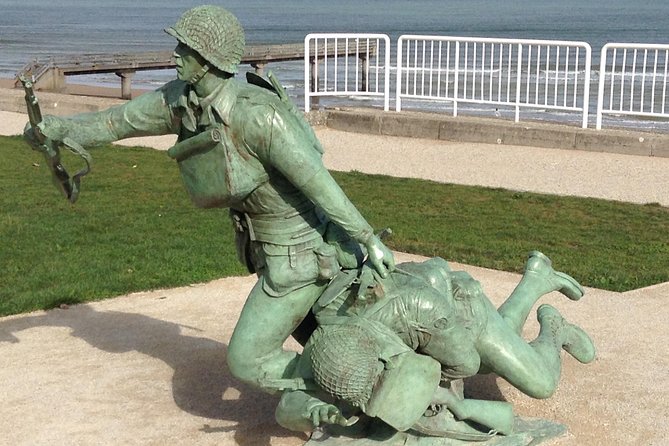
The final destination is the National Holocaust Names Monument, near the Portuguese Synagogue and not far from city hall. This is an appropriate place to finish because the walk has moved from broad occupation history toward the human cost of persecution and murder.
The monument gives the earlier stops a quiet point of focus. After hearing about government buildings, public squares, resistance, and military occupation, you finish with the names of people who were killed in the Holocaust.
The end point also leaves you in an area where you can continue exploring Amsterdam’s Jewish history on your own. The tour does not include private transportation, and none is needed between the listed locations. You walk from the canal belt through central Amsterdam toward the monument.
I would plan a little time after the tour rather than rushing straight to another appointment. The final subject matter can take a while to process, and the guide may have covered a great deal by the time you arrive.
How the guides shape the experience
The guides are retired historians with a special interest in the German occupation of the Netherlands. Peter and Ben are named as two of the possible guides, so the exact personality and presentation can vary slightly.
The strongest feature is the level of preparation. Peter has used photographs connected to Amsterdam, while Ben has brought photographs, maps, and a notebook to help explain the stories. Printed copies and other material may also be available during the walk.
That visual support matters. Dates and names can blur during a three-hour history tour, but an old photograph held beside a modern street gives you something concrete to remember. You can see how a corner, building, or square looked during the occupation and then compare it with the view in front of you.
The guides also adjust their pace to the slowest person in the group and make sure people can hear. That may sound basic, but it is important on a walking tour with a serious subject. You are not pushed from stop to stop just to complete a route.
The tone is serious without being relentlessly grim. Along the way, the guide may add lighter facts about Amsterdam or explain how the city changed after the war. That does not soften the crimes being discussed. It simply gives you enough variety to stay attentive for the full three to three and a half hours.
Is $46.44 good value?
At $46.44 per person, this is priced like a focused specialist walk rather than a general city tour. I consider it good value if you want detailed commentary, a small group, and access to a retired historian’s personal research materials.
The price covers the guided tour only. It does not include Anne Frank House admission, coffee, tea, or transportation. That is worth remembering when you plan your day. The main value comes from the guide’s time and the carefully selected stops, not from entry tickets.
The group limit of eight makes the price easier to justify. You are not paying for a large, anonymous walk where the guide must repeat the same script to a crowd. The setting is more personal, and you can ask about a specific name, building, or event.
The tour is currently rated 4.9 out of 5 from 63 ratings, with 98 percent recommending it. Those figures fit the experience described here: the main appeal is the guides’ command of the subject, their use of visual material, and their willingness to answer questions.
Who should book this Amsterdam WWII walk?
I would recommend it most strongly to:
- People with a serious interest in World War II or Holocaust history
- Anyone planning to visit Anne Frank House and wanting wider context
- Visitors who prefer small groups to large city walks
- People who value names, dates, photographs, and specific locations
- Those comfortable walking slowly for around three hours
- Travelers who want to understand Dutch resistance, occupation, and remembrance
I would be more cautious if you want a cheerful introduction to Amsterdam or a tour packed with interior visits. Most of the experience takes place outside, and the topic includes persecution, execution, deportation, and mass murder.
The walk is suitable for most people, and service animals are allowed. It is near public transportation, though private transportation is not included. Because the tour depends on good weather and a minimum number of participants, a change of date or full refund may be offered if the operator must cancel.
Should you book it?
Book this tour if you want Amsterdam’s wartime story tied to real streets and buildings, and if you appreciate a guide who can explain both the major events and the smaller local details. The combination of a maximum eight-person group, retired historians, period photographs, and a slow pace gives the walk a personal feel.
Do not book it expecting to enter Anne Frank House or receive a general tour of Amsterdam’s top attractions. This is a focused history walk, and much of its value comes from listening carefully.
For me, the strongest reason to choose it is the way it connects the famous Anne Frank story with the wider experience of Amsterdam under German rule. You leave with more than a single biography. You understand how occupation reached city hall, the post office, Dam Square, public administration, Jewish neighborhoods, and the streets where people still live and shop today.
FAQ
How long does the Amsterdam in World War II Tour last?
The tour lasts about three to three and a half hours. The walk is conducted at a slow pace.
Where does the tour begin?
It begins at Prinsengracht 263, 1016 GV Amsterdam, outside Anne Frank House.
What time does the tour start?
The scheduled start time is 9:30 a.m.
Does the tour enter Anne Frank House?
No. The guide begins outside Anne Frank House and discusses the German attack, Jewish refugees, and Anne Frank’s story, but museum admission is not included.
Where does the tour end?
It ends at the National Holocaust Names Monument, near the Portuguese Synagogue and not far from city hall.
How many people can join the tour?
The group has a maximum of eight people.
Is transportation included?
No. Private transportation is not included. The experience is a walking tour and is located near public transportation.
Can I cancel for a full refund?
Yes. You can cancel at least 24 hours before the local start time for a full refund. Cancellations or changes made less than 24 hours before the start time are not accepted for a refund.
Just added around Amsterdam
- Private sightseeing tour to Bruges and chocolate from Amsterdam★ 5.0 · 11 reviews
- Amsterdam: Rijksmuseum (Private Tour & Priority Access)★ 5.0 · 27 reviews
- Amsterdam: Private Romantic Evening Canal Cruise + Bubbles/Snacks★ 5.0 · 46 reviews
- Amsterdam Private Shopping Experience★ 5.0 · 7 reviews
- Rijksmuseum Amsterdam Private Guided Tour★ 5.0 · 57 reviews
- Amsterdam Rijksmuseum PRIVATE TOUR with a Local Private Guide★ 5.0 · 159 reviews
- Private Photo Session in Amsterdam★ 5.0 · 15 reviews
- Private One way Transfer Amsterdam Airport to Amsterdam★ 3.5 · 42 reviews
WWII History Tours, compared.

Life of Anne Frank and World War II Walking Tour
Read our review →
Oranjehotel World War II Prison Entrance Ticket
Read our review →
Rotterdam Walk: Hilights, Gems, Architecture & WWII | 2 or 3hrs
Read our review →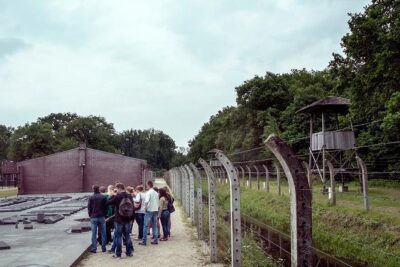
Small Group Tour to Nazi WWII concentration camp from Amsterdam
Read our review →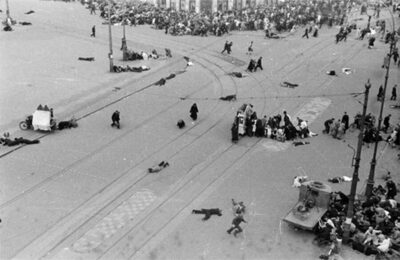
Anna Frank and World War II History Walking Tour
Read our review →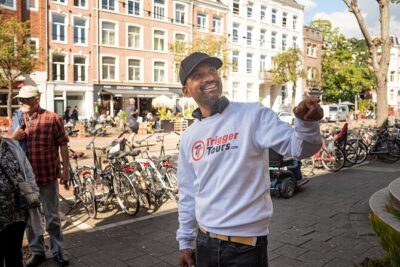
Anne Frank and World War II Walking Tour (TOP RATED)
Read our review →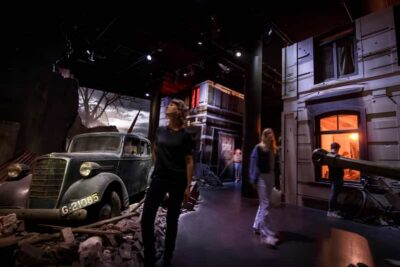
Oosterbeek: Airborne Museum Hartenstein Entry Ticket
Read our review →Browse the lists this tour appears in