
Reviewed · ANNE FRANK TOURS
Anne Frank’s Story – Guided Walking Tour through Amsterdam
The most important thing to know is also the easiest to miss: this is a walking tour about Anne Frank and Jewish Amsterdam, not a ticket to the Anne Frank House. You finish outside the museum, hearing how Anne’s diary came to be published, but you do not go inside.
I like the small groups, capped at 15, and the way the route places Anne Frank’s story in a wider setting. You see the Jewish Quarter, the Dokwerker statue, the Auschwitz Monument, and sites tied to wartime Amsterdam rather than hearing only about one family. The main drawback is the exclusion of museum entry, which has caused disappointment for people expecting an indoor visit.
Key points to know before booking
- Anne Frank House entry is not included: You cannot enter the house with this tour or use it as an admission ticket.
- The route covers several serious historical sites: Expect the Jewish Museum, Portuguese Synagogue, Dokwerker, Auschwitz Monument, Dam Square, and Anne Frank’s statue.
- Small groups make the history easier to follow: The maximum is 15 people, and guides such as Patrick, Manuel, Edwin, and Yoshi have been praised for clear, personal storytelling.
- Plan for two hours on foot: Comfortable shoes, weather-ready clothing, and a moderate level of fitness will help.
- The focus is broader than Anne Frank: You’ll learn about Nazi occupation, the February Strike, the Winter of Hunger, Dutch resistance, and daily life under German rule.
- The price is reasonable only if you want context: At $39.30 per person, the tour is a paid history walk, not a cheaper substitute for museum admission.
What this Anne Frank walking tour really offers

This experience works best as a guided introduction to Amsterdam during the German occupation from 1940 to 1945. Anne Frank’s story is the thread running through it, but the route also explains what happened to Amsterdam’s Jewish community, how ordinary life changed, and how Dutch people responded to Nazi rule.
I value that wider frame. Without it, Anne’s diary can feel sealed off from the city around it. On this walk, you connect the Frank family’s hiding place with Jewish institutions, resistance activity, wartime shortages, public protest, and memorials to those who were murdered.
The guide leads a small group of no more than 15 people. That matters on Amsterdam’s busy streets. You have a better chance of hearing the explanation, seeing photographs held up by the guide, and asking questions than you would on a large coach-style tour.
The tour is offered in English according to the supplied details. The booking information also refers to a chosen language, so check the language shown for your selected departure if English is not your preference.
One practical warning deserves bold type: you are not entering the Anne Frank House. The same applies to the Jewish Historical Museum and the Portuguese Synagogue. Those buildings are discussed from outside, and their admission is separate.
More Walking Tours in Amsterdam
- Amsterdam: Life of Anne Frank and World War II Walking Tour
★ 4.8 · 10,467 reviews - Absolutely Amsterdam – the Essential Introductory Walking Tour
★ 5.0 · 3,629 reviews - Amsterdam: Anne Frank Guided Small Group Walking Tour
★ 4.8 · 2,722 reviews
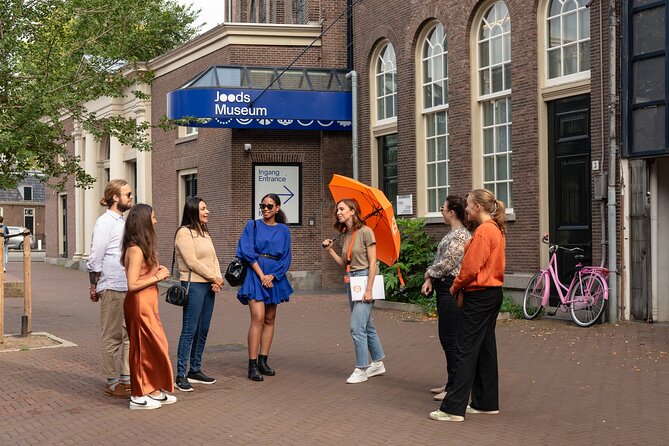
Starting near Amsterdam’s Jewish Museum
The route includes a meeting point at the entrance of the Jewish Museum, with instructions to arrive 15 minutes before the start. Elsewhere, the meeting details identify the Anne Frank House at Westermarkt 20 as both the start and finish. Because those details do not match, check the final confirmation carefully before setting out.
At the Jewish Museum, the guide gives you a first sense of Amsterdam’s Jewish life and the institutions that shaped it. You do not go inside, so this stop is about orientation and explanation rather than an exhibition visit.
That limitation is easy to accept if you already plan to visit the museum separately. If you were hoping to combine the walking tour with indoor museum time, allow extra time and buy a separate admission.
This opening section helps set up the rest of the walk. Anne Frank’s story did not begin in isolation. It belonged to a city with established Jewish communities, religious buildings, schools, businesses, and public spaces that were later targeted and controlled.
The Portuguese Synagogue and Amsterdam’s Jewish past
The Portuguese Synagogue is another exterior stop. The building gives the guide a place to talk about Jewish life in Amsterdam before the Nazi occupation, including the presence of a long-established Portuguese Jewish community.
You do not enter the synagogue, so the value here comes from the guide’s historical explanation and the setting itself. I would treat this as a context stop, not a sightseeing visit inside a landmark.
This distinction matters because the tour moves quickly between places. You see a good range of Amsterdam in two hours, but each location receives a focused explanation rather than a full museum treatment. That is a fair trade if you want a connected story while walking through the city.
The Dokwerker and the February Strike
At the Dokwerker, the guide discusses the February Strike, one of the key acts of public protest against the persecution of Amsterdam’s Jewish population. The statue is free to visit and gives the group a fixed place to pause and consider how Dutch workers responded to Nazi measures.
This is one of the route’s strongest stops because it links political resistance with a visible public monument. You are not simply hearing a list of wartime dates. You are standing beside a memorial connected to a specific act of protest.
The guide’s delivery matters here. Guides named in the supplied feedback include Patrick, Manuel, Edwin, Yoshi, Ollie, Giovanni, and Peter. The strongest descriptions emphasize thoughtful pacing, clear explanations, photographs, humor used carefully, and enough time for questions.
The subject is painful, so a guide needs the right tone. Reports of the tour describe it as moving and emotional, but also approachable for families and different age groups. I would expect a serious walk, not an entertainment-focused city tour.
More Anne Frank and wartime walks:
- Amsterdam: Anne Frank Walking Tour – Guided in EN/DE/IT/ES
★ 4.9 · 2,676 reviews - Anne Frank Walking Tour Amsterdam Including Jewish Cultural Quarter
★ 5.0 · 1,879 reviews - Anne Frank’s Last Walk & See Anne Frank House in Virtual Reality
★ 5.0 · 957 reviews - Anne Frank and Jewish Quarter Amsterdam Private Walking Tour
★ 5.0 · 684 reviews
The Auschwitz Monument and a quiet moment
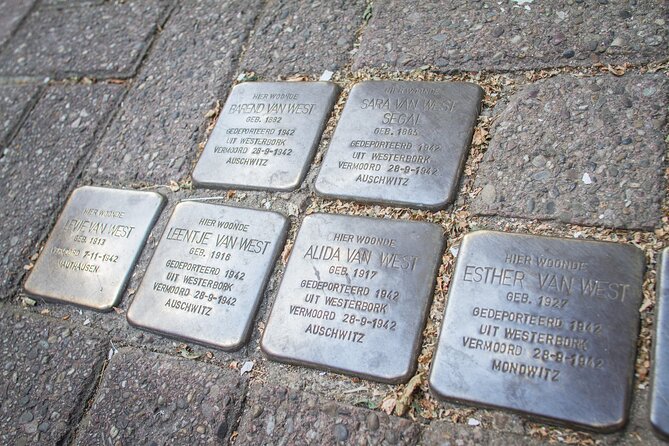
The Auschwitz Monument is another free outdoor stop. The guide explains its meaning and gives the group time to take in the memorial.
One particularly useful detail concerns the Jewish practice of placing stones near graves and memorials. A guide may explain why visitors leave rocks as a sign of respect, and the stop can include time to place one near a name. That small act can make the memorial feel less like an abstract site and more like a place for personal reflection.
You should give yourself room for the emotional weight of this section. The tour deals with deportation, murder, occupation, and the loss of Amsterdam’s Jewish community. It is not a light stroll with a few Anne Frank references added along the way.
The walk remains accessible in the practical sense that it uses public streets and free memorials, but you need a moderate level of physical fitness. Comfortable shoes are recommended, and rain or cold can affect the experience. One account describes continuing through rain and snow, so bring clothing suited to the forecast.
Dam Square and the story of occupied Amsterdam
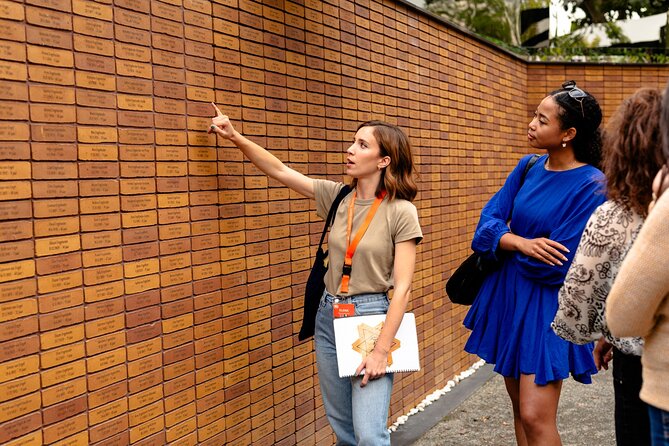
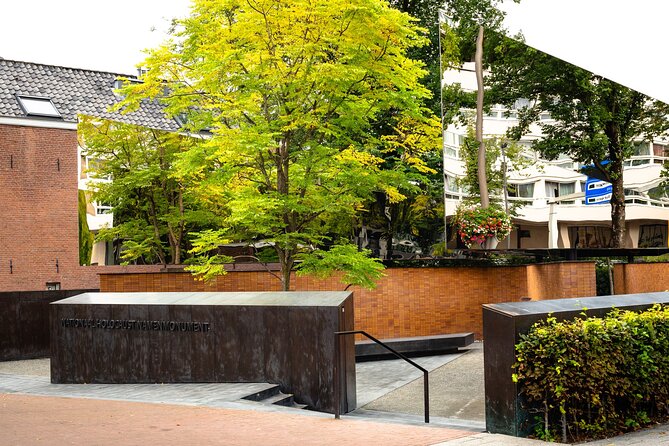
The route continues to Dam Square and the National Monument of Amsterdam. This stop broadens the story beyond the Jewish Quarter and connects wartime history to one of the city’s best-known public spaces.
The guide discusses how Amsterdam was taken over by Germany and how the occupation affected everyday life. That can include the Winter of Hunger, a severe period of wartime deprivation, as well as the social and economic strain placed on people across the city.
I like this part of the route because it prevents the story from becoming too narrow. You learn about Jewish persecution, but also about how the occupation changed daily life for the wider population. That context helps explain why the city’s wartime history cannot be reduced to a single building or diary.
The square can be busy, and the guide may need to position the group carefully so everyone can hear. This is another reason the group limit of 15 is useful.
Anne Frank’s statue and the final walk
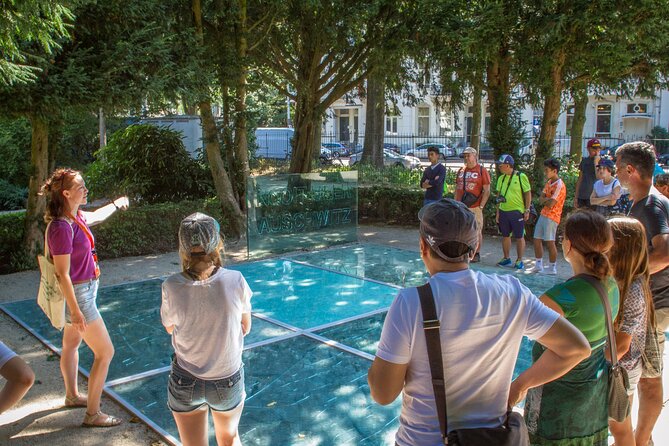
The statue of Anne Frank provides a personal link back to the story that brought you to the tour. Here, the guide can draw together the earlier discussion of Jewish Amsterdam, Nazi rule, resistance, and the Frank family.
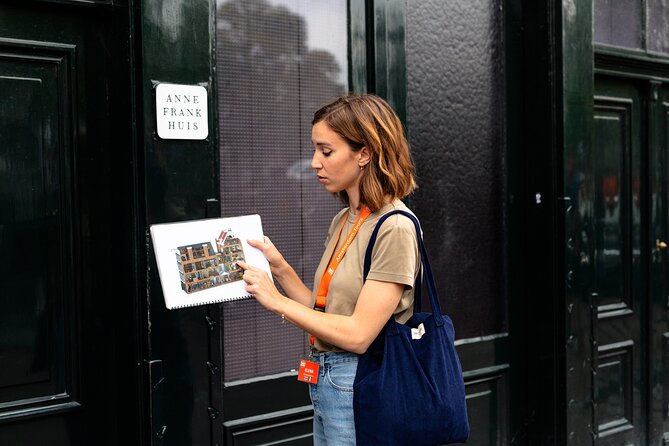
Guides often use photographs from Anne Frank’s lifetime to help connect past scenes with the modern city. This is useful because many buildings and streets look ordinary today. Without explanation, you might walk past them without understanding their wartime importance.
The route also addresses Dutch resistance and the people who helped hide families such as the Franks. That part of the story adds needed complexity. The occupation produced persecution and collaboration, but also acts of courage and practical help.
The tone can be personal without turning Anne Frank into a simple symbol. The strongest guides described in the supplied material, including Patrick, Manuel, Edwin, and Yoshi, appear to make room for questions and local details. One guide was also praised for offering useful Amsterdam information beyond the main topic, including advice about bicycle-lane etiquette. That is a small bonus, but a valuable one in a city where bikes have the right of way in many situations.
Finishing outside the Anne Frank House

The tour ends at the Anne Frank House in Westermarkt. The guide talks about Anne’s diaries, the family’s hiding period, and how Otto Frank later arranged for the diary to be published.
You then leave the group outside the museum. There is no museum entry, no access to the Secret Annex, and no admission reservation through this tour.
This is the point where you should make your expectations clear. If you already have a separate Anne Frank House ticket, the walk can give you useful background before your visit. The historical setting may make the museum experience more meaningful because you have already heard about the city, the occupation, and the people around the Frank family.
If you do not have a museum ticket, the tour still functions as a history walk, but it is not a replacement for seeing the interior. Admission to the Anne Frank House is handled separately through the official museum system, and this tour does not grant access.
The same warning applies to the Jewish Museum and Portuguese Synagogue. All three indoor attractions require separate planning.
Is $39.30 good value?
At $39.30 per person, I see this as a mid-priced guided walk. You are paying for about two hours with a local guide, a small group, and a carefully connected route through several significant sites.
The price makes sense if you want interpretation. You could walk past the monuments on your own for free, but you would miss much of the meaning behind the Dokwerker, Auschwitz Monument, and the wartime references at Dam Square. The guide’s photographs and explanations are a major part of what you are buying.
The value is weaker if your only goal is to enter the Anne Frank House. In that case, this is the wrong product. It does not include the museum, and disappointed people have specifically focused on that misunderstanding.
I would also avoid comparing the $39.30 price directly with a museum ticket. They are different experiences. One is an outdoor, guide-led history walk. The other is an indoor museum visit that requires its own timed admission.
Who should book this walk?
I would recommend it to you if you:
- Want a clear introduction to Jewish Amsterdam and the Nazi occupation.
- Have an interest in WWII history and Dutch resistance.
- Could not secure an Anne Frank House ticket but still want historical context.
- Prefer a small group and a human guide to a self-guided audio walk.
- Are visiting Amsterdam with family members who need the subject explained in an organized way.
- Plan to visit the Anne Frank House separately and want background first.
I would not recommend it if you expect indoor access to any of the three museums or if you dislike serious historical discussion. The tour is emotional and sometimes heavy. It is also outdoors for the full walk, so bad weather can affect your comfort.
Children must be accompanied by an adult. Service animals are allowed, and the route is near public transportation. The physical demand is described as moderate, so comfortable footwear is a sensible choice.
You can cancel for a full refund up to 24 hours before the start time. Cancellations or changes inside that window are not refunded. If poor weather or an insufficient number of bookings causes the tour to be canceled, you are offered another date or a full refund.
Should you book the Anne Frank walking tour?
Book it if you want the story around Anne Frank, not simply the room where she hid. The tour’s best feature is its connection between the Frank family, Amsterdam’s Jewish community, wartime resistance, public memorials, and the daily cost of occupation.
Before paying, read the admission limits carefully and confirm the meeting point. If you understand that the walk ends outside the Anne Frank House, $39.30 can buy two useful hours of context, thoughtful guiding, and access to parts of Amsterdam you might otherwise pass without noticing.
If entering the house is your main goal, secure an official museum ticket separately and treat this walk as an optional companion. That simple distinction will determine whether the experience feels like good value or a costly misunderstanding.
FAQ
Does the tour include entry to the Anne Frank House?
No. The tour ends outside the Anne Frank House and does not provide admission or access to the building.
Does the tour include the Jewish Historical Museum?
No. The Jewish Historical Museum is discussed from outside, and admission is not included.
Can I enter the Portuguese Synagogue during the tour?
No. The Portuguese Synagogue is an exterior stop only, and its admission is separate.
How long does the walking tour last?
The tour lasts approximately two hours.
How large is the group?
The maximum group size is 15 people.
What language is the tour offered in?
The supplied details identify English as an offered language. The booking information also refers to a chosen language, so check the language selected at booking.
What happens if I need to cancel?
You can receive a full refund if you cancel at least 24 hours before the start time. Cancellations or changes made less than 24 hours before the experience are not refunded. If the provider cancels because of poor weather or too few bookings, you are offered another date or a full refund.
Just added around Amsterdam
- Private sightseeing tour to Bruges and chocolate from Amsterdam★ 5.0 · 11 reviews
- Amsterdam: Rijksmuseum (Private Tour & Priority Access)★ 5.0 · 27 reviews
- Amsterdam: Private Romantic Evening Canal Cruise + Bubbles/Snacks★ 5.0 · 46 reviews
- Amsterdam Private Shopping Experience★ 5.0 · 7 reviews
- Rijksmuseum Amsterdam Private Guided Tour★ 5.0 · 57 reviews
- Amsterdam Rijksmuseum PRIVATE TOUR with a Local Private Guide★ 5.0 · 159 reviews
- Private Photo Session in Amsterdam★ 5.0 · 15 reviews
- Private One way Transfer Amsterdam Airport to Amsterdam★ 3.5 · 42 reviews
Anne Frank Tours, compared.

Life of Anne Frank and World War II Walking Tour
Read our review →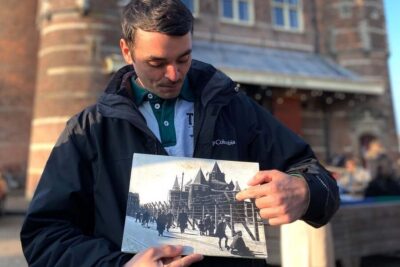

Anne Frank Walking Tour – Guided in EN/DE/IT/ES
Read our review →
Anne Frank Walking Tour Amsterdam Including Jewish Cultural Quarter
Read our review →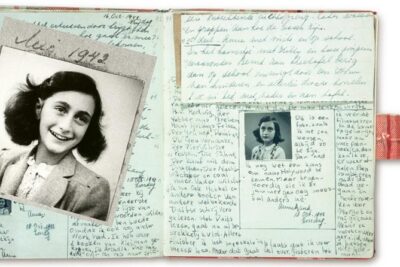
Anne Frank’s Last Walk & See Anne Frank House in Virtual Reality
Read our review →
Anne Frank and Jewish Quarter Amsterdam Private Walking Tour
Read our review →

Browse the lists this tour appears in