
Reviewed · ARCHITECTURE TOURS
Rotterdam: Architectural Highlights Guided Walking Tour
Rotterdam makes the most sense when someone explains why its buildings look so different from one block to the next. This 2-hour walk with a local architect connects the rebuilt city center with the Maas waterfront, turning a collection of bold buildings into a story about war, trade, planning, and renewal.
I like the clear route from Rotterdam Centraal to the Erasmus Bridge, and I like that the tour looks at city planning as well as individual buildings. The Markthal, Cube Houses, Lijnbaan, Timmerhuis, and City Hall all get their moment. The trade-off is pace: you cover 3 to 4 kilometers in two hours, and several people wished they had more time for questions and extra stops.
Key points to know before you book
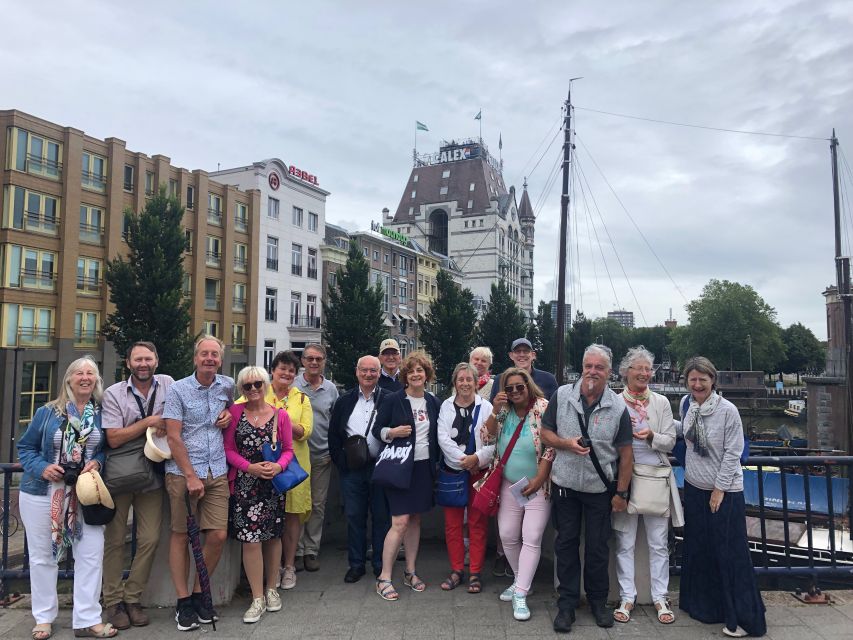
- A working architect leads the way: Guides have included Tania, Tanya, Silvia, Tina, and Sylvie, with a focus on how Rotterdam was designed and rebuilt.
- The route links major sights: Start under the clock at Rotterdam Centraal and finish near the river, passing the Lijnbaan, City Hall, Timmerhuis, Markthal, Cube Houses, and Erasmus Bridge.
- World War II shapes the story: The walk explains how the 1940 bombardment changed Rotterdam and influenced its modern appearance.
- You cover serious ground: Expect a 3 to 4 km walk over two hours, so wear comfortable shoes and be ready to keep moving.
- The Markthal and Cube Houses are brief highlights: You enter the Markthal and walk past the Cube Houses, but this is an overview rather than a long building tour.
- The tour works for many mobility needs: It is listed as wheelchair accessible, operates in rain or shine, and children ages 0 to 12 can join free with a parent.
Why Rotterdam needs an architect’s explanation
Rotterdam does not offer the easy visual rhythm of Amsterdam, where canals and historic facades tell much of the story on their own. Its center is a mix of postwar planning, daring modern design, commercial development, and older survivors.
That mix can be confusing at first. One building may look sleek and new, another may recall the 1950s, and a church or civic building may point to a much older Rotterdam. A local architect helps you read those changes instead of simply collecting photographs.
The key subject is the city’s reconstruction after the 1940 bombardment. The tour places the modern center in that difficult context and explains how Rotterdam chose to rebuild rather than simply recreate what had been lost.
That is the tour’s strongest feature. You are not just told the names of buildings. You hear how architecture connects to daily life, industry, urban growth, and long-term plans for the city. Several guides have used historical photographs to show how the city changed, which is especially useful when modern streets give little visual clue about what came before.
More Architecture Tours in Rotterdam
- Rotterdam Walk: Hilights, Gems, Architecture & WWII | 2 or 3hrs
★ 5.0 · 149 reviews - Rotterdam Architecture Highlights Walking Tour
★ 5.0 · 66 reviews - Rotterdam Must Do Tour: Highlights, History, WW2 and Architecture
★ 5.0 · 20 reviews
Starting under the clock at Rotterdam Centraal
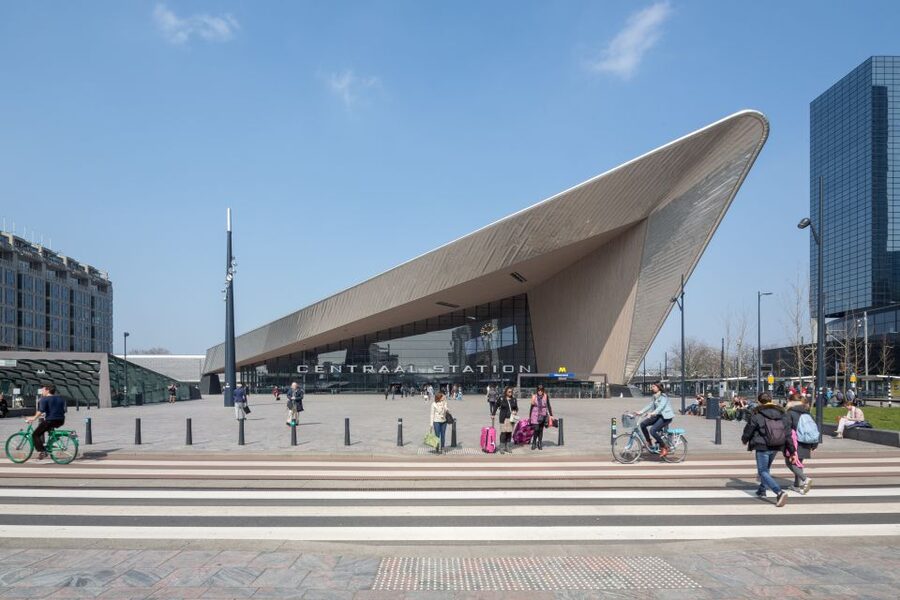
The meeting point is easy to find: look for the guide underneath the clock at Rotterdam Centraal Station. This is a practical starting point because the station itself is part of the architectural story.
The newer Central Station is a fitting introduction to Rotterdam’s confidence. It is a major gateway, a modern piece of city infrastructure, and a good place to begin thinking about how Rotterdam uses architecture to signal movement and change.
From here, you walk into the center with the guide setting the pace. The walk is in English, and the emphasis is on explanation rather than a formal interior visit. You will want to arrive ready to listen outdoors, since this is a walking tour rather than a seated presentation.
The distance is manageable for most people who are comfortable walking, but do not treat this as a short stroll between nearby sights. Three to four kilometers in two hours means you will keep moving. One guide was praised for pausing so slower walkers could catch up, but it is still sensible to tell the guide early if your group needs a gentler pace.
Lijnbaan and the postwar city
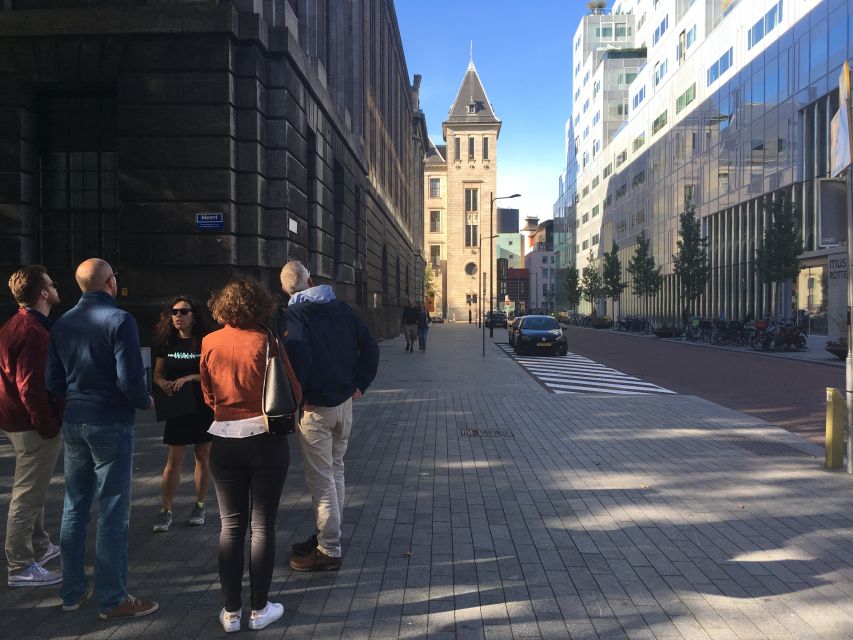
The Lijnbaan area shows how Rotterdam experimented with a new kind of city center after the war. It is an important stop because the tour can explain not only what the buildings look like, but also how streets, shopping, pedestrians, and traffic were arranged.
This is where the architect’s perspective adds real value. You can look at a shopping street and see storefronts. The guide asks you to consider the planning idea behind the street and how it fits into the wider reconstruction of Rotterdam.
The experience is not limited to architecture as decoration. It covers how people live and move through the city, and how industrial wealth and port activity shaped Rotterdam’s ambitions. That broader context keeps the walk from becoming a parade of building names.
If you are mainly interested in social housing or less famous residential projects, this route may feel selective. One person specifically hoped to see more social housing. The tour focuses on central landmarks and major architectural statements, so it is best understood as an introduction, not a full survey of every side of Rotterdam’s urban life.
City Hall, Timmerhuis, and contrasting styles
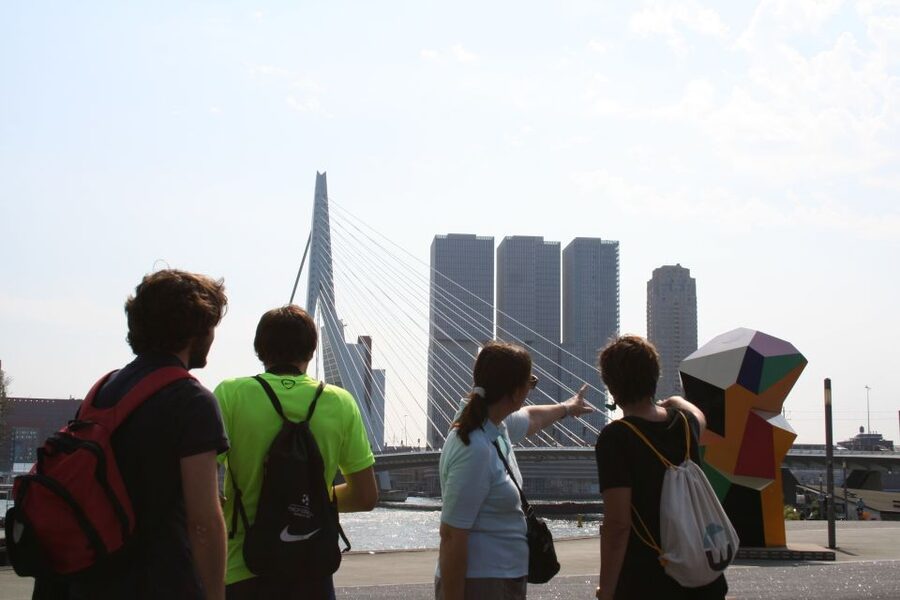
As you move farther into the center, the route takes in City Hall and the Timmerhuis. These stops help show the range of Rotterdam’s architecture and the different ways the city has handled civic space, offices, and public services.
City Hall offers a useful contrast with the more recent buildings. Timmerhuis brings the story forward again, showing Rotterdam’s willingness to use modern forms in the heart of the city.
The value here comes from comparison. A guide can point out how the buildings differ in age, purpose, scale, and design approach. You begin to see that Rotterdam’s unusual appearance is not random. It reflects several periods of rebuilding and redevelopment placed close together.
The tour also passes Sint Laurens church, an older landmark with a very different character from the surrounding modern center. Its presence makes the city’s story more complicated and more human. Rotterdam is not simply a new city built from scratch. It is a city where old and new pieces survived, returned, or were placed side by side.
A strong guide will give you enough history to understand why these contrasts exist without burying you in dates. Past participants repeatedly praised Tania, Tanya, Silvia, and Sylvie for making the architectural material understandable even for people without a background in design.
More Walking Tours in Rotterdam
- Rotterdam: Highlights & Gems Walking Tour with Dutch Local
★ 5.0 · 133 reviews - Walking Rotterdam Food Tour
★ 5.0 · 89 reviews - Rotterdam: City Center Walking Tour
★ 4.5 · 88 reviews - Rotterdam Walking Tour and Harbor Cruise
★ 4.7 · 59 reviews
Inside the Markthal
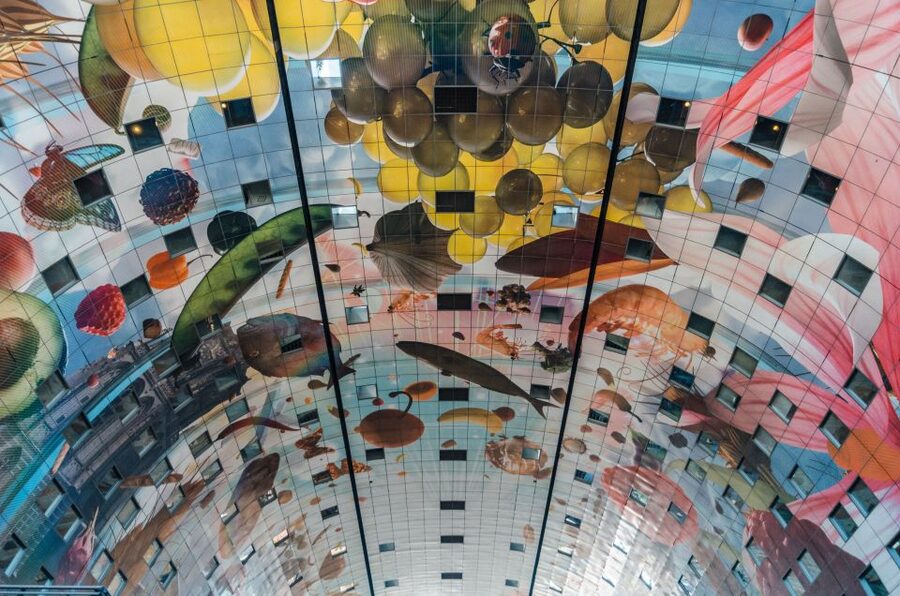
The Markthal is one of the most enjoyable stops because you enter the building rather than viewing it only from the pavement. The interior gives the tour a change of pace and lets you see how a major architectural project combines public space, food, housing, and spectacle.
You should not expect a food tasting. Food and drinks are not included, and the tour is not built around eating. Still, the Markthal is a natural place to pause visually and absorb the scale of the building.
The guide can help you look beyond the obvious colors and curved shape. The point is to understand what the structure does within the city and why it became one of Rotterdam’s best-known modern landmarks.
This stop can also be busy, and the group has a limited amount of time. If you want to shop, eat, or study the interior at length, plan to return on your own after the tour. The walking route gives you an informed first look, not a long free period inside.
Cube Houses, with room for disagreement
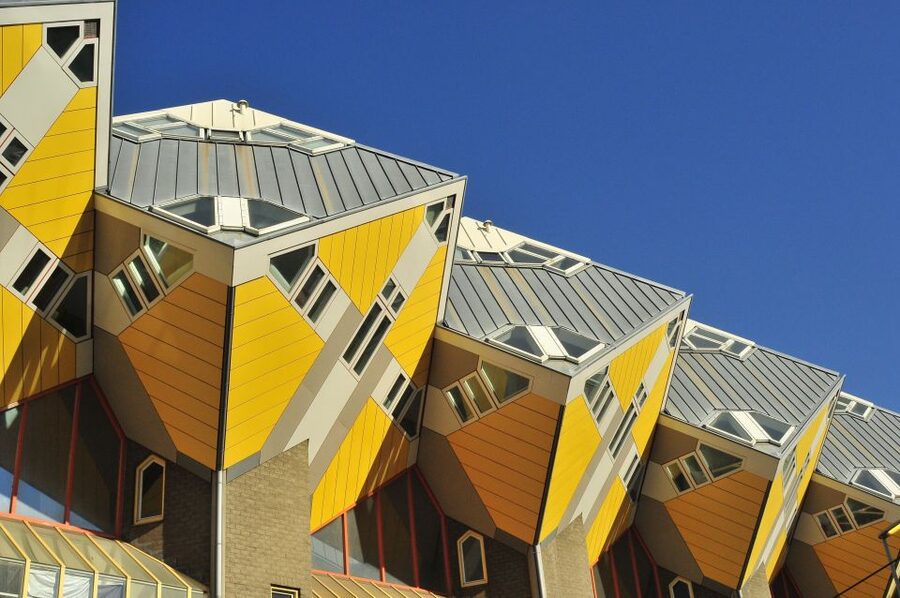
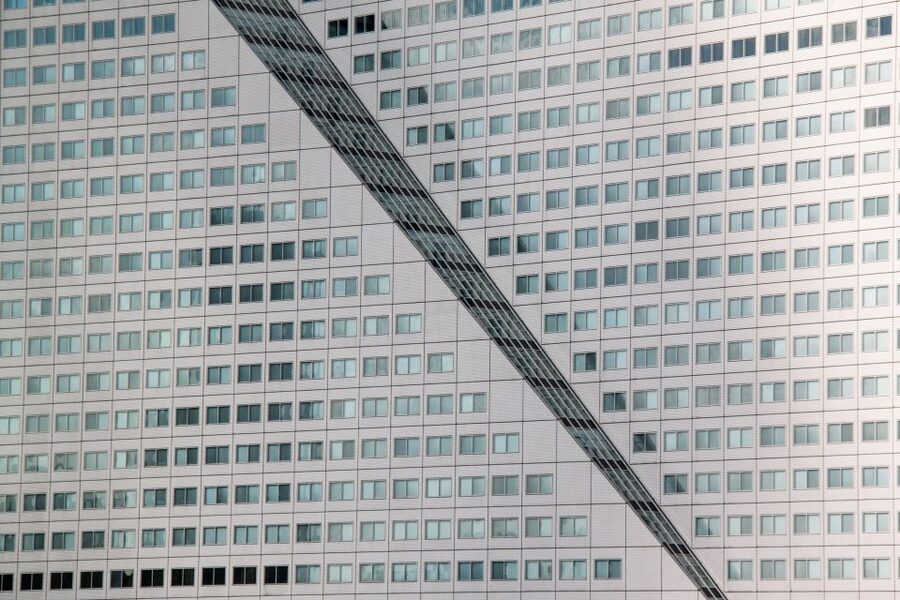
The Cube Houses are among Rotterdam’s most recognizable buildings, and the route walks past the famous row. This is a good place to discuss the difference between a building that attracts attention and a building that works well for everyday life.
The design is bold and easy to remember. It also divides opinion. One participant felt the Cube Houses had received more praise than they deserved, while others enjoyed learning how the project fits into Rotterdam’s experimental approach.
That disagreement is part of the fun. The guide is not simply asking you to admire every unusual shape. You can consider what the buildings try to achieve, how they change the idea of a normal home, and why an architect might accept practical compromises for a strong visual idea.
Because you walk past rather than spending a long period inside, you will have time to form your own view. If the Cube Houses are a major reason for booking, remember that this tour treats them as one stop among many.
The riverfront and Erasmus Bridge
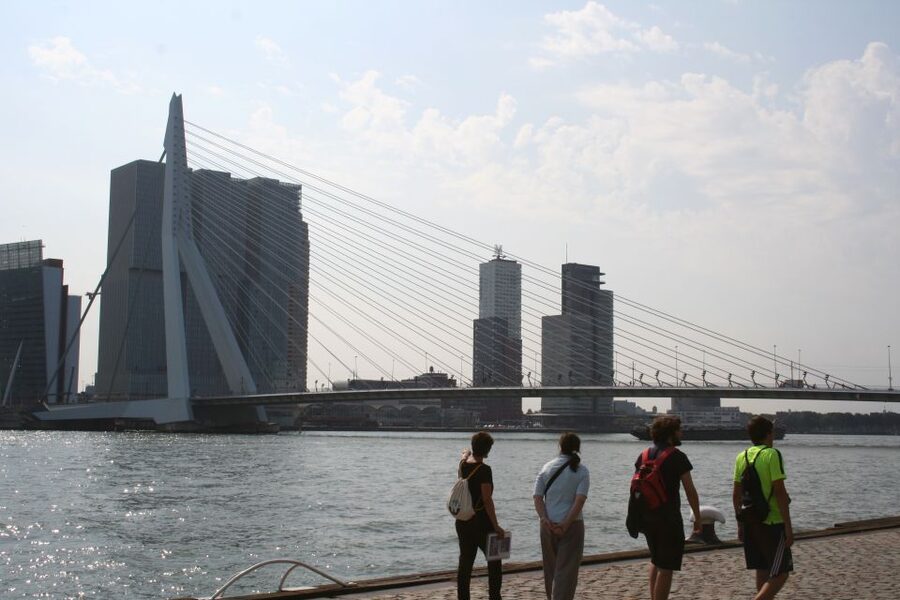
The route continues toward the waterfront, where the city opens up and the newer development on the South Bank comes into view. This final section gives the tour a wider scale after the closer look at central buildings and streets.
The Erasmus Bridge is the visual payoff. From the riverside, you can connect Rotterdam’s port identity with its high-rise ambitions and newer districts. The bridge is not just a photo stop. It helps explain how the river links different parts of the city and how development has pushed beyond the old center.
You will also get views of the skyline and learn about plans for the waterfront. This is where the tour shifts from what Rotterdam has built to what it hopes to build next.
The waterfront section is one reason I would take this walk early in a Rotterdam visit. It gives you a mental map of the city and helps you decide which areas deserve a longer return visit. The limit is time. A few people wished for a four-hour version, especially because the harbor area and South Bank offer more architecture than a two-hour route can cover.
How much value do you get for $53?
At $53 per person, this is not the cheapest way to spend two hours in Rotterdam. You can see several of these buildings from the street without paying for a guide.
The value comes from the interpretation. A local architect can explain decisions that are easy to miss, especially the links between the bombardment, postwar rebuilding, industrial growth, and current redevelopment. If you would otherwise walk past the buildings and wonder why they look so different, the guide earns the price.
The tour also covers a lot in a short period. You see Central Station, Lijnbaan, City Hall, Timmerhuis, Sint Laurens church, Markthal, Cube Houses, and the Erasmus Bridge, while also hearing about the South Bank and the city’s future direction.
I would call it good value for people who care about design, planning, or Rotterdam’s postwar story. It is less compelling if you want a relaxed walk with long stops, food, shopping, or entry into several buildings. The two-hour format gives you a strong overview, but not a slow architectural study.
Children ages 0 to 12 can join free. Parents should think about the distance, the amount of talking, and the content before bringing very young children. This is a learning-focused walk, not a children’s attraction.
Who should take this walk?
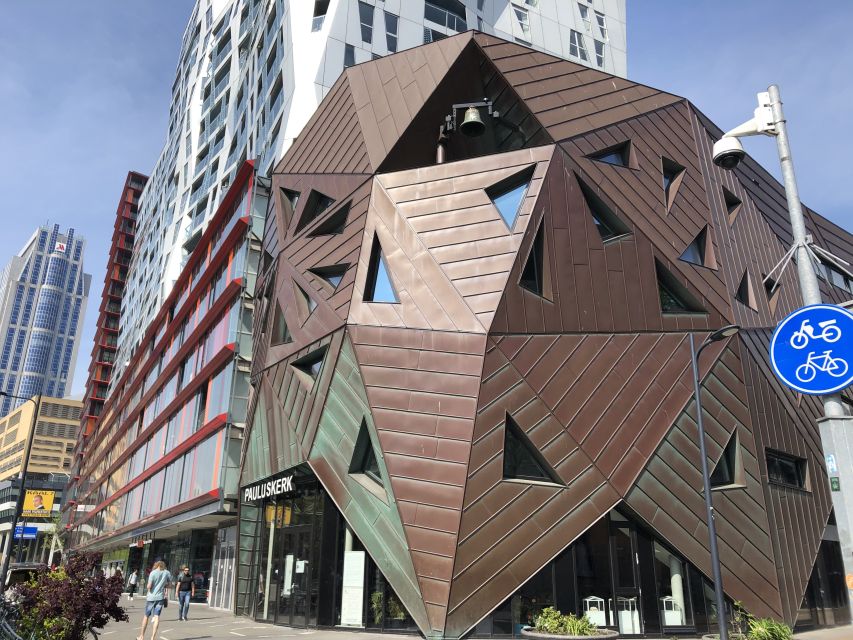
I would recommend it to you if:
- You are visiting Rotterdam for the first time and want a clear orientation.
- You enjoy architecture but do not have technical training.
- You want to understand the city’s reconstruction after 1940.
- You are interested in urban planning, public space, or modern city design.
- You want to walk from the station toward the river rather than spend two hours in a vehicle.
- You prefer a local guide who can answer questions and adjust the explanation to the group.
It is also a good choice for a short stay. The route introduces several central sights in one morning or afternoon, and you can return later to the buildings that caught your attention.
I would choose another activity if your main aim is the port, a long visit to the South Bank, social housing, or a detailed interior tour of the Cube Houses. A bicycle format could cover more ground, but this experience is specifically a walking tour and does not include transport.
Practical details for a smoother walk
Meet the guide underneath the clock at Rotterdam Centraal Station. The tour lasts two hours and covers about 3 to 4 kilometers, so wear comfortable shoes.
Bring weather-appropriate clothing. The walk operates in rain or shine, and much of the experience takes place outdoors. There is no food or drink included, so plan around the tour if you want a meal or coffee at the Markthal.
The tour is in English and is listed as wheelchair accessible. Private groups are available, which may suit families, friends, or architecture students who want a more personal pace.
You can cancel up to 24 hours in advance for a full refund, and you can reserve now and pay later. Those terms are useful if your Rotterdam plans are still shifting, though the main decision should be whether the subject and pace fit your interests.
Should you book the Rotterdam architecture walk?
Book it if you want Rotterdam to make sense, not just look unusual. The best part is the link between buildings and decisions: why the city rebuilt as it did, how modern architecture reflects Rotterdam’s ambitions, and how the riverfront is still changing.
The route is brisk, and the two-hour limit means you will not study every building in detail. Still, the combination of an architect guide, major central sights, the Markthal, Cube Houses, and Erasmus Bridge makes this a useful first look at the city.
For the strongest experience, take it near the start of your stay and keep the rest of the day open for returning to the places that interest you. If you want a grounded introduction to Rotterdam’s architecture and urban story, $53 is a fair price for the shortcut this guide provides.
FAQ
Where does the Rotterdam architectural walking tour begin?
Meet the guide at Rotterdam Centraal Station underneath the clock.
How long is the walking tour?
The tour lasts two hours.
How far do you walk?
The route covers about 3 to 4 kilometers.
Which buildings and sights are included?
The walk includes Rotterdam Central Station, the Lijnbaan area, City Hall, the Timmerhuis, Sint Laurens church, the Markthal, the Cube Houses, the South Bank development, and the Erasmus Bridge.
Is the tour available in English?
Yes. The live tour guide conducts the experience in English.
Can children and wheelchair users join?
The tour is listed as wheelchair accessible. Children ages 0 to 12 can join free, although parents should consider the distance, content, and two-hour duration.
Just added around Rotterdam
- The Netherlands: WW2 Private Day Trip★ 5.0 · 4 reviews
- Rotterdam: Guided Food Tour★ 4.4 · 16 reviews
- Rotterdam: UNESCO Van Nelle Factory Guided Tour★ 4.5 · 94 reviews
- Rotterdam: Summer Cocktail Cruise★ 4.7 · 18 reviews
- Rotterdam: Summer Evening Cruise with Live Entertainment★ 4.8 · 5 reviews
- Rotterdam: Trompenburg Botanical Gardens Entry Ticket★ 4.1 · 77 reviews
- Rotterdam: Pub Cruise with Drinks and Bites★ 3.8 · 16 reviews
- Rotterdam: Private Tour with a Local★ 4.7 · 47 reviews
Architecture Tours, compared.
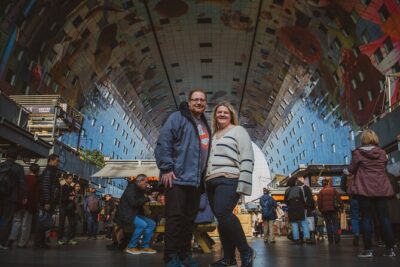
Rotterdam Walk: Hilights, Gems, Architecture & WWII | 2 or 3hrs
Read our review →
The rise of Haarlem: Culture, History, Art and Architecture Walking Tour
Read our review →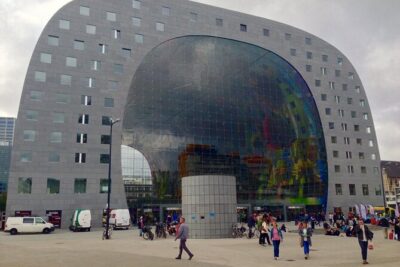
Rotterdam Must Do Tour: Highlights, History, WW2 and Architecture
Read our review →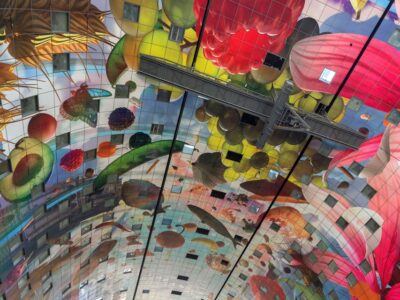
Walking Tour about Golden Age Architecture, private local guide
Read our review →
Architecture Museum Het Schip Entry Ticket & Tour
Read our review →Browse the lists this tour appears in