
Reviewed · ARCHITECTURE TOURS
The rise of Haarlem: Culture, History, Art and Architecture Walking Tour
Haarlem reveals itself best on foot, one narrow street, quiet courtyard, and ornate facade at a time. This 2.5-hour walk links the city’s medieval beginnings with its Golden Age art, Dutch architecture, and difficult wartime years, giving you far more context than a quick wander around the Grote Markt.
I like the small maximum group of six, which leaves room for questions and can turn the outing into a near-private walk. I also like the practical local advice, including tips on places to eat, drink, and continue exploring. The main catch is that you cover about 4 kilometers, and the famous hofjes are closed on Sundays and after 5pm.
Key points at a glance
- James Johnson’s history and architecture focus: Expect clear explanations of Haarlem’s buildings, artists, religious past, and wartime experience.
- A secret viewpoint: The walk includes a lesser-known spot for broad views over Haarlem.
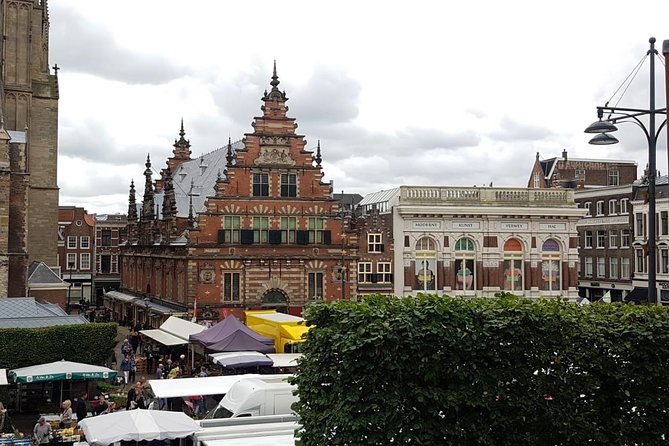
- The Grote Markt as your starting point: St. Bavo, the Town Hall, and the old market square set the scene.
- Hofjes and a walled garden: These quiet almshouse courtyards add a very different mood to the busy city center.
- A compact, question-friendly group: No more than six people means the guide can adapt the conversation.
- A useful first-day orientation: Book early in your stay so you can use the food, drink, museum, and sightseeing tips afterward.
Why Haarlem deserves more than a quick afternoon
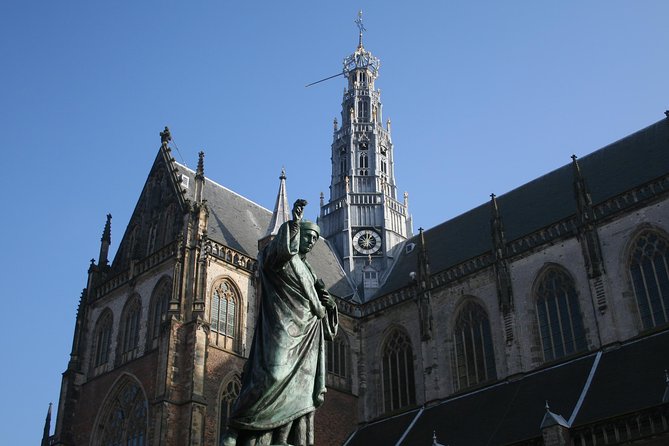
Haarlem sits close enough to Amsterdam for an easy visit, but it has a character of its own. It was an old North Sea trading port, and its center packs medieval streets, grand churches, canals, museums, almshouses, and elegant town buildings into a walkable area.
I like this tour because it does not treat Haarlem as a string of pretty facades. You get the story behind the architecture: how the medieval town developed, how wealth from the Dutch Golden Age shaped its buildings and art, and how the Second World War affected local people.
The tour also brings in famous residents and visitors, along with artists and religious figures connected to the city. That broad mix matters. If you only see Haarlem through its museums, you miss the streets. If you only photograph the streets, you miss why they look the way they do.
More Walking Tours in Haarlem
- Haarlem: City Highlights Walking Tour
★ 4.5 · 32 reviews - Haarlem Old Town Private Walking Tour
★ 5.0 · 24 reviews - 2 Hours Walking Tour Throughout History & Highlights of Haarlem
★ 4.5 · 18 reviews
Beginning at the Grote Markt and St. Bavo
You meet at Grote Markt 17, in the heart of Haarlem’s old center. This is an excellent starting place because the square brings together several major pieces of the city in one view.
The Grote Markt was the historic market square, and it remains the natural stage for understanding Haarlem’s civic life. From here, you can take in the Grote Kerk of Sint Bavo, the Town Hall and its Gravenzaal, and the surrounding historic buildings.
The church is an important visual anchor, but the walking tour does not include admission inside the cathedral. You can visit the interior separately if you want more time with the organ, architecture, and religious art. The same principle applies to the Frans Hals Museum: the tour can help you understand Haarlem’s art world, but museum entry is not part of the price.
That arrangement is sensible for a walking tour. You are not rushed through an interior while the group waits, and you can return later to spend as long as you like. Still, you should allow extra time and budget separately if the church or museum is high on your list.
Reading Haarlem through its architecture
Architecture is the backbone of this walk. James Johnson has a strong focus on the way buildings reflect changing periods and uses, and that gives the tour a clear purpose beyond sightseeing.
You might look at a facade and see only brick, windows, and decorative details. With the right explanation, those details become clues about wealth, religion, trade, civic pride, and changing taste. The tour covers medieval Haarlem, the Golden Age, and later architectural styles, helping you connect separate buildings into a larger story.
One especially useful touch is the guide’s use of a tablet to show historical pictures and artifacts. That can make a major difference when a street or building has changed over time. Instead of asking you to picture an absent feature from a verbal description, the guide can place an older image beside what you see today.
I would especially recommend this tour if you enjoy photography. You will get ideas for looking beyond the obvious church-and-canal views, noticing doorways, courtyards, rooflines, and small details that are easy to pass by alone.
The hofjes and their quiet courtyards
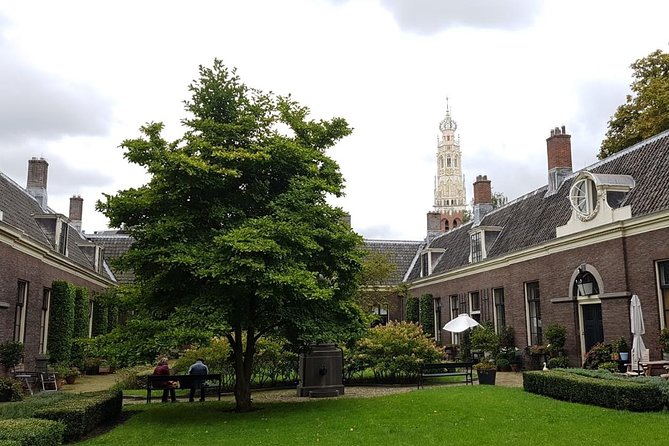
The hofjes are among the most appealing parts of Haarlem’s old center. These almshouse courtyards are usually tucked behind unassuming entrances, with homes arranged around a shared garden or enclosed space.
The contrast is striking. A few steps can take you from a public street into a calm, carefully kept courtyard. The tour includes a beautiful hofje with a secret walled garden when opening rules allow it, and this is one of the moments that gives the walk its special local feel.
You need to plan around the visiting limits. All hofjes are closed to public viewing on Sundays, and they close each day at 5pm. The summer departures that start at 5pm do not go inside them. If these courtyards are a priority, choose a weekday or Saturday time before 5pm.
That is a small but important booking detail. A late tour can still cover plenty of Haarlem, but the hofjes are not something you can simply assume will be open.
More Architecture Tours in Haarlem:
- Rotterdam: Architectural Highlights Guided Walking Tour
★ 4.8 · 215 reviews - Rotterdam Walk: Hilights, Gems, Architecture & WWII | 2 or 3hrs
★ 5.0 · 149 reviews - Rotterdam Architecture Highlights Walking Tour
★ 5.0 · 66 reviews - Rotterdam Must Do Tour: Highlights, History, WW2 and Architecture
★ 5.0 · 20 reviews
Teylers Museum, art, and Haarlem’s creative life
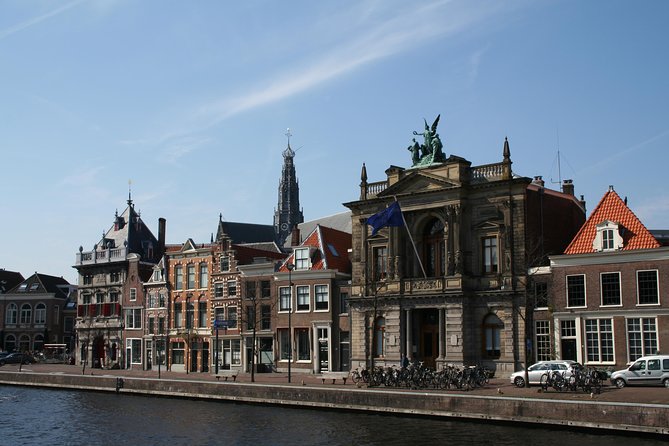
Teylers Museum is another key landmark included in the route. Even without museum admission, seeing the building in the context of Haarlem’s old center adds meaning to the stop.
The tour connects the city’s buildings with its art and intellectual life. Haarlem is closely associated with painters, collectors, religious change, and the Dutch Golden Age, so the art discussion is not an isolated museum lecture. It helps explain the city you are walking through.
The Frans Hals Museum also enters the conversation. If you want to explore Haarlem’s painting tradition in depth, you should plan a separate visit. The walking tour gives you orientation and context, while the museum gives you the chance to stand in front of the works at your own pace.
That division works well for many people. You get a lively introduction first, then you can decide which museum deserves your time. If you already know you want a long museum visit, do not expect the tour itself to replace it.
Molen Adriaan and the city’s changing edge
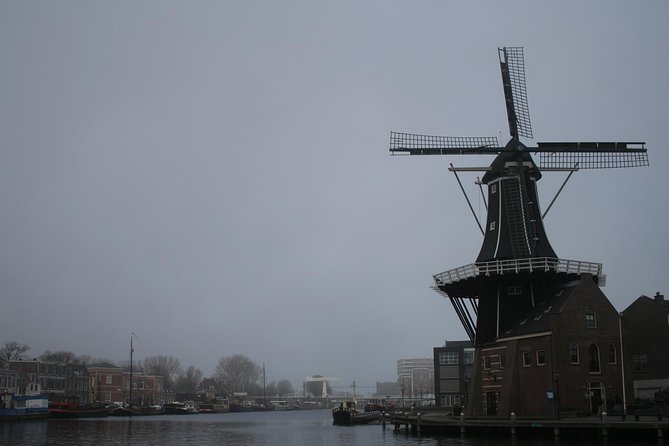
Molen Adriaan Windmill is another named point along the route. The windmill helps widen the picture beyond the central square and church.
Haarlem’s identity was shaped by trade, industry, water, and movement. A windmill is not just a postcard prop. It points to the practical systems that supported Dutch towns and links the city to the wider working world beyond its grand civic buildings.
The walk covers a broad portion of Haarlem’s center, so you should expect a steady outing rather than a series of long stops. The route is described as easy and flat, but the distance is still about 4 kilometers, or 2.5 miles. Wear comfortable shoes and keep your schedule flexible enough that you are not racing to the next appointment.
Wartime Haarlem and Corrie ten Boom
The tour gives serious attention to Haarlem during the Second World War. This adds needed weight to a walk that might otherwise focus only on churches, museums, and attractive streets.
One memorable thread is the story of Dutch resistance, including Corrie ten Boom and her home. The tour also brings in historical resistance photographs and discussion of how Nazism affected the people of Haarlem.
This part may be especially meaningful if you want to understand how ordinary residents responded during the war. It is not simply a list of dates. The wartime material places local homes and streets inside a much harder chapter of European history.
The women’s resistance museum is also highlighted as a worthwhile place connected to the city’s wartime story. You should treat it as a separate stop to explore on your own unless your booking details say otherwise. The walk provides the background, while an independent visit can give you more time with the displays.
A guide who can adjust to your questions
The strongest part of this tour is the guiding. James Johnson is repeatedly described as clear, friendly, articulate, funny, and patient with questions. Those qualities matter more than a long list of sights because history can become tiring when it is delivered as a lecture.
The small group format helps. With no more than six people, you can ask why a building looks a certain way, request more detail about wartime Haarlem, or ask for a recommendation based on your interests. In quieter periods, the group may be only two people, creating something close to a private tour.
That does not guarantee the same guide on every departure, so check your booking details if having James specifically is important to you. The information provided identifies him as the guide connected with many of the experiences described here.
The guide also offers practical advice for after the walk. One particularly useful recommendation is Huis Barnaart, a 19th-century canal house in Empire style. Reservations are needed, so this is the sort of tip worth acting on early. Huis Bartolotti in Amsterdam was also suggested as a related canal-house visit, though it is outside Haarlem and requires its own booking.
The secret viewpoint and local suggestions
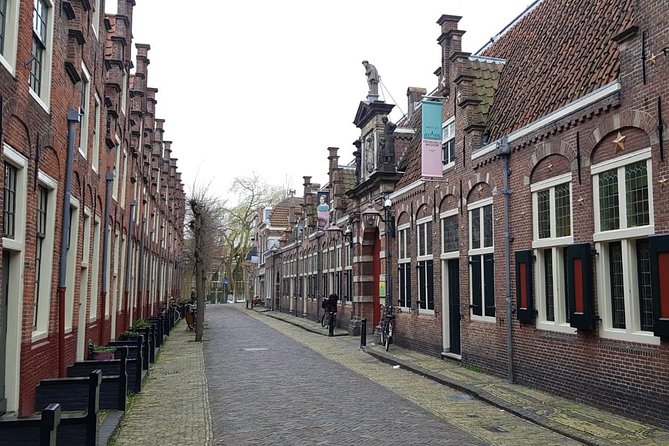
A promised secret spot provides one of the tour’s most appealing moments. The exact location is not specified in the booking details, which is probably part of the fun, but you can expect a view that gives you a better sense of Haarlem’s layout.
The viewpoint matters because a walking tour can sometimes feel like a chain of close-up details. A higher or more open view lets you connect the streets, church towers, roofs, and surrounding city.
You also receive tips on eating, drinking, and exploring after the walk. One guide even points people toward a good beer afterward. These suggestions are most useful when you take the tour early in your stay, as you can use them for the rest of your Haarlem visit instead of making every choice from a guidebook.
Is $55 a fair price?
At $55, this is not the cheapest way to see Haarlem. You are paying for roughly two and a half hours with a certified English-speaking guide, not for museum admission or transport.
For me, the price makes sense if you value interpretation. A self-guided walk can show you the same public streets, but it is unlikely to connect the medieval town, Golden Age art, Dutch architecture, resistance history, famous residents, and local courtyards in one coherent route.
The value is also stronger with a very small group. Six people is the maximum, and a smaller group can make the outing feel personal. You are not paying for a large operation with a distant guide and a crowded line of people.
The price is less attractive if you mainly want independent sightseeing or already have a firm plan for the churches and museums. In that case, you may prefer to spend the money on admission and explore at your own pace.
Timing, weather, and walking comfort
You can choose from several departure times, which makes it easier to fit the tour around a day trip or museum visit. I would choose a morning or early afternoon departure if the hofjes matter to you, especially outside Sunday.
The walk is flat, but it is not short. Four kilometers over cobbled streets can feel different from four kilometers on a smooth path, particularly in poor weather. Bring sensible shoes and a rain layer. The route has gone ahead in rain, but you should be ready to spend the full outing outdoors.
Mobile tickets make arrival simple, and the meeting point is near public transportation. The tour ends somewhere different from the starting point, though the supplied details do not specify the final address. Check the end location before booking your next activity.
Most people can take part, and service animals are allowed. The walk is not recommended if you have difficulty walking because of the distance and cobbled streets.
Who should book this Haarlem walk?
I would choose this tour if you like history, art, architecture, photography, and city stories that include both beauty and hardship. It is also a strong choice for a first visit because you leave with a map in your head and a list of places to revisit.
It suits couples, solo visitors, and small groups who enjoy asking questions. The wartime material makes it a good fit for anyone interested in Dutch resistance history, while the hofjes and architecture give plenty to enjoy if your interests are more visual.
I would be less likely to book it for young children who dislike a long walking explanation, or for anyone who wants a museum-focused outing with lots of interior time. The tour is about seeing Haarlem as a city, not checking off indoor attractions.
Should you book it?
Book this walk if you want Haarlem to make sense rather than simply look attractive. The combination of the Grote Markt, St. Bavo, Teylers Museum, Molen Adriaan, hofjes, art, architecture, and wartime stories gives you a strong first look at the city.
Choose a departure before 5pm and avoid Sunday if the hofjes are important. Book early in your stay so James’s restaurant, beer, museum, and canal-house suggestions can shape the rest of your visit. With a $55 price and a maximum of six people, it offers good value for travelers who want a thoughtful introduction instead of a quick photo walk.
FAQ
Where does the tour start?
The tour starts at Grote Markt 17, 2011 RG Haarlem, Netherlands.
How long does the tour last?
The walking tour lasts approximately 2 hours and 30 minutes.
How far do you walk?
The route covers about 4 kilometers, or 2.5 miles, through Haarlem.
What is the maximum group size?
The tour has a maximum of six participants.
Are the hofjes open on every tour?
No. The hofjes are closed to public viewing on Sundays and close daily at 5pm. Summer tours starting at 5pm do not enter the hofjes.
What is the cancellation policy?
You can cancel at least 24 hours before the start time for a full refund. Cancellations or changes made less than 24 hours before the tour are not accepted and are not refunded.
More History Tours in Haarlem
- Haarlem: Personalized Private tour Highlights & History
★ 4.9 · 13 reviews - Amsterdam Food and Cultural Tour with Tastings
★ 5.0 · 2,442 reviews - Rotterdam: Kinderdijk UNESCO World Heritage Entry Ticket
★ 4.6 · 1,477 reviews - The Hague: Hop-on Hop-off Old-Fashioned Heritage Tram Tour
★ 4.4 · 1,083 reviews
Just added around Haarlem
- Haarlem: Personalized Private tour Highlights & History★ 4.9 · 13 reviews
- Haarlem: Self-Drive Private Electric Boat Rental★ 4.7 · 59 reviews
- Haarlem: De Adriaan Windmill Tour + Open Canal Cruise★ 4.6 · 66 reviews
- Haarlem Highlights Bike Tour★ 4.1 · 26 reviews
- Local Cheese and Wine Cruise through Haarlem★ 4.1 · 10 reviews
- BBQ on Board Haarlem Cruise★ 5.0 · 4 reviews
- Haarlem Open-Boat Canal Cruise with Live Guide (Electric Boat)★ 5.0 · 233 reviews
- Private Haarlem Canal Cruise with Captain (Electric Boat)★ 5.0 · 71 reviews
Architecture Tours, compared.
Rotterdam Walk: Hilights, Gems, Architecture & WWII | 2 or 3hrs
Read our review →

Rotterdam Must Do Tour: Highlights, History, WW2 and Architecture
Read our review →
Walking Tour about Golden Age Architecture, private local guide
Read our review →

Architecture Museum Het Schip Entry Ticket & Tour
Read our review →Browse the lists this tour appears in