
Reviewed · ARCHITECTURE TOURS
Rotterdam: Architecture Highlights Tour including the Depot
Rotterdam’s architecture tour saves its best trick for the end: the Depot Boijmans van Beuningen, a giant mirrored bowl that reflects the city and sky. You’ll also enter Markthal, see Central Station, and reach a rooftop with views most city walks cannot offer. I like the private format and the way the guide explains how buildings were actually designed and built, not just how they look.
I also like the weekday and weekend rooftop choices. On weekdays, you visit a terrace at Timmerhuis. On weekends, you begin at Het Witte Huis, Europe’s oldest skyscraper, with views of Markthal, the Cube Houses, the bridges, and De Rotterdam. The main drawback is pace: 2.5 hours on foot covers a lot, so this suits you best if you can walk steadily and want architecture more than museum time.
Key points at a glance
- Depot’s curved mirror facade: Learn how its double-curved panels and huge entrance doors were engineered.
- Two different rooftop options: Weekday tours use the Timmerhuis terrace, while weekend tours visit Het Witte Huis.
- A strong private-group format: The $494 price covers up to six people, making the cost more reasonable for a full group.
- Rotterdam’s architectural timeline: See prewar landmarks, postwar rebuilding, and daring new projects in one walk.
- A guide-led city lesson: Guides speak Dutch, English, or German, and Frank Schipper has led especially well-received tours.
- Useful extras: You receive three postcards by photographer Ossip van Duivenbode and a 50 percent discount on Cube Houses admission.
Why Rotterdam works so well for an architecture walk
Rotterdam is a city where the buildings tell a clear story. War damage, reconstruction, modern planning, and a taste for unusual forms all sit close together. On this walk, you are not simply ticking off famous facades. You are watching the city change block by block.
That makes the route useful even if you are not an architecture specialist. Your guide explains the ideas behind the buildings, along with practical matters such as structure, materials, and the problems architects had to solve. A German participant on a recent tour with architectural colleagues found the walk inspiring, while another guest praised the guide’s answers about building methods and high-rise construction.
The experience is private, with a maximum of six people in the price. That matters here. Rotterdam’s buildings are easier to understand when you can stop and ask why a facade curves, how a rooftop works, or why a postwar structure looks so different from a new one. A large group would make that exchange less useful.
The tour lasts 2.5 hours. You should expect a steady city walk rather than a series of long indoor visits. The route includes several buildings from the outside, with selected entries and rooftop access. Wear comfortable shoes and keep your attention on the guide, since the value lies in the explanations between the major stops as much as in the photo opportunities.
More Architecture Tours in Rotterdam
- Rotterdam: Architectural Highlights Guided Walking Tour
★ 4.8 · 215 reviews - Rotterdam Walk: Hilights, Gems, Architecture & WWII | 2 or 3hrs
★ 5.0 · 149 reviews - Rotterdam Architecture Highlights Walking Tour
★ 5.0 · 66 reviews
Starting at Witte Huis and reaching the rooftops
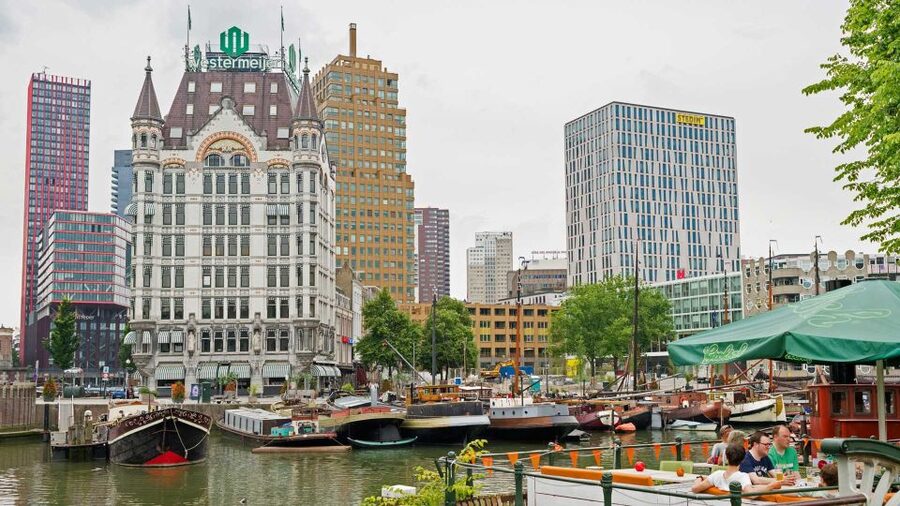
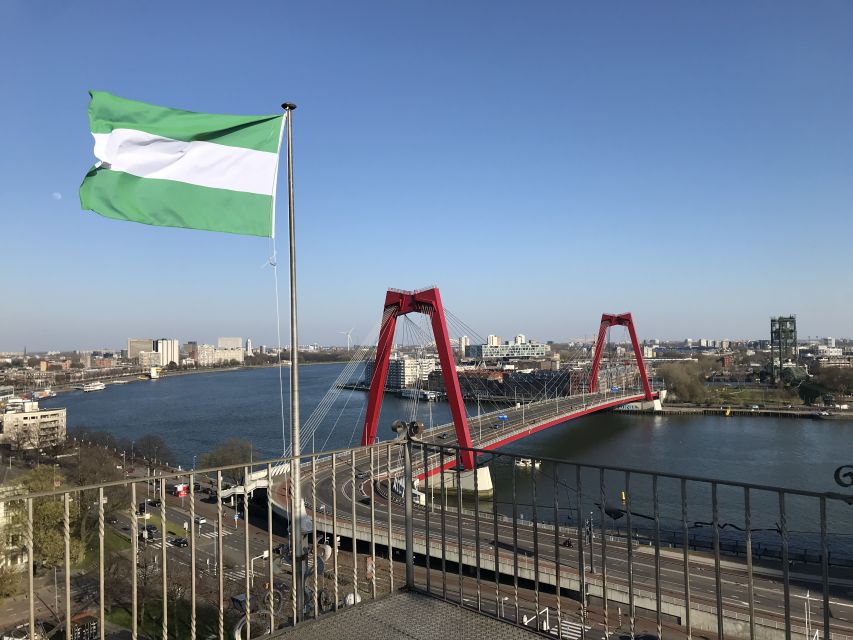
The meeting point is outside the entrance of Witte Huis. On weekend tours, the building is also your opening viewpoint. Het Witte Huis is described as Europe’s oldest skyscraper, and its roof gives you a strong first look at Rotterdam’s central district.
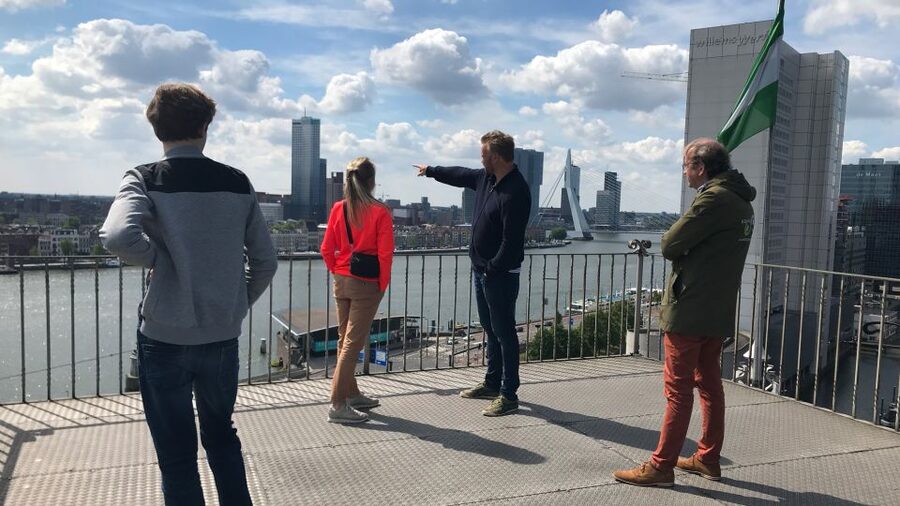
From above, you can see Markthal, the Cube Houses, the Erasmus Bridge, the Willems Bridge, and De Rotterdam. This is a useful way to get your bearings before walking among the buildings. You see how the old port city, modern high-rises, bridges, and experimental housing fit together.
The weekend rooftop has one clear advantage: it begins the tour with a wide city view. You can connect the landmarks before seeing them at street level. The limitation is that rooftop access varies by day. If a roof is central to your decision, check the date carefully. Weekend tours use Het Witte Huis, while weekday tours include a rooftop terrace at Timmerhuis.
The weekday terrace offers a different experience. It comes later in the route and looks over the city center and Markthal. That timing lets you recognize places you have just passed. Neither option is simply better. Choose the day that fits your schedule, then confirm which rooftop comes with it.
Markthal and the design of daily life
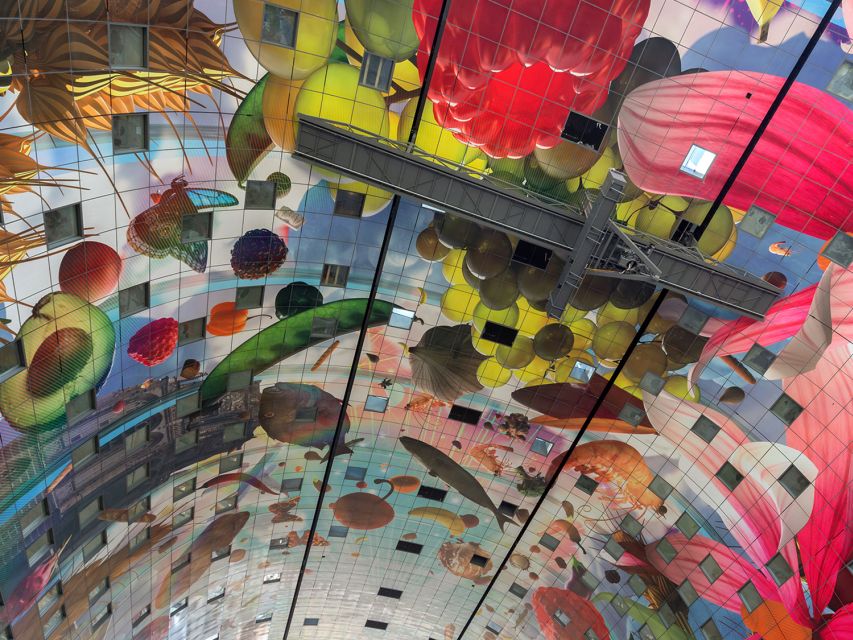
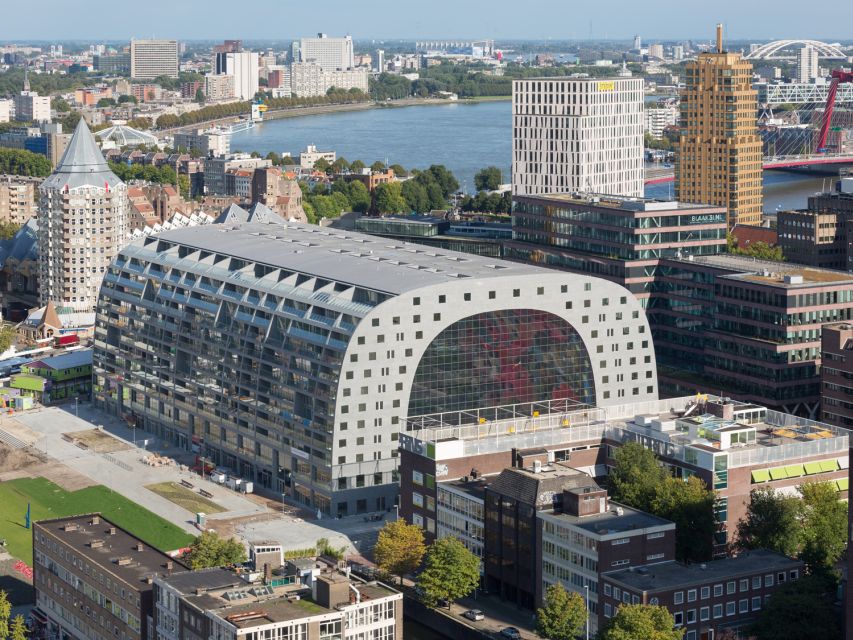
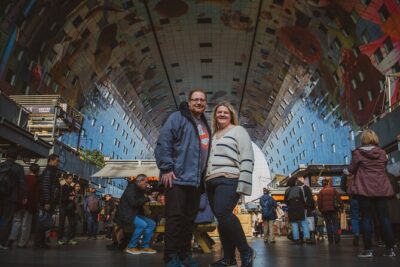
Markthal is one of the tour’s most approachable stops. You walk through a building that combines housing with a large food market, so the design is tied to ordinary city life rather than isolated from it.
The concept is easy to grasp on site. Homes form the outer structure, while the market occupies the interior. The result makes food, housing, and public activity part of one building. Your guide can help you notice how that arrangement affects the space and why Markthal became such an important example of Rotterdam’s new architecture.
I like this stop because it gives the tour a human scale. Depot and the high-rises may grab the camera, but Markthal shows how bold design can serve a practical purpose. You are not looking at a sculpture that people merely walk past. You are seeing a place designed for eating, shopping, living, and meeting.
The nearby Cube Houses add another layer. Their tilted forms are one of Rotterdam’s most recognizable sights, and the tour includes a 50 percent discount on admission. The walking route does not promise a full Cube House visit, so use the discount if you want to explore the interior separately.
Grotekerkplein, Timmerhuis, and the city center
The route continues to Grotekerkplein, where Rotterdam has created a new city park with a public stage for music and dance. This part of the walk helps show how urban design is not only about landmark buildings. Public space can be reshaped to give people somewhere to gather.
On weekday tours, you also reach a rooftop terrace in this central area. You get a different view of Markthal and the surrounding city than you did from street level. The terrace is normally closed to the public, which makes it one of the more distinctive parts of the experience.
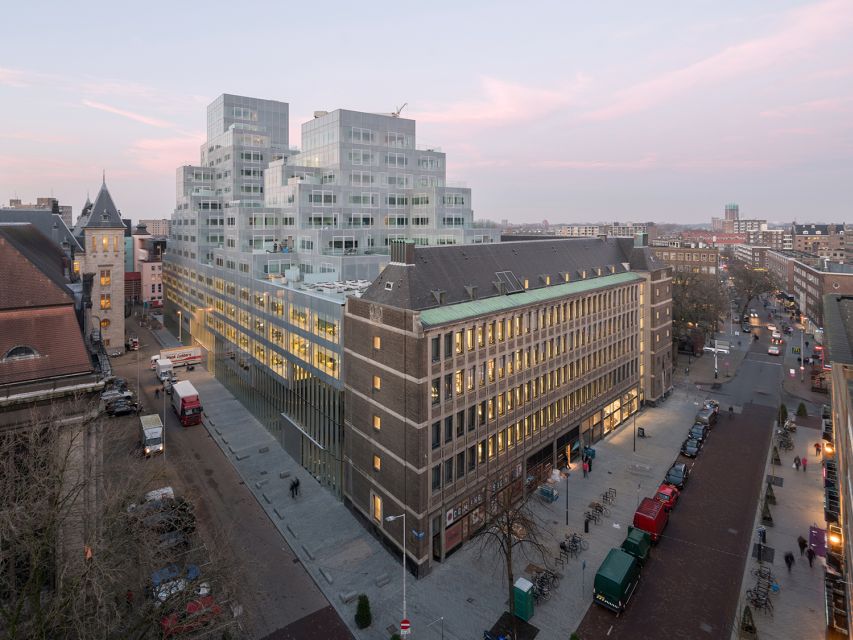
From there, you pass Dudok’s Dudok and continue to Timmerhuis. This redevelopment project is one of the route’s best examples of old and new working together. Rotterdam firm OMA joined a municipal office block from the 1950s to a pixel-like steel and glass structure.
The building is worth hearing about rather than merely photographing. Its design shows how an existing city block can be adapted instead of erased. You can look for the contrast between the older office section and the newer structure, then consider how the two parts share one urban site.
On weekdays, Timmerhuis also provides the rooftop access included with the tour. That makes the building important both as architecture and as a viewpoint.
Same base, a completely different sort of day:
- Rotterdam: Harbor Sightseeing Cruise
★ 4.3 · 7,599 reviews - Rotterdam: 1-Hour Sightseeing Splash Tour
★ 4.5 · 3,299 reviews - Rotterdam: Rotterdam Zoo Blijdorp Entry Ticket
★ 4.6 · 2,754 reviews - Rotterdam: Euromast Lookout Tower Ticket
★ 4.4 · 2,549 reviews
Prewar and postwar Rotterdam along the route
Rotterdam’s architectural story becomes clearer as the walk moves through older and rebuilt parts of the center. You pass the post office and the de Bijenkorf warehouse, then continue by Forum toward Schouwburgplein.
These stops give the guide room to explain different periods of the city’s development. You see historical buildings beside postwar monuments, followed by newer projects that push the city in another direction. The route does not treat Rotterdam as a single style. Its interest comes from the contrast.
At Kruiskadeplein, you see Groothandelsgebouw, Central Station, and de Delftse Poort. Central Station is especially useful as a public building because it combines transport with a strong architectural identity. Its striking form gives the tour a major street-level landmark, while the surrounding buildings help place it in the wider redevelopment of Rotterdam.
The route then takes in Calypso, Pauluskerk, and de Unie. These buildings add more variety before the final stretch toward Museumpark. You may find this sequence more rewarding if you pay attention to the guide’s comparisons. The tour is designed to show how Rotterdam keeps adding new ideas rather than settling into one visual language.
There is a tradeoff. You will see many buildings in a short time, and some will be exterior viewing points rather than interior visits. If you want to study one building in great detail, a dedicated museum or architecture visit may suit you better. If you want a broad understanding of the city’s building culture, this route gives you much more ground.
Sonneveld House, Museumpark, and the approach to Depot
The Museumpark section brings a change of mood. You pass Sonneveld House and Het Nieuwe Instituut before reaching Depot Boijmans van Beuningen. These stops place architecture within Rotterdam’s cultural district and provide a bridge between earlier modern design and the city’s newest showpiece.
Sonneveld House is part of the route’s modern architectural story. Het Nieuwe Instituut adds a design-focused setting before the walk arrives at Depot. You should not expect a full museum program inside each location. The emphasis is on the buildings, their setting, and the way your guide connects them to Rotterdam’s wider plans.
This part of the tour rewards you for saving energy. The walk has already covered Central Station, Markthal, Timmerhuis, and several city-center landmarks. Museumpark comes near the end, so comfortable shoes are not a minor detail.
Depot Boijmans van Beuningen, the memorable final stop
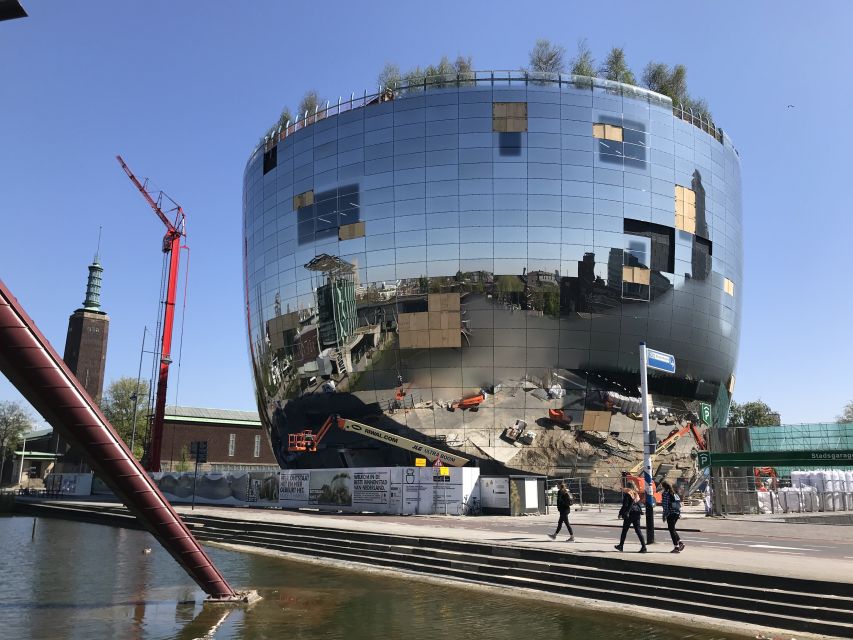
Depot is the tour’s visual high point. Its curved mirror facade reflects nearby buildings, people, and changing light. The shape is not just decorative. The design creates a distinctive home for the world’s first public art depot.
Your guide explains the thinking behind the double-curved facade and the reflective panels. You also hear about the engineering challenge of the huge entrance doors. Aviation engineering techniques were needed to make those doors operate, an unusual detail that gives you a better sense of the project’s technical demands.
I appreciate this kind of explanation because it changes the way you look at the building. Without context, Depot is an eye-catching silver bowl. With context, you start to notice the complex geometry, the panels, the entrance, and the relationship between the reflective exterior and the public purpose inside.
The tour is not presented as a full art collection visit, so plan another visit if you want to spend substantial time with the works inside. Here, Depot is the architectural conclusion to the walk. It gathers many of the tour’s main themes: unusual form, complex construction, public access, and Rotterdam’s continuing urge to try something new.
Price, group size, and overall value
The price is $494 for a private group of up to six people. For one or two people, that is a substantial cost. For six, it works out to about $82 per person, before any separate spending during the day.
The value comes from the private format, the rooftop access, the 2.5-hour route, and the specialist focus. You are paying for a guide who can adjust explanations to your interests rather than for a general city stroll. The three Rotterdam architecture postcards and the 50 percent Cube Houses discount are useful extras, though they are not the main reason to book.
This tour makes the most sense for a family group, a group of friends, or colleagues who want one shared activity. It also suits architecture students and design professionals. A recent tour led by Frank Schipper was particularly well suited to an architecture-focused group, with clear explanations and detailed answers about construction and structural systems.
Guide availability may vary, but Frank Schipper is a name connected with especially strong recent feedback. The praise centers on his good humor, warmth, clear information, and ability to make Rotterdam’s building history accessible. If a specific guide matters to you, ask when booking rather than assuming he will lead every departure.
Practical details before you reserve
The tour is offered in Dutch, English, and German. Choose your language when booking and check the starting time, since departure times vary by date.
Cancellation is free up to 24 hours before the tour for a full refund. You can also reserve and pay later, which helps if your Rotterdam schedule is still shifting.
The tour is listed as wheelchair accessible, but the same information says it is not suitable for people with mobility impairments. That is an important contradiction. Contact the provider before booking if you need step-free access or have difficulty walking, and ask specifically about the route, rooftops, and building entrances.
Pets are not allowed, although assistance dogs are permitted. Since this is a walking tour with several viewpoints and city-center crossings, plan for regular movement rather than long seated periods.
Who should book this Rotterdam tour?
I would choose this tour if you want to understand why Rotterdam looks the way it does. It is especially good for you if Markthal, Central Station, Cube Houses, postwar rebuilding, high-rise design, and Depot all sound more interesting than a standard list of sights.
It also works well as a first introduction to the city. The rooftop views help you see the layout, and the route connects major districts without requiring you to plan the sequence yourself.
I would hesitate if you want a slow museum visit, a food-focused outing, or a short route with lots of sitting. The 2.5 hours are packed with buildings and explanations. You will get more from it if you enjoy looking up, comparing facades, and asking questions.
Should you book it?
Book this tour if you want a private, architecture-led look at Rotterdam with access to a rooftop and a strong finish at Depot. The best value comes when six people share the cost, and the experience is particularly well suited to design-minded groups.
Before reserving, choose between the weekday Timmerhuis terrace and the weekend Het Witte Huis rooftop. If you are comfortable walking and want the city’s bold architecture explained in plain terms, this is a useful and well-focused introduction.
FAQ
How long does the Rotterdam architecture tour last?
The tour lasts 2.5 hours.
How much does the private tour cost?
The price is $494 for a private group of up to six people.
Where does the tour meet?
Meet your guide outside the entrance of Witte Huis.
Which rooftop do weekday tours visit?
Weekday tours include rooftop entrance at Timmerhuis, with views over the city center and Markthal.
Which rooftop do weekend tours visit?
Weekend tours begin on the roof of Het Witte Huis, with views of Markthal, the Cube Houses, the Erasmus Bridge, the Willems Bridge, and De Rotterdam.
What languages are available?
The live tour guide may lead the experience in Dutch, English, or German.
Is the tour wheelchair accessible?
The activity information lists it as wheelchair accessible but also says it is not suitable for people with mobility impairments. If you need accessible arrangements, contact the provider before booking to confirm the route and rooftop access.
Just added around Rotterdam
- The Netherlands: WW2 Private Day Trip★ 5.0 · 4 reviews
- Rotterdam: Guided Food Tour★ 4.4 · 16 reviews
- Rotterdam: UNESCO Van Nelle Factory Guided Tour★ 4.5 · 94 reviews
- Rotterdam: Summer Cocktail Cruise★ 4.7 · 18 reviews
- Rotterdam: Summer Evening Cruise with Live Entertainment★ 4.8 · 5 reviews
- Rotterdam: Trompenburg Botanical Gardens Entry Ticket★ 4.1 · 77 reviews
- Rotterdam: Private Tour with a Local★ 4.7 · 47 reviews
- Rotterdam: RIB Speedboat Sightseeing Cruise★ 4.8 · 192 reviews
Architecture Tours, compared.
Rotterdam Walk: Hilights, Gems, Architecture & WWII | 2 or 3hrs
Read our review →
The rise of Haarlem: Culture, History, Art and Architecture Walking Tour
Read our review →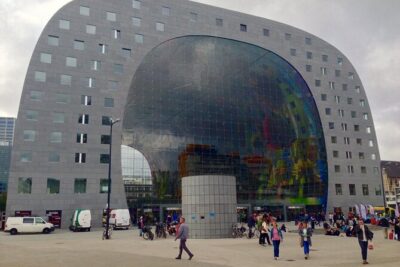
Rotterdam Must Do Tour: Highlights, History, WW2 and Architecture
Read our review →
Walking Tour about Golden Age Architecture, private local guide
Read our review →
Architecture Museum Het Schip Entry Ticket & Tour
Read our review →Browse the lists this tour appears in