
Reviewed · WALKING TOURS
Amsterdam: Queer City Walking Tour With Local Guide
Amsterdam’s queer story is written into the stones, bars, canals, and protest sites of the old city. This two-hour walking tour with Sanne connects those places with personal stories about falling in love, being gay and single in Amsterdam, Pride, and the struggles that shaped the city’s LGBTQI+ community.
I like the route’s focus on the Homomonument and queer activism, and I like that it ends at Café ‘t Mandje, Amsterdam’s oldest queer bar. The main consideration is that the tour is mostly a street-level history walk, so you should book it for stories, context, and conversation rather than long indoor visits or nightlife.
Key points
- A personal guide: Sanne mixes Amsterdam history with her own experiences of love, identity, and queer life.
- A meaningful starting point: The walk begins at the National Monument on Dam Square and soon reaches the Homomonument.
- Old gay town: The route passes through the Red Light District, Zeedijk, and other long-standing queer meeting places.
- Big social themes: Expect stories about Pride, protest, AIDS, gender identity, and the people who changed Amsterdam.
- A memorable finish: The walk ends outside Café ‘t Mandje, the city’s oldest queer bar.
- Practical format: The tour lasts two hours, runs in English or Dutch, is wheelchair accessible, and goes ahead in all weather.
Amsterdam’s queer past begins at Dam Square
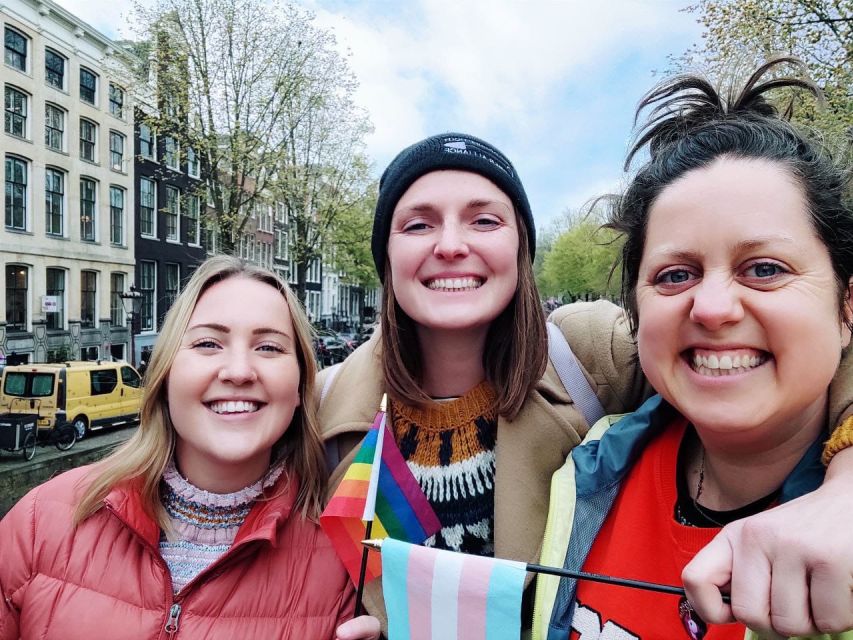
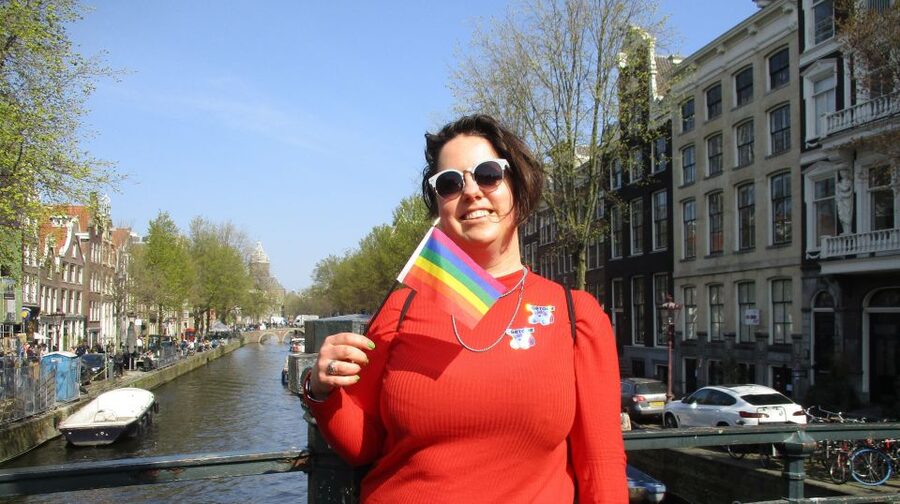
Meet Sanne at the National Monument on Dam Square. She carries a small rainbow flag, making the meeting point easy to spot in one of central Amsterdam’s busiest public spaces.
Starting here gives the walk a useful civic frame. Dam Square is not just a place for palace photos and passing trams. It is also a place tied to public memory, national identity, celebration, and protest. Sanne’s approach adds a queer question to that familiar setting: whose stories get remembered in the center of the city?
You will soon move toward the Homomonument, where the tour becomes more focused. This is one of the most important stops because Sanne discusses both what the monument represents and the controversial stories behind its creation. That second part matters. Public memorials are rarely as simple as their polished appearance suggests, and hearing about disagreement around the monument gives you a better sense of how queer history is recorded.
The visit here lasts about 20 minutes, one of the longer stops on the route. Expect explanation and conversation rather than a quick photograph. If you want to understand Amsterdam’s queer identity beyond its party reputation, this is the point where the tour earns its place.
More City Tours in Amsterdam
- Amsterdam: Relaxed City Highlights Guided Bike Tour
★ 4.7 · 1,069 reviews - Amsterdam: Historic City Sightseeing Canal Cruise
★ 4.5 · 444 reviews - Segway City Tours Amsterdam
★ 5.0 · 280 reviews
Reading Amsterdam through queer symbols
The route then moves through a series of shorter stops. At Belle, Sanne spends about 10 minutes sharing another part of the city’s queer story. The precise focus is not set out in detail, but the stop belongs to a larger theme running through the walk: ordinary Amsterdam places can carry meanings that are easy to miss if you only follow the standard sightseeing route.
One included theme involves the Royal Palace and the unicorns connected with its decoration. It is a small detail, but that is part of the pleasure here. Sanne encourages you to look again at buildings you might otherwise treat as background scenery. The tour is not only about famous names and major dates. It also asks you to notice symbols, clues, and connections.
The stop at the Condomerie brings the discussion into public health and social change. You will hear about the first condom shop in the world and why it was born from necessity during the AIDS crisis. This is one of the route’s more practical historical moments. It links queer life to health, fear, prevention, and the need for safe spaces and useful information.
Do not expect a long shop visit or a retail session. The value is in the explanation. A short stop here can help you see how Amsterdam’s queer story includes community care as well as nightlife and celebration.
The Red Light District from another angle
The walk continues into the Amsterdam Red Light District, the oldest part of the city. Many sightseeing routes treat this area as a place of spectacle. Sanne offers another lens, looking at how queer people lived, met, worked, protested, and found one another in the old center.
The visit lasts about 15 minutes. That is enough time to place the area within the wider route, but not enough for a full social history of the district. I would think of this as a carefully chosen chapter, not a complete tour of the neighborhood.
The route also passes the Eagle Amsterdam for about five minutes. Since this is a pass-by rather than a full visit, you should not expect entry or time inside. Still, the stop helps show the range of queer spaces in the area and how different venues have served different parts of the community.
This part of the walk may be the most useful for people who know Amsterdam mainly through its famous canals and nightlife image. Sanne’s perspective turns familiar streets into places connected to identity, belonging, and community memory.
Zeedijk, gender history, and the city’s social life
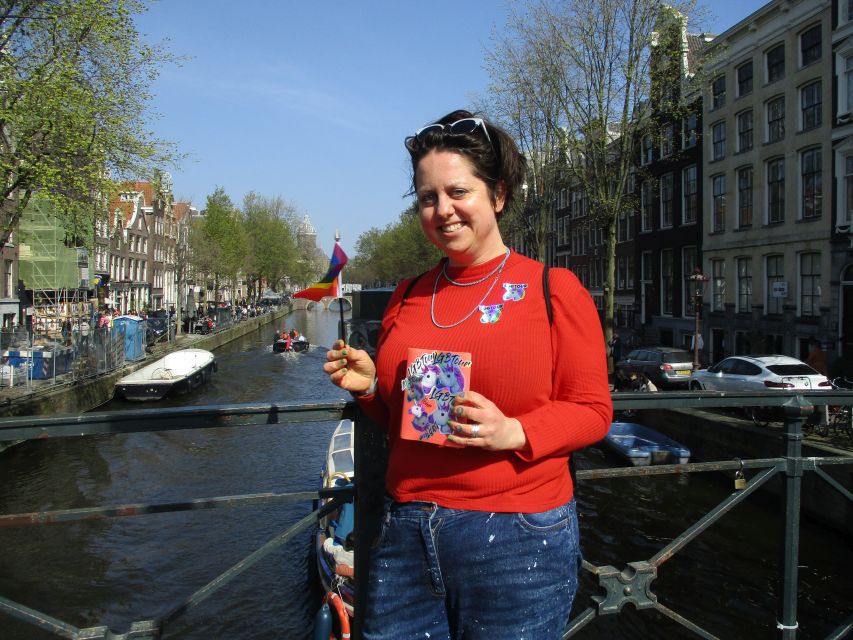
The walk along Zeedijk takes about 15 minutes. This gives you a little more time to move through the street and hear how the surrounding old town fits into queer Amsterdam.
One of the tour’s central stories concerns a woman who was the first to change her gender on her passport. The supplied information does not name her, so you should ask Sanne for the full details during the walk. The subject is important because it places gender identity within the practical world of official documents, public recognition, and personal rights.
This is also where the tour’s focus on the full LGBTQI+ spectrum becomes clearer. It is not limited to gay male nightlife, even though several locations relate to that history. The route includes stories about gender, women, trans identity, AIDS, protest, and the wider work of building a community.
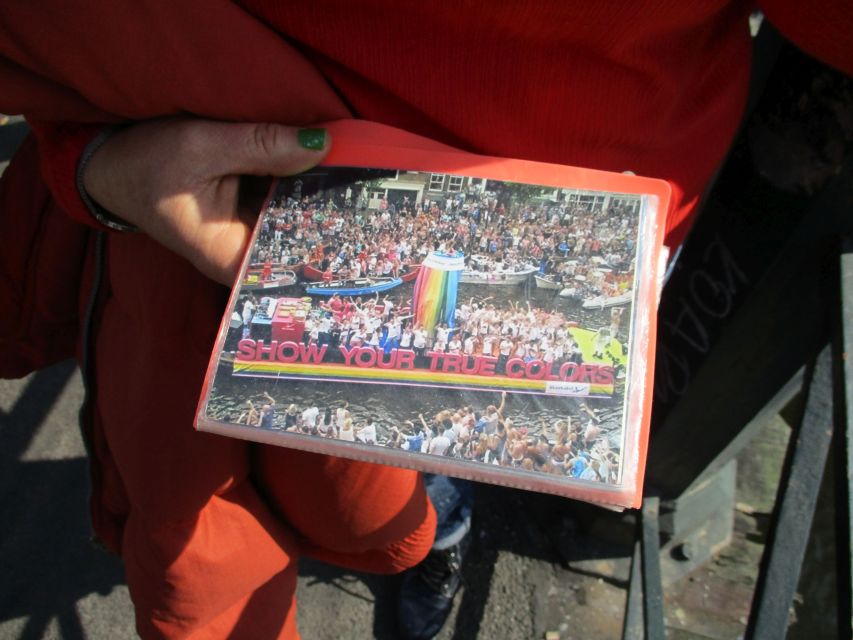
You will also pass Pride Clothing for about five minutes. This is another brief stop rather than a shopping visit. Sanne uses the route to explain how Pride became Amsterdam’s largest and most colorful public event, celebrated on the city’s canals. The tour connects that celebration with protest, which is a useful balance. Pride is both a party and a reminder of the rights and freedoms that had to be demanded.
More Walking Tours in Amsterdam
- Anne Frank’s Story – Guided Walking Tour through Amsterdam
★ 5.0 · 11,619 reviews - Amsterdam: Life of Anne Frank and World War II Walking Tour
★ 4.8 · 10,467 reviews - Absolutely Amsterdam – the Essential Introductory Walking Tour
★ 5.0 · 3,629 reviews - Amsterdam: Anne Frank Guided Small Group Walking Tour
★ 4.8 · 2,722 reviews
Kokopelli and the pleasure of queer spaces
Kokopelli receives about 10 minutes of guided attention. As with Belle and the Condomerie, the point is not simply to collect venue names. Sanne places each stop within a wider story about where queer people could meet, express themselves, and build relationships.
That approach gives the walk a human scale. You are not only learning what a place is called. You are considering what it meant to have somewhere to go, especially at times when being open about your identity could carry real personal or social costs.
Sanne’s personal stories add another layer. She talks about falling in love and about being gay and single in Amsterdam. Those details keep the tour from becoming a parade of dates and institutions. They show that queer history is also made from everyday experiences: meeting people, looking for connection, feeling welcome, and figuring out where you belong.
This personal element is the feature most likely to shape your experience. If you like a guide who shares openly and invites connection, it should make the walk feel warm and direct. If you prefer a strictly academic tour with little personal material, you may find the approach more intimate than expected.
The Dancing Houses and a thoughtful finish
The Dancing Houses provide a 10-minute photo stop. These narrow, tilting canal houses are a familiar Amsterdam sight, but here they serve as a visual pause near the end of the walk.
A photo stop can sound like a small addition, yet it helps the two-hour route breathe. You have spent much of the tour listening and moving through dense old streets. This is a chance to look up, take pictures, and let the city itself take over for a moment.
The tour finishes at Café ‘t Mandje. The café is presented as the oldest queer bar in Amsterdam, making it a fitting final location. The walk does not promise a full evening inside, a reserved table, or a nightlife program, so treat the café as the closing point rather than an included bar experience.
Still, the ending has meaning. After stories about memorials, protest, public health, gender, and Pride, you finish at a place associated with everyday social life. That is a good final note. Queer history is not only about hardship or public demonstrations. It is also about having a place to meet, talk, flirt, laugh, and feel at home.
What the two-hour format gives you
Two hours is a sensible length for this route. Amsterdam’s old center is compact, and the walk includes many stops without asking you to spend an entire day on one subject. The short visits keep the pace moving, while the Homomonument and several 10 to 15 minute stops allow space for explanation.
The tradeoff is depth. You will receive a concentrated selection of stories, not a complete account of Amsterdam’s LGBTQI+ past. Some stops last only five minutes, and several are viewed from the street. If one subject catches your interest, you may want to ask Sanne for more suggestions after the walk.
The small-group format should help with conversation. The tour specifically encourages queers and allies from around the world to share their own stories. That makes this more than a one-way lecture, although the amount of discussion will depend on the group and the guide.
The tour has a five-out-of-five rating from 24 bookings, with particular praise for Sanne’s personal connection, care, and ability to make the subject feel both educational and human. I would give that feedback practical weight: the guide is central to this experience, and Sanne is not simply pointing out buildings. She is telling the story from inside the queer community.
Is $59 a fair price?
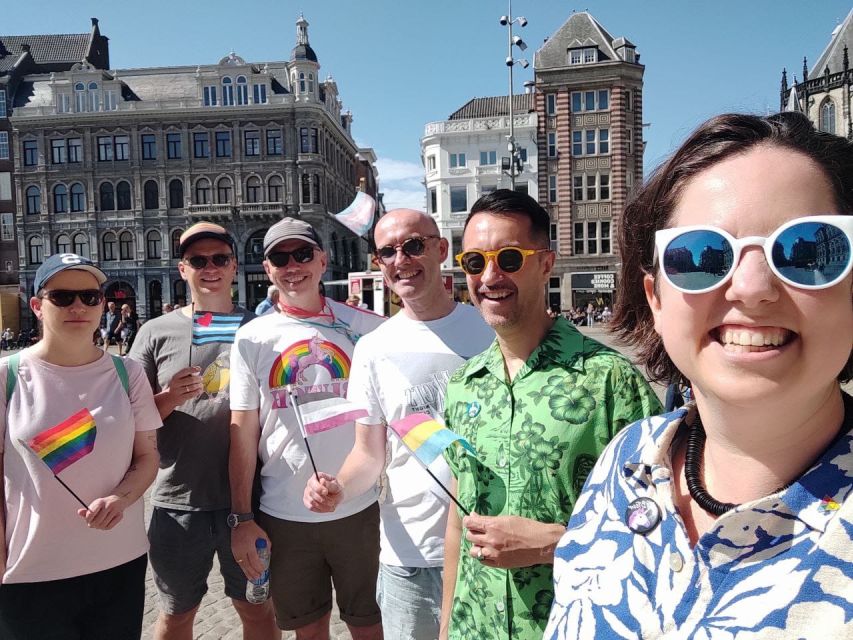
At $59 per person, this is not the cheapest way to spend two hours in Amsterdam. The price makes the most sense if you value a specialist guide, a small group, a clear theme, and personal storytelling.
You are paying for a focused experience rather than admission to a major attraction. No museum entry, meal, drink, or bar program is listed as part of the tour. The stops are mainly monuments, streets, shops, venues, and exterior locations.
That makes the tour good value for a first-time visitor who wants context that a standard city walk is unlikely to provide. It is also useful if you are visiting Amsterdam for Pride, researching queer history, or looking for places and events to explore later. Sanne provides a personal favorites list with LGBTQI+ events, venues, and other Amsterdam spots, which can add value if you want to continue beyond the two-hour route.
The price is harder to justify if you already know Amsterdam’s queer history well or want a long indoor museum visit. In that case, a general city walk or a self-guided route may offer enough.
Weather, access, and what to bring
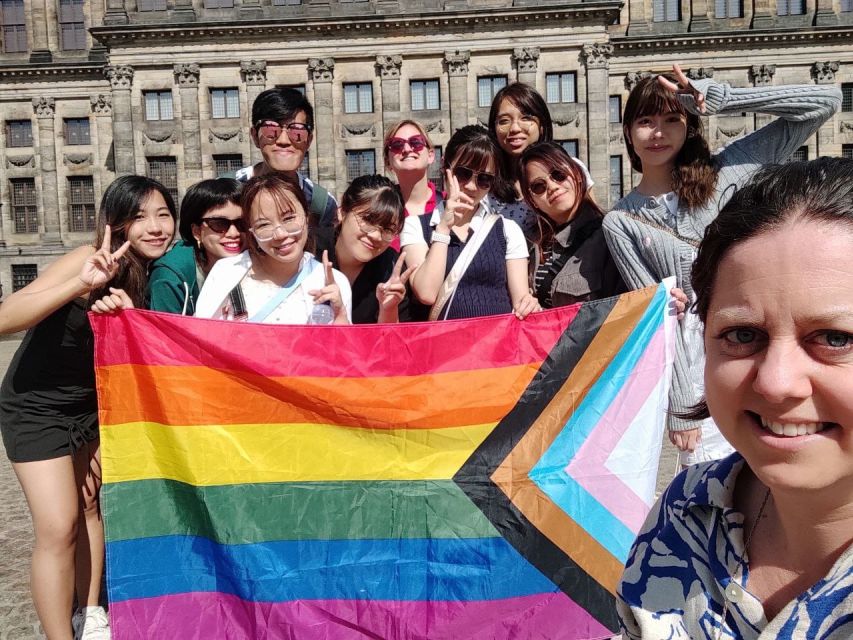
The tour is wheelchair accessible, and it runs in English or Dutch. Since it takes place outdoors and continues in rain or shine, wear comfortable shoes and practical clothing.
Bring a sun hat and sunscreen in bright weather, plus rain gear when the forecast looks uncertain. Amsterdam weather can change quickly, and the tour does not move indoors simply because conditions are unpleasant.
The meeting point is the National Monument at Dam Square. Look for Sanne’s small rainbow flag. The route finishes at Café ‘t Mandje, so you will not return to the starting point. That is worth remembering when planning the rest of your day.
Free cancellation is available up to 24 hours before the start, and you can reserve now and pay later. Starting times vary, so check availability when choosing your date.
Who will get the most from this walk?
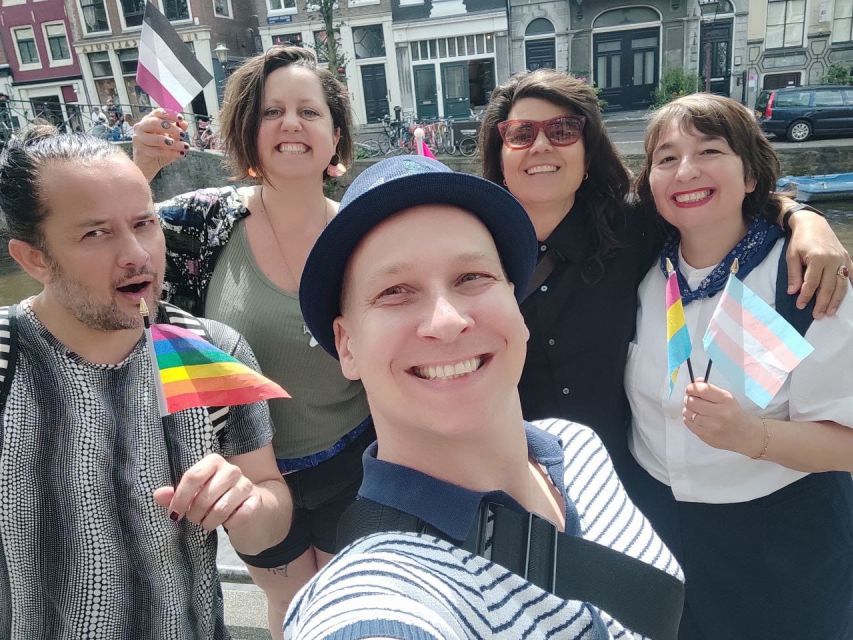
I would recommend this tour to LGBTQI+ visitors who want more than Amsterdam’s nightlife image. It suits anyone interested in civil rights, social history, memorials, gender identity, public health, or the way cities make room for different communities.
It should also work well for allies who want a thoughtful introduction without treating queer life as a side topic. The route includes major themes but keeps them tied to real streets and personal experiences.
Couples, solo visitors, and friends can all fit the format. Solo participants may especially appreciate the invitation to connect with queers and allies from other places, though the level of group conversation will vary.
I would be more cautious about booking it for young children, since the route passes through the Red Light District and includes adult queer venues. The supplied information does not give a minimum age, so check before booking if that matters for your group.
Should you book Sanne’s Queer City Tour?
Book it if you want a personal, place-based introduction to Amsterdam’s queer life. The Homomonument, Condomerie, Red Light District, Zeedijk, Pride themes, and Café ‘t Mandje create a strong route, while Sanne’s own stories give the history a human voice.
Skip it if you want museum interiors, a nightlife crawl, or a broad survey of all Amsterdam history. At $59, the tour asks you to value the guide and the subject more than the number of attractions visited.
For many visitors, that is the point. In two hours, you will see familiar Amsterdam streets from a different angle and leave with a better sense of how queer people helped shape the city.
FAQ
Where does the Queer City Walking Tour begin?
The tour begins at the National Monument on Dam Square in Amsterdam.
Where does the tour finish?
The walk finishes at Café ‘t Mandje, described as Amsterdam’s oldest queer bar.
How long does the tour last?
The tour lasts two hours.
Which languages are available?
The live guide leads the tour in English or Dutch.
Who is the guide?
The guide is Sanne from LGBTOUR_Amsterdam.
Is the tour wheelchair accessible?
Yes, the activity is listed as wheelchair accessible.
Does the tour operate in bad weather?
Yes. The tour takes place rain or shine, so bring suitable clothing and rain gear.
What should I bring?
Wear comfortable shoes and comfortable clothes. A sun hat, sunscreen, and rain gear are also recommended.
Can I cancel my booking?
Yes. You can cancel up to 24 hours in advance for a full refund. You can also reserve now and pay later.
More LGBTQ-Friendly in Amsterdam
- Amsterdam: Ludwig’s Queer Pub Crawl with Club Entry
★ 4.1 · 44 reviews - Rainbow Bar Stroll: Sashay through Amsterdam
★ 4.2 · 29 reviews - Rainbow Bar Stroll: Sashay through Amsterdam
★ 3.5 · 7 reviews - Amsterdam: Queer Nightlife Tour
★ 4.8 · 7 reviews
Just added around Amsterdam
- Private sightseeing tour to Bruges and chocolate from Amsterdam★ 5.0 · 11 reviews
- Amsterdam: Private Romantic Evening Canal Cruise + Bubbles/Snacks★ 5.0 · 46 reviews
- Amsterdam Private Shopping Experience★ 5.0 · 7 reviews
- Amsterdam: Rijksmuseum (Private Tour & Priority Access)★ 5.0 · 27 reviews
- Rijksmuseum Amsterdam Private Guided Tour★ 5.0 · 57 reviews
- Amsterdam Rijksmuseum PRIVATE TOUR with a Local Private Guide★ 5.0 · 159 reviews
- Private Photo Session in Amsterdam★ 5.0 · 15 reviews
- Private One way Transfer Amsterdam Airport to Amsterdam★ 3.5 · 42 reviews
Walking Tours, compared.
Anne Frank’s Story – Guided Walking Tour through Amsterdam
Read our review →
Life of Anne Frank and World War II Walking Tour
Read our review →
Absolutely Amsterdam – the Essential Introductory Walking Tour
Read our review →

Anne Frank Walking Tour – Guided in EN/DE/IT/ES
Read our review →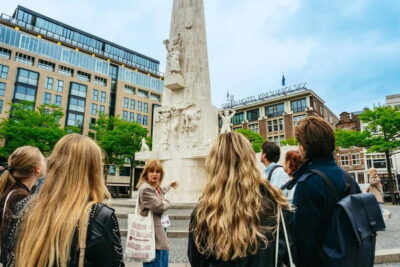

Anne Frank Walking Tour Amsterdam Including Jewish Cultural Quarter
Read our review →Browse the lists this tour appears in