
Reviewed · WALKING TOURS
Amsterdam: Guided Cultural Walking Tour
Amsterdam’s story comes together on foot, one square, canal, and crooked house at a time. This two-hour cultural walk moves from Dam Square through the old center to Begijnhof, the Amstel, and several important memorials, giving you a useful first look before you choose which museums and neighborhoods deserve more of your time.
I like the wide mix of subjects, from medieval merchants and Golden Age art to colonial history, WWII, and modern Amsterdam life. I also like the practical finish, when your guide can point you toward foods such as bitterballen and stroopwafels and suggest districts worth exploring by bike. The main drawback is that two hours is tight for so many stops, so you should expect outdoor explanations and photo pauses rather than interior visits.
Key points before you book
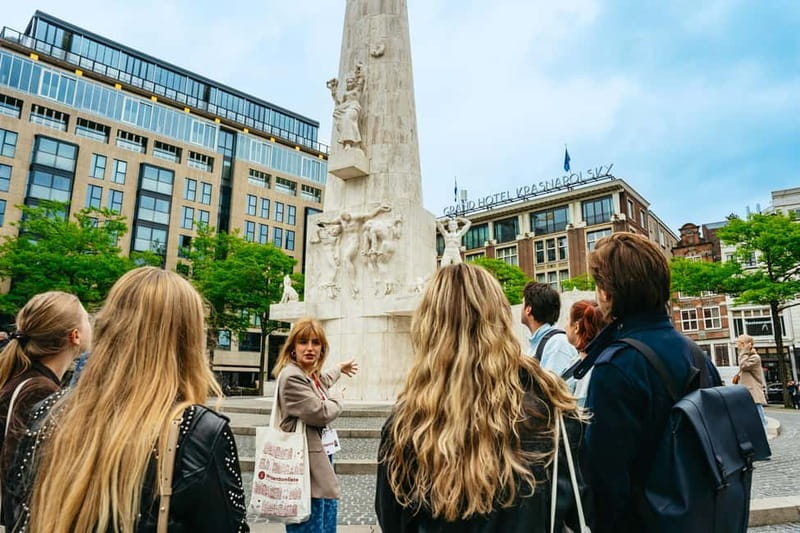
- Start at the National Monument: Meet on the stairs of the white obelisk in Dam Square, where your guide wears a red name tag.
- See major sights without admission fees: The walk passes the Royal Palace, Nieuwe Kerk, Beurs van Berlage, Westerkerk, Begijnhof, and other landmarks from the outside.
- Get more than a postcard view: The guide covers medieval life, the Golden Era, colonial links, WWII, tolerance, and Amsterdam’s multicultural present.
- Expect a manageable pace: The route lasts two hours, with frequent stops for stories and photographs.
- Ask for local advice: Guides can recommend Dutch foods, bike-friendly districts, and places to continue exploring.
- Choose your language carefully: Tours are offered in English or German, with private groups available.
A useful first walk through Amsterdam’s old center
At $29 per person, this is priced as an affordable orientation walk rather than a major attraction. There is no museum ticket or canal cruise included, but you are paying for a guide who connects the city’s buildings and public spaces into a coherent story.
That matters in Amsterdam. The center can look like a parade of pretty canals and narrow houses if you only wander without context. A good guide explains why the city grew where it did, how trade shaped its buildings, and how older events still affect local life.
The tour has earned a 4.9 rating from 2,384 reviews, and the strongest pattern is clear: guides make or break the outing. Alex, Justin, Josh, Deborah, Stefanie, Charlotte, Prisha, Claudia, Anne, and others are praised for humor, clear explanations, friendly conversation, and the ability to answer questions.
Some guides bring a student’s point of view, while others focus more on history and culture. That variety can be a plus, though the exact personality and route emphasis will depend on who leads your group. One German-language tour had a strong accent that a guest found slightly difficult to follow, so choose English if that is the clearer option for you.
More Walking Tours in Amsterdam
- Anne Frank’s Story – Guided Walking Tour through Amsterdam
★ 5.0 · 11,619 reviews - Amsterdam: Life of Anne Frank and World War II Walking Tour
★ 4.8 · 10,467 reviews - Absolutely Amsterdam – the Essential Introductory Walking Tour
★ 5.0 · 3,629 reviews
Meeting the guide beneath the National Monument
The meeting point is easy to identify once you are in Dam Square. Look for the large white National Monument, then wait on its stairs. Your guide should wear a red name tag around the neck.
This is the one practical detail I would take seriously. Dam Square is busy, and several guides may be gathered nearby with similar-looking lanyards. One person had trouble spotting the correct guide, so arrive a few minutes early and actively look for the red tag rather than waiting passively at the monument.
The tour ends at the same place, which makes it simple to continue toward the Royal Palace, the Nieuwe Kerk, shopping streets, or a nearby café. Wear comfortable shoes. Amsterdam’s center is easy to walk, but two hours on hard pavement still calls for sensible footwear. Bring water and an umbrella, since the activity runs outdoors in changeable Dutch weather.
The walk is wheelchair accessible and suitable for children. Private groups are available if you want a more personal pace or need the guide to focus on particular interests.
Dam Square, the Royal Palace, and the city’s public heart
The National Monument and Dam Square set the tone. Amsterdam grew around the dam in the Amstel River, and the square remains the city’s best-known meeting point. Your guide explains the connection between the river, the dam, and the city’s name before leading you toward the surrounding landmarks.
The Royal Palace gives the square its grandest architectural presence. You stop outside for photographs and hear about its role in Amsterdam’s civic and royal story. The nearby Nieuwe Kerk adds another layer, as one of the city’s best-known historic churches.
Do not expect to go inside either building during this tour. The value here is orientation. You learn what you are looking at and can decide later if an interior visit deserves time on your own.
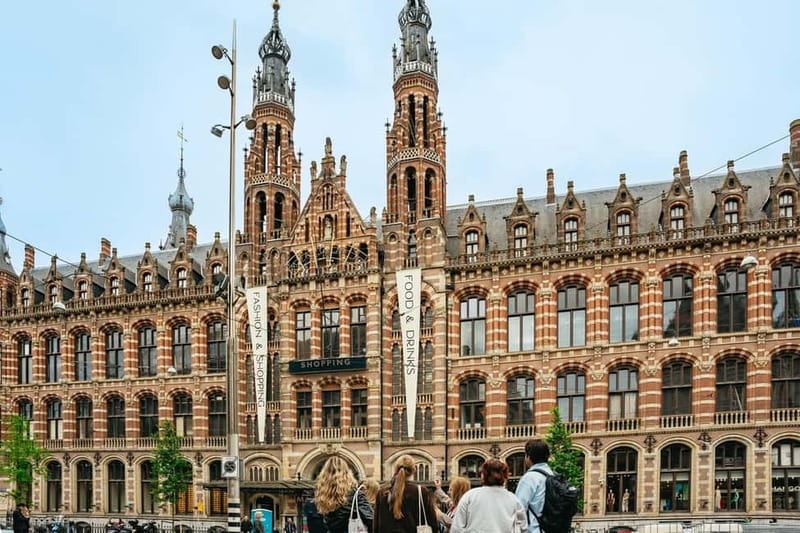
The former main post office, now associated with Magna Plaza, offers a useful change of mood. Its ornate exterior and later commercial use show how older Amsterdam buildings continue to find new purposes. The guide also points out Beurs van Berlage, the former stock exchange, where trade and finance helped shape the city.
These early stops are especially helpful if you have just arrived. They place you in the middle of Amsterdam’s historic core without asking you to spend half a day in a museum.
Canal houses and the Multatuli Statue
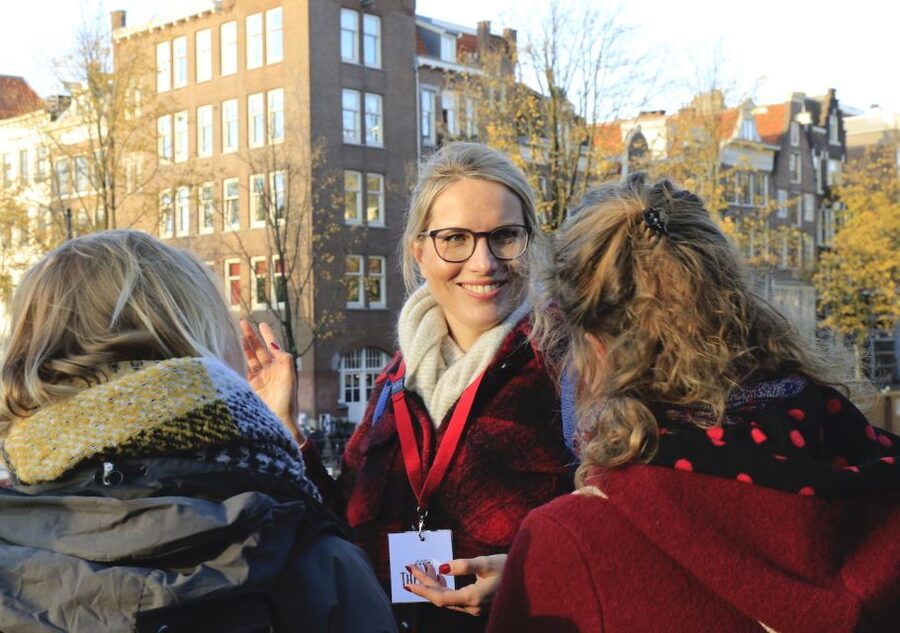
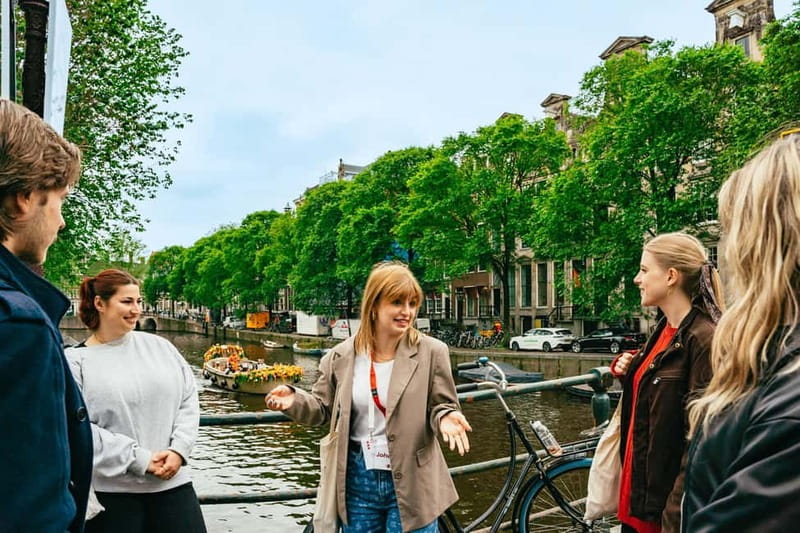
From the square, the walk heads toward Amsterdam’s canals and the Torensluis Bridge. This section is where the city’s famous architecture becomes easier to read. You pass romantic canal-side houses, see one of the city’s smallest homes, and hear why narrow buildings were practical in an old trading city.
The façades are attractive, but the stories matter more than the photographs. Your guide discusses how merchants, salesmen, and poor residents lived in the Middle Ages, giving you a fuller picture than the wealthy canal houses alone can provide.
At the Multatuli Statue on Torensluis Bridge, the subject shifts to colonial history. Multatuli was the pen name of Eduard Douwes Dekker, a Dutch writer associated with criticism of colonial rule. The stop gives the guide a chance to explain how Amsterdam’s prosperity connected to events beyond the Netherlands.
This is one of the more valuable parts of the route because it avoids presenting the city as only picturesque and prosperous. You get a reminder that trade, art, wealth, and colonial power were connected.
Same base, a completely different sort of day:
- Amsterdam: Van Gogh Museum Ticket
★ 4.7 · 52,054 reviews - Amsterdam Classic Saloon Boat Cruise with Drinks and Cheese
★ 5.0 · 31,825 reviews - Amsterdam Luxury Canal Cruise + Unlimited Drinks & Bites option
★ 5.0 · 30,518 reviews - Amsterdam: Heineken Experience Ticket
★ 4.6 · 30,055 reviews
Anne Frank Monument, Westerkerk, and WWII memory
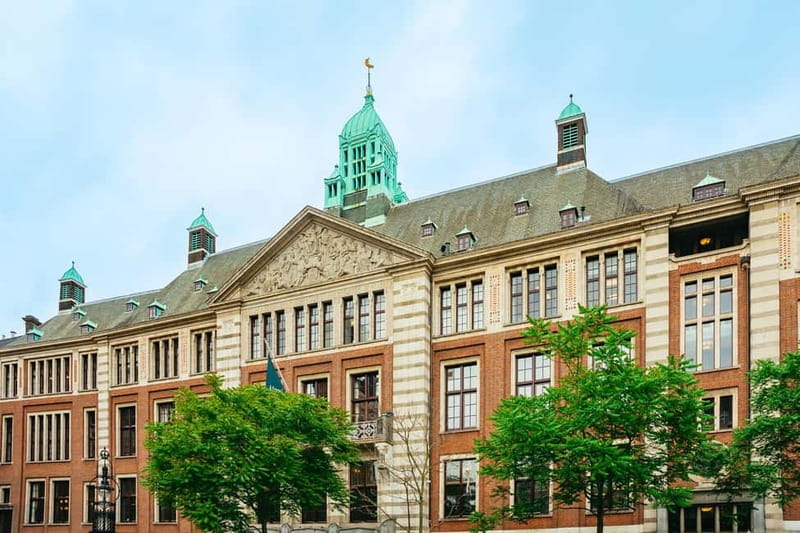
The walk continues to the Anne Frank Monument and Westerkerk area. These stops place Amsterdam’s WWII story within the living city rather than treating it as a separate museum subject.
The guide discusses how World War II changed Amsterdam’s people. The Anne Frank Monument serves as a quiet point for reflection, while Westerkerk helps you understand the setting around Anne Frank House, even though this walk does not include entry to the house.
If Anne Frank House is on your list, you should arrange that separately. This tour gives background and location, but it is not a substitute for the museum visit.
The subject matter can be serious, particularly when the guide moves from wartime persecution to the city’s present-day identity. That contrast is useful. Amsterdam’s reputation for tolerance did not appear from nowhere, and a strong guide can explain both its ideals and its difficult past without turning the walk into a lecture.
Homomonument and Amsterdam today
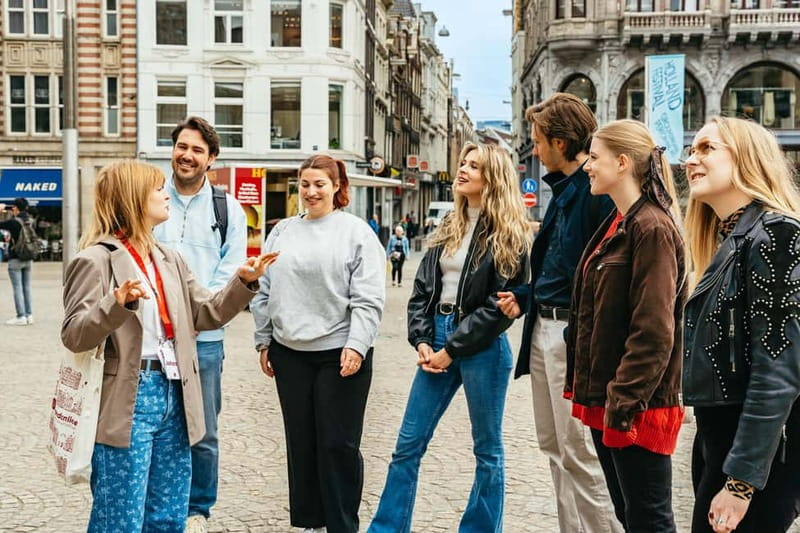
The Homomonument adds a modern civic and cultural dimension. It commemorates gay people who have faced persecution and links the city’s public spaces with its identity as a place that values openness and inclusion.
This stop helps balance the older architectural focus. You are not only looking backward at merchants, palaces, and canals. You are also discussing how people live in Amsterdam today, including its multicultural population and changing social character.
The guide may also speak about current affairs and local customs. The supplied details promise an overview rather than a specialist political tour, so expect a broad conversation about city life rather than a detailed policy discussion.
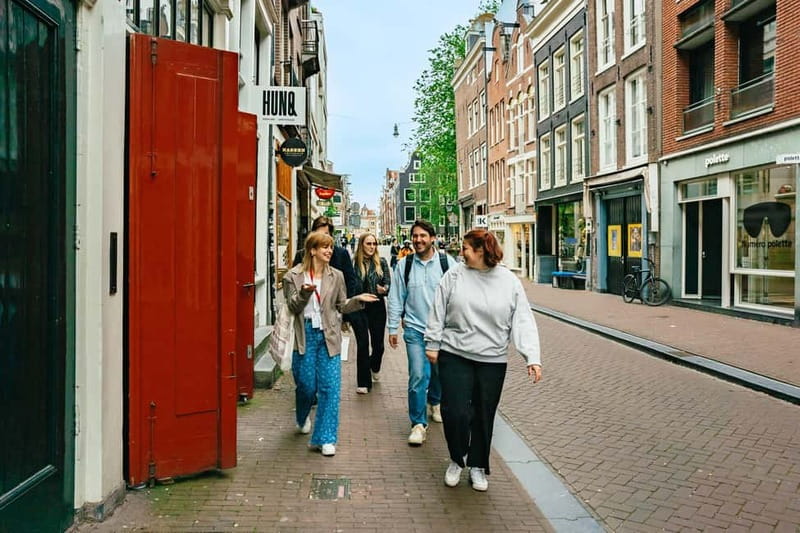
The route then passes through De Negen Straatjes, or the Nine Streets. This small shopping and dining area is known for its historic lanes and canal setting. The stop is brief, but it gives you a practical idea of a district you can return to for independent browsing.
Begijnhof, one of the quietest pauses
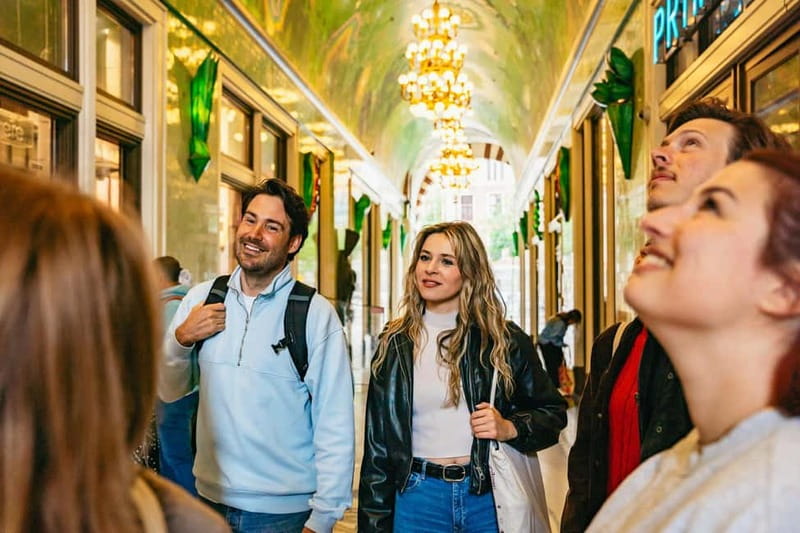
Begijnhof is often the emotional high point of a central Amsterdam walk. Tucked behind the busy streets, this enclosed courtyard offers a calmer setting and a different kind of city history.
The guide explains the community connected with the Beguines, religious women who lived together without taking formal monastic vows. You can expect a short photo stop and an explanation of the houses, courtyard, and local traditions.
Please keep your voice low here and treat the area as a residential and historic place, not simply a backdrop for photographs. The contrast with Dam Square is part of its appeal. Within minutes, you move from traffic and crowds into a quiet courtyard that feels almost hidden in plain sight.
The stop also shows why a walking guide adds value. Without context, Begijnhof can look like a pretty enclosed square. With context, its layout and purpose become much easier to understand.
The Amstel and a useful finish
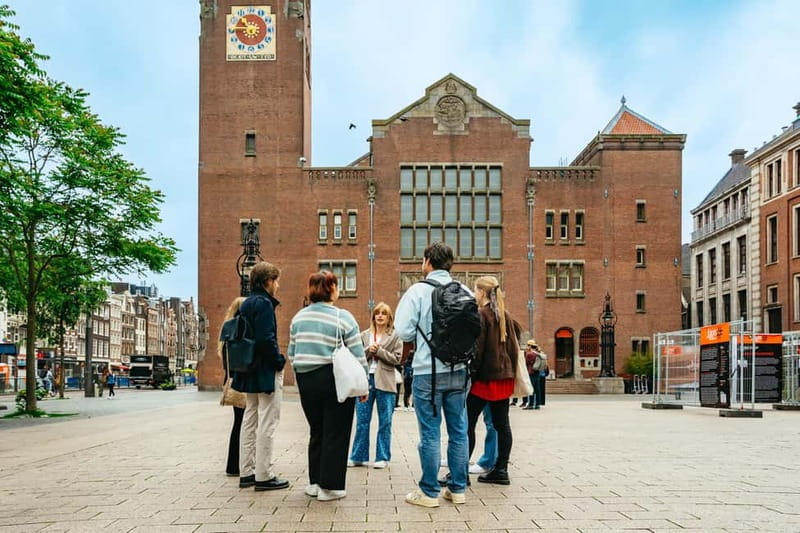
On the return toward Dam Square, you see the river that gave Amsterdam its name. The Amstel is not just a scenic waterway. It explains the city’s original geography and helps tie together the dam, canals, trade, and later growth.
The final stop is the National Monument, originally built to remember Dutch victims of World War II and now dedicated to people who died in wars around the world. Returning here gives the tour a clear ending and connects the city’s local story with a wider human cost.
Before you part, ask your guide for practical advice. Food recommendations are part of the tour’s appeal, and specific suggestions include bitterballen and stroopwafels. You can also ask which districts make sense to explore by bike, one of the best ways to cover more of Amsterdam after you have learned the center’s basic layout.
Several guides, including Alex, Justin, Deborah, Stefanie, and Prisha, are praised for giving useful ideas beyond the formal route. One guide even pointed out where to find excellent bitterballen. Those small tips can be worth as much as another historical fact, especially on a short stay.
Pace, group style, and language
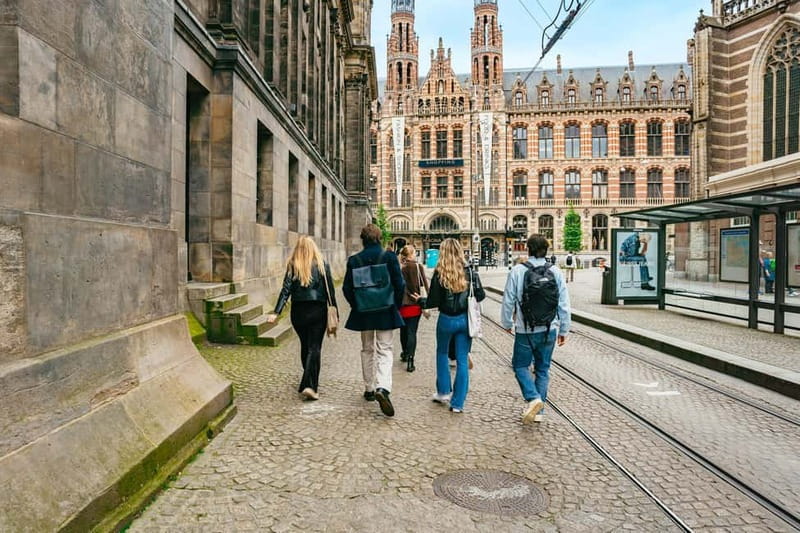
Two hours is a good length for a first look at Amsterdam. It is long enough to cover several areas but short enough to fit before lunch, after arrival, or ahead of a museum booking.
The route includes many stops, so you will not be walking continuously. You pause at Dam Square for about 15 minutes, the Royal Palace for about 10, Beurs van Berlage for about 15, and several other places for explanations and photographs. The overall rhythm is steady rather than rushed.
The exact group size is not specified, but private groups can be booked. Some people have ended up in very small groups, even receiving an almost private tour when few participants arrived. That can make it easier to ask questions and adjust the pace, though you should not assume every departure will be small.
English and German are available. The guide’s style may range from funny and informal to more structured and academic. The strongest match for this tour is someone who enjoys asking questions and wants a broad introduction, not someone seeking an intensive specialist lecture on one period.
Who will get the most from this walk
I would recommend it for first-time visitors, families, couples, and anyone arriving in Amsterdam without a clear plan. The route gives you enough background to choose your next stops with more confidence.
It is also a good fit if you want to understand the city beyond canals and photographs. Medieval social life, the Golden Era, colonial connections, WWII, LGBTQ history, architecture, food, and modern city life all appear within two hours.
Children can join, though the amount of detail may work best for older children and teenagers. The regular pauses help, and the guide’s storytelling style can keep the history from feeling too heavy.
I would be more cautious if you want extensive interior access. The sights are viewed from outside, and no admission fees are included because there are no paid entries during the walk. You should also choose another activity if you dislike walking in rain or prefer a single-subject tour.
Cancellation is flexible up to 24 hours before the start for a full refund, and you can reserve now and pay later. Those terms are useful if your Amsterdam plans are still shifting.
Should you book this Amsterdam walking tour?
Book it if you want a friendly, useful introduction to the center for $29. The best part is not any single landmark. It is the connection between them, from the dam and river to trade, architecture, war, colonial history, and present-day Amsterdam.
The guides receive especially strong marks for humor, clear storytelling, patience, and local suggestions. Ask questions, request food advice, and tell the guide what interests you. You will get more from the two hours than someone who simply follows along silently.
Skip it if you already know central Amsterdam well or want access to museums and interiors. For most first visits, though, this is a sensible opening walk that helps you get your bearings without taking over your day.
FAQ
How long does the Amsterdam cultural walking tour last?
The tour lasts two hours. Check availability for the current starting times.
Where does the tour begin?
Meet on the stairs of the National Monument in Dam Square. It is the large white pillar or obelisk.
How do I identify the guide?
Look for a guide wearing a red name tag around their neck. Arriving a few minutes early can help because other tour guides may be nearby.
Where does the tour end?
The tour finishes back at the National Monument in Dam Square.
Which languages are available?
The tour is offered in English and German.
Is the tour wheelchair accessible?
Yes, the activity is listed as wheelchair accessible.
Are children allowed to join?
Yes, the tour is suitable for children.
Are admission fees included?
You will not pay admission fees during the tour. The sights are visited from outside and can be seen for free.
Can I cancel or pay later?
You can cancel up to 24 hours in advance for a full refund. You can also reserve your place and pay later.
Just added around Amsterdam
- Private sightseeing tour to Bruges and chocolate from Amsterdam★ 5.0 · 11 reviews
- Amsterdam: Rijksmuseum (Private Tour & Priority Access)★ 5.0 · 27 reviews
- Amsterdam: Private Romantic Evening Canal Cruise + Bubbles/Snacks★ 5.0 · 46 reviews
- Amsterdam Private Shopping Experience★ 5.0 · 7 reviews
- Rijksmuseum Amsterdam Private Guided Tour★ 5.0 · 57 reviews
- Amsterdam Rijksmuseum PRIVATE TOUR with a Local Private Guide★ 5.0 · 159 reviews
- Private Rijksmuseum Tour- The Dutch Masters, Rembrandt & Vermeer★ 5.0 · 54 reviews
- Private Photo Session in Amsterdam★ 5.0 · 15 reviews
Walking Tours, compared.
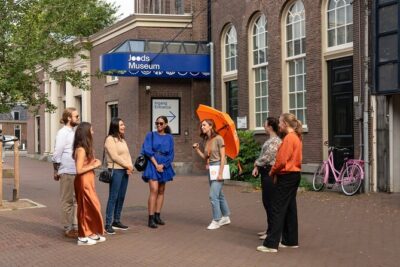
Anne Frank’s Story – Guided Walking Tour through Amsterdam
Read our review →
Life of Anne Frank and World War II Walking Tour
Read our review →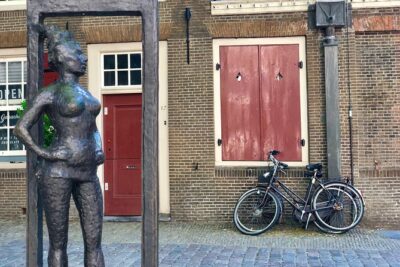
Absolutely Amsterdam – the Essential Introductory Walking Tour
Read our review →

Anne Frank Walking Tour – Guided in EN/DE/IT/ES
Read our review →
Anne Frank Walking Tour Amsterdam Including Jewish Cultural Quarter
Read our review →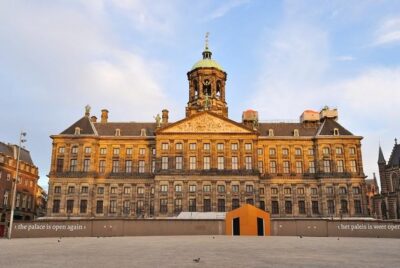
Amsterdam Highlights Walking Tour: Small Group Experience
Read our review →Browse the lists this tour appears in