
Reviewed · WALKING TOURS
Amsterdam Old City Private Walking Tour
Amsterdam’s story comes alive when you walk it in the right order. This private tour links the medieval center, canals, former Jewish District, Chinatown, and Red Light District, showing how a swamp-side port grew into a world power. I especially like the flexible route and the chance to hear modern city stories from a guide with decades of local experience.
I also like that the tour goes beyond the postcard views, taking in places such as Oude Manshuispoort, old pawn shops, the Begijnhof, and the former East India Company headquarters. The main limitation is time: two hours passes quickly, so you will see the city’s broad story rather than explore every stop at length.
Key points to know before booking
- A private route for up to 10 people: Your group gets its own guide, with the walk adapted to your interests.
- Amsterdam’s past in one compact circuit: Learn how a reclaimed swamp became one of Europe’s largest cities in 1650.
- More than canal photos: The route can include the Old Church, Begijnhof, Chinatown, the former Jewish District, and the Red Light District.
- Local stories from different eras: The tour covers Amsterdam’s 17th-century power as well as changes from the 1970s and later.
- A central starting point: Meet in front of the main entrance of Amsterdam Central Station.
- Good for history and architecture fans: You need no special background, just curiosity and comfortable walking shoes.
Starting at Amsterdam Central Station
The tour begins in front of the main entrance of Amsterdam Central Station, a useful meeting point if you are arriving by train or staying near the city center. From here, you move straight into Amsterdam’s oldest districts rather than spending time on a bus or waiting for a large group to assemble.
Because this is a private group tour, your guide can shape the emphasis around your interests. Tell the guide if you care most about architecture, religious buildings, Jewish Amsterdam, the city’s canals, or its social history. The advertised route covers a lot, so a little direction at the start helps you get more from the two hours.
You should leave large bags and luggage behind. The walk is wheelchair accessible, but the exact ease of each street, entrance, or passage may depend on the route chosen. Ask for the most suitable path when you meet your guide.
More Walking Tours in Amsterdam
- Anne Frank’s Story – Guided Walking Tour through Amsterdam
★ 5.0 · 11,619 reviews - Amsterdam: Life of Anne Frank and World War II Walking Tour
★ 4.8 · 10,467 reviews - Absolutely Amsterdam – the Essential Introductory Walking Tour
★ 5.0 · 3,629 reviews
Amsterdam’s swampy beginning
One of the most useful parts of the walk is learning how unlikely Amsterdam’s location once seemed. The city was built on reclaimed swamp, with land that had to be buried and stabilized in mud. Its harbor was difficult to reach, and a direct connection with the North Sea did not arrive until the 19th century.
Yet Amsterdam became a major European center long before that connection was completed. By 1650, about 220,000 people lived here, making it the third-largest city in Europe at the time. That fact gives the canals and narrow streets a sharper meaning: they were not built for a sleepy village, but for a fast-growing trading city with global ambitions.
I like this framing because it keeps the pretty canal houses from becoming mere scenery. Your guide can explain how water, trade, engineering, finance, science, and culture shaped one another. The city’s development becomes easier to understand when you see the old center as a working port and commercial capital.
The medieval center and the old city wall
The first part of the walk takes you through Amsterdam’s medieval center, including parts of the old city wall. This is where the city’s early footprint is easiest to grasp. Streets are close together, the route feels older than the grand canal belt, and the scale changes from Amsterdam’s later merchant avenues.
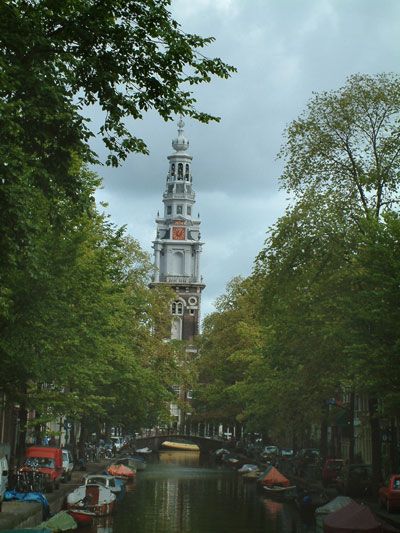
The Old Church, or Oude Kerk, is one of the key sights in this part of town. Its presence near the Red Light District is a reminder that Amsterdam’s religious and commercial life developed side by side. The church is not simply an isolated monument. Its location helps explain how older neighborhoods changed as the city expanded and social uses shifted.
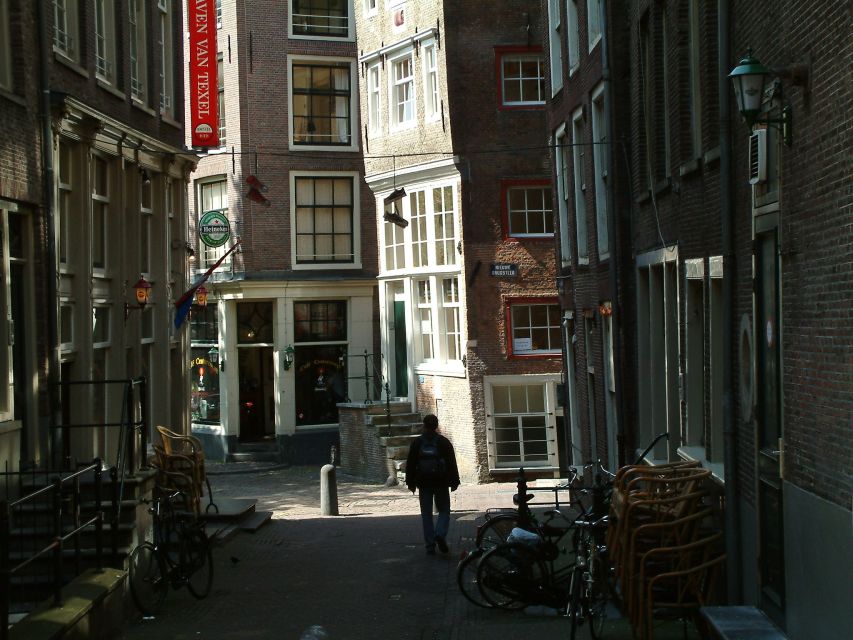
The route can also include Oude Manshuispoort, a passage with the sort of tucked-away character that is easy to miss when you walk alone. Stops like this are valuable on a short tour because they give you a sense of Amsterdam beyond its main squares and canal views.
Do not expect a long interior visit at every church or historic building. The experience is a walking tour, not a sequence of full museum entries. The value lies in seeing the places in context and hearing why they matter.
Canal houses and the business of empire
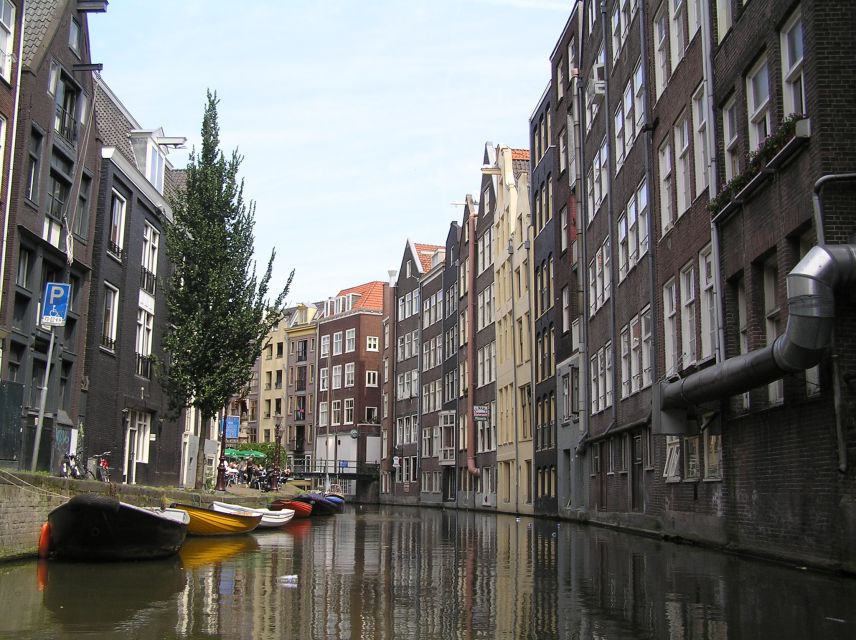
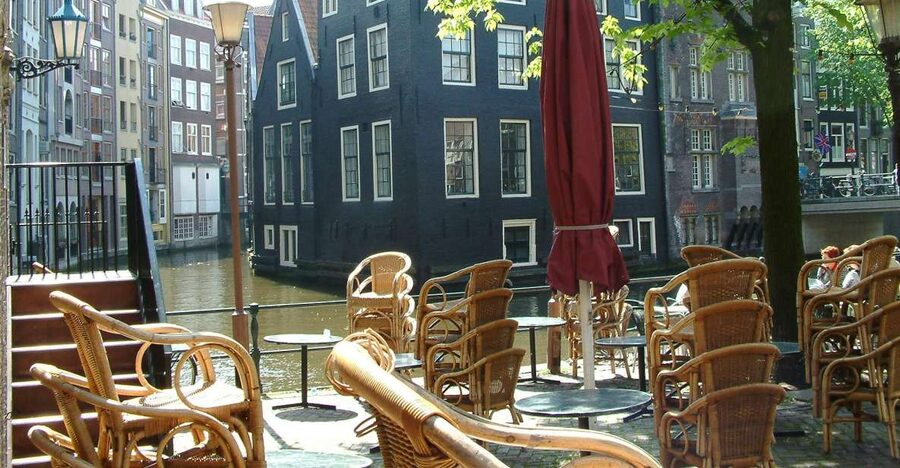
From the old center, the walk reaches Amsterdam’s famous canals and the handsome merchant houses along them. Herengracht is one of the first three major canals in the city, and its broad curve and elegant façades show how Amsterdam’s wealthy citizens built a new residential district around trade.
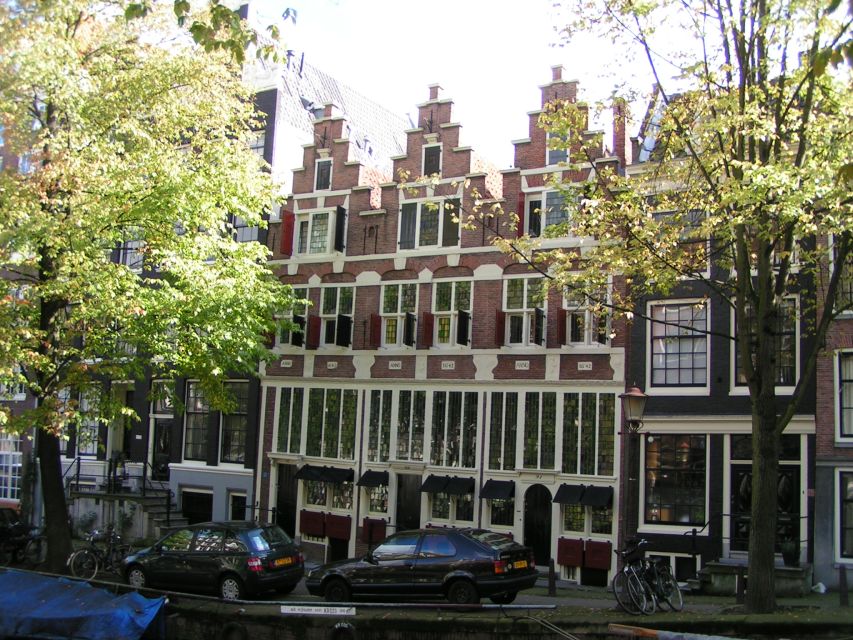
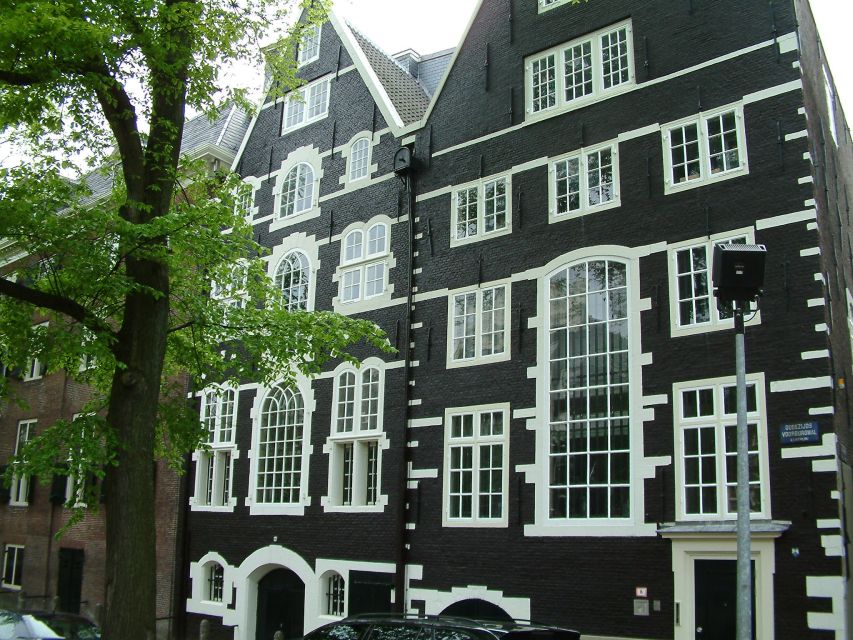
Your guide can point out how the houses reflect the city’s commercial success. They are narrow because of taxes and limited plots, yet often surprisingly deep. Their façades, gables, and proportions hint at the money flowing through Amsterdam during the 17th century.
The Oostindisch Huis adds a more direct link to that power. It served as the Amsterdam headquarters of the East India Company, one of the major institutions behind the city’s overseas trade. A stop here helps connect local architecture with the wider economic system that made Amsterdam wealthy.
This is also where I would pay attention to the tour’s balance. The story of Amsterdam’s golden age includes impressive engineering, trade, science, and culture, but it also involves colonial power and commercial exploitation. The supplied details promise a historical explanation rather than a simple celebration, and a private guide gives you a chance to ask how the city’s prosperity was made.
Same base, a completely different sort of day:
- Amsterdam: Van Gogh Museum Ticket
★ 4.7 · 52,054 reviews - Amsterdam Classic Saloon Boat Cruise with Drinks and Cheese
★ 5.0 · 31,825 reviews - Amsterdam Luxury Canal Cruise + Unlimited Drinks & Bites option
★ 5.0 · 30,518 reviews - Amsterdam: Heineken Experience Ticket
★ 4.6 · 30,055 reviews
The former Jewish District
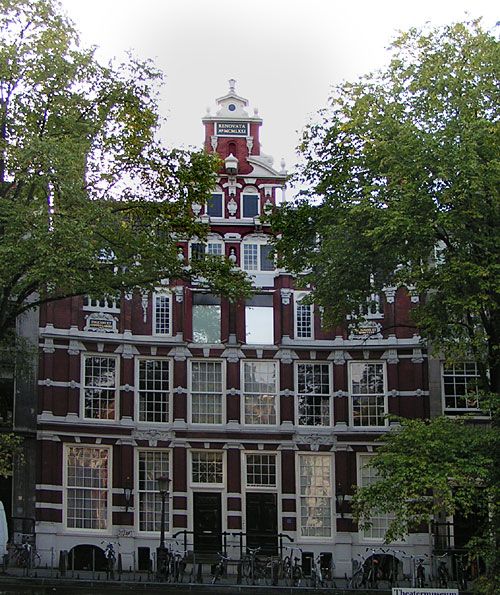
The walk continues through Amsterdam’s old Jewish District, an area that adds another layer to the city’s past. This part of the route matters because Amsterdam was not shaped by one group or one trade. Its history includes communities, businesses, religious life, migration, and painful changes over time.
The tour does not promise a full museum visit or a dedicated specialist program on Jewish Amsterdam. Instead, you get the district as part of a wider city story. That makes it a good fit if you want a first orientation before returning later to explore this subject in greater detail.
You may also pass old pawn shops in the wider historic center and surrounding districts. These businesses offer a practical glimpse of earlier urban life, when people bought, sold, borrowed, and traded in ways that were tied closely to neighborhood streets. They are small details, but they can make the city feel more lived in.
Begijnhof and Amsterdam’s quieter side
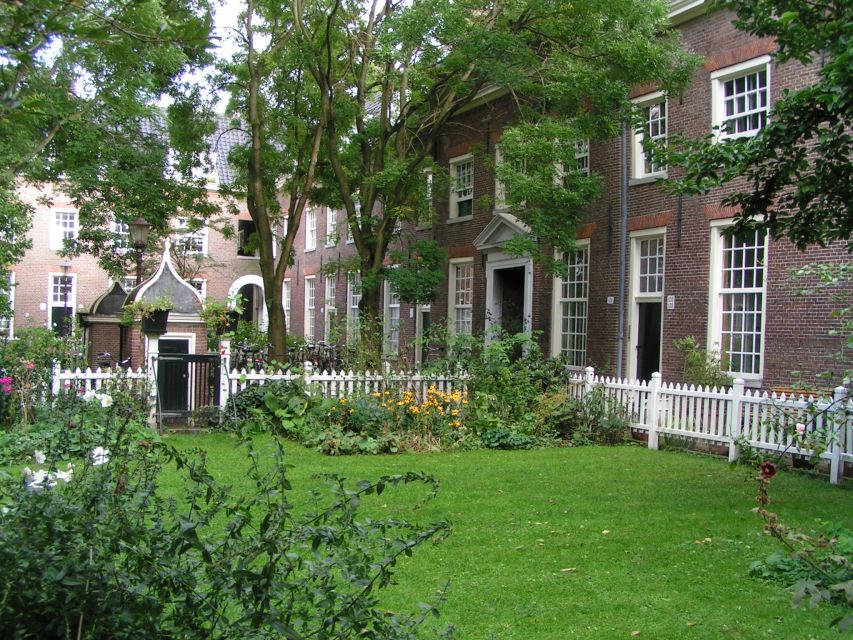
The Begijnhof provides a sharp change of mood. This group of women’s homes offers a quieter setting within the central city and shows that Amsterdam’s urban story was not only about merchants, sailors, and company offices.
The stop is especially useful for first-time visitors because it gives you architectural contrast. After narrow commercial streets and busy historic districts, the Begijnhof offers a more sheltered arrangement of homes and shared space. Your guide can explain its place in the city and the lives associated with the women who lived there.
The route may not allow time for a slow, contemplative visit. Two hours is enough to understand why the Begijnhof matters, but not necessarily enough to linger over every building. If it is a top priority, make that clear at the beginning so the guide can give it the right share of your walking time.
Chinatown and Nieuwmarkt
The Chinatown and Nieuwmarkt portion shows how Amsterdam’s center keeps changing while older streets remain in place. You will see a district shaped by later communities and newer layers of city life, close to some of Amsterdam’s oldest areas.
Nieuwmarkt is a natural place to discuss the relationship between old buildings, public space, commerce, and urban change. Chinatown adds another perspective, showing how a historic European city continues to absorb new communities and businesses.
I like this section because it prevents the tour from becoming a narrow lesson about the 17th century. Amsterdam is not a museum set. Its old center still has shops, homes, restaurants, religious buildings, and streets used for ordinary life.
The tour includes food and drink only as background, not as part of the price. You can stop afterward in the area, but plan to buy anything you want separately.
Walking through the Red Light District
The Red Light District is one of Amsterdam’s most famous and misunderstood areas. Seeing it with a guide can help you place it within the older city instead of treating it as a spectacle. Its closeness to the Old Church makes the district particularly striking, and the contrast raises useful questions about Amsterdam’s long history of trade, tolerance, regulation, and public morality.
Keep your expectations sensible. This is a historical city walk, not a nightlife tour or an invitation to photograph people. You should follow local rules, respect privacy, and listen to the guide’s explanation of the neighborhood rather than treating it as a curiosity show.
For some people, this will be the most memorable section. For others, it may feel uncomfortable or less appealing than the canals and Begijnhof. A private tour helps here because you can ask questions quietly and move on without being tied to a large group’s pace.
The Jordaan and everyday Amsterdam
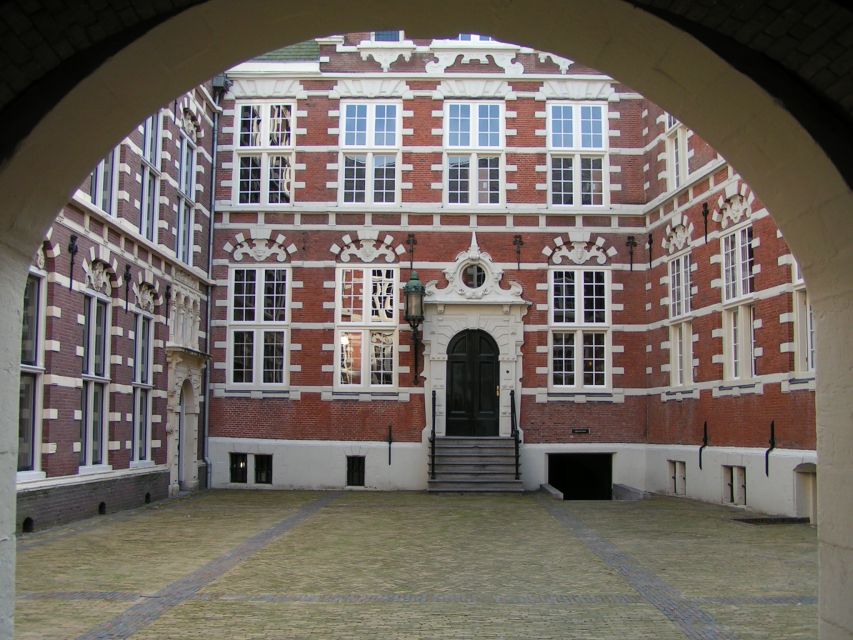
The route can also include the Jordaan district, where old pawn shops and merchant houses offer a different look at Amsterdam. The area is often associated with attractive streets and canals, but the useful part of this stop is the connection between grand architecture and ordinary urban life.
A guide with long experience in the city may add details that are not obvious from a standard guidebook. One guide described in the tour feedback was a lifelong Amsterdammer who could explain changes from the 1970s because he had lived through them. That kind of local memory can add a modern layer to a route otherwise focused on medieval and 17th-century history.
This is one of the tour’s strongest features for me. You are not limited to famous dates and façades. You might hear how districts changed, how the city developed in recent decades, and why certain corners matter to people who live there.
What two hours really gives you
Two hours is enough for a strong first orientation, especially if you have just arrived in Amsterdam. You can learn the city’s basic timeline, see several important districts, and mark places to revisit later.
It is not enough for an unhurried exploration of every attraction. The Old Church, Begijnhof, canals, Chinatown, Jewish District, Red Light District, Nieuwmarkt, Jordaan, and East India Company headquarters represent a large area and a long story. Some stops will be brief, and the route may need to change based on your interests and walking pace.
That tradeoff is easier to accept because the tour is private. A large group would need to follow a fixed rhythm, while your guide can spend more time on the subjects that matter to you. If you want detailed access to interiors, museum collections, or one district studied at length, choose a longer or more specialized experience instead.
Is the private price good value?
The price is $265 for a group of up to 10 people. That works out to $26.50 per person if you fill all 10 places, $33.13 for eight people, or $66.25 for four. For a couple, the total price feels high compared with a public group walk, but for a family or small group it becomes much easier to justify.
The value comes from privacy and flexibility, not from included admissions or refreshments. VAT and the guide are included, while food and drinks are not. You are paying for two hours of personal attention and a route shaped around your interests.
I would consider it good value for a group that wants one shared introduction to Amsterdam and does not want to spend time sorting out the city alone. It is less compelling if you are traveling solo and mainly want the lowest-cost way to hear basic facts.
English, Dutch, and German are available. The free cancellation deadline is 24 hours before the tour, and you can reserve while paying later, which helps if your schedule is still moving.
Who should book this walk?
This tour suits first-time visitors who want a clear introduction before exploring Amsterdam on their own. It is also a good choice for families, friends, or multigenerational groups that want their own pace and a chance to ask questions without an audience.
History and architecture fans will get the most from it, but you do not need formal background. An interest in how cities work is enough. You will see how land reclamation, canals, trade, religion, migration, and urban change fit together.
I would be more cautious if you dislike walking, want a slow visit inside every building, or prefer a narrowly focused subject. The route covers many districts in two hours, so it favors range and orientation over detailed examination.
Should you book the Amsterdam Old City Private Walking Tour?
Book it if you are traveling with several people and want a flexible, historically grounded introduction to Amsterdam. The best reasons are the private format, the mix of famous areas and less obvious passages, and the chance to hear both the old city story and more recent local memories.
Skip it if your main goal is a cheap group tour, extensive interior visits, or a deep study of one neighborhood. For most small groups, though, this is a practical way to get your bearings fast, understand why Amsterdam looks the way it does, and leave with a better plan for the rest of your stay.
FAQ
Where does the tour meet?
Meet in front of the main entrance of Amsterdam Central Station.
How long does the walking tour last?
The tour lasts two hours.
How many people can join the private group?
The price covers a private group of up to 10 people.
Which languages are available?
The guide can conduct the tour in English, Dutch, or German.
Is the tour wheelchair accessible?
Yes, the activity is listed as wheelchair accessible.
What areas can the tour visit?
The route can include Amsterdam’s medieval center, the old city wall, the canals, Chinatown, the former Jewish District, the Red Light District, the Begijnhof, Nieuwmarkt, and the Jordaan.
Can the route be adapted to my interests?
Yes. The two-hour walk is adapted to your wishes, so you can tell the guide which parts of Amsterdam’s history or architecture interest you most.
Is food included?
No. Food and drinks are not included in the tour price.
Can I bring luggage or a large bag?
No. Luggage and large bags are not allowed.
How does cancellation work?
You can cancel up to 24 hours in advance for a full refund. You can also reserve now and pay later.
Just added around Amsterdam
- Private sightseeing tour to Bruges and chocolate from Amsterdam★ 5.0 · 11 reviews
- Amsterdam: Rijksmuseum (Private Tour & Priority Access)★ 5.0 · 27 reviews
- Amsterdam: Private Romantic Evening Canal Cruise + Bubbles/Snacks★ 5.0 · 46 reviews
- Amsterdam Private Shopping Experience★ 5.0 · 7 reviews
- Rijksmuseum Amsterdam Private Guided Tour★ 5.0 · 57 reviews
- Amsterdam Rijksmuseum PRIVATE TOUR with a Local Private Guide★ 5.0 · 159 reviews
- Private Photo Session in Amsterdam★ 5.0 · 15 reviews
- Private One way Transfer Amsterdam Airport to Amsterdam★ 3.5 · 42 reviews
Walking Tours, compared.
Anne Frank’s Story – Guided Walking Tour through Amsterdam
Read our review →
Life of Anne Frank and World War II Walking Tour
Read our review →
Absolutely Amsterdam – the Essential Introductory Walking Tour
Read our review →

Anne Frank Walking Tour – Guided in EN/DE/IT/ES
Read our review →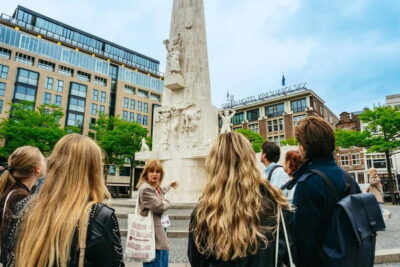

Anne Frank Walking Tour Amsterdam Including Jewish Cultural Quarter
Read our review →Browse the lists this tour appears in