
Reviewed · MUSEUMS
Delft: Canal House Museum ‘Paul Tetar van Elven’ Ticket
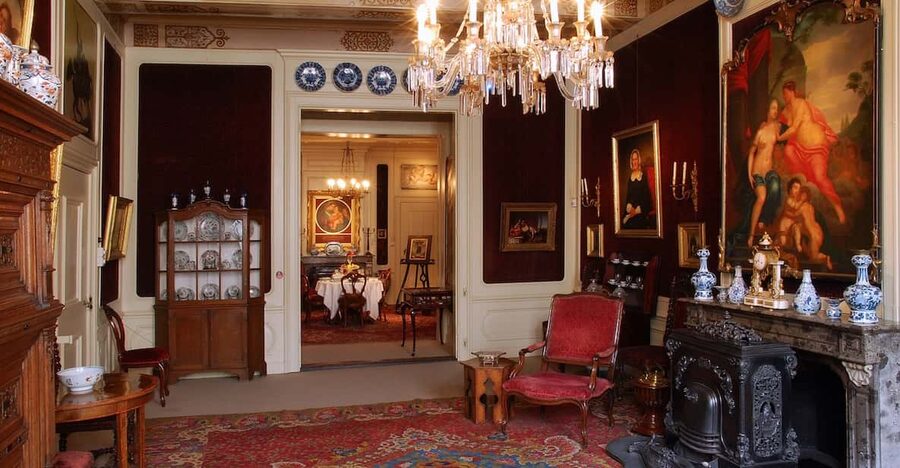
The most intriguing thing here is that you are not entering a recreated historic house. You are entering the actual Delft home of Paul Tetar van Elven, an artist, teacher, and collector whose furniture and possessions were preserved as a museum. I love the authentic canal-house setting and the chance to see how a 19th-century artist lived among his own paintings, books, and porcelain.
I also like the painted salon ceiling, decorated with the names of old masters such as Raphael, Rubens, and Rembrandt. The main drawback is size: this is an intimate house museum, not a large gallery, so visitors who want a long list of major artworks may find the visit brief.
Key points
- Original artist’s home: Visit the house Tetar van Elven bought in 1864, with its period interiors and personal possessions.
- Painted salon ceiling: Look up for the names of old masters he admired and copied.
- Collector’s eye: See Delft blue pottery, Far Eastern porcelain, antiques, paintings, and old books.
- Central Koornmarkt location: The museum is in the heart of Delft, in one of the city’s historic canal-house districts.
- English or Dutch welcome: An English or Dutch host or greeter is available.
- Good value at $14: The ticket offers more than a standard art display because the building, rooms, and collections belong together.
Entering Paul Tetar van Elven’s Delft home
On Koornmarkt, in central Delft, this museum gives you something rare: a house that still feels like a home rather than a neutral exhibition box. Paul Tetar van Elven left the property and its contents in his will, asking that they become a museum. That decision preserved the connection between the building, the man, and the objects he chose to live with.
The house began in the 16th century, not long after Delft’s Great Fire in 1536. Koornmarkt later became one of the city’s wealthiest areas. The building changed over time, including a new front façade and major modern work around 1800, but the house Tetar van Elven purchased in 1864 is the one you encounter today.
That layered past matters. You are not looking at one perfectly restored period from top to bottom. You are seeing a house shaped by several centuries, then adapted by a 19th-century artist to suit his own taste.
More Museum Tickets in Delft:
- Royal Delft: Delftblue Factory and Museum
★ 4.6 · 588 reviews - Delft: Vermeer Centrum Delft Museum Entry Ticket
★ 4.6 · 189 reviews - Royal Delft: Delftblue Factory and Museum Admission Ticket
★ 4.5 · 145 reviews
Why the rooms matter more than a single painting
Tetar van Elven was an artist and a drawing-master at Delft’s Polytechnic School, now Delft University of Technology. He was also a serious collector. His home displays those interests side by side, so the visit works best when you consider the rooms as a complete portrait of their owner.
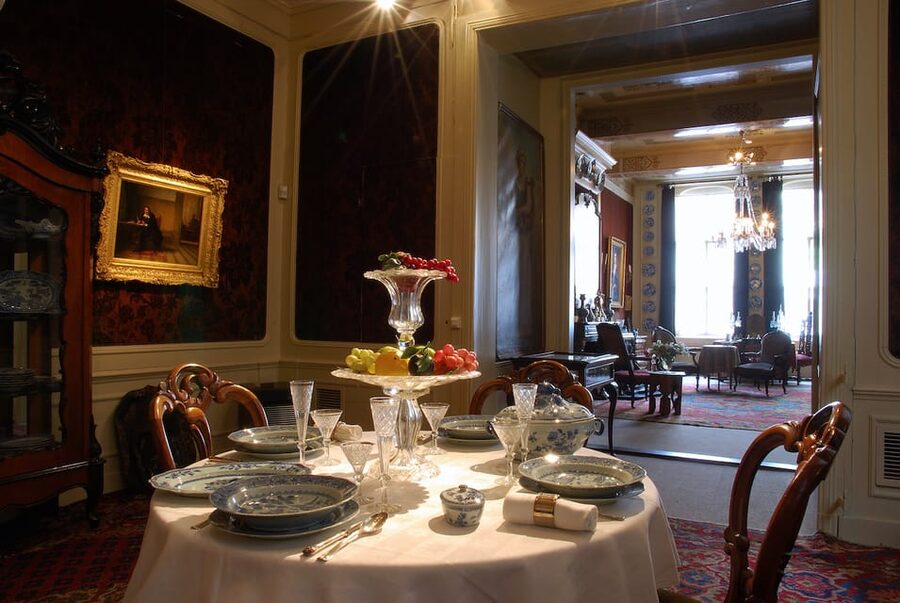
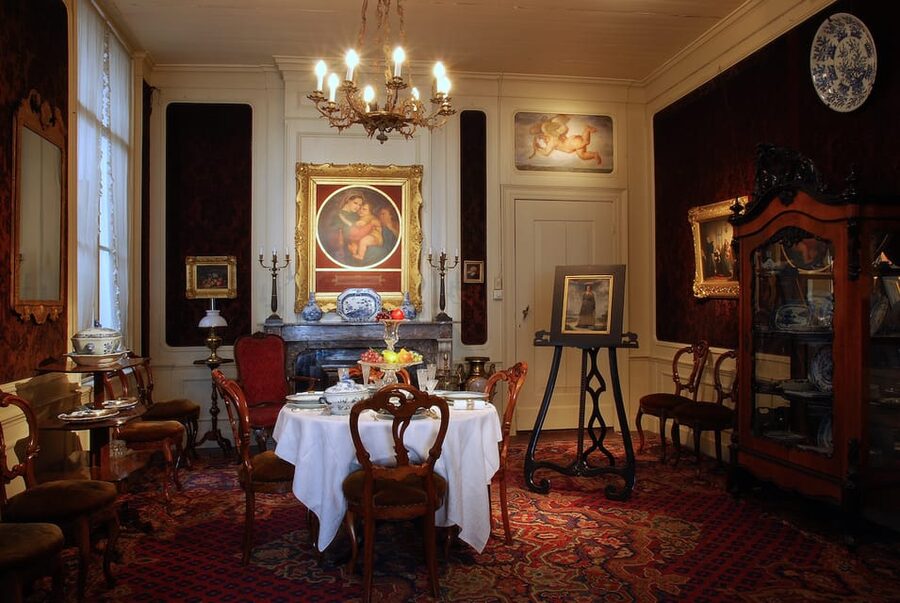
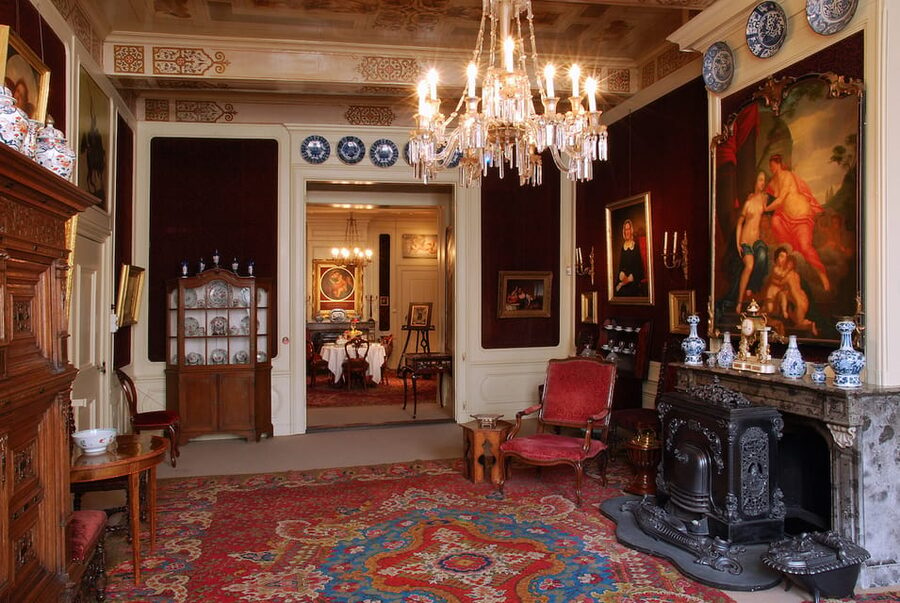
In the living rooms, you can expect lavish furnishings, portraits, and paintings by Tetar van Elven and his contemporaries. The effect is personal. The house helps you picture an artist surrounded by works he admired, objects he collected, and books connected to his interests.
I like this kind of museum because the furniture is not just decoration around the artwork. It gives scale and context. A painting in a gallery can feel distant. A painting in the artist’s own home, near his books and possessions, feels tied to everyday life.
The furnishings may also appeal to you if you enjoy decorative arts more than formal painting collections. Delft blue pottery and porcelain from the Far East are displayed in cabinets, adding another layer to the house. You get a look at collecting as a social habit and a personal passion, not simply at objects arranged by an anonymous institution.
The salon ceiling is the detail to seek out
The salon contains the museum’s most unusual visual feature: a painted ceiling commissioned by Tetar van Elven. Abraham Gips decorated it with the names of old masters whom Tetar van Elven admired and copied, including Raphael, Rubens, and Rembrandt.
This is an easy detail to miss if you spend all your time looking straight ahead. Make a point of looking up. The ceiling tells you how the artist positioned himself within the history of art. It also shows that his taste was not limited to one school or period.
The ceiling is more than an ornamental flourish. It reveals an artist making his admiration visible inside his own home. Instead of keeping his influences private, he placed them above the room where he and his wife received people.
A host or greeter speaking English or Dutch can help explain details like this. No individual guide name is provided for this experience, so do not book it expecting a named guide. The format is best understood as a museum visit with an available English or Dutch welcome, rather than a guaranteed private tour led by a specific person.
The studio gives the museum its personal heart
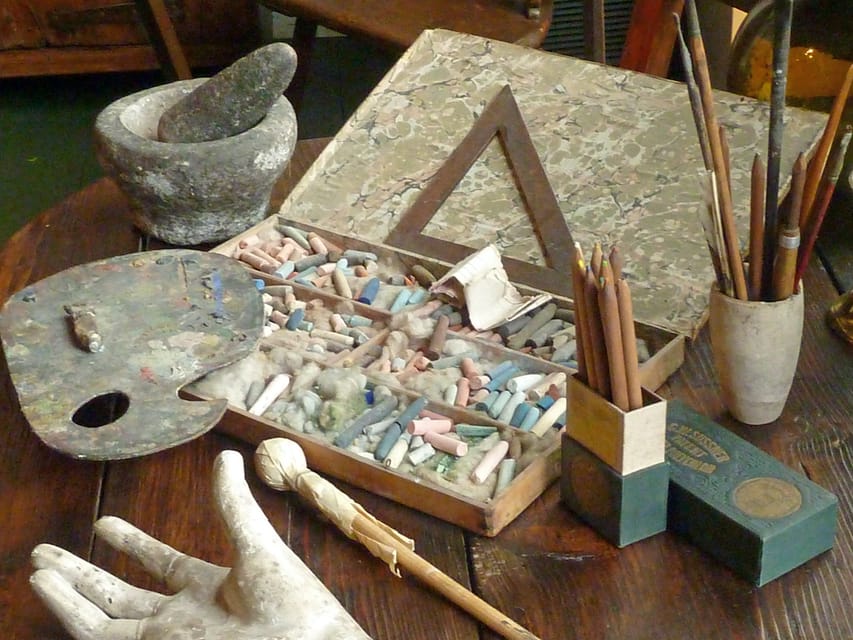
The studio is where the house moves closest to Tetar van Elven himself. You can see his personal possessions there, along with the setting connected to his work as an artist and teacher.
The value of the studio is not just in identifying every item. It lets you picture the practical side of artistic life: a working room, tools and possessions close at hand, and a home organized around art. The house does not present him only as a name on a label. It gives you a sense of how his profession shaped his surroundings.
If you prefer large canvases and famous masterpieces, the studio may feel modest. If you are interested in the daily life of artists, it is likely to be one of the most satisfying rooms. I would give it time instead of treating it as a passage between the salon and library.
The museum is particularly well suited to visitors who enjoy close looking. The collection includes enough small objects, furnishings, books, and decorative details to reward a slower pace. You might find that the most memorable parts are not the objects you expected to see, but the way the rooms work together.
A few more Delft half-days worth comparing
- Delft: Canal Cruise with Guided Commentary
★ 4.4 · 990 reviews - Delft: Entrance Ticket for the Old and New Churches
★ 4.4 · 229 reviews - Delft: City Center Walking Tour
★ 4.7 · 88 reviews - Delft: Craft Beer Tasting in Medieval Brewery with Snacks
★ 4.4 · 67 reviews
The library and antique books
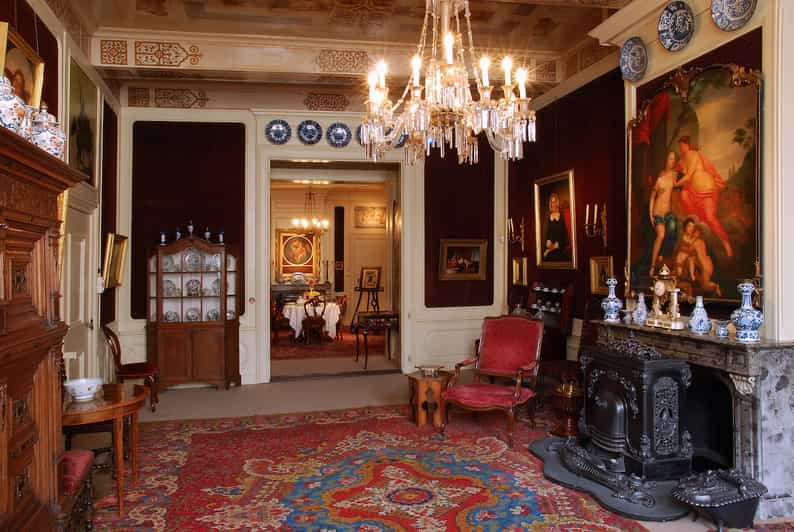
The library contains Tetar van Elven’s collection of antique books. This section adds a quieter dimension to the visit. The salon shows his public taste, while the library suggests the world of ideas and reference that supported his work.
The books help explain why this is more than a house filled with attractive objects. Tetar van Elven collected across several areas: art, antiques, ceramics, porcelain, and books. His interests were broad, but they were not random. Together, they show how an artist built a private environment around visual culture and learning.
You may not be able to inspect every book in detail, and the available information does not specify a particular title or display method. Still, the library belongs in the visit because it rounds out the portrait. It is one thing to see what an artist hung on the wall. It is another to see the printed material he kept close.
Delft blue pottery and Far Eastern porcelain
The cabinets of pottery and porcelain are a major reason to choose this museum over a standard city walk. Tetar van Elven collected Delft blue pottery as well as porcelain from the Far East, and these pieces remain part of the house museum.
Delft blue is closely linked with the city’s identity, so seeing it in a Delft home gives the collection local meaning. The Far Eastern porcelain broadens the picture. It places Delft’s own ceramic tradition beside objects from a wider world of trade, taste, and collecting.
You do not need to be a ceramics specialist to enjoy this section. Look for the contrast between the local Delftware and the imported porcelain, then notice how the objects occupy the domestic rooms. Here, ceramics are not isolated behind a large gallery label. They are part of the household Tetar van Elven chose to create.
The collection also helps explain the $14 ticket. You are paying for access to a building, an interior, an artist’s studio, a library, paintings, furniture, and ceramics. It is not the cheapest possible museum stop, but it offers a concentrated experience with several subjects in one place.
How long to allow for the visit
The ticket is valid for one day, but that does not mean you need a full day inside the museum. The supplied details do not give a precise visit length or a fixed start time. Check the available entry times when booking, then plan the museum as one focused stop during your Delft day.
I would avoid squeezing it between two tightly timed activities. A small house museum rewards attention, and you will want time to look at the salon ceiling, paintings, studio possessions, books, furniture, and ceramics without racing.
At the same time, this is not a full-day attraction by itself. If you want a large institution with many rooms and hundreds of works, this museum may feel limited. Its strength is concentration. You get one preserved home and a clear sense of its former owner.
Because it is in central Delft, the location works well as part of a walking day. The information provided does not include transportation arrangements, meeting instructions, or food service, so plan to reach the Koornmarkt independently and arrange refreshments elsewhere.
What the $14 price buys you
At $14 per person, the ticket is fairly priced for a specialized museum with an original interior and an unusual collection. The value depends on what you want from a museum visit.
If you measure value by the number of objects or the size of the building, a larger Delft attraction may offer more. If you value authenticity, personal history, and decorative arts, this ticket makes better sense. You are seeing the home that Tetar van Elven owned, not a modern reconstruction built to imitate a 19th-century artist’s residence.
The ticket includes entry to Museum Paul Tetar van Elven. Food and drinks are not included, though that is hardly a concern for a short central Delft visit. English and Dutch assistance is available through the host or greeter, which makes the museum accessible to visitors who do not speak Dutch.
The booking terms also reduce some risk. You can cancel up to 24 hours before the visit for a full refund, and you can reserve now and pay later. Those options are useful if your Delft schedule is still shifting.
Who will enjoy this museum most
I would recommend this experience to you if you like:
- Historic homes that retain their original contents
- Artist studios and the daily setting behind creative work
- Delft blue pottery and porcelain
- Decorative interiors, furniture, and painted ceilings
- Small museums with a strong personal story
- Quiet cultural stops in the middle of a city walk
It is also a good choice for repeat visitors to Delft who have already seen the city’s main sights and want something more specific. The museum offers a different angle on Delft, focused on one home and one collector.
Families with older children may find the house interesting, especially if you point out the ceiling and ask them to spot the names of famous artists. Very young children may have less patience for a small interior where the pleasure comes from careful looking. The available information does not give age guidance, so use your own judgment.
Art students and anyone interested in drawing may get extra value from the story of Tetar van Elven as a drawing-master at the Polytechnic School. You can connect the studio, the copies of old masters, and the salon ceiling to his teaching and artistic interests.
Who might prefer a different Delft stop
You may want to skip this ticket if your main goal is a large collection of major artworks, a long guided walk, or a detailed program with a named specialist. No personal guide name, group size, or fixed tour length is provided.
You should also consider your interest in interiors. The museum’s appeal comes from the combination of architecture, furniture, paintings, books, ceramics, and personal objects. If you only want to see Delftware, a ceramics-focused museum may suit you better. If you only want a grand canal-house exterior, the city streets provide that without an admission fee.
The house’s intimate scale is both its charm and its limit. It offers a close look at a preserved artist’s world, but it cannot provide the variety of a major art museum.
Practical booking advice
Check the available starting times before you commit, since the ticket information does not list one universal opening schedule. The host or greeter can assist in English or Dutch, but the details do not promise a full guided tour in either language.
Bring your interest in small details. The painted ceiling, antique books, studio possessions, and pottery cabinets are central to the experience, and none should be treated as background decoration. If you are planning several Delft attractions, place this visit where you can slow down rather than at the end of an already packed day.
Your ticket covers entry only. Food and drinks are not part of the experience, so plan those separately. The one-day validity gives you flexibility, but it does not replace checking the actual entry time available for your date.
Should you book Museum Paul Tetar van Elven?
Book it if you want an authentic, compact museum with a strong sense of place. The combination of a 16th-century canal house, 19th-century interiors, an artist’s studio, antique books, Delft blue pottery, Far Eastern porcelain, and the remarkable painted salon ceiling is unusual.
At $14, it is a sensible choice for visitors who enjoy homes and collections more than blockbuster art. I would be less quick to recommend it to anyone seeking a long itinerary, a large gallery, or a guaranteed named guide. For the right visitor, though, this is a personal and focused look at Delft life, art, and collecting behind one handsome canal-house façade.
FAQ
Where is Museum Paul Tetar van Elven located?
The museum is in central Delft, on the Koornmarkt, in South Holland, Netherlands.
What does the ticket include?
The ticket includes entry to Museum Paul Tetar van Elven.
How much does the experience cost?
The listed price is $14 per person.
How long is the ticket valid?
The ticket is valid for one day. Available starting times should be checked when booking.
What languages are available?
The host or greeter is available in English and Dutch.
Can I cancel the booking?
Yes. You can cancel up to 24 hours in advance for a full refund.
Do I have to pay when I book?
No. The reserve now and pay later option lets you book without paying immediately.
Are food and drinks included?
No. Food and drinks are not included in the ticket.
What can I see inside the house?
You can see the preserved canal-house interior, paintings, portraits, a painted salon ceiling, the studio and personal possessions of Paul Tetar van Elven, a library with antique books, and collections of Delft blue pottery and Far Eastern porcelain.
Just added around Delft
- Private Tour of Delft + Visit to Royal Delft Museum★ 5.0 · 4 reviews
- Delft: Private Historical and Cultural Guided Walking Tour★ 5.0 · 8 reviews
- Delft – Step/scootertour in and around the city★ 4.8 · 9 reviews
- The Hague: One Way Boat Ticket to or from Delft★ 4.5 · 52 reviews
- Royal Delft: Delftblue Factory and Museum Admission Ticket★ 4.5 · 145 reviews
- Delft: Christmas Walk with Oliebollen and Glühwein★ 4.8 · 8 reviews
- Delft: Craft Beer Tasting in Medieval Brewery with Snacks★ 4.4 · 67 reviews
- Delft: City Center Walking Tour★ 4.7 · 88 reviews
Museums, compared.
Moco Museum Amsterdam Entrance Tickets with Banksy & More
Read our review →


Amsterdam’s Weirdest Museum: Believe It or Not!
Read our review →
Browse the lists this tour appears in