
Reviewed · MUSEUMS
Royal Delft: Delftblue Factory and Museum Admission Ticket
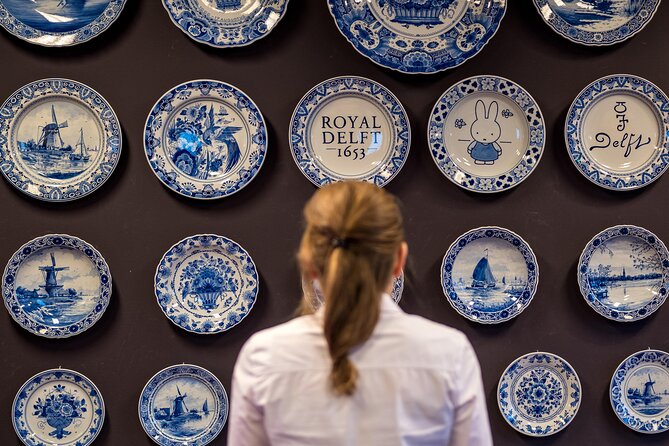
Royal Delft lets you see Delft Blue being made, not just displayed behind glass. Founded in 1653, it is the only Delftware factory from Delft’s great 17th-century pottery era that still operates. The most memorable moments come when you watch a painter work and see black pigment turn Delft Blue after firing.
I like the working factory floor, where centuries-old hand-painting skills are still used, and the Royal Chambers, which connect the pottery to the Dutch royal family. The museum also has a striking 480-tile version of Rembrandt’s The Night Watch.
The main drawback is that this is a self-guided visit, not a guided tour. You receive an audio tour in one of eight languages, but much of the experience depends on reading panels and moving through the displays on your own.
Key points to know before you go

- Watch Delft Blue being painted by hand: The artists at work are the strongest part of the visit.
- See the only surviving Delftware factory in Delft: Royal Delft has operated since 1653.
- Allow 1 to 1.5 hours: The ticket lists about one hour, but careful visitors may want more time.
- Use the audio tour or read at your own pace: The visit is independent, with no personal guide included.
- Look for royal ceramics and the 480-tile Night Watch: These displays add variety beyond standard blue-and-white pottery.
- Save time for the brasserie and shop: Food costs extra, and signed pottery can be expensive.
Why Royal Delft is more than a pottery museum
Delft Blue is often treated as a classic Dutch souvenir, alongside tulips and windmills. At Royal Delft, you see the skill and labor behind that familiar blue-and-white style.
The factory began in 1653, when Delft had roughly 32 potteries. Royal Delft is now the only one of those original Delftware factories still operating in Delft. That fact gives the visit a real sense of place. You are not simply looking at old objects in a museum. You are seeing a living craft carried on in the same city that made Delftware famous.
The company received the title Royal in 1919, reflecting its long connection with the Dutch royal family. That link appears in the Royal Chambers, where you can see Orange Ceramics made for the Dutch royal household over the years.
I find this setting especially useful if you want context. The displays explain how Delft Blue developed, how the pottery is produced, and why the work remains distinctive. You get a clearer idea of the difference between a factory-made souvenir and a signed, hand-painted piece.
More Museum Tickets in Delft:
- Royal Delft: Delftblue Factory and Museum
★ 4.6 · 588 reviews - Delft: Vermeer Centrum Delft Museum Entry Ticket
★ 4.6 · 189 reviews - Delft: Canal House Museum ‘Paul Tetar van Elven’ Ticket
★ 4.5 · 6 reviews
Following the self-guided route
This admission ticket is designed for independent visitors. You enter with a mobile ticket and make your own way through the museum, factory, display rooms, and showroom.
The route uses written panels, video screens, objects, and an audio tour available in eight languages. You can listen as you go or simply read the information. The audio tour covers much of the same material as the panels, so I would choose one approach rather than trying to do everything at once.
That flexible format works well for different kinds of visitors. I can move quickly through familiar material, while you can pause beside a painting demonstration or spend time examining a particular piece. There is no guide setting the pace, so you are free to linger.
The tradeoff is direction. A first-time visitor may need to pay attention to the route and opening information. The attraction is not a guided walk with someone leading you from room to room. If you prefer personal explanations and a fixed sequence, this may feel a little loose.
Still, the independent format suits the subject. Pottery rewards close looking, and you can take time with details that would be easy to miss in a group.
The factory floor is the real highlight
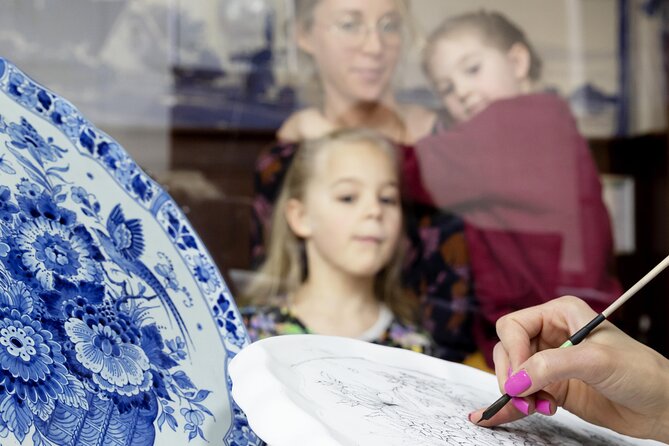
The production area gives Royal Delft its character. You can watch the traditional process unfold and see artists working on the pottery.
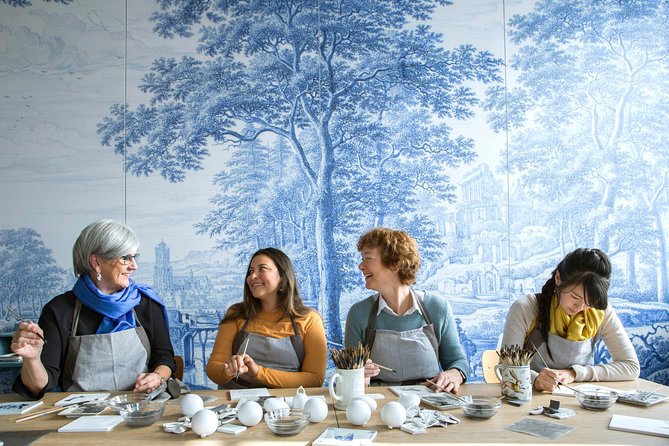
The painting demonstration is the part I would make sure not to miss. A skilled painter applies the familiar designs by hand, often with a level of control that is easy to underestimate until you see it happen. One especially useful detail is the explanation of how the dark pigment changes into Delft Blue during firing.
That small technical point helps explain why the finished pottery looks different from the paint applied before firing. It also shows why the work requires practice. A painter cannot simply judge the final blue while working with the unfired piece.
You may see the artists painting and other staff handling different stages of production. The process feels practical rather than theatrical. You are looking at a real working craft, not a staged demonstration created only for an audience.
The factory is also a good reason to avoid rushing. The basic visit may take about an hour, but many people will find 1 to 1.5 hours more comfortable if they want to read the panels, watch the screens, and wait for a painter to begin a new piece.
The museum rooms connect pottery with Dutch culture
Royal Delft’s museum collection moves beyond production. It places the pottery in a broader Dutch setting through themed rooms and historic objects.
The Vermeer room recreates the dining room of Johannes Vermeer, the celebrated 17th-century painter from Delft. This display links ceramics to domestic life and to the city’s artistic past. It is a useful change of pace after the factory machinery and production explanations.
The Royal Chambers focus on Orange Ceramics made for the Dutch royal family. These pieces give you a glimpse of how Delftware was used in formal and royal settings. If you are interested in Dutch monarchy, decorative arts, or ceremonial objects, this room will likely hold your attention longer than the general display cases.
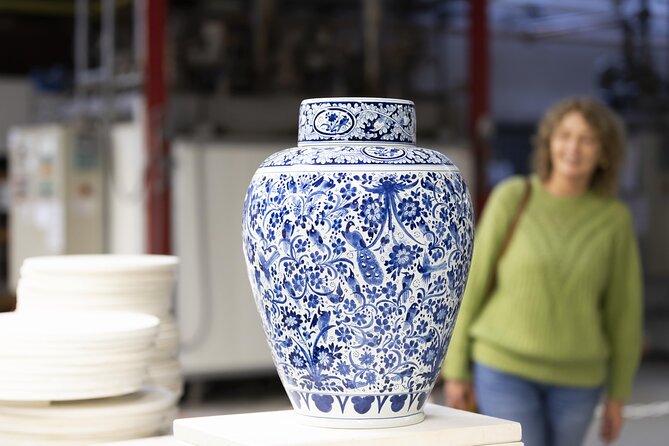
The museum also presents antique and modern Delft Blue pieces. That contrast matters. You can see how the style has continued while forms, subjects, and uses have changed. The collection is not enormous, so you will not spend half a day here. Its strength is the mix of old pottery, modern work, royal pieces, and an active factory.
One surprising display is the 480-tile version of Rembrandt’s The Night Watch. It gives the blue-and-white medium a dramatic subject and shows how ceramic tiles can create a large image from many separate pieces.
A few more Delft half-days worth comparing
- Delft: Canal Cruise with Guided Commentary
★ 4.4 · 990 reviews - Delft: Entrance Ticket for the Old and New Churches
★ 4.4 · 229 reviews - Delft: City Center Walking Tour
★ 4.7 · 88 reviews - Delft: Craft Beer Tasting in Medieval Brewery with Snacks
★ 4.4 · 67 reviews
Why the 480-tile Night Watch deserves your attention
The Night Watch is easy to overlook if you arrive expecting only traditional plates, jars, and tiles. Give it a few minutes.
The work is made from 480 tiles, and the scale makes it different from the smaller objects elsewhere in the museum. It also shows that Delftware is not limited to floral patterns or standard souvenir designs. The tiled image turns a familiar Dutch masterpiece into a ceramic artwork.
For me, displays like this help break up the visit. You move from the technical side of pottery to royal collections, then to a large artistic installation. The museum remains fairly compact, but the variety keeps it from feeling like a single long shop display.
The shop ranges from souvenirs to costly signed pieces
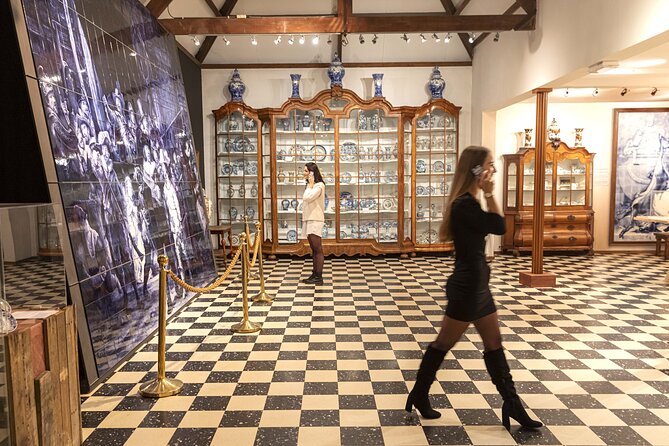
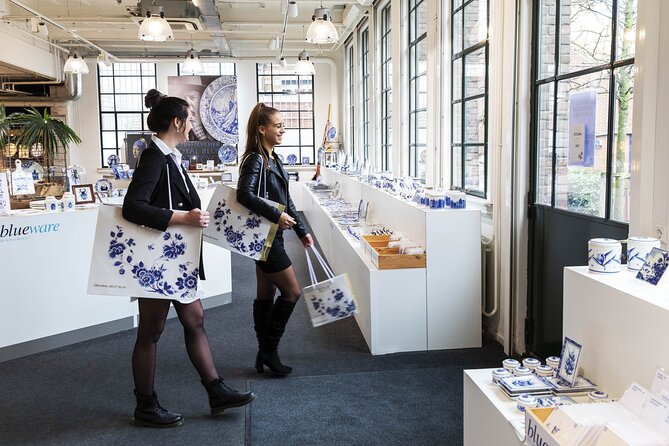
The showroom comes at the end of the route and carries a broad selection of Royal Delft earthenware and souvenirs. It is worth browsing even if you do not plan to buy anything, since you can compare the pieces with the work you just saw being produced.
Set your budget before you enter. Signed Royal Delft pieces can cost a great deal more than ordinary souvenirs. The price of the admission ticket, about $20.52 per person, is modest beside the cost of many of the higher-end items in the shop.
That contrast can be useful. After watching a painter work, you have a better sense of why a hand-painted piece carries a higher price. You can also decide if you prefer a small souvenir rather than a major decorative item.
I would not build the visit around shopping alone. The best value comes from combining the museum and factory experience with the shop at the end. You do not need to purchase pottery to appreciate the visit.
A pleasant stop at the brasserie
The brasserie overlooks a courtyard and serves coffee, tea, lunches, and High Teas. Food and drinks are not included in the admission price, so treat this as an optional extra.
A cup of tea served in authentic Delftware can be a fitting way to finish the visit. The setting gives you time to sit down after walking through the museum, and the menu offers more than a quick drink.
The brasserie is especially useful if you are allowing 1.5 hours rather than racing through in one. You can visit the factory, watch the painters, browse the collection, and then pause for food. You should not count on the cafe as part of the ticket value, but it adds a comfortable finish if you have the time and budget.
How much time should you allow?
The official visit is described as about one hour. That is enough for a fairly quick route through the museum and factory.
I would allow 1 to 1.5 hours for a better visit. Use the extra time to:
- Watch a painter at work
- Read the panels in each room
- See the production videos
- Spend time in the Vermeer and Royal Chambers
- Examine the 480-tile Night Watch
- Browse the showroom
- Stop at the brasserie if you want food or tea
You can shorten the visit if you are mainly interested in the factory. You will need longer if you enjoy decorative arts and prefer to read every display.
The opening hours provided for 2026 are daily from 9:30 a.m. to 5 p.m. Since the experience is self-guided, you have room to choose your own pace during those hours. The ticket is commonly booked around 25 days ahead, so planning ahead is sensible if this is important to your schedule.
Is the $20.52 admission good value?
At $20.52 per person, the ticket offers a solid amount to see for a one-hour museum visit, particularly because it includes the factory and demonstrations rather than only static displays.
The value is strongest if you care about process. Watching the painter and seeing the production stages gives the admission a purpose beyond viewing ceramics in cases. The connection with the Dutch royal family, the Vermeer room, and the Night Watch add further interest.
The value is less clear if you want a full guided tour or a large museum with hours of galleries. This is a compact experience, and you are responsible for making your own way through it. Food, drinks, workshops, and purchases are extra.
You can also join a workshop at Royal Delft, where you try painting Delft Blue yourself, but that is not part of this admission ticket. If hands-on activity matters most to you, check the workshop options separately rather than assuming this ticket includes one.
Who will enjoy this visit most?
I would recommend Royal Delft to anyone interested in ceramics, Dutch art, design, royal collections, or traditional crafts. It also works well for visitors who want something connected to Delft’s identity without spending a full day indoors.
Families can take part, though children must be accompanied by an adult. The working artists and the production process may hold a child’s attention better than long written panels, while older children and teenagers may appreciate seeing how the familiar blue color develops during firing.
The visit suits independent people who like to stop, read, and move at their own speed. It is less suitable for someone who wants a lively guide telling stories throughout the route.
Most people can participate, service animals are allowed, and the site is near public transportation. The maximum group size is 15, which keeps the experience from becoming a large organized crowd, though the visit itself remains self-guided.
Practical tips for a smoother visit
Arrive with enough time to watch a painter. The working artists are easy to miss if you hurry from the museum displays to the shop.
Use the audio guide if you prefer spoken explanations, but do not feel required to use it. The written panels and video screens cover much of the same material, and some visitors may find the displays easier to follow at their own speed.
If you are driving, a small parking lot beside the building is available. Since spaces can be limited, do not assume parking will be effortless.
Keep the brasserie in mind when planning your timing, but remember that food and drinks cost extra. If you intend to buy signed pottery, set aside a separate budget. The showroom includes souvenirs, but the most special pieces can be costly.
The ticket includes free Wi-Fi and an audio tour in eight possible languages. Confirmation is provided when you book, and free cancellation is available if you cancel at least 24 hours before the experience begins. Changes or cancellations made inside that 24-hour window are not accepted for a refund.
Should you book Royal Delft?
Book this experience if you want to see an authentic Delftware factory still using hand-painting methods, and if you enjoy learning by looking closely rather than following a guide. The factory floor, the painter demonstration, and the royal ceramics give the visit real substance.
I would be more cautious if you expect a large museum, a fully guided tour, or an activity packed with entertainment. Royal Delft is compact and self-directed. Its appeal comes from the craft, the displays, and the chance to watch skilled work happen in front of you.
For most visitors with an interest in Dutch art or pottery, the $20.52 ticket is a fair buy. Allow 1.5 hours, watch the painter, look for the 480-tile Night Watch, and finish with tea in Delftware if the brasserie suits your schedule.
FAQ
Where is Royal Delft located?
Royal Delft is located in Delft, Netherlands. The experience information lists The Hague as the location area and Royal Delft, Koninklijke Porceleyne Fles, as the attraction.
How long does the visit take?
The admission is described as approximately one hour. If you read the displays, watch the production process, and visit the shop or brasserie, allow about 1 to 1.5 hours.
Is the visit guided?
No. The admission does not include a personal guide or guided tour. You explore independently using display panels, screens, and an audio tour.
Is an audio guide included?
Yes. The ticket includes a one-hour audio tour available in eight possible languages.
What are Royal Delft’s opening hours?
For the listed 2026 period, Royal Delft is open Monday through Sunday from 9:30 a.m. to 5 p.m.
Are food and drinks included?
No. Food and drinks are not included. The brasserie serves coffee, tea, lunches, and High Teas at your own expense.
Can I cancel the ticket for a refund?
Yes. You can receive a full refund if you cancel at least 24 hours before the experience start time. Cancellations or changes made less than 24 hours ahead are not accepted for a refund.
Just added around Delft
- Private Tour of Delft + Visit to Royal Delft Museum★ 5.0 · 4 reviews
- Delft: Canal House Museum ‘Paul Tetar van Elven’ Ticket★ 4.5 · 6 reviews
- Delft: Private Historical and Cultural Guided Walking Tour★ 5.0 · 8 reviews
- The Hague: One Way Boat Ticket to or from Delft★ 4.5 · 52 reviews
- Delft: Christmas Walk with Oliebollen and Glühwein★ 4.8 · 8 reviews
- Delft: Craft Beer Tasting in Medieval Brewery with Snacks★ 4.4 · 67 reviews
- Delft – Step/scootertour in and around the city★ 4.8 · 9 reviews
- Get the best out of Delft by creating memories during our private walking tour!★ 5.0 · 15 reviews
Museums, compared.

Moco Museum Amsterdam Entrance Tickets with Banksy & More
Read our review →


Amsterdam’s Weirdest Museum: Believe It or Not!
Read our review →

Browse the lists this tour appears in