
Reviewed · WALKING TOURS
Amsterdam: Small-group Guided Walking Tour (French/English)
Amsterdam’s old center is easy to walk through, yet surprisingly hard to understand without context. This 2 to 3 hour tour connects the grand sights with small details: the canal houses, the narrowest house, hidden courtyards, tulip mania, Dutch daily life, and the city’s shift from fishing village to trading power. Chris leads in English, with French also available.
I like two things here. First, the route gives you a useful first look at Amsterdam without forcing you into a museum-heavy schedule. Second, the guide offers practical follow-up advice for restaurants, cafés, pubs, shops, boats, and other sights. The main consideration is pace: with roughly 20 stops, many are short photo and explanation stops rather than long visits inside.
Key points
- A strong first-day orientation: The route links Centraal Station, Dam Square, the old center, the canal belt, and Jordaan.
- Stories beyond the postcard view: Expect context on Amsterdam’s Golden Age, tulip mania, Dutch daily life, and the Anne Frank story.
- Chris is the main draw: He is praised for clear storytelling, humor, local detail, and useful restaurant and sightseeing advice.
- Small-group feel: Private and small-group formats allow questions and possible route adjustments.
- A practical $33 use of time: Food and drinks are not included, but the tour covers a wide central area without adding transport costs.
- Easy meeting point, with care needed: Look behind Centraal Station by the white and blue ferries, next to Pancakes Amsterdam at the IJ.
Starting beside Amsterdam Centraal and the IJ
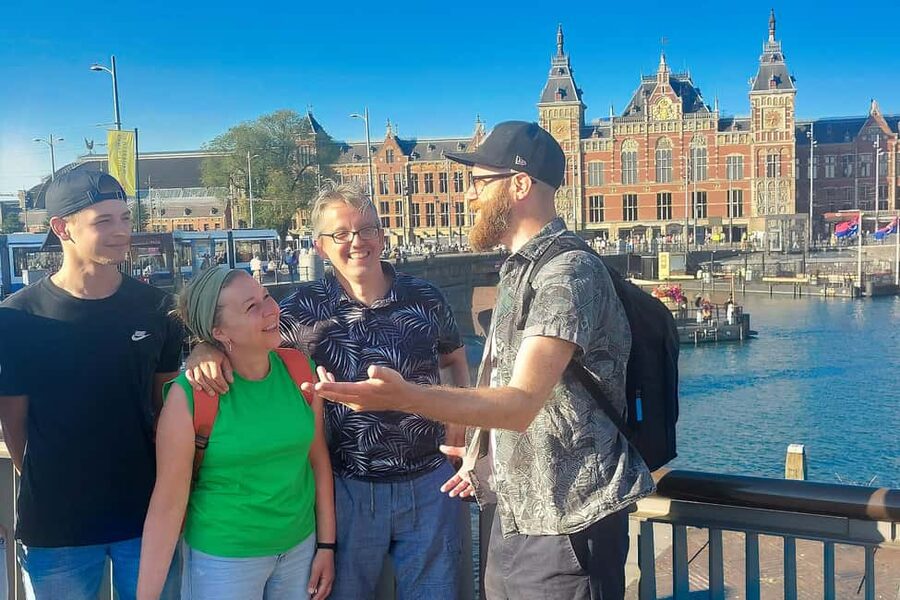
The meeting point is behind Amsterdam Centraal, beside the water where the white and blue ferries leave for Amsterdam North. Look for Pancakes Amsterdam at the IJ and the large D ferry stop sign beside the bike lane. Your guide is described as wearing glasses, a beard, and a baseball hat.
This is a useful place to begin because you are already at Amsterdam’s main arrival point. The station, ferry traffic, water, bicycles, and old city skyline give you an instant lesson in how Amsterdam works. Still, give yourself time to find the spot. The station area has several paths, ferry signs, and bike lanes, so do not cut your arrival too close.
The tour then moves toward the historic center. You will be on foot for 2 to 3 hours, so comfortable shoes matter more than stylish ones. Bring water, an umbrella, and clothing suited to the weather. Amsterdam weather can change quickly, and there is no included food or drink break.
More Walking Tours in Amsterdam
- Anne Frank’s Story – Guided Walking Tour through Amsterdam
★ 5.0 · 11,619 reviews - Amsterdam: Life of Anne Frank and World War II Walking Tour
★ 4.8 · 10,467 reviews - Absolutely Amsterdam – the Essential Introductory Walking Tour
★ 5.0 · 3,629 reviews
Centraal Station, the Dancing Houses, and Saint Nicholas
The first stops help you read the city’s architecture. Amsterdam Centraal is more than a transport hub, and your guide uses it as a photo and explanation point before leading you toward the Dancing Houses.
The Dancing Houses are a classic Amsterdam sight. Their narrow façades and slight angles make the city look cheerfully uneven. This is one of those stops that works best with a guide because the view alone tells only half the story. Look up, listen for the explanation, and notice how the buildings sit along the water and street frontage.
The Basilica of Saint Nicholas adds a different note. Its large church form is a useful contrast to the thin canal houses around it. The stop is brief, so think of it as an outside introduction rather than a church visit. If you want to see interiors at length, you will need to return on your own.
Zeedijk, Alida Bosshardt, and life in the old center
Zeedijk gives the walk a more local, mixed character. This old street leads through an area where Amsterdam’s past and present sit close together. The route also includes the statue of Major Alida Bosshardt, a figure connected with social work in the city. That stop helps shift the tour away from architecture alone and toward Amsterdam’s people and civic life.
Next comes Ons’ Lieve Heer op Solder, the Our Lord in the Attic Museum. From the street, you get an introduction to one of Amsterdam’s most unusual historic sites, a hidden Catholic church built inside a canal house. The tour does not include entry, and the stop is listed as a photo and guided explanation stop. If the idea catches your interest, save the museum for a separate visit.
This stretch is one of the tour’s strengths. You are not simply moving from famous square to famous square. You are seeing how religion, trade, social care, and ordinary streets shaped the old city.
Oude Kerk, Chinatown, and the old eastern bank
The route continues to the Oude Kerk, Amsterdam’s oldest church, then through Burgwallen Oude Zijde and Amsterdam Chinatown. These stops show how close the city’s oldest landmarks are to present-day shops, restaurants, and immigrant communities.
At the Oude Kerk, the guide can help you place the church within the surrounding medieval street plan. Again, the short stop is not a substitute for going inside. It is better understood as a quick orientation, especially if you have never walked this part of Amsterdam.
Chinatown adds a modern cultural layer. I like this part of the route because it keeps Amsterdam from becoming a museum of Dutch façades. The city center has long been shaped by trade and movement, and the changing streetscape gives you a more complete picture.
De Waag follows. This striking building has served different purposes over time, and its location near the old center makes it a useful point for discussing Amsterdam’s defenses, trade, and public life. The exact emphasis can shift with your group and guide, which is useful if you have questions.
More Small-Group Tours in Amsterdam:
- Amsterdam: Anne Frank Guided Small Group Walking Tour
★ 4.8 · 2,722 reviews - Amsterdam Small-Group Canal Cruise Including Snacks and Drinks
★ 5.0 · 2,526 reviews - Zaanse Schans Windmills, Clogs and Dutch Cheese Small-Group Tour from Amsterdam
★ 4.5 · 2,369 reviews - Amsterdam: Zaanse Schans 3-Hour Small Group Tour
★ 4.8 · 2,160 reviews
Dutch trade at the VOC site and the narrowest house
The tour also touches the Dutch East India Company, known as the VOC. This is an important moment for understanding Amsterdam’s wealth and global reach during the Dutch Golden Age. It also gives you a chance to ask about the less comfortable side of that prosperity, including the systems of trade and power behind it.
The stop at the narrowest house in Europe is lighter in tone. Its tiny frontage is a favorite photo subject and a good reminder that Amsterdam’s valuable canal plots encouraged very narrow building designs. You may find the stop quick, but it adds the sort of visual detail that makes later walks more fun.
This is where Chris’s style appears especially useful. His strongest feedback centers on small facts, stories, and visual aids for specific sights. If you enjoy asking why a building looks the way it does, or how a street gained its name, this tour should give you plenty to work with.
Dam Square, the Royal Palace, and Magna Plaza
Dam Square is the main civic heart of the route. Here you see the Royal Palace, a major landmark that began as Amsterdam’s city hall, along with the broad square and nearby historic buildings. The guide connects the square to the city’s growth, government, monarchy, and public life.
The Royal Palace stop is outside. That is worth knowing if palace interiors are high on your list. You will get background and a good first look, but palace admission is not included.
Magna Plaza offers a different architectural pause. The former post office building has a grand interior and ornate exterior, now used for shopping. It helps you see how old city buildings continue to serve modern purposes.
For first-time visitors, this central section is valuable because it gives you a map in your head. After the tour, Dam Square can act as a reference point for returning to the palace, the canal belt, shopping streets, or the western side of the center.
Torensluis and the 400-year-old canal belt
From the square, the walk reaches Torensluis Bridge and the Grachtengordel, Amsterdam’s canal belt. The canal district is a UNESCO World Heritage site and one of the city’s defining sights. You will see the water, bridges, house fronts, and long lines of historic streets that make Amsterdam so recognizable.
A guide adds value here by pointing out details you might otherwise pass without noticing. Watch the façades, rooflines, hooks, windows, and the way buildings lean toward the street. The famous views are attractive, but the stories explain why the city was built this way and how it supported Amsterdam’s rise as a trading center.
The canal belt is also one place where a walking tour can outperform a hurried boat ride. A boat gives you a fine view from the water, while walking lets you stop, turn around, compare buildings, and ask questions. The tour does not include a boat trip, but the guide provides recommendations if you want to add one later.
Anne Frank House and Westerkerk
The route includes the Anne Frank House and Westerkerk. These are among Amsterdam’s most visited sights, so the guide’s role is mainly to provide setting and historical context from outside. Entry to the Anne Frank House is not included.
If you want to visit the Anne Frank House, arrange that separately and well ahead of time using the official ticket system. Do not expect this walking tour to replace the museum visit. It can help you understand the neighborhood and the nearby church tower, but the interior experience requires its own ticket and time slot.
Westerkerk adds an architectural and historical landmark beside the canal. Its position near the Anne Frank House makes the two stops easy to connect geographically. The guide can help you understand why this part of the western canal belt matters, while you also get a chance to pause after the denser old-center streets.
This portion may feel serious compared with the playful stop at the narrowest house or the stories of tulip mania. That range is useful. Amsterdam’s identity includes art, trade, faith, migration, social work, war, and everyday life, not just pretty canals.
Finishing in Jordaan
The final section reaches Jordaan, one of Amsterdam’s best-known neighborhoods. Here the route shifts toward narrow streets, canals, small courtyards, and a more residential feel. The experience is less about ticking off a single monument and more about seeing how the city feels away from its biggest square.
The tour description includes hidden courtyards and secret gardens, though the exact access may depend on opening conditions, local rules, construction, or the interests of your group. Ask your guide what can be seen on the day.
Jordaan is a good place to finish because you can continue exploring without needing transport. You can use the guide’s recommendations for food, drinks, cafés, shopping, and nearby sights. Several people specifically valued the practical links sent after the tour, including advice on Dutch food and places to eat.
Do not expect a food tour. Bitterballen is mentioned in the guide’s recommendations, but food and drinks are not included. The point is to leave with ideas for your next meal, not to sample one during the walk.
What Chris adds to the experience
The guide is repeatedly praised for a friendly manner, humor, local history, and the ability to answer questions. Chris is also referred to as Christian in one booking, so you may see either name used. His approach includes stories, small facts, and display visuals for historic places and particular buildings.
That matters because the route covers a lot. Without a strong narrator, 20 stops could become a blur of names and façades. Chris’s reported style is conversational rather than formal, with time for questions and recommendations after the main walk.
French is available, and English is available. If language matters to your booking, check the selected tour option carefully. Private and small-group formats are offered, which can make it easier to ask questions or request small itinerary changes.
The route can be adjusted when possible for your interests, construction work, or other unexpected changes. That flexibility is helpful, but it also means the exact order or amount of time at each sight may vary.
Is $33 a fair price?
At $33 per person, I see this as good value for a first look at central Amsterdam. You get a local guide, a route through major districts, historical background, and practical tips that can shape the rest of your stay. You also avoid spending your first morning trying to connect these places on a map.
The value depends on what you want. If you prefer long museum visits, quiet photography, or independent wandering, the 2 to 3 hour route may feel too broad. Most stops are short, so you are paying for context and orientation rather than extended time at any one attraction.
For a first day, I like the tradeoff. The tour can help you decide which places deserve a return visit, which museum or canal cruise fits your interests, and where you might eat later. Since admission fees, food, drinks, and boat trips are not included, budget separately for those.
The 5 out of 5 rating from 289 reviews supports the idea that the guide’s personal service is a major part of the value. The strongest pattern is not a single landmark. It is the combination of clear history, a comfortable pace, friendly answers, and useful follow-up advice.
Who should book this Amsterdam walk?
I would choose this tour if you are visiting Amsterdam for the first time, want a broad city introduction, or have only a short stay. It also suits you if you enjoy history but prefer stories on the street instead of a full day inside museums.
It is a good fit for people who like to ask questions. Chris’s style appears especially useful for curious visitors who want restaurant suggestions, Dutch food advice, and help planning the next day.
You should think twice if you dislike walking in busy city areas or want every stop to include entry. This is an outdoor orientation tour, not a museum pass. Some stops may be busy, weather may affect comfort, and the large number of locations means no single attraction gets much time.
Wheelchair access is listed, but Amsterdam’s old streets, bridges, crowds, and possible construction can still affect the route. If you use a wheelchair, confirm the practical route details before booking and mention any needs in advance.
Should you book it?
Book this walk if you want Amsterdam to make sense quickly. The route covers the city center, Dam Square, the canal belt, Anne Frank House surroundings, and Jordaan, while the guide adds the small stories that make those places stick.
I would be especially comfortable recommending it for a first or second day, when practical food and sightseeing advice has real value. Choose it in French or English, wear good shoes, and leave room in your schedule to return to the places that catch your interest.
FAQ
How long does the Amsterdam walking tour last?
The tour lasts approximately 2 to 3 hours. Starting times vary, so check availability when booking.
What languages are available?
The live guide is available in English or French.
Where does the tour meet?
Meet behind Amsterdam Centraal Station, near the water and the white and blue ferries to Amsterdam North. The meeting point is next to Pancakes Amsterdam at the IJ, near the large D ferry stop sign beside the bike lane.
How will I recognize the guide?
The guide is described as wearing glasses, a beard, and a baseball hat.
Is the tour private or shared?
Private and small-group options are available.
Are food and drinks included?
No. Food and drinks are not included, although the guide provides recommendations for restaurants, cafés, pubs, Dutch food, and other places to eat and drink.
Does the tour enter the Royal Palace or Anne Frank House?
The route includes guided stops and photo stops at these landmarks, but admission is not listed as included. The tour does not replace a separate visit inside either attraction.
Can I cancel or pay later?
You can cancel up to 24 hours in advance for a full refund. A reserve-now, pay-later option is also available.
Just added around Amsterdam
- Private sightseeing tour to Bruges and chocolate from Amsterdam★ 5.0 · 11 reviews
- Amsterdam: Rijksmuseum (Private Tour & Priority Access)★ 5.0 · 27 reviews
- Amsterdam: Private Romantic Evening Canal Cruise + Bubbles/Snacks★ 5.0 · 46 reviews
- Amsterdam Private Shopping Experience★ 5.0 · 7 reviews
- Rijksmuseum Amsterdam Private Guided Tour★ 5.0 · 57 reviews
- Amsterdam Rijksmuseum PRIVATE TOUR with a Local Private Guide★ 5.0 · 159 reviews
- Private Photo Session in Amsterdam★ 5.0 · 15 reviews
- Private One way Transfer Amsterdam Airport to Amsterdam★ 3.5 · 42 reviews
Walking Tours, compared.
Anne Frank’s Story – Guided Walking Tour through Amsterdam
Read our review →
Life of Anne Frank and World War II Walking Tour
Read our review →
Absolutely Amsterdam – the Essential Introductory Walking Tour
Read our review →

Anne Frank Walking Tour – Guided in EN/DE/IT/ES
Read our review →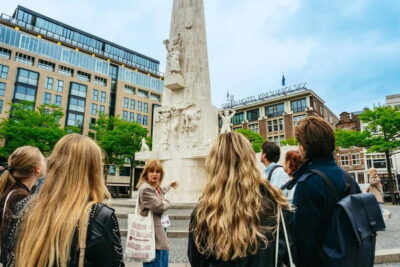

Anne Frank Walking Tour Amsterdam Including Jewish Cultural Quarter
Read our review →Browse the lists this tour appears in