

Reviewed · ANNE FRANK TOURS
Amsterdam: Life of Anne Frank and World War II Walking Tour
Anne Frank’s story is best understood in the streets and neighborhoods that shaped it. This two-hour walk connects her family’s life, the old Jewish Quarter, wartime persecution, Dutch Resistance efforts, and the diary’s later fame without pretending that a view of the Anne Frank House can replace going inside.
I like the route’s clear historical arc and the chance to see the Portuguese Synagogue, Auschwitz Monument, Jewish Historical Museum, and Anne Frank House façade in one outing. I also like the choice between a shared group and private guide, with guides such as Jonas, Martina, Yoshi, Florian, and Manuel praised for turning difficult material into an understandable, respectful lesson.
The main limitation is simple: Anne Frank House admission is not included. The walk ends outside the house, so book that separate ticket months ahead if you hope to enter. The route also calls for comfortable shoes and leaves large luggage behind.
Key points to know before booking
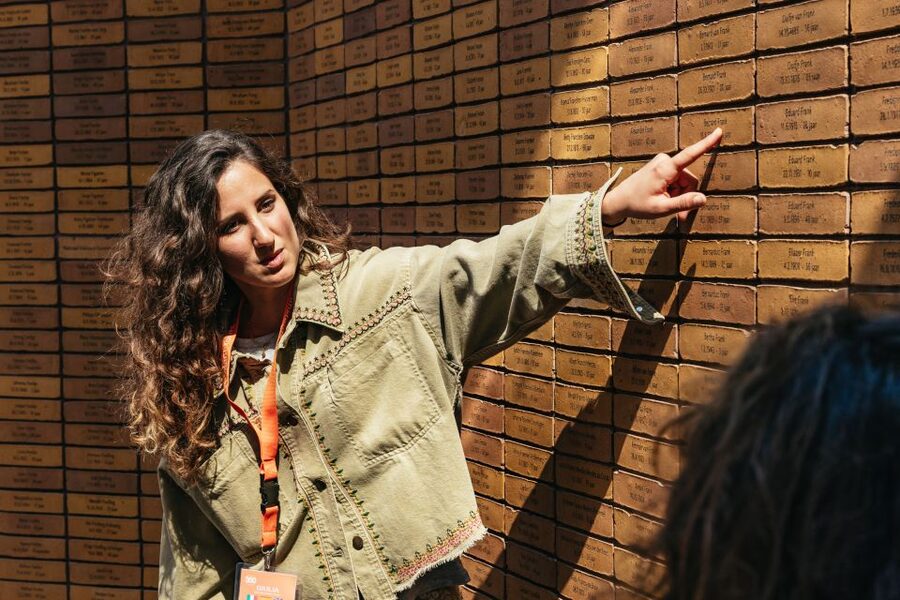
- A two-hour route through Jewish Amsterdam: The walk links Anne Frank’s family story with the older Jewish Quarter and wartime Amsterdam.
- Four major landmarks: You pass the Portuguese Synagogue, Jewish Historical Museum, Auschwitz Monument, and Anne Frank House exterior.
- Strong guide-led storytelling: Guides including Jonas, Manuel, Yoshi, Martina, Florian, and Julia bring personal stories and wartime context to the streets.
- Anne Frank House tickets are separate: This is an excellent alternative if tickets are gone, but it is not an inside visit.
- Good value at $37: For two hours with a live guide, the price is fair, especially for a first Amsterdam visit.
- Shared or private format: Check the exact option and language, since group and private tours may not offer the same choices.
Why this walk matters beyond the Anne Frank House
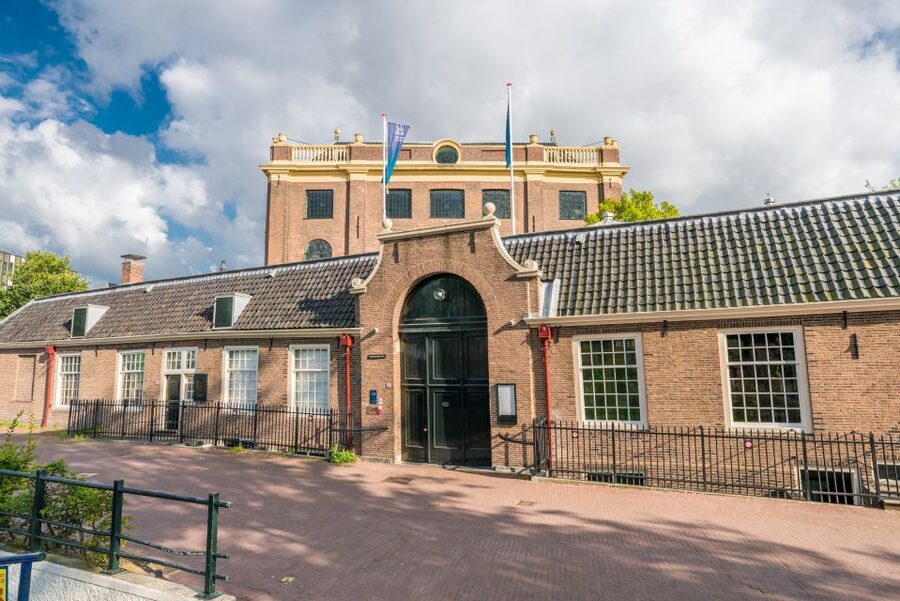
It is easy to treat Anne Frank’s story as a single building with a long ticket line. This walk widens the frame. You hear about Anne as a girl growing up, her family’s move from Germany, the conditions in Amsterdam during the 1930s and 1940s, the years in hiding, and Otto Frank’s life after the war.
That broader view matters because Anne did not live in isolation. Her story was tied to a Jewish community with centuries of roots in Amsterdam. The route also places her experience within the German occupation, the persecution of Jewish residents, and the choices made by people who resisted or helped others.
I find this approach especially useful if Anne Frank is familiar to you only through the diary. A guide can explain family relationships, Anne’s love of writing, and the road from private notebook to world-famous book. The focus is not simply on tragedy. It is also on a young writer’s voice and the people around her.
The subject is heavy, and the tour does not try to make it light. Still, the best guides keep the material accessible. Yoshi was praised for handling persecution with care and passion. Julia was described as attentive to the group’s questions and feelings, while Manuel made the subject relevant for both teenagers and adults.
More Walking Tours in Amsterdam
- Anne Frank’s Story – Guided Walking Tour through Amsterdam
★ 5.0 · 11,619 reviews - Absolutely Amsterdam – the Essential Introductory Walking Tour
★ 5.0 · 3,629 reviews - Amsterdam: Anne Frank Guided Small Group Walking Tour
★ 4.8 · 2,722 reviews
Starting beside the Portuguese Synagogue
The walk begins outside the Portuguese Synagogue, a 17th-century Sephardic building that still functions as a synagogue. It is a fitting starting point because the building gives you an immediate sense that Jewish Amsterdam did not begin with the Second World War.
Your guide explains how the original Jewish neighborhood developed over many centuries. That early context helps you see the area as a living community, not just a collection of wartime memorials. The synagogue also adds a useful contrast: Jewish life in Amsterdam had a long, varied history before the occupation shattered it.
The synagogue is a starting point, not necessarily an interior visit. The walking tour includes the guide’s explanation and the exterior setting, so do not book this expecting a synagogue admission. If you want to explore every landmark inside, you will need to arrange separate visits.
This opening stop also helps with orientation. Amsterdam’s Jewish Cultural Quarter includes several sites close enough to connect on foot, but a guide gives the streets a logical order. That can be useful on your first day in the city, when a short walk helps you understand the center and plan later visits.
The Jewish Quarter and the Jewish Historical Museum
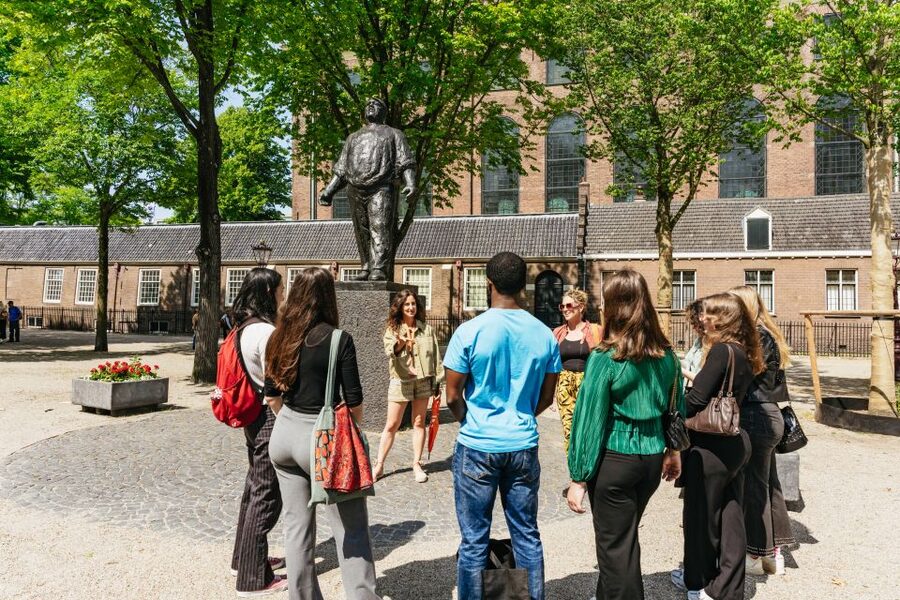
From the synagogue, the route moves through the Jewish Quarter and past the Jewish Historical Museum. Here, the story becomes more layered. You learn about Jewish life before the war, the community’s place in Amsterdam, and what changed under German occupation.
The museum itself is one of the landmarks you see along the way, but entrance is not listed as part of the walk. That distinction matters. You get historical explanation from the guide, not a museum visit with time to study its displays.
I like this section because it prevents the tour from reducing Amsterdam’s Jewish population to victims alone. The guide’s account of the neighborhood’s earlier life gives the wartime story a human setting. You begin to picture families, faith, work, school, and community before the restrictions and deportations.
The guide may also use photographs or other visual material. Peter, for example, used a binder of pictures to support his explanations. That sort of aid can help when you are standing on an ordinary street and trying to connect today’s buildings with events from the 1930s and 1940s.
Because this is a walking tour, the exact pace depends on the group and guide. Florian was praised for keeping people together without walking too fast, a small detail that matters when the subject requires attention. You need to stay near the guide and listen carefully, especially on busy Amsterdam streets.
Anne Frank’s family, writing, and years in hiding

The Anne Frank portion covers more than the familiar outline of hiding in the Secret Annex. You hear about her family dynamics, their move from Germany, Anne’s interest in writing, and the difficult conditions facing Jewish people in Amsterdam.
That family focus makes the story more personal. It also helps you understand Anne as a young person with opinions, ambitions, frustrations, and a developing literary voice. Her diary was not written as a history textbook. It was a private record that later became one of the best-known accounts of life under Nazi persecution.
The guide also discusses Otto Frank’s life after the war. That is a valuable part of the story because Anne’s diary did not end when the hiding place was discovered. Otto’s survival and later work shaped how Anne’s writing reached the public.
Do not expect a long stop at the hiding place itself. The tour takes you to the outside of the Anne Frank House façade rather than inside the building. You will hear the story and gain context, but you will not see the Secret Annex rooms or the famous movable bookcase as part of this experience.
For many people, this is the most important booking detail. If entering the house is your main goal, reserve the official admission separately several months ahead. Tickets often sell out well in advance. If you cannot get one, this walk still gives you a serious, useful account rather than leaving you with only a photograph outside.
More WWII Tours in Amsterdam
- Amsterdam: Dutch WWII Resistance Museum Entry Ticket
★ 4.7 · 951 reviews - Small Group Tour to Nazi WWII concentration camp from Amsterdam
★ 5.0 · 112 reviews - Amsterdam: Anna Frank and World War II History Walking Tour
★ 4.8 · 86 reviews - Amsterdam: Anne Frank and World War II Walking Tour (TOP RATED)
★ 4.5 · 72 reviews
Dutch Resistance and the city under occupation

The route also covers the Dutch Resistance during the Second World War. This section adds needed complexity. Amsterdam’s wartime story was not only about persecution and hiding. It also involved resistance, secrecy, moral choices, and people trying to help under dangerous conditions.
Your guide points out places connected with secret hiding locations and explains how the occupation affected daily life. The value here comes from location. You are not hearing a detached lecture in a classroom. You are walking through the city where those pressures shaped real decisions.
The guide’s role is important. The subject includes death, fear, betrayal, and loss, so a rushed or careless presentation would weaken the experience. Guides such as Yoshi, Arthur, Julia, and Jonas were praised for treating the material with care while keeping the group involved.
Jonas, in particular, was described as warm, engaged, and deeply committed to the subject. Arthur was praised for bringing wartime Amsterdam to life. Those qualities matter more than theatrical performance. You want a guide who can explain clearly, answer questions, and respect the weight of what you are hearing.
This part may be difficult for younger children. Children up to age three can join free, but the activity deals with persecution and mass death. Parents should decide if a two-hour discussion of the occupation is suitable for their children.
A quiet pause at the Auschwitz Monument
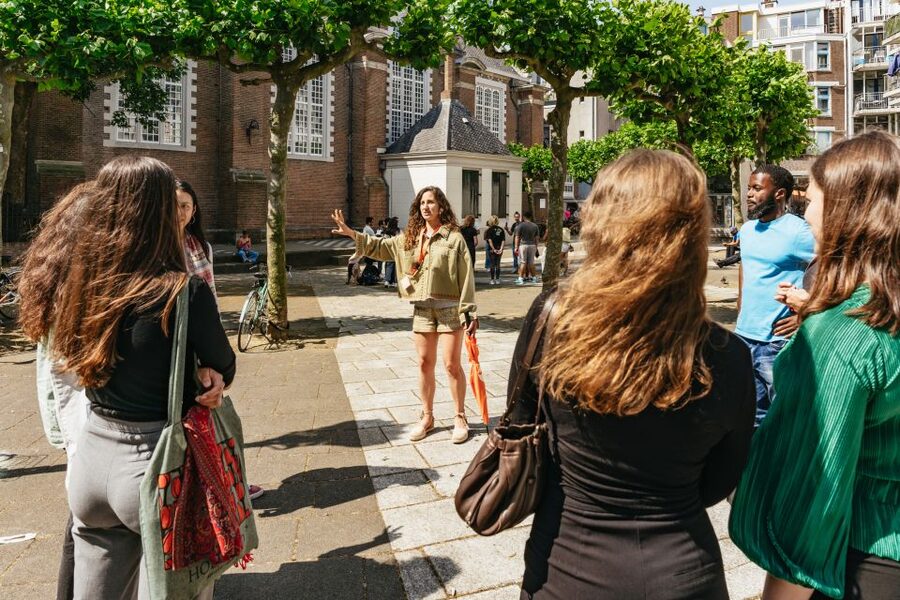
The Auschwitz Monument is one of the most powerful stops. Unlike a busy museum visit, a memorial stop gives the group a chance to pause and reflect. The guide explains its meaning and the scale of lives lost during the Holocaust.
This is often where the walking tour feels least like sightseeing. The monument asks you to slow down. Florian was praised for allowing time to walk through the memorial and helping the group understand the number of people who died.
That pause is one reason comfortable shoes and a charged phone are listed as useful items, but the bigger requirement is attention. You will be outdoors for the full activity, and the route depends on walking between sites. Bring water, dress for the day, and avoid carrying large bags or luggage.
The monument also gives the tour a broader focus. Anne Frank’s story is central, but it is one story within the destruction of Jewish communities across Europe. The guide connects the personal account in Anne’s diary with the larger human cost of Nazi persecution.
What the Anne Frank House exterior can and cannot do
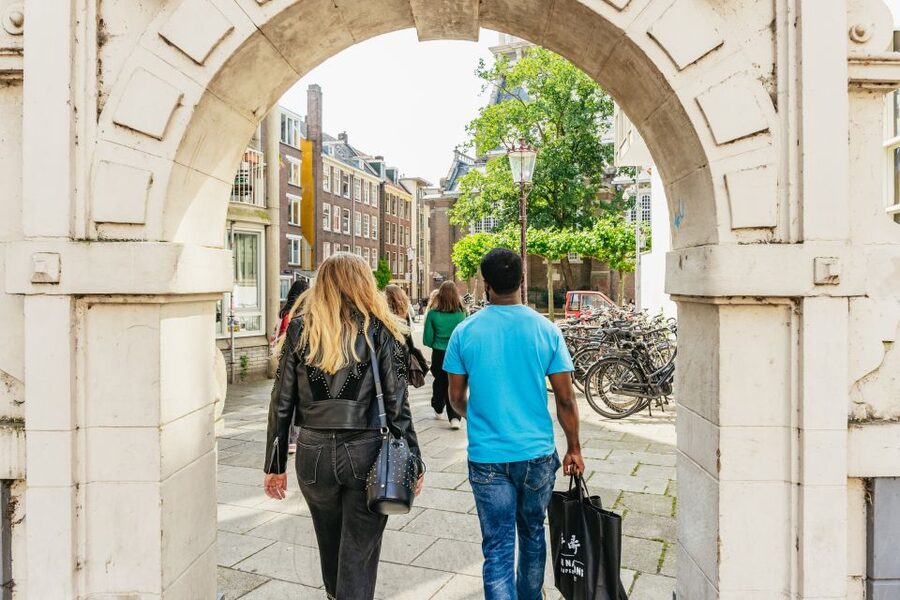
Seeing the façade at the end gives you a physical reference point. You can connect the guide’s earlier explanation with the building where Anne, her family, and others hid. For a first visit, that may be enough to make the story more concrete.
Still, the outside cannot show you the cramped rooms, steep stairs, or hidden entrance. You should not confuse this walking tour with a substitute for the official house visit in terms of access. It is better understood as historical preparation, or as a solid alternative when official tickets are unavailable.
I would book the walk before an Anne Frank House visit if you can get both. The guide can give you names, dates, family context, and wartime background first. Then the house visit can focus on the physical space and Anne’s original writing.
If you cannot get a house ticket, book the walk without feeling that you have missed the entire story. You will not enter the rooms, but you will learn about Anne’s family, the Jewish Quarter, the Resistance, the occupation, and Otto Frank’s later life. Several hours at a good museum or another memorial could add more, but this two-hour route gives you a strong foundation.
Guide quality, languages, and group choice

The experience is offered as a shared small-group or private tour. A small group usually gives you the social energy of walking with others while keeping the guide close enough for questions. A private option may suit families or groups that want more control over the pace and discussion.
The available guide languages are Dutch, German, Portuguese, Italian, English, Spanish, and French. Check the precise option before booking. The shared and private formats do not always provide the same language choices.
English-speaking guides named in the feedback include Jonas, Martina, Yoshi, Florian, Manuel, Julia, Arthur, Peter, Janet, Sasha, Kiran, Henk, Giovanni, Ronald, and others. The repeated strengths are clear explanations, strong preparation, and a respectful tone. Some guides use photographs or binders, while others rely on stories and questions.
One practical point: arrive early at the correct meeting place. The starting point can change according to the option you book, and the activity returns to its meeting point. One guide generously allowed a late arrival to join a slightly earlier walk, but you should not count on that. Amsterdam streets can make a two-minute delay surprisingly costly.
Is $37 a fair price?
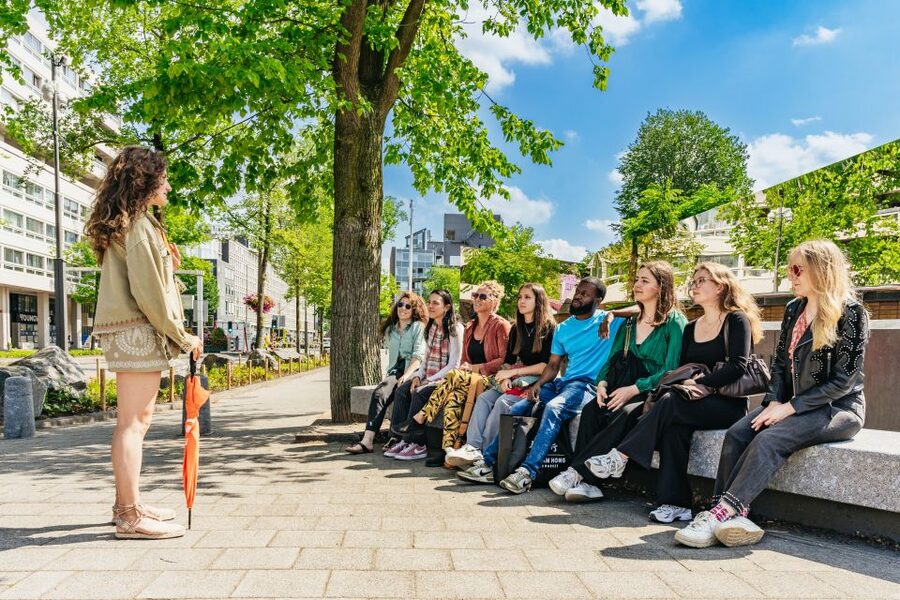
At $37 per person, this is a fair price for a two-hour guided walk in central Amsterdam. You are paying for a live guide, not admission to the Anne Frank House or the Jewish Historical Museum, and not transport to the meeting point.
The value depends on how much context you want. If you only want to see the Anne Frank House façade, $37 is too much. You can walk past it on your own. If you want the connected story of the family, Jewish Amsterdam, the occupation, Resistance activity, memorials, and the diary’s publication, the guide adds real value.
A private tour will usually make more sense for a group that wants flexibility, while the shared option is likely the better deal for solo visitors and couples. The unusually high rating and large number of ratings suggest a dependable experience, but guide quality can still vary because different people lead different departures.
I would also consider the timing. At two hours, it fits neatly into a morning or afternoon. It is short enough for a first day in Amsterdam, yet substantial enough to shape the rest of your visit. Afterward, you may want time at the Anne Frank House, Jewish Historical Museum, or another memorial, so avoid packing the day too tightly.
Who should book this Amsterdam walk?
I recommend it to first-time visitors who want a meaningful introduction to Amsterdam’s Jewish Quarter. It also suits anyone who failed to secure Anne Frank House tickets but still wants more than an exterior photograph.
Families with older children and teenagers may find the walk useful because a good guide can explain difficult subjects in plain language and invite questions. Manuel was especially praised for keeping both teenagers and adults involved.
The tour suits history-minded visitors, readers of Anne Frank’s diary, and people who prefer learning through streets and memorials rather than sitting in a museum. It may not suit you if you dislike walking, want a light sightseeing outing, or expect to enter every landmark on the route.
Should you book it?
Book this tour if you want the story around Anne Frank, not just the address of the house. The Portuguese Synagogue, Jewish Quarter, Jewish Historical Museum, Auschwitz Monument, Resistance stories, and Anne Frank House exterior create a useful two-hour route, and the best guides handle the subject with care.
Just keep the limits in mind. Admission to the Anne Frank House is not included, large luggage is not allowed, meeting points vary, and some language choices depend on the format. Reserve the official house ticket separately months ahead if entering is important to you.
At $37, I see this as a strong orientation walk and a worthwhile backup when house tickets are gone. Choose a private departure for control and quieter discussion, or the shared option for good value. Either way, bring comfortable shoes, water, a charged smartphone, and enough time to listen.
FAQ
Does this tour include entry to the Anne Frank House?
No. The tour includes the outside façade of the Anne Frank House, but admission and tickets are not included.
How long does the walking tour last?
The scheduled duration is two hours. Some departures may run a little longer, so allow extra time afterward if you have another booking.
Which landmarks are included on the route?
The route includes the Portuguese Synagogue, Jewish Historical Museum, Auschwitz Monument, and the exterior of the Anne Frank House.
What languages are available?
The listed languages are Dutch, German, Portuguese, Italian, English, Spanish, and French. Shared and private options may not offer the same languages, so check the exact departure before booking.
Is a private tour available?
Yes. You can choose a private group option, subject to availability.
What should I bring?
Wear comfortable shoes, bring water, and carry a charged smartphone. Large bags and luggage are not allowed.
Can young children join the tour?
Children up to three years old can participate for free. The subject includes wartime persecution and Holocaust memorials, so parents should decide if the content suits older children in their group.
Can I cancel the booking?
You can cancel up to 24 hours in advance for a full refund. A reserve now and pay later option is also available.
More Anne Frank and Wartime Walks
- Amsterdam: Anne Frank Walking Tour – Guided in EN/DE/IT/ES
★ 4.9 · 2,676 reviews - Anne Frank Walking Tour Amsterdam Including Jewish Cultural Quarter
★ 5.0 · 1,879 reviews - Anne Frank’s Last Walk & See Anne Frank House in Virtual Reality
★ 5.0 · 957 reviews - Anne Frank and Jewish Quarter Amsterdam Private Walking Tour
★ 5.0 · 684 reviews
Just added around Amsterdam
- Private sightseeing tour to Bruges and chocolate from Amsterdam★ 5.0 · 11 reviews
- Amsterdam: Rijksmuseum (Private Tour & Priority Access)★ 5.0 · 27 reviews
- Amsterdam: Private Romantic Evening Canal Cruise + Bubbles/Snacks★ 5.0 · 46 reviews
- Amsterdam Private Shopping Experience★ 5.0 · 7 reviews
- Rijksmuseum Amsterdam Private Guided Tour★ 5.0 · 57 reviews
- Amsterdam Rijksmuseum PRIVATE TOUR with a Local Private Guide★ 5.0 · 159 reviews
- Private Photo Session in Amsterdam★ 5.0 · 15 reviews
- Private One way Transfer Amsterdam Airport to Amsterdam★ 3.5 · 42 reviews
Anne Frank Tours, compared.
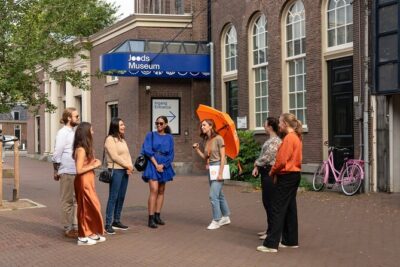
Anne Frank’s Story – Guided Walking Tour through Amsterdam
Read our review →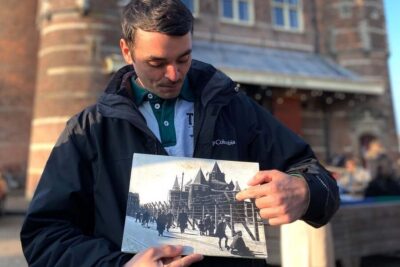

Anne Frank Walking Tour – Guided in EN/DE/IT/ES
Read our review →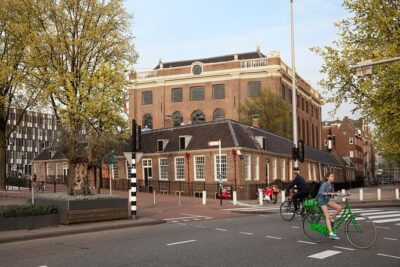
Anne Frank Walking Tour Amsterdam Including Jewish Cultural Quarter
Read our review →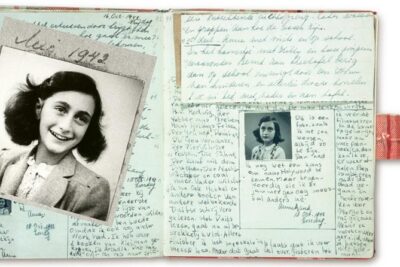
Anne Frank’s Last Walk & See Anne Frank House in Virtual Reality
Read our review →
Anne Frank and Jewish Quarter Amsterdam Private Walking Tour
Read our review →

Browse the lists this tour appears in