
Reviewed · WALKING TOURS
Amsterdam Highlights and History Walking Tour (MUST DO)
Amsterdam’s story comes alive on foot, from the political theater of Dam Square to the quiet Begijnhof courtyard and the old lanes around the Red Light District. This tour gives you a useful first look at the city without burying you in dates and dry facts.
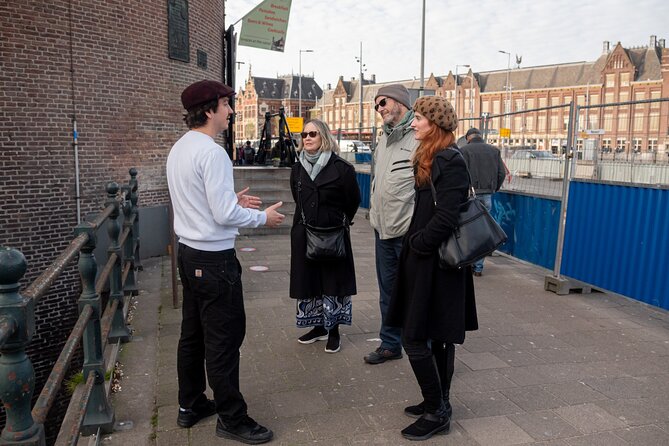
I like the small maximum group of 15, which makes it easier to hear your guide and ask questions. I also like the mix of major sights and less obvious details, especially the way guides such as Gio, Aaron, Andrea, Aarre, David, and James connect buildings, politics, faith, and daily life.
The main drawback is simple: you must walk and stand for about two hours while keeping alert around Amsterdam’s bicycle traffic. Bad weather can also spoil the experience, and the cancellation terms offer no refund inside 24 hours.
Key points to know before you book
- A two-hour city-center route: You see several of Amsterdam’s essential sights in one compact outing.
- A capped group of 15: The size is small enough for questions and personal attention.
- Strong history and culture focus: Expect explanations about urban planning, religion, royal power, trade, and local life.
- Several famous landmarks in one walk: The route includes Dam Square, the canal ring, Begijnhof, the Old Church, the Royal Palace, and Nieuwmarkt.
- Good value at $26.91: The price includes a local English-speaking guide, but not food or drinks.
- Best for active first-time visitors: You need to manage two hours on foot and watch for bikes along the way.
Why this two-hour walk works for a first look at Amsterdam
Amsterdam can feel confusing at first. Its streets curve around canals, bikes move quickly, and the important buildings are spread through a compact but busy center. A guided walk gives you a basic map in your head before you set off on your own.
This experience focuses on the city center rather than trying to cover every district. That is a sensible choice for a short tour. You get a close look at the places that shaped Amsterdam’s public life, religious life, royal life, and street culture.
The tour is offered in English and costs $26.91 per person. For that price, I see the main value in the guide’s explanation, not simply the route. You can photograph Dam Square or a canal by yourself. The useful part is learning why these places matter and how they fit together.
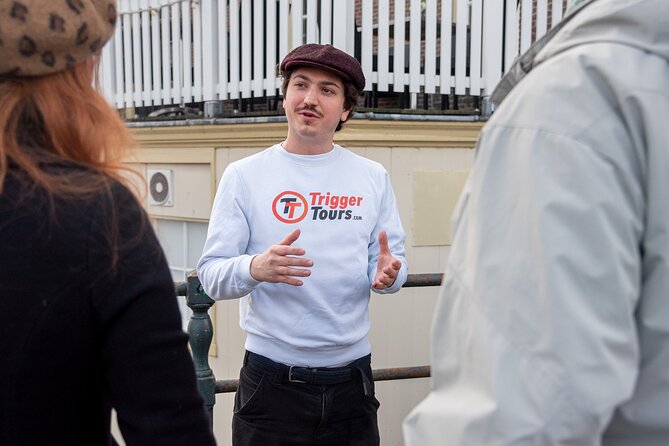
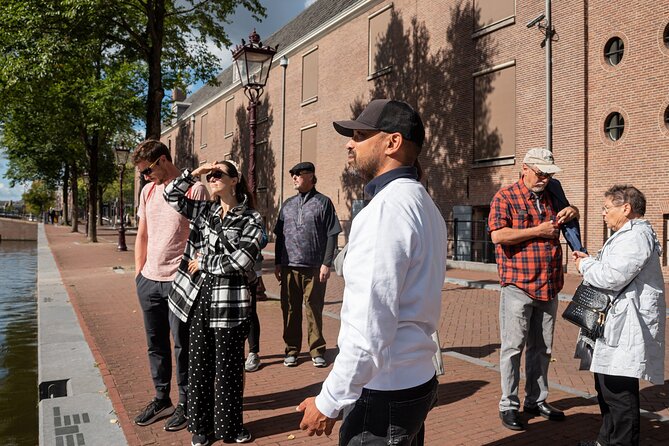
The group limit of 15 is another practical advantage. It is not a private tour, but it is far more manageable than a large crowd. Guides can keep the group together, answer questions, and point out details without shouting across a street.
The rating is 4.9 out of 5 from 29 ratings, with 97 percent recommending the experience. That record points to a tour that depends heavily on the guide, so the quality may vary slightly by who leads your departure. The names praised most often include Gio, Aaron, Andrea, Aarre, David, and James.
More History Tours in Amsterdam
- Amsterdam Food and Cultural Tour with Tastings
★ 5.0 · 2,442 reviews - Amsterdam: Haunted History and Ghost Walking Tour
★ 4.5 · 488 reviews - Amsterdam High-End Dutch Food & History Tour – Up to 8 guests
★ 5.0 · 482 reviews
Dam Square puts Amsterdam’s power on display
Dam Square is a fitting starting point because it is the city’s public heart. It has been a place of political and cultural importance for centuries, and it remains one of the easiest spots in Amsterdam to understand as a meeting place.
Expect your guide to use the square to set the stage. The surrounding buildings help explain how Amsterdam grew from a trading town into a major Dutch city. This is also where the tour begins, at Damrak 1-5, 1012 TM Amsterdam.
The square itself can be crowded and noisy. You may have to share the space with pedestrians, cyclists, trams, and people heading toward nearby shops. That is part of the Amsterdam experience, but it means you should arrive ready to pay attention rather than wander off for photos.
The Royal Palace is one of the major sights connected with Dam Square. Originally built as a 17th-century town hall, it later became one of the three palaces used by the Dutch royal family. Its Dutch classical design makes it a strong example of the city’s former wealth and civic ambition.
The palace is open to the public for tours, but this walking experience does not include an interior visit. You should think of the stop as an introduction to the building and its role in Amsterdam, not a palace admission.
Amsterdam’s canal ring shows how the city was planned
The canal ring is one of Amsterdam’s defining views, but it is more than a pretty setting for photographs. It reflects careful urban planning and major engineering work. The canals helped shape trade, movement, housing, and the growth of the city.
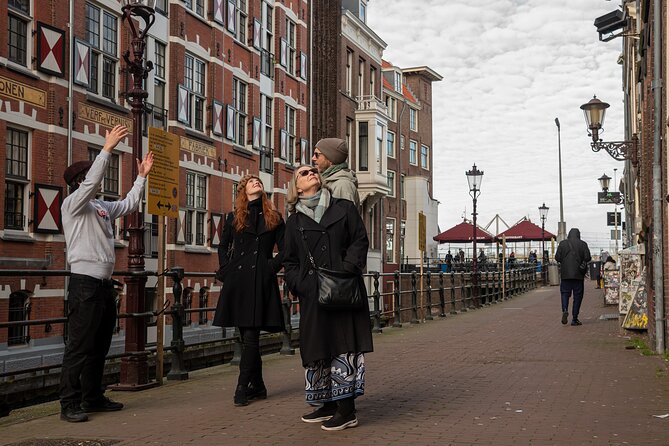
A guide can make this part more useful than a quick stroll beside the water. Look for the way streets, bridges, canal houses, and waterways work together. The point is not just to see the canals, but to understand why they were built and how they supported Amsterdam’s rise.
The canal ring is a UNESCO World Heritage Site. That status gives the walk added context, though the tour does not include a formal site entry or a canal boat ride. You remain on foot, moving through the city rather than viewing it from the water.
The canals also bring the tour’s main practical challenge. Sidewalks can be busy, and bikes have priority in many parts of central Amsterdam. Keep your attention on your guide and your surroundings. The pace is described as moderate, but you still need to walk for the full two hours.
Begijnhof offers a quieter side of the city
Begijnhof is one of the most atmospheric stops on the route. This enclosed historic courtyard dates from the 14th century and was once home to Beguines, religious women who lived in a semi-monastic community.
The courtyard gives you a sharp contrast with Dam Square. Instead of grand civic buildings and open traffic, you get a more private setting tied to faith and community life. It is one of the oldest and best-preserved parts of Amsterdam.
This is the kind of place where a guide adds real value. Without context, Begijnhof can look like a peaceful collection of old houses. With an explanation of the women who lived there and the courtyard’s place in the city, the stop becomes a window into Amsterdam’s religious past.
You should also be respectful here. Begijnhof is not simply a photo set. It is a historic residential setting, so follow your guide, keep your voice down, and avoid treating the courtyard like a noisy public square.
More Walking Tours in Amsterdam
- Anne Frank’s Story – Guided Walking Tour through Amsterdam
★ 5.0 · 11,619 reviews - Amsterdam: Life of Anne Frank and World War II Walking Tour
★ 4.8 · 10,467 reviews - Absolutely Amsterdam – the Essential Introductory Walking Tour
★ 5.0 · 3,629 reviews - Amsterdam: Anne Frank Guided Small Group Walking Tour
★ 4.8 · 2,722 reviews
The Old Church connects faith, art, and the old city
The Old Church, or Oude Kerk, dates to the 13th century and is Amsterdam’s oldest surviving building. It began as a Catholic church, later served Protestant congregations, and now functions as a cultural center.
Its changing use gives your guide plenty to work with. The building reflects the religious shifts that shaped the Netherlands, while its location places you near some of the city’s oldest streets. This stop helps link Amsterdam’s medieval beginnings with its later commercial and social growth.
The tour takes you to the church as part of the walking route, but the supplied details do not include admission to the interior. Plan on an exterior explanation unless your booking information says otherwise. If seeing the inside matters to you, check separately before scheduling your day.
The area around the Old Church can be busy. Stay close to the group and remain aware of bikes and foot traffic. Amsterdam’s center rewards careful looking, but it is not the place to walk while staring only at your phone.
The Royal Palace explains Amsterdam’s civic ambition
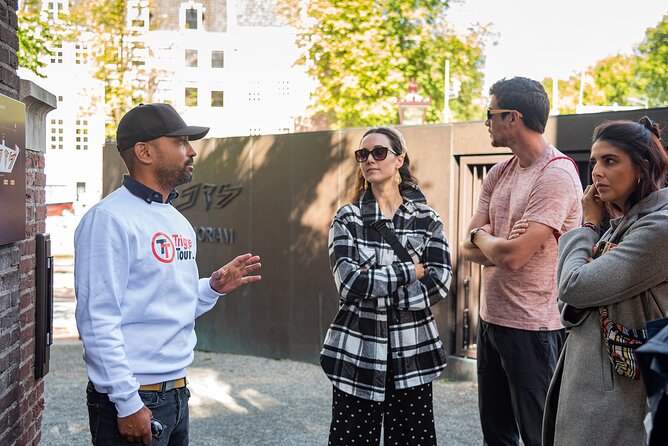
The Royal Palace deserves more than a quick photograph. Its first purpose was practical and political: it was built as Amsterdam’s town hall in the 17th century. That tells you something about the confidence and wealth of the city at the height of its commercial power.
Today it is one of three palaces used by the Dutch royal family. Its Dutch classical style reflects order, scale, and authority. The building helps show how Amsterdam wanted to present itself, not merely as a port, but as a powerful civic center.
This is also a good example of the tour’s limits. You will hear about the palace and see it in the context of the city, but the experience is not an interior palace tour. If you want rooms, artwork, or a longer look inside, you will need a separate visit.
Nieuwmarkt brings the walk back to everyday Amsterdam
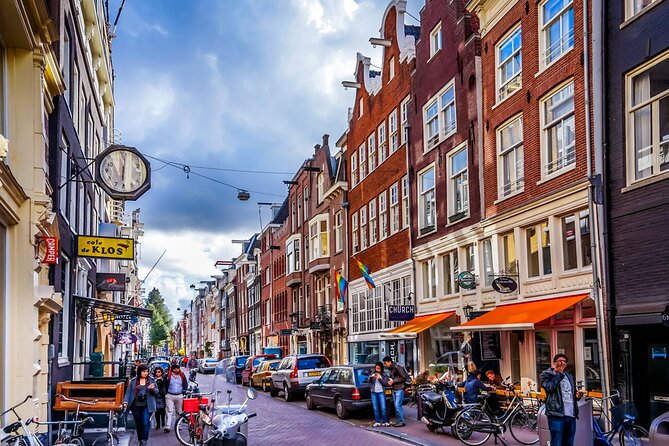
Nieuwmarkt once formed part of Amsterdam’s 17th-century city walls. Today it is a public square with a daily market, cafes, restaurants, and historic buildings.
This stop gives the tour a more lived-in finish. Dam Square and the Royal Palace represent formal power. Nieuwmarkt shows how an old defensive area can become a place where people meet, eat, shop, and spend time.
The square is described as a popular gathering place for locals and visitors. That means it can be lively, particularly around market activity and restaurants. Your guide may point out how the old buildings and the square’s current use fit into the city’s long development.
Nieuwmarkt is also useful for planning the rest of your day. Since the tour ends back at the meeting point rather than at Nieuwmarkt, you return to the starting area after seeing this part of the center. You can then continue on your own, use public transportation nearby, or stop for food elsewhere.
The guides make the difference
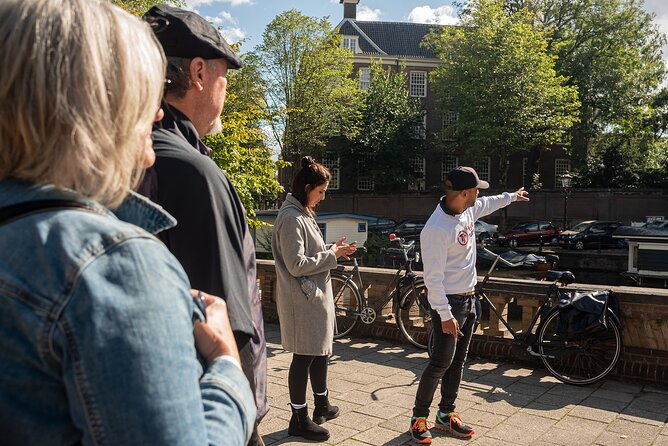
The strongest part of this experience is the human side. Several guides receive specific praise for making complicated material easy to follow and keeping the pace comfortable.
Gio is described as passionate and energetic, with a style that brings the city’s story to life. Aaron is praised for interactive storytelling and a strong interest in history. Andrea is noted for walking at a comfortable pace and revealing details that are easy to miss.
Aarre is singled out for the depth of his explanations about buildings and city areas. David is described as warm, attentive, and willing to answer questions. James is praised for a clear walk through the important sights and for offering useful restaurant suggestions after the tour.
You cannot choose all of these guides when booking unless the provider gives you that option. Still, these details show what to hope for: a guide who does more than recite dates. The best version of this tour links Amsterdam’s architecture with its people, beliefs, conflicts, and daily routines.
The high score of 4.9 out of 5 comes from 29 ratings, so it is a strong result but not a huge sample. I would book it for the route and format first, then view the guide as an important bonus.
Price, pace, and group size
At $26.91 per person, this is fairly priced for a two-hour guided walk in central Amsterdam. The cost includes a local guide and the tour itself. Food and drinks are not included, which is normal for a walking experience of this length.
The price works best if you want orientation and context. It is less useful if you only want photographs, since the main sights are easy to see independently. A guide earns the fee by helping you notice what you would otherwise pass without thought.
Groups can receive discounts, and the maximum size is 15. The small-group limit matters because Amsterdam’s streets can be noisy. You are more likely to hear a guide clearly and get an answer to a question than you would in a large group.
You should also budget for weather. The walk goes ahead outdoors, and one poor experience resulted from missing the meeting point in bad weather. Wear suitable shoes and check the forecast. A moderate pace does not remove the need to stand and walk continuously.
The tour is near public transportation, and most people can take part. Service animals are allowed. The published details do not specify wheelchair access, step-free routing, or restroom stops, so ask the provider directly if those details affect your decision.
Who should book this Amsterdam walk
I would choose this tour for a first visit, especially if you have only a short time in Amsterdam. It puts the city’s central landmarks into a clear order and gives you a base for later independent exploring.
It also suits anyone who likes history but does not want a museum lecture. The walk moves through public streets and courtyards, with the story attached to real buildings. The best guides appear to make the subject lively and interactive.
Families, couples, solo visitors, and small work groups can all fit the format. A group of 11 has used it successfully as a team activity, and group discounts may help with larger bookings. The key requirement is comfort with two hours on foot.
I would be more cautious if you have limited mobility, dislike outdoor tours in uncertain weather, or want long interior visits at the Royal Palace and Old Church. This is a city orientation walk, not a full entry tour of Amsterdam’s major buildings.
Free cancellation is available when you cancel at least 24 hours before the start time. Inside that window, the amount paid is not refunded and changes are not accepted. The local time controls the cut-off, and if the minimum number is not reached, you are offered another date or experience, or a full refund.
Should you book the Amsterdam Highlights and History Walking Tour?
Yes, if you want a compact introduction to Amsterdam with a clear historical thread. The combination of Dam Square, the canal ring, Begijnhof, the Old Church, the Royal Palace, and Nieuwmarkt gives you a strong first look for $26.91.
Book it early if your dates are fixed, since it averages 57 days of advance booking. Arrive ready to walk, watch for bikes, and listen closely. If you want a short, useful orientation led by an engaging English-speaking guide, this is one of the better ways to start your time in Amsterdam.
FAQ
How long does the Amsterdam Highlights and History Walking Tour last?
The tour lasts approximately two hours.
Where does the tour begin?
It begins at Damrak 1-5, 1012 TM Amsterdam, Netherlands.
Where does the tour end?
The activity ends back at the meeting point.
What sights are included on the walking route?
The route includes Dam Square, Amsterdam’s canal ring, Begijnhof, the Old Church, the Royal Palace, and Nieuwmarkt.
Is the tour offered in English?
Yes. The tour is offered in English.
How large is the group?
The activity has a maximum of 15 participants. Group discounts are available.
Just added around Amsterdam
- Private sightseeing tour to Bruges and chocolate from Amsterdam★ 5.0 · 11 reviews
- Amsterdam: Rijksmuseum (Private Tour & Priority Access)★ 5.0 · 27 reviews
- Amsterdam: Private Romantic Evening Canal Cruise + Bubbles/Snacks★ 5.0 · 46 reviews
- Amsterdam Private Shopping Experience★ 5.0 · 7 reviews
- Rijksmuseum Amsterdam Private Guided Tour★ 5.0 · 57 reviews
- Amsterdam Rijksmuseum PRIVATE TOUR with a Local Private Guide★ 5.0 · 159 reviews
- Private Photo Session in Amsterdam★ 5.0 · 15 reviews
- Private One way Transfer Amsterdam Airport to Amsterdam★ 3.5 · 42 reviews
Walking Tours, compared.
Anne Frank’s Story – Guided Walking Tour through Amsterdam
Read our review →
Life of Anne Frank and World War II Walking Tour
Read our review →
Absolutely Amsterdam – the Essential Introductory Walking Tour
Read our review →

Anne Frank Walking Tour – Guided in EN/DE/IT/ES
Read our review →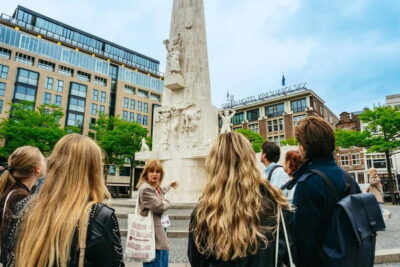

Anne Frank Walking Tour Amsterdam Including Jewish Cultural Quarter
Read our review →Browse the lists this tour appears in