
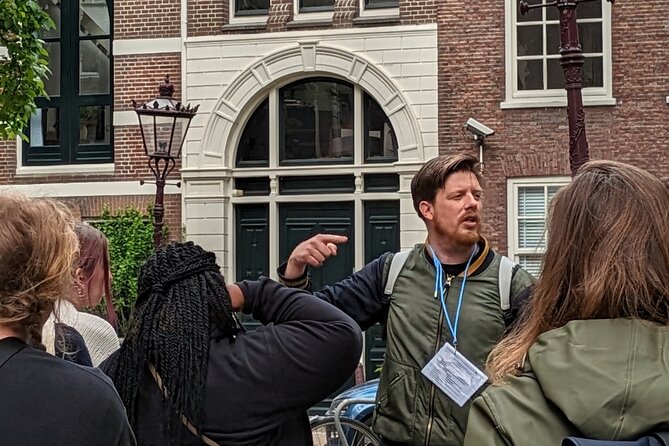
Reviewed · WALKING TOURS
Amsterdam 2 Hour History Walking Tour
Amsterdam’s story makes the most sense on foot, where canals, churches, courtyards, and grand squares sit within a compact center. This two-hour walk connects the city’s water problem, religious upheaval, wartime tragedy, trading empire, and royal traditions without asking you to spend half a day in a museum.
I like the small group, limited to 10 people, and the practical advice you get along the way. I also like the mix of serious history and lighter details, including the Monet bridge and the Dutch affection for orange. The main drawback is the brisk schedule: several stops last only five minutes, so this is an overview rather than a close look at every site.
Key points at a glance
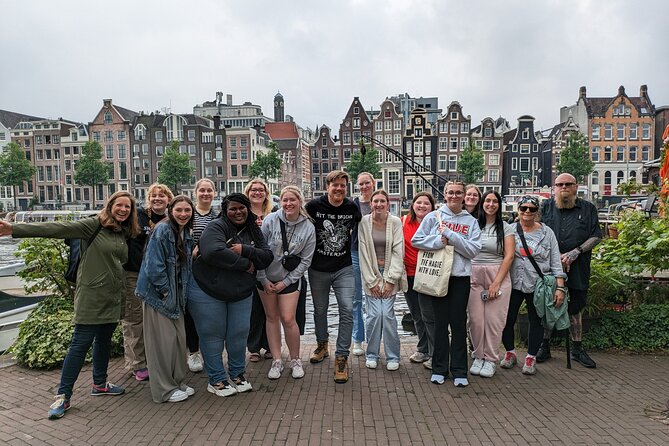
- A compact introduction to Amsterdam: Ten central stops give you a useful first look at the city in about two hours.
- Small groups matter: A maximum of 10 people makes it easier to hear the guide and ask questions.
- History with a human touch: Expect canals, Catholic and Protestant conflict, Jewish history, empire, and royal politics, plus humor.
- Useful for a first day: The guide shares tips for getting around and making better use of the rest of your stay.
- Good photo stop: Groenburgwal brings you to the well-known Monet bridge for a quick picture.
- Low-cost sightseeing: At $30.04 per person, you are paying mainly for context, orientation, and local guidance rather than admission tickets.
Why this walk works well on a first day
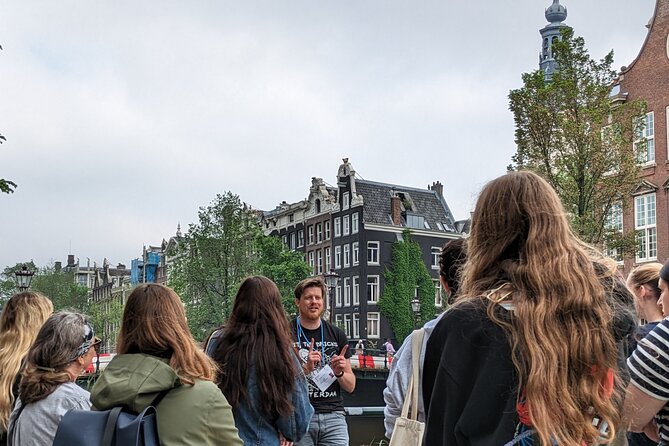
Amsterdam can look easy to understand. The streets are compact, the canals are beautiful, and the main sights are close together. Yet the city’s shape and customs are tied to events that are not obvious from a quick stroll.
This walk gives you a framework. You learn why water shaped Dutch thinking, how Amsterdam changed from Catholic to Protestant, how a small republic built a far-reaching trading empire, and how the modern royal family fits into that story.
I like this approach because it helps you read the city after the tour ends. A canal is no longer just a pretty view. A church courtyard is not simply a quiet place to pause. A square or government building gains meaning from the conflicts and choices behind it.
The tone also sounds well judged for a short introduction. Guides such as Axel and Mark are described as personable, funny, and clear. One guide helped a first-time visitor pick up both major themes and the odd fact worth repeating back home. That combination is useful: you get substance without a lecture.
The walk is offered in English and begins at 11 a.m. It is best suited to someone who wants orientation before exploring alone. You will not enter a long list of attractions, and admission tickets are generally not part of the experience. The value comes from making sense of what you see.
More History Tours in Amsterdam
- Amsterdam Food and Cultural Tour with Tastings
★ 5.0 · 2,442 reviews - Amsterdam: Haunted History and Ghost Walking Tour
★ 4.5 · 488 reviews - Amsterdam High-End Dutch Food & History Tour – Up to 8 guests
★ 5.0 · 482 reviews
From the canal belt to Amsterdam’s water problem
The tour begins in the Grachtengordel, Amsterdam’s famous canal belt. This is the right place to start because the city’s relationship with water affects almost everything else, from urban planning to national character.
You learn how the Dutch had to live with water and manage it over time. The point is not simply that Amsterdam has canals. It is that water forced people to cooperate, plan, build, and keep adapting.
The stop lasts about five minutes, so expect a sharp introduction rather than a technical lesson. That short timing is useful for orientation, but you will need to explore the canal belt on your own later if you want architectural details or a slower look at the houses.
De Wallen, beyond the stereotypes
The Red Light District, known as De Wallen, brings a very different side of Amsterdam. This is one of the city’s most famous areas, yet it is easy to pass through while understanding very little about its past or its place in Dutch society.
The guide explains why the district is there, how it works, and how Dutch people view it. That context matters because the area is often treated as a spectacle. A good explanation helps you see it as part of the city rather than just a quick photo stop.
The scheduled 10 minutes gives this subject more room than several other locations. Still, expect an overview. The group is moving through a working neighborhood, so listen carefully and follow the guide’s lead on respectful behavior.
Dam Square and the making of a nation
Dam Square is Amsterdam’s central square and one of the main places for understanding the city’s public life. Here, the guide returns to the question of water and shows how the struggle to control it affected Dutch culture and ways of thinking.
This stop also helps tie the opening canal discussion to the wider story. You begin with water as a physical challenge, then see how it became part of the nation’s identity.
Only about five minutes are assigned here. That is enough for a clear explanation and a look around, but not enough for detailed architectural study. If you want to visit the square again, the tour ends there, making it easy to continue exploring or connect with public transportation.
More Walking Tours in Amsterdam
- Anne Frank’s Story – Guided Walking Tour through Amsterdam
★ 5.0 · 11,619 reviews - Amsterdam: Life of Anne Frank and World War II Walking Tour
★ 4.8 · 10,467 reviews - Absolutely Amsterdam – the Essential Introductory Walking Tour
★ 5.0 · 3,629 reviews - Amsterdam: Anne Frank Guided Small Group Walking Tour
★ 4.8 · 2,722 reviews
South Church and the Protestant break
At South Church, the walk shifts to religion. In the serene inner courtyard beside the church, you learn how and why the Dutch moved from Catholicism to Protestantism.
This is one of the tour’s better choices because the setting gives you a break from busy streets. The courtyard offers a quieter place to absorb a difficult period of change, even though the stop itself is brief.
The subject is important for understanding Dutch culture, politics, and architecture. Since the tour lasts only two hours, the guide has to keep this section focused. You get the reason and broad effect of the change, not every stage of the Reformation.
Jodenbreestraat and wartime memory
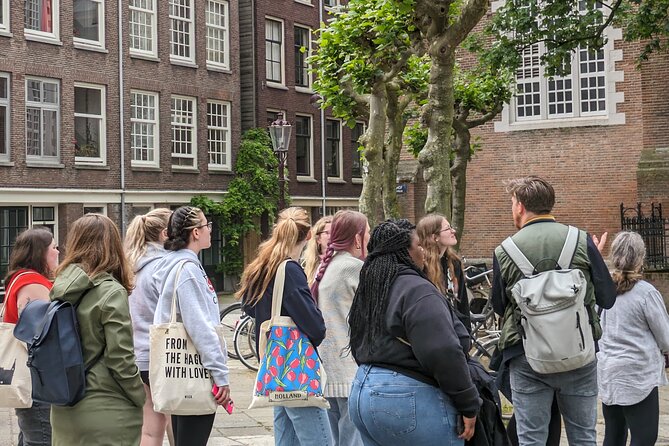
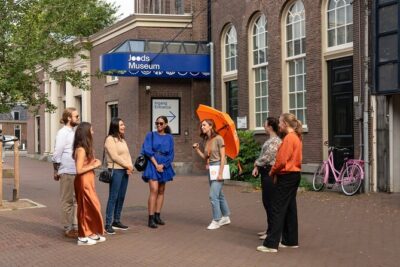
At Jodenbreestraat, near the beginning of Amsterdam’s Jewish Quarter, the tone becomes serious. The guide discusses the fate of tens of thousands of Jewish people who lived in Amsterdam before and during the war, as well as the disastrous Hunger Winter.
This is a necessary part of the city’s story, and including it keeps the tour from presenting Amsterdam as only canals, charm, and trading success. You are given a connection between a particular street and the people who lived there before wartime persecution and hardship changed the community.
The stop lasts about five minutes, which means the treatment must be concise. I would see it as an introduction and then set aside time for a museum or memorial if you want fuller detail. The tour’s strength here is placement and context, not an extended presentation.
The Dutch East India Company and global trade
At Bushuis and Oost-Indisch Huis, the former headquarters of the Dutch East India Company, the story widens from Amsterdam to the world.
Here you learn how the Dutch Republic built a large empire and gained control over spice trade routes while fighting for its own independence. That contrast is central: the country was small, politically pressured, and still able to project power far beyond Europe.
This stop adds needed complexity. Amsterdam’s wealth was not produced by canals and clever merchants alone. It was tied to international trade, military power, and colonial expansion. The guide’s short explanation gives you a starting point for thinking about both Dutch achievement and its costs.
The location is especially useful because the physical headquarters connects the commercial story to a real place. You are not hearing about an abstract company in a classroom. You are standing where decisions about trade and empire were made.
Stopera and the city’s modern identity
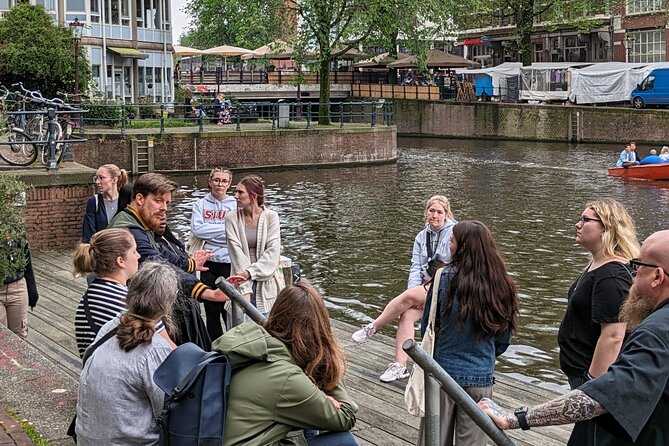
At the Stopera pier, beside the Amstel River, the tour reaches Amsterdam’s modern city hall and opera house complex. Locals call it Stopera, a blend of the Dutch words for city hall and opera.
The guide explains why the building has a poor reputation for appearance, yet remains a source of local pride. That is a nice reminder that a city’s identity is not made only from postcard views. Residents also care about public buildings, civic life, and the stories attached to unpopular designs.
The stop lasts about five minutes. You get a useful local perspective and a view beside the river, but not a full architectural analysis. It is a quick way to connect old Amsterdam with the modern city that governs itself today.
Begijnhof, a quiet courtyard in the center
Begijnhof offers a change of pace. This enclosed courtyard, tucked into central Amsterdam, introduces you to the beguine sisters who built and lived in the community.
The setting is one of the tour’s strongest contrasts. After busy streets and heavy subjects, you enter a calm space with a distinct religious and social history. The guide can show you why the courtyard matters, rather than leaving it as a pretty place that you happened to discover.
You have about 10 minutes here, giving the guide enough time to explain the beguines and their way of life. Keep in mind that this is a functioning historic place, not simply a photo set. Quiet and respectful behavior is part of making the visit work.
Royal Palace, France, and the color orange
At the Royal Palace Amsterdam, the guide explains how the Dutch royal family came to be, what France had to do with that development, and why the national color is orange even though the flag is red, white, and blue.
These are exactly the sort of connections that make a short city tour worthwhile. You learn that national symbols and royal traditions have a story behind them, rather than treating orange clothing or flags as random local decoration.
The palace itself is listed as an exterior stop with admission not included. This walk is not a palace tour, so you should plan a separate visit if you want to go inside. The five-minute explanation gives you a reason to return and look at the building with better context.
Groenburgwal and the Monet bridge
The final stop is Groenburgwal, where you can see the famous Monet bridge and take a picture. At about three minutes, this is a quick finish rather than a long scenic pause.
Still, it gives the tour a lighter ending after the sections on war, religion, and empire. The bridge is an easy visual reminder of why Amsterdam attracts artists and photographers. Bring a phone or camera if you want the picture, but do not expect a long photography session.
The walk ends on Dam Square, close to the starting point and convenient for public transportation. That arrangement makes it simple to continue sightseeing, find lunch, or return to another part of the center.
What $30.04 buys you
The price is $30.04 per person. Since the stops are free and no major admission tickets are included, you are paying for the guide’s time, the route, historical connections, and practical advice.
I consider that fair for a small group of no more than 10, especially if you are new to Amsterdam. A guide can save you from wandering past important places without understanding them, and the advice may help you plan the rest of your stay.
The value drops if you already know central Amsterdam well or prefer to explore at your own pace. The tour moves quickly, and the short stops do not replace museum visits or a detailed architectural walk.
The experience also includes discount codes for the provider’s other tours upon request. Bottled water is not included, but there are several places to refill a bottle. Bring your own refillable bottle, especially if you are walking on a warm day.
Group size, comfort, and practical planning
A maximum of 10 people is a real benefit. You are more likely to hear the guide clearly, stay together at crossings, and ask a question without turning the walk into a large crowd. It also supports the relaxed atmosphere promised by the experience.
Most people can participate, and service animals are allowed. The meeting point is Hit the Bricks Walking Tours at Prinsenstraat 13, 1015 DA Amsterdam. The start time is 11 a.m., so arrive with enough time to locate the office and group.
The tour is offered in English and uses a mobile ticket. Confirmation is sent at booking. One past booking problem involved the operator not having the reservation information, though the company arranged a 90-minute canal tour instead. That was a good recovery, but I would still keep your confirmation available on your phone and check the meeting details before setting out.
Free cancellation is available up to 24 hours before the start time for a full refund. Changes or cancellations inside that 24-hour window are not accepted, and poor weather can lead to a new date or a full refund.
Who should book this Amsterdam walk
I would choose this tour if you are visiting Amsterdam for the first time, want a clear introduction, and prefer history explained in plain language. It also suits you if you like a guide who can move from serious subjects to humor without treating either side lightly.
The route is a good fit for someone who wants to learn about more than canals and famous paintings. You get religion, Jewish history, empire, government, royalty, and local customs in one compact outing.
I would skip it if you want long visits inside buildings, a slow photography walk, or a narrow focus on art and architecture. You will need separate time for the Royal Palace, museums, and deeper wartime history.
Should you book it?
Book this walk if you want to get your bearings fast and understand how Amsterdam’s water, religion, trade, war, and royal traditions connect. The small group, English-speaking guide, practical tips, and $30.04 price make it a sensible first-day choice.
Just set your expectations correctly. This is a brisk introduction with 10 stops, not an in-depth study of each site. Bring a refillable water bottle, keep your mobile confirmation handy, and save time afterward for the places that deserve a longer visit.
FAQ
How long does the Amsterdam history walking tour last?
The tour lasts approximately two hours.
What time does the tour start?
The scheduled start time is 11 a.m.
Where does the tour begin?
It begins at Hit the Bricks Walking Tours, Prinsenstraat 13, 1015 DA Amsterdam, Netherlands.
Where does the tour end?
The walk ends at Dam Square, about two minutes from the starting area and close to public transportation.
How large is the group?
The tour has a maximum of 10 participants.
Is the tour offered in English?
Yes. English is the available tour language.
Are admission tickets included?
The listed stops are generally free to visit during the walk. Admission to the Royal Palace is not included.
Can I cancel for a refund?
Yes. You can cancel at least 24 hours before the local start time for a full refund. Cancellations or changes made less than 24 hours before the start are not refunded or accepted.
More 2-Hour Experiences in Amsterdam
- Amsterdam: 2-Hour Canal Cruise incl. Drinks & Dutch Snacks
★ 5.0 · 594 reviews - Amsterdam 2-hour Private Canal Cruise with Live Guide and Drinks
★ 5.0 · 296 reviews - Amsterdam 2-Hour Evening Cruise With Live Guide and Bar
★ 5.0 · 134 reviews - Amsterdam: 2-Hour Sightseeing Tour by Rickshaw
★ 4.7 · 81 reviews
Just added around Amsterdam
- Private sightseeing tour to Bruges and chocolate from Amsterdam★ 5.0 · 11 reviews
- Amsterdam Private Shopping Experience★ 5.0 · 7 reviews
- Amsterdam: Rijksmuseum (Private Tour & Priority Access)★ 5.0 · 27 reviews
- Amsterdam: Private Romantic Evening Canal Cruise + Bubbles/Snacks★ 5.0 · 46 reviews
- Rijksmuseum Amsterdam Private Guided Tour★ 5.0 · 57 reviews
- Amsterdam Rijksmuseum PRIVATE TOUR with a Local Private Guide★ 5.0 · 159 reviews
- Private Photo Session in Amsterdam★ 5.0 · 15 reviews
- Private One way Transfer Amsterdam Airport to Amsterdam★ 3.5 · 42 reviews
Walking Tours, compared.
Anne Frank’s Story – Guided Walking Tour through Amsterdam
Read our review →
Life of Anne Frank and World War II Walking Tour
Read our review →
Absolutely Amsterdam – the Essential Introductory Walking Tour
Read our review →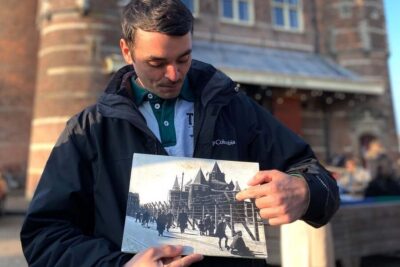

Anne Frank Walking Tour – Guided in EN/DE/IT/ES
Read our review →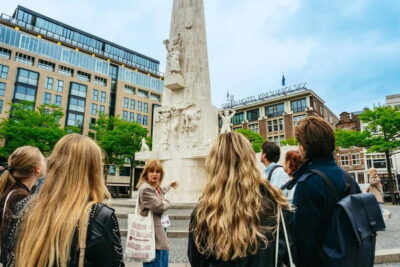

Anne Frank Walking Tour Amsterdam Including Jewish Cultural Quarter
Read our review →Browse the lists this tour appears in