
Reviewed · WALKING TOURS
Amsterdam private city walking experience with a local
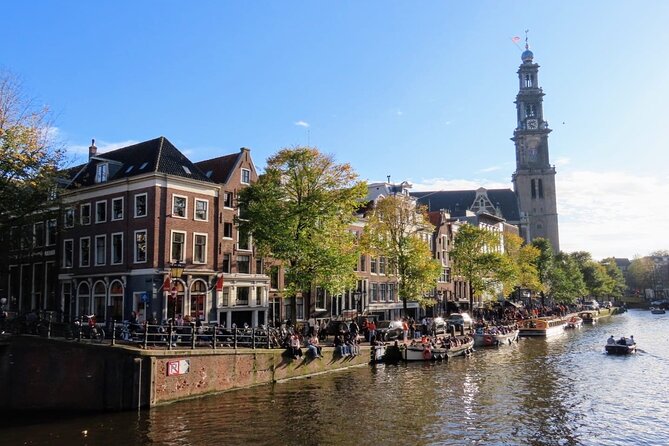
Amsterdam makes far more sense when you connect its canals, trading past, religious tolerance, and modern city life on foot. This private walk with local guide Manouk links major sights with smaller details, from a house touching three canals to the old wooden cottages of Begijnhof.
I like the private format, which lets you ask questions and steer the conversation toward history, architecture, food, or daily life. I also like the route’s broad sweep, ending with Centraal Station after stops in the old center, Nieuwmarkt, and Zeedijk. The main consideration is pace: two hours is enough for orientation, but not for long visits inside attractions.
Key points at a glance
- A private walk for up to 12 people: The flat group price works best for families or friends traveling together.
- A useful first-day route: You cover Beursplein, Dam Square, Begijnhof, Nieuwmarkt, Zeedijk, and Centraal Station.
- Manouk adapts the conversation: She can focus more on history and architecture, and she uses maps and pictures to support her explanations.
- Amsterdam beyond postcard views: The walk includes guilds, wartime history, religious life, Chinatown, canal houses, and local neighborhood changes.
- No entrance fees are included or needed at the listed stops: You see the places from the outside while walking between them.
- Plan for two to two and a half hours on foot: Wear sensible shoes and allow extra time for pauses, questions, and city traffic.
Starting at Beursplein, where Amsterdam began
The meeting point at Beursplein puts you near the heart of old Amsterdam. This is a strong place to begin because the first story is about how a fishing village became a major center of world trade in the 17th century.
You will not simply receive a list of dates. The guide connects the city’s name and early development to the water, commerce, and the steady expansion of Amsterdam. That opening gives the rest of the walk a clear purpose: canals and grand houses are not random scenery, but signs of a city shaped by trade and movement.
Beursplein is also practical for a first orientation. You begin in a central area, then walk toward Dam Square and the old core. Since the activity is private, you can ask for more background at the start or request a faster introduction if you want to spend more time on later stops.
More Walking Tours in Amsterdam
- Anne Frank’s Story – Guided Walking Tour through Amsterdam
★ 5.0 · 11,619 reviews - Amsterdam: Life of Anne Frank and World War II Walking Tour
★ 4.8 · 10,467 reviews - Absolutely Amsterdam – the Essential Introductory Walking Tour
★ 5.0 · 3,629 reviews
Dam Square, the city’s public stage
Dam Square brings together several layers of Amsterdam in one busy space. You will hear how the square helped shape the city, then look toward the Royal Palace on the Dam and discuss its place in Amsterdam’s civic story.
The stop also includes the square’s connection to the Second World War. That matters because Dam Square is more than a grand setting for photographs. It has been a place of public life, ceremony, political meaning, and remembrance.
Allow about 15 minutes here. The guide’s role is especially useful in a spot that can feel crowded and visually scattered. Instead of trying to work out the significance of each building on your own, you get a short explanation that puts the square into context.
You should also expect the normal city distractions: people crossing, bicycles passing, and noise from the surrounding center. This is not a quiet, museum-like stop. It is better understood as a quick orientation point in a living public space.
Begijnhof and Amsterdam’s religious past
Begijnhof provides one of the walk’s sharpest changes of mood. After the open activity of Dam Square, you enter a serene courtyard with a religious past and a story tied to Amsterdam’s long tradition of tolerance.
The guide explains the women who lived here and what the courtyard reveals about religious life in the city. You will also see one of Amsterdam’s oldest houses, one of the two surviving wooden cottages mentioned on the route.
This stop rewards a slower look. Pay attention to the contrast between the quiet courtyard and the dense streets outside. It is a useful reminder that Amsterdam’s history is not only about merchants and ships. It also includes faith, private communities, changing rules, and the ways people found room to live according to their beliefs.
The visit is listed as a 15-minute stop, so you should not expect an extended architectural inspection or a long independent visit. Still, it is one of the best moments for seeing how a small, protected space can preserve a different side of the city.
A house on three canals and the bicycle bridge
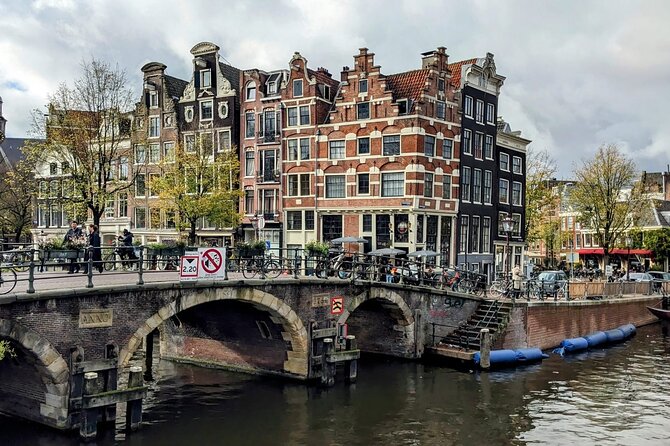
The route next brings you to a house located on three canals. This is the sort of detail that makes a walking tour worthwhile. You could pass the building without knowing why it matters, while a guide can point out its unusual position and explain what to look for.
You will also learn about the bicycle bridge. The supplied details do not promise a long technical explanation, so think of this as a compact urban-design stop rather than a major attraction. It adds another layer to the walk: Amsterdam is not only a city of old facades, but also a place where bridges, canals, and bicycles shape everyday movement.
This is a good section for questions about architecture and city planning. If you are interested in how Amsterdam works as a place to live, tell Manouk early. She has adapted walks for people interested in architecture and history, and she can give those subjects more attention.
Same base, a completely different sort of day:
- Amsterdam: Van Gogh Museum Ticket
★ 4.7 · 52,054 reviews - Amsterdam Classic Saloon Boat Cruise with Drinks and Cheese
★ 5.0 · 31,825 reviews - Amsterdam Luxury Canal Cruise + Unlimited Drinks & Bites option
★ 5.0 · 30,518 reviews - Amsterdam: Heineken Experience Ticket
★ 4.6 · 30,055 reviews
Nieuwmarkt, the Waag, and the old guild system
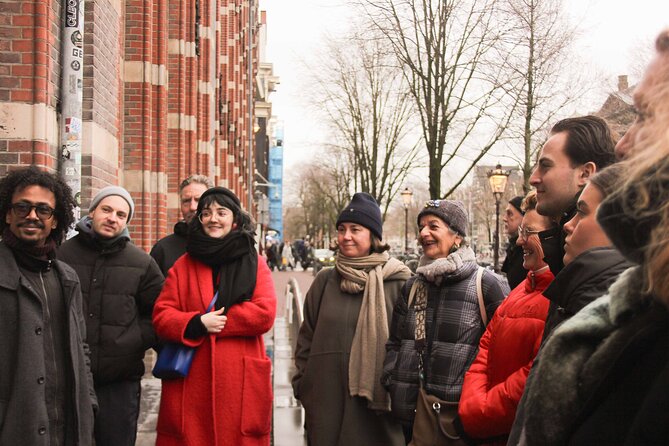
Nieuwmarkt receives the longest listed stop, about 30 minutes, and that extra time makes sense. Here you will see the Waag, one of the old city gates that later became a guild hall, and learn how guilds influenced working life in Amsterdam.
The Waag is a useful bridge between the city’s defensive past and its commercial growth. A former gate becoming a guild hall shows how old structures were reused as the city changed. The discussion of guilds adds human detail to the usual canal-house story by focusing on the people and trades that kept Amsterdam functioning.
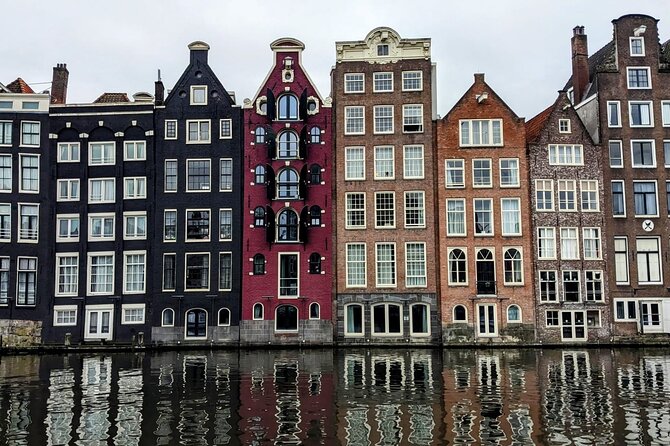
Look for the dancing houses as well. These narrow, leaning buildings are among the city’s most recognizable visual details. The guide can help you understand why Amsterdam’s historic buildings often appear to shift, tilt, or crowd together rather than forming a neat row.
Nieuwmarkt also gives the walk room to breathe. Fifteen-minute stops can deliver a quick fact and a photograph. Thirty minutes allows more questions and a fuller explanation, which is useful if you want to connect architecture with civic life and work.
Zeedijk and the changing face of Chinatown
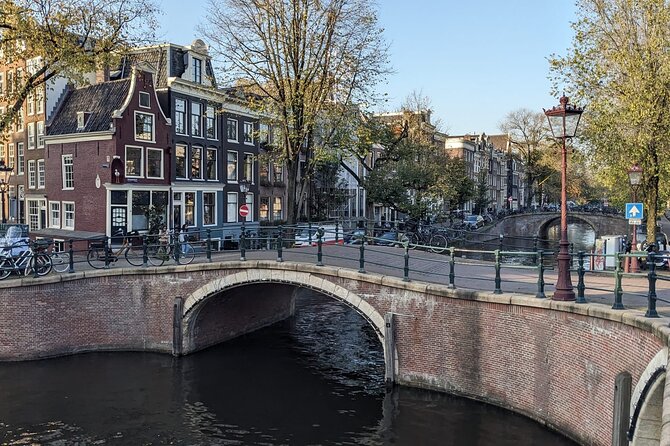
Zeedijk offers a more modern and socially complex part of the route. You will explore Amsterdam’s Chinatown and hear how the street was viewed as one of the city’s most dangerous places during the 1970s before its decline and transformation.
That change is important. It keeps the walk from treating Amsterdam as a fixed historic display. Neighborhoods change, reputations shift, and streets can become favorite places for local residents after difficult periods.
The stop is listed at about 15 minutes, so the emphasis is on explanation and orientation rather than an extended food tour. You may receive food suggestions, since Manouk has offered local eating tips during walks, but the provided details do not promise tastings or restaurant visits as a formal part of this activity.
I like this stop for readers who want a city story that includes current problems and future plans, not only old buildings. Ask questions here if you want to understand how a neighborhood’s identity changes over time.
Centraal Station and the city’s connection to the world
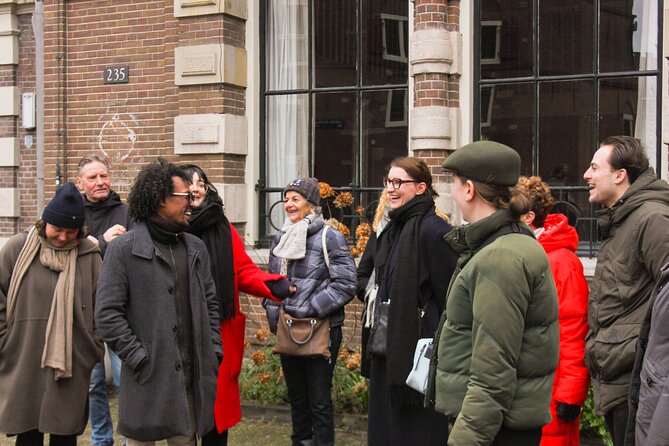
The route includes Amsterdam Centraal, one of the city’s most impressive buildings. The stop looks at its architecture and explains why this location has mattered as a transport hub and symbol of connection and prosperity for centuries.
Centraal Station is a fitting final landmark because it brings the walk back to movement. You began with a fishing village shaped by water and trade, then moved through squares, canals, religious spaces, guild buildings, and neighborhood streets. At the station, those older patterns meet modern transport.
The listed stop lasts about 15 minutes. That is enough to discuss the building and its setting, but not enough for a detailed interior tour. The activity is a walking experience, not a station architecture visit or a rail excursion.
The information says the activity ends back at the meeting point, while Centraal Station is the final listed sightseeing stop. Confirm the exact return arrangement with the provider when booking, especially if you need to catch a train immediately afterward.
What Manouk adds to the walk
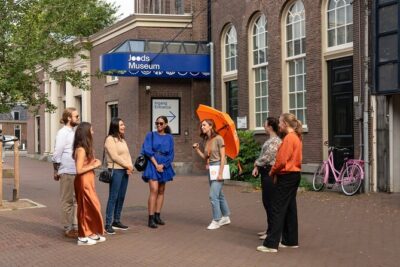
The guide is a major part of the experience. Manouk is described as a local guide who combines clear historical explanations with a friendly, personal approach. She has used maps and pictures during the walk and has brought small local edible treats as an extra touch.
That personal style may suit you if you prefer conversation to a memorized speech. The walk can be adapted to your interests, with particular attention to history and architecture when requested. Solo visitors may also appreciate the private format, since the guide can keep the conversation comfortable and focused instead of addressing a large, mixed group.
The strongest praise centers on three qualities: warmth, preparation, and the ability to answer questions. Those qualities matter in Amsterdam, where a short walk can raise questions about religion, trade, war, architecture, bicycles, food, and neighborhood change.
You should still tell Manouk what you want before the walk begins. If you want restaurant advice, say so. If you care more about buildings than social history, make that clear. The more specific you are, the more useful a private guide can be.
How the private price works
The price is $180.62 per group of up to 12 people. For a full group, that works out to roughly $15 per person, which is good value for a private guide. For two people, the same price is about $90 per person, so the value depends heavily on how many people share the booking.
The flat rate makes the most sense for families, couples traveling with friends, or a small private group that wants one guide and one shared pace. You avoid the uncertainty of joining strangers, and you can ask questions without competing with a large crowd.
The walk does not include paid entry to attractions, but the listed stops are viewed as part of the street route and have no admission charge. The real purchase is the guide’s time, interpretation, route planning, and local perspective.
At two hours, you are buying orientation rather than a full day of sightseeing. I would place this early in an Amsterdam stay, when the route can help you understand the center and decide where to return later.
Timing, walking effort, and practical limits
The activity is described as lasting about two hours, with the walking time sometimes running to two and a half hours. The listed schedule totals 120 minutes across seven stops, and additional time is spent walking between them while the guide discusses the city.
Most people can take part, and service animals are allowed. The route is near public transportation, which makes the central meeting point convenient, but no specific transport instructions are provided.
You should wear comfortable shoes. Amsterdam’s center is best understood on foot, and the value of this experience comes from moving through streets rather than simply standing in one square. Allow extra time if you want photographs or a longer conversation at a particular stop.
The walk is offered in English. Confirmation arrives at booking, and free cancellation is available until 24 hours before the start time. Changes or cancellations inside that window are not accepted for a refund, so keep the local start time in mind when making plans.
Who will get the most from this Amsterdam walk
I would recommend this experience to first-time visitors who want a clear introduction without committing to a full-day tour. The route covers major landmarks, but the subjects go beyond the standard postcard checklist.
It also suits repeat visitors who want a human guide to connect familiar places with less obvious details. The house on three canals, the bicycle bridge, the guild story at the Waag, and the changing character of Zeedijk give the walk more texture than a simple greatest-hits route.
History and architecture fans should benefit most, especially if they tell Manouk their interests in advance. Solo visitors, couples, families, and small groups can all use the private format to set a comfortable pace.
I would hesitate only if you want long interior visits, extensive museum time, or a food-focused tour. This experience stays outdoors and keeps moving. It gives you context and orientation, then leaves you to explore the places that interest you most.
Should you book the Amsterdam private city walk?
Book it if you want a personal introduction to central Amsterdam, especially if you can fill enough places in the group to make the $180.62 price good value. Manouk’s friendly approach, visual aids, local perspective, and willingness to adapt the route are strong reasons to choose this over a larger group walk.
The route works best as an early-stay activity. You will learn how Amsterdam developed, see the Royal Palace and Centraal Station, visit Begijnhof and Nieuwmarkt, and get a more nuanced look at Zeedijk. Just keep your expectations realistic: this is a two to two and a half hour outdoor orientation, not a series of lengthy attraction visits.
If that balance suits you, the walk gives you something useful: a map in your head, a better sense of the city’s past and present, and a guide who can help you decide what deserves more of your time.
FAQ
How long does the Amsterdam private city walking experience last?
The walk lasts about two hours, with the full activity sometimes taking two to two and a half hours because of the time spent walking between stops and discussing the city.
How many people can join the private tour?
The price covers one private group of up to 12 people. Only your group participates in the activity.
Where does the walking experience start?
The meeting point is Beursplein, 1012 JW Amsterdam, Netherlands.
Where does the activity end?
The activity information says it ends back at the meeting point. Centraal Station is the final listed sightseeing stop, so confirm the exact return arrangement if you have a train or other fixed appointment.
Is the tour offered in English?
Yes. The experience is offered in English.
Can I cancel for a full refund?
Yes, if you cancel at least 24 hours before the scheduled start time. Cancellations or changes made less than 24 hours before the start time are not accepted for a refund.
Just added around Amsterdam
- Private sightseeing tour to Bruges and chocolate from Amsterdam★ 5.0 · 11 reviews
- Amsterdam: Rijksmuseum (Private Tour & Priority Access)★ 5.0 · 27 reviews
- Amsterdam: Private Romantic Evening Canal Cruise + Bubbles/Snacks★ 5.0 · 46 reviews
- Amsterdam Private Shopping Experience★ 5.0 · 7 reviews
- Rijksmuseum Amsterdam Private Guided Tour★ 5.0 · 57 reviews
- Amsterdam Rijksmuseum PRIVATE TOUR with a Local Private Guide★ 5.0 · 159 reviews
- Private Photo Session in Amsterdam★ 5.0 · 15 reviews
- Private One way Transfer Amsterdam Airport to Amsterdam★ 3.5 · 42 reviews
Walking Tours, compared.
Anne Frank’s Story – Guided Walking Tour through Amsterdam
Read our review →
Life of Anne Frank and World War II Walking Tour
Read our review →
Absolutely Amsterdam – the Essential Introductory Walking Tour
Read our review →

Anne Frank Walking Tour – Guided in EN/DE/IT/ES
Read our review →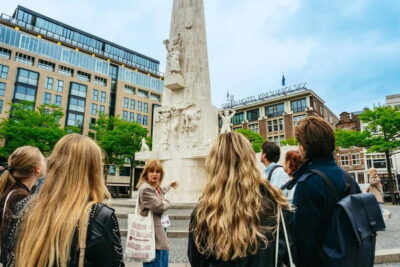

Anne Frank Walking Tour Amsterdam Including Jewish Cultural Quarter
Read our review →Browse the lists this tour appears in