
Reviewed · DUTCH MASTERS ART TOURS
Walking Tour about Golden Age Architecture, private local guide
Amsterdam’s Golden Age is written into Amsterdam’s brick and stone, but the details are easy to miss. This private walk connects grand buildings, crooked houses, warehouses, and tiny façade stones with the trade, engineering, and social life that shaped them.
I like the one-on-one format, which gives you room to ask questions and stop for photographs. I also like the attention to practical design, from building on soft ground to the roof beams used to lift cargo. The main drawback is that 90 minutes of walking and standing can feel demanding, especially if you use a walker or have trouble staying on your feet.
Key points to know before you book
- The route covers nine major stops: You move from Dam Square and the Royal Palace through the canal belt and Jordaan to Westerkerk.
- Anna is the featured local guide: She brings local knowledge, clear English, and a personal connection to Amsterdam’s canals.
- Architecture is the focus: Expect design, materials, engineering, social class, and trade, not just dates and famous names.
- You get a private experience: Only your own group participates, so questions and photo stops are easier.
- The route ends near Anne Frank House: Westerkerk is the final stop, making this useful before or after seeing that area.
- The walk costs $73.59 per person: That is a fairer deal for a couple or small group than for one person, since the price buys private guiding rather than admission tickets.
Why Amsterdam’s Golden Age is best read from the street
This walk works because Amsterdam’s 17th-century success is not locked away in a museum. You see it in narrow canal houses, merchant warehouses, grand civic buildings, and the small signs that once told people what happened inside.
The Dutch Golden Age was the period when Amsterdam grew into a major trading center. Wealth from shipping and commerce paid for impressive buildings, but the city had to solve hard practical problems too. Much of Amsterdam was built on soft, marshy ground, so engineering mattered as much as decoration.
Your guide links those two sides of the city. You learn why wealthy merchants wanted elegant façades, why warehouses needed hoisting beams, and why some houses lean in ways that look almost playful. This gives you more than a parade of pretty canals. It helps you read the city as you walk.
More Walking Tours in Amsterdam
- Anne Frank’s Story – Guided Walking Tour through Amsterdam
★ 5.0 · 11,619 reviews - Amsterdam: Life of Anne Frank and World War II Walking Tour
★ 4.8 · 10,467 reviews - Absolutely Amsterdam – the Essential Introductory Walking Tour
★ 5.0 · 3,629 reviews
Dam Square and the Royal Palace: power on difficult ground
The meeting point is the Royal Palace Amsterdam at Nieuwezijds Voorburgwal 147. The opening discussion centers on Dam Square, where you get the basic story of Amsterdam’s rise and the importance of the square as a civic center.
The Royal Palace was first built as Amsterdam’s town hall during the Golden Age. That change in purpose matters. The building originally expressed the strength of the city and its merchants, not royal authority. It later became a royal residence, but its first role was tied to Amsterdam’s civic and commercial power.
You’ll also look at the palace’s Dutch Neoclassical design, building materials, and construction methods. The most useful part is the engineering story. Building a huge structure on clay and marshy ground required careful planning and technical skill.
The stop at Dam Square is brief, about five minutes, while the palace discussion takes around ten minutes. The exterior is the focus, and admission is not included or required for this walk. If you want to tour the palace interiors, plan that separately.
Huis Bartolotti and the canal house as a status symbol
Huis Bartolotti gives you a sharp change of scale. Instead of a public building built to represent civic power, you look at a luxurious private home along the canal.
Its red-brick façade, large windows, and sandstone decoration show how a wealthy owner could use a house to make a public statement. The design reflects Dutch Baroque style, with ornate details that contrast with Amsterdam’s more restrained canal façades.
The building also points to the city’s international links. Its original owner had strong trading connections with Italy, which helps explain why Amsterdam architecture did not develop in isolation. A short five-minute stop here is enough to learn what to look for, though anyone who wants lengthy photography time may need to keep moving.
Torensluis: four façades and Amsterdam’s crooked houses
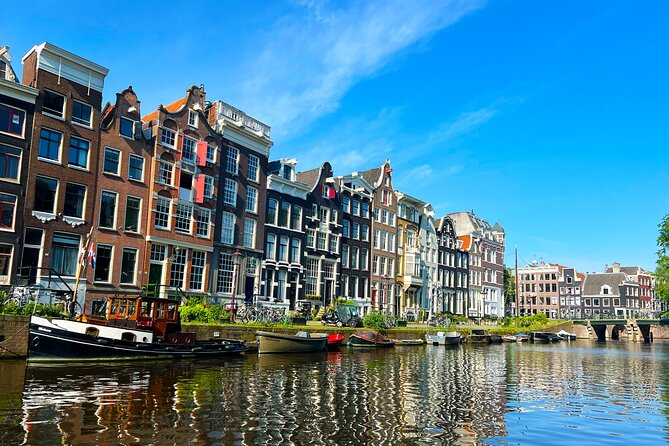
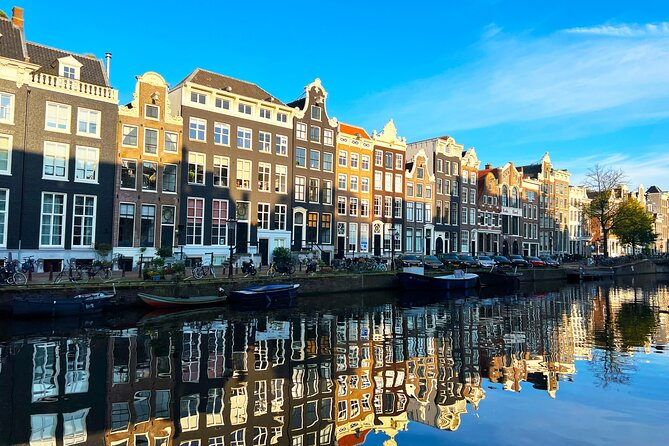
Torensluis is one of the more useful viewing points on the route. From this wide bridge, you can compare four façade designs associated with Amsterdam’s mercantile class during the Golden Age.
Your guide explains how Baroque ideas were adapted for Dutch buildings. Look for changes in ornament, shape, and proportion rather than treating every canal house as identical. The city’s architecture becomes easier to understand when you compare buildings side by side.
This is also a good place to notice Amsterdam’s crooked houses. Soft ground, shifting foundations, age, and narrow construction have all contributed to buildings that lean in different directions. The result can look whimsical, but it also reflects the long practical struggle of building and maintaining a city on marshy soil.
The stop lasts about ten minutes. It is especially useful for people who have already taken canal photographs but want to understand what they are seeing.
More Dutch Masters art visits:
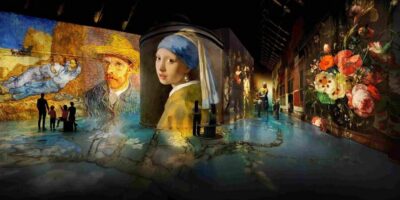
- Amsterdam: Fabrique des Lumières Dutch Masters Ticket
★ 4.6 · 2,373 reviews - Visit the Girl with the Pearl Earring, The Hague & Delft City
★ 5.0 · 63 reviews - Private Rijksmuseum Tour- The Dutch Masters, Rembrandt & Vermeer
★ 5.0 · 54 reviews - Kinderdijk, The Hague, Mauritshuis Private Tour from Amsterdam
★ 4.5 · 44 reviews
De Dolphijn and the story behind The Night Watch
De Dolphijn adds a personal connection to the city’s art and politics. The house was once owned by Frans Banning Cocq, the captain portrayed in Rembrandt’s The Night Watch.
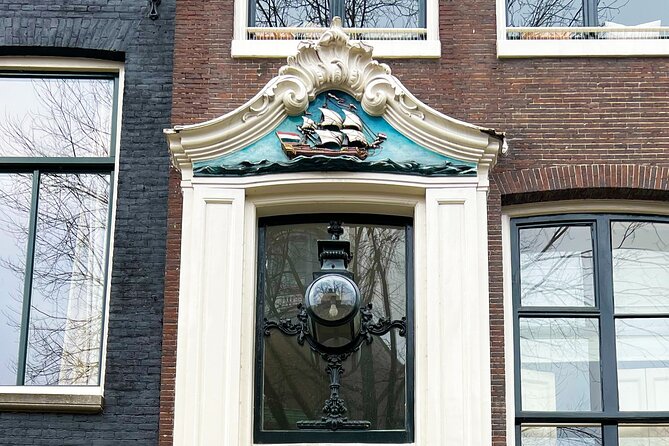
The name refers to a dolphin, a symbol associated with wealth. That detail links the house to Amsterdam’s maritime trade and to the self-image of prosperous residents. Here, architecture is not treated as a collection of façades alone. The building becomes a clue to the people who lived in the canal district and the status they wanted to show.
This is another short stop, about five minutes. Its value comes from the connection between the house, trade, social rank, and one of Amsterdam’s best-known paintings.
Ronde Lutherse Kerk and the ambition of a dome
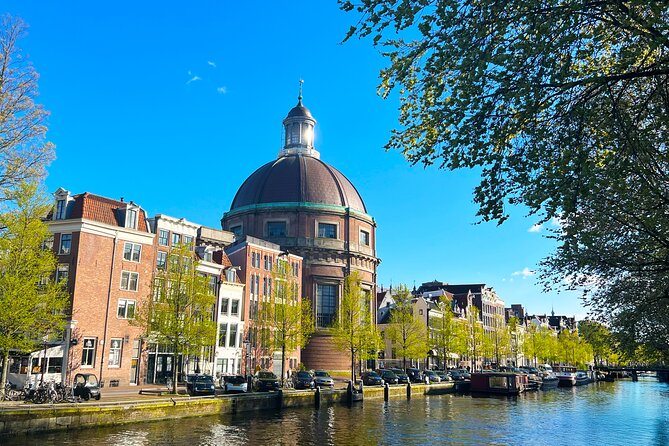
The Ronde Lutherse Kerk is included as an example of the technical and visual ambition of its time. The tour points out the importance of domes during the Renaissance period and treats the building as an architectural achievement.
This stop is brief, so expect an exterior explanation rather than a long church visit. It gives the route some variety after the narrow canal houses and helps show that Amsterdam’s Golden Age design was not limited to tall merchant homes.
Prinsengracht warehouses: where architecture had a job to do
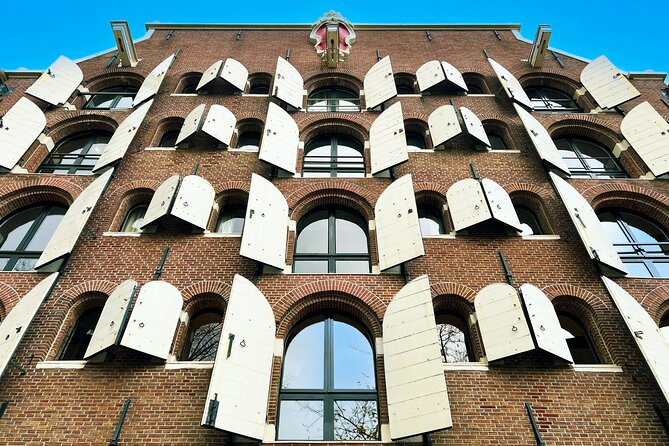
Along Prinsengracht, the focus shifts from display to function. The warehouses were tied to the trade that made Amsterdam wealthy, and their shape tells you how they worked.
Look for tall gables, large windows, steep roofs, and the wooden hoisting beams at the top. These beams allowed merchants and workers to lift heavy goods from boats and move them into storage areas. The buildings were designed around cargo, access, and limited street space.
The exteriors are often simpler than those of wealthy homes. That restraint was practical, but the size of the warehouses still showed the power of the merchants who used them. You can read the commercial system in the buildings themselves.
This five-minute stop is useful if you like architecture with a clear purpose. It also gives you a better sense of why Amsterdam’s canals were working routes, not just scenic waterways.
Jordaan: small façade stones with large stories
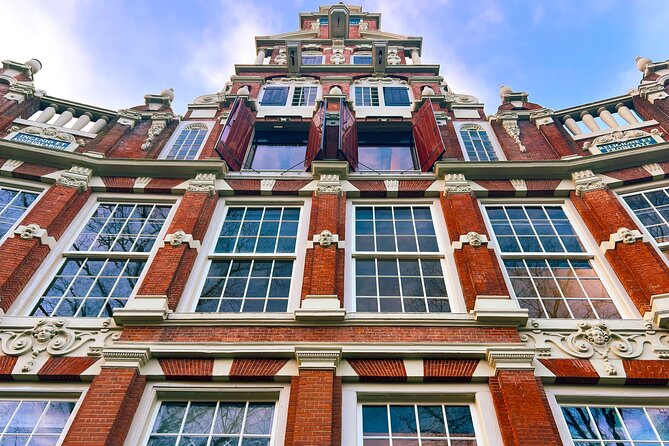
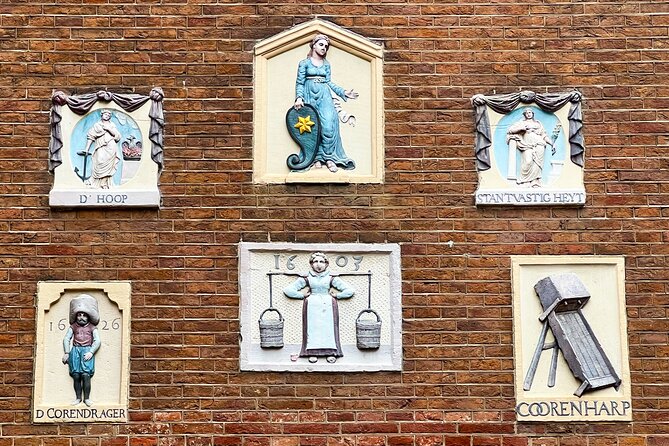
The longest stop is in Jordaan, lasting about twenty minutes. Originally a lower- and middle-class district for craftsmen and laborers, Jordaan combined homes, shops, and workshops in a tight urban setting.
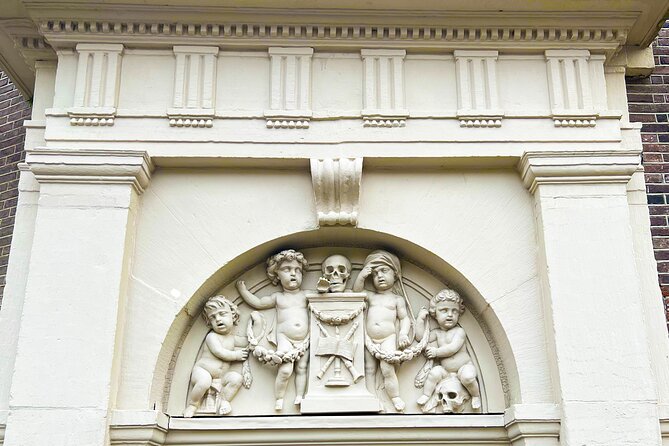
The main subject here is the gevelsteen, or façade stone. These small carved plaques were set into building fronts and could identify a profession, explain how a property was used, or point to important facts about its occupants.
Once your guide points them out, you may find yourself looking above doors and along façades for these modest signs. They add a human layer to the street. A grand canal house tells you about wealth, but a façade stone may tell you about a baker, craftsman, merchant, or workshop.
This part of the walk is likely the strongest match for you if you enjoy small details and local stories. It also rewards questions. You can ask Anna about the symbols, buildings, or neighborhood features that catch your eye.
Westerkerk: the final landmark near Anne Frank House
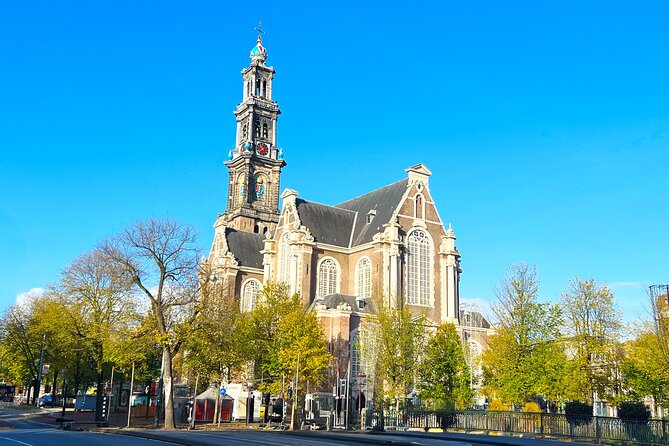
The route ends at Westerkerk on Prinsengracht, near the Anne Frank House. The church was built as a Calvinist place of worship for Amsterdam’s growing population, and its plain, spacious interior reflects Calvinist preferences.
Its tower rises 85 meters, or about 280 feet, above Jordaan. The spire is topped by the imperial crown, a symbol connected with Amsterdam’s status since the 15th century. The tower clock and its chimes also have a strong place in the city’s memory, including Anne Frank’s description of them in her diary.
The church is also associated with Rembrandt, who was buried there. The stop takes about five minutes, so treat it as a final outdoor explanation rather than a full church visit.
Ending here is practical. You are close to the Anne Frank House and the canal district, so the tour fits neatly into a day built around central Amsterdam sights. No admission ticket is included, and the walk does not promise entry to the church or Anne Frank House.
What the private format adds
A private tour matters most on a subject like architecture. In a large group, you may hear the main dates and move on. Here, you can ask why a house leans, what a carving means, or how a warehouse worked.
Anna is praised for clear English, patience, and an easy way of explaining history. Her local connection is useful because the tour is not limited to famous names. She can point out details you might otherwise pass without noticing, then respond to your own questions.
The private format also makes photo stops easier. You are not trying to keep up with a large crowd, though the 90-minute schedule still requires a steady pace. Group discounts are available, which can improve the value for a small party.
Is $73.59 a fair price?
At $73.59 per person, this is not a budget orientation walk. The price does not include drinks, museum entry, or access to the Royal Palace, Westerkerk, or Anne Frank House. You are paying for the private guide and the concentrated route.
For one person, the cost is harder to justify unless architecture is a top interest. For two or more people, the private format makes more sense, especially when group discounts apply. You also save time by seeing many important buildings in 90 minutes rather than trying to identify them on your own.
I would compare this with the cost of a general group walk. If you mainly want broad city orientation, a cheaper option may suit you. If you want Amsterdam’s buildings explained in detail and prefer to ask questions freely, this tour offers a more focused use of your time.
Who should book this walk?
I would choose it for a first or second visit if you want to understand the canal belt rather than simply photograph it. It suits architecture fans, history enthusiasts, photographers, and anyone curious about how trade shaped city design.
It also works well for a small family or couple who want a flexible conversation with a local guide. Anna’s willingness to answer many questions and allow photo stops makes the experience feel personal without turning it into a museum lecture.
You should think twice if you dislike walking, standing, or moving between several short stops. Most people can participate, but the tour is not recommended for people who use a walker or have trouble walking and standing for 1.5 hours. Mobility aids are not available.
The tour is offered in English and includes a mobile ticket. Service animals are allowed, and the route is near public transportation.
Booking advice and final verdict
I would book this tour if you want the canal belt to make more sense. The best parts are not simply the grand buildings. They are the links between a façade, the person who paid for it, the goods moved through the canal, and the ground beneath the street.
Book with enough energy for a steady 90-minute walk, and wear comfortable shoes. If you have time afterward, continue exploring near Westerkerk and Anne Frank House, since the tour finishes there.
This is a strong choice for a small group that values personal attention and architectural detail. Skip it if you want interior visits, a slow photography session, or a broad tour of all Amsterdam history. For everyone else, the route offers a smart, compact way to learn how Amsterdam’s Golden Age still shapes the streets you see today.
FAQ
How long is the walking tour?
The tour lasts approximately 1 hour and 30 minutes.
Where does the tour start?
The meeting point is Royal Palace Amsterdam at Nieuwezijds Voorburgwal 147, 1012 RJ Amsterdam.
Where does the tour end?
The tour ends at Westerkerk, Prinsengracht 279, 1016 DL Amsterdam, near the Anne Frank House.
Is this a private tour?
Yes. Only your own group participates in the activity.
Is the tour offered in English?
Yes. The tour is offered in English.
What is included in the price?
A private guide is included.
Is bottled water included?
No. Bottled water is not included.
Are admission tickets included?
The listed stops have no admission ticket included. The tour focuses on viewing and discussing the buildings, and separate entry is not provided.
Is the tour suitable for people with walking difficulties?
The tour is not recommended for people who use a walker or have trouble walking and standing for 1.5 hours. Mobility aids are not available.
Can I cancel for a full refund?
Yes, if you cancel at least 24 hours before the experience start time. Cancellations made less than 24 hours in advance are not refunded.
More Architecture Tours in Amsterdam
- Amsterdam: Architecture Museum Het Schip Entry Ticket & Tour
★ 3.7 · 8 reviews - Amsterdam Architecture Tour
★ 5.0 · 4 reviews - Rotterdam: Architectural Highlights Guided Walking Tour
★ 4.8 · 215 reviews - Rotterdam Walk: Hilights, Gems, Architecture & WWII | 2 or 3hrs
★ 5.0 · 149 reviews
Just added around Amsterdam
- Private sightseeing tour to Bruges and chocolate from Amsterdam★ 5.0 · 11 reviews
- Amsterdam: Rijksmuseum (Private Tour & Priority Access)★ 5.0 · 27 reviews
- Amsterdam: Private Romantic Evening Canal Cruise + Bubbles/Snacks★ 5.0 · 46 reviews
- Amsterdam Private Shopping Experience★ 5.0 · 7 reviews
- Rijksmuseum Amsterdam Private Guided Tour★ 5.0 · 57 reviews
- Amsterdam Rijksmuseum PRIVATE TOUR with a Local Private Guide★ 5.0 · 159 reviews
- Private One way Transfer Amsterdam Airport to Amsterdam★ 3.5 · 42 reviews
- Private Rijksmuseum Tour- The Dutch Masters, Rembrandt & Vermeer★ 5.0 · 54 reviews
Dutch Masters Art Tours, compared.
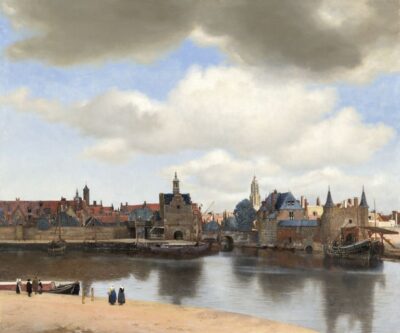
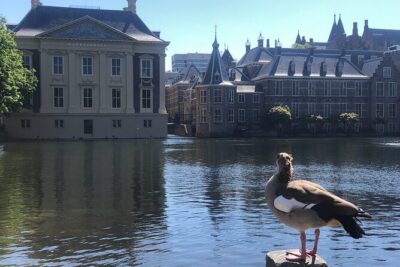
Visit the Girl with the Pearl Earring, The Hague & Delft City
Read our review →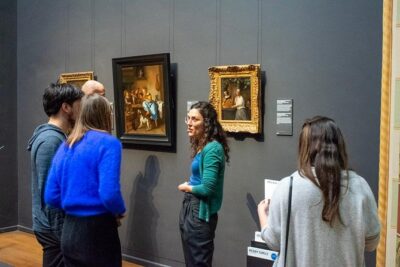
Private Rijksmuseum Tour- The Dutch Masters, Rembrandt & Vermeer
Read our review →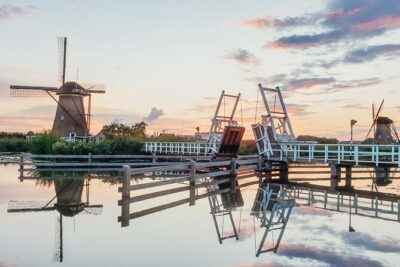
Kinderdijk, The Hague, Mauritshuis Private Tour from Amsterdam
Read our review →
5 hrs Golden Age Amsterdam Private Walking Tour With Local Guide
Read our review →
Browse the lists this tour appears in