
Reviewed · ANNE FRANK TOURS
Liberal Amsterdam: Small-Group Walking Tour & Anne Frank VR
Amsterdam’s past comes into focus through ordinary streets on this three-hour walk with Antonis. You’ll hear about wartime resistance, Jewish families in hiding, secret prisons beneath bridges, leaning houses, water management, and the social ideas that shaped modern Amsterdam. The optional Anne Frank House VR adds a quiet final reflection rather than another standard sightseeing stop.
I like the personal scale and the unusual details. The walk is limited to a small group, and Antonis uses books, chalk drawings, questions, humor, and stories about everyday people instead of delivering a string of dates. I also like the little extras: a coffee break, Dutch chocolate or cookies, a mini Polaroid and handwritten postcard. The main consideration is that the route covers several hours on foot and includes serious Holocaust material, while the VR uses one headset passed around, so it is optional and not a full private simulation for everyone.
Key points at a glance
- WWII stories begin at Kattengat 4-6, with the walk moving through places tied to Jewish life, resistance, and remembrance.
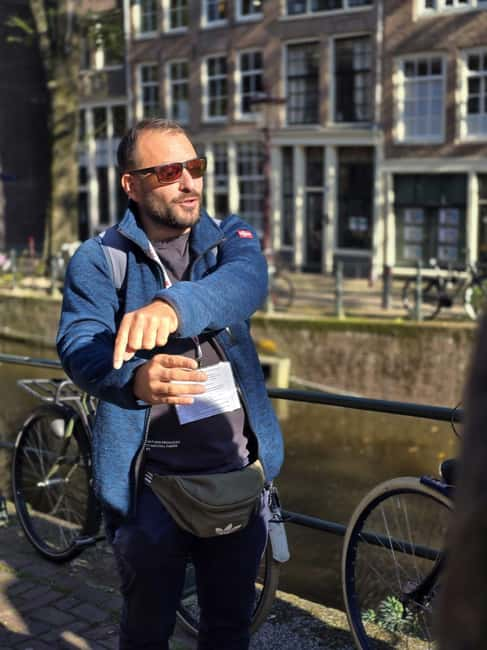
- Antonis keeps the tone conversational, mixing local customs with history, humor, and time for questions.
- Amsterdam’s physical character gets proper attention, from water control and leaning houses to bridges and houseboat life.
- The Holocaust Names Monument is a reflective stop, not just another photo opportunity.
- Coffee, a sweet treat, bottled water, chocolate, and small paper souvenirs add warmth to the three-hour experience.
- The Anne Frank VR is optional, with one headset shared during the closing session.
Amsterdam’s wartime story starts on foot
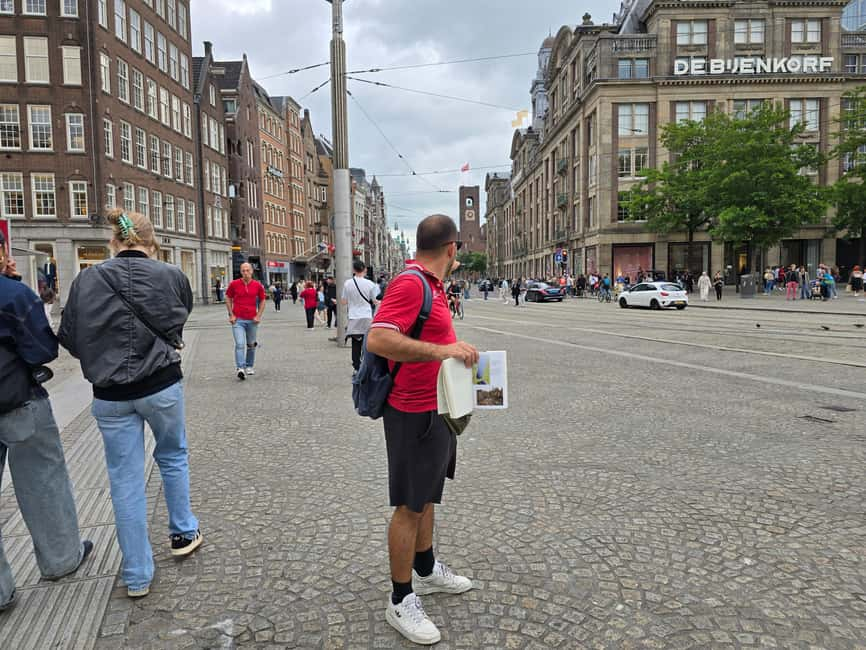
The meeting point is in front of De Silveren Spiegel at Kattengat 4-6, near the center. The first setting is linked to a building where Jewish families were hidden during World War II, which gives the walk a human starting point. You are not simply beginning with a map and a list of monuments. You are beginning with the choices made by people who lived through occupation.
The first listed stop is the HIV/AIDSmonument. Antonis uses about ten minutes here for a guided introduction, sightseeing, and a short safety briefing. It may seem like an unexpected opening for a WWII and liberal-culture tour, but it helps frame Amsterdam through compassion, public memory, and the city’s changing social values.
From there, the group reaches Amsterdam Centraal Station. You get a photo stop and about ten minutes of explanation. The station is one of the city’s most recognizable landmarks, but the useful part of this visit is the connection between Amsterdam’s transport network, waterfront setting, and growth as a commercial city.
The walking pace is relaxed. You should still wear comfortable shoes, since the route involves bridges, streets, and pauses at many different points. Bring water and clothing suited to the weather. The city can feel easy to walk through, but three hours on hard pavement is not the same as a short stroll between attractions.
More Walking Tours in Amsterdam
- Anne Frank’s Story – Guided Walking Tour through Amsterdam
★ 5.0 · 11,619 reviews - Amsterdam: Life of Anne Frank and World War II Walking Tour
★ 4.8 · 10,467 reviews - Absolutely Amsterdam – the Essential Introductory Walking Tour
★ 5.0 · 3,629 reviews
Bridges, canals, and the practical city
The stop at Tony’s Chocolonely Super Store takes about five minutes. It is a quick look at a distinctly Dutch food brand and a chance to connect the city’s modern ethical concerns with its long tradition of trade. It is not a major museum visit, so you should treat it as a brief cultural pause rather than a shopping stop.
The Aluminium Bridge receives about fifteen minutes. Amsterdam’s bridges are not just useful crossings. They shape how people move through the city and offer changing views of canals, houses, bicycles, and water. Antonis also explains why water management matters so much here. The city’s character depends on controlling water, maintaining canals, and building on ground that has never been entirely simple.
At Staalmeestersbrug, another fifteen-minute stop gives you time to look closely at the bridge and its surroundings. This is the kind of place you could cross without noticing. With a guide, the bridge becomes a doorway into Amsterdam’s building methods, canal planning, and daily routines.
The tour also covers leaning houses and houseboat life. Leaning buildings are not all the result of neglect or poor construction. Their angles can relate to old foundations, narrow plots, settling ground, and the way goods were once lifted into upper floors. Houseboats, meanwhile, are not just a postcard feature. They show how Amsterdam adapts living space to a city defined by water.
These details are especially useful if you have already seen the central canals but still wonder how the city works. I like tours that explain the practical reason behind a visual oddity. Here, a crooked house becomes a clue about engineering, property, and urban life.
The Jewish Quarter and the weight of memory
The Jewish Quarter receives about fifteen minutes of guided attention. This section is central to the tour’s WWII focus, and Antonis connects streets and buildings with the lives of people who lived, worked, hid, resisted, and suffered in Amsterdam.
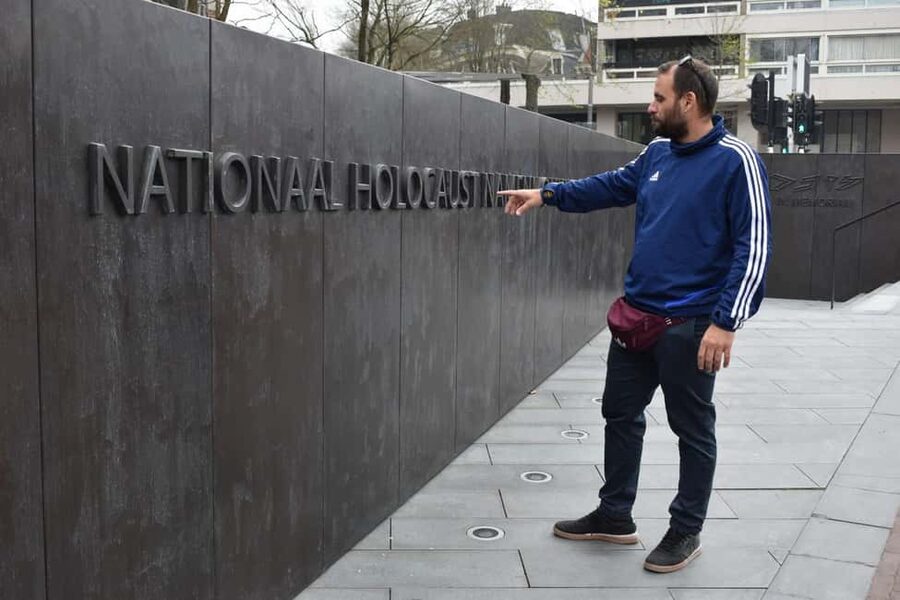
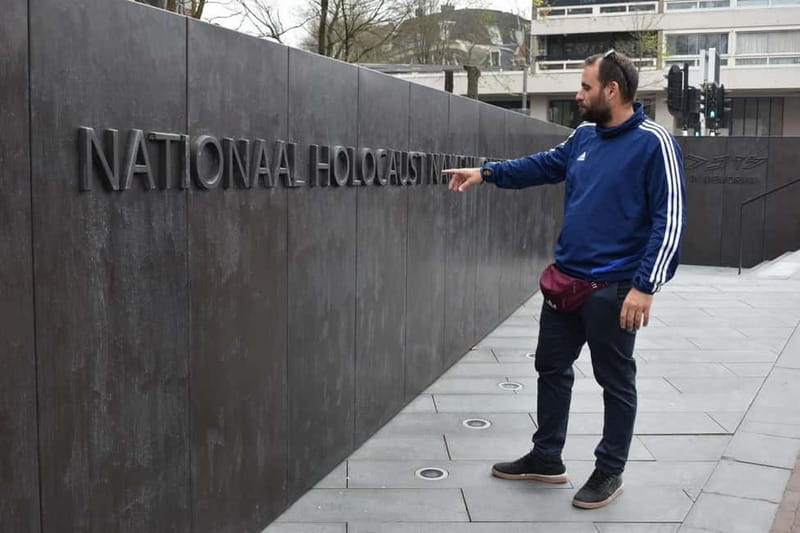
You should expect a serious change in tone as the walk reaches the National Holocaust Names Monument. The stop lasts about fifteen minutes and is meant for reflection as much as explanation. The monument gives names and identity to people who were murdered, making the scale of the Holocaust personal rather than abstract.
This is one of the strongest parts of the route, but it may not suit someone looking only for light sightseeing. The tour includes humor and everyday culture, yet it does not treat wartime history as a decorative backdrop. You will need to give the subject your attention and respect.
The nearby bridges and streets also carry less obvious stories. Antonis talks about resistance, hidden places, and secret prisons under bridges. These accounts show how wartime Amsterdam involved more than famous buildings. Choices were made in homes, alleys, workplaces, and public spaces.
The tour’s theme of liberal Amsterdam is handled through this mixture of past and present. The point is not that the city has always been perfectly free or tolerant. Instead, you see how ideas about education, community, art, resistance, and compassion have developed over time. Antonis also discusses the Dutch educational system and how it supports the country’s progress, giving the tour a broader social frame.
Magere Brug and the city’s changing face
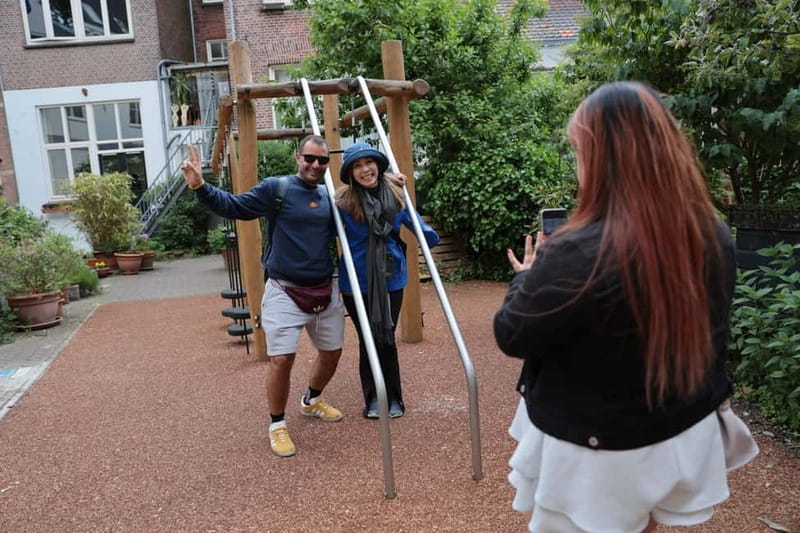
The walk continues to Magere Brug, one of Amsterdam’s best-known bridges. The group spends around ten minutes here for sightseeing, photography, and explanation. This is a good place to appreciate how engineering, water, and beauty overlap in the city.
Blauwbrug Bridge follows, with another ten minutes. It offers a different view of Amsterdam’s waterways and urban design. The route does not rush from landmark to landmark. Instead, each bridge becomes a short lesson in how the city is built and how people use it.
You may also hear about Amsterdam’s liberal culture through its less polished corners, including quiet lanes near the Red Light District. The emphasis is on cultural context rather than sensationalism. Antonis explains how freedom, commerce, privacy, and public debate sit beside one another in the city.
That balance is important. Many first-time visitors arrive with a narrow picture of Amsterdam, shaped by cannabis shops, nightlife, and crowded central streets. This tour gives you a fuller view without pretending those parts of the city do not exist. You see how they fit into a place that also values art, social policy, historical memory, and ordinary neighborhood life.
More Anne Frank and wartime walks:
- Amsterdam: Anne Frank Guided Small Group Walking Tour
★ 4.8 · 2,722 reviews - Amsterdam: Anne Frank Walking Tour – Guided in EN/DE/IT/ES
★ 4.9 · 2,676 reviews - Anne Frank Walking Tour Amsterdam Including Jewish Cultural Quarter
★ 5.0 · 1,879 reviews - Anne Frank’s Last Walk & See Anne Frank House in Virtual Reality
★ 5.0 · 957 reviews
Zuiderkerk, Nieuwmarkt, and a useful finish
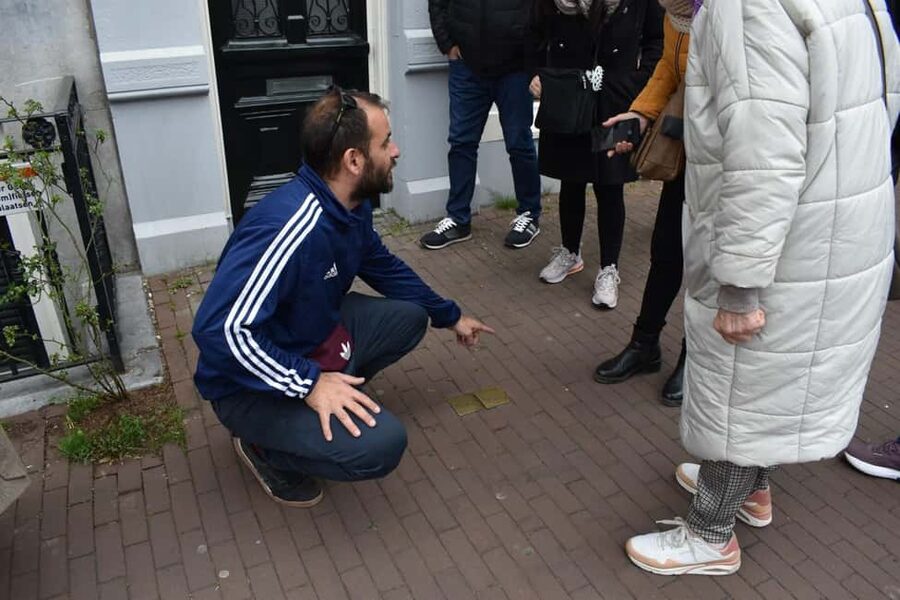
Zuiderkerk is another ten-minute stop for photos and guided sightseeing. The church helps place the surrounding streets in the city’s older urban fabric. You get another chance to consider how religious buildings, housing, waterways, and civic life developed side by side.
The final listed stop is Nieuwmarkt Square, where the group spends around fifteen minutes. Nieuwmarkt is a useful place to end the walking portion because it brings together several sides of Amsterdam: old defensive architecture, food and drink, public space, and the everyday movement of local life.
The activity details also name Waag as the finish, while the meeting information says the activity ends back at the meeting point. Because these descriptions differ, I would confirm the exact end point before booking, especially if you have a timed museum entry, dinner reservation, or train to catch.
Antonis provides local suggestions for nearby bars and restaurants. This is one of the more practical benefits of taking the walk early in your stay. You can ask about places that fit your taste and use the advice later, rather than relying only on restaurants closest to the main sights.
Coffee, chocolate, and Anne Frank in VR
After roughly two hours of walking, the experience includes a break with coffee, bottled water, and a changing Dutch sweet treat. The treat may be chocolate or Dutch cookies. Chocolate is also listed among the inclusions, so you should expect a small edible extra rather than a meal.
There is a slight information conflict here: the activity description says coffee is included, while the general inclusions also say snacks and drinks are not included. I would confirm exactly what is covered when you reserve. In any case, plan to eat beforehand or carry a snack, since this is not a lunch tour.
The closing Anne Frank House VR session is designed as a shared, informal activity. There is one headset, which is passed from person to person, and trying it is optional. You can take part if you are curious, or simply stay with the conversation and stories while others try it.
This setup matters. You should not book the tour expecting every member of the group to receive a long, private VR visit. The technology works more as a conversation starter and a way to picture the Secret Annex than as a replacement for visiting the actual Anne Frank House.
The value is that you do not need an Anne Frank House ticket for this portion. You get a short virtual look at the space after hearing the wider wartime story in the streets. That sequence can make the subject feel more connected, but the experience remains shared and optional.
What you take home
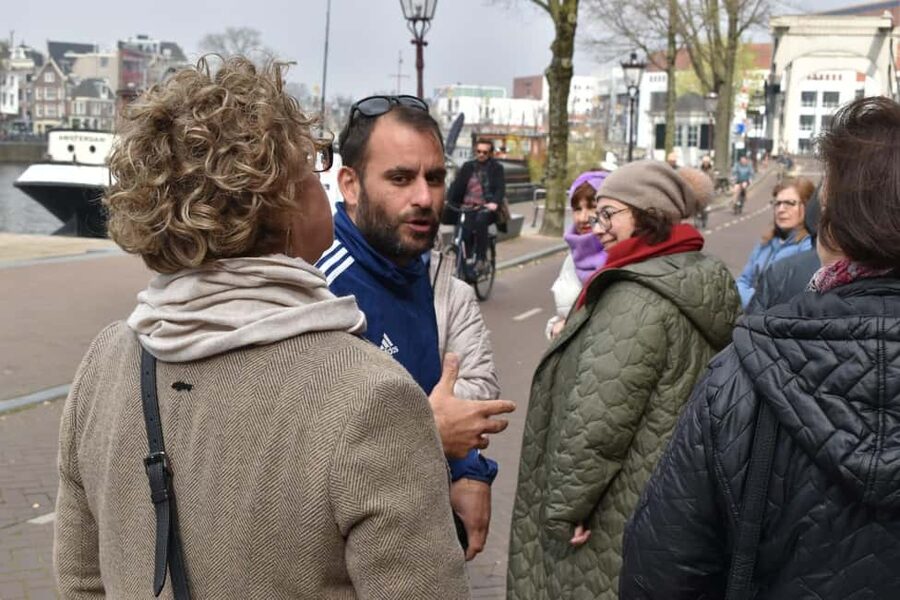
The small souvenirs are simple but thoughtful. Antonis takes a mini Polaroid photo, and you receive a postcard from the Anne Frank Museum or City Archives with a personalized handwritten message and official stamp. The exact postcard may vary, but it is more personal than a generic digital photo.
I like the Polaroid because it fits the tone of the tour. It is not a large production or a forced group photo. It is a small physical reminder of a walk that depends on conversation and observation.
The recommendation list is useful, too. You get tips for bars and restaurants, which can help you move beyond the most obvious tourist choices. Antonis’s approach, as reflected in the experience itself, places a lot of value on questions. If you want restaurant advice, ask clearly about budget, neighborhood, and food style.
Price, group size, and practical value
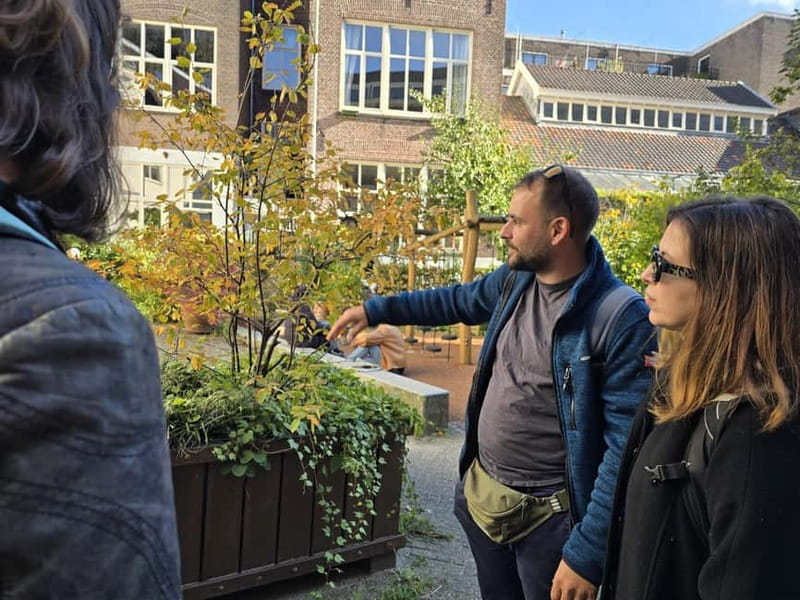
At $33 per person, the tour is priced below many large commercial city walks and includes more than the guiding itself. You receive around three hours with an English-speaking guide, a small-group format, a coffee break as described, a sweet treat, water, VR access, a Polaroid, a postcard, and local recommendations.
The main value is the guide’s personal storytelling. A standard free walk may cover some of the same central streets, but it is less likely to include chalk drawings, a shared VR session, a handwritten postcard, and a sustained focus on the link between WWII history and modern liberal culture.
The group-size details are not fully consistent. One description says a maximum of ten people, while another says the group is limited to six. Either way, this is intended to be a small group, not a coach tour. Confirm the actual maximum at your chosen time if having a very intimate group matters to you.
The activity is offered in English and is not suitable for wheelchair users. The route includes walking over bridges and through historic streets, so anyone with limited mobility should ask for current route details before paying.
Free cancellation is available up to 24 hours before the start, and you can reserve now and pay later. That gives you useful flexibility, especially when Amsterdam weather or museum plans are still shifting.
Who will enjoy this Amsterdam walk
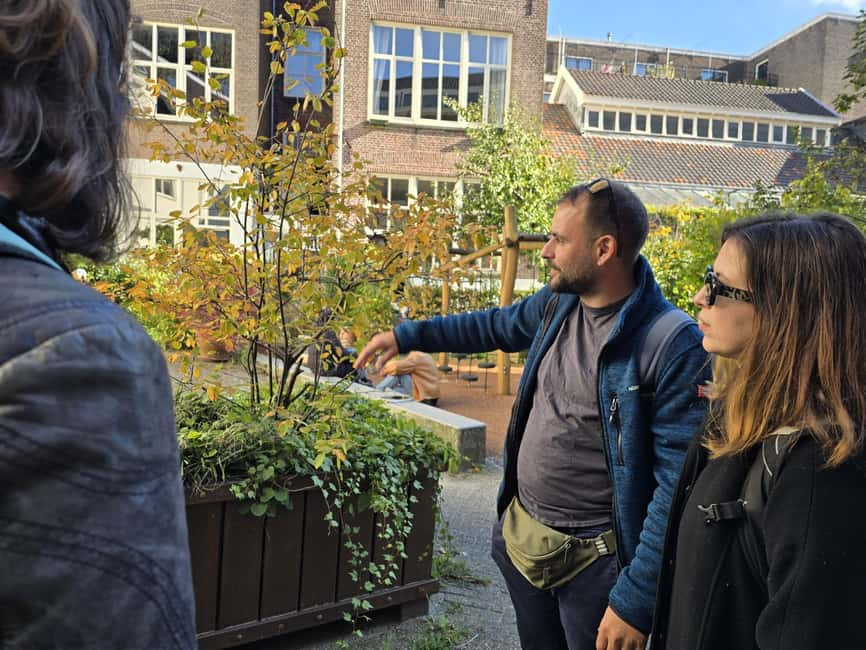
I would choose this tour if you want context more than a checklist. It suits solo visitors, couples, curious first-time visitors, and anyone who wants to understand Amsterdam beyond its nightlife reputation.
It is also a good early-stay activity. The guide’s food and drink suggestions, city orientation, bridge explanations, and social history can help you make better choices during the rest of your visit.
You should think twice if you want a fast, landmark-heavy route with little discussion. The tour pauses often, covers painful historical subjects, and depends on listening. The VR is a bonus, not the main attraction, and one headset means the experience is shared.
The route is also not ideal for anyone who needs step-free access or dislikes walking for several hours. Bring water, wear good shoes, and allow extra time after the tour if you want to stop for food in the Nieuwmarkt area.
Should you book it?
Book this tour if you want Amsterdam explained through people, choices, bridges, and memory rather than only through famous buildings. Antonis’s style suits you if you enjoy questions, humor, local advice, and stories that connect WWII with the city’s present-day social character.
Skip it if you want a private Anne Frank House visit, a full VR session for each person, or a relaxed café outing with only a little walking. At $33, though, the combination of a small group, two hours on foot, practical city advice, keepsakes, and an optional VR experience offers solid value, provided you are comfortable with the route and confirm the coffee, group size, and end point before booking.
FAQ
How long does the tour last?
The activity lasts three hours. The walking portion takes about two hours, followed by coffee and the VR session.
What language is the tour offered in?
The tour is conducted in English by a live guide.
Who leads the tour?
The guide is Antonis, who uses personal storytelling, books, chalk drawings, humor, and questions during the walk.
Where does the tour start?
It starts at Kattengat 4-6, in front of the restaurant De Silveren Spiegel.
Where does the tour finish?
The itinerary names Waag as the finish, while the meeting information says the activity ends back at the meeting point. Confirm the exact end location before booking.
Is the Anne Frank VR required?
No. The VR is optional. There is one headset, and it is passed around for anyone who wants to try it.
Is coffee included?
The experience description says a warm coffee is included. However, the general information also says snacks and drinks are not included, so confirm the current arrangement when booking.
What souvenirs are included?
You receive a mini Polaroid photo and a postcard from the Anne Frank Museum or City Archives. The postcard includes a handwritten message and an official stamp.
Is the tour wheelchair accessible?
The activity is listed as unsuitable for wheelchair users.
Can I cancel the booking?
You can cancel up to 24 hours in advance for a full refund. A reserve-now, pay-later option is also available.
More Small-Group Tours in Amsterdam
- Amsterdam Small-Group Canal Cruise Including Snacks and Drinks
★ 5.0 · 2,526 reviews - Zaanse Schans Windmills, Clogs and Dutch Cheese Small-Group Tour from Amsterdam
★ 4.5 · 2,369 reviews - Amsterdam: Zaanse Schans 3-Hour Small Group Tour
★ 4.8 · 2,160 reviews - Rijksmuseum Amsterdam Small-Group Tour with Private Upgrade
★ 4.5 · 1,547 reviews
More VR Experiences in Amsterdam
- Amsterdam: Anne Frank’s Last Walk & Visit the House in VR
★ 4.9 · 482 reviews - Amsterdam: Racing Experience at A’DAM VR Game Park (no VR)
★ 4.2 · 22 reviews - Amsterdam: VR Game Park Free-Roaming Experience
★ 5.0 · 9 reviews - Amsterdam: VR Starter Pack with 6 Tokens
★ 4.7 · 7 reviews
Just added around Amsterdam
- Private sightseeing tour to Bruges and chocolate from Amsterdam★ 5.0 · 11 reviews
- Amsterdam: Private Romantic Evening Canal Cruise + Bubbles/Snacks★ 5.0 · 46 reviews
- Amsterdam Private Shopping Experience★ 5.0 · 7 reviews
- Amsterdam: Rijksmuseum (Private Tour & Priority Access)★ 5.0 · 27 reviews
- Rijksmuseum Amsterdam Private Guided Tour★ 5.0 · 57 reviews
- Amsterdam Rijksmuseum PRIVATE TOUR with a Local Private Guide★ 5.0 · 159 reviews
- Private Photo Session in Amsterdam★ 5.0 · 15 reviews
- Private One way Transfer Amsterdam Airport to Amsterdam★ 3.5 · 42 reviews
Anne Frank Tours, compared.
Anne Frank’s Story – Guided Walking Tour through Amsterdam
Read our review →
Life of Anne Frank and World War II Walking Tour
Read our review →
Anne Frank Walking Tour – Guided in EN/DE/IT/ES
Read our review →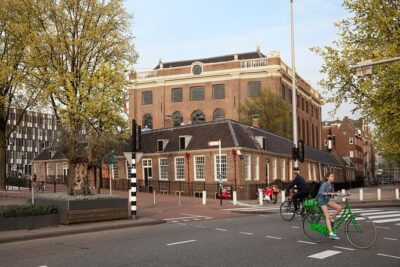
Anne Frank Walking Tour Amsterdam Including Jewish Cultural Quarter
Read our review →
Anne Frank’s Last Walk & See Anne Frank House in Virtual Reality
Read our review →
Anne Frank and Jewish Quarter Amsterdam Private Walking Tour
Read our review →
Browse the lists this tour appears in