Reviewed · TOURS
From Amsterdam: Rotterdam and The Hague Tour in Spanish
Rotterdam and The Hague make a useful pair: one is the Netherlands’ political heart, the other a bold port city rebuilt around modern design. I like that this Spanish-language day trip covers both without making you change trains or work out two complicated city visits yourself. I also like the mix of major sights, from the Binnenhof and Peace Palace to Rotterdam’s Cube Houses and Markthal.
The tradeoff is pace. Eight hours must cover the bus ride, two cities, guided stops, and roughly three hours of free time, so this is a strong first look rather than a slow, museum-heavy visit. Admission costs and food are not included, and some stops may be mainly exterior views.
Key points to know before booking
- Two very different cities in one day: Compare The Hague’s royal and government buildings with Rotterdam’s postwar architecture.
- Spanish-speaking guides: Guides including Blas, Fanny, Facundo, and Silvia have been praised for humor, care, and clear explanations.
- About three hours of free time: Use it for lunch, shopping, the Markthal, or a more personal look at Rotterdam.
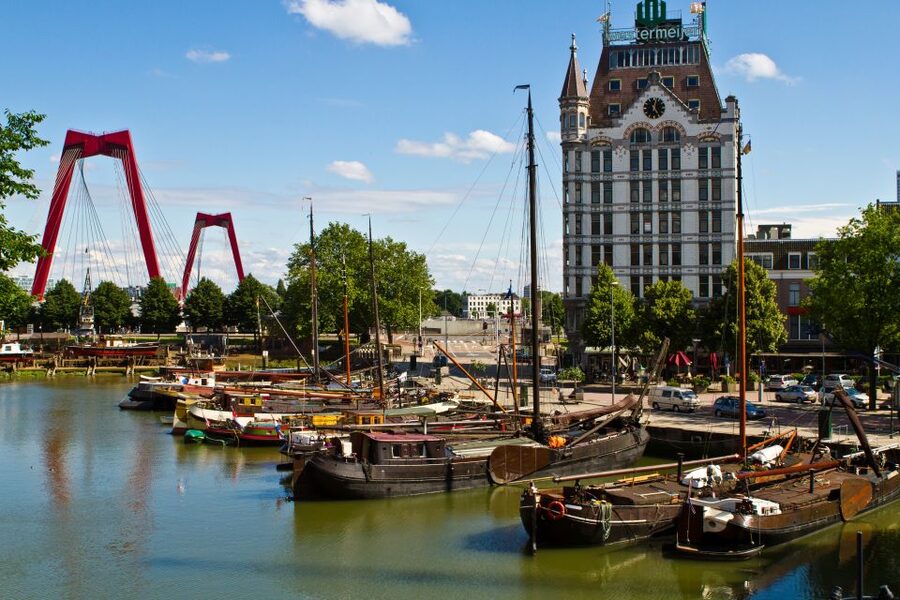
- A useful architecture focus: See the Cube Houses, Oude Haven, the Markthal, and the River Meuse waterfront.
- A bus-based day from Amsterdam: Transportation is arranged, but the fixed route leaves limited time for unplanned detours.
- Good value at $46: The price is attractive for a full day with transport and a live guide, though meals and possible entrance fees are extra.
Why this day trip works from Amsterdam

Amsterdam has enough to fill several days, but the Netherlands is compact, and Rotterdam and The Hague offer a sharp change of mood. The Hague gives you royal residences, government buildings, international law, and traditional city scenery. Rotterdam feels more experimental, with large modern buildings, unusual homes, open waterfront views, and reminders of wartime destruction.
I like this pairing because it avoids seeing only one version of the country. You get the formal side of Dutch public life in The Hague, then the practical, rebuilt, forward-looking character of Rotterdam. The bus also saves you from planning separate rail connections and city walks.
The tour lasts eight hours, so expect a full day. The schedule gives you guided context at the main sights, then around three hours to eat, shop, or explore independently. That free time matters. A guided city tour can otherwise leave you moving from stop to stop without a chance to sit down or choose your own lunch.
The price of $46 per person is a strong point. For that amount, you receive bus transportation and a Spanish-speaking guide for the day. You still need to budget for food, drinks, and any admission fee required at a museum or interior site. The value is best if you want an efficient overview rather than a series of paid indoor visits.
A few more Amsterdam half-days worth comparing
- Amsterdam: Van Gogh Museum Ticket
★ 4.7 · 52,054 reviews - Amsterdam Classic Saloon Boat Cruise with Drinks and Cheese
★ 5.0 · 31,825 reviews - Amsterdam Luxury Canal Cruise + Unlimited Drinks & Bites option
★ 5.0 · 30,518 reviews
The Hague, from Noordeinde Palace to the Binnenhof
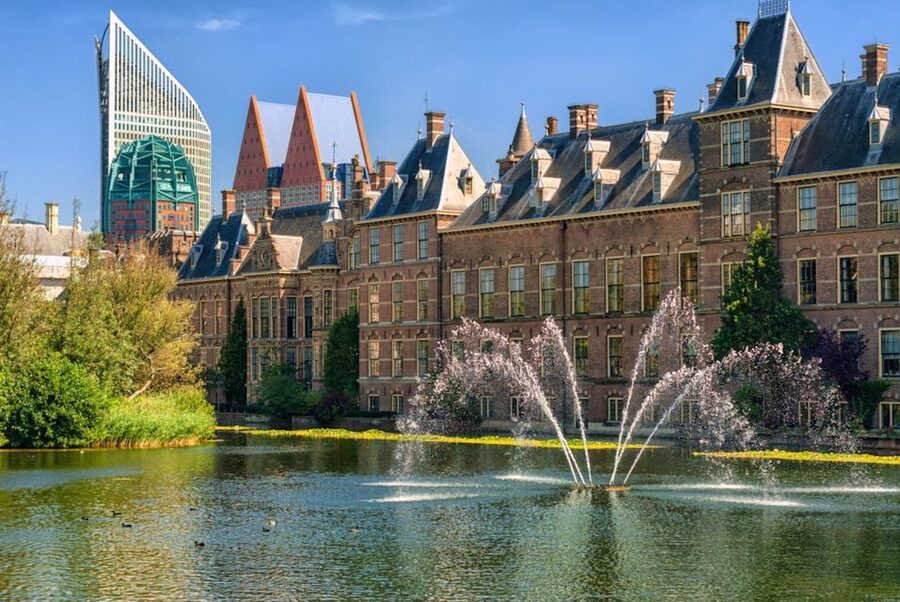
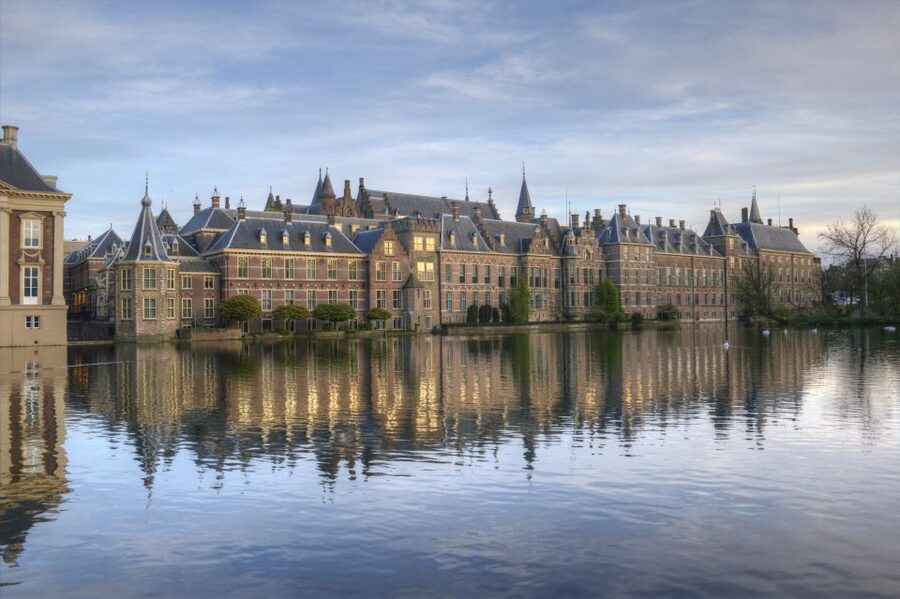
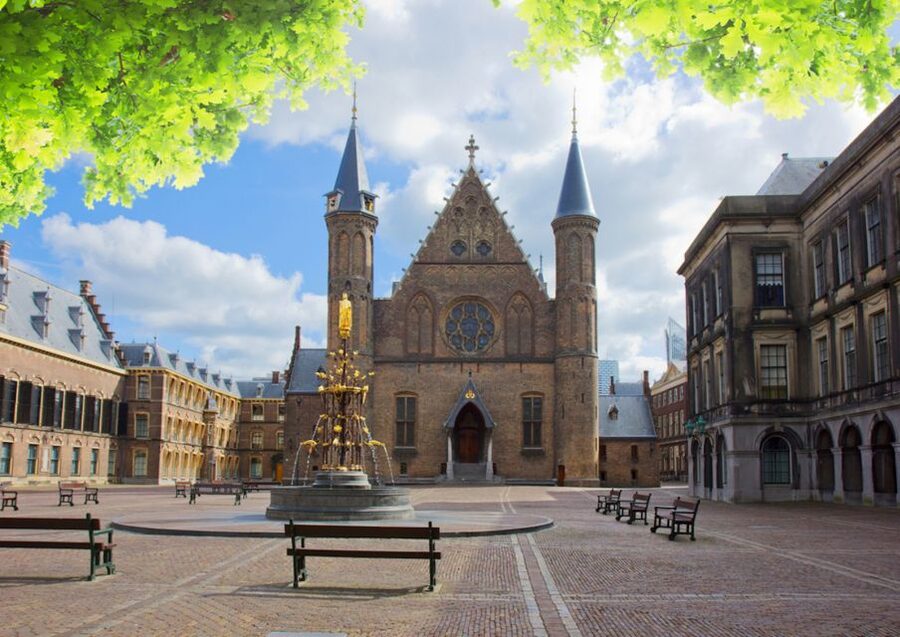
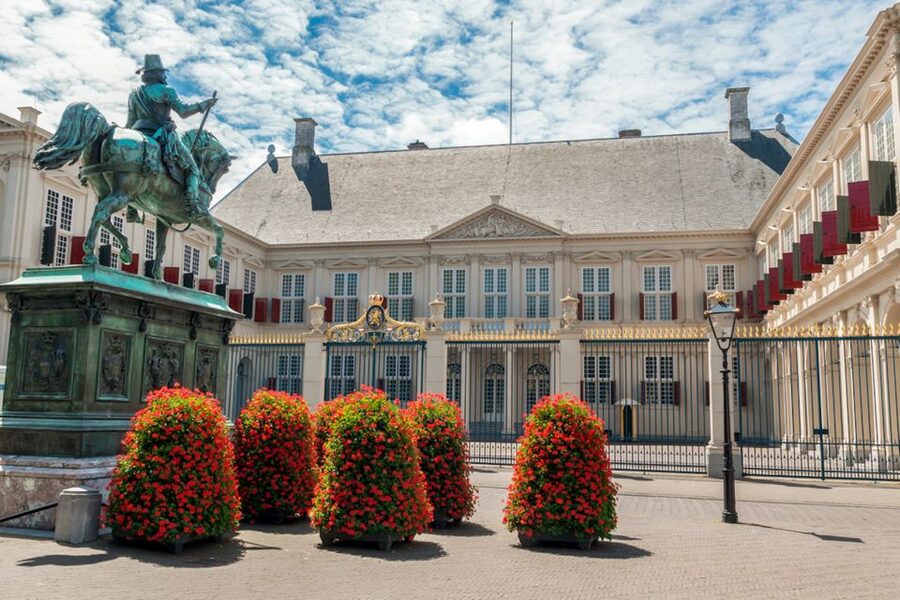
The first city gives you a look at the Netherlands as a seat of power. The itinerary includes Noordeinde Palace, the royal palace associated with the Dutch monarch, and the Binnenhof, the government complex at the center of The Hague.
These stops work well together. Noordeinde gives you the royal connection, while the Binnenhof helps explain the political role of the city. You are not simply seeing attractive buildings. You are seeing the places tied to the country’s monarchy and government.
The Binnenhof complex is especially useful with a guide because the buildings can mean little if you only walk past them. Your Spanish-speaking guide can provide the basic political and historical setting as you move through the city. The exact amount of time at each location is not specified, so expect a guided look rather than an extended architectural study.
The Hague is also the more traditional half of the day. If you prefer old civic buildings, royal associations, and a formal city center, you will likely enjoy this portion more than Rotterdam. If your main interest is contemporary architecture, save your energy for the second city.
The Mauritshuis and the Peace Palace
The route also includes the Mauritshuis Museum, known for works by Rembrandt and Vermeer. These are major names in Dutch art, and the museum gives the day an artistic counterpoint to the government buildings.
One practical point matters here: the tour information does not say that museum admission is included. Food and drinks are specifically excluded, while entrance arrangements are not clearly listed. Ask the guide or tour operator on the day if you want to go inside, and be prepared for the possibility of a separate ticket or an exterior introduction.
The Peace Palace adds another layer to The Hague’s identity. It is associated with the International Court of Justice, so the stop connects the city to international law and diplomacy. You can expect to see the headquarters and hear about its role, but the information provided does not promise an interior visit.
I appreciate the range of these stops. In a short period, you move from monarchy to national government, fine art, and international justice. The drawback is that each topic receives only a slice of the day. You will gain orientation, not a full visit to every institution.
Rotterdam and the memory of wartime destruction
Rotterdam changes the tone quickly. The city is known for innovative architecture, but the tour does not treat its modern buildings as decoration alone. The Man without a Heart sculpture by Ossip Zadkine introduces the story of Rotterdam’s destruction during World War II.
That context makes the city easier to read. The striking buildings and open spaces are tied to rebuilding and reinvention. Rotterdam’s modern appearance is not simply the result of fashionable design. It reflects a city that had to recover from severe wartime damage.
I find this one of the most useful stops because it gives meaning to the architecture that follows. Without that background, the Cube Houses and high-rise views can feel like a collection of odd shapes. With it, you can see Rotterdam as a city that chose to create a new visual identity.
The sculpture is also a good reminder that this is not only an architecture tour. The route includes memory, civic identity, and the effect of war on an urban center. Listen closely here, especially if you have never studied Rotterdam’s past.
Same base, a completely different sort of day:
- Amsterdam: Heineken Experience Ticket
★ 4.6 · 30,055 reviews - Amsterdam: Rijksmuseum Entry Ticket
★ 4.7 · 25,535 reviews - Amsterdam: Classic Boat Cruise with Optional Cheese & Wine
★ 4.6 · 22,925 reviews - Amsterdam: Evening Cruise with Optional Wine and Snacks
★ 4.4 · 19,696 reviews
The last medieval building and the Cube Houses
The tour points out the only medieval building still standing in Rotterdam. That detail creates a striking contrast with the city’s modern skyline. You see a surviving piece of older Rotterdam surrounded by a city famous for postwar rebuilding and new design.
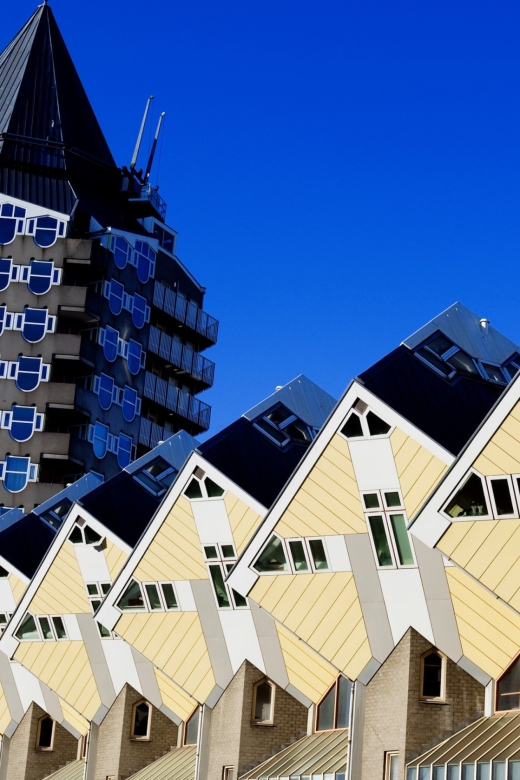
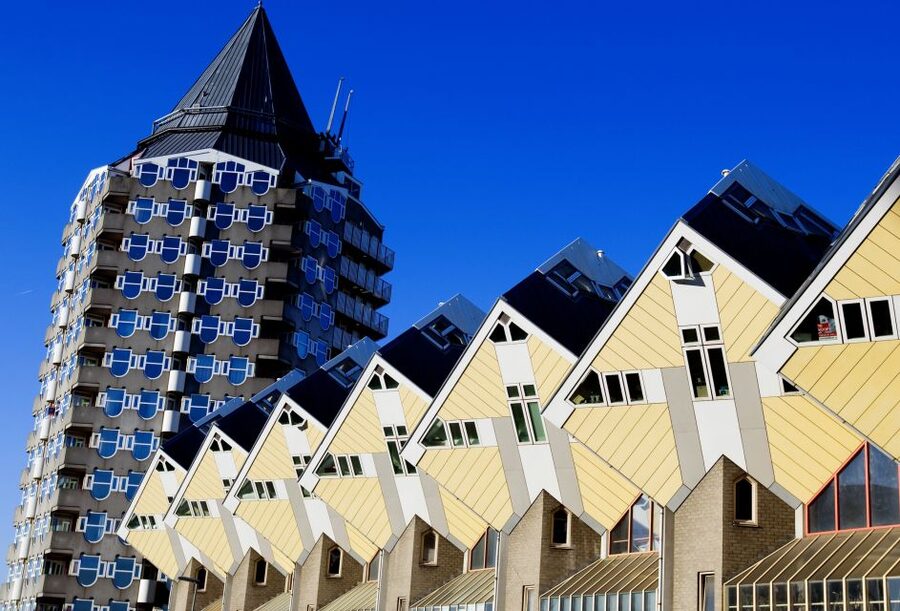
Then come the Cube Houses by Piet Blom. Their tilted geometric forms are among Rotterdam’s best-known sights, and they are easy to recognize even if you know little about architecture. The guided explanation is useful because the buildings can otherwise seem like a quick photo stop.
You should expect time to see and photograph the Cube Houses, not a full architectural course or guaranteed interior access. The schedule has many stops, and the information provided does not say that an inside visit is included. If you want a more detailed look at how the homes function, use some of your free time to remain in the area if the schedule allows.
The contrast between the medieval building and the Cube Houses is one of the day’s best visual pairings. One shows what survived. The other shows what Rotterdam chose to build afterward.
Oude Haven, Markthal, and the River Meuse
Oude Haven, or Old Port, gives you a more intimate side of Rotterdam’s waterfront. After the large-scale architecture, this area helps connect the city to its port past. You can expect a guided look at the harbor area, followed by opportunities to see how old and new Rotterdam sit close together.
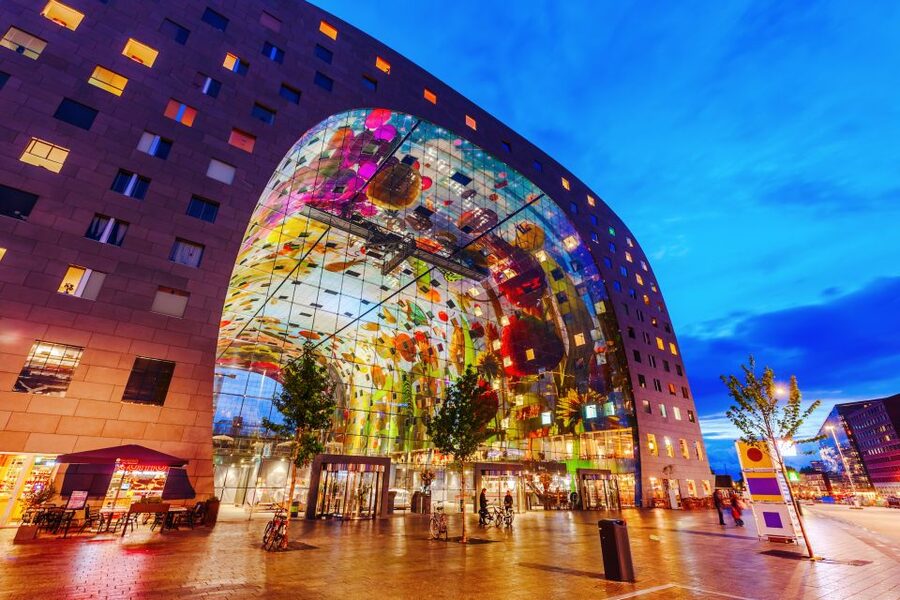
The Markthal is a practical stop as well as an architectural one. The historic market setting and food displays make it a natural place to think about lunch. Since food and drinks are not included, you will need to pay for anything you buy. The free time makes the Markthal especially useful if you want an easy meal with plenty of choice, though the tour does not promise a specific restaurant or reserved seating.
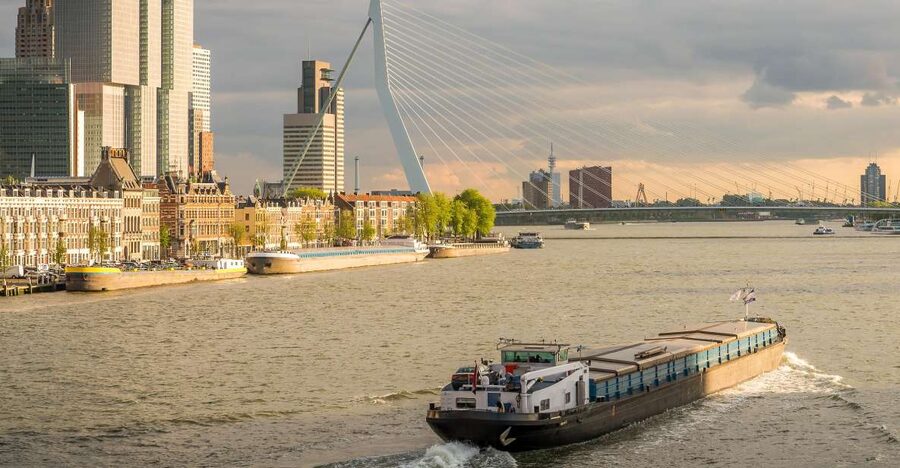
A walk along the River Meuse brings the city’s scale into focus. From the banks, you get a broad view toward Rotterdam’s skyscrapers. This is likely to be one of the better places for photographs because you can take in several parts of the modern skyline at once.
The city portion combines landmarks with ordinary decisions: where to eat, what to photograph, and how long to linger. That balance is helpful. You are not held in a group every minute, and the three hours of free time let you adjust the day to your own interests.
How to use the three hours of free time
Three hours is enough to make the Rotterdam portion feel personal, but not enough to cover every museum and neighborhood. I would choose one main plan before the bus arrives.
You could focus on food at the Markthal, walk toward the Cube Houses and Oude Haven, and finish with the River Meuse views. Or you could spend less time on lunch and use the free period for shopping or a longer look at the central sights.
If you are especially interested in art, confirm whether a museum visit fits the schedule and whether an entrance fee applies. If architecture is your priority, keep your time around the Cube Houses, Markthal, harbor, and waterfront rather than trying to travel across the city.
The free period is also your best chance to slow down. The guided route has to keep moving, while independent time lets you stop for coffee, compare food stalls, or take photographs without a group waiting. Just keep track of the meeting instructions and return point given by your guide.
The Spanish guides and the feel of the tour
The strongest personal praise has gone to the guides. Blas is described as funny, enthusiastic, and able to connect historical subjects with current issues. Fanny is noted for being attentive, professional, and careful with the group. Facundo is remembered for his humor and clear explanations, while Silvia receives praise for making the day enjoyable.
Guide assignments can change, so you should not book expecting a particular person. Still, the repeated pattern is useful: this tour depends heavily on the guide’s delivery, and the available feedback points to Spanish-speaking guides who add personality rather than simply reading dates from a script.
The Spanish language is central to the experience. If you understand Spanish well, you can follow the historical explanations and ask questions more easily. One person who did not speak Spanish still found the tour useful for photos and said the guide occasionally gave instructions in English, but I would not treat that as a standard language service. Book this tour for Spanish guiding first.
A small practical detail can save time in the morning: staff are identified by green umbrellas. Meet outside the main entrance to Aloha Bowling and arrive 15 minutes before departure. That is especially important at a busy meeting area, where a late arrival could mean starting the day under pressure.
Pace, comfort, and what is not included
The bus makes this easier than arranging the two cities independently, but the day will still be long. You are covering two destinations, several exterior sights, and a large amount of information in eight hours. I would wear comfortable shoes and keep your day bag light.
The tour does not include food or drinks. You have free time for lunch, but the cost and choice are yours. A guide once recommended an inexpensive restaurant that served generous portions, so you can ask for a suggestion, but no restaurant is guaranteed.
The same applies to interiors. The Mauritshuis is included as a sight, but the supplied details do not confirm admission. Churches or other buildings along the route may also be viewed from the entrance or lobby if there is not enough time or if payment is required. If going inside matters to you, ask early and accept that an interior visit may reduce time elsewhere.
Cancellation is flexible: you can cancel up to 24 hours before the activity for a full refund. You can also reserve now and pay later, which helps if your Amsterdam schedule is still changing.
Who should book this Rotterdam and The Hague tour?
I would choose this trip if you have one spare day in Amsterdam and want a guided introduction to two important Dutch cities. It is particularly suited to Spanish-speaking visitors who value historical explanation, organized transport, and a guide who can add humor and local context.
It also suits first-time visitors who want to compare royal and government buildings with modern urban design. The itinerary gives you enough free time to eat and shop, so you are not confined to a rigid procession of monuments.
I would hesitate if you want long museum visits, extensive time inside historic buildings, or a slow exploration of one city. You may prefer an independent rail trip if your main goal is to set your own hours and stay in Rotterdam or The Hague all day.
At $46, this is a good-value overview. The price is low for eight hours of transport and Spanish guiding, but remember to add lunch, drinks, and any optional entry fees. Book it for breadth, clear orientation, and an efficient first look. Skip it if depth and independence matter more than convenience.
FAQ
How long does the tour last?
The tour lasts eight hours, including transportation from Amsterdam, guided sightseeing in The Hague and Rotterdam, and free time.
Is the guide Spanish-speaking?
Yes. The activity includes a live Spanish-speaking guide, and Spanish is the listed tour language.
What sights are included in The Hague?
The route includes Noordeinde Palace, the Binnenhof government complex, the Mauritshuis Museum, and the Peace Palace, associated with the International Court of Justice.
What will I see in Rotterdam?
The itinerary includes The Man without a Heart sculpture, Rotterdam’s only surviving medieval building, the Cube Houses, Oude Haven, the Markthal, and views along the River Meuse.
Is lunch included?
No. Food and drinks are not included, but you receive about three hours of free time to choose where to eat and what else to do.
Where is the meeting point?
Meet outside the main entrance to Aloha Bowling and arrive 15 minutes before the activity begins. Staff can be identified by their green umbrellas.
Just added around Amsterdam
- Private full-day customizable tour of the Netherlands from Amsterdam★ 5.0 · 9 reviews
- Amsterdam Essence in German: 90-minute waterway trip★ 5.0 · 11 reviews
- Private Daytrip Giethoorn and Windmills of Zaanse Schans from Amsterdam★ 5.0 · 4 reviews
- Bruges Private Custom Tour from Amsterdam★ 4.5 · 13 reviews
- Private Day Tour: Rotterdam and The Hague. English or Spanish★ 4.5 · 20 reviews
- Private day trip to Bruges from Amsterdam★ 5.0 · 6 reviews
- Private day trip to the Dutch castles from Amsterdam★ 5.0 · 10 reviews
- Private Amsterdam City Highlights Bike Tour (PRIVATE GUIDE)★ 5.0 · 28 reviews
Tours, compared.
Zaanse Schans, Edam, Volendam & Marken Bus Tour
Read our review →
Anne Frank’s Story – Guided Walking Tour through Amsterdam
Read our review →
Life of Anne Frank and World War II Walking Tour
Read our review →
Red Light District Tour in German/English/Italian
Read our review →
Guided Zaanse Schans, Windmills & Cheese Tour
Read our review →
Windmill Tour from Amsterdam, Including Volendam & Marken
Read our review →