
Reviewed · CYCLING TOURS
Amsterdam: Guided Bike Tour City Centre in EN/DE/FR/ES
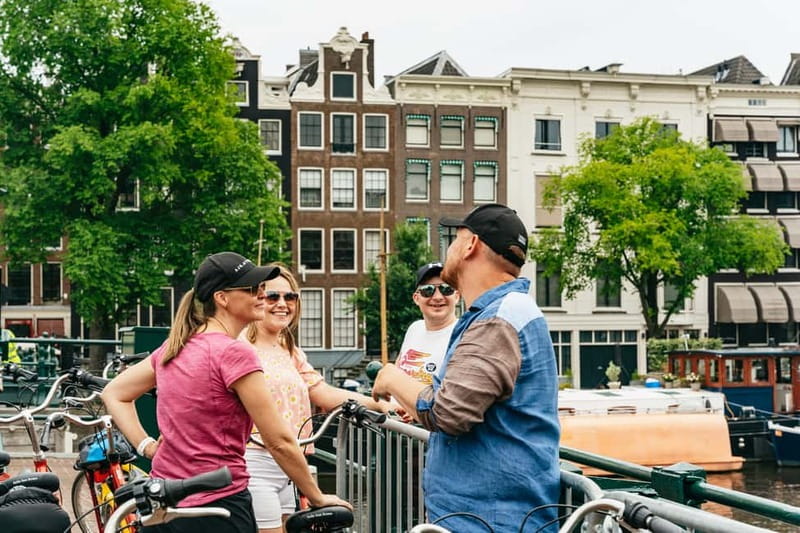
Amsterdam makes the most sense from a bicycle seat. This three-hour ride covers far more ground than a walking tour, taking you from Central Station and the Western Islands through Jordaan, the Museum Quarter, De Pijp, and the Maritime Quarter. You get both famous sights and ordinary streets where Amsterdam life actually happens.
I like the small groups of 15 or fewer, which make it easier for a guide to manage city traffic and answer questions. I also like the planned stop in Vondelpark, about two hours into the ride, with time for a snack, water, and a restroom break.
The main consideration is simple: you need to be comfortable riding in a busy city. Amsterdam’s bike traffic can feel chaotic at first, especially near the center, though the tour begins on quieter streets so you can get used to the bicycle.
Key points to know before you book
- About 15 kilometers of riding: You cover a wide sweep of Amsterdam rather than staying in one neighborhood.
- A real city orientation: The route helps you understand how the canals, districts, bridges, and bike paths fit together.
- Three-speed bicycles: The bikes are described as comfortable and easy to ride, with only gentle bridge inclines.
- A useful Vondelpark pause: The break comes roughly two hours in and includes a stroopwafel, water bottle refill, and restroom opportunity.
- Experienced local guides: Rad, Chris, Carlos, and Miriam are among the guides praised for history, humor, safety, and patience.
- Several language choices: Live tours are offered in English, German, or Dutch. French and Spanish are available through an audio guide option.
Why a bicycle is the right way to see Amsterdam
You can walk Amsterdam’s center, but you will cover only a small part of it in three hours. A bicycle lets you link districts that feel separate on foot, from the old warehouses west of the center to the narrow streets of De Pijp and the broad paths around the Museum Quarter.
This is not a racing tour. The route includes regular stops for photographs and explanations, and the guide adjusts the speed to the group. One group covered roughly 10 miles, or about 15 kilometers, while another said the pace worked well for riders of different abilities.
You still need basic confidence. The city has dedicated cycle routes, but bikes, pedestrians, cars, trams, and scooters share a busy urban space. The early warm-up on quieter roads is useful. Once you join the main flow of Amsterdam cyclists, you need to pay attention and follow your guide closely.
The bicycles are three-speed models, which suit Amsterdam well. The city is generally flat, though you will feel a slight rise when crossing bridges. Helmets are available on request. If you do not ride a bicycle, this is not the right activity, but you do not need to be a serious cyclist.
More Bike Tours in Amsterdam
- Countryside Bike Tour from Amsterdam: Cheese, Clogs & a Windmill
★ 5.0 · 1,485 reviews - Amsterdam: Hidden Gems & Highlights Guided Bike Tour
★ 4.8 · 1,404 reviews - Amsterdam: Off the Beaten Path Bike Tour in French
★ 4.9 · 1,193 reviews
Starting near Central Station and the Western Islands
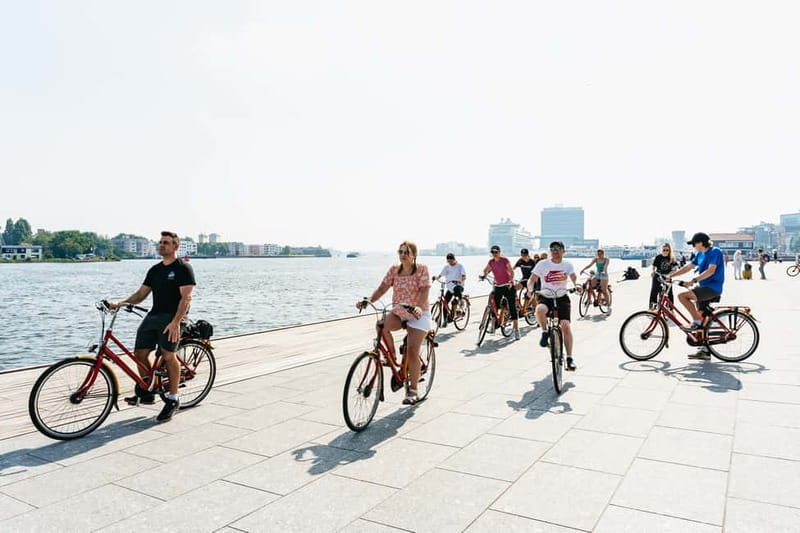
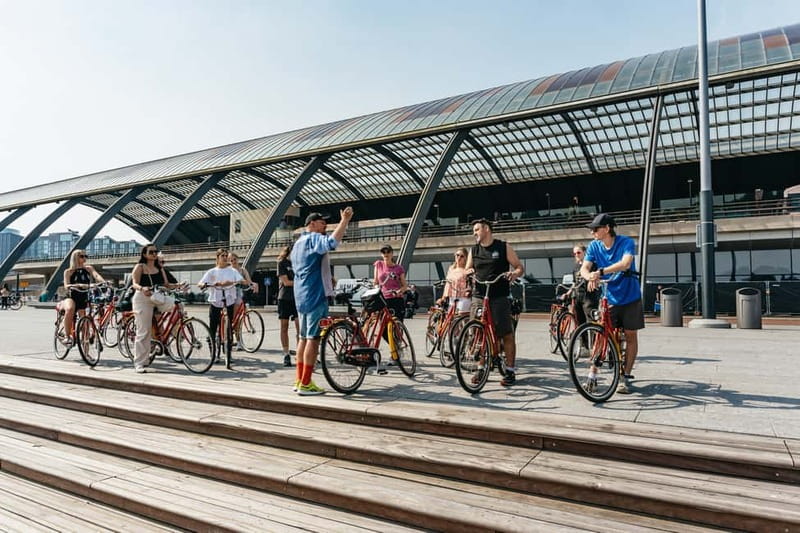
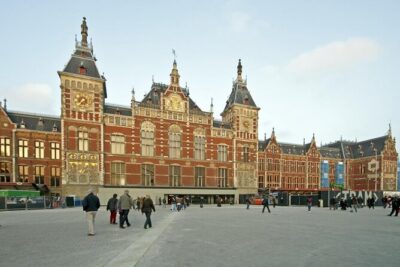
You meet inside the AmsterBike shop, a short walk from Central Station. The starting point is convenient if you have just arrived in Amsterdam or are staying near the station. After getting your bicycle, the group begins near the water and passes the modern A’DAM Tower before heading toward the Western Islands.
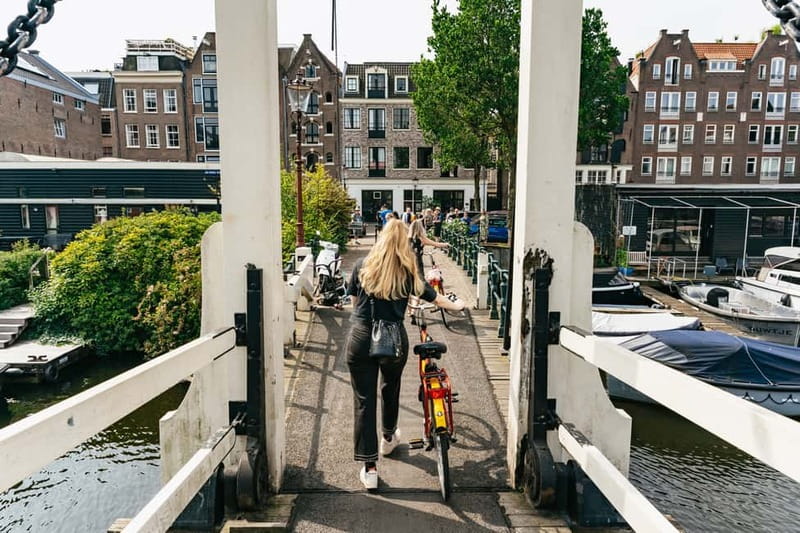
This opening section gives you a quick contrast between old and new Amsterdam. The Western Islands were shaped by the city’s working waterfront, and their old warehouses, small drawbridges, and converted studios feel quieter than the central canal belt. The area has a more residential and creative character, with attractive views across the water and plenty of changes in architectural style.
I especially like this part because it gets you away from the postcard center early. You see the sort of district that can be easy to miss if you spend your whole visit around Dam Square and the busiest canals.
Brouwersgracht, Jordaan, and the Nine Streets
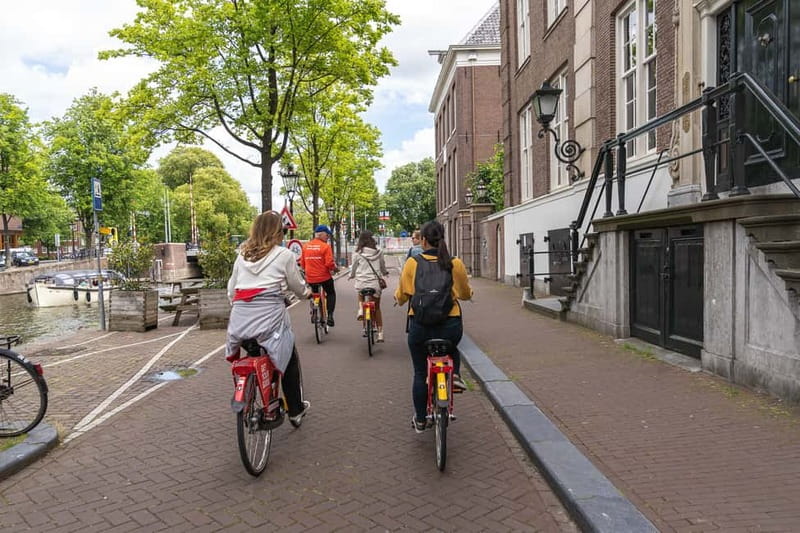
The route continues along Brouwersgracht, one of the most attractive canals in the central area, then enters Jordaan. This neighborhood is known for narrow streets, canals, cafés, small shops, and a more local feel than the main tourist routes.
You also ride through De Negen Straatjes, or the Nine Streets. Here, boutique shops, cafés, and small eateries fill a compact group of lanes between the major canals. On foot, the area invites slow browsing. By bike, you get an overview of its layout and can mark places to return to later.
This portion is valuable because the guide can explain how Amsterdam’s districts change from one block to the next. You are not just checking off sights. You are learning where the city’s shopping streets, old canal houses, quieter residential lanes, and dining areas sit in relation to one another.
Take care at this point. The center can be crowded, and the Nine Streets are not a place to relax your attention. Your guide’s job is partly historical interpreter and partly traffic leader.
Westerkerk, the Anne Frank House, and Leidseplein
The route then enters the Grachtengordel, Amsterdam’s famous canal belt. You pass Westerkerk, the large church beside the Anne Frank House, and pause to take in the canal scenery and surrounding buildings.
The tour does not include entry to the Anne Frank House. You see the exterior and learn about the setting, so book a separate timed visit if you want to go inside. The same principle applies to other major attractions along the route: this is a sightseeing ride, not an admission tour.
From there, the group heads toward Leidseplein. The square is associated with theaters, music, restaurants, and nightlife, so it feels busier and more commercial than the Western Islands or Jordaan. It is a useful stop because it shows another side of central Amsterdam, one centered on entertainment rather than canals or trade.
Guides such as Chris and Rad are praised for explaining Amsterdam’s development and history in a clear way. That matters here. Without context, this section can feel like a string of attractive streets. With a good guide, you begin to understand how the old center functions as a group of distinct neighborhoods.
Same base, a completely different sort of day:
- Amsterdam: Van Gogh Museum Ticket
★ 4.7 · 52,054 reviews - Amsterdam Classic Saloon Boat Cruise with Drinks and Cheese
★ 5.0 · 31,825 reviews - Amsterdam Luxury Canal Cruise + Unlimited Drinks & Bites option
★ 5.0 · 30,518 reviews - Amsterdam: Heineken Experience Ticket
★ 4.6 · 30,055 reviews
A well-timed pause in Vondelpark
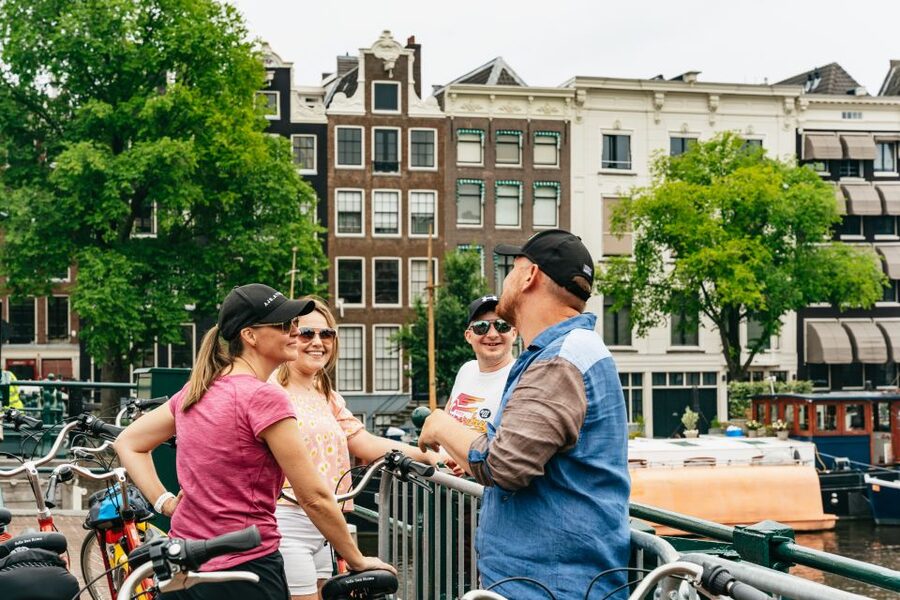
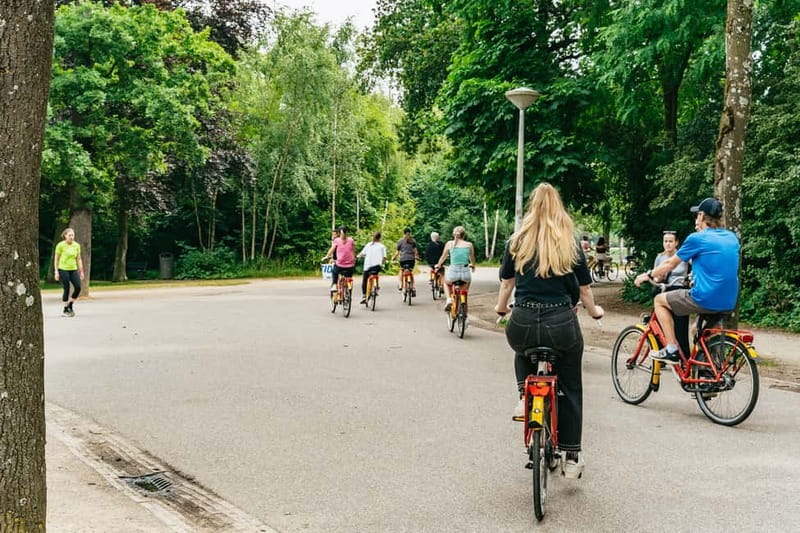
After roughly two hours, you enter Vondelpark, Amsterdam’s best-known park and the largest in the city. This is the natural breathing space in the tour. You can rest, use a restroom, refill your water bottle, and enjoy the included stroopwafel.
I consider this break one of the tour’s practical strengths. Three hours on a bicycle is not especially demanding for an active person, but a pause makes the route friendlier for families and occasional cyclists. Several people found that the time passed quickly, partly because the stops and park break break up the riding.
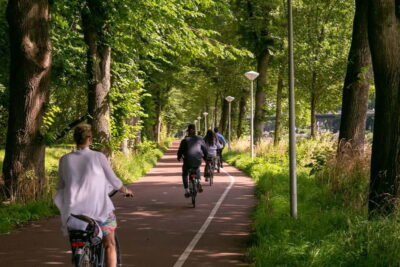
Vondelpark also changes the mood. After the narrow streets and busy cycle lanes of central Amsterdam, the park offers open paths and greenery. You are still in the city, but the pace becomes calmer.
Bring water and a charged phone. The provider can fill your bottle, and your phone is needed if you choose the audio guide option. Headphones are also listed among the items to bring.
Museumplein and the city’s grander side

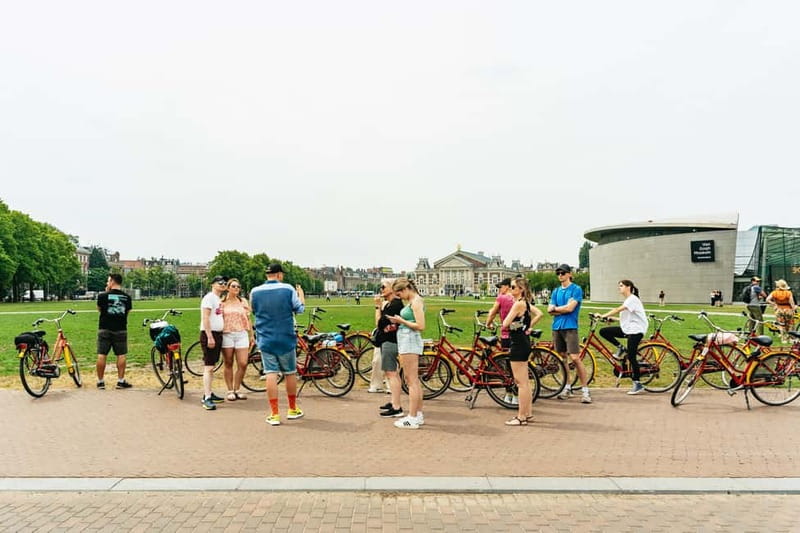
Once you leave the park, you ride around Museumplein, the Museum Quarter. The district has a more spacious feel than Jordaan, with major cultural buildings and broad public areas rather than tight canal streets.
The route gives you orientation around the quarter, but it does not include museum admission. That makes this section especially useful on a first day in Amsterdam. You can see where the museums are located, then decide which one deserves your separate time.
The tour’s broad coverage is a real advantage if you have only one day in the city. You will not explore any single museum or neighborhood in depth, but you will understand the city’s layout quickly. I would use this ride early in a visit, then return to the places that caught your interest.
De Pijp and the Magere Brug
The group continues into De Pijp, a former working-class district with narrow streets, cafés, and a bohemian feel. It is a lively contrast to the formal Museum Quarter and the old canal belt.
Cycling gives you a good sense of De Pijp’s compact design, though you should not expect long stops at every shop or café. The guide points out places and explains the area while keeping the group moving. If De Pijp appeals to you, save it for a later meal or walking visit.
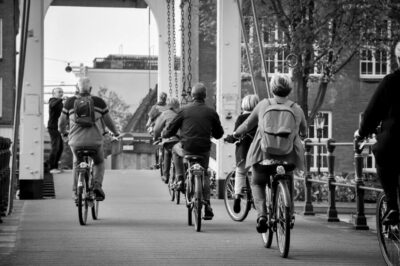
The route then crosses the Magere Brug, or Skinny Bridge, a well-known wooden drawbridge over the Amstel River. This is one of the prettiest crossing points in the city and a natural photo stop. The bridge is also a reminder that Amsterdam’s waterways are not just scenery. They continue to shape how people move through the city.
Bridge crossings are not steep, but they do require control and attention. Keep your distance from the rider ahead and follow the guide’s instructions.
Artis, the Maritime Quarter, and the Salt Harbour
The final part of the ride leads toward Artis Zoo and the Maritime Quarter. You pass through an area tied to Amsterdam’s seafaring past, then see the replica of a 17th-century Dutch East India Company ship at the Salt Harbour.
This ending gives the tour a useful historical frame. The Western Islands showed Amsterdam’s working waterfront and warehouses. The Maritime Quarter brings you back to the city’s relationship with ships, trade, and overseas travel.
You return to AmsterBike after this section. Because the route forms a large loop, you do not simply retrace your path. That helps the tour feel like a proper city survey rather than a short ride around the center.
The guides and the quality of the experience
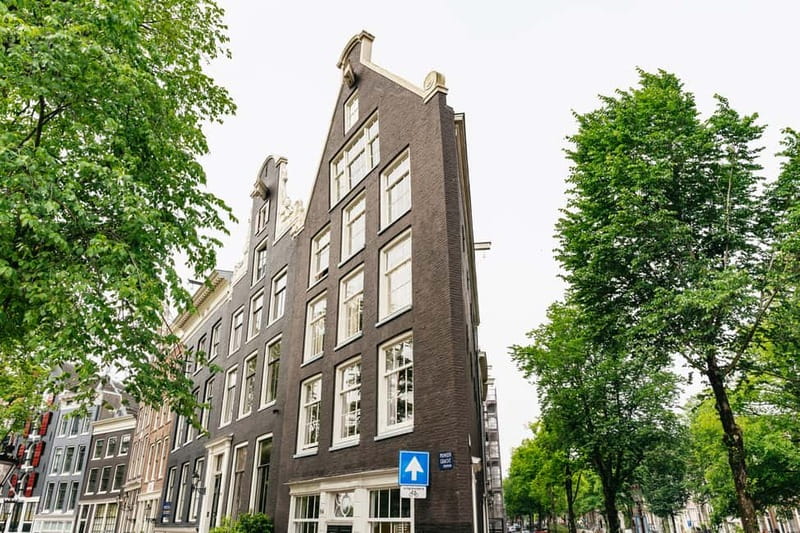
Guide quality matters a great deal on a bicycle tour. You need someone who can explain history while watching traffic, keep the group together, and adjust the pace when riders need help.
Rad receives repeated praise for being safety-focused, patient, friendly, and good at explaining how Amsterdam developed. Chris is described as a history enthusiast with a good sense of humor, and several people found his explanations useful for getting oriented during the rest of their visit. Carlos is praised for taking groups to places they would not easily find alone. Miriam is noted for answering questions, caring for children in the group, and keeping the information interesting.
The individual guide can affect the tone of your ride, but the repeated strengths are clear: historical explanation, a patient pace, and attention to group safety. The small-group limit helps. A group of 15 is still large enough to require discipline in traffic, but it is far easier to manage than a large bicycle convoy.
Some tours offer an audio guide option, including French and Spanish. Live guiding is listed in English, German, and Dutch. Check the language choice carefully when booking, since the live guide and audio options are not the same thing.
What you get for $41
At $41 per person, the price is fair for a three-hour guided activity that includes a bicycle, a local guide, a small group, a stroopwafel, and a water refill. You are paying for more than bicycle rental. The useful part is the route planning and the guide’s ability to connect districts that would take much longer to understand alone.
The value is strongest if you have limited time in Amsterdam. In one morning or afternoon, you see the Western Islands, Jordaan, canal belt, Museum Quarter, De Pijp, Magere Brug, and Maritime Quarter. You also learn how to move around by bicycle, which can save time and help you explore independently afterward.
The value is weaker if you already know Amsterdam well or prefer to stop for long periods at museums, cafés, or shops. This tour keeps moving. It gives you a broad view rather than extended time in any one place.
Cancellation is flexible up to 24 hours before the start for a full refund, and you can reserve now and pay later. Private and small-group options are also available if you want a more personal format.
Who should book this Amsterdam bike tour
I would choose this ride for first-time visitors, active couples, families with cycling experience, and anyone staying in Amsterdam for only a short time. It is also a smart first-day activity because you learn the city’s basic pattern and may discover neighborhoods to revisit.
It suits you if you want:
- A broad look at Amsterdam in three hours
- Local history mixed with practical city orientation
- A small group rather than a large procession
- A comfortable, easy-to-ride bicycle
- Regular stops and a proper break
- Access to areas beyond the most famous canal streets
I would think twice if you dislike city cycling, have trouble riding for several hours, or want a slow photography tour. The traffic is manageable with attention, but it is still city traffic. People who cannot ride a bike should choose another way to see Amsterdam.
Should you book it?
Yes, if you want a fast, active introduction to Amsterdam and can ride with confidence. The route is unusually broad, the Vondelpark break is well placed, and the $41 price includes the bicycle and guide rather than just a rental.
Book it early in your visit, ideally when you still have time to return to Jordaan, De Pijp, or the Museum Quarter afterward. If you prefer a quiet, slow-paced outing or want to spend most of your time inside attractions, choose a walking tour or museum visit instead. For most first-time visitors who want to understand Amsterdam quickly, this is a practical and enjoyable choice.
FAQ
How long does the Amsterdam bike tour last?
The tour lasts three hours. Starting times vary, so check availability when choosing your date.
Where does the tour start and end?
You meet your guide inside the AmsterBike shop. The tour ends back at the same meeting point.
What neighborhoods and sights does the route include?
The route includes the Western Islands, Jordaan, Westerkerk, the Nine Streets, Leidseplein, Vondelpark, Museumplein, De Pijp, Magere Brug, Artis, the Maritime Quarter, and the Maritime Museum area.
Is a bicycle provided?
Yes. A bicycle is included in the tour price. Helmets are available on request.
How large is the group?
The standard group has a maximum of 15 people. Private and small-group options are also available.
What languages are offered?
Live guides are available in English, German, and Dutch. French and Spanish are available through an optional audio guide.
Is the tour suitable for children or people who cannot ride?
You must be able to ride a bicycle to join. Children have taken part, and guides can adjust the pace, but the tour still includes cycling through busy parts of Amsterdam.
Just added around Amsterdam
- Private sightseeing tour to Bruges and chocolate from Amsterdam★ 5.0 · 11 reviews
- Amsterdam: Private Romantic Evening Canal Cruise + Bubbles/Snacks★ 5.0 · 46 reviews
- Amsterdam Private Shopping Experience★ 5.0 · 7 reviews
- Amsterdam: Rijksmuseum (Private Tour & Priority Access)★ 5.0 · 27 reviews
- Rijksmuseum Amsterdam Private Guided Tour★ 5.0 · 57 reviews
- Amsterdam Rijksmuseum PRIVATE TOUR with a Local Private Guide★ 5.0 · 159 reviews
- Private Photo Session in Amsterdam★ 5.0 · 15 reviews
- Private One way Transfer Amsterdam Airport to Amsterdam★ 3.5 · 42 reviews
Cycling Tours, compared.
Countryside Bike Tour from Amsterdam: Cheese, Clogs & a Windmill
Read our review →
Windmill, Cheese, and Countryside E-Bike Tour
Read our review →

Browse the lists this tour appears in