Reviewed · TOURS
Amsterdam: Spanish Tour Unmasking the Redlight District
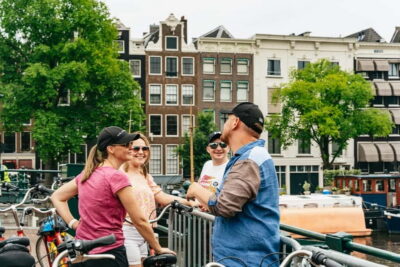
Amsterdam’s Red Light District makes more sense when you see it as part of the city’s long port history, not just a row of red-lit windows. This two-hour Spanish walking tour links medieval streets, old canals, sailors’ taverns, chapels, and landmarks such as Oude Kerk and De Waag.
I like the route’s strong historical arc, from St. Nicholas Basilica and Zeedijk to Dam Square. I also like that it keeps you outdoors and moving, with time to see the neighborhood instead of simply pointing at its most famous sights. A possible drawback is that the tour does not include entry to venues, food, or drinks, and the narrow streets may be hard for anyone who uses a wheelchair.
Key points at a glance
- A Spanish-language history walk: You follow the story of Amsterdam’s port, commerce, nightlife, and changing social attitudes.
- A useful route through the district: The walk connects St. Nicholas Basilica, Zeedijk, He Hua Temple, Nieuwmarkt, De Waag, Oude Kerk, Warmoesstraat, and Beursplein.
- An outdoor experience: Comfortable shoes and weather-ready clothing matter, since the full tour takes place on foot.
- A guide-led interpretation: Expect anecdotes, mysteries, and explanations rather than a silent sightseeing stroll. A Chilean guide has been praised for an agile, clear style.
- A look beyond the red lights: The tour explains how population growth, prosperity, shipping, and demand for entertainment shaped the area.
- A budget-friendly format: At $31 per person, the value rests on the guide’s storytelling and the number of important places covered in two hours.
Why this neighborhood needs context
Amsterdam’s Red Light District is easy to misread. Visitors can walk through it, see the windows, notice the crowds, and leave with only a few snapshots of its modern reputation. This tour tries to supply the missing story.
You begin with Amsterdam’s early development as a maritime city. From there, the route follows the forces that shaped the center: shipping, trade, immigration, religious change, population growth, and the demand for entertainment near a major port.
That approach matters. The district is not presented as an isolated pocket of nightlife. It is tied to the city around it. Streets such as Zeedijk and Warmoesstraat help show how sailors, merchants, workers, and people from different cultures shaped central Amsterdam over time.
The tour also looks at the district’s changing place in public life. You hear how an area linked with prostitution and vice became associated with more progressive attitudes. The point is not to excuse or sensationalize anything. It is to explain how a city’s laws, economy, and habits can shift across centuries.
A few more Amsterdam half-days worth comparing
- Amsterdam: Van Gogh Museum Ticket
★ 4.7 · 52,054 reviews - Amsterdam Classic Saloon Boat Cruise with Drinks and Cheese
★ 5.0 · 31,825 reviews - Amsterdam Luxury Canal Cruise + Unlimited Drinks & Bites option
★ 5.0 · 30,518 reviews
Starting beside St. Nicholas Basilica
Meet your guide outside the entrance to the Barbizon Palace Hotel on Prins Hendrikkade. The starting point is close to Amsterdam Central Station, so it is practical if you are arriving by train or beginning your sightseeing in the station area.
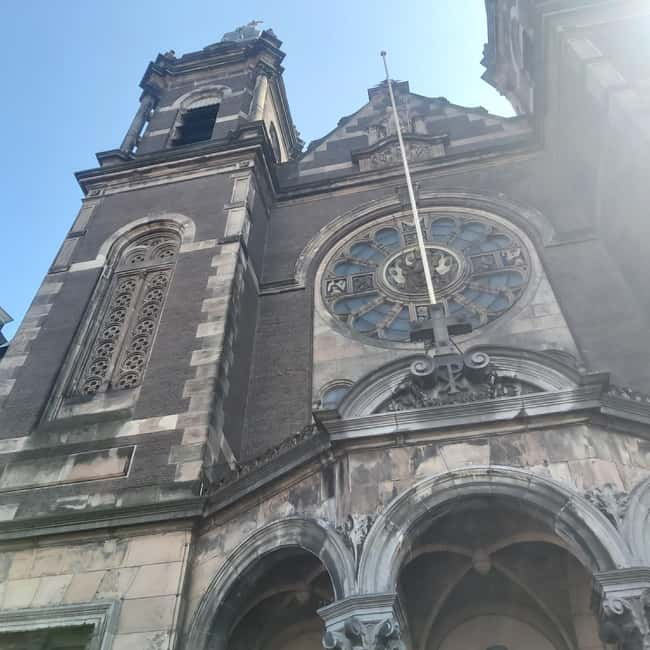
The nearby St. Nicholas Basilica provides the first major landmark. The tour begins with a short introduction to Amsterdam’s maritime roots and early growth. Its position opposite the station also gives you a clear sense of how the old center, the port, and the modern transport hub meet in one small area.
This is a good opening because it gives the rest of the walk a frame. Instead of starting with the most famous windows, you start with the city that made the district possible.
The meeting point deserves care. Look for the guide outside the hotel entrance on Prins Hendrikkade, not simply somewhere inside the station. Arrive in comfortable clothes and shoes. The activity is listed as two hours, and the route includes several walking sections on old streets and canal-side paths.
Zeedijk and Amsterdam’s port connections
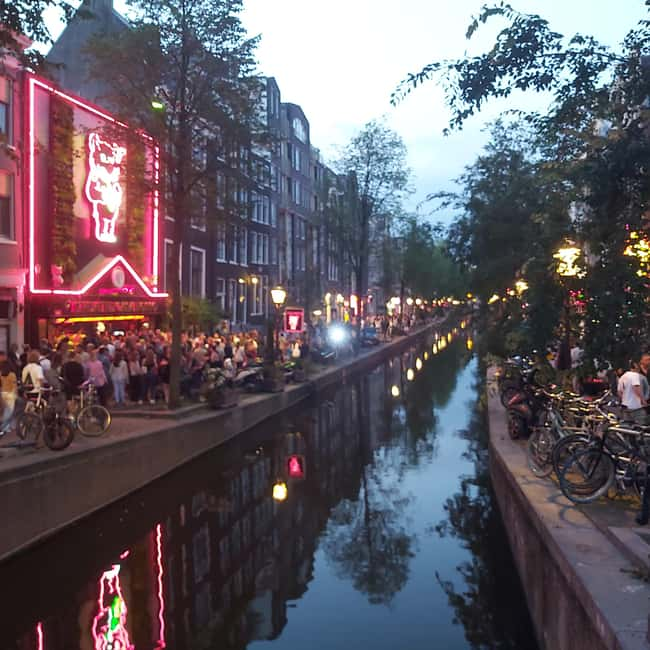
The walk to Zeedijk takes about 15 minutes. This street is known for its multicultural past and historic bars that once served sailors arriving from many parts of the world.
Zeedijk helps you see the Red Light District as a port neighborhood. Sailors needed food, drink, lodging, company, and entertainment. That steady flow of people affected the streets around the harbor and helped create the conditions for businesses connected with nightlife and prostitution.
The guide’s stories are especially important here. The route is not built around long museum stops, so the explanation you receive while walking gives the street its meaning. Expect anecdotes and local mysteries that add detail to what you see around you.
The tradeoff is simple: this is an active urban neighborhood, not a preserved open-air museum. You will be walking through narrow streets used by everyday city life. Stay close enough to hear your guide, and do not expect every stop to feel quiet or spacious.
A short photo stop and He Hua Temple
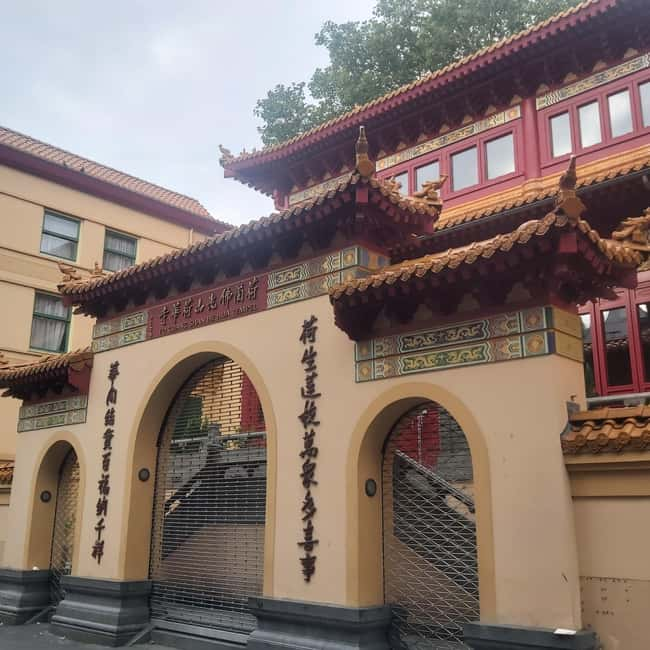
After Zeedijk, the route includes a secret stop for about 10 minutes of photographs, followed by a 10-minute photo stop at He Hua Temple.
The temple adds another layer to the area’s multicultural past. Its presence fits the larger story of Amsterdam as a city shaped by movement across borders. You are not just looking at one type of heritage. The route places religious, commercial, and social histories side by side.
The exact nature of the first photo stop is not specified, so you should treat it as a brief pause rather than a major attraction with a long visit. The temple stop is also primarily for viewing and photographs. No venue admissions are included.
Photography comes with rules. You may bring a camera, but your guide will tell you when it is appropriate to use it. Photography inside is not allowed. Since the walk passes through a sensitive working neighborhood, follow those instructions closely and avoid treating people or private activity as a spectacle.
Same base, a completely different sort of day:
- Amsterdam: Heineken Experience Ticket
★ 4.6 · 30,055 reviews - Amsterdam: Rijksmuseum Entry Ticket
★ 4.7 · 25,535 reviews - Amsterdam: Classic Boat Cruise with Optional Cheese & Wine
★ 4.6 · 22,925 reviews - Amsterdam: Evening Cruise with Optional Wine and Snacks
★ 4.4 · 19,696 reviews
Nieuwmarkt and De Waag
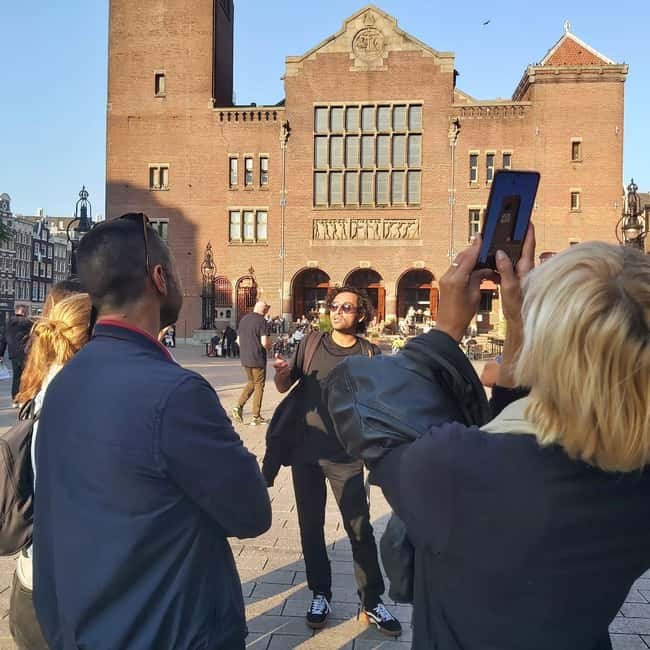
Nieuwmarkt is the next substantial part of the route, with about 10 minutes for photographs. The square is dominated by De Waag, a former city gate that later became a weighing house.
This is one of the tour’s useful history lessons. A defensive city gate becoming a commercial building reflects Amsterdam’s growth and changing needs. As the city expanded, structures connected with protection and trade took on new roles.
The tour uses Nieuwmarkt to explain how the port city became a meeting place for cultures and ideas. Prosperity brought more people into the center. More people created demand for food, lodging, trade, entertainment, and vice. The Red Light District developed within that larger urban system.
You should not expect a formal interior visit to De Waag. The supplied route describes a photo stop at Nieuwmarkt and a later visit to Oude Kerk, while entries to venues are not included. That distinction helps you plan: this is a street-level history tour, not an attraction pass.
The heart of the Red Light District
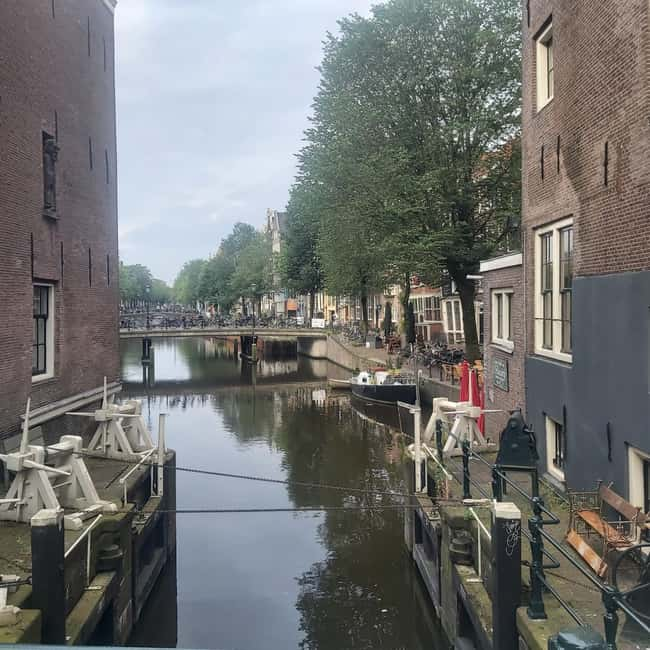
The walking portion through the Red Light District lasts about 20 minutes. Here, the guide connects the visible present with the centuries of development discussed earlier.
You will hear how the district became associated with prostitution and nightlife as Amsterdam grew more prosperous and more populated. The guide also explains its later image as a place connected with progressive thinking.
That balance is important. The tour is about a famous neighborhood, but it does not reduce the area to jokes or shock value. You are encouraged to notice its canals, narrow streets, old buildings, and changing identity.
This section may feel crowded or exposed compared with a conventional sightseeing walk. The district is a place where people live, work, and visit, and the subject matter is not suitable for every age group. The tour is not suitable for children under 14. A respectful manner is essential.
Alcohol and drugs are not allowed on the activity. Nonalcoholic drinks are allowed, which is useful on a warm day, though the tour does not provide refreshments.
Oude Kerk, Amsterdam’s oldest building
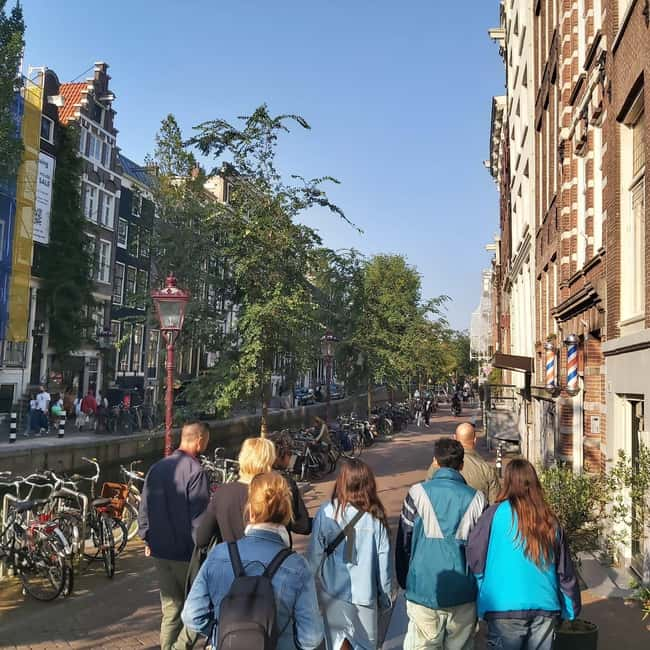
Oude Kerk receives about 15 minutes and is described as a visit. It is the oldest building in Amsterdam, making it one of the strongest historical stops on the walk.
The church’s position in the middle of the Red Light District makes the area’s history more complicated. Religious life, commerce, port traffic, and prostitution existed close together. That physical closeness helps explain why the neighborhood cannot be understood through a single label.
The visit is valuable because it gives you a fixed point amid the narrow streets and changing businesses. You can connect the city’s medieval beginnings with the later growth of the port and the district around it.
Do not assume the price covers a separate admission ticket. The activity information says entries to venues are not included. The route includes a visit to Oude Kerk, but you should check the exact conditions when booking if entering the building is important to you.
Warmoesstraat and the smaller details
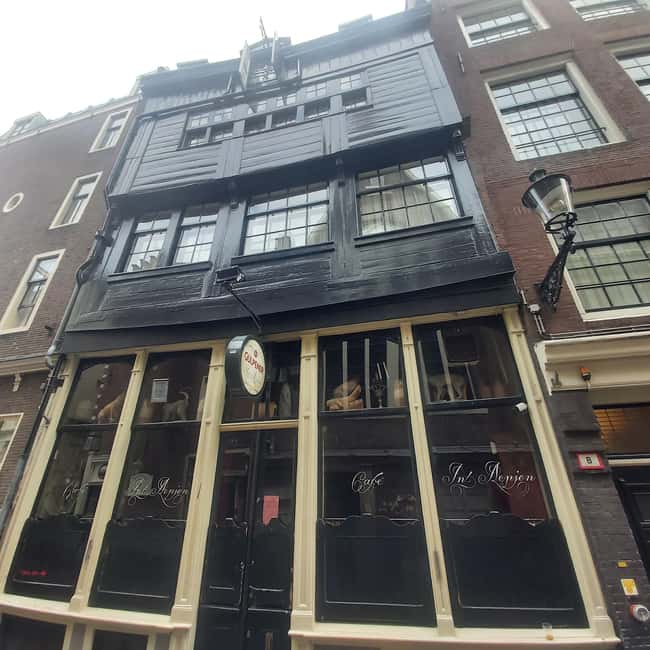
Warmoesstraat comes next, with about 10 minutes of walking. This street helps carry the story from major landmarks to the everyday texture of the district.
A short walk here may seem modest on paper, but it gives the guide room to point out details that are easy to miss on your own. The tour promises mysteries and anecdotes, so this is where the live commentary matters most.
After Warmoesstraat, the route includes another 15-minute visit to a place described as a hidden gem. The exact location is not named in the available details. That means you should see it as a surprise stop rather than plan your day around a specific attraction.
The stop can add variety to a route that otherwise focuses on major streets and famous buildings. It also keeps the tour from becoming a simple march between postcard sights. Still, if you prefer a fixed list of named museums and interiors, this part may feel less predictable.
Finishing near Beursplein and Dam Square
The route is listed as ending at Beursplein, while the meeting-point information says the activity ends back at the meeting point. Because those details do not match perfectly, confirm the final location and time with the operator before making a tight dinner or train connection.
The tour also discusses the Royal Palace in Dam Square and its relationship with the Red Light District. That final connection broadens the story again. Amsterdam’s official center and its most controversial neighborhood are not separate worlds. They have developed alongside one another within the same compact historic core.
Beursplein and Dam Square are useful places to continue exploring afterward. The tour does not include food, drinks, or venue entry, so you can decide what to do next rather than being tied to a group meal or paid attraction.
What $31 gets you
At $31 per person, this is priced as an accessible guided walk rather than a full attraction package. You are paying for a Spanish-speaking guide, a structured route, and the interpretation that links the buildings and streets.
The value is strongest if you want the district explained in Spanish. A self-guided walk can show you the same streets, but it will not give you the connected story about maritime growth, sailors, commerce, population change, nightlife, and progressive attitudes.
The cost is less compelling if you mainly want to enter historic buildings or visit venues. Food, drinks, and admissions are not included. You are also spending two hours outdoors, so the tour works best when you want context rather than a long indoor visit.
A Chilean guide has been singled out for an excellent and agile way of explaining the material. That detail matters because the subject can easily become either dry or sensational. A clear guide can keep the pace moving while treating the district with some care.
Who will get the most from this walk
I would choose this tour if you want to understand how Amsterdam’s Red Light District developed instead of simply seeing it at night. It suits adults and older teenagers aged 14 and above who are comfortable with the subject.
It is also a strong choice for Spanish-speaking visitors who want more than basic sightseeing commentary. The tour’s value comes from explanation, anecdotes, and connections between places, so language comfort will make a real difference.
You may want another option if you need wheelchair access. The activity is not suitable for wheelchair users, and the route includes narrow streets and several walking sections. It is also not suitable for people over 95 years old.
Bring weather-appropriate clothing. There is no indoor shelter built into the experience, and the entire activity is outdoors. Wear shoes that can handle two hours of city walking, and bring a nonalcoholic drink if you need one.
Should you book the Spanish Red Light District tour?
Book it if you want a compact, Spanish-language introduction to Amsterdam’s most discussed neighborhood, with enough history to place the red-lit windows in a wider city story. The route covers an impressive number of major places in two hours, including Zeedijk, He Hua Temple, Nieuwmarkt, De Waag, Oude Kerk, Warmoesstraat, and the canals of the district.
Skip it if your priority is entering attractions, sampling food, or spending a long time at one site. You should also confirm the finishing point if your schedule is tight.
For the right visitor, $31 is a fair price for a focused walking tour with a lively guide. Wear good shoes, respect the photography rules, and arrive ready to listen. That is how this neighborhood gives up its real story.
FAQ
What language is the tour conducted in?
The tour is conducted in Spanish by a live Spanish-speaking guide.
How long does the tour last?
The walking tour lasts two hours. Starting times vary, so check availability when booking.
Where does the tour begin?
Meet your guide outside the entrance to the Barbizon Palace Hotel on Prins Hendrikkade in Amsterdam.
Where does the tour finish?
The route information lists Beursplein as the finish. The meeting-point information says the activity ends back at the meeting point, so confirm the final location with the provider.
Is the tour suitable for children?
The activity is not suitable for children under 14 years old.
Is the tour wheelchair accessible?
No. The activity is listed as unsuitable for wheelchair users.
Are food and drinks included?
No. Food and drinks are not included. Nonalcoholic drinks are allowed.
Can I take photographs?
You may bring a camera, but your guide will advise you when photography is appropriate. Photography inside is not allowed.
What should I wear and bring?
Wear comfortable shoes and comfortable, weather-appropriate clothing. The tour takes place outdoors.
Just added around Amsterdam
- Private full-day customizable tour of the Netherlands from Amsterdam★ 5.0 · 9 reviews
- Amsterdam Essence in German: 90-minute waterway trip★ 5.0 · 11 reviews
- Private Daytrip Giethoorn and Windmills of Zaanse Schans from Amsterdam★ 5.0 · 4 reviews
- Bruges Private Custom Tour from Amsterdam★ 4.5 · 13 reviews
- Private Day Tour: Rotterdam and The Hague. English or Spanish★ 4.5 · 20 reviews
- Private day trip to Bruges from Amsterdam★ 5.0 · 6 reviews
- Private day trip to the Dutch castles from Amsterdam★ 5.0 · 10 reviews
- Private Amsterdam City Highlights Bike Tour (PRIVATE GUIDE)★ 5.0 · 28 reviews
Tours, compared.
Zaanse Schans, Edam, Volendam & Marken Bus Tour
Read our review →
Anne Frank’s Story – Guided Walking Tour through Amsterdam
Read our review →
Life of Anne Frank and World War II Walking Tour
Read our review →
Red Light District Tour in German/English/Italian
Read our review →
Guided Zaanse Schans, Windmills & Cheese Tour
Read our review →
Windmill Tour from Amsterdam, Including Volendam & Marken
Read our review →