
Reviewed · SURFING & PADDLEBOARDING
The Hague: Beginner’s Surf Lesson
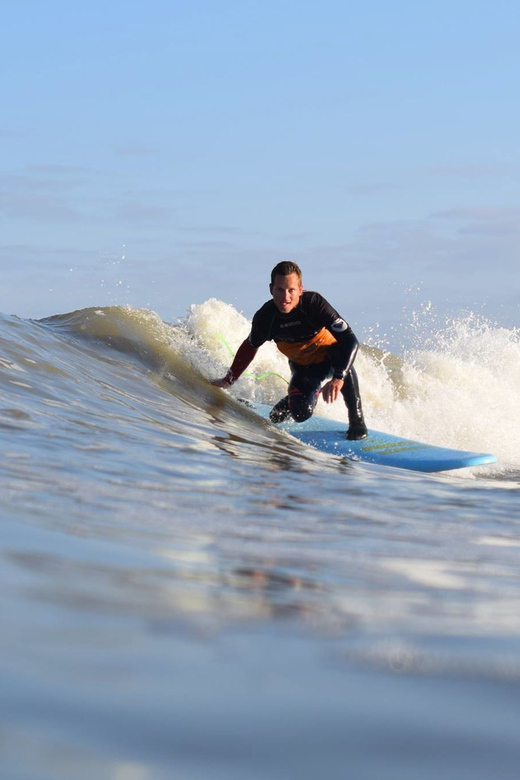
Catching your first wave in Scheveningen is the main event, but the lesson starts on the sand, where you learn how to stay safe, handle the board, and read the sea. With no more than six students, you get more useful attention than you would in a large beach class.
I like the practical setup: warm wetsuits and caps are supplied, and you have changing rooms, hot showers, and lockers at the surf school. I also like the €15 rental credit, which gives you a reason to keep practicing after the lesson. The main drawback is simple: you must be at least 16, and you need to bring your own swimwear and towel.
Key points at a glance
- Small groups of six or fewer: You get a better chance to ask questions and receive help with your stance and timing.
- A real beginner lesson: The session covers safety, board control, wave reading, and the timing of your takeoff.
- Warm gear included: Wetsuit and cap are provided, with gloves and boots available in winter.
- Three instructors praised by name: Ayoub, Gijs, and Connor are noted for kind, helpful, fun, and professional teaching.
- Useful facilities at the beach school: Changing rooms, hot showers, and lockers make the wet-and-sandy part easier.
- €15 rental credit included: You can use it after the lesson when you are ready for more time on the water.
Starting at Strandweg 3 in Scheveningen
Your lesson begins at Strandweg 3, 2586JK Scheveningen, in The Hague’s seaside district. The activity also ends there, so you do not need to arrange a second meeting point after you leave the beach.
Scheveningen is the natural setting for a first lesson. You are not practicing on a lake or in a pool. You are learning on the North Sea, with real moving water and changing waves. That makes the first successful ride feel earned, but it also means your instructor’s safety briefing matters.
Allow time to get changed before the lesson begins. Swimwear and a towel are not included, so pack both. The surf school provides lockers for personal items, which means you can leave your dry clothes and valuables behind while you are in the water.
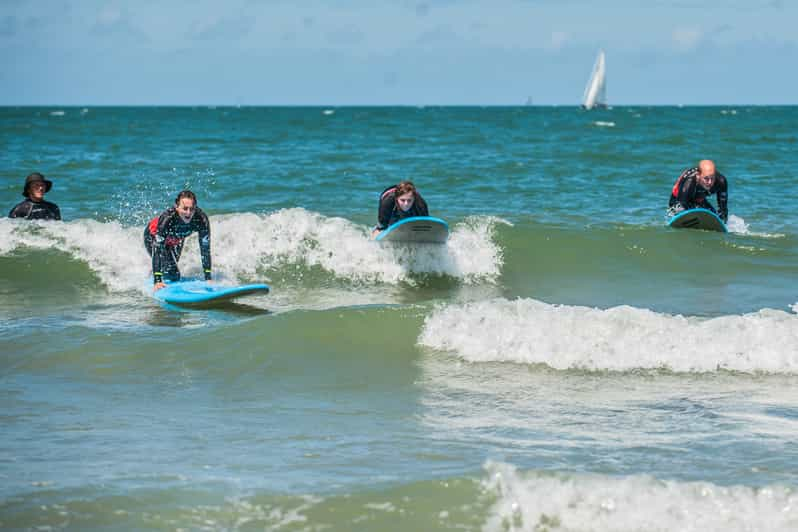
The small group size is especially useful here. Surfing instruction can become a long wait if too many people share a teacher and a stack of boards. With six participants or fewer, you should spend less time standing around and more time listening, trying, and correcting mistakes.
More surf and paddleboard sessions:
- Scheveningen Beach: 2-Hour Surf Experience for Adults
★ 4.8 · 50 reviews - Scheveningen Beach: 1,5 hour Surf experience for families
★ 5.0 · 11 reviews - Scheveningen Full-day Surfing lessons with Lunch
★ 4.3 · 8 reviews
The beach briefing before you touch the waves
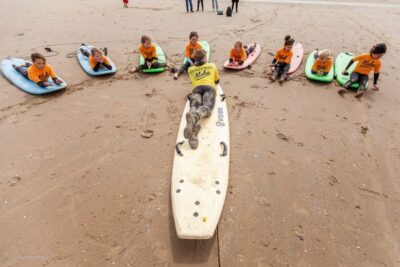
The first part of the two-hour session takes place on the beach. Your Dutch or English-speaking instructor explains how to stay safe in the water and how to move out through the waves without losing control of your board.
This ground-based practice is not filler. A surfboard is large, slippery, and attached to you by a leash. Before you go into the sea, you need to know how to carry it, where to position yourself, and how to avoid creating trouble for the people around you.
You will also learn the basic surfing techniques needed for a first attempt. The lesson focuses on the parts that matter most to a beginner: keeping the board under control, reading the waves, timing your takeoff, and getting into a standing position.
I appreciate that the session does not promise instant mastery. The goal is more modest and more useful: understand the basics, stay safe, and give yourself a fair chance of riding a wave. Surfing looks simple when someone else does it. The beach explanation helps you see why small details matter.
Choosing the soft-top board and getting suited up
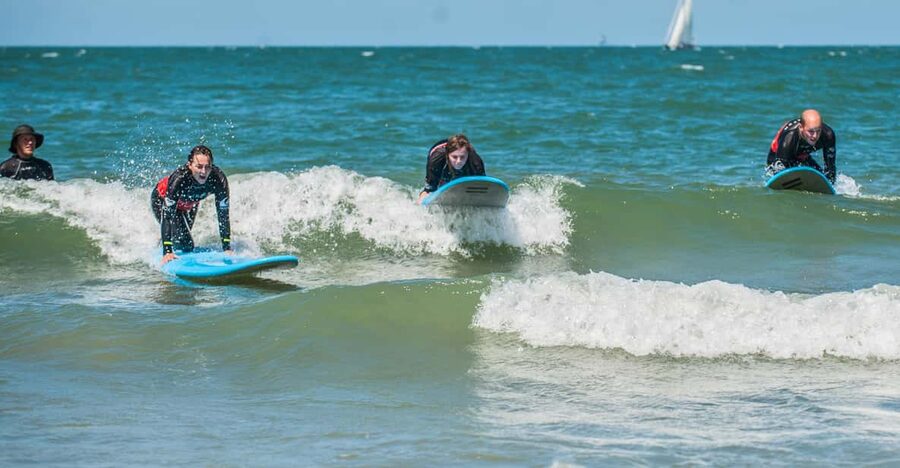
The lesson includes a soft-top surfboard. This is the sensible choice for first-timers because it is designed for learning and is more forgiving than a hard board when you lose your balance.
The surf school supplies a warm wetsuit and cap. In winter, gloves and boots are available if needed. That gear is not a minor perk in the Netherlands. The North Sea is not known for bath-like temperatures, and staying warm lets you focus on standing up instead of counting the minutes until you can get dry.
You do need to bring your own swimwear to wear under the wetsuit. A towel is also essential for the end of the class. Afterward, you can use the hot showers before changing, a small comfort that makes the difference between a pleasant afternoon and a long, chilly trip back in damp clothes.
The changing rooms and lockers add practical value. You can arrive with ordinary beach clothes, change at the school, and keep your belongings secure while you are outside. The information provided does not specify the locker system or its size, so bring only what you need.
Learning to read the Scheveningen waves
Once you are ready, the instructor helps you understand what makes a usable beginner wave. You are not simply pointed toward the sea and told to paddle. You learn to watch the water, judge the wave, and decide when to move.
Wave timing is often the hardest new skill. Start too soon and the wave may pass underneath you. Start too late and you may miss its push. The instruction is built around helping you recognize that moment, then get the board moving in the right direction.
Board control is another key lesson. You will work on keeping the soft-top steady and under control as you move through the water. That gives you a better base for the takeoff and helps keep the session safer for you and other surfers.
The sea will not behave exactly as it did during the previous class. That is part of the value of learning here. You are picking up skills that depend on conditions, not memorizing a routine that only works in a controlled setting.
More Workshops in The Hague:
- Amsterdam: Traditional Dutch Syrup Waffle Making Workshop
★ 4.8 · 4,093 reviews - Amsterdam Traditional Dutch Syrup Waffle Making Workshop
★ 5.0 · 960 reviews - Amsterdam: Bols Cocktail Experience and Cocktail Workshop
★ 4.8 · 666 reviews - Amsterdam: 3-Course Meal in Historic 1st Class Waiting Rooms
★ 4.5 · 292 reviews
Your first attempt at standing up
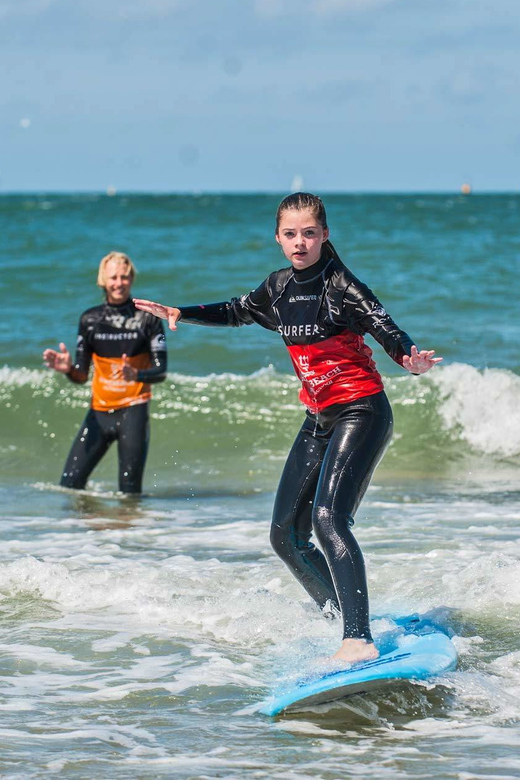
The high point is the takeoff. You paddle or move with the wave, then try to rise from the board and find your balance. You may stand briefly, wobble, or slide off almost at once. All three are normal parts of a first lesson.
Your instructor’s job is to help you understand what happened. Was the timing late? Was the board pointing the wrong way? Did you place your feet poorly? In a group of six or fewer, there is a better chance that these corrections are noticed and explained.
The class is aimed at beginners, so you do not need previous surfing experience. You do need patience. The first wave may be short, and a successful ride may last only a few seconds. That is still enough to show why people keep coming back.
One useful detail from the teaching team is the mix of friendly and professional styles. Ayoub and Gijs are specifically praised for being kind and helpful, while Connor is described as fun and professional. You cannot choose your instructor from the information provided, but these names give you a sense of the teaching approach associated with the school.
The age rule also shapes the class. You must be at least 16 to take part. This is not a family lesson for younger children, so check your group carefully before booking.
What the $45 price really includes
At $45 per person, the price covers two hours of instruction, a soft-top board, warm wetsuit and cap, and access to the school’s changing facilities, showers, and lockers. Winter gloves and boots are included if needed during the colder months.
That is a reasonable package for someone who wants to try surfing without buying or arranging equipment. The board and wetsuit alone would otherwise create extra work, especially if you are visiting The Hague with limited luggage.
The €15 rental credit adds another useful layer. It can be used after the lesson whenever it suits you, so the experience is not limited to one supervised session. If you enjoyed the class and want another try, the credit reduces the cost of getting back on a board.
The credit does not mean you should assume a second lesson is included. It is rental credit, not a promise of another guided class. Ask the surf school how it applies when you decide to use it, particularly if you want more instruction rather than independent practice.
For a first attempt, I see the value in the combination of coaching, equipment, and facilities. If you already surf regularly, the beginner format will probably feel too basic. This is aimed at people who want a clear introduction, not experienced surfers seeking challenging conditions.
The facilities make the beach day easier
Surf lessons involve more logistics than a normal walk along the shore. You get wet, sandy, and cold if you are not prepared. The included facilities reduce that hassle.
The changing rooms give you a place to put on the wetsuit and get back into dry clothes. Hot showers are particularly welcome after time in the North Sea. Lockers mean you do not have to leave your personal belongings in plain sight while you are in the water.
Bring a towel, even if the weather looks mild. You will need it after the shower, and it is not supplied. Also bring swimwear, which is the other item listed as your responsibility.
The supplied cap, plus winter gloves and boots when needed, shows that the lesson is designed to run across more than one season. Still, the information does not guarantee identical conditions on every date. Check the available start times and prepare for a beach activity rather than a fixed indoor attraction.
Who will get the most from this lesson
This class suits you if you are at least 16, have never surfed, or want a structured refresher before trying on your own. It is also a good fit if you prefer a small class and want an instructor to explain the water rather than simply hand you a board.
You will likely appreciate it most if you value practical details. The lesson teaches safe movement, board control, wave reading, and takeoff timing. Those basics give you a better starting point than simply renting a board and hoping for the best.
It also suits solo visitors. A group capped at six makes it easier to join without feeling lost in a crowd. The English-language option helps if you do not speak Dutch, while Dutch instruction is also available.
This is not the right choice for children under 16, advanced surfers, or anyone looking for a full-day surf camp. Two hours is enough for an introduction, but not enough to build strong technique from scratch.
Booking, cancellation, and timing
The lesson lasts two hours, but the available starting times depend on the date you select. Check the schedule before building the rest of your day around it.
You can cancel up to 24 hours in advance for a full refund. There is also a reserve-now, pay-later option, which is useful if your Hague plans are still moving around. These policies give you some flexibility, but you should still confirm the exact time before heading to Strandweg 3.
The activity returns to the original meeting point. That makes it easy to continue with a beach walk, meal, or other Scheveningen plans afterward, although you should leave yourself time to shower and change.
Should you book the Scheveningen surf lesson?
Book it if you want a friendly, well-equipped first look at surfing and like the idea of learning in a group of six or fewer. The warm gear, hot showers, lockers, and €15 rental credit make the $45 price easier to justify, especially if you may want another go.
I would also choose it if you are nervous about the sea. The safety briefing and instruction on board control give you a sensible foundation before you try to stand. The teaching style associated with Ayoub, Gijs, and Connor sounds encouraging without losing the professional side of the lesson.
Skip it if you are under 16, already comfortable surfing, or want a long independent session rather than beginner coaching. For everyone else, this is a practical way to test your balance, catch a first wave, and find out if surfing in Scheveningen is worth pursuing.
FAQ
Where does the surf lesson begin?
The lesson begins at Strandweg 3, 2586JK Scheveningen, The Hague.
Where does the activity end?
The activity ends back at the meeting point at Strandweg 3.
How long does the beginner lesson last?
The surf lesson lasts two hours. Starting times depend on availability.
What languages do the instructors speak?
The instructors speak Dutch and English.
How many people are in each group?
The activity uses a small group format with no more than six participants.
What equipment is included?
You receive a soft-top surfboard, a warm wetsuit, and a cap. Gloves and boots are available if needed during the winter months.
What should I bring, and who can take part?
Bring swimwear and a towel. You must be at least 16 years old to participate.
Just added around The Hague
- The Hague Tower Guided Tour★ 4.5 · 45 reviews
- The Hague: Powerboat Tour Scheveningen★ 4.5 · 15 reviews
- The Hague Walking Tour★ 4.5 · 16 reviews
- The Hague: Ping Pong Table Rental at a Secret Ping Pong Bar★ 4.5 · 7 reviews
- The Hague: Private Boattour up to 10 persons★ 4.9 · 37 reviews
- The Hague: Prison Gate Museum★ 4.5 · 58 reviews
- The Hague : Must-See attractions Private Walking Tour★ 4.8 · 9 reviews
- The Hague: Private Custom Walking Tour With A Local Guide★ 4.5 · 13 reviews
Surfing & Paddleboarding, compared.
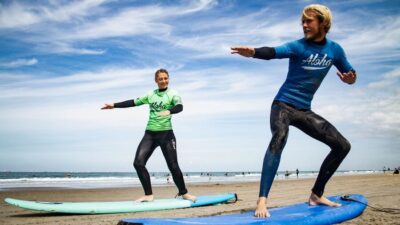
Scheveningen Beach: 2-Hour Surf Experience for Adults
Read our review →
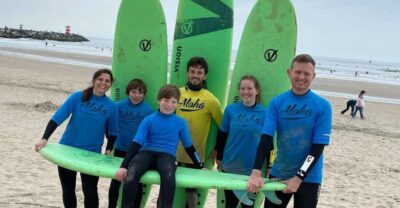
Scheveningen Beach: 1,5 hour Surf experience for families
Read our review →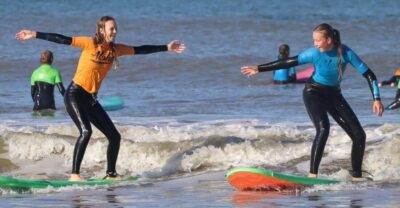
Scheveningen Beach: 1,5-Hour Surf Experience for kids
Read our review →
Browse the lists this tour appears in