
Reviewed · WWII HISTORY TOURS
Oranjehotel World War II Prison Entrance Ticket
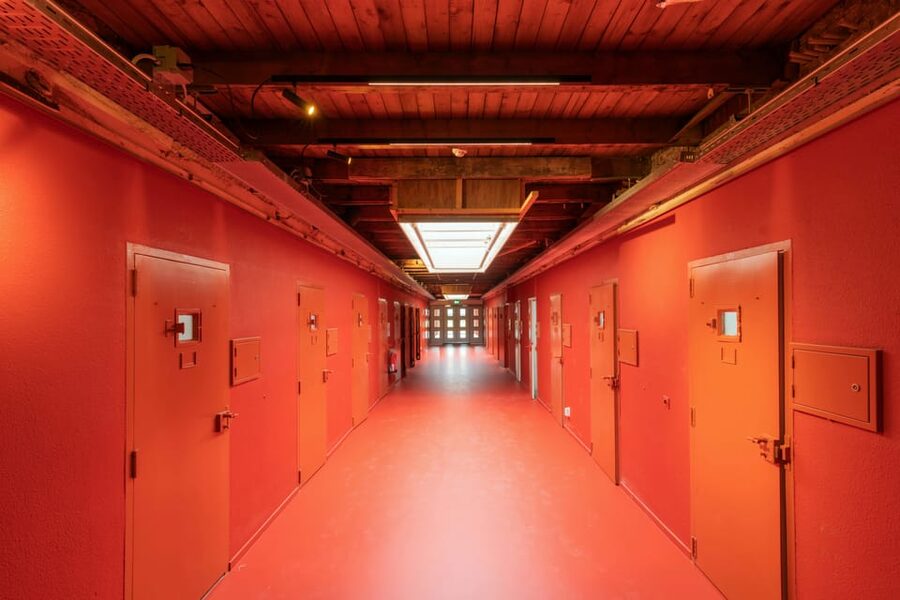
More than 250 prisoners were sent from the Oranjehotel to their deaths by firing squad. At this former Nazi prison in The Hague, Cell 601 gives the visit its hardest physical focus, while the audioguide fills the rooms with personal stories of fear, hunger, faith, and resistance.
I like the freedom to move at your own pace, and I like the careful use of letters, photographs, documents, films, and spoken testimony. The main drawback is that only one cell remains unchanged, so visitors expecting a large prison complex or many preserved rooms may find the exhibition physically limited.
Key points to know before you go
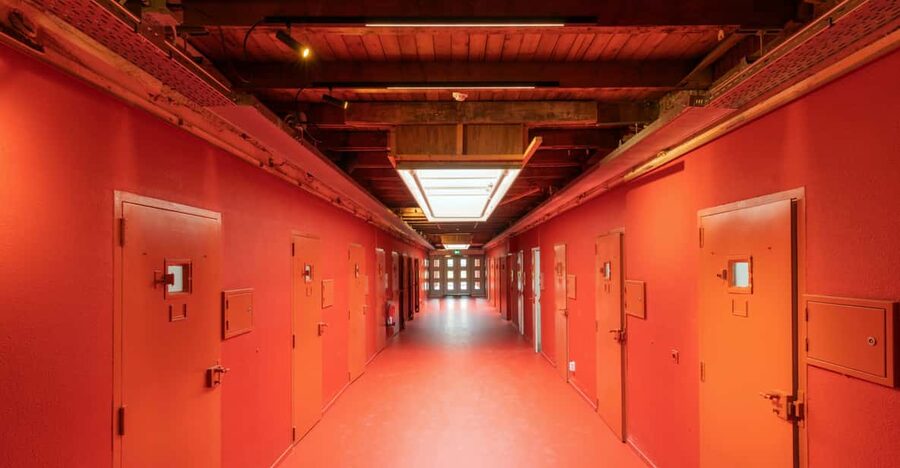
- Cell 601: Enter the notorious death cell, the most powerful single stop in the exhibition.
- Personal stories: Hear about prisoners, families, resistance, injustice, hunger, and hope through audio and visual material.
- Self-guided visit: Follow the numbered stops with an audioguide rather than joining a live group tour.
- Four audio languages: Choose English, Dutch, German, or French.
- Family value: Children as young as eight have found the visit engaging, while older children can better grasp its moral and historical weight.
- Practical value: Admission costs $15 per person, includes the audioguide, and can be cancelled up to 24 hours before the visit for a full refund.
Entering the Oranjehotel in The Hague
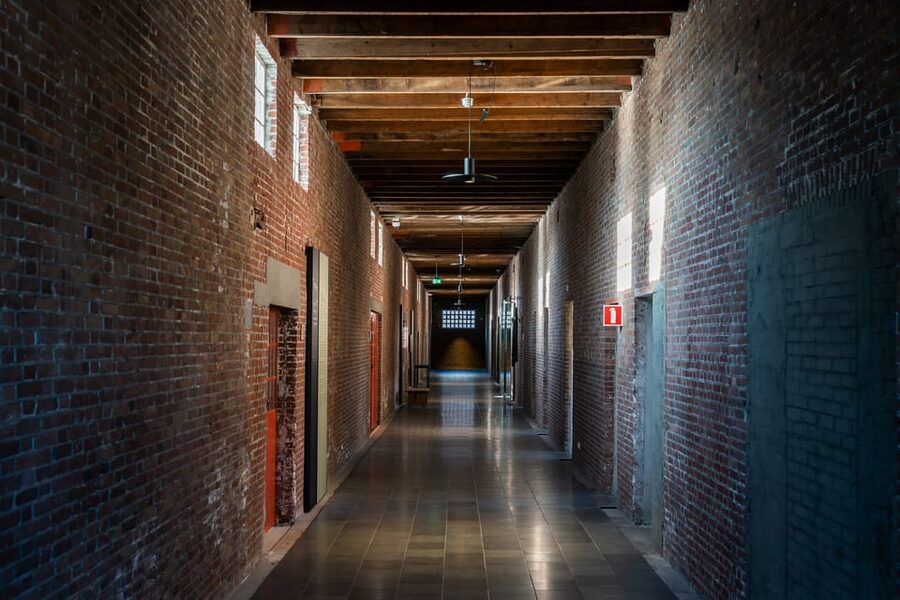
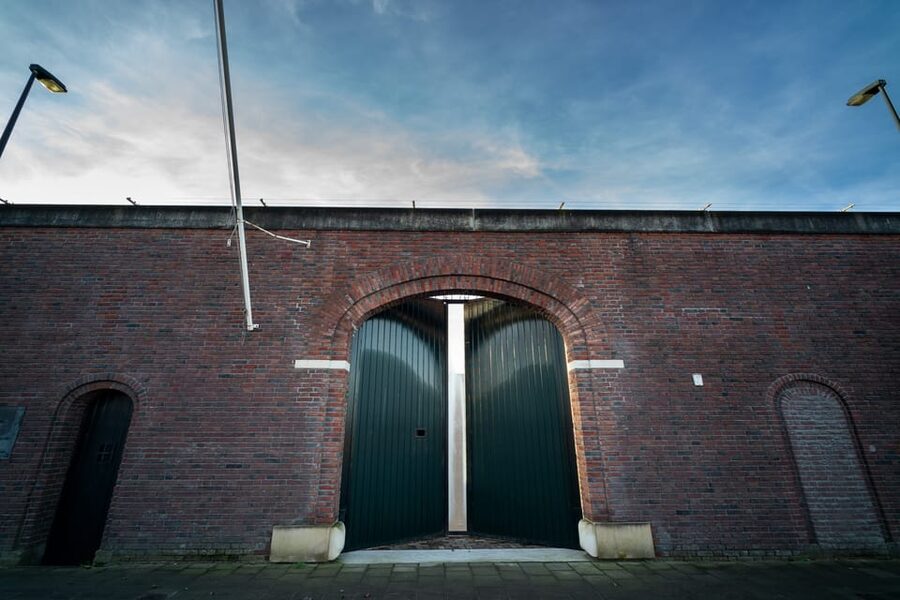
The name Oranjehotel was a nickname used for the prison during the German occupation of the Netherlands. It was not a hotel, of course, but a place where Dutch resistance members and others arrested by the occupying authorities were held.
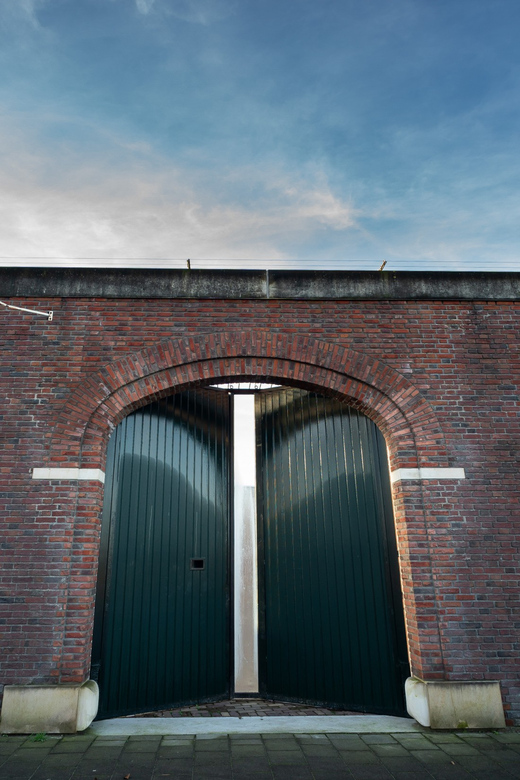
Your visit begins at the Nationaal Monument Oranjehotel on Van Alkemadelaan 1258 in The Hague. The building itself matters. You are not looking at a general Second World War museum built somewhere else. You are entering the former prison where people were confined, questioned, sentenced, and, in some cases, sent to their deaths.
That setting gives the exhibition a directness that photographs alone cannot provide. You may know the broad outline of the German occupation, yet the rooms make the subject local and personal. The story is about what happened in the Netherlands, in this building, to specific men, women, and children.
The museum presents the Oranjehotel as the most important Nazi prison in the Netherlands. For more than 250 prisoners, it became their last stop before execution by firing squad. That fact is worth holding in mind before you begin, because the visit is not designed as light sightseeing.
More Attraction Tickets in The Hague
- The Hague: Mauritshuis Entrance Ticket
★ 4.7 · 2,706 reviews - The Hague: Madurodam Miniature Park Entry Ticket
★ 4.6 · 1,559 reviews - The Hague: The Pier SkyView Ticket with Drink and Snack
★ 4.4 · 1,398 reviews
Following the numbered audioguide stops
There is no live guided tour. Instead, you receive an audioguide and follow the numbered sections through the exhibition. This arrangement lets you stop when something catches your attention, replay material, and spend more time with a document or photograph that needs a second look.
The audioguide is available in English, Dutch, German, and French. English-speaking visitors can follow the story without relying only on written panels, and the spoken material adds a human voice to a place that might otherwise feel stark and silent.
The format also suits different kinds of visitors. You can move quickly through the general background, then slow down for the prison stories. If you are visiting with older children, this gives you room to explain difficult subjects in your own words instead of having to keep pace with a group.
At the start, staff provide the information needed to begin. The welcome has been described as friendly and helpful, which matters in a memorial site where visitors may need a moment to understand how the exhibition works.
Cell 601 and the weight of a single room
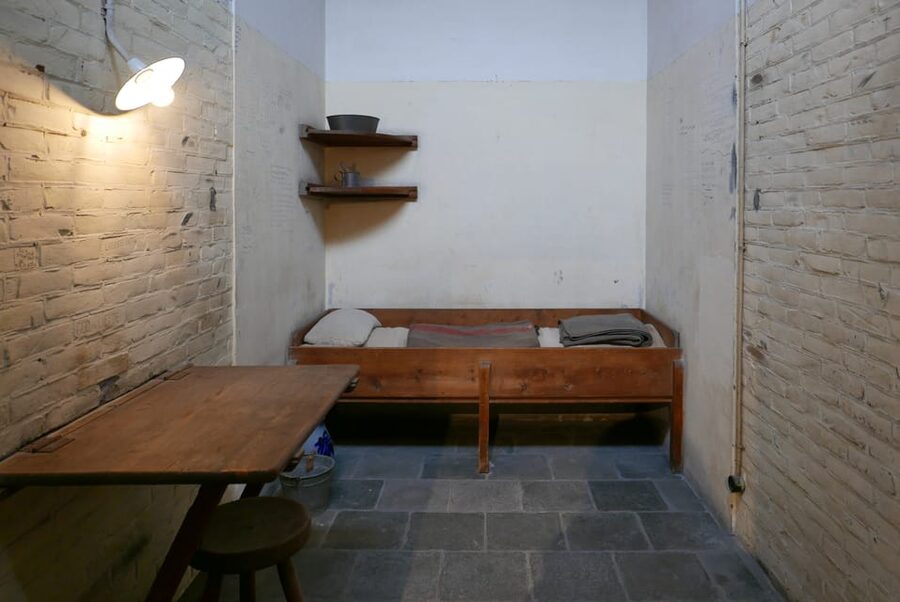
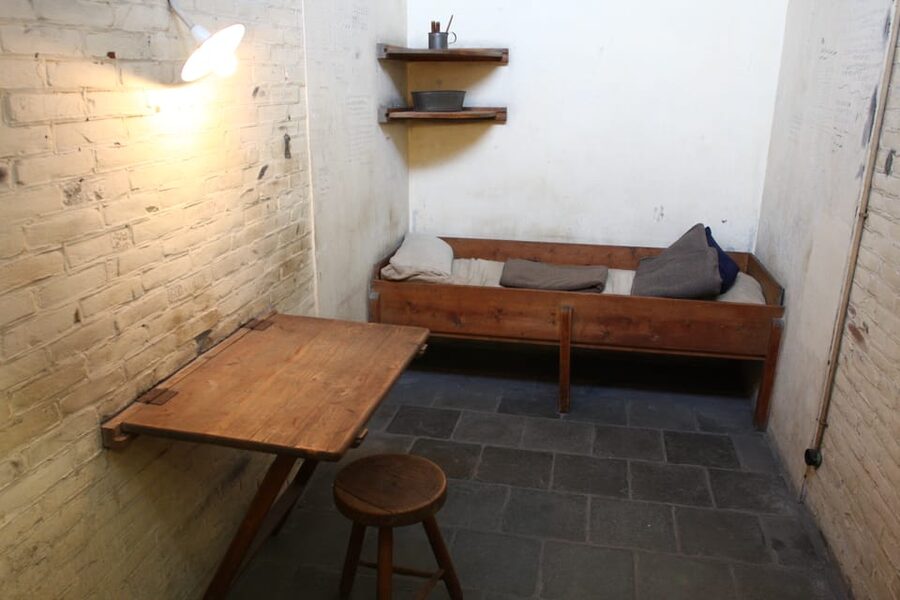
Cell 601 is the visit’s central physical experience. It is known as the death cell, and stepping inside gives the history a sharper edge than a display case can manage.
The room is not presented as a theatrical attraction. Its power comes from its purpose and from the people who passed through it. You are asked to think about the uncertainty of waiting, the threat of execution, and the way an ordinary prison room could become the last place someone lived.
Only one cell remains unchanged. That is an important limitation to understand before paying for admission. If you want to see a large number of original cells or walk through an entire prison wing, this is not that kind of museum.
Still, the preserved cell gives the exhibition a focus. The rest of the visit explains the people and events connected to places like this, while Cell 601 makes the setting immediate. I would rather see one authentic room treated with care than a larger number of spaces stripped of meaning.
Documents, photographs, films, and spoken memories
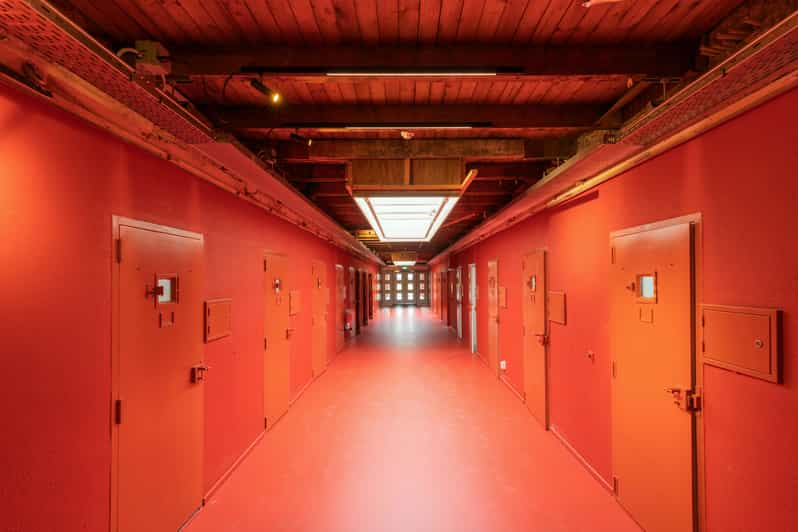
The exhibition uses more than wall text. You will encounter documents and photographs, along with interviews and audio fragments that help bring individual stories forward.
These materials cover the daily pressures of imprisonment: hunger, insecurity, fear, and the disruption of family life. They also show courage, solidarity, faith, and hope for freedom. The balance is important. The Oranjehotel was a place of suffering, but the exhibition does not reduce its prisoners to victims without agency.
Letters and records can show the effects of imprisonment in a precise way. A photograph can put a face to a name. A spoken testimony can convey the uncertainty that a tidy historical summary often misses. Taken together, these items shift the visit from a lesson about war to a closer look at how war reaches into ordinary lives.
You also learn how arrests affected families outside the prison. Imprisonment did not stop at the cell door. Relatives faced fear, uncertainty, separation, and the practical consequences of losing someone to the occupation’s prison system.
That wider view is one of the strongest parts of the experience. The museum asks you to consider not only those who were held inside, but also the people waiting outside without reliable news.
More WWII Tours in The Hague:
- Amsterdam: Life of Anne Frank and World War II Walking Tour
★ 4.8 · 10,467 reviews - Amsterdam: Dutch WWII Resistance Museum Entry Ticket
★ 4.7 · 951 reviews - Rotterdam Walk: Hilights, Gems, Architecture & WWII | 2 or 3hrs
★ 5.0 · 149 reviews - Small Group Tour to Nazi WWII concentration camp from Amsterdam
★ 5.0 · 112 reviews
Understanding resistance in occupied Netherlands
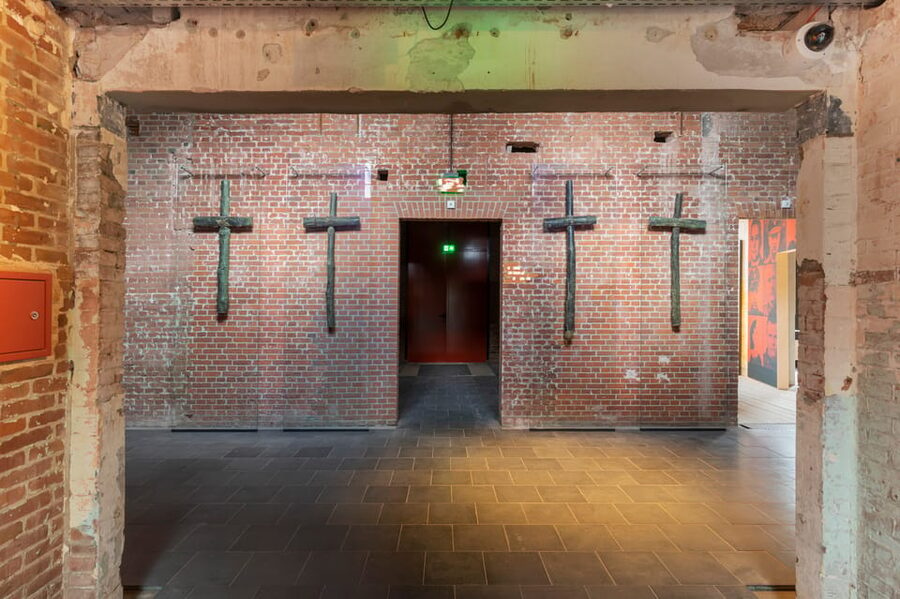
The exhibition explains the rise of resistance and places the prison within the wider history of the Netherlands under Nazi occupation. You learn why people were arrested and how the prison became tied to resistance activity.
The presentation is useful for first-time visitors because it connects local events with the broader Second World War. You do not need to arrive with a detailed understanding of Dutch wartime history. The audioguide and displays provide the setting, then add personal examples.
If you already know a good deal about the war, the value lies in the local detail. The Oranjehotel shows how occupation worked at street level, through arrests, confinement, sentences, and pressure on families. It also offers a link to the concentration-camp system. The exhibition includes information about prisoners who were later sent to Sachsenhausen, helping you connect this prison with other wartime sites in Europe.
The emphasis stays on people rather than military campaigns. You will not find a long account of battles or weapons. This is a place to understand imprisonment, resistance, state violence, and the consequences of political repression.
What the visit feels like for families
The subject is serious, but the experience can work for families if you prepare children honestly. An eight-year-old may respond to the photographs and stories without grasping every political detail. Older children and teenagers can discuss resistance, unfair imprisonment, bravery, and the cost of freedom in a more direct way.
The exhibition has helped families continue the conversation after leaving. That is one sign of a useful memorial visit. You may find yourselves discussing the war later over a meal or while exploring The Hague.
I would not describe this as a carefree family outing. The material includes death, fear, and injustice, so parents should decide how much detail suits their children. The self-guided format helps because you can pause, shorten the visit, or spend longer in sections that feel appropriate.
The museum’s considerate layout also gives you time in each part of the exhibition. You do not have to rush from room to room. That slower pace suits a memorial site and makes it easier to show respect for the people whose stories are being told.
How much time should you allow?
The ticket is valid for one day, but no fixed visit length is provided. That means you can plan the Oranjehotel around the rest of your time in The Hague rather than treating it as a timed group excursion.
The amount of time you need depends on how closely you listen to the audioguide and read the material. A quick visit will give you the basic story and Cell 601. A slower visit lets you hear more personal accounts, study documents, and consider the family and postwar sections.
Do not schedule it as a rushed stop between unrelated sights. The exhibition asks for attention, and the emotional material can take time to absorb. You might also want a quiet break afterward before moving on to another museum or attraction.
The site is wheelchair accessible. Food and drinks are not included, so plan those separately. The experience itself is focused on the museum and its audio and visual material, not on refreshments or entertainment.
Is $15 a fair price?
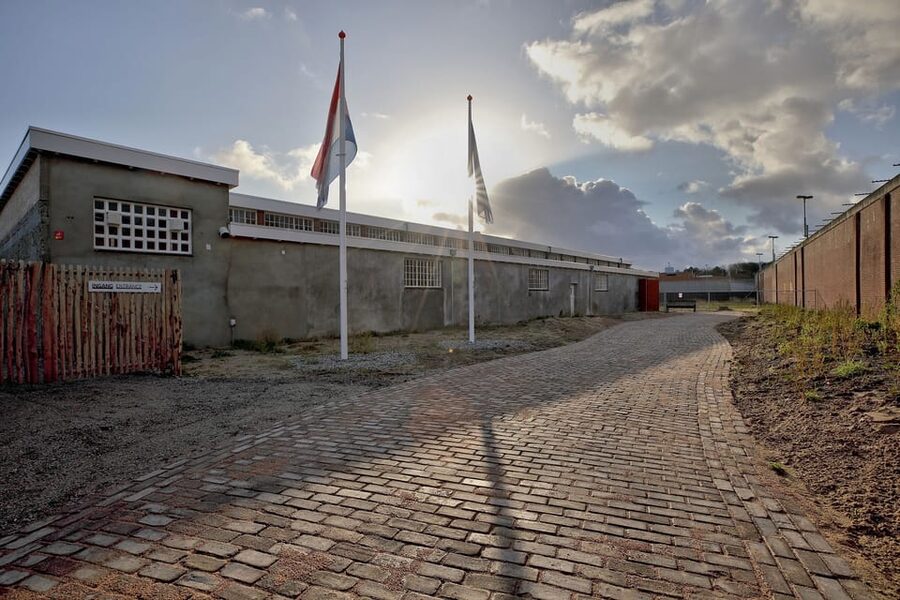
At $15 per person, the ticket is reasonably priced for a specialist memorial museum with an included audioguide. You are paying for access to an original prison setting, Cell 601, the exhibition, and material in four languages.
The value depends on what you want from a museum. If you measure value by the number of rooms or objects, the visit may feel modest. One visitor found there was not a great deal to see physically, and that is a fair point. The building does not offer a vast series of preserved cells.
If you value context, personal records, and a focused account of Dutch wartime imprisonment, the price is easier to justify. The documents, interviews, photographs, and audio fragments add substance beyond the preserved architecture.
The free cancellation option up to 24 hours in advance and the reserve now, pay later choice also make it easier to fit into a changing schedule. These booking terms are useful, but the main value still comes from the quality and focus of the exhibition.
Who should visit the Oranjehotel?
I recommend this experience to anyone interested in the Second World War, Dutch history, resistance movements, or memorial museums. It is especially useful if you have already visited another wartime site and want to understand how prisoners moved through the Dutch system before being sent elsewhere.
It also suits visitors who prefer to learn at their own speed. The audioguide lets you choose your level of detail, and there is no live group pacing you through the building.
Families with school-age children can make good use of the visit, provided adults explain the subject in advance. The material has prompted children from about eight years old upward to ask questions, though each family should judge the emotional content for itself.
I would be less likely to recommend it to someone looking for a large, object-filled museum or a relaxed sightseeing stop. The exhibition is compact, sober, and focused. You come to listen, think, and remember.
Helpful planning details
The address is Van Alkemadelaan 1258, 2597 BP Den Haag, Netherlands. The experience provider is Nationaal Monument Oranjehotel.
Admission includes entry and the audioguide. The audio languages are English, Dutch, German, and French. Food and drinks are not included.
The attraction is wheelchair accessible. Check the available starting times when booking, since the ticket is valid for one day rather than tied to a stated visit duration.
The overall rating is 4.6 from 708 reviews, which fits the experience’s strongest qualities: clear historical content, respectful presentation, friendly staff, and a powerful emotional effect. The main reservation is physical scale, since only one original cell remains unchanged.
Should you book the Oranjehotel ticket?
Book it if you want a serious, personal account of the Netherlands under Nazi occupation. The combination of Cell 601, the original prison setting, and the audioguide makes the visit far more meaningful than a quick display of wartime objects.
I would especially choose it if you are already visiting The Hague and want to understand the city’s wartime past, or if you have visited a concentration camp or resistance museum elsewhere and want to connect those stories to the Dutch experience.
Skip it if you need a large museum with many rooms, extensive military exhibits, or a light afternoon activity. This is a compact memorial with difficult subject matter. For $15, though, it offers a focused and carefully handled encounter with prisoners whose names and lives might otherwise be reduced to a line in a history book.
FAQ
Where is the Oranjehotel located?
The Nationaal Monument Oranjehotel is at Van Alkemadelaan 1258, 2597 BP Den Haag, Netherlands.
What does the ticket include?
The ticket includes entrance to the Oranjehotel and an audioguide.
Is the audioguide available in English?
Yes. The audioguide is available in English, Dutch, German, and French.
Can I visit at my own pace?
Yes. This is a self-guided visit, so you follow the numbered sections with the audioguide rather than joining a live guided tour.
Can I enter Cell 601?
Yes. The experience includes access to Cell 601, the former death cell.
Is the Oranjehotel wheelchair accessible?
Yes. The experience is wheelchair accessible.
Are food and drinks included?
No. Food and drinks are not included in the admission ticket.
Can I cancel my booking?
Yes. You can cancel up to 24 hours in advance for a full refund. You can also reserve now and pay later.
Just added around The Hague
- The Hague Tower Guided Tour★ 4.5 · 45 reviews
- The Hague: Powerboat Tour Scheveningen★ 4.5 · 15 reviews
- The Hague Walking Tour★ 4.5 · 16 reviews
- The Hague: Ping Pong Table Rental at a Secret Ping Pong Bar★ 4.5 · 7 reviews
- The Hague: Private Boattour up to 10 persons★ 4.9 · 37 reviews
- The Hague: Prison Gate Museum★ 4.5 · 58 reviews
- The Hague: Private Custom Walking Tour With A Local Guide★ 4.5 · 13 reviews
- The Hague: Highlights Bike Tour★ 4.6 · 135 reviews
WWII History Tours, compared.

Life of Anne Frank and World War II Walking Tour
Read our review →
Rotterdam Walk: Hilights, Gems, Architecture & WWII | 2 or 3hrs
Read our review →
Small Group Tour to Nazi WWII concentration camp from Amsterdam
Read our review →
Anna Frank and World War II History Walking Tour
Read our review →
Anne Frank and World War II Walking Tour (TOP RATED)
Read our review →
Oosterbeek: Airborne Museum Hartenstein Entry Ticket
Read our review →Browse the lists this tour appears in