
Reviewed · FOOD & DRINK
Boutique Dutch Food & History Tour with up to 8 guests only
Amsterdam reveals itself especially well through its food. This four-hour Jordaan tour moves from a brown café to specialty shops, a fish counter, a private wine room, and a historic restaurant, giving you a useful first look at both Dutch eating habits and Amsterdam’s past.
I like the small maximum of eight people, which should make it easy to ask questions and keep the pace relaxed. I also like that the food adds up to a proper meal, with drinks included at five stops. The main consideration is the changing menu: Saturday, Sunday, Monday, and Tuesday through Friday offer different tastings, so check the day before booking. Vegans should choose another tour.
Key points to know before booking
- Six substantial tastings cover Dutch cheese, sausage, fish, apple pie, Indonesian food, and bitterballen.
- The Jordaan is explored on foot, with about 2 kilometers of walking over four hours.
- Five drink stops are included, with beer and non-alcoholic choices available in place of wine.
- The menu changes by day, since the tour works with small local businesses that do not all open daily.
- A guide with at least 15 years of Amsterdam connection leads the walk in English.
- The group is limited to eight, making this better for conversation than a large city tour.
Why this Jordaan food tour works as an introduction
The Jordaan gives you a compact setting for learning how Amsterdam eats and how it grew. You are not simply stopping for samples. The walk links cafés, family shops, market food, and old buildings, so the dishes have a setting and a story around them.
That matters on a first visit. Dutch food can seem plain if you only encounter cheese in a supermarket or herring from a stand without context. Here, the guide can explain how familiar ingredients fit into daily life, colonial history, café culture, and Amsterdam’s long trading past.
The group size is one of the tour’s biggest advantages. With no more than eight participants, you should be able to hear the guide clearly and ask about restaurants, customs, neighborhoods, or anything else that comes up. The pace is designed to be easy rather than rushed, though you should still arrive ready for a four-hour eating and walking session.
The route covers roughly 2 kilometers. That is not a demanding distance, but the tour takes place rain or shine, and several stops involve standing or moving between locations. Tastings are inside and seated, which gives your feet a break and makes the meal feel more generous than a series of quick bites.
More Food Tours in Amsterdam
- 10 Tastes of Amsterdam: Food Tour by UNESCO Canals and Jordaan
★ 5.0 · 3,020 reviews - Amsterdam Food and Cultural Tour with Tastings
★ 5.0 · 2,442 reviews - Amsterdam Jordaan Food & Drinks Tour with Eating Europe
★ 5.0 · 2,425 reviews
Starting with apple pie at Papeneiland Café
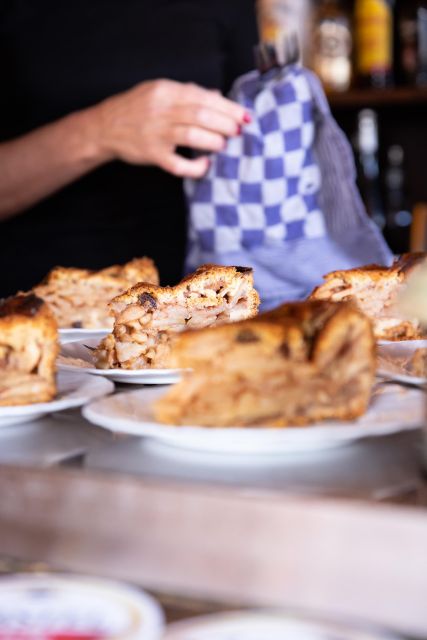
The meeting point is outside The Papeneiland Café, where you look for a guide carrying an Amsterdam Food Tours folder. The tour begins with homemade Dutch apple pie in one of Amsterdam’s best-known brown cafés.
A brown café is the sort of traditional neighborhood pub associated with dark wood, worn-in furnishings, and a relaxed local atmosphere. Starting here is smart because it gives you a quick sense of Amsterdam’s café culture before the route moves into food shops and restaurants.
The apple pie is more than a sweet opener. It is a gentle introduction to Dutch comfort food, and the café setting helps you slow down at the start. You also receive a drink here, adding to the feeling that the first stop is a proper welcome rather than a sample handed over in passing.
One practical point: the menu does not include vegan options, and the tour is built around dairy, meat, fish, and egg-based foods. Vegetarians may find some flexibility at certain stops, but the supplied details only specifically rule out vegans, so ask before booking if your diet is restrictive.
Walking through the Jordaan between bites
After the café, the guide leads you through the Jordaan. The walking section is important because it connects the food to Amsterdam’s streets and local identity.
The tour company uses guides who have lived or worked in Amsterdam for at least 15 years. That does not guarantee a particular style, but it should give your guide plenty of first-hand material about daily life, neighborhood changes, food habits, and city traditions. The guide is also there to answer questions, so come prepared to ask about anything from Dutch meals to Amsterdam history.
The route changes from day to day. This is not a weakness in itself. It reflects the fact that the tour works with small businesses, some of which are closed on particular days. The trade-off is simple: you gain more local variety, but you cannot assume every booking day will include the same dishes.
For planning, Sunday and Monday differ from Tuesday through Friday, and Saturday has its own combination. If a particular food matters to you, check the day’s menu before paying.
Sunday and Monday: sausage, shrimp croquette, and Indonesian flavors
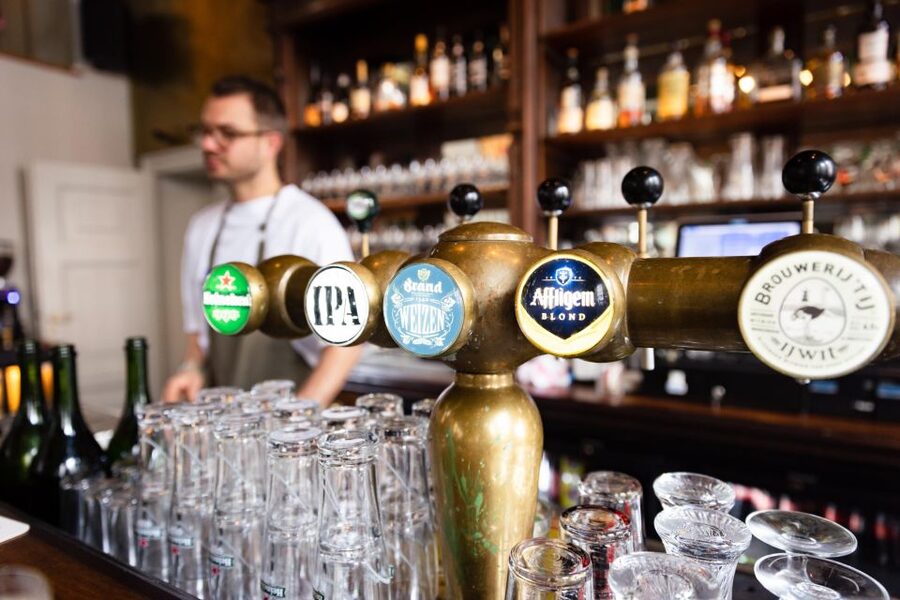
On Sunday and Monday, the tour moves beyond apple pie into a strong mix of Dutch and Indonesian food.
One stop offers a fresh baguette topped with Dutch grillworst, a warm, spiced pork sausage. It comes with honey-mustard sauce, mayonnaise, pine nuts, and rocket salad. This is a useful example of how a simple Dutch sausage can become a full sandwich with contrasting sweet, sharp, creamy, and peppery flavors.
You also try a Dutch shrimp croquette from Patisserie Holtkamp, a famous Amsterdam patisserie. Croquettes are a familiar Dutch snack, but the shrimp filling gives this one a more refined character than the standard bar snack. The portion is part of a larger sequence, so avoid filling up early.
Next comes freshly grilled Javanese chicken satay with peanut sauce, cassava kroepoek, and sambal. The tour then adds handmade Indonesian spekkoek, a layered cinnamon cake. These dishes point to the Netherlands’ long connection with Indonesia and show how Indonesian food became part of everyday Dutch eating.
This is one of the more useful parts of the tour for anyone who wants history attached to the plate. The food is not presented as a distant foreign course. It is part of the Dutch dining scene, especially in cities such as Amsterdam.
The final tasting on these days includes three artisan soft and hard Dutch cheeses with crackers and quince pear, plus ossenworst, a smoked beef sausage, with pickles and mustard. The variety makes this a filling stop and gives you a chance to compare textures and strengths rather than simply sample one famous cheese.
More History Tours in Amsterdam
- Amsterdam: Haunted History and Ghost Walking Tour
★ 4.5 · 488 reviews - Amsterdam High-End Dutch Food & History Tour – Up to 8 guests
★ 5.0 · 482 reviews - Amsterdam: Historic City Sightseeing Canal Cruise
★ 4.5 · 444 reviews - Amsterdam: Historical Highlights Walking Tour with Tasting
★ 4.6 · 381 reviews
Tuesday through Friday: butcher shops, Dutch wine, and fish
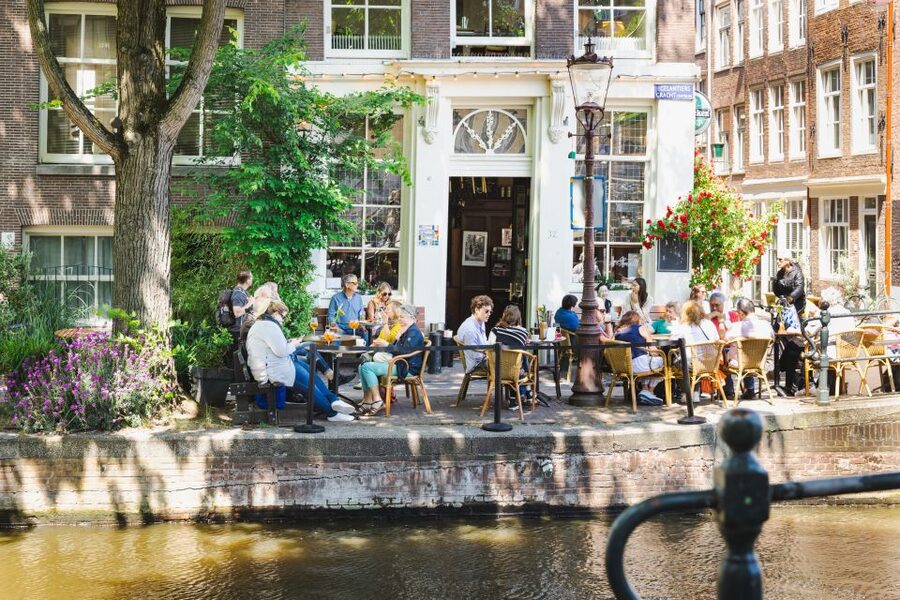
The Tuesday through Friday version replaces the Sunday and Monday sausage sandwich and shrimp croquette with a visit to a 130-year-old family butcher shop. You taste Dutch ossenworst and grillworst there.
This stop should appeal if you want a closer look at traditional food businesses. The difference between the two sausages gives the guide a natural way to discuss preparation, seasoning, and how Dutch meat snacks are served.
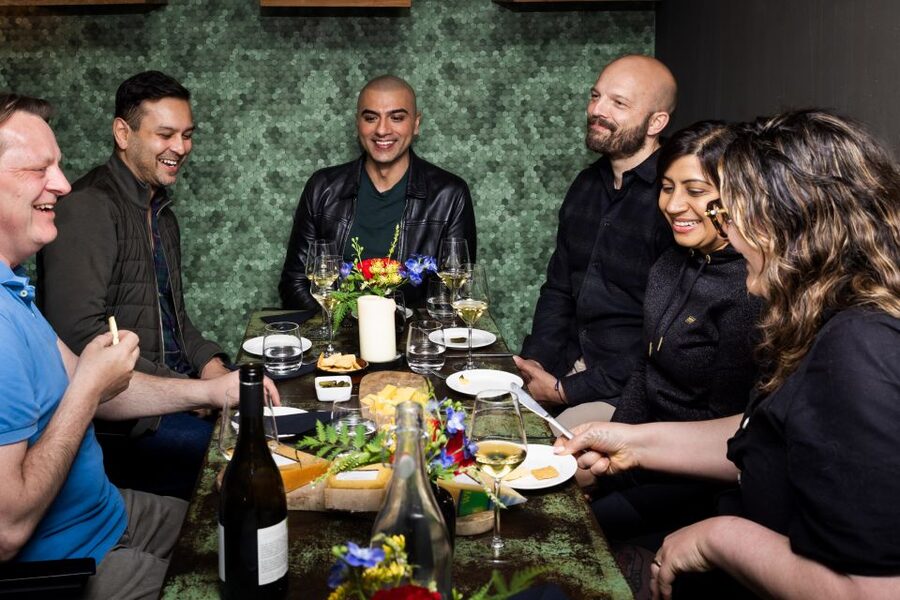
You then pick up three farmhouse Dutch cheeses from a boutique deli shop. The tasting moves into a private speakeasy room for Dutch wine paired with the cheeses. This is an unusual part of the experience because Dutch wine is not what most visitors expect to find on an Amsterdam food walk.
Non-alcoholic drinks or beer are available instead of wine. That makes the stop more flexible, though you should mention your preference to the guide. The cheese pairing also gives the meal a slower middle section, with seating and time for conversation.
The fish stop brings herring, fried cod, and smoked eel from a local fish shop. Herring is one of the foods most closely tied to Dutch food culture, while fried cod is more immediately familiar. Smoked eel adds a stronger, richer flavor. If you are unsure about herring, this arrangement lets you try it alongside other fish rather than making it the only option.
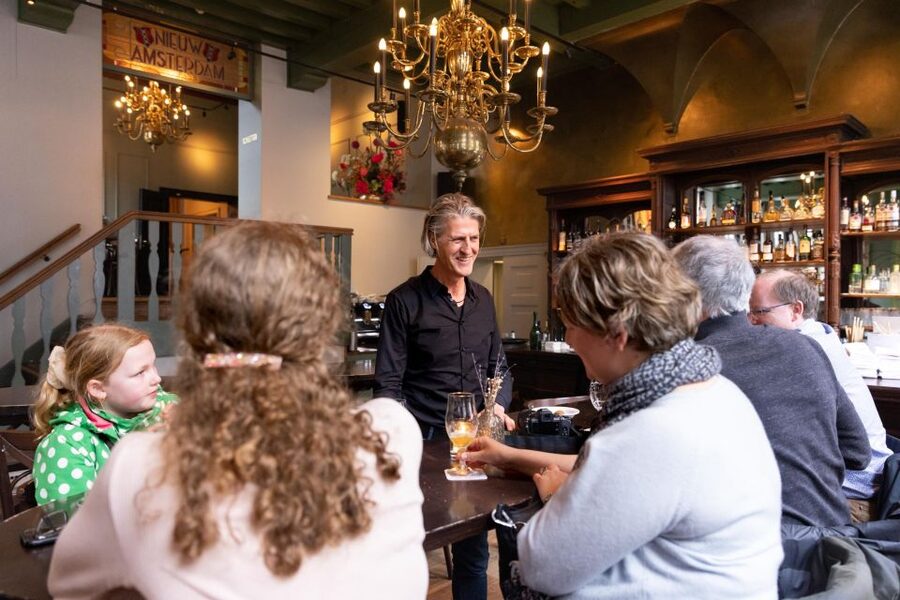
The tour finishes at Café Nieuw Amsterdam, located in the former 17th-century headquarters of the Dutch West India Company. The site is described as the birthplace of New York, a detail that gives the final stop real historical weight. Here you enjoy traditional bitterballen, the round, crisp Dutch snack often served with mustard.
Ending with bitterballen makes sense. It is a sociable café food, and the final stop leaves you with something distinctly Dutch rather than another dessert.
Saturday: market food and a different atmosphere
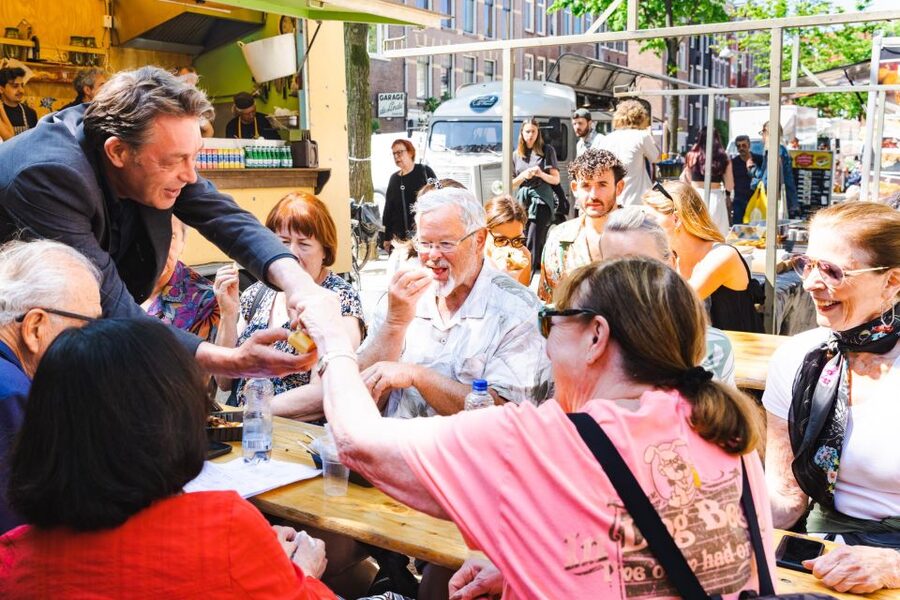
Saturday follows a separate route. After the brown café and apple pie, you visit the Saturday Lindengracht market for Indonesian satay with side dishes.
A market stop changes the feel of the tour. Instead of entering only established cafés and shops, you get food from a weekly public gathering. The Indonesian element also links Saturday to the same Dutch-Indonesian food connection found on the other routes.
The rest of the Saturday menu includes three farmhouse cheeses, Dutch wine in the private speakeasy room, and fish from a local shop. You try herring, fried cod, and smoked eel before finishing with bitterballen at the former West India Company headquarters.
Saturday therefore offers a good mix of market food, seated tastings, and historical places. It may suit you best if you like the added energy of a market setting. The trade-off is that Saturday’s route is not the same as the Sunday and Monday version, so you will not receive the shrimp croquette or the grillworst baguette on this day.
How much food and drink do you really get?
The food is intended to make up a large meal, not simply provide token samples. Across the route, you may eat apple pie, sausage, cheese, fish, satay, croquettes, cake, or bitterballen depending on the day.
Drinks are included at five locations. That is a useful value point in Amsterdam, where separate drinks can quickly push up the cost of a food outing. The inclusion also keeps the tour simple: you do not need to keep calculating what each stop costs.
Still, you should pace yourself. The early pie and bread-based items can be filling, and the later cheese, fish, and bitterballen stops add up. A light meal beforehand is sensible, but arriving hungry is also important.
The exact number of food businesses visited can vary with the day’s route, yet the tour promises six large tastings. Since small local businesses may close on certain days, the changing menu is part of the operating model rather than a surprise substitution.
Is $147 fair for four hours?
At $147 per person, this is not a bargain snack crawl. The price makes more sense if you value a small group, a local English-speaking guide, seated tastings, and drinks at five locations.
You are paying for a meal, but also for access to places selected through the company’s long relationships with local food partners. The tour promises behind-the-scenes contact with small businesses rather than a route built only around famous tourist stops.
I would compare the price with what you might spend on four hours of separate eating, drinks, and a private or small-group city walk. The tour combines all three. It also removes the work of deciding where to go and what to order, which is useful on a first Amsterdam visit.
The value is weaker if you only want a cheap way to sample Dutch food or if you already know the Jordaan well. It is also less suitable if you avoid most animal products. For an omnivorous eater who wants structure and conversation, the cost is easier to justify.
Who should book this experience?
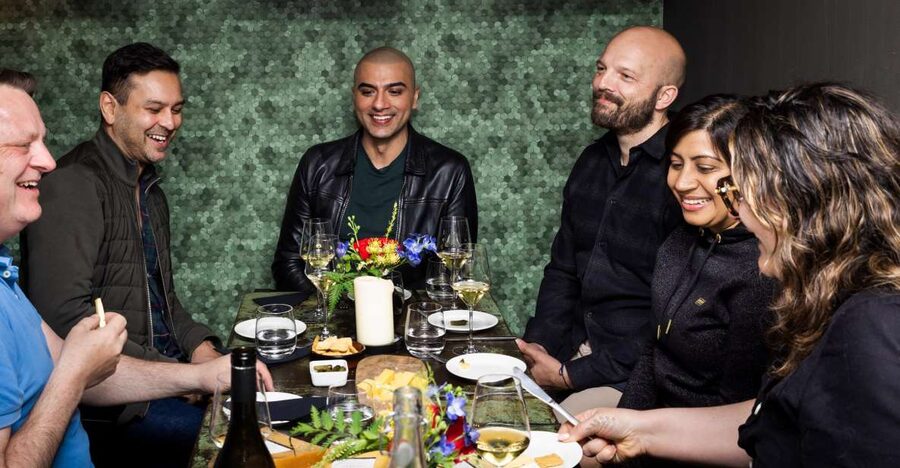
I would recommend it to first-time visitors who want a friendly introduction to Amsterdam without joining a large group. It also suits people who prefer food with historical context, since the route moves from cafés and markets to a former colonial headquarters.
It is a good choice for couples, friends, and solo participants who enjoy asking questions. The eight-person limit gives solo visitors a better chance of joining conversations than a private tour would, while keeping the price below many fully private experiences.
Food-focused visitors should check the day-specific menu. Sunday and Monday offer the shrimp croquette, Indonesian satay, spekkoek, and a grillworst baguette. Tuesday through Friday add the family butcher, Dutch wine pairing, and fish course. Saturday includes the Lindengracht market.
I would skip it if you are vegan, dislike fish or meat, or want a tour focused only on architecture. The history is woven into a food walk, not delivered as a full museum-style history tour.
My booking advice
Book this tour if you want a full meal, local conversation, and a manageable walk in one package. The strongest reasons are the eight-person limit, the generous tastings, and the guide’s long connection to Amsterdam. The guide quality matters here, and the format gives that person room to respond to your questions.
Before booking, choose your day with care. If you want the market, book Saturday. If the shrimp croquette and Indonesian cake appeal to you, choose Sunday or Monday. For Dutch wine, the family butcher, and the fish sequence, Tuesday through Friday is the better fit.
You can cancel up to 24 hours before the start for a full refund, and you can reserve without paying immediately. The meeting point is outside Papeneiland Café, and the tour runs in all weather, so bring sensible shoes and a rain layer.
FAQ
How long is the Dutch food and history tour?
The tour lasts four hours.
Where does the tour begin?
It begins outside The Papeneiland Café. Look for the guide carrying an Amsterdam Food Tours folder.
Where does the tour finish?
The tour finishes at Café Nieuw Amsterdam.
How far do you walk?
The walking distance is around 2 kilometers, mainly through the Jordaan.
How many people can join the tour?
The group is limited to a maximum of eight participants.
Is the tour offered in English?
Yes. The tour has a live English-speaking guide.
Are food and drinks included?
Yes. The tour includes many Dutch food tastings that make up a large meal, plus drinks at five locations.
Can vegans join the tour?
No. The tour is not suitable for vegans.
Just added around Amsterdam
- Private sightseeing tour to Bruges and chocolate from Amsterdam★ 5.0 · 11 reviews
- Amsterdam: Rijksmuseum (Private Tour & Priority Access)★ 5.0 · 27 reviews
- Amsterdam: Private Romantic Evening Canal Cruise + Bubbles/Snacks★ 5.0 · 46 reviews
- Amsterdam Private Shopping Experience★ 5.0 · 7 reviews
- Rijksmuseum Amsterdam Private Guided Tour★ 5.0 · 57 reviews
- Amsterdam Rijksmuseum PRIVATE TOUR with a Local Private Guide★ 5.0 · 159 reviews
- Private Photo Session in Amsterdam★ 5.0 · 15 reviews
- Private One way Transfer Amsterdam Airport to Amsterdam★ 3.5 · 42 reviews
Food & Drink, compared.
10 Tastes of Amsterdam: Food Tour by UNESCO Canals and Jordaan
Read our review →
Amsterdam Food and Cultural Tour with Tastings
Read our review →
Amsterdam Jordaan Food & Drinks Tour with Eating Europe
Read our review →
Premium Henri Willig Cheese Tasting Experience
Read our review →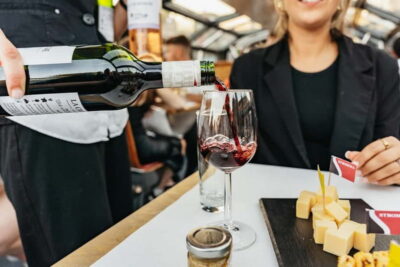
Zaanse Schans and Cheese Tasting Guided Tour from Amsterdam
Read our review →
Browse the lists this tour appears in