
Reviewed · JORDAAN WALKING TOURS
10 Tastes of Amsterdam: Food Tour by UNESCO Canals and Jordaan
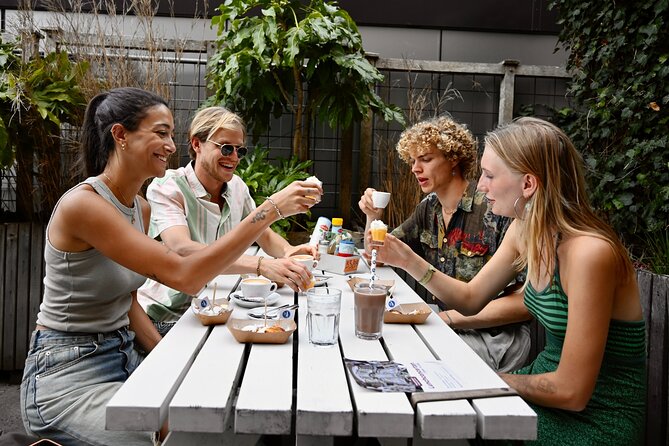
Amsterdam’s best food stories are often found in small shops and old brown cafés, not grand restaurants. This three-hour walk links cheese, herring, stroopwafels, chocolate, poffertjes, and local drinks with the canals, Spui, the Nine Streets, and Jordaan.
I like the generous range of tastes and the chance to sample food you might not order on your own. I also like the small-group format, with guides such as Dennis, Maria, Kees, Joeri, and Kees earning repeated praise for their humor, local tips, and easy conversation. The main drawback is that the route includes several sweet stops and drinks, so it may feel less like a full savory meal than the title suggests.
Key points at a glance
- Start with cheese in a cellar: Sample young and aged Gouda at Gastrovino, paired with Dutch liquor or port.
- Taste Amsterdam classics: Expect stroopwafels, herring, Dutch pralines, poffertjes, bitterballen, fries, or other local favorites depending on the guide and day.
- Walk the historic center: The route covers about 1.5 miles, linking Spui, the canal ring, Jordaan, the Nine Streets, and nearby sights.
- Small groups matter: The experience is designed for a personal feel, with group sizes described as up to 10 foodies and a maximum of 12 participants.
- Dietary choices are possible: Vegetarian and pescetarian alternatives are available. Gluten-free requests are easier on a private tour.
- Come hungry: The food adds up to a substantial meal, but some tastings are sweet treats or drinks rather than savory dishes.
Cheese, liquor, and a cellar start
Your meeting point is Gastrovino Amsterdam, De Mannen Van Kaas, at Spuistraat 330. The tour begins downstairs in the shop’s wine cellar, which gives the opening a pleasant sense of occasion without requiring a formal restaurant setting.
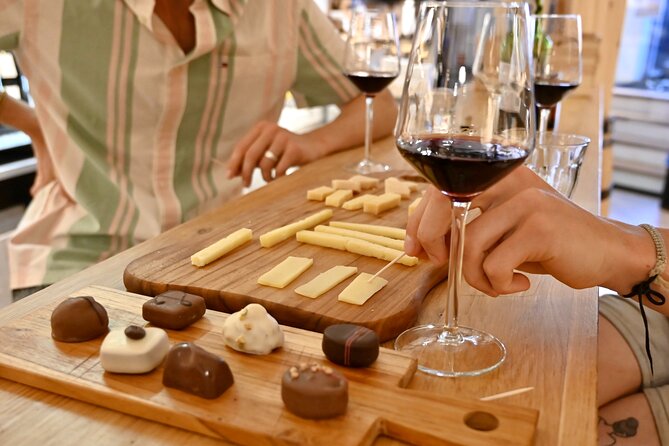
Here you taste both young and aged Gouda. That comparison is useful because Gouda is not one single flavor. A younger cheese tends to be softer and milder, while an aged version brings a firmer texture and more pronounced taste. The cheese comes with a seasonal Dutch liquor or port, so you begin with both food and a small introduction to Dutch drinking culture.
Allow a few minutes to find the shop and get settled. The meeting point is about an eight-minute walk from Dam Square and about five minutes from Rokin Metro. Hotel pickup is not part of the public tour, though it can be arranged with the private option.
One practical note: the cheese shop is also a retail business. You may have the chance to buy cheese to take home. That can be convenient, but you should not feel obliged to purchase anything. The tour’s value should come from the tastings, stories, and route, not from extra shopping.
More Food Tours in Amsterdam
- Amsterdam Food and Cultural Tour with Tastings
★ 5.0 · 2,442 reviews - Amsterdam Jordaan Food & Drinks Tour with Eating Europe
★ 5.0 · 2,425 reviews - Amsterdam: Premium Henri Willig Cheese Tasting Experience
★ 4.7 · 1,106 reviews
Brown bars and Amsterdam’s drinking culture
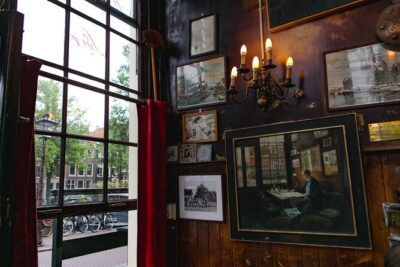
Early in the walk, your guide points out a brown bar said to have served sailors for more than 400 years. These dark, compact cafés are part of Amsterdam’s everyday character. They are not polished cocktail lounges. They are places built around wood, conversation, beer, and the old Dutch habit of stopping for a drink.
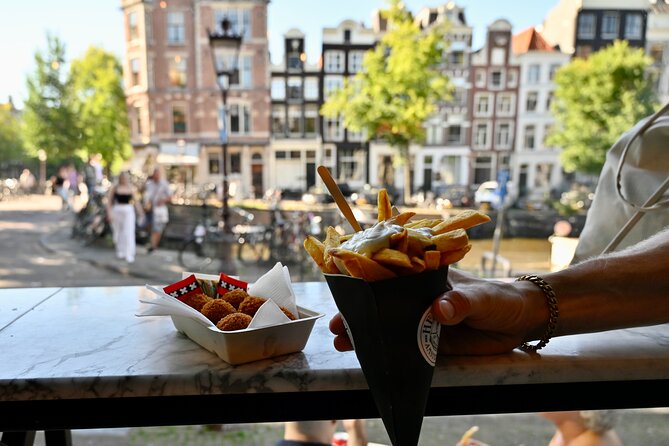
A visit to this kind of bar helps explain why jenever and bitterballen belong together. Jenever is a traditional Dutch spirit, while bitterballen are small, crisp snacks with a creamy filling. The tour may include jenever, wine, coffee, tea, soda, or another local drink, depending on the route and timing.
This is also where the balance of the experience becomes clear. You are not simply moving from restaurant to restaurant. You are walking through old neighborhoods, hearing stories, and stopping for modest portions. If you want a tour focused almost entirely on large savory servings, this may not be the right choice.
Spui, books, and a hot stroopwafel
Spui is a natural place to connect food with city life. Writers, students, artists, and book lovers gather around the square, especially on weekends. The setting feels more local and relaxed than the grand monuments around Dam Square.
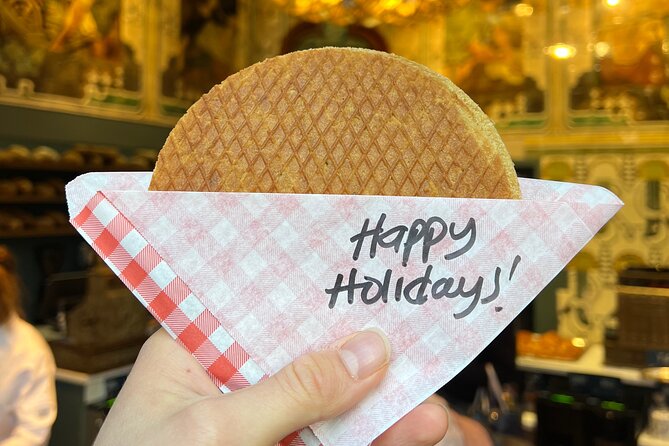
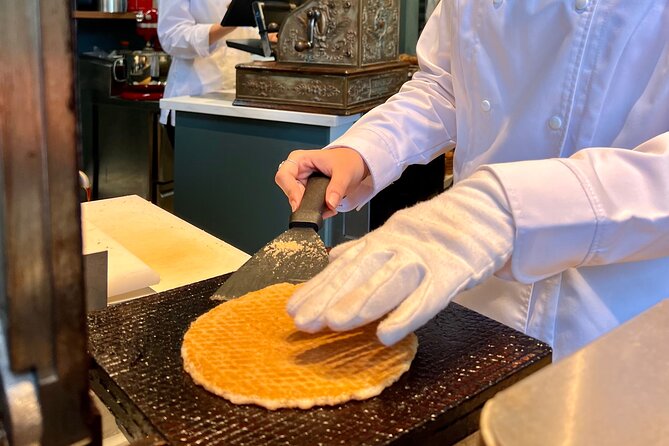
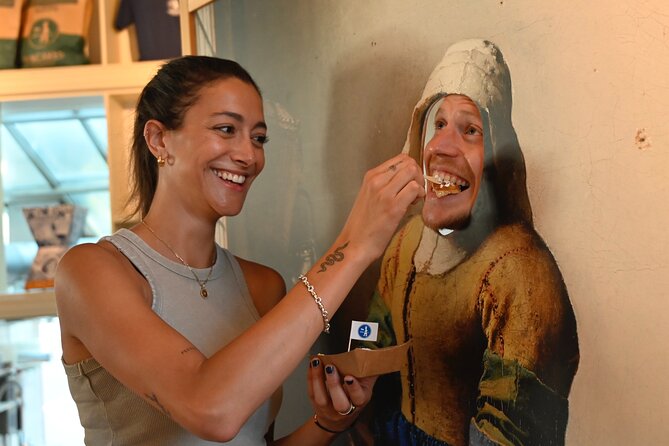
The food stop here is Hans Egstorf, a bakery with about 200 years of history. Stroopwafels are prepared fresh, with two thin waffle rounds joined by warm syrup. The contrast is the point: crisp edges, a soft center, and plenty of sweetness.
Fresh preparation makes this stop more appealing than buying a packaged stroopwafel from a souvenir shop. It also gives your guide a simple way to explain a familiar Dutch snack. The portion is small, but after cheese, a drink, and more stops ahead, that is a sensible approach.
Near Spui, your guide may also point out a 15th-century hidden garden with a secret house church. If time allows, you may look inside. This kind of detour is one reason the route feels more personal than a standard sightseeing circuit, though the exact stop depends on timing and access.
Herring before 4 p.m.
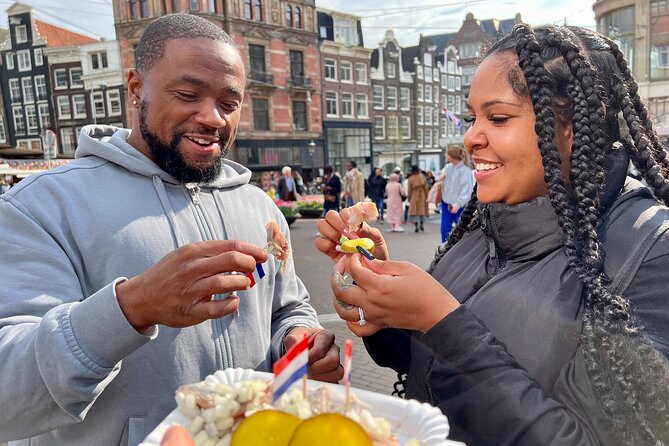
The herring stop is one of the tour’s most distinctive tastings. At Herring Stall Jonk, a family business associated with seafood since 1982, you try Dutch herring with the usual simple treatment, often accompanied by onions.
The tour presents herring as Dutch sashimi, a food tradition that reaches back more than 1,000 years. You do not need to be a seafood enthusiast to try it, but you should be ready for a cool, soft texture and a direct fish flavor. This is not a disguised or heavily seasoned dish.
Timing matters. Herring is available only for tours starting by 4 p.m. or earlier, due to opening hours. If herring is high on your list, choose a morning or early afternoon departure and confirm the start time when booking.
Vegetarian and pescetarian alternatives are available. Tell the company about dietary needs when booking, then remind your guide at the start. Shellfish, nut, and peanut allergies can often be handled, but shared kitchens mean cross-contact is possible.
More walks through the Jordaan:
- Amsterdam Food Tour of 10+ Local Classic Tastings in Jordaan Area
★ 5.0 · 334 reviews - Amsterdam: Jordaan District Local Food Walking Tour
★ 4.8 · 311 reviews - Amsterdam: Jordaan District Tour with a German guide
★ 5.0 · 62 reviews - Authentic tour of Amsterdam: Jordaan, Ana Frank and Vondelpark
★ 4.5 · 31 reviews
Floating flowers and Dutch chocolate
The route may continue past the Bloemenmarkt on the Singel Canal. The floating flower stalls are one of Amsterdam’s best-known sights, with tulip bulbs and flowers displayed along the water.
Do not expect a long flower-market visit. This is primarily a walking route, and each guide may take a slightly different path. Still, passing the market gives you a useful visual break between food stops and helps tie the walk to Amsterdam’s canals.
At Puccini Bomboni, you taste Dutch pralines. The stop highlights the country’s connection with cacao and chocolate. The company describes the Netherlands as the world’s leading cacao importer and notes the Dutch fondness for chocolate, even at breakfast.
This is another sweet tasting, so keep the overall pattern in mind. The tour offers variety, but not every stop is a substantial savory dish. If you have a sweet tooth, that is a benefit. If you mainly want herring, fries, and bitterballen, ask your guide early about the savory options on your particular route.
From the university quarter to Jordaan
The walk continues past Amsterdam’s 400-year-old university, where your guide may talk about students, Dutch spirits, and bitterballen. This is a good example of the tour’s wider purpose: food provides an excuse to notice places you might otherwise pass without a second look.
The Jordaan is the route’s most atmospheric neighborhood. Its narrow streets, canals, small bridges, and brown cafés make it a pleasant place to walk even between tastings. Here, the food stop is poffertjes, tiny pancakes served with butter and usually plenty of sugar.
Poffertjes are light and fluffy rather than filling on their own. Along with a local beer or another drink, they make a sociable pause. The Jordaan stop has about 30 minutes, longer than the quick bakery or herring visits, so it may feel like one of the more relaxed parts of the tour.
The neighborhood also gives your guide room to explain how Amsterdam changed from a small fishing settlement into a major trading city. The food becomes more meaningful when you understand that the city’s cooking reflects trade, migration, commerce, and everyday working life.
Canals, royal history, and the Nine Streets
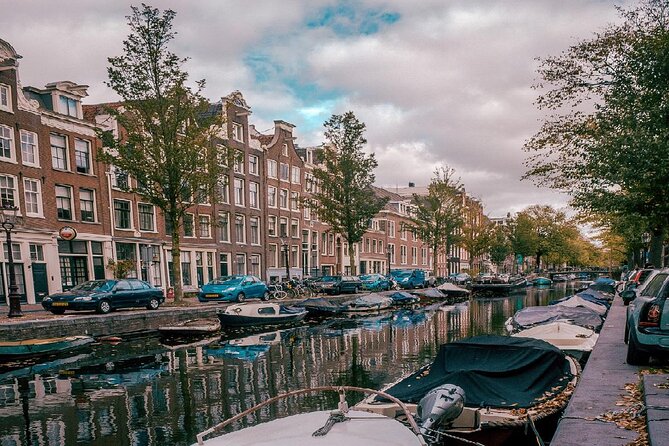
Amsterdam’s 17th-century canal ring supplies the tour’s visual backbone. You cross and follow canals while moving between tasting stops, with time to take photos and listen without being trapped on a bus or seated indoors.
You may also pass the old royal palace, associated with the House of Orange. The route can include the area around the Nine Streets, a compact district of canals, independent shops, cafés, and old buildings.
The Nine Streets section is less about one signature tasting and more about connecting food to the city’s past. Your guide may explain how Amsterdam grew from a modest settlement into a major trading center during the Dutch Golden Age, and how that exchange shaped what people ate.
Food from Indonesia and Suriname may appear on some routes. These flavors are important to modern Dutch food culture, but they are not guaranteed at every departure. Guides choose stops according to their own local favorites, opening hours, and the needs of the group.
That variation is both a strength and a limitation. You get a route that can feel flexible and personal, but you cannot treat every listed food as guaranteed. If a particular item matters to you, ask about it before the walk begins.
A final brown-café pause
Café Hegeraad is the final named tasting stop. This old brown pub is known for apple pie and local beer, offering a fitting end to a walk built around traditional cafés and simple food.
The stop is brief, around 10 minutes, so think of it as a last taste and toast rather than a long pub visit. By then, the combination of cheese, sweets, seafood, chocolate, pancakes, drinks, and possible savory snacks should leave you well fed.
The public route usually finishes near the Anne Frank House at Westermarkt, about a 10 to 15-minute walk from the starting point or Dam Square. The tour does not include admission to the Anne Frank House. It may pass near the building, but the precise route varies.
From Westermarkt, you can walk back, take a tram, or arrange a taxi. Your guide can help with directions.
How much food do you really get?
The experience includes 10 premium tastings at five or more local spots, plus drinks such as local liquor, jenever, wine, coffee, tea, soda, and bottled water. In practical terms, I would treat it as a light lunch or early dinner, not a formal restaurant meal.
The total amount can be substantial. One person described the food as enough to feel full, while another found the balance tilted toward drinks and sweet items, with only a couple of clear local cuisine stops. Both reactions make sense because the route changes.
Possible tastings include:
- Young and aged Gouda
- Stroopwafels made fresh
- Herring with onions
- Dutch pralines
- Poffertjes with butter
- Apple pie and local beer
- Bitterballen
- Dutch fries
- Indonesian or Surinamese snacks
- Jenever, wine, or another local drink
You should eat lightly beforehand, but do not arrive expecting ten full plates. The pleasure is in the range, not in restaurant-sized servings.
Guides make the biggest difference
A food walk depends heavily on the person leading it. Dennis is repeatedly praised for keeping the pace moving while still allowing time for food, conversation, and city views. Maria is noted for her local knowledge and accommodating manner, while Kees receives praise for thoughtful explanations and a good selection of foods.
Joeri, Daniel, Todd, Katya, and Michael are also named as guides who made the experience friendly and informative. Todd’s private tours are described as especially flexible, with stops adjusted around the group’s interests.
The strongest part of the experience is often the guide’s ability to connect a snack to a place, custom, or historical detail. Ask questions. Ask where to eat afterward. Ask which Dutch foods are worth seeking out on your own. The company provides an insider food guide at the end, which adds value if you plan to eat your way through Amsterdam for several more days.
Price, group size, and practical comfort
At $102.06 per person, the price is not cheap for three hours. It becomes more reasonable when you count the 10 tastings, drinks, guide, and access to places you might not find on your own.
The value is strongest if you want orientation as well as food. You are paying for a walking route through several central districts, local introductions, and the convenience of sampling many items without ordering full portions at separate restaurants.
The group is designed to be small. The experience describes a maximum of 10 foodies in one place and a maximum of 12 participants elsewhere, so check the final booking details if group size is important to you. Smaller groups allow more questions and make cramped cafés easier to manage.
You will walk about 1.5 miles, or 2.5 kilometers, and spend time standing. Some food shops and cafés have steps or narrow stairs. Strollers are allowed, though you may need to leave one outside briefly. Anyone with mobility concerns should consider the private option, which can use a shorter route.
A private tour also includes hotel or ship pickup, a custom route, flexible timing, and fuller dietary planning. It is the better choice for a fully gluten-free experience, though gluten-free food may be possible at many stops on public tours starting by 4 p.m.
Who should book this Amsterdam food tour?
I would choose this tour if you want an easy first look at Dutch food and central Amsterdam at the same time. It suits people who enjoy tasting small portions, walking through old neighborhoods, and hearing stories from a local guide.
It is especially useful early in your stay. You can collect ideas for later meals, learn which foods you like, and ask for restaurant suggestions before spending the rest of your trip guessing.
I would be more cautious if you dislike fish, sweets, alcohol, or walking. The route includes several sweet tastings and drinks, and herring is part of the appeal for many people. Vegetarian and pescetarian options are available, but strict gluten-free diners should book privately.
The free-cancellation window is 24 hours before the start time. After that, refunds are not available, so choose your departure carefully.
Should you book it?
Yes, if you want a sociable introduction to Amsterdam that combines food with canals, old cafés, Jordaan streets, and the Nine Streets. The standout advantages are the range of tastings, the local guide, and the chance to try foods such as fresh stroopwafel and herring without committing to full meals.
Book the public tour for the best value and a friendly small-group setting. Choose the private version if you need hotel pickup, a shorter route, a custom food plan, or careful gluten-free arrangements. Arrive hungry, wear comfortable shoes, and take an early start if Dutch herring is on your must-try list.
FAQ
How long does the Amsterdam food tour last?
The tour lasts approximately three hours.
How far does the group walk?
The route covers about 1.5 miles, or 2.5 kilometers, on foot. You should also be comfortable standing, since not every stop has seating.
Where does the public tour start?
Public tours start inside Gastrovino Amsterdam, De Mannen Van Kaas, at Spuistraat 330. The tour begins in the shop’s wine basement.
Where does the tour end?
Tours usually end near the Anne Frank House at Westermarkt. The end point is generally a 10 to 15-minute walk from the starting point or Dam Square.
Is herring included on every departure?
Herring is available only on tours starting by 4 p.m. or earlier because of opening times. Ask about the timing when you book if this tasting matters to you.
Are vegetarian, pescetarian, or gluten-free options available?
Vegetarian and pescetarian alternatives are available. Gluten-free choices are possible at many stops for tours beginning by 4 p.m., but a private tour is recommended for a fully gluten-free route. Tell the company about allergies when booking and remind your guide at the start.
Is hotel pickup included?
Hotel or ship pickup is not included on the public tour. Pickup is available when you select the private tour option.
Just added around Amsterdam
- Private sightseeing tour to Bruges and chocolate from Amsterdam★ 5.0 · 11 reviews
- Amsterdam: Rijksmuseum (Private Tour & Priority Access)★ 5.0 · 27 reviews
- Amsterdam: Private Romantic Evening Canal Cruise + Bubbles/Snacks★ 5.0 · 46 reviews
- Amsterdam Private Shopping Experience★ 5.0 · 7 reviews
- Rijksmuseum Amsterdam Private Guided Tour★ 5.0 · 57 reviews
- Amsterdam Rijksmuseum PRIVATE TOUR with a Local Private Guide★ 5.0 · 159 reviews
- Private Photo Session in Amsterdam★ 5.0 · 15 reviews
- Private One way Transfer Amsterdam Airport to Amsterdam★ 3.5 · 42 reviews
Jordaan Walking Tours, compared.
Amsterdam Jordaan Food & Drinks Tour with Eating Europe
Read our review →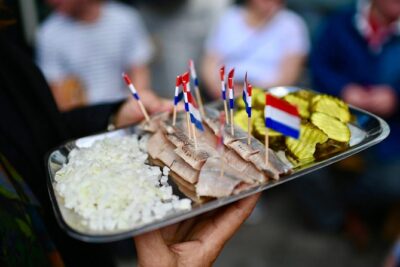
Amsterdam Food Tour of 10+ Local Classic Tastings in Jordaan Area
Read our review →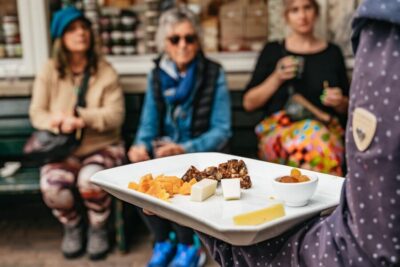
Authentic tour of Amsterdam: Jordaan, Ana Frank and Vondelpark
Read our review →
Jordaan, Anne Frank and Leidseplein tour in English
Read our review →
Half-Day Amsterdam Jordaan Private Walking Tour
Read our review →
Browse the lists this tour appears in