
Reviewed · JEWISH HERITAGE TOURS
Amsterdam: National Holocaust Museum Entry Ticket
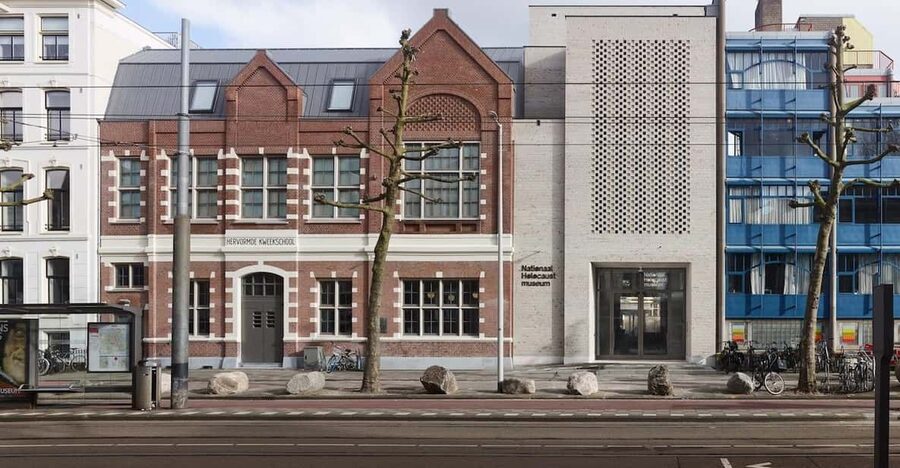
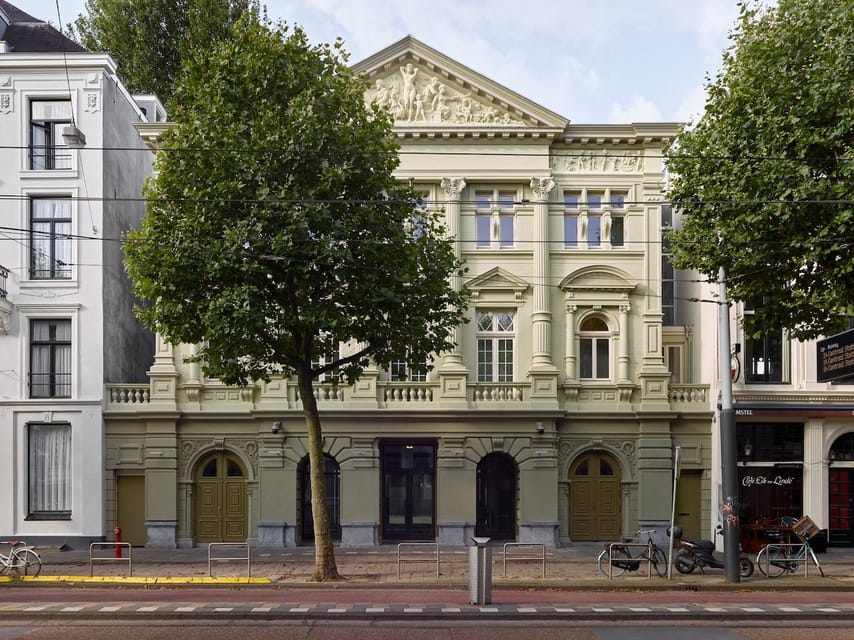
The most powerful part of this visit is the building itself. The former Hervormde Kweekschool was beside a daycare used by the Nazis as a holding point for Jewish children. From here, Henriëtte Pimentel helped hundreds escape, including through the school. I like the personal scale of the museum and its clear account of how persecution grew step by step. I also like that your ticket includes the Hollandsche Schouwburg, adding another important Amsterdam site to the same visit.
The main drawback is time. This is not a quick museum stop, and some displays require close reading or waiting for a viewing position. The building can also be difficult to follow at busy times, while reflective glass makes a few artifacts harder to see. Plan carefully, and do not squeeze this into a rushed hour.
Key points to know before you go
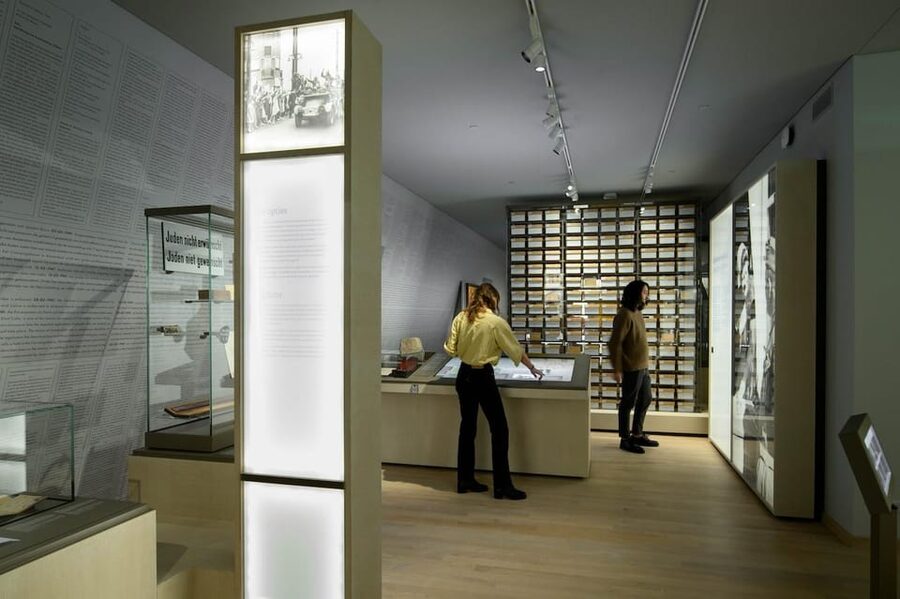
- The former Hervormde Kweekschool matters: This was part of the route through which Jewish children were gathered, deported, and sometimes saved.
- Two memorial sites come with one ticket: Entry includes both the National Holocaust Museum and the Hollandsche Schouwburg.
- Expect a serious, personal presentation: Portraits, objects, testimonies, and audio material give the victims recognizable faces.
- Set aside several hours: The amount of reading and listening can be substantial, especially if you use the audio guide.
- Interactive holograms add a modern touch: You can ask questions and hear responses from recorded historical figures.
- The ticket remains valid for seven days after activation: This gives you room to split the museum visits across your Amsterdam schedule.
Why this museum belongs on an Amsterdam itinerary
Amsterdam offers many famous museums, but this visit asks something different of you. It is not built around artistic beauty or a grand collection. It explains how ordinary life changed for Jews in the Netherlands, how Nazi persecution became organized, and how the Holocaust has been remembered since the war.
That focus makes the museum especially useful if you know the broad outline of the Holocaust but want to understand the Dutch experience. Before World War Two, Jewish and non-Jewish people lived alongside one another with the same legal rights. The museum then shows how those rights were stripped away and how the occupation brought registration, exclusion, arrest, deportation, and murder.
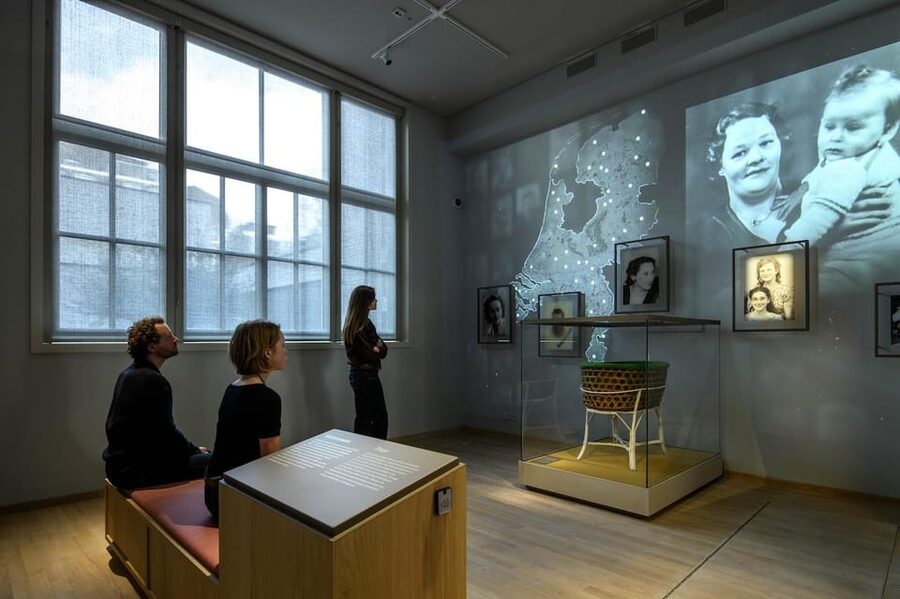
About three-quarters of the Jewish population in the Netherlands was killed. That figure is difficult to grasp on its own. The museum gives it human scale through faces, names, possessions, and personal accounts. I find this approach more affecting than a display built only around numbers and military dates.
The presentation is direct but restrained. You will see photographs and written explanations of Nazi atrocities, yet the museum also gives space to daily life before the war, liberation, and the long process of fitting the Holocaust into Dutch national memory. That wider frame matters. It shows not only what happened, but also how a society recalls, explains, or struggles with what happened.
More Attraction Tickets in Amsterdam
- Amsterdam: Van Gogh Museum Ticket
★ 4.7 · 52,054 reviews - Amsterdam: Heineken Experience Ticket
★ 4.6 · 30,055 reviews - Amsterdam: Rijksmuseum Entry Ticket
★ 4.7 · 25,535 reviews
Entering the former Hervormde Kweekschool
The museum’s setting is not a neutral container. The former Hervormde Kweekschool is part of the story, and knowing that before you enter changes how you read the rooms.
During the occupation, the Nazis used the adjacent daycare as a gathering and deportation point for Jewish children. Henriëtte Pimentel, the daycare director, helped hundreds of children escape. Some were moved through the Kweekschool, making this school a place connected to both danger and rescue.
You should take a moment to understand this arrangement before moving through the exhibits. The physical link between daycare, school, and deportation process helps explain how the machinery of persecution operated in everyday surroundings. This was not an isolated camp far from city life. It happened in Amsterdam, inside and around familiar civic buildings.
The museum does not turn this story into a simple tale of heroes and villains. Its wider displays show the systems that made persecution possible, the people caught in them, and the choices made by those who resisted, cooperated, or tried to survive. That careful approach gives the site weight without turning it into a theatrical attraction.
From ordinary life to Nazi persecution
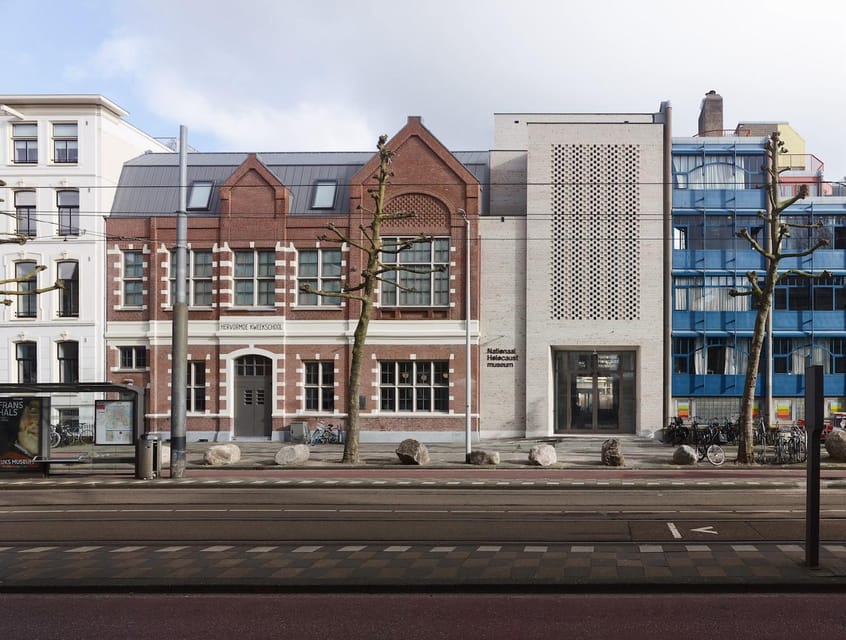
Begin with the sections on Jewish life before the war. These displays help you see people as neighbors, parents, children, workers, and members of Dutch society, rather than as a group defined only by what later happened to them.
This part is easy to hurry past, but I would not. It gives context to everything that follows. You see that Jewish life in the Netherlands was not a footnote waiting for tragedy. It was part of the country’s daily social fabric.
The museum then traces the occupation and the gradual installation of Nazi systems. The strength of this section is its attention to the incremental process. Persecution did not arrive all at once as a single event. Rules, labels, restrictions, registration, and forced movement narrowed people’s choices over time.
The clear sequence helps you recognize how normal routines can be turned into tools of control. This is one of the museum’s most important lessons, and it is handled without excessive drama. The photographs and text explain what happened while leaving you room to think.
You will also learn how the Nazis used Amsterdam sites in the deportation process. The nearby daycare and Hollandsche Schouwburg were not just locations on a map. They were places where families were separated, children were placed in danger, and deportations were organized.
Personal accounts, artifacts, and interactive displays
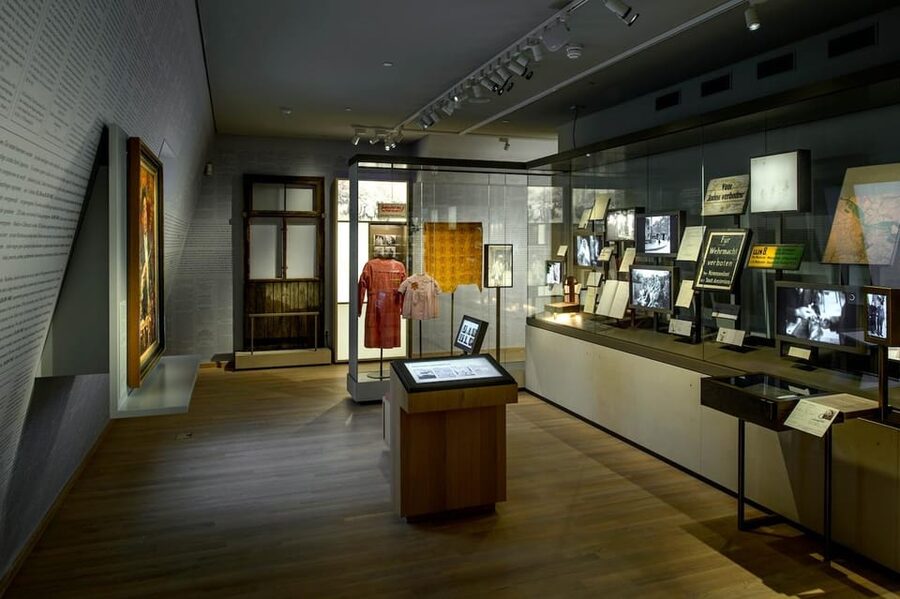
The museum gives victims recognizable faces. Portraits and personal stories make the history more immediate, while objects such as suitcases connect the large events to the belongings people could carry with them.
I found the personal accounts particularly valuable because they prevent the visit from becoming a lesson made only of statistics. They show different lives and experiences, rather than suggesting that every Jewish person in the Netherlands experienced the occupation in exactly the same way.
An audio guide adds another layer. It is informative and helps you move through the material at your own pace. Labels are generally clear and well arranged, and the displays are organized so you can build an understanding as you go.
There is one practical warning: an audio account has sometimes switched into Dutch instead of staying in English. If you rely heavily on the guide, check the language as you move between sections.
The interactive holograms are one of the museum’s more unusual features. They allow you to ask questions and receive answers from recorded figures. This can make the subject feel more immediate, especially for visitors who respond well to personal testimony and technology.
At the same time, the museum contains a lot of information. You may find yourself wanting to return to sections you passed too quickly. That is not a flaw in the subject matter, but it does affect how you plan your day. Reading every label, listening to every audio section, and using the interactive displays can take much longer than expected.
More Museum Tickets in Amsterdam
- Moco Museum Amsterdam Entrance Tickets with Banksy & More
★ 4.4 · 10,088 reviews - Amsterdam: The Upside Down Museum Entrance Ticket
★ 4.4 · 9,506 reviews - Amsterdam: Red Light Secrets Museum Entry Ticket
★ 4.2 · 5,722 reviews - Amsterdam’s Weirdest Museum: Believe It or Not!
★ 4.5 · 4,086 reviews
Why the Hollandsche Schouwburg adds real value
Your ticket also includes the Hollandsche Schouwburg National Holocaust Memorial. This gives you a second location tied directly to the persecution of Amsterdam’s Jewish population.
The two sites work well together. The National Holocaust Museum gives you a broader explanation of Jewish life, Nazi persecution, liberation, and Dutch memory culture. The Hollandsche Schouwburg brings the story back to a specific Amsterdam place connected with deportation.
I would not treat the second entry as a minor extra. It helps you connect the museum’s historical explanation with the city around you. You are not simply reading about events in an abstract setting. You are visiting sites that formed part of the system being described.
The ticket is valid for seven days from first activation, so you do not need to force both locations into one crowded session. That flexibility is useful because the museum itself can take several hours. You can visit one site on a day when you have the patience for extended reading, then visit the other when your schedule is lighter.
How much time should you allow?
The listed duration is seven days, but that refers to the ticket’s validity after activation, not to a seven-day museum visit. For the museum itself, I would allow at least half a day if you want to read carefully and use the audio material.
Some people will move faster. Others will stop often, especially at personal accounts and objects. If you want to visit both included sites without rushing, give yourself plenty of room between them.
Closing time matters. The museum closes firmly, and arriving late can leave you with unfinished sections. One practical approach is to visit earlier in the day rather than assuming a late afternoon slot will be enough.
Crowding can affect the pace. Some exhibits can be viewed by only a small number of people at once, so you might need to wait or move on and return later. The route is not always perfectly obvious, either. Keep an eye on the signage and allow extra time if you want to see every display.
The museum café is a useful pause point. A break can help you process the material instead of trying to absorb everything in one continuous push.
Price, access, and practical details
At about $24 per person, this is a fair price if you use the ticket for both sites and spend several hours with the material. You are paying not just for entry to one room, but for access to two historically important locations and a carefully presented account of Dutch Jewish history.
The value is strongest for visitors who read, listen, and take their time. If you plan only a fast walk through the museum, the price may feel less attractive. If you want a serious visit with personal accounts, artifacts, audio material, and the second memorial site, it compares well with other major Amsterdam cultural experiences.
The museum is wheelchair accessible. Photography is allowed, but use care. This is a memorial setting, not a place for casual photo sessions, and some objects deserve your full attention rather than a quick snapshot.
Free cancellation is available up to 24 hours before the visit, and you can reserve now and pay later. Those terms are useful if your Amsterdam plans are still shifting. They do not change the nature of the visit, however: this is an emotionally heavy museum, so choose a time when you have enough mental space for it.
Who will get the most from this visit?
I recommend it to adults and older children who can handle serious historical material and want more than a general overview of World War Two. It suits anyone interested in Dutch history, Jewish life in Europe, memorial culture, or the way persecution develops through official rules and daily decisions.
It is also a strong choice if you have already visited another Holocaust museum and want a specifically Dutch perspective. The former Hervormde Kweekschool and Hollandsche Schouwburg give the subject a clear local setting.
Families should judge the age and temperament of each child. The museum is educational, but the subject includes murder, deportation, separation, and loss. Interactive holograms may help some younger visitors engage with the material, while the emotional weight may be too much for others.
You may want a lighter activity afterward. This is a quiet, sobering visit, and it can leave you needing time to think. Pair it with a calm walk or a simple meal rather than another packed museum schedule.
Should you book the National Holocaust Museum ticket?
Book it if you want an honest, personal account of the persecution of Jews in the Netherlands and are willing to spend several hours with difficult material. The combination of the former Hervormde Kweekschool, the Hollandsche Schouwburg, personal testimony, artifacts, and audio content gives the visit real depth.
Do not book it as a quick stop between other attractions. Allow time, arrive early enough to avoid a rushed finish, and consider splitting the two included sites across the ticket’s seven-day validity. If you do that, the $24 ticket offers a thoughtful and useful way to understand an essential part of Amsterdam’s past.
FAQ
What does the National Holocaust Museum ticket include?
The ticket includes entry to the National Holocaust Museum and the Hollandsche Schouwburg National Holocaust Memorial.
How long is the ticket valid?
The ticket is valid for seven days from first activation. This is the validity period for using the ticket, not the length of a single museum visit.
How much time should I allow for the museum?
Allow several hours, and ideally about half a day if you want to read the displays, use the audio guide, and spend time with the interactive material.
Is the museum wheelchair accessible?
Yes. The National Holocaust Museum is wheelchair accessible.
Can I take photographs inside?
Yes, photography is allowed. You should still be respectful because the museum is a memorial and presents very painful personal history.
Can I cancel the booking?
Yes. You can cancel up to 24 hours in advance for a full refund. You can also reserve now and pay later.
More Jewish Heritage Tours in Amsterdam
- Anne Frank Walking Tour Amsterdam Including Jewish Cultural Quarter
★ 5.0 · 1,879 reviews - Anne Frank and Jewish Quarter Amsterdam Private Walking Tour
★ 5.0 · 684 reviews - Amsterdam: Anne Frank and Jewish Quarter Tour
★ 4.7 · 434 reviews - Amsterdam: Anne Frank and Jewish Quarter Walking Tour (TOP RATED)
★ 4.5 · 430 reviews
Just added around Amsterdam
- Private sightseeing tour to Bruges and chocolate from Amsterdam★ 5.0 · 11 reviews
- Amsterdam: Rijksmuseum (Private Tour & Priority Access)★ 5.0 · 27 reviews
- Amsterdam: Private Romantic Evening Canal Cruise + Bubbles/Snacks★ 5.0 · 46 reviews
- Amsterdam Private Shopping Experience★ 5.0 · 7 reviews
- Rijksmuseum Amsterdam Private Guided Tour★ 5.0 · 57 reviews
- Amsterdam Rijksmuseum PRIVATE TOUR with a Local Private Guide★ 5.0 · 159 reviews
- Private Photo Session in Amsterdam★ 5.0 · 15 reviews
- Private One way Transfer Amsterdam Airport to Amsterdam★ 3.5 · 42 reviews
Jewish Heritage Tours, compared.
Anne Frank Walking Tour Amsterdam Including Jewish Cultural Quarter
Read our review →
Anne Frank and Jewish Quarter Amsterdam Private Walking Tour
Read our review →
Anne Frank and Jewish Quarter Walking Tour (TOP RATED)
Read our review →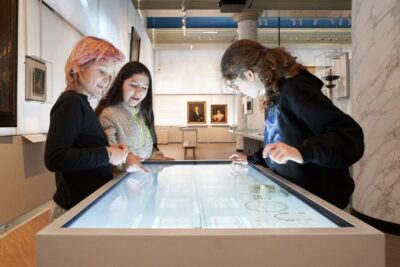
Anne Frank and the Jewish History of Amsterdam Private Tour
Read our review →
Anne Frank and Amsterdam Jewish History Walking Tour
Read our review →
Browse the lists this tour appears in