
Reviewed · JEWISH HERITAGE TOURS
Amsterdam: Jewish Quarter and History Guided Tour
Amsterdam’s Jewish Quarter is not a museum behind glass. It is a real part of the city, where ordinary streets, old façades, and memorials carry the story of a community nearly destroyed during the Nazi occupation. This two-hour walk helps you read those streets with care, moving from the Amstel River toward the Anne Frank House.
I like the small-group format, which gives you room to ask difficult questions and hear personal explanations. I also like the way the tour links daily Jewish life before and during the war with specific places, rather than treating the Holocaust as a set of distant dates. The main drawback is pace: two hours covers a lot, and you may want more time at several memorials.
Key points
- A serious walk through occupied Amsterdam: Learn how the 1940 to 1945 occupation changed life for Jewish residents and the wider city.
- Memorials with meaning: The Dokwerker and Auschwitz Monument are explained in their historical setting, not simply pointed out as photo stops.
- Major Jewish landmarks: Pass the Portuguese Synagogue, Jewish Historical Museum, and former headquarters of the Jewish Council.
- Guides who handle hard subjects well: James, Aaron, Jyry, Masha, Marsha, Joshua, and others have been praised for clear, sensitive explanations.
- Private or small-group choices: A smaller party can make it easier to ask personal or detailed questions.
- A useful pairing with other sights: The walk finishes near Anne Frank House, but it does not include entry to the house.
Starting beside the Amstel River
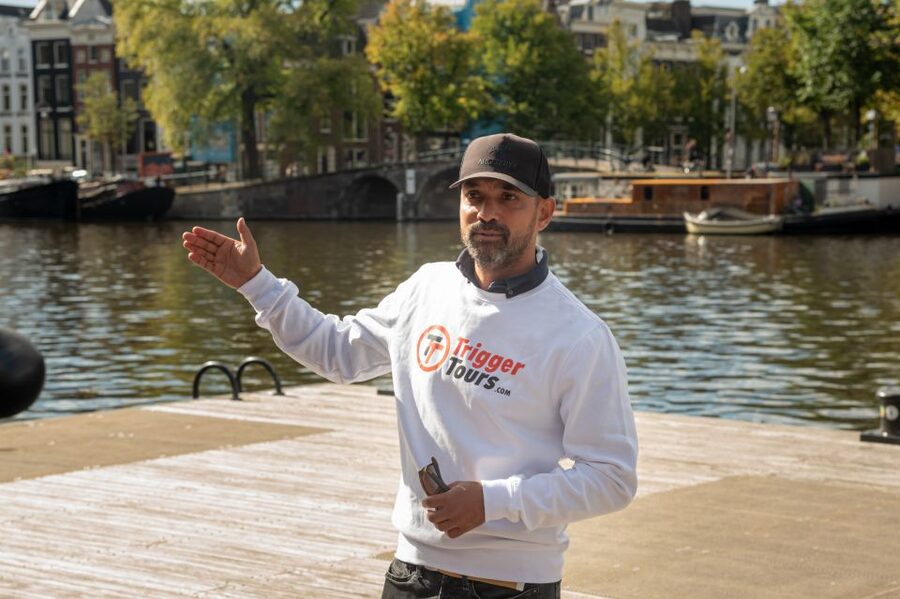
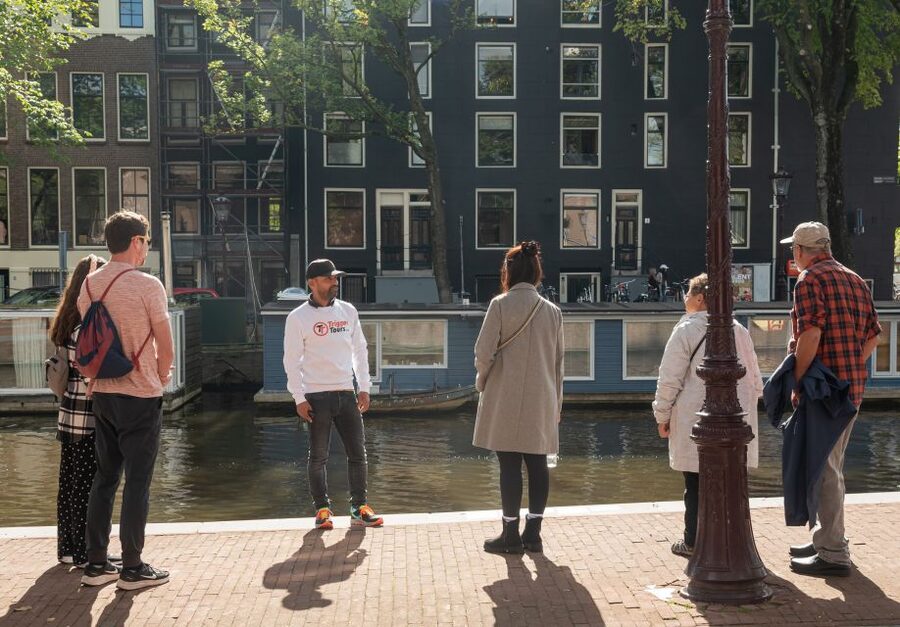
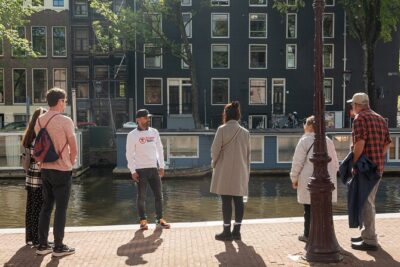
The tour begins near the Amstel River, though the precise meeting place can vary with the option you book. That detail matters in Amsterdam, where a short address can still mean a busy square, a bridge, or a canal-side corner. Check your booking details closely before setting off.
From the start, your guide places Amsterdam’s Jewish community in a wider setting. The story does not begin in 1940. You hear about Jewish life in the city before the war, the institutions that served the community, and the role this district played in Amsterdam’s daily life.
That opening is important because it gives the walk more depth than a simple sequence of wartime tragedies. You are not only seeing where persecution happened. You are learning about the people, buildings, religious life, and civic structures that existed before the occupation.
The tone is serious, but the strongest guides keep it human and clear. James has been praised for connecting buildings to the people who lived and worked in them. Aaron is often described as friendly and easy to understand, while Jyry has been singled out for adding broader historical context. Guide assignments can change, so do not book expecting one specific person unless the operator confirms it.
More History Tours in Amsterdam
- Amsterdam Food and Cultural Tour with Tastings
★ 5.0 · 2,442 reviews - Amsterdam: Haunted History and Ghost Walking Tour
★ 4.5 · 488 reviews - Amsterdam High-End Dutch Food & History Tour – Up to 8 guests
★ 5.0 · 482 reviews
Understanding Amsterdam under Nazi rule
A central part of the walk covers the Nazi occupation of the Netherlands from 1940 to 1945. Your guide explains how German rule affected Amsterdam and why Jewish residents faced increasing restrictions, registration, isolation, and deportation.
The useful part here is the attention to ordinary life under occupation. You hear about how people lived with fear and uncertainty, how Jewish residents experienced the city, and how non-Jewish Dutch people responded. That broader view matters. It avoids presenting history as a simple story with only villains and heroes.
Several people who have taken the tour valued the guide’s impartial and factual approach. That is especially helpful when discussing cooperation, resistance, indifference, and the varied behavior of Dutch citizens. A good guide can explain those uncomfortable shades without turning the walk into a political speech.
Expect the subject to be emotionally heavy. This is not a light sightseeing stroll with a few historical facts added. The walk deals with persecution, murder, loss, and the destruction of a community. If you have a personal connection to Holocaust history, the ability to pause and ask questions may be especially valuable.
The Portuguese Synagogue and the Jewish institutions
The Portuguese Synagogue is one of the important sights along the route. From the outside, it helps show the long presence and institutional life of Amsterdam’s Jewish community. The tour places the building within the story of Jewish Amsterdam, rather than treating it as an isolated architectural stop.
You also pass the Jewish Historical Museum. Even if you do not enter, its presence reinforces the scale of the subject. This is a district with several layers of Jewish memory, worship, education, administration, and remembrance.
Another significant stop is the former headquarters of the Jewish Council. This is where the tour shifts from general history to the difficult machinery of wartime administration. Your guide explains how the council fitted into the occupation and how decisions and orders affected Jewish residents.
These stops are most useful when you listen for connections. A building can look like just another Amsterdam façade until a guide explains who used it, what happened there, and how its purpose changed during the war. That is the main reason to take this walk instead of wandering through the area alone.
The tour does not replace a museum visit. If you want extensive displays, documents, or long periods inside historic buildings, allow separate time for the Jewish Historical Museum and other Amsterdam museums. The walking tour gives you structure and context in the streets.
The Dokwerker and the meaning of protest
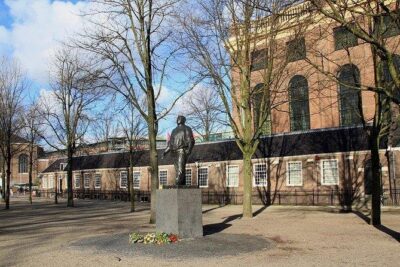
The Dokwerker is one of the best-known monuments on the route. Your guide explains its connection with the February Strike, a major act of resistance against the persecution of Jewish people in Amsterdam.
This stop gives the tour a different emotional note. Much of the walk concerns what was done to Jewish residents, but the monument also raises questions about protest, courage, and public response. The sculpture is more meaningful once you understand the event it represents and the risks involved.
The Dokwerker is in an urban setting, so you should not expect a quiet, private memorial visit. You may have limited time to study the monument before the group moves on. One practical tip is to arrive ready to listen first, then take photographs during a natural pause rather than falling behind.
The pace has been a minor concern for some people. The route covers many sites in two hours, and stopping to take a close look at a memorial can mean missing part of the next explanation. A private tour gives you the best chance of asking the guide to pause or return to a point.
More Jewish Heritage Tours in Amsterdam:
- Anne Frank Walking Tour Amsterdam Including Jewish Cultural Quarter
★ 5.0 · 1,879 reviews - Anne Frank and Jewish Quarter Amsterdam Private Walking Tour
★ 5.0 · 684 reviews - Amsterdam: Anne Frank and Jewish Quarter Tour
★ 4.7 · 434 reviews - Amsterdam: Anne Frank and Jewish Quarter Walking Tour (TOP RATED)
★ 4.5 · 430 reviews
The Auschwitz Monument and a harder pause
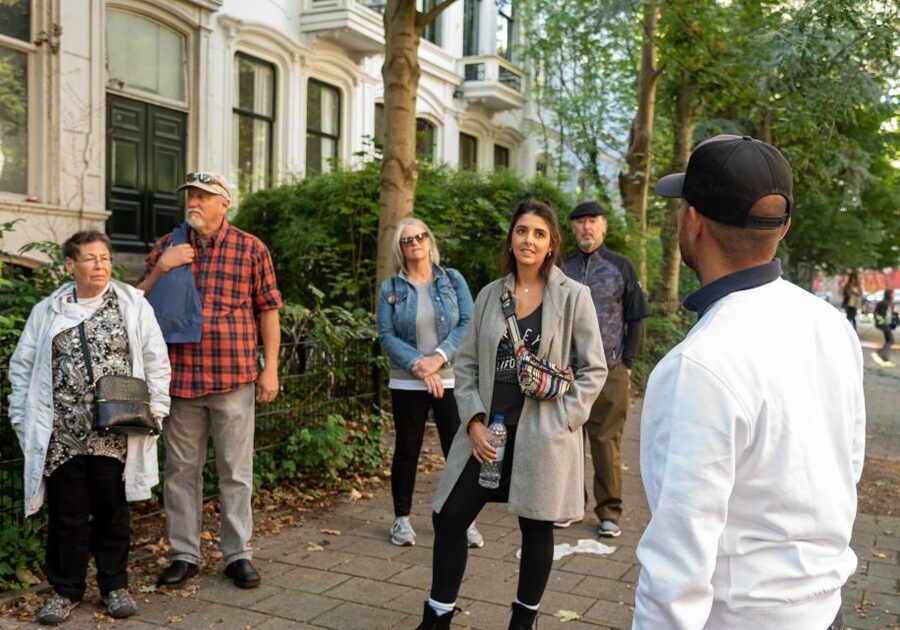
The Auschwitz Monument is among the most affecting stops. Your guide explains what it represents and connects it to the Jewish population of Amsterdam and the wider destruction of European Jewry.
This is not just a place to take a photograph. It is a point where the walk asks you to face the final consequences of the policies discussed earlier. The monument helps turn statistics into a physical place of remembrance.
The setting can affect the experience. The tour is conducted outdoors, and the group continues through a working city. You may hear traffic or pass other people while discussing a painful subject. That contrast can feel uncomfortable, but it also reflects the way history remains present in ordinary urban life.
The route description places the Auschwitz Monument among the key stops, and one past participant recalled ending there rather than at Anne Frank House. The advertised route finishes in front of Anne Frank House, but the exact endpoint may vary by guide or day. If your onward plans depend on the final stop, confirm the meeting and finishing points before booking.
Walking toward Anne Frank House

The tour finishes near Anne Frank House, linking the wider story of Amsterdam’s Jewish community to one of the best-known wartime diaries in the world. Your guide explains Anne Frank’s diary, how Otto Frank arranged its publication, and how the book became widely known.
This is an exterior stop for the walking tour. Entry to Anne Frank House is not included, and the activity does not promise access inside. If you want to visit the museum and hiding place, you need a separate ticket and separate planning.
Even without entering, finishing here makes sense. Anne Frank’s story is often the first point of contact many people have with the Holocaust, but the tour places it within the larger history of Amsterdam’s Jewish residents. That context helps you understand that Anne’s family was part of a much wider community.
You might want to schedule the Anne Frank House for another time rather than trying to combine both visits tightly. The walking tour can finish with a serious discussion, and you may prefer a break before entering another emotionally demanding site.
Guide quality and the value of a small group
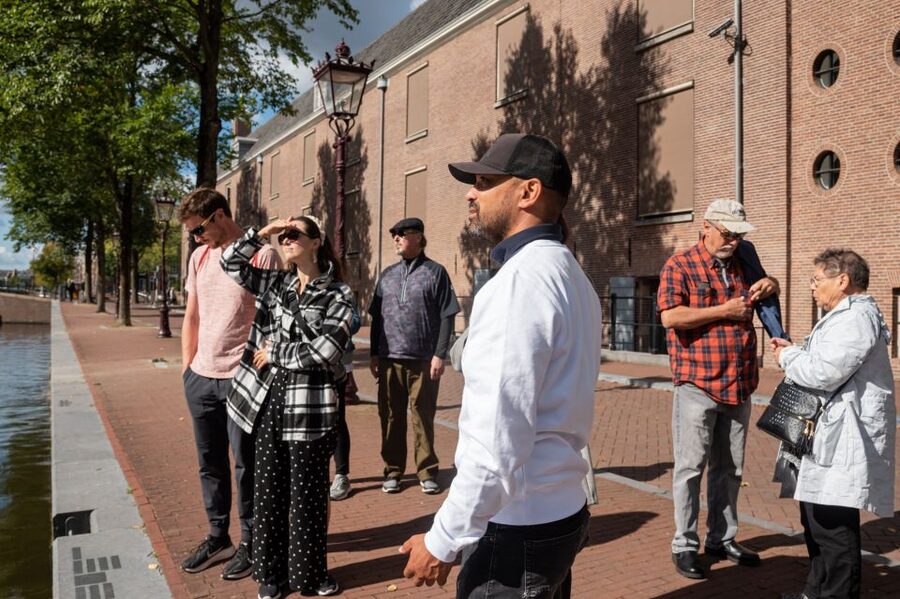
The strongest feature of this experience is the guide. James, Aaron, Jyry, Masha, Marsha, Joshua, Guido, and other guides have received praise for clear explanations, patience, sensitivity, and the ability to answer personal questions.
That does not mean every tour will feel identical. A guide’s style shapes the experience. Some focus more on wartime history, while others connect the subject to architecture, family stories, or the development of Amsterdam’s Jewish community. The shared quality is the effort to explain rather than recite.
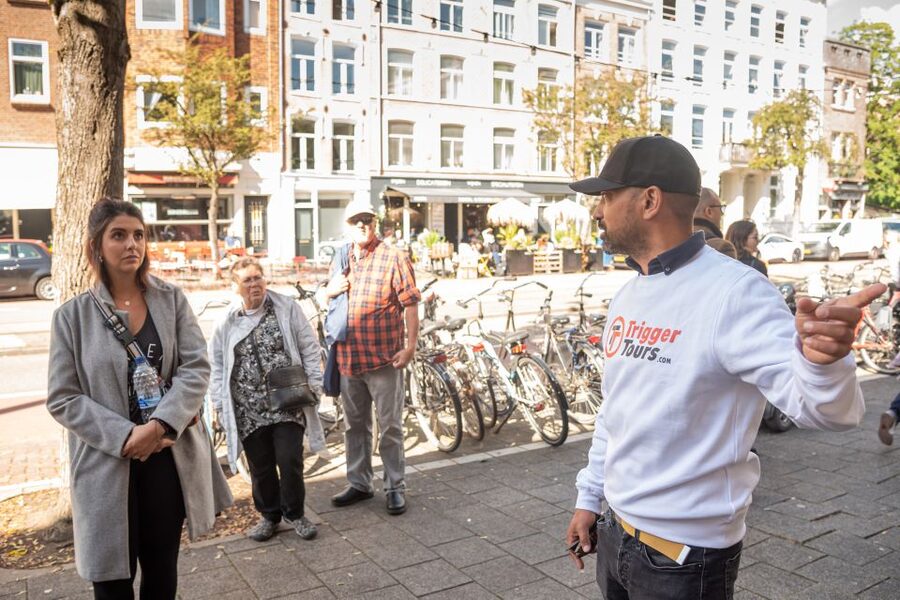
Small groups are worth considering. A smaller party gives you more opportunity to ask questions and makes it easier for the guide to adjust the explanation. One private tour became especially conversational because only two people attended. That can be a major advantage if you have family history, academic interest, or questions that need more than a quick answer.
A shared group usually offers better value at the $23 price. A private tour costs more in many booking systems, though the supplied price is listed as $23 per person and the available option depends on your selection. At that rate, two hours with a live guide is a fair deal if you want historical context rather than a self-guided walk.
The price does not include food, drinks, museum tickets, or entry to Anne Frank House. Think of it as paying for interpretation and direction. The streets are free, but the knowledge that connects them is what makes the route worthwhile.
Who should book this walk
I would recommend this tour to anyone who wants to understand Amsterdam beyond canals, paintings, and pretty façades. It is especially suited to people with a serious interest in Jewish history, World War II, memorial culture, or the daily effects of occupation.
It can also work well as an introduction before visiting the Jewish Historical Museum, National Holocaust Museum, or Anne Frank House. The walk gives you names, locations, and questions to carry into those places.
Families with older teenagers may find it useful, provided they are ready for a frank discussion of persecution and murder. The subject is not softened into a simple lesson, and the two-hour length gives enough structure without requiring a full day.
You may want to skip it if you are looking for light entertainment, fast sightseeing, or lots of indoor time. The walk is outdoors, emotionally demanding, and information-heavy. It may also feel rushed if you want to linger at every memorial.
Wear comfortable shoes and leave room in your schedule. You are walking between several locations, and the tour’s value comes from staying with the guide’s explanations. If you stop for photos, do so quickly or tell the guide you need a moment.
Should you book the Amsterdam Jewish Quarter tour?
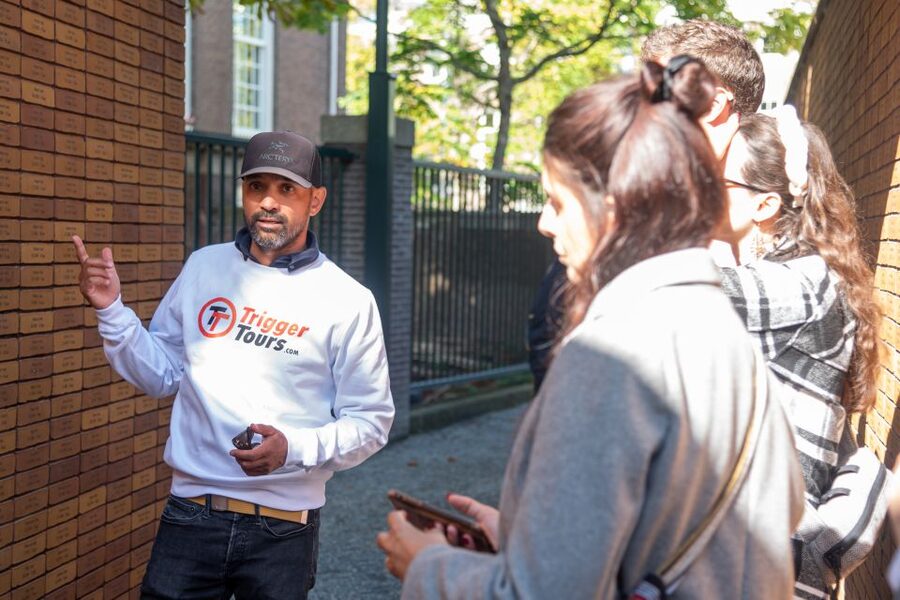
Book it if you want the places of Amsterdam’s Jewish Quarter explained with care. The 4.7 rating from 210 reviews reflects a strong pattern of satisfaction, especially with the guides’ preparation, sensitivity, and ability to answer difficult questions.
The best choice is a small group or private option if you want conversation and a slower pace. The shared tour is the better value if you mainly want a clear two-hour introduction.
Just keep your expectations accurate. You will see Anne Frank House from outside, not enter it. You may finish at the Auschwitz Monument rather than exactly where expected, and the route can feel brisk. Still, for $23, this is a thoughtful way to understand how Jewish life, Nazi occupation, resistance, and remembrance shaped Amsterdam.
FAQ
How long is the Jewish Quarter walking tour?
The tour lasts two hours.
What is the price?
The listed price is $23 per person.
Where does the tour begin?
It begins by the Amstel River, but the exact meeting point may vary depending on the option booked.
Where does the tour finish?
The advertised route finishes in front of Anne Frank House. One past participant reported finishing at the Holocaust memorial, so confirm the endpoint for your selected departure.
Is entry to Anne Frank House included?
No. The tour finishes in front of Anne Frank House and does not include entry.
Which languages are available?
The live tour guide is available in English or Spanish.
Is this a private tour?
You can choose a private tour or a small-group option, depending on availability and the booking choice.
Are food and drinks included?
No. Food and drinks are not included.
Can I cancel for a full refund?
Yes. You can cancel up to 24 hours in advance for a full refund.
Can I reserve now and pay later?
Yes. The activity allows you to reserve your place and pay later, keeping your plans flexible.
Just added around Amsterdam
- Private sightseeing tour to Bruges and chocolate from Amsterdam★ 5.0 · 11 reviews
- Amsterdam: Rijksmuseum (Private Tour & Priority Access)★ 5.0 · 27 reviews
- Amsterdam: Private Romantic Evening Canal Cruise + Bubbles/Snacks★ 5.0 · 46 reviews
- Amsterdam Private Shopping Experience★ 5.0 · 7 reviews
- Rijksmuseum Amsterdam Private Guided Tour★ 5.0 · 57 reviews
- Amsterdam Rijksmuseum PRIVATE TOUR with a Local Private Guide★ 5.0 · 159 reviews
- Private Photo Session in Amsterdam★ 5.0 · 15 reviews
- Private One way Transfer Amsterdam Airport to Amsterdam★ 3.5 · 42 reviews
Jewish Heritage Tours, compared.
Anne Frank Walking Tour Amsterdam Including Jewish Cultural Quarter
Read our review →
Anne Frank and Jewish Quarter Amsterdam Private Walking Tour
Read our review →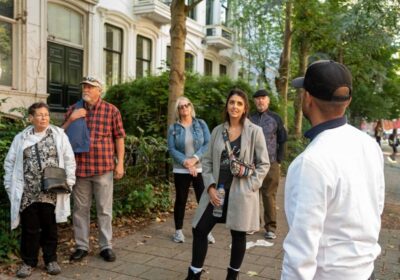
Anne Frank and Jewish Quarter Walking Tour (TOP RATED)
Read our review →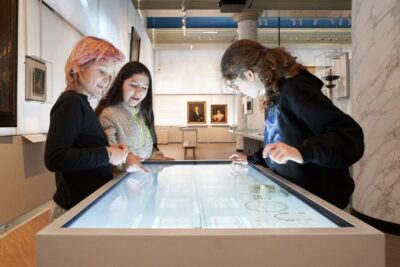

Anne Frank and the Jewish History of Amsterdam Private Tour
Read our review →
Anne Frank and Amsterdam Jewish History Walking Tour
Read our review →Browse the lists this tour appears in