
Reviewed · ATTRACTION TICKETS IN UTRECHT
Utrecht: Rietveld Schröderhuis UNESCO Entry Ticket
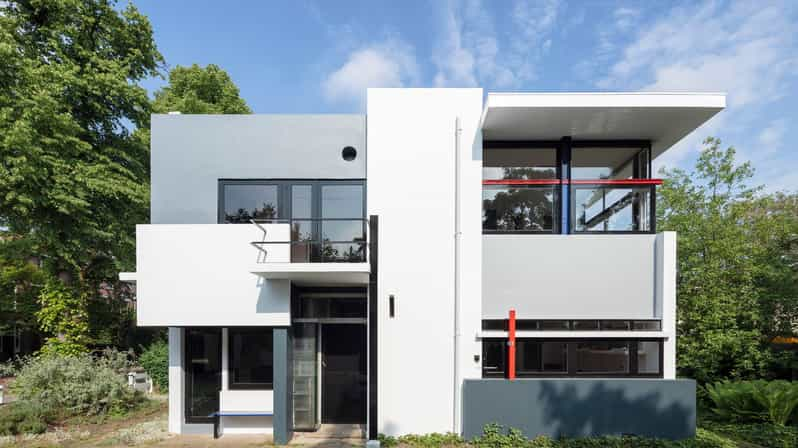
The Rietveld Schröder House is a small building with a huge idea behind it: a home should change with the people who live in it. Designed in 1924 by Gerrit Rietveld for Truus Schröder, this Utrecht house helped define De Stijl, the Dutch modern-art movement known for clean lines, simple forms, and bold blocks of color.
I like two things right away. First, the house is not merely viewed from outside, you are taken through the rooms and shown how its sliding walls and movable furniture work. Second, the audio guide gives the design a human side by explaining how Schröder and Rietveld imagined daily life inside it.
The main drawback is the short visit. You have about 30 to 40 minutes, and the house is not suitable for wheelchair users or people with mobility impairments. At $22 per person, it is good value for architecture fans, but a quick stop rather than a full afternoon attraction.
Key points before you book
- A 1924 home built around flexibility: Upstairs, walls slide and furniture moves so one open room can become several smaller spaces.
- A major De Stijl landmark: The house shows how an art movement became a practical home rather than just a gallery style.
- A UNESCO World Heritage site since 2000: You are visiting one of the Netherlands’ most important modern buildings.
- A self-guided audio visit: Choose Dutch, English, German, French, Italian, Spanish, Japanese, or Chinese.
- A compact 30 to 40-minute stop: It fits neatly into a Utrecht sightseeing day, though the timed visit leaves little room to linger.
- A museum shop with unusual souvenirs: The shop carries products linked to the house and its design.
Why this small Utrecht house matters
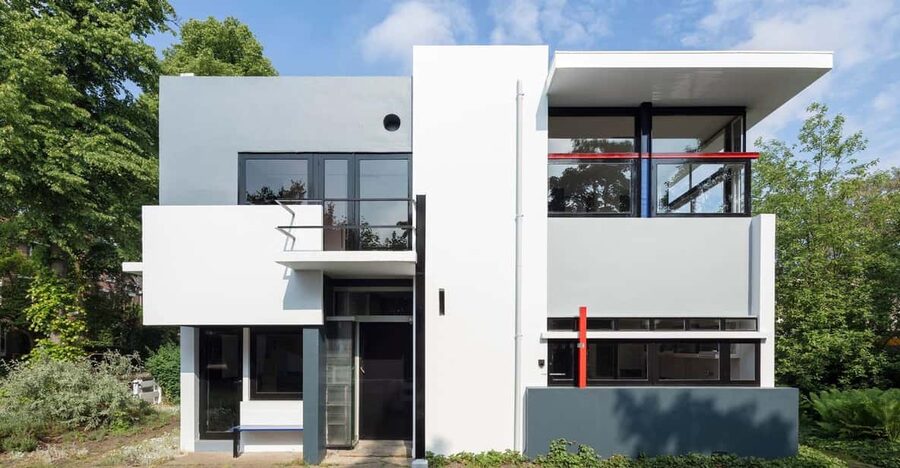
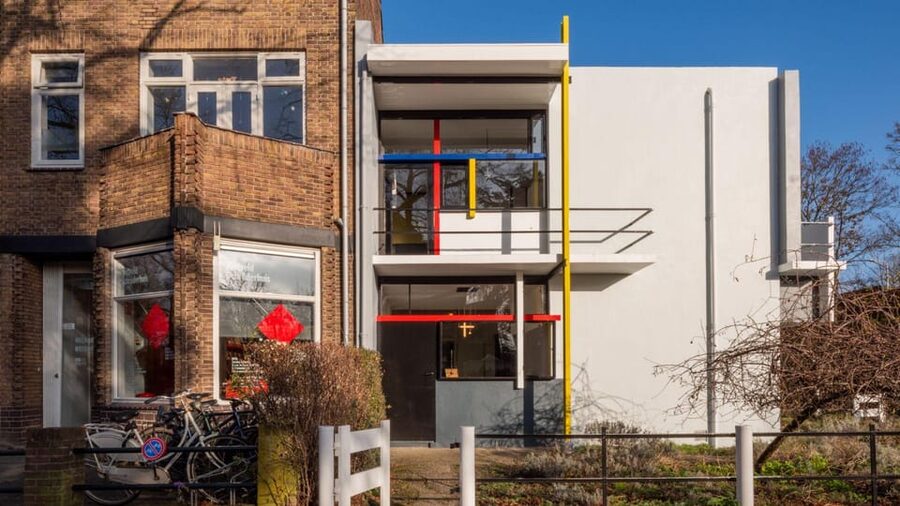
From the street, the Rietveld Schröder House may seem almost too modest for its reputation. It is not a palace or a grand museum. Its importance comes from the way it questions the basic parts of a home: walls, windows, furniture, privacy, and the idea of a fixed room.
Gerrit Rietveld designed the house for Truus Schröder in 1924. It was his first residence design and the beginning of his career as an architect. Schröder was not simply a client choosing finishes from a catalog. Her ideas about how she wanted to live shaped the project, and the house became a shared expression of her needs and Rietveld’s design thinking.
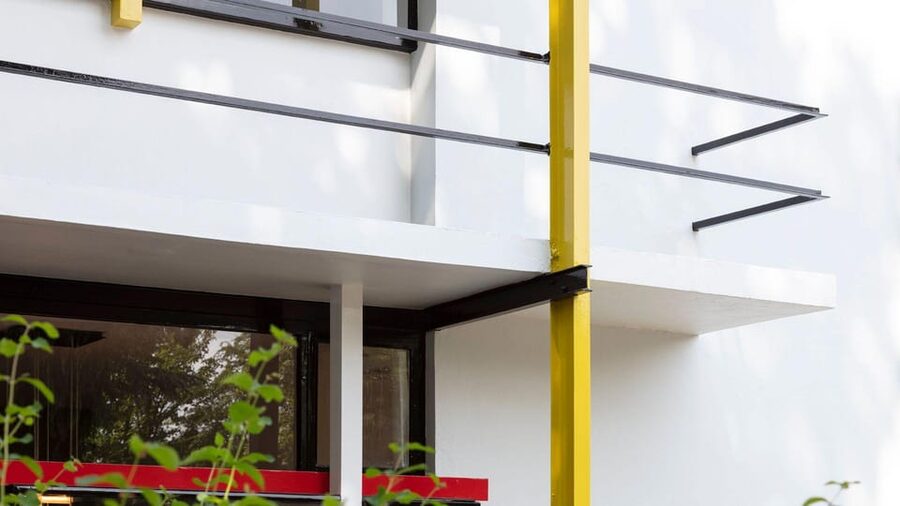
The building is tied closely to De Stijl, the Dutch movement that favored clear geometry, horizontal and vertical lines, and a limited palette. The house turns those principles into something practical. Its planes and color blocks are not decoration added after the fact. They help define doors, windows, walls, and the way the building meets the street.
That is why the visit is worth your time even if modern architecture is not normally your first choice. You are not only looking at an early twentieth-century design. You are seeing an attempt to change ordinary domestic life.
The house has been a UNESCO World Heritage site since 2000. That recognition tells you the building has international importance, but the audio tour helps explain why. The visit is most rewarding when you pay attention to the connection between the design and the people who used it.
More Attraction Tickets in Utrecht
- Utrecht: De Haar Castle & Park Entry Ticket
★ 4.7 · 1,350 reviews - Utrecht: DOMunder Entry Ticket with Guide
★ 4.4 · 706 reviews - Utrecht: Dom Tower Entry Ticket and Guided Tour
★ 4.6 · 513 reviews
Checking in beside the house
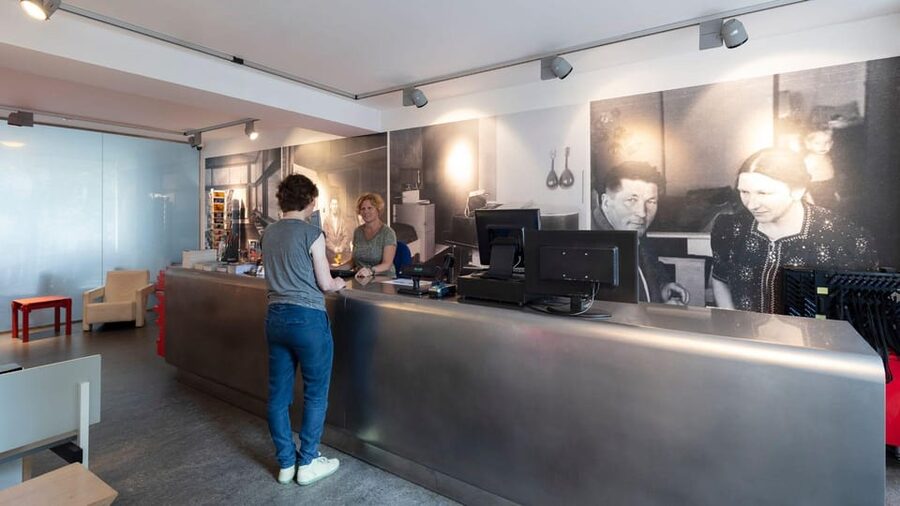
Your visit begins at the ticket office to the left of the Rietveld Schröder House. Check in there before entering. The entrance process is simple, but you should allow enough time to find the correct door and collect the audio equipment rather than arriving at the last second.
You receive a media player with the audio tour. It has a built-in speaker, so a headset is not required. If you prefer more privacy or clearer sound, you can connect your own headphones with a mini-jack connection.
You also have the option of using your own device. Scan the QR code at the ticket desk, bring your headphones, and follow the tour that way. This is useful if you prefer not to handle a separate player or want to use familiar earbuds, though the supplied information specifically notes the need for a mini-jack connection when using your own headset with the media player.
The audio is available in eight languages: Dutch, English, German, French, Italian, Spanish, Japanese, and Chinese. That makes the visit workable for most international visitors, and the self-guided format lets you move through the house without waiting for a live guide.
There is no guide name to look for because this is not a live guided tour. The audio presentation is your companion throughout the building. One verified German booking described the visit as very interesting and very good, with no suggested improvements. That fits the nature of the attraction: the appeal is focused, thoughtful, and closely tied to the house itself.
Starting with Rietveld and Schröder
The first part of the audio tour introduces the two people behind the building. Rietveld is the architect, but Truus Schröder is equally important to understanding the house. The name Rietveld Schröder House keeps both figures in view, and that matters because the project grew from a client’s wish for a different kind of home.
The audio commentary gives context about what it was like to live in the house and explains Rietveld’s main ideas. That personal angle keeps the tour from becoming a list of architectural terms. You hear about the concepts in relation to everyday use, which makes the rooms easier to read.
As you move through the house, pay attention to how little seems accidental. Lines, openings, colors, and furniture relate to one another. The design asks you to think about space as something that can be adjusted rather than something permanently divided into a living room, bedroom, and hallway.
This is also where you begin to see why the house is a landmark of De Stijl. The movement’s visual rules are present, but the building is not simply a three-dimensional painting. Its clean shapes support a particular way of living.
Seeing the rooms change upstairs
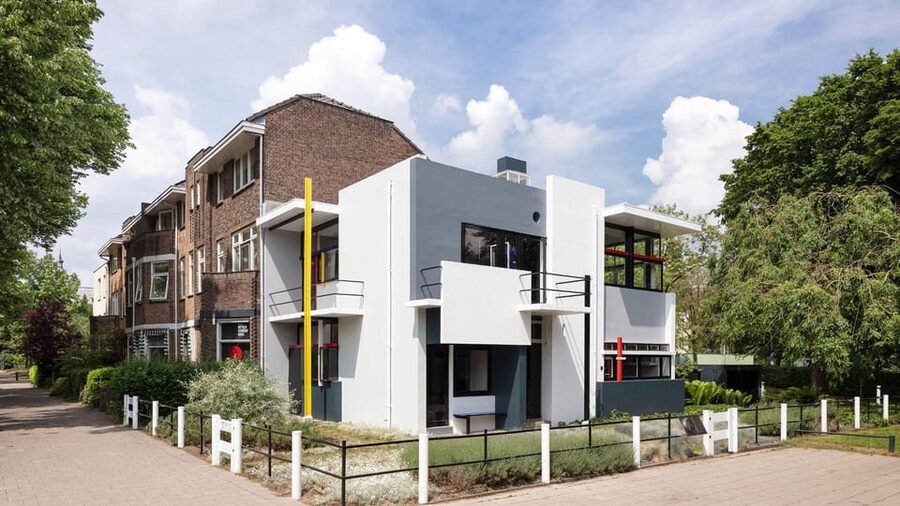
The highlight comes upstairs, where the audio tour includes a demonstration of the sliding walls and movable furniture. This is the moment when the house’s central idea becomes clear.
Instead of treating walls as permanent barriers, Rietveld used them as flexible tools. The upstairs area could be changed to suit different needs, creating larger open space or more private sections. Furniture also played a part in this transformation.
That arrangement was progressive in 1924, and it still feels unusual today. Many homes are built around fixed rooms and fixed purposes. Here, the occupants could adapt the interior as the day changed. The house could support openness, privacy, work, rest, and social time without relying on a conventional floor plan.
The demonstration is especially useful because photographs alone cannot show how the system works. You see the design in motion and understand that the house was meant to be used, not just admired.
Do not rush this part. The total visit is short, but the moving elements deserve your attention. Listen to the explanation, watch how the spaces alter, and consider the practical tradeoff. Flexible walls offer freedom, but they also make the home more dependent on deliberate organization. The cleverness is in the system, not in comfort that happens automatically.
A few more Utrecht half-days worth comparing
- Utrecht: City Canal Cruise
★ 4.3 · 2,895 reviews - Utrecht: De Haar Castle, Park Entry Ticket
★ 4.6 · 153 reviews - Utrecht 2-Hour Walking Tour | Discover The City With A Local
★ 5.0 · 138 reviews - Rhenen: Ouwehands Zoo Entry Ticket
★ 4.6 · 126 reviews
Reading the house as daily life, not just art
The audio tour adds anecdotes and personal stories about life in the house. These details help translate the building from an architectural object into a place where someone actually lived.
That distinction is important. If you arrive expecting a large museum with many rooms and displays, you may find the visit brief. If you want to understand how a particular family used a radical home, the scale works in its favor.
The house lets you examine familiar features in a new way. A wall is not only a wall. A window is not only a source of light. A piece of furniture can help divide space, and a color can make a structural element easier to read.
I recommend listening closely even if you already know something about De Stijl. The general style is easy to recognize, but the audio explains how the ideas were applied to domestic routines. That is the difference between seeing a famous building and understanding its purpose.
The visit also gives you a useful contrast with Utrecht’s older architecture. The city is known for centuries-old buildings and canals, while this house presents a much more experimental answer to modern life. It is a small but striking change of pace from the city center’s traditional streets.
What you get for $22
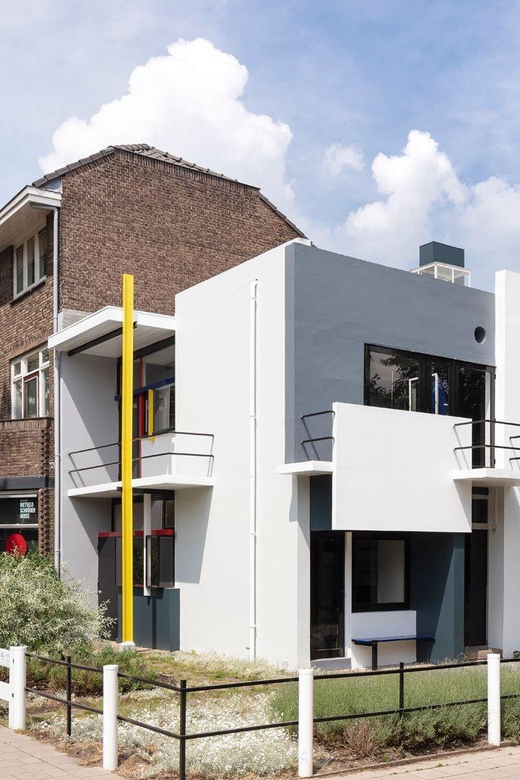
The ticket costs $22 per person and includes entrance and the audio tour. Food, drinks, and transportation are not included, though the visit is short enough to fit into a larger day in Utrecht without demanding a major time commitment.
The value depends on your interests. For an architecture enthusiast, design student, or visitor who wants to see a UNESCO site with a clear story, the price is reasonable. You are paying for access to an important original building and an explanation of its working parts, not for a long list of attractions.
For someone who wants a broad museum visit, the cost may feel higher because the tour lasts only 30 to 40 minutes. You should think of it as a concentrated architectural visit rather than a half-day outing.
The museum shop adds a little extra value at the end. It offers distinctive products and souvenirs connected with the house. I would not book the experience solely for shopping, but it is a useful place to find something more thoughtful than a standard Utrecht postcard.
Availability depends on the starting time you choose. Because the visit is brief, it can work before lunch, between other cultural stops, or later in the day. Reserve and pay later is available, and cancellation is free up to 24 hours in advance, which helps if your Utrecht plans are still shifting.
Practical limits you should know
The house is not suitable for wheelchair users or people with mobility impairments. Babies under one year are also listed as unsuitable for this activity. You should take those limits seriously before booking because the building is a historic residence with a design focused on stairs and compact interior spaces.
The tour is self-guided, so you control your pace within the visit. Still, the short duration means you should not expect unlimited time in each room. If a particular detail catches your eye, you may need to decide quickly between listening to the explanation and studying the space.
The built-in speaker means you can participate without bringing headphones. If you want to use your own device or headset, remember to bring headphones and check that your equipment is compatible with the connection provided.
Language choice is a strong practical feature. English is available along with Dutch, German, French, Italian, Spanish, Japanese, and Chinese. You can select the option that lets you focus on the house rather than translating every sentence in your head.
There is no food or drink included, and no pickup or drop-off service. That is not a major problem for a short city attraction, but you should plan it as an independent stop rather than a packaged excursion.
Who will enjoy the Rietveld Schröder House most
I would recommend this visit to you if you like architecture, modern art, design, or unusual homes. It is also a good choice if you are curious about how social ideas can shape a building’s layout.
The experience suits independent visitors who prefer an audio guide to a large group. You can hear the story in your chosen language and focus on the parts of the house that interest you most.
It is less suitable if you want a long tour, extensive exhibits, or a conventional historic house filled with period furnishings. The attraction is compact and idea-driven. Its impact comes from the design of the space rather than from a large collection of objects.
Families should check the mobility restrictions and the brief duration before booking. Babies under one year are not suitable for the activity, and people with mobility impairments or wheelchair users should choose another Utrecht attraction.
Should you book this UNESCO visit?
Book it if you want to see a major piece of modern architecture in the place where its ideas were put to daily use. The sliding walls and movable furniture give you something to watch and understand, while the audio tour explains the roles of Gerrit Rietveld and Truus Schröder.
Skip it if your priority is a long museum visit or a relaxed attraction with plenty of time to wander. At 30 to 40 minutes, this is a focused stop, and the $22 price makes the most sense when you care about design and architectural history.
For the right visitor, the house delivers a lot in a small package. You leave with a clearer sense of how De Stijl shaped real space, and why this 1924 residence remains important more than a century later.
FAQ
How long does the Rietveld Schröder House visit take?
The visit takes approximately 30 minutes to a maximum of 40 minutes.
What is included in the ticket?
The ticket includes entrance to the Rietveld Schröder House and an audio tour.
Which languages are available for the audio tour?
The audio tour is available in Dutch, English, German, French, Italian, Spanish, Japanese, and Chinese.
Do I need to bring headphones?
No. The supplied media player has a built-in speaker. You can connect your own headset if you prefer, or use your own device by scanning the QR code at the ticket desk and bringing headphones.
Where do I check in?
Check in at the ticket office to the left of the Rietveld Schröder House.
Is the house accessible to wheelchair users?
No. The activity is not suitable for wheelchair users or people with mobility impairments.
Can I cancel my booking?
Yes. You can cancel up to 24 hours in advance for a full refund. Reserve and pay later is also available.
Just added around Utrecht
- Our Utrecht’s Private & Personalized tour★ 5.0 · 3 reviews
- Utrecht – Food Tour: Try out 6 dutch bites★ 4.5 · 6 reviews
- Historical Utrecht: Private Walking Tour with a Local Guide★ 4.6 · 3 reviews
- From Amsterdam: Castle De Haar Guided Tour★ 4.7 · 41 reviews
- Our Utrecht City Tour (Limited group size & optional Lunch)★ 4.9 · 70 reviews
- Utrecht Food Tour with local guide★ 5.0 · 112 reviews
- Rhenen: Ouwehands Zoo Entry Ticket★ 4.6 · 126 reviews
- Utrecht Walking Tour with a local comedian as guide★ 5.0 · 48 reviews
Attraction Tickets in Utrecht, compared.
Browse the lists this tour appears in