
Reviewed · RED LIGHT DISTRICT TOURS
Amsterdam Red Light District and City Center Walking Tour
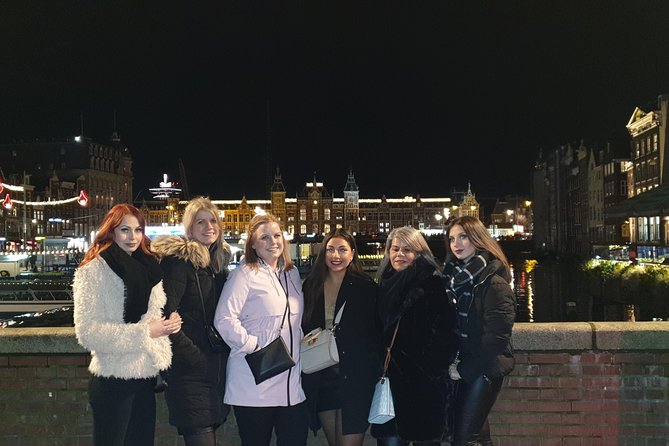
Amsterdam’s Red Light District is more than neon windows and late-night crowds. On this two-hour walking tour, you learn how De Wallen grew from Amsterdam’s old harbor district, how prostitution and coffeeshops fit within Dutch law, and why some of the city’s oldest buildings sit beside modern adult businesses.
I like the compact route and the small group limit of 16. I also like the mix of frank social history and odd city details, from wooden foundation poles to a tiny former VOC storage house. The main drawback is that the experience depends heavily on the guide. Robin, Gio, and Aaron have drawn especially warm praise for their clear explanations and group control, but one piece of feedback raised concern about a guide appearing impaired.
Key points to know
- The tour covers more than sex shops: You also see Dam Square, De Waag, Int Aepjen, the smallest house, and the city’s historic old center.
- You learn how the district works: The guide explains coffeeshop culture, window prostitution, and the legal rights connected with sex work.
- The group stays fairly small: A maximum of 16 people makes it easier to hear the guide and ask questions.
- The route begins and ends at Geldersekade 2: You do not need to arrange a separate ride back after the walk.
- The price is $31.24 per person: For two hours of guided orientation in central Amsterdam, that is a fair midrange price.
- The walk is in English: Several start times are offered, and confirmation arrives when you book.
What this Amsterdam walk really sets out to explain
This is not simply a stroll past red-lit windows. The useful part is the explanation behind the district: why it developed where it did, how Amsterdam’s old center shaped it, and how the Netherlands handles sex work and coffeeshops.
You begin in the historic core near Geldersekade and move through De Wallen, the official name for the Red Light District. The route gives you a quick introduction to narrow lanes, old buildings, canals, and the social rules that can be easy to misunderstand if you explore alone.
I like this approach for a first visit. Amsterdam can feel compact on a map, but its oldest streets twist around water, squares, and former defensive points. A guide helps you connect the sights instead of seeing them as a string of disconnected photo stops.
The subject also calls for some care. This is a working neighborhood, not a theme park. You should listen, ask respectful questions, and follow the guide’s instructions about photography and behavior. The supplied details do not set out specific photography rules, so your guide is the person to follow on the day.
More Walking Tours in Amsterdam
- Anne Frank’s Story – Guided Walking Tour through Amsterdam
★ 5.0 · 11,619 reviews - Amsterdam: Life of Anne Frank and World War II Walking Tour
★ 4.8 · 10,467 reviews - Absolutely Amsterdam – the Essential Introductory Walking Tour
★ 5.0 · 3,629 reviews
Starting at Geldersekade 2
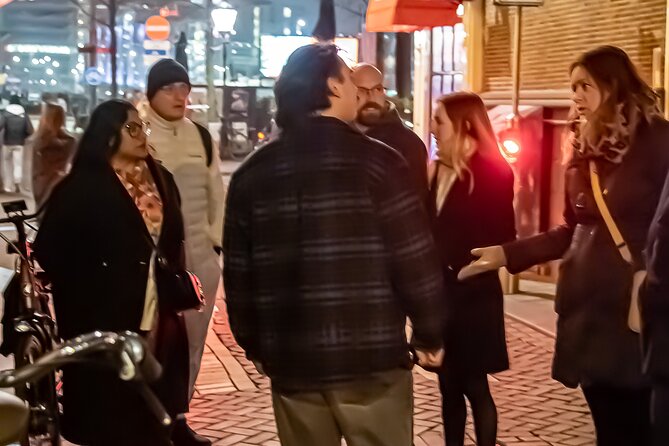
The meeting point is Geldersekade 2, 1012 BH Amsterdam. The activity begins and ends there, which is handy if you are fitting the walk between other plans.
The location sits close to the old center and public transportation. That makes the tour a useful first-day choice, especially if you want to get your bearings before setting out on your own.
You should allow enough time to find the meeting point without rushing. The tour offers several start times, but the exact time you choose matters because the Red Light District can feel very different by day and at night. The route description specifically presents the district at night, so check the time at booking if evening atmosphere is important to you.
Confirmation is provided at the time of booking. The mobile ticket means you can keep the booking on your phone rather than carry a printed voucher.
De Wallen and the story behind the windows
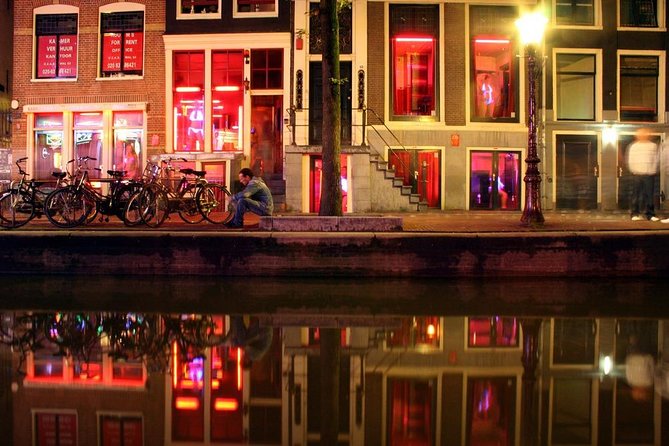
The main stop is De Wallen, Amsterdam’s famous Red Light District and part of the Old Town. This is the oldest part of the city, so the adult businesses sit among streets and buildings with centuries of history.
The guide explains the window prostitution system and the legal rights connected with sex work. That context is one of the strongest reasons to choose a guided walk. Without it, you may see windows, coffeeshops, and crowds without understanding the local system or the difference between what is legal, regulated, or simply tolerated.
You also hear about coffeeshop culture. The tour does not present the district as a place for uninformed experimentation. Instead, it gives you a clearer sense of how coffeeshops fit into Amsterdam’s public life and why the city’s approach is often different from what you may know at home.
The narrow streets are part of the experience, but they can also make the walk feel crowded. Keep your group in sight, listen for the guide, and expect to stop in busy public spaces rather than quiet museum rooms. Aaron was particularly praised for keeping track of the whole group and making eye contact while speaking, two small habits that matter on these tight streets.
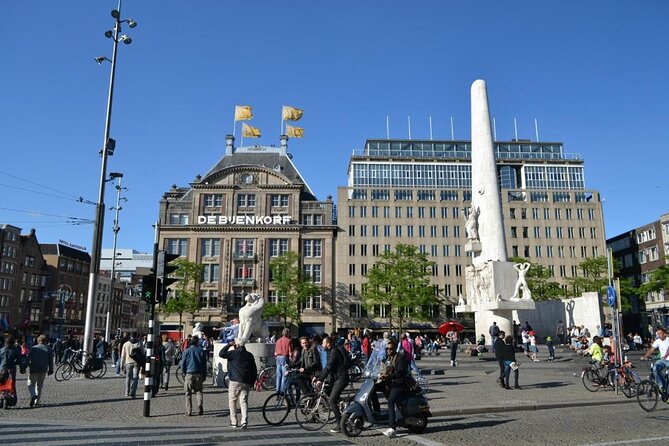
Dam Square and Amsterdam built on timber
One stop brings you to the Dam, the city’s central square. Here the guide explains why Amsterdam is sometimes called a city built on trees.
Amsterdam rests on thick layers of fen and clay. Many buildings were supported by wooden poles driven through the soft ground until they reached a firm sand layer about 11 meters below the surface. The detail helps explain why the city’s architecture and engineering developed in such a distinctive way.
I like this stop because it broadens the tour. You are not only hearing about the Red Light District. You are learning why Amsterdam exists in its present form, and why old buildings require such unusual foundations.
The Dam is also a useful orientation point. If you are new to Amsterdam, you can place the Old Town, the Red Light District, and the main city routes in relation to one another. The tour does not promise a full city sightseeing program, but it gives you a practical mental map.
More Red Light District walks:
- Amsterdam: Red Light Secrets Museum Entry Ticket
★ 4.2 · 5,722 reviews - Amsterdam: Red Light District Tour in German/English/Italian
★ 4.9 · 5,623 reviews - Amsterdam Red Light District & Coffee Shop Tour
★ 4.6 · 4,134 reviews - Amsterdam: Red Light District Pub Crawl with Unlimited Shots
★ 4.1 · 2,130 reviews
Int Aepjen, one of two wooden survivors
Pub Int Aepjen, also called The Ape, dates from around 1540. It is one of only two remaining wooden buildings in Amsterdam, a remarkable fact in a city where fire changed building rules.
A major fire in 1452 led the authorities to require brick facades. That makes Int Aepjen more than an old pub. It is a surviving example of the earlier wooden city and a reminder that Amsterdam’s building code grew from real danger.
This is the sort of detail that works well on a walking tour. You do not need a long museum visit to understand the point. The guide can show you the building, explain why it survived, and place it within the story of the Old Town.
You should not expect a dedicated interior visit based on the information provided. Treat it as an exterior landmark and listen to the explanation around it.
De Waag and the old city defenses
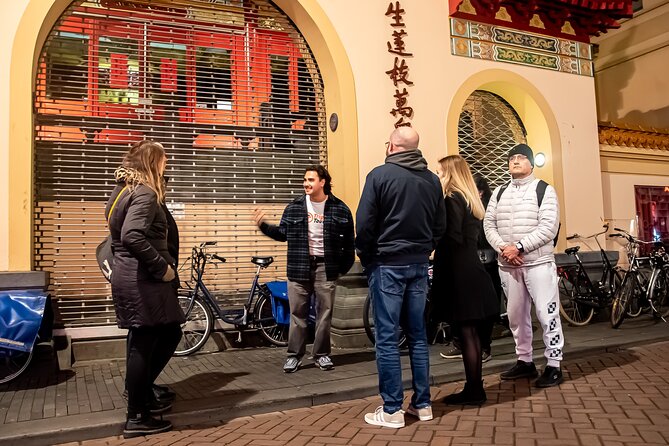
De Waag began as one of Amsterdam’s city gates and formed part of the defensive wall. Built around the 1400s, it is described as the second-oldest building in Amsterdam.
Later, guilds used the building. These were organizations for craftspeople, and their presence around the square reveals how the city was organized in earlier centuries. De Waag was not just a gate. It became part of the commercial and professional life of Amsterdam.
This stop gives the walk a useful change of pace. After the modern questions surrounding sex work and coffeeshops, you shift back to medieval defenses and urban institutions. The route shows how old and new uses share the same small section of the city.
Again, the value comes from the guide’s interpretation. De Waag is easy to pass without much thought. With the background, its shape and location make more sense.
The smallest house and a commercial past
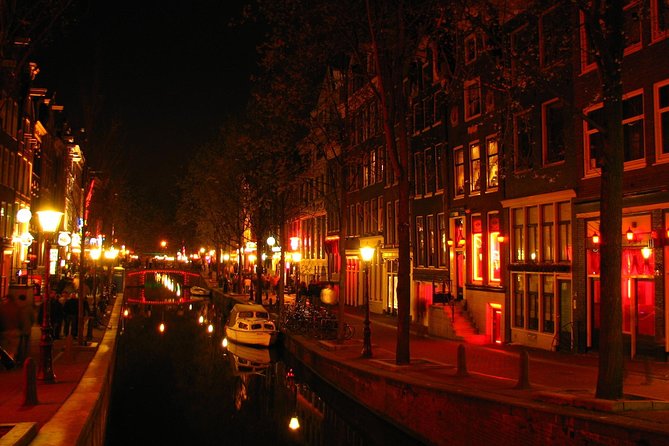
The route also includes Amsterdam’s smallest house, built around the 1700s. It first served as storage for the Dutch East India Company, known as the VOC. Later, people lived there for a long time.
This stop is a reminder that space in Amsterdam’s old center has always been precious. A building first used for storage later became a home, showing how the city adapted its narrow plots and small structures to changing needs.
The tour information does not give the house’s exact dimensions, so do not book this walk expecting a detailed architectural survey. Its importance is the story: trade, tight urban space, and the way old commercial buildings found new uses.
For first-time visitors, small sights like this can be more memorable than a long list of grand monuments. The guide’s job is to point out what you might otherwise walk past.
The condom shop with a practical twist
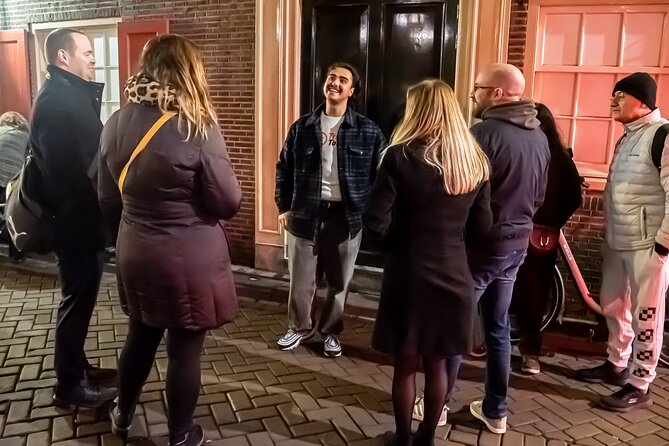
One of the more unusual stops is the world’s first shop specializing in condoms, operating at this location since 1987. The shop offers many types, including customized sizes and novelty products.
This is an amusing stop, but it also fits the wider subject. Amsterdam’s adult culture is not limited to the red-lit windows. It includes retail, public discussion, and a level of openness that may feel unfamiliar.
The guide can use the shop to explain the district’s commercial side without turning the walk into a simple parade of provocative sights. If you prefer a strictly historical tour, this stop may feel light. If you want to understand the area as it functions today, it adds useful color.
The guide makes or breaks the walk
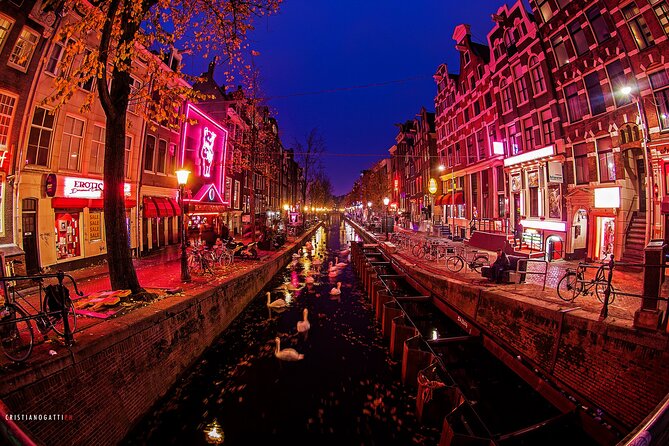
The strongest feedback centers on the guides. Robin is described as friendly and well informed, Gio as someone who created a memorable experience, and Aaron as a detailed speaker who kept the group together and invited questions.
Those details tell you what to look for. A good guide on this route needs to explain sensitive topics clearly, make room for questions, and keep everyone close in narrow streets. Eye contact and group control may sound minor, but they can determine whether you hear the story or spend the walk trying to catch up.
There is one caution. A three-star account objected to a guide who seemed drunk or high. That is a serious concern, even though the other feedback is strongly positive. I would not treat one report as proof of a regular problem, but the guide’s condition and conduct clearly matter on a tour dealing with adult subjects and busy nighttime streets.
The company is Trigger Tours. The group maximum is 16, which is small enough for questions without the price of a private tour. If you want the most personal experience, private touring may cost more but can be worth considering, particularly if you want to ask many questions about Dutch law and local customs.
Is $31.24 a fair price?
At $31.24 per person, the tour sits in a reasonable range for a two-hour guided walk in central Amsterdam. You are paying for a live English-speaking guide, a planned route, local context, and the convenience of a central start and finish.
The value is best if you are new to Amsterdam or unsure how to read the Red Light District. You get several landmarks along with the main subject, so the price is not only buying a walk through adult-oriented streets.
It is less useful if you have already taken a detailed Old Town tour and spent time learning about De Wallen. The route is compact, and admission to the sights is not the point. You are paying for explanation and orientation rather than entry to a museum or attraction.
Group discounts may reduce the cost for people booking together. The maximum group size of 16 also keeps the experience from feeling like a large street procession.
Who should book this tour?
I would suggest it to first-time visitors who want a clear introduction to Amsterdam’s Old Town and Red Light District. It also suits adults who want to understand the legal and social background instead of relying on rumors.
The tour can work well for couples, friends, and small groups. The English format and multiple start times make it easy to fit around a city break.
I would think twice if you have limited mobility. The activity is a walking tour through narrow historic streets, and the information specifically says it is not recommended for people with limited mobility. Service animals are allowed, and most people can participate, but the route itself may still be difficult for some.
This is also not the best choice if you want a quiet, private experience. The group can reach 16 people, and the district may be busy, especially at night. For a more personal discussion, ask about a private option before booking.
Booking, cancellation, and practical details
The tour is offered in English and accepts mobile tickets. You receive confirmation at booking, and public transportation is nearby.
Free cancellation is available if you cancel at least 24 hours before the scheduled start. Cancelling later, or changing the booking within 24 hours, does not qualify for a refund. The cut-off follows Amsterdam local time.
Because the activity ends at the meeting point, you can plan another central sight afterward without arranging a return transfer. Group discounts are available, and the small maximum group size gives you a better chance of hearing the guide.
Should you book the Amsterdam Red Light District walking tour?
Book it if you want the facts behind De Wallen, not just a quick look at its windows and neon. The route adds Dam Square, De Waag, Int Aepjen, the smallest house, and the condom shop, giving you a broader view of Amsterdam’s oldest center.
The strongest reasons to choose it are the focused two-hour length, English guidance, central route, and small group limit. Robin, Gio, and Aaron are singled out for friendly explanations, clear detail, and good group management.
Skip it if you want a private tour, have limited mobility, or already know the Old Town well. Also keep the isolated concern about guide conduct in mind. At $31.24, this is a sensible orientation walk for a first visit, provided you approach the district respectfully and value explanation more than formal admission sights.
FAQ
How long does the Amsterdam Red Light District walking tour last?
The tour lasts approximately two hours.
Where does the tour begin?
It begins at Geldersekade 2, 1012 BH Amsterdam, Netherlands.
Where does the tour end?
The activity ends back at the meeting point on Geldersekade.
Is the tour offered in English?
Yes. The tour is offered in English.
How many people can join the tour?
The maximum group size is 16 people.
What sights are included on the walking route?
The route includes De Wallen, the Dam, Int Aepjen, De Waag, Amsterdam’s smallest house, and the condom shop that has operated since 1987.
Does the tour explain coffeeshops and sex work?
Yes. The guide discusses coffeeshop culture, the sex work industry, window prostitution, and the rights connected with prostitution in Amsterdam.
Can I cancel for a full refund?
Yes, if you cancel at least 24 hours before the experience starts. Cancellations or changes made less than 24 hours before the start time are not refunded.
Just added around Amsterdam
- Private sightseeing tour to Bruges and chocolate from Amsterdam★ 5.0 · 11 reviews
- Amsterdam: Rijksmuseum (Private Tour & Priority Access)★ 5.0 · 27 reviews
- Amsterdam: Private Romantic Evening Canal Cruise + Bubbles/Snacks★ 5.0 · 46 reviews
- Amsterdam Private Shopping Experience★ 5.0 · 7 reviews
- Rijksmuseum Amsterdam Private Guided Tour★ 5.0 · 57 reviews
- Amsterdam Rijksmuseum PRIVATE TOUR with a Local Private Guide★ 5.0 · 159 reviews
- Private Photo Session in Amsterdam★ 5.0 · 15 reviews
- Private One way Transfer Amsterdam Airport to Amsterdam★ 3.5 · 42 reviews
Red Light District Tours, compared.
Red Light District Tour in German/English/Italian
Read our review →
Amsterdam Red Light District & Coffee Shop Tour
Read our review →
Red Light District Pub Crawl with Unlimited Shots
Read our review →

Private Amsterdam Red Light District and Coffee Shop Tour
Read our review →Browse the lists this tour appears in