
Reviewed · FOOD & DRINK
Amsterdam : Guided Cultural Food Tour
Amsterdam’s story comes together nicely on this small-group food and culture walk. In two and a half hours, you move from the city’s medieval beginnings at the National Monument to the canals and narrow houses of the Jordaan, with snacks along the way.
I like the mix of well-known sights and overlooked corners, especially the contrast between the Royal Palace, the Oude Kerk, and the quieter Begijnhof. I also like the guide’s personal role: the guide is there to answer questions, suggest places to eat and drink, and help you notice details you could easily miss on your own. The main drawback is pace. With 12 stops in 150 minutes, most places receive only a short explanation, and no major museum or paid attraction is entered.
Key points before you book
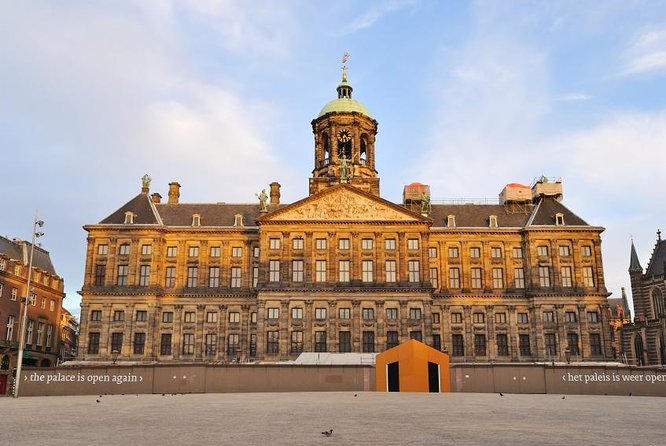
- The route links Amsterdam’s central landmarks: You see Dam Square, the Royal Palace, Oude Kerk, Beurs van Berlage, Magna Plaza, and more.
- The Jordaan and Nine Streets add local character: This is where the walk feels less like a checklist and more like a useful introduction to Amsterdam neighborhoods.
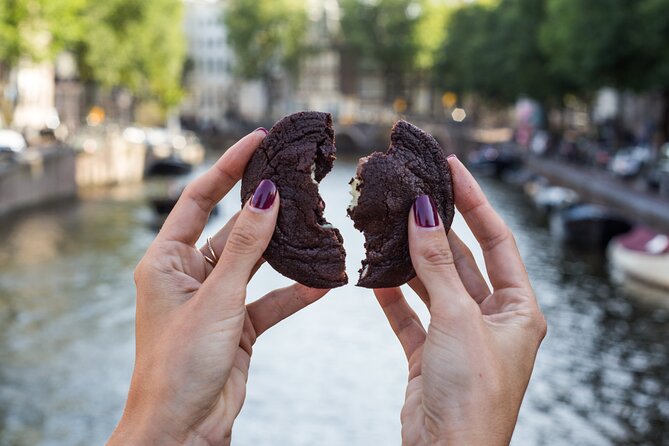
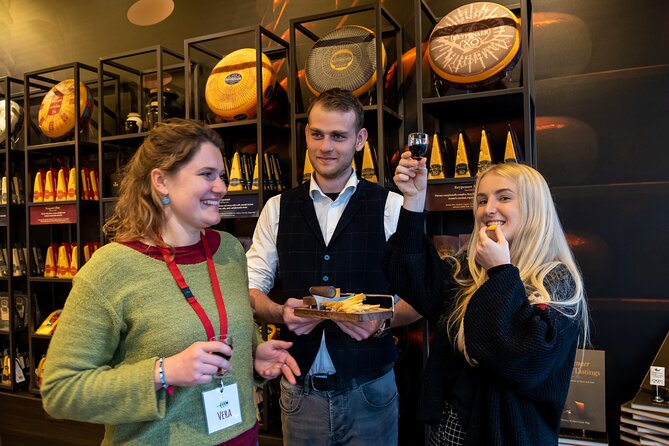
- Snacks are included: Food is part of the tour, though the supplied details do not specify the number or type of snacks.
- The group is capped at 15 people: That gives you a better chance to hear the guide and ask questions.
- The tour handles difficult history: Colonialism, World War II, the Red Light District, and Anne Frank are all part of the route.
- It ends at Spui: You can return toward Dam Square with the guide if you wish.
A useful first look at Amsterdam in 150 minutes
This is a good choice if you want your first hours in Amsterdam to answer basic questions. Why was the city built here? How did a small fishing settlement become a major trading center? Why are the houses so narrow? How did monarchy, commerce, religion, colonial wealth, and modern tourism shape the city?
The walk does not treat Amsterdam as a pretty collection of canals. It also makes room for its harder subjects. At the Multatuli statue, you hear about colonialism and the wealth it brought to the Netherlands. Near the Oude Kerk, the route explains how the Red Light District developed. At the National Monument and Anne Frank House, the focus shifts to World War II and its human cost.
That range is one of the tour’s best features. You get food, architecture, local neighborhoods, and serious history in one compact outing. Still, the tour is an introduction rather than a full historical study. Expect brief talks at most stops, not long site visits.
The current rating is 5 from 26 evaluations, with 100 percent recommending the experience. One especially useful point is the guide’s communication style. The guide is described as friendly, easy to understand in English, willing to answer questions, and able to make the walk feel like a friend showing you the city. That matters on a history tour, because clear storytelling can make the difference between useful context and a string of dates.
More Food Tours in Amsterdam
- 10 Tastes of Amsterdam: Food Tour by UNESCO Canals and Jordaan
★ 5.0 · 3,020 reviews - Amsterdam Food and Cultural Tour with Tastings
★ 5.0 · 2,442 reviews - Amsterdam Jordaan Food & Drinks Tour with Eating Europe
★ 5.0 · 2,425 reviews
Starting at the National Monument and Dam Square
The meeting point is at the National Monument on Dam Square. This is a practical place to begin because you are right in the middle of Amsterdam, near major sights and public transportation.
The opening talk looks back to the 13th century, when Amsterdam began as a small settlement. From there, the guide places Dam Square at the center of the city’s development. You learn how a small fishing village grew into the Amsterdam you see today.
The National Monument also brings World War II into the tour from the start. The memorial honors Dutch victims of the war, so this is more than a photo stop. Take a moment to look at it before the group moves on.
The Royal Palace follows. The guide explains the royal past of the Netherlands and the monarchy’s place in modern Dutch life. You will see the palace from the outside, but admission is not part of this tour. If you want to go inside, plan that separately.
The early part of the walk is busy with major city sights. That helps you get oriented, but it also means the group may pause on crowded streets and open squares. Comfortable shoes are more important here than dressing for a formal palace visit.
From Oude Kerk to Amsterdam’s trading power
At the Oude Kerk, you visit the oldest church in Amsterdam. The stop also explains how the Red Light District developed in the 14th century. This pairing gives you a clearer picture of old Amsterdam, where religion, trade, housing, and nightlife grew close together.
The church is another brief stop, and admission is not included. You should think of it as an exterior and neighborhood introduction rather than a complete church visit.
Next comes Beurs van Berlage, an important reminder that Amsterdam’s wealth came from commerce. The guide connects the building and the surrounding city to the trading activity that helped make Amsterdam one of the world’s richest cities during the Golden Age.
This is useful context for the rest of the walk. The grand buildings and wealthy merchant houses were not created by accident. Their presence is tied to shipping, finance, trade, and colonial activity, subjects the tour brings together instead of presenting Amsterdam’s success as a simple feel-good story.
Magna Plaza offers a change of architectural mood. The former post office is known for its ornate design and now functions as a shopping center. You do not need to shop here to appreciate the building. The stop is short, but it gives you a chance to see how an old civic structure has found a new purpose.
Multatuli and the difficult side of Dutch wealth

The statue of Multatuli gives the tour one of its strongest historical turns. Multatuli was an important Dutch author who criticized colonial abuses, and the guide uses his story to discuss the darker side of the wealth that helped build the Netherlands.
This is a valuable stop because it adds a voice of criticism to the city’s familiar Golden Age story. Amsterdam’s impressive buildings and commercial success came with costs, and the tour does not avoid that connection.
You will not spend a long time at the statue, but the subject can help you understand later sights differently. When you admire old buildings, you also have more context for asking how they were funded and whose lives were affected.
For anyone interested in history, this is one of the better reasons to choose this walk over a basic sightseeing circuit. The tour gives you enough background to keep exploring after it ends, even if it cannot cover every detail in a short visit.
Same base, a completely different sort of day:
- Amsterdam: Van Gogh Museum Ticket
★ 4.7 · 52,054 reviews - Amsterdam Classic Saloon Boat Cruise with Drinks and Cheese
★ 5.0 · 31,825 reviews - Amsterdam Luxury Canal Cruise + Unlimited Drinks & Bites option
★ 5.0 · 30,518 reviews - Amsterdam: Heineken Experience Ticket
★ 4.6 · 30,055 reviews
The Jordaan, Nine Streets, and Amsterdam’s everyday charm

The Jordaan is where the tour shifts toward neighborhood life. You explore one of Amsterdam’s most picturesque areas and hear how its small houses and streets developed.
The stop lasts about 15 minutes, making it one of the longer pauses. That gives you more time to look around, take photographs, and notice the scale of the neighborhood. The Jordaan is also a good place to pay attention to the contrast between attractive facades and compact living spaces.
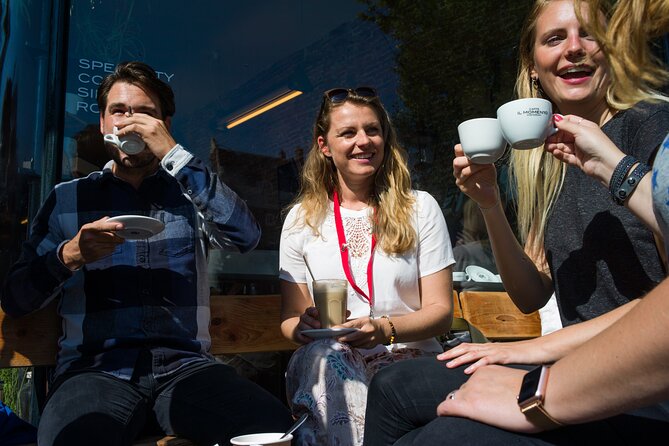
From there, the route reaches the Nine Streets, or Negen Straatjes. This shopping district is known for its small streets, stores, bars, and restaurants. The guide offers suggestions for places to eat, drink, and shop, which may be one of the most practical parts of the tour.
I would save your serious restaurant decisions until this section. You get recommendations while standing in the area, rather than receiving a generic list unrelated to where you are. The included snacks can take the edge off your hunger, but they are not presented as a full meal. Plan lunch or dinner separately.
This section also gives you a chance to judge what kind of Amsterdam experience you want. If you prefer small streets and local suggestions to major monuments, the Jordaan and Nine Streets may be your favorite part. If you mainly want interiors and formal attractions, the brief stops may feel too short.
Anne Frank House and Westerkerk

The route passes the Anne Frank House, where you take a brief look and hear about Anne Frank’s story. Admission is not included, so this tour does not replace a reserved visit inside the house.
That distinction matters. If you plan to visit the Anne Frank House, you need to arrange that separately. The walk gives you location and context, but only a few minutes at the site.
Westerkerk comes next. The church is one of Amsterdam’s largest and most attractive, and you see it as part of the walk. Again, the stop is short and admission is not included.
These two locations work well together because they connect Amsterdam’s architecture with its wartime memory. The visit remains brief, but the guide can help you place both sites within the city rather than treating them as isolated photo opportunities.
Begijnhof and the quiet finish at Spui
Begijnhof provides a calmer final stretch. This historic courtyard is known for its peaceful setting and its concealed church. The guide invites you to look for the hidden church inside, which gives the stop a small sense of discovery without turning it into a treasure hunt.
The courtyard is a useful contrast to Dam Square and the busy central streets. It also shows another side of Amsterdam’s religious past and domestic life.
The tour ends at Spui, at Art Amsterdam Spui, on Spui Square. If you want to return to Dam Square, you can simply walk back with the guide. Otherwise, the ending puts you near cafés, shops, and central streets, so it is easy to continue sightseeing.
The final location is convenient, but remember that the official walking time is approximate. Crowds, questions, photographs, and the pace of the group can affect the exact finish.
What the $102.41 price really covers
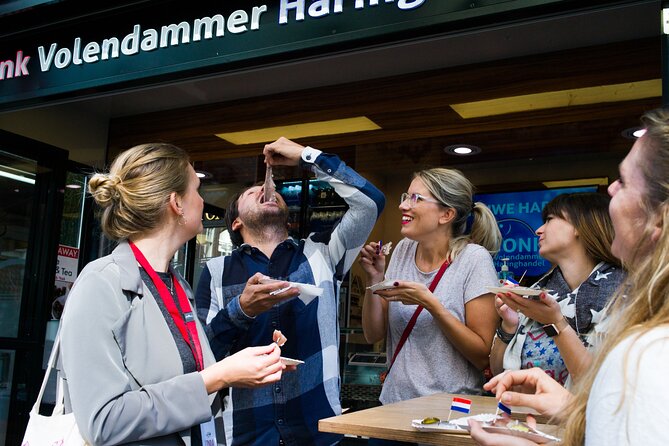
At $102.41 per person, this is not a cheap orientation walk. You are paying for a 2.5-hour guided experience, snacks, a small group of no more than 15 people, and the included €1.50 tourist tax.
The value depends on how much you use the guide. If you want someone to connect Amsterdam’s medieval beginnings, monarchy, commerce, colonial past, wartime history, and present-day neighborhoods, the price can make sense. You also receive recommendations for bars, restaurants, and shopping areas that may help shape the rest of your stay.
The value is weaker if you want entry to attractions. The tour does not include admission to the Royal Palace, Oude Kerk, Anne Frank House, Westerkerk, or other paid sites. You see many locations from the outside or receive a short introduction, then continue walking.
I would compare this tour with the cost of arranging several separate visits. If your goal is to understand the city quickly and decide which places deserve a return visit, it offers a useful package. If you already know Amsterdam well, the broad introductory format may not justify the price.
Group size, language, and practical details
The tour is offered in English, and the group maximum is 15 people. That is small enough for questions without promising a private tour. A smaller group also helps when the guide is explaining a detail in a narrow street or stopping outside a busy landmark.
A mobile ticket is accepted. The meeting point is the National Monument at Dam, 1012 JS Amsterdam. The endpoint is Art Amsterdam Spui, Spui 20HS, 1012 XA Amsterdam.
The tour is near public transportation, service animals are allowed, and most people can participate. The supplied details do not give a precise accessibility description for every street, surface, or stop, so you should ask the operator if you have specific mobility needs.
The experience requires good weather and a minimum number of participants. If poor weather cancels the walk, you are offered another date or a full refund. The same applies if the minimum number is not reached. You can cancel for a full refund up to 24 hours before the start time. Changes or cancellations inside that window are not accepted.
Who should choose this Amsterdam walk?
I would recommend it most strongly for a first visit, especially if you want history and food in the same outing. It suits people who enjoy walking, asking questions, trying snacks, and getting practical neighborhood advice.
History fans will appreciate the range, from the city’s 13th-century beginnings to World War II and colonial criticism. Food lovers will like having snacks included and receiving suggestions for restaurants and bars, though this is not a meal tour with a detailed tasting menu.
Families and mixed-interest groups may also find the format useful because the subjects change often. One stop focuses on a palace, another on a church, another on a neighborhood, and another on food or shopping.
I would hesitate if you dislike walking, need long visits at each attraction, or want a tour centered on museum interiors. The route covers a lot of ground, and the short timing means you must be comfortable moving on before every question has been fully explored.
Should you book the Guided Cultural Food Tour?
Book it if you want a compact, thoughtful introduction to Amsterdam that balances famous sights with neighborhood streets and difficult history. The friendly English-speaking guide, 15-person limit, included snacks, and useful food suggestions add real value.
Skip it if you want admission to major attractions or a slow food tasting. This is best used early in your visit, when the guide’s explanations can help you choose where to return, what to eat, and which stories you want to explore further.
FAQ
How long does the Amsterdam Cultural Food Tour last?
The walking tour lasts approximately 2 hours and 30 minutes.
Where does the tour begin?
It begins at the National Monument on Dam Square, Amsterdam, 1012 JS.
Where does the tour end?
It ends at Art Amsterdam Spui, Spui 20HS, on Spui Square. You can walk back toward Dam Square with the guide if you wish.
What language is the tour offered in?
The tour is offered in English.
How many people can join the tour?
The experience has a maximum of 15 participants.
Are snacks included?
Yes. Snacks and the €1.50 tourist tax are included in the price.
Does the tour include admission to the Anne Frank House or Royal Palace?
No. Admission tickets are not included. The tour passes or visits these locations from the outside and provides explanations along the route.
Can I cancel for a full refund?
Yes. You can cancel at least 24 hours before the start time for a full refund. Cancellations or changes made less than 24 hours before the start time are not accepted.
Just added around Amsterdam
- Private sightseeing tour to Bruges and chocolate from Amsterdam★ 5.0 · 11 reviews
- Amsterdam: Rijksmuseum (Private Tour & Priority Access)★ 5.0 · 27 reviews
- Amsterdam: Private Romantic Evening Canal Cruise + Bubbles/Snacks★ 5.0 · 46 reviews
- Amsterdam Private Shopping Experience★ 5.0 · 7 reviews
- Rijksmuseum Amsterdam Private Guided Tour★ 5.0 · 57 reviews
- Amsterdam Rijksmuseum PRIVATE TOUR with a Local Private Guide★ 5.0 · 159 reviews
- Private Photo Session in Amsterdam★ 5.0 · 15 reviews
- Private One way Transfer Amsterdam Airport to Amsterdam★ 3.5 · 42 reviews
Food & Drink, compared.

10 Tastes of Amsterdam: Food Tour by UNESCO Canals and Jordaan
Read our review →
Amsterdam Food and Cultural Tour with Tastings
Read our review →
Amsterdam Jordaan Food & Drinks Tour with Eating Europe
Read our review →
Premium Henri Willig Cheese Tasting Experience
Read our review →
Zaanse Schans and Cheese Tasting Guided Tour from Amsterdam
Read our review →
Browse the lists this tour appears in