
Reviewed · KINDERDIJK TOURS
Rotterdam: Kinderdijk UNESCO World Heritage Entry Ticket
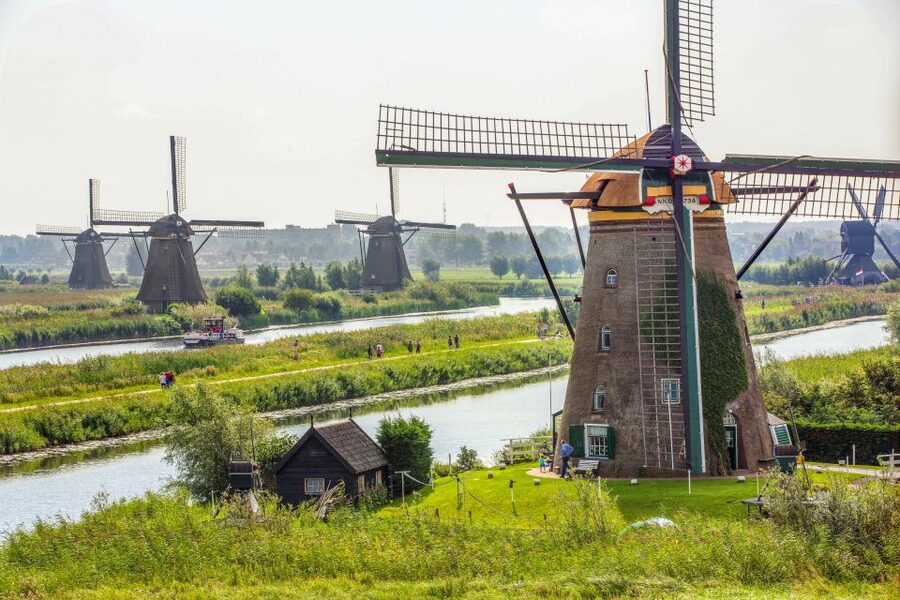
Kinderdijk shows you the practical side of Dutch beauty: 19 old windmills, narrow waterways, low fields, and a long struggle to keep the land dry. The boat ride gives you the best broad view, while the two museum mills let you see the cramped, working lives of the miller families who once lived inside them. I like the mix of outdoor scenery and hands-on history, and I like that you can set your own pace rather than follow a fixed tour.
The $25 ticket is good value if you use the museums, pumping station, film, audio guide, and boat. Much of the outdoor route can be seen without paying, so the ticket makes most sense for anyone who wants to understand how the windmills worked. Bring sun protection and comfortable shoes: the paths are exposed, and reaching the various stops means plenty of walking.
Key points to know before you go
- Nineteen windmills in one polder setting: You see the famous row of mills in the place where Dutch water management still feels real and practical.
- Two mills you can enter: Blokweer and Nederwaard turn a scenic stop into a close look at mill machinery and family life.
- A boat ride is included: Use it for a restful view across the canals, but remember that boats can stop running in bad weather.
- The $25 ticket adds the useful parts: Museums, the pumping station engine room, film, audio guide, and boat ride are included.
- Plan for walking and limited shade: The route between exhibits can be long, with little protection from strong sun or rain.
- Self-guided and flexible: You can walk, ride the boat, pause for food, and spend two or three hours or most of a day on site.
Why Kinderdijk is more than a windmill photo stop
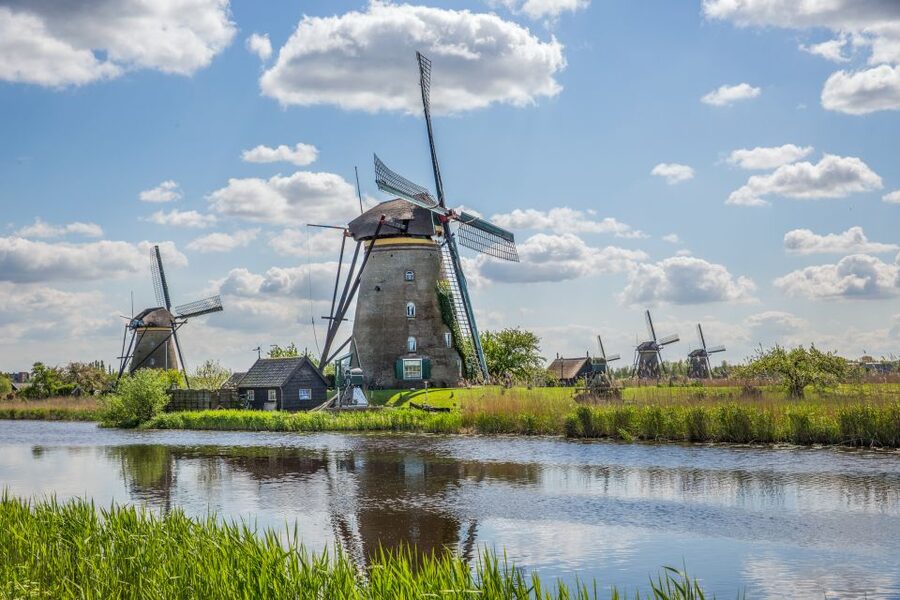
A row of Dutch windmills makes an easy postcard. Kinderdijk gives that picture a purpose.
The mills were built as part of a water-control system in the Alblasserwaard polder. Here, the land sits low, and water has always needed to be moved away from fields and homes. The windmills pumped water through a chain of waterways, helping keep the polder usable.
That is what makes the site worth the trip from Rotterdam. You are not simply looking at old machinery. You are seeing an entire settlement shaped by water, wind, dikes, canals, and patient engineering. The windmills are attractive, but their real appeal is that they still explain how the Netherlands made life possible below sea level.
Kinderdijk is a UNESCO World Heritage Site, and the setting feels open and calm. The mills are spread along the waterways rather than packed into a small museum compound. You get long views, working sails, grassy paths, and water on both sides. It is a place where the setting matters as much as the exhibits.
More Attraction Tickets in Rotterdam
- Rotterdam: Rotterdam Zoo Blijdorp Entry Ticket
★ 4.6 · 2,754 reviews - Rotterdam: Euromast Lookout Tower Ticket
★ 4.4 · 2,549 reviews - Rotterdam: Waterbus Ticket to Dordrecht and/or Kinderdijk
★ 4.6 · 542 reviews
What your $25 ticket includes
The ticket costs about $25 per person for one day. That is fair value if you plan to enter the mills and use the boat.
Your admission includes:
- Blokweer Museum Mill
- Nederwaard Museum Mill
- The tour boat through the World Heritage Site
- The pumping station engine room
- An informative film and exhibition
- An online guide with audio tours
The outdoor setting itself is the main draw, and parts of the route can be enjoyed without paying for the indoor attractions. That makes the ticket less essential for someone who only wants a walk and a few photographs.
I would buy it if you have at least a few hours. The two mill interiors are the heart of the experience, and the boat saves your legs while giving you another view of the site. The film and audio guide also help explain what you are seeing. Without them, the windmills can blur into a beautiful but less meaningful row of old buildings.
Tickets booked ahead can make entry to the exhibits quicker. Food and drinks are not included, so plan around your own meal or refreshments.
Start with the film and online audio guide
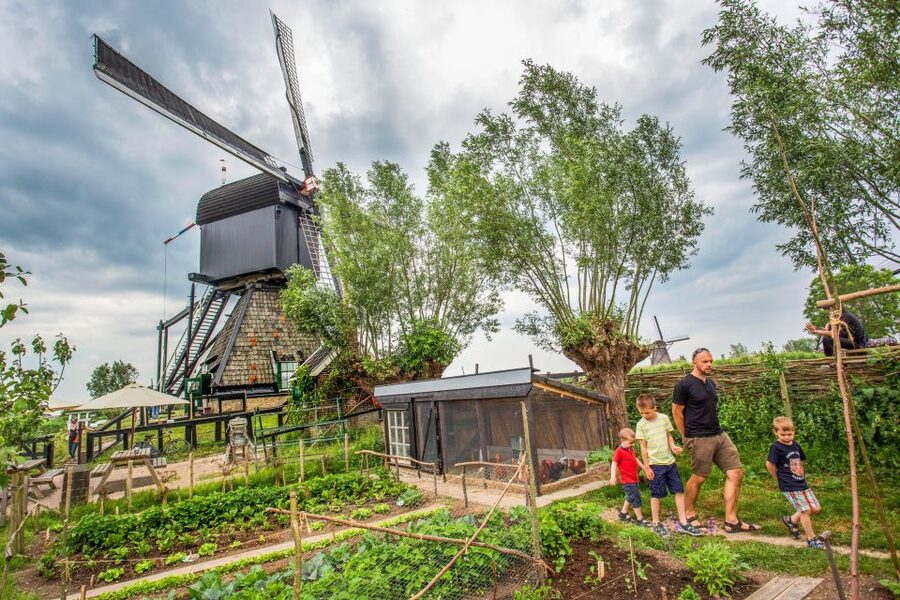
Kinderdijk is self-guided. No tour leader walks you from one stop to the next, so you have freedom, but you also need to take charge of your visit.
The informative film is a smart first stop. It gives you the basic story of the polders, the windmills, and Dutch water control before you head outside. At around nine minutes, it does not take much time, and it can make the rest of the visit easier to follow.
The online guide offers audio tours in English, Dutch, French, Spanish, Italian, Chinese, and German. Dutch and English are also used by the host or greeter. Ask for the audio tour code at the information desk, since it may not be handed to you automatically.
I would not rush straight to the first windmill. Spend a few minutes getting the basic water story, then walk outside with a clearer idea of what the mills were doing. You will notice the channels, pumping routes, and dikes differently once you understand their job.
Entering Blokweer Museum Mill
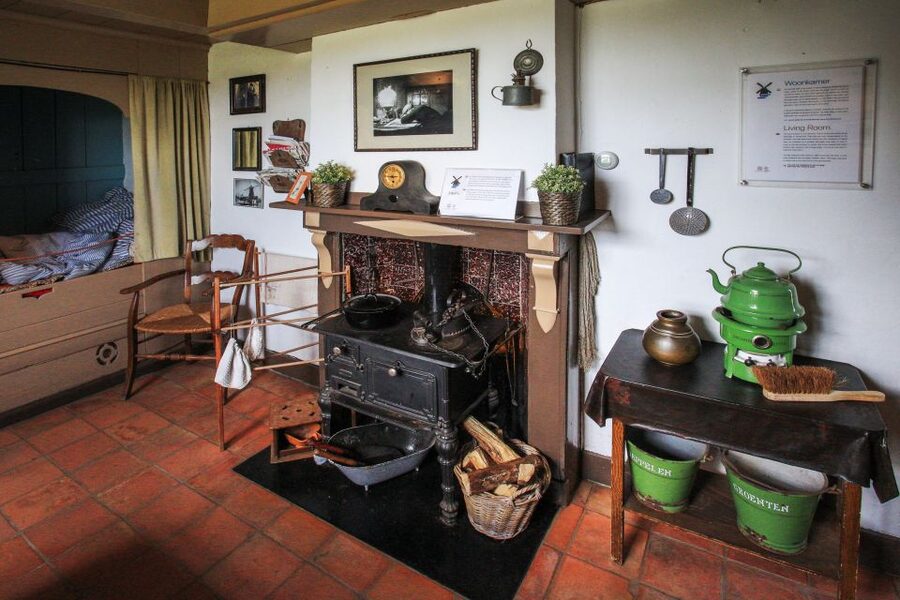
Blokweer Museum Mill gives you a close look at life inside a mill that was also a home.
The appeal is not just the machinery. You see how a miller family lived and worked in a tight, unusual space. The interior helps you picture the daily routine behind the picturesque exterior: maintaining the mill, watching water levels, handling the sails, and living with the constant movement of the machinery.
This is one of the stops that turns Kinderdijk from a scenic walk into a human story. The mill is not a grand residence or polished palace. It is practical, compact, and closely tied to the work of water management.
Take your time inside. The spaces can feel confined, and several people trying to move through at once may make it harder to notice details. If you are sensitive to stairs or tight interiors, expect the mill experience to require more care than the main outdoor paths.
More Kinderdijk windmill trips:
- All-Inclusive Private Windmill Tour to Kinderdijk from Rotterdam
★ 4.5 · 59 reviews - Kinderdijk, The Hague, Mauritshuis Private Tour from Amsterdam
★ 4.5 · 44 reviews - Kinderdijk Windmills, Delft City & Delft Blue Factory Visit
★ 5.0 · 17 reviews - Brussels: Holland Keukenhof & Kinderdijk Guided Day Tour
★ 4.6 · 15 reviews
Seeing the Nederwaard Museum Mill
Nederwaard Museum Mill offers another view of mill life, with the workings and living quarters brought close together.
You can see how the mill operated and how families adapted their lives around it. The moving parts are especially useful because they show that these were working machines, not just decorative monuments. Depending on conditions, you may see the sails turning and the mill functioning as part of the site’s story.
The interior experience is often the most memorable part for first-time visitors. Outside, a windmill can look simple: a tower, sails, and a roof. Inside, the machinery makes the design feel clever and physical. Wood, gears, shafts, and water-control equipment all had a job.
The two museum mills are different enough to justify visiting both. One does not replace the other. Together, they show the connection between home, workplace, and water system.
The pumping station explains the modern solution
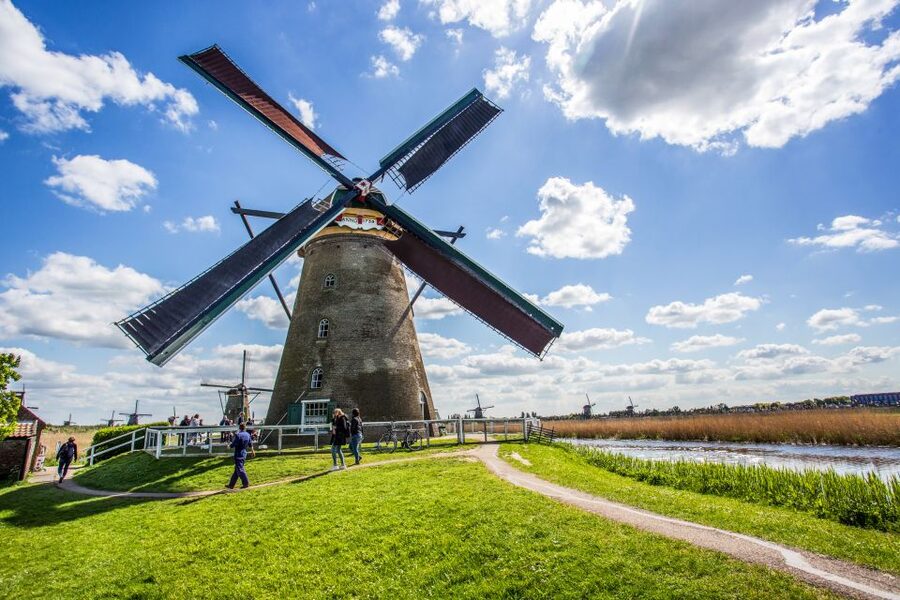
The pumping station engine room adds an important second chapter.
Windmills were an effective answer for centuries, but modern pumping stations could move water with greater power and consistency. The engine room lets you see the technology that followed the windmills and understand that Dutch water management did not stop when the sails slowed.
This is a useful stop for anyone interested in engineering. It also prevents the visit from becoming too romantic. Kinderdijk is charming, but keeping polders dry has always required hard work, repairs, new machinery, and constant attention.
I would visit the pumping station after at least one mill. The contrast makes more sense when you have already seen how wind power worked. The result is a clearer picture of change over time, from sails and gears to mechanical pumping.
Take the boat for the best overall view
The included boat ride is one of the strongest parts of the ticket.
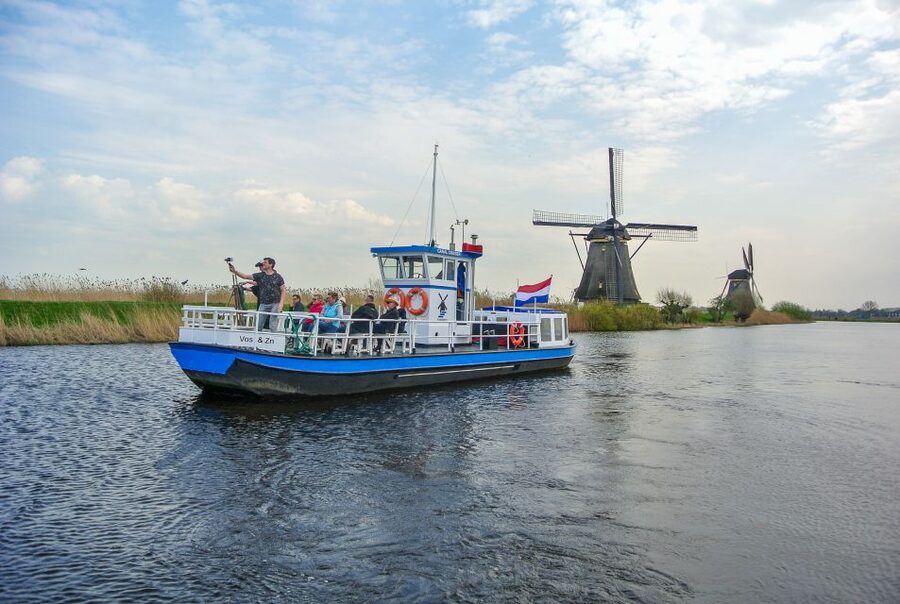
From the water, the windmills line up differently. You get a wider view of the polders, canals, and dikes, and you can rest your feet while the village slides past. The boat also helps you grasp the scale of the site. On foot, you tend to focus on the next mill. From the canal, the whole system comes into view.
There are boats that move through the site and stop near the main points. You can ride around for the full view, then get off where you want to visit a museum mill, depending on the operating pattern that day. Some people prefer to take the boat first and then walk back through the exhibits. That is a sensible plan if you arrive early.
The boats have limited seating, especially at busy times. Do not leave the ride until the final part of the day. The last boat departs 30 minutes before closing, and bad weather can prevent boats from sailing.
If the boat is not running, the walking route still gives you access to the main setting, but you lose the easy canal view and the chance to rest between stops.
Walking the polders, paths, and dikes
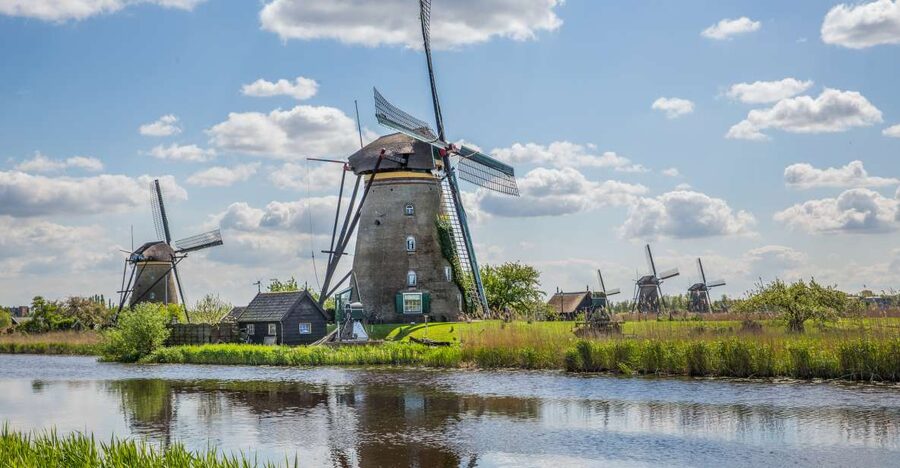
Kinderdijk rewards slow walking, but the route is longer than some first-time visitors expect.
The distance between the museums and crossing points can take time. You may walk beside water, along dikes, and between open fields before reaching the next stop. The paths are well kept, but this is not a compact indoor museum where everything sits within a few minutes of the entrance.
Wear comfortable shoes. Bring water, especially in warm weather, and remember that there is little shade along long stretches. A hat or sun protection is useful. Rain can also change the feel of the visit quickly, since much of the experience happens outdoors.
Bicycles can be useful if you want to cover more ground, and a picnic can turn the visit into a relaxed full day. Keep your eyes open for cyclists, particularly on busy paths. Walking is easy at a steady pace, but sharing narrow routes with bikes requires attention.
Allow two to three hours for a focused visit to the main attractions. Give yourself half a day if you want to walk slowly, use the boat, spend time in both mills, and stop at the film and pumping station. You can stretch it longer with a picnic and a bicycle.
Getting there from Rotterdam
Transport to Kinderdijk is not included, so you need to arrange your own route.
The Waterbus is a popular choice from Rotterdam. One route used by visitors is Waterbus 21 to Alblasserkade, followed by a short bicycle ride or onward connection to the site. The direct ride from Rotterdam takes about 35 minutes according to the practical experience shared by visitors, but you should check the timetable before setting out.
This matters because the attraction is easy to enjoy once you arrive, yet transport schedules can shape the whole day. Look at the return boat or bus times before you begin. Do not assume you can simply turn up late and find frequent service back to Rotterdam.
Driving is possible, but parking can be difficult, particularly at busy times. If you are coming from a cruise ship, the water connection can be an appealing alternative, though the approach from a water taxi may not be easy for everyone with limited mobility.
The site itself is wheelchair accessible, and a mobility scooter can work well once you are there. The transport leg is the part that may need extra planning.
Opening hours and the best time to visit
Hours change by season, so check the date carefully.
From March 6 through November 1, Kinderdijk is open daily from 9 a.m. to 5:30 p.m. Until March 5, the opening hours on operating days are 10:30 a.m. to 4 p.m. From November 2 through December 31, it is also open daily from 10:30 a.m. to 4 p.m. The site is closed on Christmas Day.
An early start gives you more time and a better chance of getting a seat on the boat. It also helps if you want to combine the visit with a bicycle ride or a longer stop for lunch.
Summer gives you more daylight and warmer walking conditions, but the exposed paths can feel hot, and the site can be busier. Spring and autumn can offer a quieter mood, though weather may affect the boat. Winter visits are shorter and more dependent on opening hours and conditions.
Who will enjoy Kinderdijk most
I would recommend this experience to anyone visiting Rotterdam who wants to understand a defining part of Dutch life, not just see another city attraction.
It suits:
- Families, especially with the interactive scavenger hunt for children
- History and engineering fans
- Photographers looking for classic windmill views
- Cruise passengers with a well-planned half day
- Independent visitors who dislike fixed group schedules
- Anyone who enjoys walking, cycling, and open-air sites
The attraction is less suitable if you want a short, tightly packed stop with no walking. It is also not ideal for anyone who dislikes exposed paths, changeable weather, or self-guided touring.
The scavenger hunt gives children a reason to look more closely, while the film and audio guide help adults connect the machinery to the wider water system. Families should allow extra time rather than trying to race through every stop.
Is the Kinderdijk ticket worth booking?
Yes, if you want more than an outdoor photograph.
The free or low-cost outdoor viewing gives you the famous image, but the $25 ticket adds the parts that explain what the windmills did and how people lived inside them. The boat ride is especially useful for anyone who wants to reduce walking or see the site from the canals.
Book it if you can spare at least two or three hours, and plan to arrive early enough for the boat. Bring comfortable shoes, sun or rain protection, and a transport plan from Rotterdam.
Skip the ticket only if you are content with a walk past the windmills and do not care about entering the mills, seeing the engine room, or using the boat. For a first visit to the Netherlands, I think the full ticket is the better choice. Kinderdijk is one of those places where the practical story makes the pretty view much more memorable.
FAQ
How much does the Kinderdijk entry ticket cost?
The ticket costs $25 per person.
How long is the ticket valid?
The ticket is valid for one day.
What is included in the ticket?
It includes entry to Blokweer Museum Mill, Nederwaard Museum Mill, the pumping station engine room, the informative film and exhibition, the online audio guide, and the boat trip through the World Heritage Site.
Is transport from Rotterdam included?
No. You must arrange and pay for transport to Kinderdijk separately.
Is the boat ride always available?
No. The boats may not sail in bad weather. The last boat leaves 30 minutes before closing, and seating is limited.
What languages are available for the audio guide?
The audio guide is available in English, Dutch, French, Spanish, Italian, Chinese, and German.
Is Kinderdijk wheelchair accessible?
The Kinderdijk site is wheelchair accessible. Access from a water taxi may be difficult for some people with disabilities, so plan the transport leg carefully.
How much time should I allow?
You can see the main attractions in about two to three hours, but half a day gives you time to walk at an easy pace, visit both museum mills, use the boat, and see the pumping station.
Is food included?
No. Food and drinks are not included in the ticket.
More History Tours in Rotterdam
- Rotterdam: Harbor Cruise on a Historic Ship
★ 4.2 · 812 reviews - Rotterdam Must Do Tour: Highlights, History, WW2 and Architecture
★ 5.0 · 20 reviews - Amsterdam Food and Cultural Tour with Tastings
★ 5.0 · 2,442 reviews - The Hague: Hop-on Hop-off Old-Fashioned Heritage Tram Tour
★ 4.4 · 1,083 reviews
Just added around Rotterdam
- The Netherlands: WW2 Private Day Trip★ 5.0 · 4 reviews
- Rotterdam: Guided Food Tour★ 4.4 · 16 reviews
- Rotterdam: UNESCO Van Nelle Factory Guided Tour★ 4.5 · 94 reviews
- Rotterdam: Summer Cocktail Cruise★ 4.7 · 18 reviews
- Rotterdam: Summer Evening Cruise with Live Entertainment★ 4.8 · 5 reviews
- Rotterdam: Trompenburg Botanical Gardens Entry Ticket★ 4.1 · 77 reviews
- Rotterdam: Pub Cruise with Drinks and Bites★ 3.8 · 16 reviews
- Rotterdam: Private Tour with a Local★ 4.7 · 47 reviews
Kinderdijk Tours, compared.
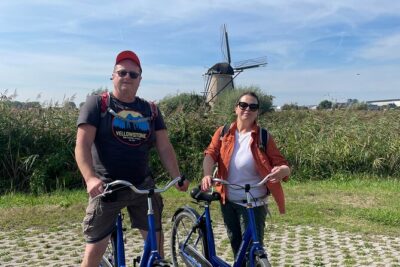
All-Inclusive Private Windmill Tour to Kinderdijk from Rotterdam
Read our review →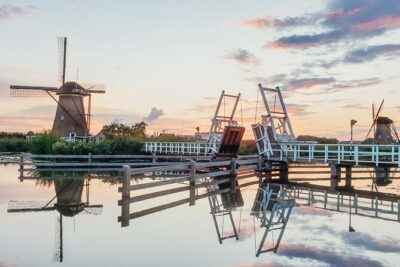
Kinderdijk, The Hague, Mauritshuis Private Tour from Amsterdam
Read our review →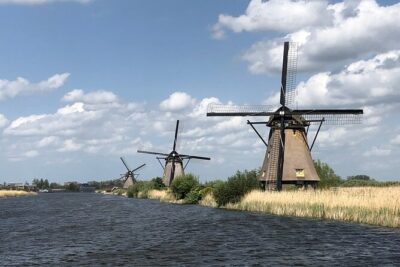
Kinderdijk Windmills, Delft City & Delft Blue Factory Visit
Read our review →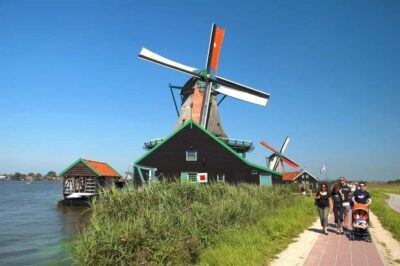
Brussels: Holland Keukenhof & Kinderdijk Guided Day Tour
Read our review →
Kinderdijk, Euromast, Delft and Den Haag Day Tour
Read our review →
Private Tour to Kinderdijk and Delft / Leiden / Hague / Gouda
Read our review →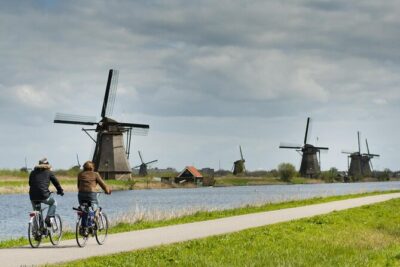
Famous Holland Tour: visit The Hague, Delft, Rotterdam and Kinderdijk from A’dam
Read our review →Browse the lists this tour appears in