
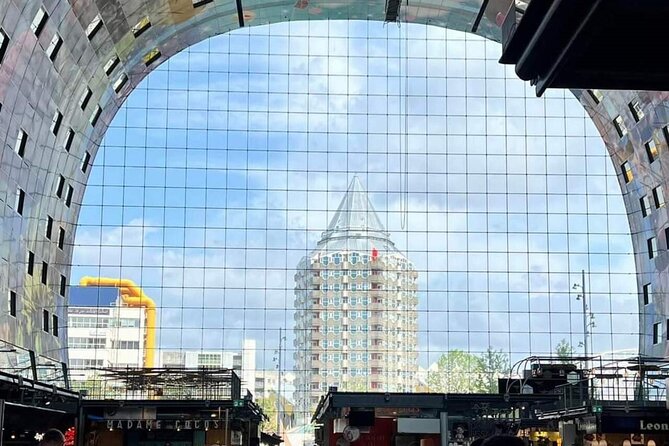
Reviewed · ROTTERDAM TOURS
Rotterdam: Private Tour with Local Guide + Cube House visit
Rotterdam makes the strongest first impression through its buildings. After World War II, much of the center was rebuilt in a bold, modern style, and this private walk helps you read that unusual city instead of simply snapping photos of it. The Cube House interior gives you a quick look at what life inside one of Rotterdam’s famous tilted homes is actually like.
I like the freedom of a private group and the relaxed pace. You can ask questions, request advice for the rest of your visit, and potentially begin somewhere else in central Rotterdam. The main consideration is time: two hours gives you a smart introduction, not a full tour of every museum, neighborhood, or wartime site.
Key points to know before booking
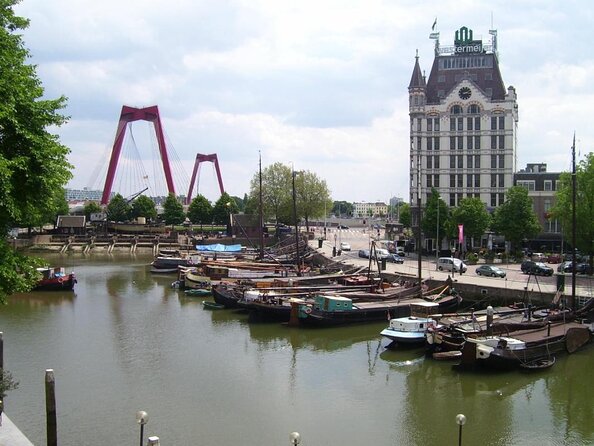
- Enter a real Cube House: The 15-minute interior visit shows how the famous angled design works from inside.
- Begin at Blaak Station: Meet above ground, in front of the Kiosk entrance, an easy place to find in the city center.
- Learn Rotterdam’s unusual rebirth: Your guide connects the city’s modest beginnings, wartime destruction, and growth into a major port.
- Choose a private pace: The walk is relaxed, and your own group can ask questions without keeping up with strangers.
- Pay per group: The $293 rate covers up to 10 people, making the cost about $29.30 per person if you fill the group.
- Pick from six languages: Dutch, German, English, Spanish, Italian, and French are available.
Why Rotterdam works best with a guide at street level
Rotterdam is not the kind of Dutch city that explains itself at a glance. It does not offer one continuous run of historic façades like Delft or Amsterdam. Instead, its story appears in the contrast between surviving traces, postwar rebuilding, daring experiments, and the working life of a major port.
That makes a walking guide useful. You are not only looking at odd shapes and tall buildings. You are learning why the center looks so different from other Dutch cities, and how Rotterdam went from a modest settlement to an international port city.
The tour begins at Blaak, one of the city’s most recognizable modern areas. From here, you are well placed to see several of Rotterdam’s unusual structures on foot. The guide leads you through the center at a relaxed pace, giving you a chance to stop, look up, and ask questions rather than race from one photo stop to another.
I especially like this format for a first visit. You get the broad story quickly, then can decide which parts of Rotterdam deserve more of your own time. The guide can also offer advice after the tour, which is useful when you are trying to choose what to see next.
A few more Rotterdam half-days worth comparing
- Rotterdam: Harbor Sightseeing Cruise
★ 4.3 · 7,599 reviews - Rotterdam: 1-Hour Sightseeing Splash Tour
★ 4.5 · 3,299 reviews - Rotterdam: Rotterdam Zoo Blijdorp Entry Ticket
★ 4.6 · 2,754 reviews
Starting at Blaak Station and finding your bearings
The meeting point is in front of the Kiosk entrance at Blaak Station, above ground. That detail matters because large city stations can have several exits and underground passages. Look for the entrance area rather than waiting below street level.
Blaak is a sensible starting point for this particular walk. It puts you close to some of Rotterdam’s best-known modern architecture and makes the connection between transport, public space, and city design clear from the start.
If Blaak is inconvenient, you can ask to begin elsewhere in Rotterdam city center. That request needs to be made in advance, but it adds useful flexibility for people already staying downtown or arriving from another central location.
The walk takes place rain or shine. Rotterdam’s weather can change quickly, so bring a rain jacket and shoes suited to ordinary city walking. The pace is described as relaxed, but you should still expect to spend the tour on foot rather than sitting through a presentation.
Seeing the city that rose from wartime destruction
The central theme is Rotterdam’s rebirth. The city was burned to the ground during World War II, then rebuilt in a way that favored new ideas over simply recreating the old streets.
That choice explains much of Rotterdam’s character. You will see a city where modern buildings and older remnants share the same center, sometimes in surprising combinations. The guide helps turn that contrast into a story instead of leaving you to wonder why Rotterdam looks so unlike many other Dutch cities.
The tour also covers Rotterdam’s earlier beginnings and its growth into a giant port city. That wider context is important. The architecture is not just a collection of strange shapes. It reflects a city that has repeatedly adapted to war, trade, population change, and new construction.
You will also hear about present-day Rotterdam, including its young population, active nightlife, and international character. The city is home to at least 170 nationalities, and that variety is part of the modern story the guide brings into the walk.
The strongest praise attached to this experience points to information delivered in a lively, easy-to-follow way. Susanne described the two hours as both informative and entertaining, with many small stories tied to individual sights. That is exactly what you want in Rotterdam, where a short anecdote can make an unusual building far easier to remember.
Reading Rotterdam’s modern architecture
The architecture is the main event here. Rotterdam is sometimes called Manhattan on the Meuse, a nickname that captures its tall structures, broad modern ambitions, and position beside the river.
You will be guided past some of the city’s most unusual buildings. The point is not just to collect landmark names. It is to understand the choices behind the forms, the way the rebuilt center differs from traditional Dutch city planning, and how old traces remain among the concrete and glass.
A private guide can adjust the amount of explanation to your interests. If you care about design, you can ask more about the buildings. If you are more interested in the city’s wartime experience or port development, you can steer the conversation in that direction.
The tour’s private setup is a real advantage here. With a larger public group, you often get a fixed script and limited time for questions. With your own party, the guide can keep the pace comfortable and explain a sight when it has your attention.
Do not expect a museum-style architectural lecture or a detailed tour of every building in Rotterdam. Two hours is enough for an overview and a handful of memorable stories. It is not enough for a full survey of the city’s design history.
Same base, a completely different sort of day:
- Rotterdam: Euromast Lookout Tower Ticket
★ 4.4 · 2,549 reviews - Rotterdam: Pancake Cruise
★ 4.4 · 1,986 reviews - Rotterdam: Kinderdijk UNESCO World Heritage Entry Ticket
★ 4.6 · 1,477 reviews - Rotterdam: Harbor Cruise with Live Guide
★ 4.0 · 1,270 reviews
Inside a Cube House for 15 minutes
The Cube Houses are the tour’s clearest hands-on feature. You do not only view the exterior. You enter one of the houses for an interior visit lasting about 15 minutes.
That short visit is valuable because the outside gives only half the story. The homes are famous for their tilted walls and unusual geometry, but the interior helps you understand the practical effects of that design. You can see the type of space created when a house is set at an angle rather than built in a conventional upright box.
Keep your expectations realistic. Fifteen minutes is a brief stop, not an extended house tour. You will get the essential interior experience, then return to the wider walk. For many people, that is the right amount of time: enough to satisfy curiosity without allowing one attraction to swallow the whole Rotterdam introduction.
The Cube House entry is included, so you do not need to arrange a separate ticket for this part. The tour also includes a Dutch snack, a small local touch that makes the stop feel less like a simple photo opportunity.
If the Cube Houses are your main reason for visiting Rotterdam, you may want to spend additional time around them before or after the tour. The guided visit gives you context and entry, but the full experience of the area is not limited to 15 minutes inside one house.
What the private format changes
The group can include up to 10 people, and the booking price is set per group rather than per person. At $293 for the maximum group size, the arithmetic works out to about $29.30 each. For two people, the effective cost is about $146.50 each, so the value depends heavily on how many people join your booking.
For a family, a group of friends, or a small organization, this can be a sensible way to get a private introduction without paying individual rates for a separate guide. A couple should think harder about the price, especially if they are mainly interested in seeing the Cube Houses and taking a few photographs.
The private arrangement also gives you control over the pace. The walk is relaxed, and you can ask for advice at the end. This is especially useful if you want help deciding what to see that evening, where to continue walking, or which parts of the city deserve a longer visit.
You should not interpret private as completely customized from start to finish. The advertised focus remains Rotterdam’s architecture, history, and Cube House visit. Still, the ability to ask questions and avoid a large group makes a noticeable difference in a short city tour.
Guides, languages, and the feel of the commentary
The tour is offered in Dutch, German, English, Spanish, Italian, and French. That broad choice is useful for mixed-language groups or anyone who would rather hear the story in a language other than English.
Two guides named in the feedback are Michel and Alberto. Michel is described as both humorous and excellent at making the morning memorable, while Alberto is described as prepared and helpful. Those details suggest the tone is not meant to be dry or purely academic.
The best fit is someone who enjoys conversation. You are encouraged to ask questions, and the guide can respond to the interests of your own party. That creates a more personal experience than following a large group with a fixed lecture.
The praise is consistent on the key points: the explanations are informative, the two hours pass quickly, and the guides add personal stories to the major sights. I would book this for context and human connection, not just for a checklist of landmarks.
How much can you cover in two hours?
Two hours is a good length for a first look at central Rotterdam. You can learn the basic story, see several unusual structures, and enter a Cube House without giving up most of your day.
The tradeoff is depth. You will not cover every major museum, waterfront area, or neighborhood. The tour also does not suggest a long stop inside each building. Its job is to make the city understandable and give you a useful starting point.
I would place it early in your Rotterdam visit. Once you know how the city was rebuilt and why its architecture takes such bold forms, later walks become more rewarding. You can also use the guide’s advice to plan the rest of the day.
The relaxed pace should suit most people comfortable with ordinary city walking. There is no promise of shelter, and the tour runs in all weather, so conditions matter more than fitness. Bring suitable clothing, especially if rain is forecast.
Who gets the best value from this tour?
This experience suits you if you want a private introduction rather than a long, specialized architectural program. It works well for first-time visitors, families, friends, and anyone who wants to ask questions without being part of a large group.
It is also a good match for people who find Rotterdam’s design confusing at first. A guide can explain why the city contains such a mix of older remains and postwar structures, and the Cube House visit adds a clear physical example.
The tour may be less useful if you already know Rotterdam well or want a slow visit focused on museums. It is also less cost-effective for only one or two people unless the private format is especially important to you.
For architecture fans, the Cube House interior is the key extra. For history-minded visitors, the wartime destruction and rebuilding story carries more weight. For casual sightseers, the short length and snack keep the experience light.
Booking details worth knowing
The experience costs $293 per private group of up to 10 people. It includes the local guide, entry into a Cube House, and a Dutch snack. Starting times vary, so check availability for your chosen date.
You can cancel up to 24 hours before the experience for a full refund, and you can reserve now and pay later. The ticket line is skipped for the included Cube House entry.
The meeting point is at Blaak Station, in front of the Kiosk entrance above ground. If you want another central starting point, contact the provider before the tour. Since the walk continues in rain or sunshine, dress for the forecast.
Should you book this Rotterdam walk?
Book it if you want Rotterdam to make sense quickly. The combination of wartime history, modern architecture, a private guide, and a real Cube House interior gives you more than a photo walk. Guides such as Michel and Alberto appear to bring humor, clear explanations, and practical help to the experience.
The value is strongest when you have several people sharing the $293 group price. If you are traveling alone or as a couple, compare that cost with a regular public walking tour. But if privacy, flexible questions, and a relaxed pace matter to you, this is a well-focused two-hour introduction to one of the Netherlands’ most unusual cities.
FAQ
Where does the tour begin?
It begins in front of the entrance of the Kiosk at Blaak Station in Rotterdam. The meeting point is above ground.
How long does the experience last?
The guided experience lasts two hours. The Cube House interior visit is listed as a 15-minute stop within the program.
Is entry to a Cube House included?
Yes. The entry ticket into a Cube House is included in the price.
Is the tour private?
Yes. It is offered as a private group experience for up to 10 people.
Which languages are available?
The tour can be conducted in Dutch, German, English, Spanish, Italian, or French.
What happens if it rains?
The tour takes place rain or shine. It includes walking at a relaxed pace, so bring clothing suitable for the weather.
Just added around Rotterdam
- The Netherlands: WW2 Private Day Trip★ 5.0 · 4 reviews
- Rotterdam: Guided Food Tour★ 4.4 · 16 reviews
- Rotterdam: UNESCO Van Nelle Factory Guided Tour★ 4.5 · 94 reviews
- Rotterdam: Summer Cocktail Cruise★ 4.7 · 18 reviews
- Rotterdam: Summer Evening Cruise with Live Entertainment★ 4.8 · 5 reviews
- Rotterdam: Trompenburg Botanical Gardens Entry Ticket★ 4.1 · 77 reviews
- Rotterdam: Private Tour with a Local★ 4.7 · 47 reviews
- Rotterdam: RIB Speedboat Sightseeing Cruise★ 4.8 · 192 reviews
Rotterdam Tours, compared.




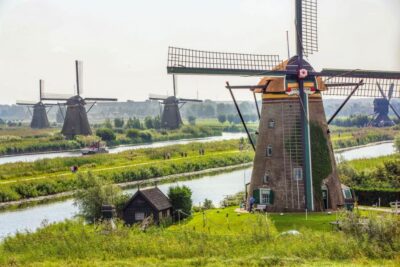
Kinderdijk UNESCO World Heritage Entry Ticket
Read our review →
Browse the lists this tour appears in