
Reviewed · ESCAPE GAMES
Amsterdam Urban Legend Scavenger City Game
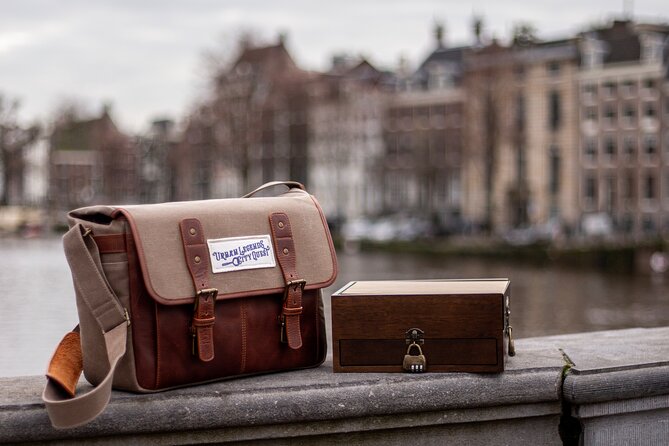
Amsterdam’s House with the Bloodstains mystery turns a city walk into an outdoor escape room. Your group follows clues linked to 17th-century Amsterdam, a mysterious chest, and former mayor Coenraad van Beuningen. Along the way, you solve hands-on puzzles while seeing parts of the city centre.
I like the mix of real urban legends and imaginative storytelling, and I like that the puzzles use physical materials rather than asking you to stare at a phone. The main consideration is pace: you need to think, walk, and stay engaged for about two hours and 30 minutes, so this is not a relaxed sightseeing stroll.
Key points to know before booking
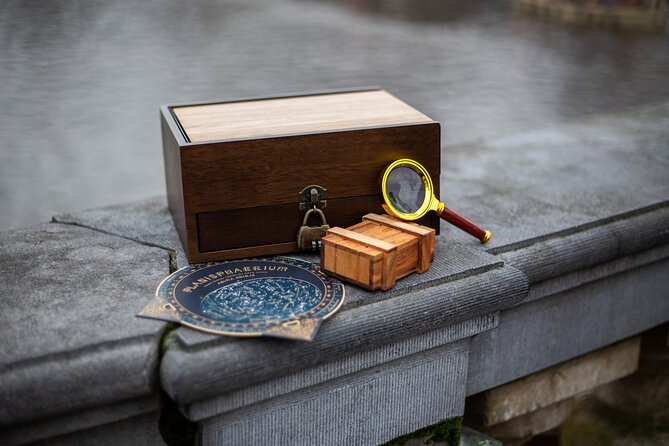
- A 17th-century mystery at the Amstel: The story begins with a chest found beneath the floorboards of a historic canal house.
- Physical escape-room puzzles: Expect challenges involving lock picking, inkblots, chemical reactions, and other surprising materials.
- Private group format: Only your own group takes part, making it easier to work at your preferred pace.
- Sightseeing built into the game: The route leads through Amsterdam’s city centre and returns to the starting point.
- Hints are part of the experience: The host explains the game, keeps you moving, and can help when a puzzle stalls you.
- Good for puzzle fans and families: The activity requires moderate physical fitness, but one family completed it with a nearly two-year-old in a buggy.
A murder-mystery mood beside the Amstel
The game starts at the Amstel in Amsterdam, where your host introduces the tale of an old chest discovered beneath the floorboards of a canal house. An accompanying letter points to former mayor Coenraad van Beuningen, whose final days helped give the building its grim nickname, the House with the Bloodstains.
That setup matters because the story gives your walk a purpose. You are not simply moving from one attraction to another. You are looking for connections, testing clues, and trying to work out what happened. The historical setting supplies the atmosphere, while the added fictional elements keep the game playful and unpredictable.
I like this balance. The experience is based on real stories, myths, and urban legends, but it is not presented as a formal history lesson. You get enough background to make the puzzles meaningful, then the game sends you into the city to solve the next problem.
The opening also sets expectations well. The host gives your group instructions before you begin, and the introduction helps establish the tone. A strong start is useful here because the game involves several types of puzzle, not just a series of clues on a phone.
More Scavenger Hunts in Amsterdam
- Amsterdam Treasure Hunt: The Mystery of a Secret Sender
★ 5.0 · 149 reviews - Amsterdam: Treasure Hunt Walking Tour “A Secret Sender”
★ 4.7 · 71 reviews - e-Scavenger hunt Amsterdam: Explore the city at your own pace
★ 4.5 · 14 reviews
Walking through Amsterdam by solving clues
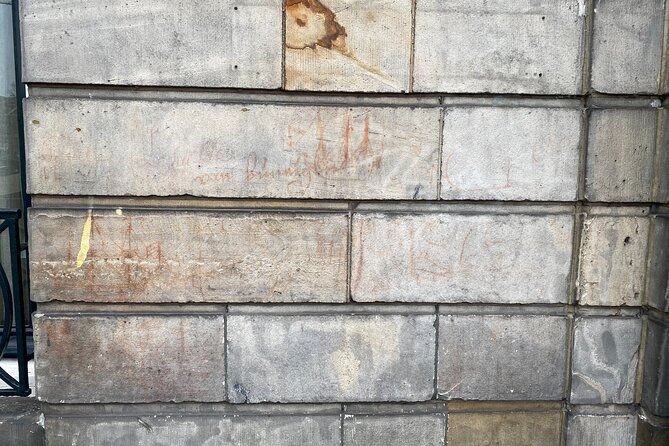
The route takes you through Amsterdam’s central area, with sightseeing folded into the puzzle trail. The exact sequence of locations is not provided, so I would not book this expecting a fixed list of monuments or museum stops. Instead, think of the city itself as the playing field.
The walking is described as moderate rather than punishing. One group completed the game in about two hours, and another found there was not too much walking even with a small child in a buggy. Still, you should be comfortable walking outdoors, standing while examining clues, and moving between locations.
The sightseeing works best for people who like a little structure in their city exploring. Amsterdam can sometimes feel like a collection of canals, bridges, and attractive streets without a clear route. Here, the story keeps you moving and gives you a reason to pay attention to your surroundings.
You will also have chances to pause at a terrace along the way. That can make the activity feel less like a timed race, though your group should avoid lingering too long if you want to finish within the stated two-hour-30-minute window.
Lock picking, inkblots, and chemical reactions
The strongest part of this experience is the variety of the puzzles. You may work with locks, decipher an inkblot, or deal with a chemical reaction. These are physical and visual challenges, so the game feels closer to an outdoor escape room than a standard phone-based scavenger hunt.
That distinction is important. Many city games rely on map instructions, trivia questions, or smartphone tasks. This one gives you attractive materials and objects to handle. One puzzle involving inkblots can seem baffling at first, but the solution becomes satisfying once you understand what the marks are meant to show.
You should expect moments when your whole group goes quiet and concentrates. You may also have moments when one person spots a clue that everyone else missed. That shared problem-solving is a major reason the activity works well for friends, families, and small groups.
The challenges are not described as easy. One group called them thoughtful and challenging, while another praised the final puzzle in particular. That sounds like good news for experienced escape-room fans, but beginners should not worry about being abandoned. The host can offer hints when needed.
The use of hints is a strength rather than a weakness. A city game should keep the story moving. If your group gets trapped on one clue for too long, a timely nudge lets you enjoy the next part instead of spending half the afternoon staring at the same object.
The final puzzle and the value of a proper ending
A weak scavenger hunt can lose energy near the end. This one puts clear effort into its final challenge, which is described as especially impressive. I would keep some attention in reserve for the last stage rather than treating it as a formality.
The final puzzle matters because it gives the story a finish. You are not simply told that the route is over after collecting a set number of answers. The last challenge ties together the clues and gives your group a shared moment of success, or at least a shared sense of relief.
That makes the game feel more complete than a basic self-guided walk. You get a beginning, a middle, and a final task, with the host available to help maintain the rhythm.
The ending returns you to the meeting point at the Amstel. This is practical if you have plans afterward, since you finish where you started rather than needing to find your way across Amsterdam from an unfamiliar final location.
Same base, a completely different sort of day:
- Amsterdam: Van Gogh Museum Ticket
★ 4.7 · 52,054 reviews - Amsterdam Classic Saloon Boat Cruise with Drinks and Cheese
★ 5.0 · 31,825 reviews - Amsterdam Luxury Canal Cruise + Unlimited Drinks & Bites option
★ 5.0 · 30,518 reviews - Amsterdam: Heineken Experience Ticket
★ 4.6 · 30,055 reviews
What the private format changes
This is a private activity, so only your group takes part. That is a useful feature for a puzzle game. You can discuss possible solutions freely without strangers listening in, and the host can focus on your group’s progress.
A private format is especially handy for families, couples, and groups of friends with different puzzle-solving styles. Fast solvers can explain their thinking, while quieter participants have room to examine the materials. You are also not competing with another group that happens to be on the same route.
The tradeoff is price. At $29.50 per person, this costs more than simply walking Amsterdam’s canals on your own. You are paying for the host, the prepared puzzle materials, the story design, and a structured two-hour activity.
I consider that reasonable for people who would otherwise pay for an escape room or a guided city tour. You get elements of both, though not the same depth as a specialist historical tour or the polished indoor setting of a dedicated escape-room venue.
The value is best when you share the cost with several people who enjoy puzzles. If one person in your party dislikes games and would rather sightsee without stopping to solve clues, the price may feel less worthwhile.
A good choice in mixed weather
The activity runs outdoors, and it has been completed in poor weather. That does not mean bad weather will be comfortable. Amsterdam rain, wind, and cold can make handling puzzle materials less pleasant, so dress for the forecast and protect anything you need to keep dry.
The activity’s outdoor design is still a plus. You see the city while playing, rather than spending the whole experience inside a room. If the weather is mild, the route gives you a pleasant change from museums and indoor attractions.
Bring a practical attitude. You may need to pause on streets or near canals while examining clues, and you should keep an eye on your belongings and surroundings. The city remains active around you even though the game is your main focus.
Service animals are allowed, and the activity is near public transportation. A moderate level of physical fitness is expected. The experience is not described as fully step-free or specifically adapted for every mobility need, so you should ask the provider directly if access is a concern.
Is it suitable for children?
The game can work for families, but the best age fit depends on your children’s interest in puzzles and their patience with walking. A family completed it with an almost two-year-old in a buggy, even in poor weather, and found the walking manageable.
That does not mean every toddler will enjoy two hours of clues. Very young children may be happy to ride along while adults solve the puzzles, but older children who like locks, mysteries, and hands-on tasks are more likely to take an active role.
The private format helps families. You can pause to manage a child without affecting another group, and you can share the puzzle work while someone handles the buggy. Still, you should not expect a dedicated children’s tour. The story involves bloodstains and mysterious final days, so parents should decide if that tone suits their children.
Who will enjoy this Amsterdam quest most?
I would recommend it most strongly to:
- Escape-room fans who want to take their puzzles outside
- Couples looking for an active alternative to a standard city walk
- Friends who enjoy solving clues together
- Families with children who like mysteries and hands-on games
- First-time Amsterdam visitors who want sightseeing with a clear purpose
- Repeat visitors who have already seen the main sights and want a different way to explore
I would be more cautious if you want a detailed lecture on Dutch political history. The historical material supports the game, but the focus is solving puzzles and following the story.
I would also think twice if you dislike uncertainty. You may not know exactly what each object means at first, and some clues require patience. That is the point for puzzle fans, but it can frustrate anyone hoping for a simple, guided stroll.
Practical details that affect your day
The listed duration is about two hours and 30 minutes, though one group completed the quest in roughly two hours. Build in extra time if you want a terrace stop or if your group tends to puzzle slowly.
The meeting point is at the Amstel in Amsterdam, and the activity ends back there. You receive confirmation when booking, and a mobile ticket is available. Public transportation is nearby, which makes the starting point easier to reach than an out-of-the-way attraction.
Group discounts may reduce the cost for larger parties. Since the activity is private, check the final price for your group before booking and compare it with the cost of a conventional guided walk or an indoor escape room.
Free cancellation is available if you cancel at least 24 hours before the start time. Cancellations or changes made less than 24 hours ahead do not qualify for a refund, and the cut-off follows local Amsterdam time.
Should you book the House with the Bloodstains?
Book it if you want a hands-on city game with a strange story, physical puzzles, and real Amsterdam streets as your setting. The mix of lock picking, inkblots, chemical reactions, and a strong final puzzle gives the experience more substance than a simple clue hunt.
I would especially choose it for a private group of friends or family members who already enjoy escape rooms. You will get the most from it if everyone is willing to contribute ideas and keep moving.
Skip it if you want a quiet, traditional history tour, a fixed list of major landmarks, or a completely effortless walk. At $29.50 per person, the value depends on your appetite for puzzles. For the right group, it is a clever way to see Amsterdam while working out a mystery together.
FAQ
Where does the Amsterdam Urban Legend Scavenger City Game start?
The activity starts at the Amstel in Amsterdam, Netherlands.
Where does the activity end?
The game ends back at the meeting point.
How long does the experience last?
The stated duration is approximately two hours and 30 minutes. One group completed it in about two hours.
What is the price?
The listed price is $29.50 per person.
Is this a private tour?
Yes. Only your own group participates in the activity.
Is a mobile ticket available?
Yes, the experience includes a mobile ticket.
What level of fitness is required?
Participants should have a moderate level of physical fitness. The activity takes place outdoors and involves walking through Amsterdam.
Are service animals allowed?
Yes, service animals are allowed.
Can I cancel for a full refund?
Yes, if you cancel at least 24 hours before the experience start time. Cancellations or changes made less than 24 hours before the start time are not refunded.
More Escape Games in Amsterdam
- Discover Amsterdam Vondelpark in this Outside Escape city game!
★ 4.5 · 6 reviews - Outside Escape Amsterdam with your friend(s) and have fun!
★ 4.4 · 4 reviews - Rotterdam Highlights & Spies: Interactive City Game
★ 4.0 · 51 reviews - Discover Utrecht with a self-guided Outside Escape city game tour
★ 4.5 · 51 reviews
Just added around Amsterdam
- Private sightseeing tour to Bruges and chocolate from Amsterdam★ 5.0 · 11 reviews
- Amsterdam: Rijksmuseum (Private Tour & Priority Access)★ 5.0 · 27 reviews
- Amsterdam: Private Romantic Evening Canal Cruise + Bubbles/Snacks★ 5.0 · 46 reviews
- Amsterdam Private Shopping Experience★ 5.0 · 7 reviews
- Rijksmuseum Amsterdam Private Guided Tour★ 5.0 · 57 reviews
- Amsterdam Rijksmuseum PRIVATE TOUR with a Local Private Guide★ 5.0 · 159 reviews
- Private Rijksmuseum Tour- The Dutch Masters, Rembrandt & Vermeer★ 5.0 · 54 reviews
- Private Photo Session in Amsterdam★ 5.0 · 15 reviews
Escape Games, compared.

Rotterdam Highlights & Spies: Interactive City Game
Read our review →
Discover Utrecht with a self-guided Outside Escape city game tour
Read our review →

Discover The Hague with a self-guided Outside Escape city tour
Read our review →
Discover Delft with a self-guided Outside Escape city game tour!
Read our review →
Discover Maastricht with a self-guided Outside Escape city game
Read our review →
Maastricht Medieval Mystery: Interactive City Game & Tour
Read our review →
Hague: The Heart of Old Town Exploration Game and Tour
Read our review →Browse the lists this tour appears in