
Reviewed · MUSEUMS
Amsterdam: Houseboat Museum Entry Ticket
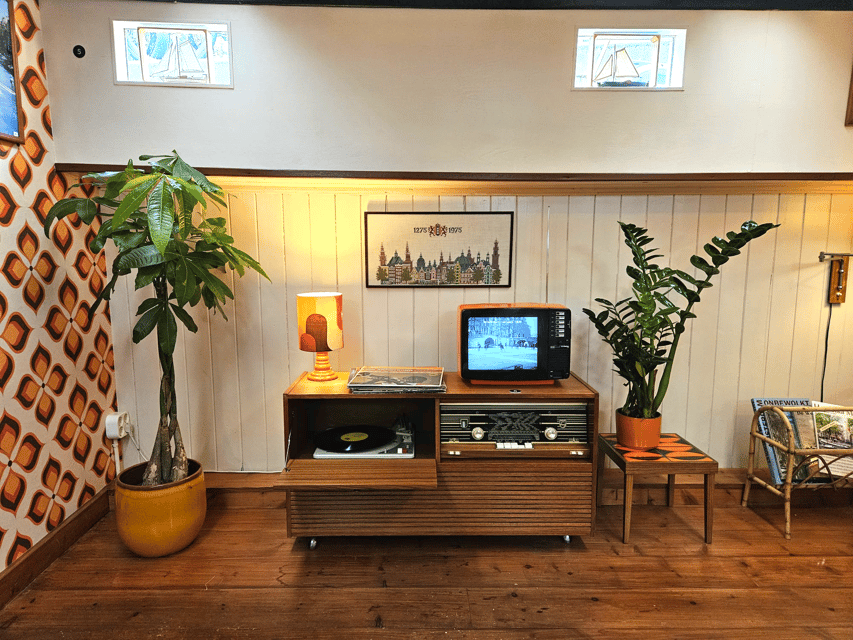
Amsterdam’s Houseboat Museum gives you something most canal cruises cannot: a look inside an actual home on the water. The Hendrika Maria began life as a 1914 cargo ship, sailed to Scandinavian countries, and became a family home in 1967. Inside, the original 1970s decor remains, right down to the orange, yellow, and brown color scheme.
I like the working-boat details, especially the sailing mast and leeboard, because they show how this vessel moved cargo before it carried sofas and kitchen cupboards. I also like the compact, hands-on design, which lets you see how four people made a home in roughly 80 square meters.
The main drawback is size. You can see the whole boat in 15 to 20 minutes with the audio guide, and a very fast visit could take only five minutes. Steep stairs and narrow spaces also make this a poor fit for anyone who needs step-free access or dislikes tight quarters.
Key points about the Hendrika Maria
- A 1914 cargo ship turned home: See how the Hendrika Maria changed from freight barge to residential houseboat in 1967.
- Original 1970s interior: Expect orange, yellow, and brown furnishings that feel like a preserved time capsule.
- A family-of-four perspective: The rooms show how daily life worked aboard a floating home.
- Working nautical equipment: An original sailing mast and leeboard reveal the boat’s earlier purpose.
- Short but focused visit: Most people can see the 80-square-meter interior in about 15 to 20 minutes with the audio guide.
- $12 entry: The price is fair if you enjoy design, boats, or Amsterdam’s houseboat culture, but less attractive if you want a long museum visit.
Why this small museum is worth your time
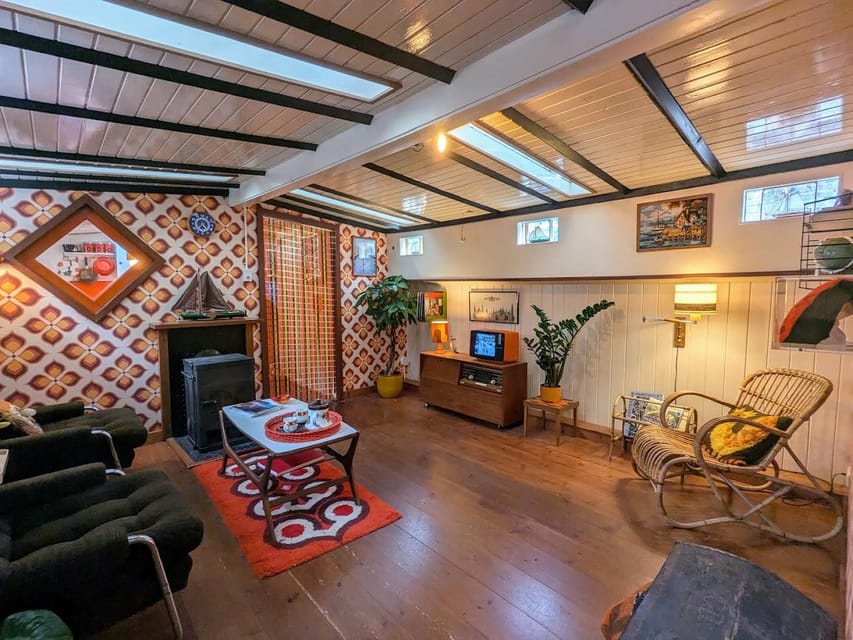
Amsterdam is famous for houseboats, but most visitors only see their exteriors from the canals. This museum lets you cross that boundary and see how a boat can function as a real home.
That difference matters. A modern floating house can look spacious and polished from the outside. The Hendrika Maria gives you a more practical picture: limited room, steep stairs, compact living areas, and furniture arranged around the boat’s shape.
I find that the museum works best as a short, specific stop rather than a major half-day attraction. It is not trying to compete with Amsterdam’s large art museums. Instead, it answers a simple question: how did people actually live on a houseboat for decades?
The answer comes through the preserved interior and the boat’s original working parts. You see both sides of its life, first as a cargo vessel and later as a family residence. That combination gives the visit more substance than a simple display of old furniture.
More Attraction Tickets in Amsterdam
- Amsterdam: Van Gogh Museum Ticket
★ 4.7 · 52,054 reviews - Amsterdam: Heineken Experience Ticket
★ 4.6 · 30,055 reviews - Amsterdam: Rijksmuseum Entry Ticket
★ 4.7 · 25,535 reviews
Boarding a 1914 cargo ship
The experience begins when you step aboard the Hendrika Maria. It was built as a cargo ship in 1914, so the boat’s structure comes from an era when vessels like this carried goods along European waterways.
The museum explains that the ship sailed to Scandinavian countries for freight transport. The original sailing mast and leeboard remain in place, and these are among the most useful details to look for before you focus on the living quarters.
The mast helps you picture the boat under sail. The leeboard, mounted to help the vessel move more effectively through the water, shows that this was not built as a house. These pieces connect the interior to the ship’s earlier working life.
I recommend taking a moment to look at the boat as a vessel before treating it like a room-by-room home. The narrow proportions and practical construction make more sense when you remember that the Hendrika Maria once carried cargo rather than a family.
Seeing how four people lived aboard
In 1967, the cargo ship was converted into a residential houseboat. The museum presents the former home of a family of four, giving you a clear scale for the space.
You are not looking at a model or a modern recreation. The interior is still original from the 1970s, when the boat began regular use as a house. That makes the visit feel personal, but also very specific to its era.
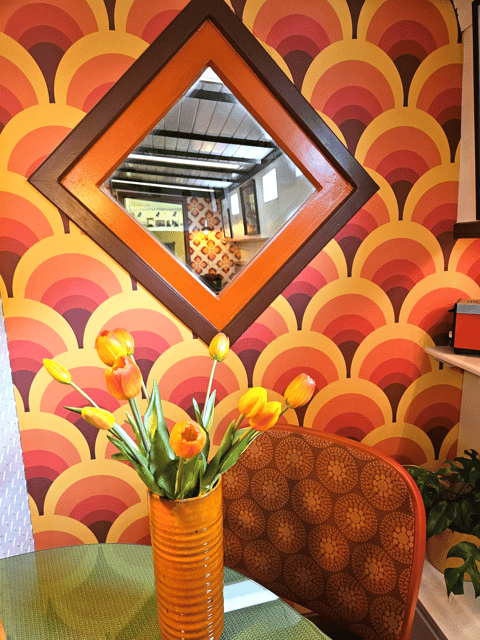
The most noticeable feature is the color. Orange, yellow, and brown appear throughout the interior, creating the kind of bold 1970s look that younger visitors may find amusing and older visitors may recognize immediately.
The decor is more than a visual joke. It helps place the boat in time. This was not a restored nineteenth-century sailing vessel arranged to look old. It became a home in the late twentieth century, and the design reflects the taste and materials of that period.
You can use the furnishings to imagine the daily compromises of life aboard. Every area had to serve a purpose, and movement was shaped by the boat’s narrow form. The museum does not need a huge collection to make that point. The space itself does the explaining.
The 80-square-meter interior and its limits
The houseboat covers about 80 square meters, which is enough to show a real home but not enough to let people spread out comfortably. Expect narrow passages and limited room around the displays.
This is one of the experience’s strengths. You get a direct sense of the scale instead of viewing houseboat life from behind glass. You can see how the rooms connect and how much space a family had for ordinary routines.
It is also the reason you should set your expectations correctly. This is a compact museum. You will not spend hours wandering through galleries, and busy moments may feel cramped.
A normal visit with the audio guide takes around 15 to 20 minutes. If you move quickly, you may see the main points in five minutes, but that would leave little time to think about the boat’s design or history.
I would plan on 20 minutes and treat any extra time as a bonus. That makes the museum easy to add between larger Amsterdam sights. It can fit neatly into a walking day, provided you are already visiting this part of the city.
More Museum Tickets in Amsterdam
- Moco Museum Amsterdam Entrance Tickets with Banksy & More
★ 4.4 · 10,088 reviews - Amsterdam: The Upside Down Museum Entrance Ticket
★ 4.4 · 9,506 reviews - Amsterdam: Red Light Secrets Museum Entry Ticket
★ 4.2 · 5,722 reviews - Amsterdam’s Weirdest Museum: Believe It or Not!
★ 4.5 · 4,086 reviews
Using the audio guide and interactive displays
The visit includes shared information about the boat and the people who lived aboard it. An audio guide helps you follow the story as you move through the interior.
The guide is useful because the boat’s small size means there is not room for long written panels everywhere. Audio lets you focus on the rooms, fittings, and structure while learning how the ship changed over time.
The experience is described as interactive, but you should think of that in a modest way. This is not a high-tech attraction with large screens or a staged performance. The physical boat is the main exhibit, and the information helps you read what you are seeing.
Take your time with the practical details. Look at the places where the vessel’s original function meets its later use as a home. The most interesting part is often not a single object, but the contrast between freight transport and domestic life.
The audio guide is available in English, French, Traditional Chinese, German, Spanish, Portuguese, Italian, and Dutch. That makes the visit easier to follow for many international visitors, though the information provided does not identify individual guides or a live host.
A time capsule from the 1970s
The interior design may be the museum’s most memorable feature. Orange, yellow, and brown dominate, giving the boat a strong period feel.
If you like design history, this is a real advantage. The colors and furnishings show how quickly a working vessel could be transformed into a home with a completely different mood.
If you prefer clean, modern interiors, you may find the decor dated rather than charming. That is part of the point, but it is still a matter of taste. The museum does not present a neutral houseboat. It presents one family’s preserved living space from a particular decade.
I like that the interior has not been smoothed into a polished fantasy. The boat’s identity comes from its ordinary use. It feels more useful to see a home with strong period styling than a generic boat decorated to please everyone.
Bring your curiosity about everyday life, not just an interest in boats. The museum is as much about household space, family routines, and changing ideas of comfort as it is about navigation.
The steep stairs and narrow passageways
The Hendrika Maria is a real boat, and that affects how you move through it. Steep stairs are part of the experience, and some areas may feel tight.
You should be comfortable climbing aboard and using steps that are not designed like those in a modern public building. The information provided warns that the stairs may not suit everyone.
The limited space also matters for children, older adults, and anyone who needs more room to move. The museum is not presented as step-free or fully accessible, so you should consider your own mobility before booking.
Photography is allowed, which is helpful if you want to remember the 1970s interior or the nautical equipment. Flash photography is not permitted inside. Use the visit to observe first, then take a few careful photographs without holding up movement through the boat.
Because the interior is small, a quieter visit will feel more comfortable. The museum does not provide food or drinks, and there is no hotel pickup or drop-off. Plan it as an independent city stop rather than a full excursion.
Is $12 good value?
At $12 per person, the ticket is reasonably priced for a focused museum visit. The question is not simply how long you stay. It is whether the subject interests you enough to make a short visit worthwhile.
I think the price works well for people who enjoy boats, architecture, domestic history, or unusual Amsterdam experiences. You are paying to enter an original vessel and see a preserved 1970s home, not just to look at a collection of objects.
The value is weaker if you measure attractions by time alone. A 15 to 20-minute visit costs more per minute than a large museum where you can spend half a day. One very quick visit could take only five minutes, which makes the ticket feel expensive.
You can improve the value by pairing the museum with other nearby plans, though the available information does not specify exact neighboring sights or travel times. Think of it as a compact addition to your day, not the main reason to visit Amsterdam.
The flexible booking terms help if your schedule is still changing. You can reserve and pay later, and cancellation is available up to 24 hours before the visit for a full refund. Check the available starting times when you choose a date, since the stated duration covers one day rather than a long guided program.
Who will enjoy this houseboat visit?
I would recommend the museum most strongly to you if you like places that show ordinary life in a distinctive setting. The family-of-four story gives the boat a human scale, while the mast and leeboard add a clear connection to its working past.
It also suits design fans who enjoy seeing authentic 1970s interiors. The orange, yellow, and brown palette is not subtle, but it gives the visit a strong sense of place and time.
Families may find the boat interesting, especially if children are curious about how people can live on water. Still, the steep stairs and small rooms mean you should supervise children closely and consider whether the space will be comfortable.
The museum is less suitable for you if you want a long, guided city tour, a large collection, or a fully accessible venue. It also may not satisfy you if you are only interested in Amsterdam’s grand canals and famous buildings.
Practical advice before you go
Plan for about 15 to 20 minutes, then leave room for a slower look if the boat interests you. Rushing through in five minutes is possible, but you will get more from the visit if you listen to the audio guide and examine the changes between ship and home.
Wear shoes that feel secure on stairs. The boat’s compact layout makes bulky bags and awkward clothing less convenient, though no specific bag policy is provided.
Use the audio guide in the language that suits you best. The available choices include English, French, Traditional Chinese, German, Spanish, Portuguese, Italian, and Dutch.
Remember that flash photography is not allowed. You can take pictures, but the small interior means it is polite to pause rather than block the route.
There is no food, drink, or transport service included. This is a simple entry ticket, so arrange your own way to the museum and combine it with the rest of your Amsterdam day.
Should you book the Houseboat Museum?
Book it if you want an authentic look at Amsterdam’s houseboat culture and enjoy compact museums with a strong sense of place. The preserved 1970s interior, the story of a family of four, and the original sailing equipment make this more interesting than a simple walk past a canal boat.
Skip it if you need step-free access, dislike tight spaces, or expect several hours of entertainment for $12. The museum is short, and its value depends on your interest in domestic life, boat design, and twentieth-century interiors.
For the right visitor, the short length is an advantage. You can see something unusual without giving up half your day. Go expecting a small, focused museum, and the Hendrika Maria can add a memorable human detail to your time in Amsterdam.
FAQ
What is the Amsterdam Houseboat Museum?
It is a museum inside the Hendrika Maria, a 1914 cargo ship converted into a residential houseboat in 1967.
How long does a visit take?
A visit with the audio guide takes about 15 to 20 minutes. You could see the interior in as little as five minutes if you move quickly.
How large is the houseboat interior?
The houseboat covers about 80 square meters.
How many people lived on the boat?
The museum shows how a family of four lived aboard the vessel.
What does the interior look like?
The interior retains its original 1970s design, with prominent orange, yellow, and brown colors.
Does the boat still have original sailing equipment?
Yes. The Hendrika Maria still has an original sailing mast and a leeboard.
Is photography allowed inside?
Yes, photography is allowed, but flash photography is not permitted.
Are there stairs inside the museum?
Yes. The boat has steep stairs, which may not be suitable for everyone.
What languages are available for the audio guide?
Information is available in English, French, Traditional Chinese, German, Spanish, Portuguese, Italian, and Dutch.
Does the ticket include food or transport?
No. Food, drinks, hotel pickup, and hotel drop-off are not included.
Just added around Amsterdam
- Private sightseeing tour to Bruges and chocolate from Amsterdam★ 5.0 · 11 reviews
- Amsterdam: Rijksmuseum (Private Tour & Priority Access)★ 5.0 · 27 reviews
- Amsterdam: Private Romantic Evening Canal Cruise + Bubbles/Snacks★ 5.0 · 46 reviews
- Amsterdam Private Shopping Experience★ 5.0 · 7 reviews
- Rijksmuseum Amsterdam Private Guided Tour★ 5.0 · 57 reviews
- Amsterdam Rijksmuseum PRIVATE TOUR with a Local Private Guide★ 5.0 · 159 reviews
- Private Photo Session in Amsterdam★ 5.0 · 15 reviews
- Private One way Transfer Amsterdam Airport to Amsterdam★ 3.5 · 42 reviews
Museums, compared.

Moco Museum Amsterdam Entrance Tickets with Banksy & More
Read our review →


Amsterdam’s Weirdest Museum: Believe It or Not!
Read our review →

Browse the lists this tour appears in