Reviewed · AMSTERDAM TOURS
Amsterdam: Cultural Highlights in English/German/Italian
Amsterdam’s story comes into focus on this 3 to 4-kilometer walking route, which links royal power, trade, colonial history, Jewish life, LGBTQ+ rights, and the quieter corners of the old center. You move from the National Monument and Dam Square to the Nine Streets and Begijnhof, with no traffic or parking to worry about.
I like the way the tour mixes major sights with useful follow-up advice. The guide can point you toward shopping in the Nine Streets, food ideas, and lesser-known places to explore later. I also like the small-group limit of 15 people, which makes it easier to ask questions and keep the pace comfortable.
The main thing to check before booking is the language. The experience is offered in English, German, and Italian, but the booking information also identifies German as the tour language in one place. Confirm your chosen departure and language, and remember that this is an outdoor walk, not a museum tour or an Anne Frank House visit.
Key points at a glance
- A strong first-day orientation: The route covers central Amsterdam’s main historical themes in about two hours.
- History beyond pretty canals: You hear about the Golden Era, colonialism, religious change, Jewish Amsterdam, and LGBTQ+ life.
- Useful local advice: Expect tips for the Nine Streets, food, hidden churches, and places to visit after the walk.
- Small group format: The maximum is 15 people, with the group walking at the pace of its slowest member.
- No admission fees during the walk: The listed stops are viewed from public areas, and no ticket is needed.
- A moderate but real walk: Wear comfortable shoes, carry water, and bring a hat in hot weather.
Starting beneath the National Monument
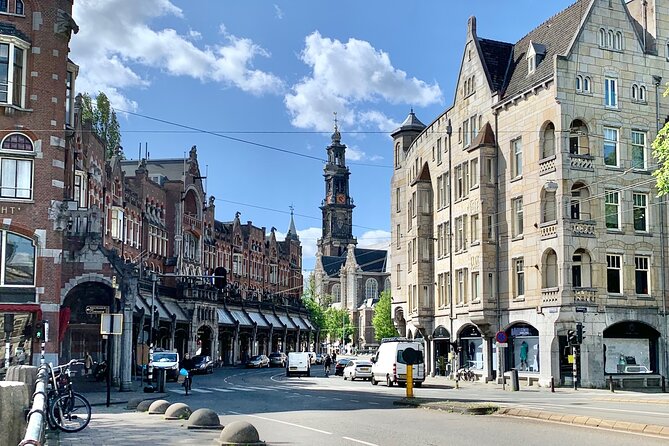
The tour begins at the National Monument on Dam Square. This is a practical meeting point in the heart of Amsterdam, close to public transportation and easy to use as a reference point when you are still learning the city.
The opening stop lasts only about five minutes, but it gives the guide a clear place to gather the group and set the tone. From here, you are already in the middle of Amsterdam’s old center, so the tour gets moving without a long transfer or a bus ride.
I would book this walk early in your stay. It is often reserved well ahead of time, and the route gives you a useful mental map for later wandering. You can also ask your guide about restaurants, shopping, and places that fit your interests before you spend time crossing the city on your own.
A few more Amsterdam half-days worth comparing
- Amsterdam: Van Gogh Museum Ticket
★ 4.7 · 52,054 reviews - Amsterdam Classic Saloon Boat Cruise with Drinks and Cheese
★ 5.0 · 31,825 reviews - Amsterdam Luxury Canal Cruise + Unlimited Drinks & Bites option
★ 5.0 · 30,518 reviews
Dam Square and Amsterdam’s beginnings
Dam Square gets about 15 minutes. This is where the guide explains how Amsterdam began and how the city developed around its early settlement.
The square is also the setting for two important buildings: the Nieuwe Kerk and the former town hall, now the Royal Palace. You will learn how civic power and royal ceremony became tied to this central space.
The tour does not include paid entry into the palace or church, so you should think of this part as an outdoor introduction. That keeps the walk moving and the price low, but it also means you will not see the interiors.
For a first look at Amsterdam, this is useful context. The square can feel crowded and visually scattered if you do not know what you are looking at. A guide helps connect the buildings to the city’s political beginnings instead of leaving you with a collection of grand facades.
Beurs van Berlage and the Golden Era
At the Beurs van Berlage, the focus shifts from Amsterdam’s beginnings to its rise as one of the world’s wealthiest cities during the Golden Era. The stop lasts about 15 minutes.
This is one of the most valuable parts of the route because it explains the machinery behind Amsterdam’s prosperity. You are not simply told that the city became rich. You get a place in the city center where trade and public life can be discussed together.
The stop also helps balance the tour’s more scenic moments. Amsterdam is easy to admire for its canals and narrow houses, but its wealth came from commerce, shipping, finance, and colonial activity. You need that background to understand why the center looks the way it does.
Nieuwe Kerk and civic power
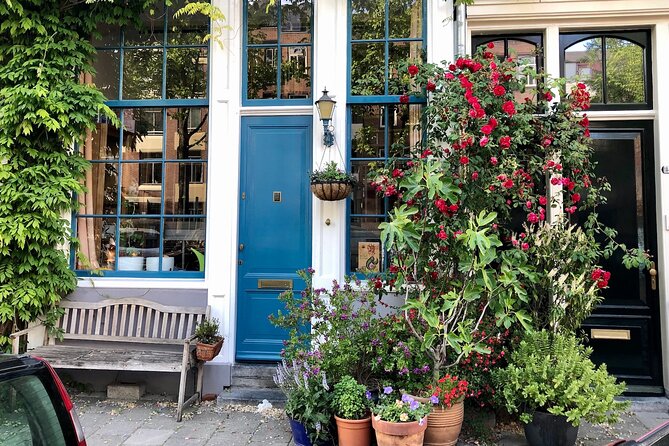
The Nieuwe Kerk receives a short five-minute stop. The guide explains its role in Amsterdam’s development and why it matters beside Dam Square and the Royal Palace.
That short timing tells you what to expect. This is an exterior orientation, not a long church visit. If the church is open and you want to see more, you would need to return separately and arrange your own admission.
Still, the stop works well in sequence. After hearing about the city’s government and wealth, you see how religious and civic institutions shaped the same central district.
Same base, a completely different sort of day:
- Amsterdam: Heineken Experience Ticket
★ 4.6 · 30,055 reviews - Amsterdam: Rijksmuseum Entry Ticket
★ 4.7 · 25,535 reviews - Amsterdam: Classic Boat Cruise with Optional Cheese & Wine
★ 4.6 · 22,925 reviews - Amsterdam: Evening Cruise with Optional Wine and Snacks
★ 4.4 · 19,696 reviews
Multatuli and the difficult colonial past
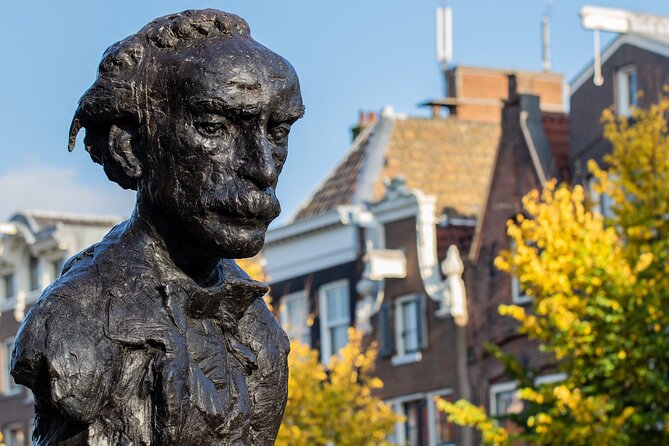
The statue of Multatuli gives the guide about ten minutes to discuss Amsterdam’s colonial era and its connection to one of the Netherlands’ most important books.
This is a welcome choice because it pushes the tour beyond polished architecture. Amsterdam’s prosperity had a colonial side, and the stop introduces that subject through a literary figure and a public monument.
You should expect a concise explanation rather than a full course on Dutch colonial history. The value is in recognizing the connection between a statue, a national book, and the city’s wider past. If this subject matters especially to you, make a note of the names and themes discussed so you can continue learning after the tour.
Magna Plaza and the changing city center
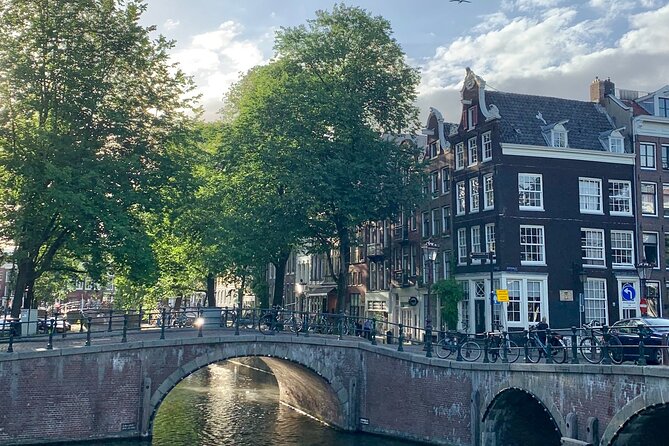
Magna Plaza gets about five minutes. The guide explains the importance of the former post office, a building that now serves a very different public purpose.
This quick stop shows how Amsterdam reuses older buildings. It also gives you a visual break from churches, statues, and monuments. The tour is not only about famous people and major events. It also asks you to notice how ordinary civic buildings change with the city.
Because the stop is brief, you may want to linger later if the architecture catches your eye. The walk gives you the background, then lets you decide what deserves a closer look.
Westerkerk and the Jordaan connection
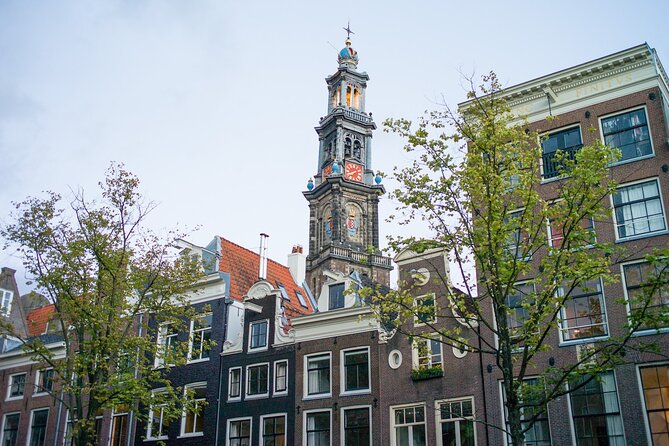
The tour continues to Westerkerk, described as Amsterdam’s biggest church, for about ten minutes. The guide connects the church with the Jordaan area, one of the city’s best-known historic neighborhoods.
This is where the walk begins to feel less like a central-square tour and more like a neighborhood introduction. You get a sense of how a major church relates to the streets around it, rather than viewing it as an isolated landmark.
Again, the emphasis is on explanation from outside. No admission fee is included or needed for the stops as presented. If you want an interior visit, treat that as a separate plan.
The route is still manageable, but you are covering real distance. The group moves at the pace of its slowest person, which is considerate for mixed ages and walking speeds. It also means the walk may feel less brisk than a private tour.
Anne Frank’s story without an Anne Frank House ticket
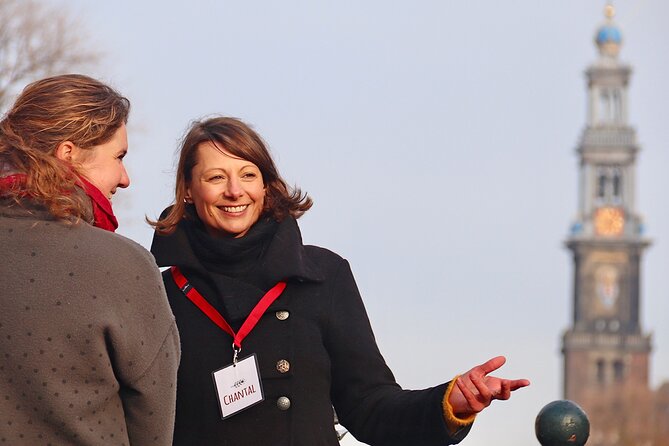
At the Anne Frank statue, the guide discusses Jewish Amsterdam and how Anne Frank and her family experienced their time in the city. This stop lasts about ten minutes.
It is important to set your expectations here. The walk does not include a visit to the Anne Frank House. The statue stop offers historical context in a public setting, but it cannot replace the museum’s rooms, documents, and detailed presentation.
That distinction matters because one participant expected an Anne Frank House visit and was disappointed when it did not happen. The activity details clearly identify the statue as the stop, so read the route carefully before booking.
The subject is handled as part of a wider look at Amsterdam’s Jewish history. That broader framing is useful, since it places Anne Frank within the city’s wartime and Jewish story rather than treating her as an isolated name.
The Gay Monument and Amsterdam’s LGBTQ+ story
The Gay Monument receives about ten minutes and introduces Amsterdam’s LGBTQ+ history.
This is one of the tour’s most distinctive stops. Many short city walks focus on trade, royalty, canals, and churches. Adding LGBTQ+ history gives you a fuller picture of the city and its changing public life.
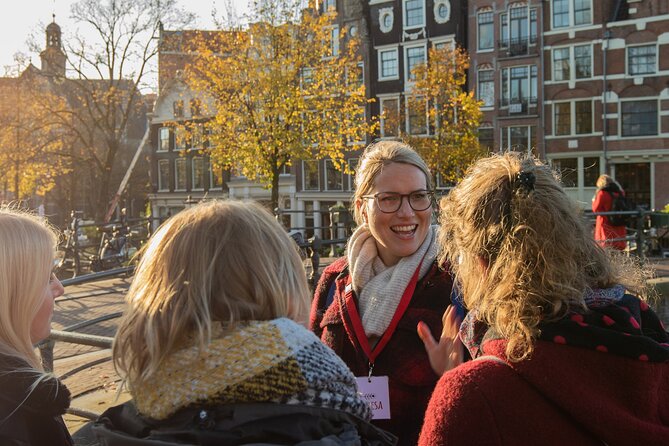
You can also ask questions here, provided the group schedule allows. Guides such as Deborah, Justin, Josh, Stephanie, Marina, Justus, and Noeme have been praised for clear explanations, friendly conversation, and answers that connect history with present-day customs. Your guide will vary, but the format encourages questions rather than a silent march from one landmark to the next.
Shopping advice in the Nine Streets
The Nine Streets, or Negen Straatjes, receives about five minutes. The stop is short, but the practical payoff can last much longer.
Your guide can point out how to use the area for shopping after the tour. This is a good example of the walk’s value beyond its formal history. You are not just shown a district and sent away. You receive suggestions for returning when you have more time.
The Nine Streets are especially useful after a history walk because you can explore them at your own pace. You might choose to browse, eat, or simply walk the small connecting streets. Since the tour only gives you an introduction, do not expect an extended shopping session during the two-hour route.
Spui, Begijnhof, and Amsterdam after the Reformation
The final major stop is Spui, with about 15 minutes devoted to the historic Begijnhof and the Reformation in Amsterdam.
This is a strong ending because the area brings together religious change, quiet courtyards, and the city’s less obvious details. The guide points out the concealed church, and you receive suggestions for other places to explore after the walk.
The Begijnhof is also a reminder that Amsterdam’s most interesting spaces are not always the largest monuments. You enter the area with more awareness of what to look for, including the way religious life continued and adapted during periods of change.
The tour ends back at the meeting point. That makes it easy to continue your day from central Amsterdam, return to your hotel, or revisit one of the areas that caught your attention.
What the $33.88 price delivers
At $33.88 per person, the main value is the guide’s two hours of interpretation and practical advice. You are not paying for entrance tickets, because no paid admissions are part of the walk. The price is reasonable if you want a structured introduction rather than a self-guided route with facts pulled from a map or phone.
The value is strongest for a first visit. You cover major themes quickly, learn where several districts fit together, and get advice you can use for the rest of your trip.
It is less compelling if you already know central Amsterdam well or prefer to spend two hours inside museums. You also need to add tips for the guide if you feel the service deserves them. Tips are not included.
The small-group limit helps justify the price. A group of up to 15 people is large enough to keep the cost below a private tour while still allowing questions. It is not the same as a one-on-one walk, though, and the pace is set by the whole group.
Language, walking conditions, and who should book
The experience is described as available in English, German, or Italian. At the same time, one section identifies the tour as German, so I would confirm the language before completing your booking. The names in the feedback include guides who have led German and English walks, but the individual guide is not guaranteed.
You will walk roughly 3 to 4 kilometers over two hours. Wear comfortable shoes, especially if you plan to continue exploring afterward. In warm weather, bring water and a hat.
The tour is suitable for children, and most people can participate. It is not designed for someone who wants a slow, seated sightseeing experience. It is also not a red-light district tour. The route passes only along the southern side of that area, and it does not visit a coffee shop.
Free cancellation is available until 24 hours before the start time. Within 24 hours, you do not receive a refund. The activity depends on good weather, so a weather cancellation gives you the choice of another date or a full refund.
Should you book this Amsterdam walk?
Book it if you want a well-paced first look at Amsterdam’s center, especially if you care about more than canals and postcard views. The combination of the Golden Era, colonial history, Anne Frank’s Amsterdam, LGBTQ+ life, religious change, and practical neighborhood advice gives you a useful foundation.
It is a particularly good fit for couples, families, and solo visitors who want to ask questions without paying for a private guide. It also suits anyone who wants shopping and food suggestions alongside historical context.
Skip it if you expect entry into the Royal Palace, Nieuwe Kerk, or Anne Frank House. Those places are discussed from the outside or nearby. Also check the language carefully, bring proper walking shoes, and be ready for a group pace.
For $33.88, this is a sensible way to get your bearings early in an Amsterdam visit. The best payoff comes when you use the final tips: return to the Nine Streets, look for the concealed church at Begijnhof, and follow up on the parts of the city’s past that interest you most.
FAQ
Where does the Amsterdam cultural walking tour begin?
The tour begins at the National Monument on Dam Square in Amsterdam, Netherlands.
Where does the tour end?
The activity ends back at the meeting point.
How long is the walking tour?
The tour lasts approximately two hours.
How far does the group walk?
The route covers about 3 to 4 kilometers.
What languages are available?
The tour is described as being offered in English, German, and Italian. One section identifies German as the tour language, so confirm your preferred language when booking.
Does the tour visit the Anne Frank House?
No. The route stops at the Statue of Anne Frank and discusses Jewish history and Anne Frank’s experience in Amsterdam, but it does not include admission to the Anne Frank House.
Is the tour suitable for children?
Yes. The activity is identified as suitable for children, and most people can participate.
What happens if the weather is poor?
The experience requires good weather. If it is canceled because of poor weather, you will be offered a different date or a full refund.
Just added around Amsterdam
- Amsterdam Essence in German: 90-minute waterway trip★ 5.0 · 11 reviews
- Private full-day customizable tour of the Netherlands from Amsterdam★ 5.0 · 9 reviews
- Private Daytrip Giethoorn and Windmills of Zaanse Schans from Amsterdam★ 5.0 · 4 reviews
- Bruges Private Custom Tour from Amsterdam★ 4.5 · 13 reviews
- Private Day Tour: Rotterdam and The Hague. English or Spanish★ 4.5 · 20 reviews
- Private day trip to Bruges from Amsterdam★ 5.0 · 6 reviews
- Private day trip to the Dutch castles from Amsterdam★ 5.0 · 10 reviews
- Private Amsterdam City Highlights Bike Tour (PRIVATE GUIDE)★ 5.0 · 28 reviews
Amsterdam Tours, compared.

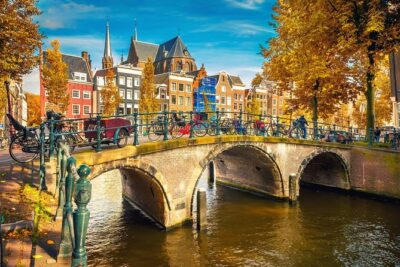
Amsterdam Classic Saloon Boat Cruise with Drinks and Cheese
Read our review →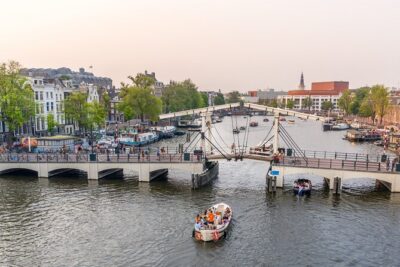
Amsterdam Luxury Canal Cruise + Unlimited Drinks & Bites option
Read our review →

Classic Boat Cruise with Optional Cheese & Wine
Read our review →
Evening Cruise with Optional Wine and Snacks
Read our review →