
Reviewed · MUSEUMS
Amsterdam: ARTIS-Micropia Microbe Museum Entry Ticket
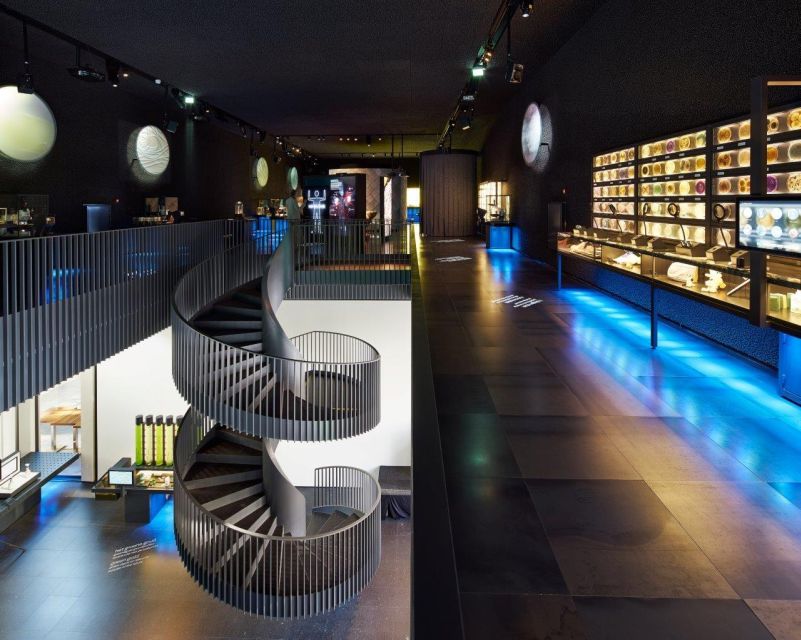
Amsterdam’s ARTIS-Micropia turns bacteria, fungi, viruses, and other tiny life forms into something you can actually see and understand. The body scanner is a memorable starting point: it shows how many microbes live on and inside you, which may be fascinating, alarming, or both.
I like the museum’s mix of real science and playful interaction, especially the microscope stations and the stamp-collecting trail for children. I also like its location beside ARTIS Zoo and in a pleasant part of Amsterdam where you can pair the visit with the zoo, Groote Museum, or a coffee nearby. The main drawback is value: at about $21 per person, Micropia can feel expensive if you finish in 45 minutes or are not especially interested in biology.
Key points to know before you go
- The world’s only microbe museum: ARTIS-Micropia focuses entirely on life too small to see with your eyes alone.
- Plan 45 minutes to two hours: A quick visit works for families, while careful readers can spend much longer at the displays.
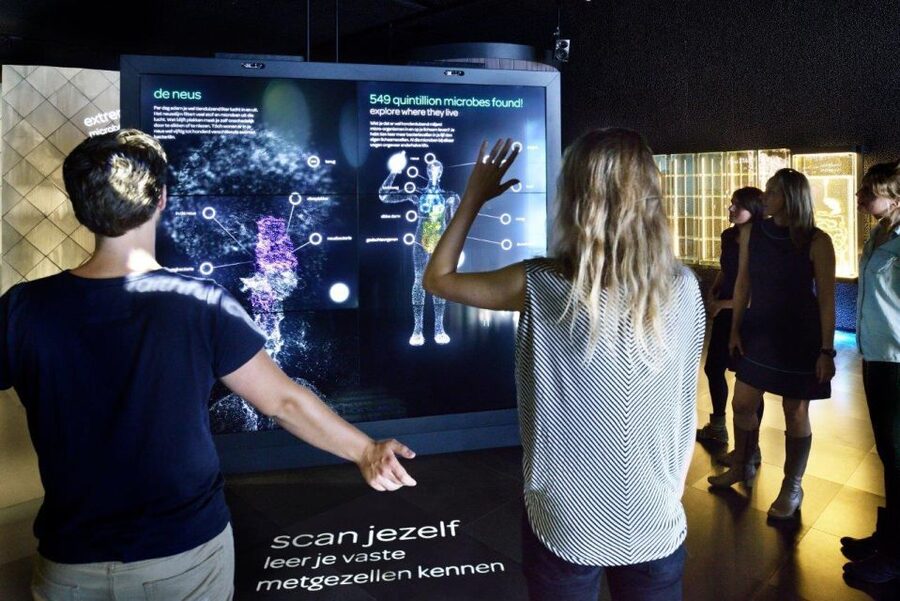
- Scan your own body: The interactive scanner reveals microbes found on and inside you.
- Collect microbe stamps: Children often enjoy the stamp trail, which gives the visit a simple sense of purpose.
- Daily lab talks: Staff explain science in front of the Laboratorium, adding a human voice to the exhibits.
- Children ages 0 to 12 enter free: The recommended age is 8 and older, though younger children may enjoy the interactive parts.
Why ARTIS-Micropia is different from an ordinary museum
Most museums ask you to look at large objects: paintings, fossils, machines, or animals. Micropia asks you to think about the tiny life already surrounding you. Microbes are in the air, on your skin, in your gut, in food, and throughout the natural world.
That idea gives the museum a useful purpose. You are not simply learning about remote organisms under glass. You are learning about life that is already part of your body and daily routine. Microbes help digest food, shape flavors, support health, and maintain balance in nature.
The museum makes this subject approachable without treating it as a children-only attraction. Families get interactive machines and stamp collecting. Adults with an interest in biology can spend time reading the more detailed explanations, looking at living cultures, and studying the scientific displays.
I would not compare Micropia with a large natural history museum. It is a focused experience in a relatively compact space. That focus is its strength, but it also explains why some people may feel the admission price is high for the amount of floor space.
More Attraction Tickets in Amsterdam
- Amsterdam: Van Gogh Museum Ticket
★ 4.7 · 52,054 reviews - Amsterdam: Heineken Experience Ticket
★ 4.6 · 30,055 reviews - Amsterdam: Rijksmuseum Entry Ticket
★ 4.7 · 25,535 reviews
Arriving at Plantage Kerklaan
The museum is at Plantage Kerklaan 38 to 40, about a 10-minute walk from central Amsterdam. It sits in the ARTIS area, beside Amsterdam Royal Zoo and close to the Groote Museum.
This location makes planning easy. You can visit Micropia on its own, then continue to the zoo or Groote Museum if you have a combination ticket. You can also treat it as part of a longer afternoon around the ARTIS grounds, where there are cafes and places to sit.
The neighborhood is a useful advantage if you have a booking time and arrive early. You can wait nearby rather than standing around an ordinary city street. The zoo area also gives the visit a pleasant setting, especially if you want a break after time indoors.
Micropia is wheelchair accessible. Dutch and English are used, and the activity is designed for independent exploration rather than a fixed guided tour. Staff are available to help, and daily lab talks take place in front of the Laboratorium.
Seeing the invisible world through real displays
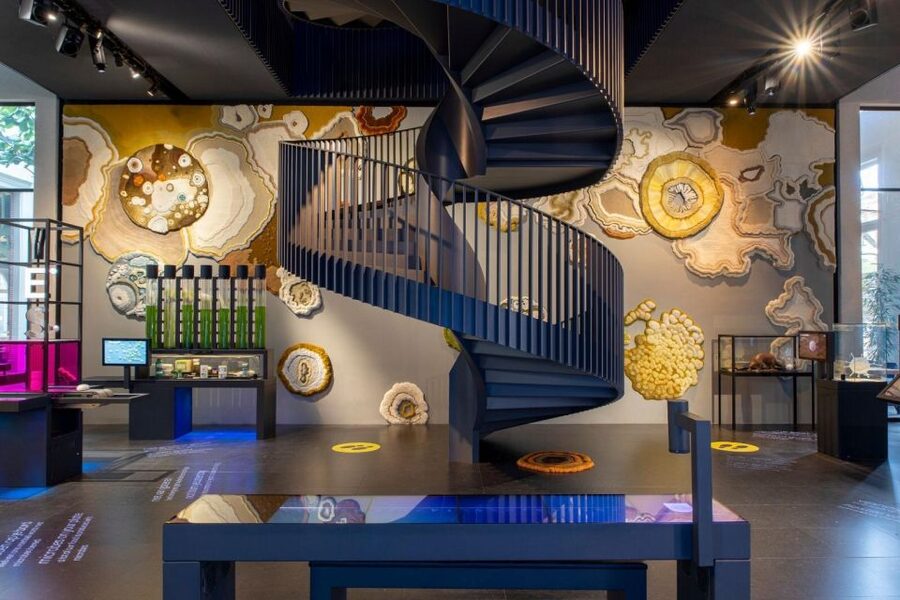
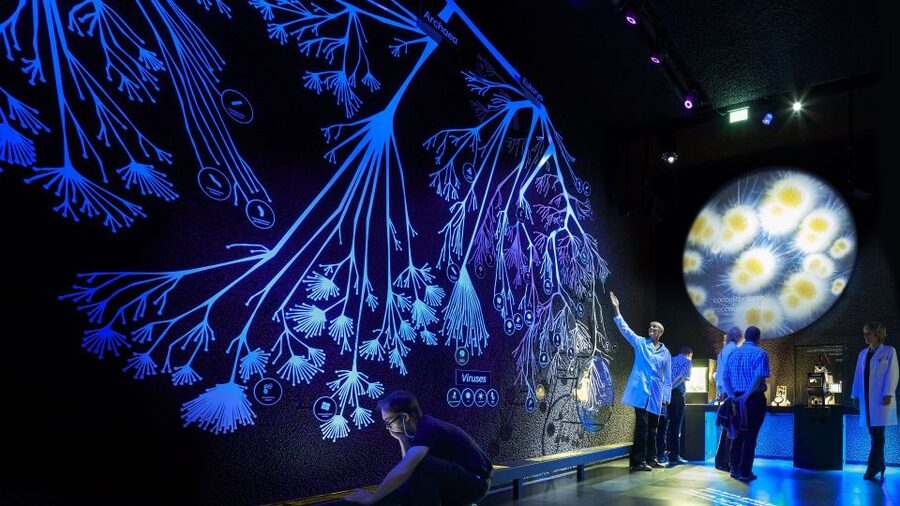
Inside, the museum uses living microbes, microscopes, screens, animations, and explanatory panels to make a difficult subject clear. You are not expected to arrive with a science background. The displays introduce the basic idea first, then give you ways to look closer.
The microscope stations are central to the experience. They give you a chance to examine organisms that are normally beyond human sight. Some displays use magnified forms and visual models, including attractive sculptures of bacteria and viruses. These help you understand shape and structure before you move on to the more technical information.
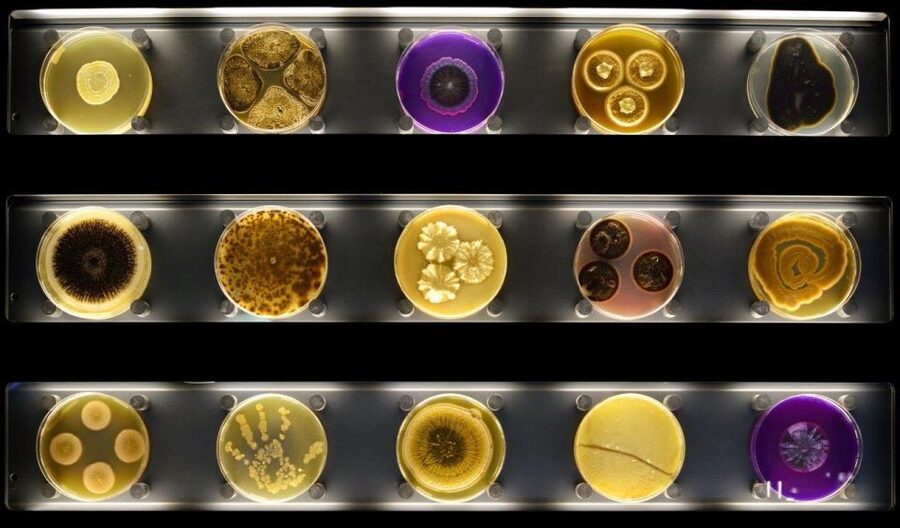
Living cultures and growing mould provide a more direct connection with the laboratory. They can be thrilling in a slightly unsettling way, especially if you are used to thinking of mould and bacteria only as problems to avoid. Micropia gives them a wider context. Some microbes cause illness, but others help food, bodies, and ecosystems function.
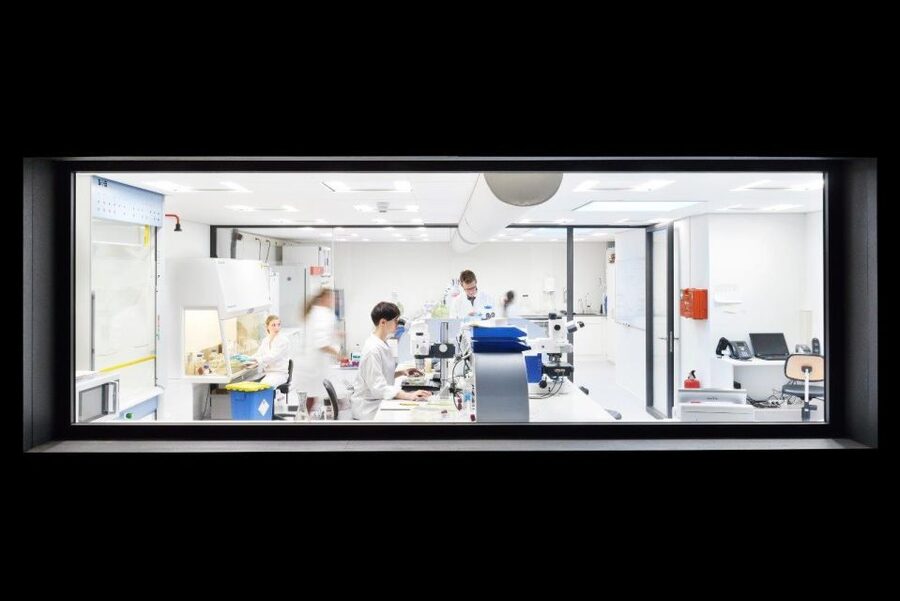
The museum also includes an actual visible laboratory. That detail matters because it shows that microbiology is active work, not just a set of facts printed on a wall. You can see where the subject is studied, and the lab talks help explain what you are looking at.
The body scan is the museum’s best conversation starter
The body scan is one of the most memorable activities. It shows the microbes living on and inside you, turning an abstract idea into something personal.
You may find the results a little alarming. That is part of the point. The scan helps correct the common idea that all microbes are dangerous. Your body is a living community, and many microbes are normal or useful parts of it.
I would make time for this station instead of rushing past it. It gives you a simple way to connect the museum’s science with your own life. Children may find it funny or surprising, while adults often appreciate the reminder that cleanliness and health are more complicated than simply removing every microbe.
The scanner is also a good point for conversation between parents and children. It provides a clear question to take through the rest of the museum: what do these organisms do, and why are they here?
More Museum Tickets in Amsterdam
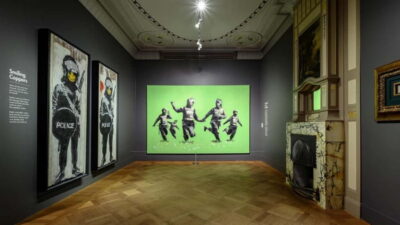
- Moco Museum Amsterdam Entrance Tickets with Banksy & More
★ 4.4 · 10,088 reviews - Amsterdam: The Upside Down Museum Entrance Ticket
★ 4.4 · 9,506 reviews - Amsterdam: Red Light Secrets Museum Entry Ticket
★ 4.2 · 5,722 reviews - Amsterdam’s Weirdest Museum: Believe It or Not!
★ 4.5 · 4,086 reviews
Interactive exhibits keep children involved
Micropia works best for children who can read some of the information and enjoy asking questions. The recommended age is 8 and older, and the museum’s interactive design suits that age group well.
The stamp trail gives children a small mission as they move through the displays. You collect microbe stamps along the way, which turns the visit into a search rather than a passive walk around a museum. It is a simple idea, but it gives younger visitors a reason to stop at each station.
Children up to age 12 enter free, which makes the price easier for families to manage. The museum is still not necessarily a quick bargain for adults, but free admission for children can make it a sensible addition to a family day at ARTIS.
During spring break, children can also collect the free Micro Mission at the ticket desk. This activity looks at how plants, animals, and microbes work together in nature. It includes questions such as how gut microbes help digest food, giving children a clear way to connect the small world of microbes with larger living systems.
A creative workshop is also listed as part of the spring-break program. Availability is tied to that period, so check the current schedule when planning your visit.
Daily lab talks add a human voice
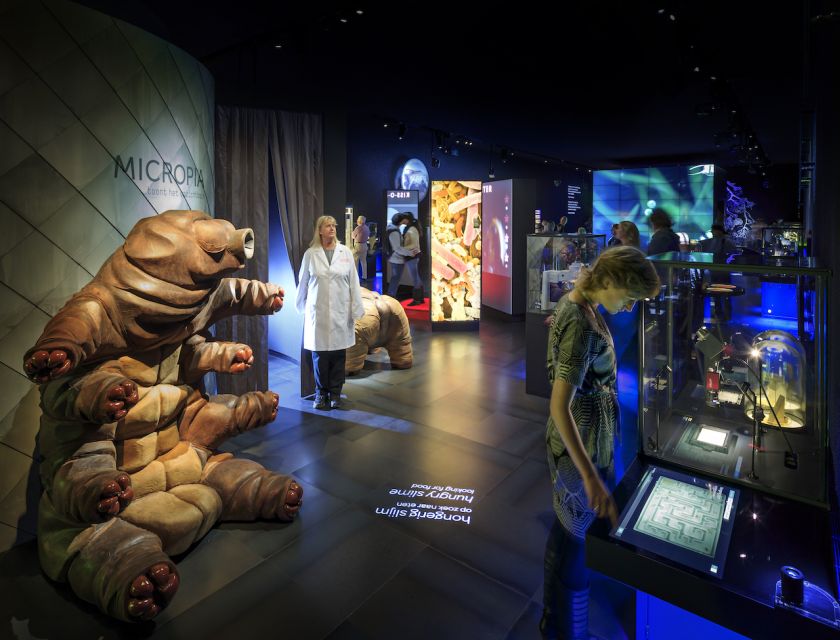
The museum’s daily lab talks take place in front of the Laboratorium. These talks are useful if you want more than screens and written panels.
The experience does not depend on a named guide. Instead, staff and lab workers provide explanations around the museum and answer questions. The listed languages are Dutch and English, so English-speaking visitors should be able to follow the main information.
I especially like the idea of timing your visit around a lab talk. Interactive machines can catch your attention, but a short explanation from someone connected with the laboratory can help you understand why a display matters.
Because this is not a full-length guided tour, you retain control over your pace. You can listen to the talk, return to a display, or move on to the next station. That suits people with different interests, though anyone expecting a continuous guided explanation should adjust expectations.
How long should you allow?
The practical answer is between 45 minutes and two hours.
A fast visit may take around 45 minutes if you focus on the main machines, scan your body, collect some stamps, and move through the central exhibits. This can work well when Micropia is one stop in a larger ARTIS day.
Allow closer to two hours if you read the displays carefully, use the microscopes, watch the animations, examine the growing cultures, attend a lab talk, and stop to think about the explanations. People with a background in biology or microbiology may want even more time at the detailed stations.
The museum is valid for one day, so you can plan it around the rest of your Amsterdam schedule. Opening hours are generally 10 am to 5 pm daily. The holiday schedule includes 9 am to 5 pm on December 24, 25, and 26, 9 am to 4 pm on December 31, and 10 am to 5 pm on January 1.
Do not assume that a one-day ticket means you need a full day at Micropia. It means you have flexibility to visit within the operating day. The actual museum visit is usually a compact half-day activity at most.
Is the $21 admission good value?
At about $21 per person, Micropia is not a throwaway attraction. The value depends on how you use it.
I think the price makes more sense if you are interested in science, visiting with children, or combining the museum with the ARTIS area. Adults who read everything and use the interactive displays can spend close to two hours inside. Families also benefit from free entry for children from 0 to 12.
The price may feel high if you want a large museum with many rooms or a full-day attraction. Micropia is specialized, and its subject limits the physical scale of the exhibition. You are paying for unusual content, laboratory elements, microscopes, and interactive presentation rather than a huge collection.
A combination ticket with the ARTIS-Groote Museum can improve the value if you want to explore how humans, animals, plants, and microbes connect. You can also add ARTIS Zoo, though zoo admission is not included with the Micropia ticket.
The nearby zoo creates an easy full-day plan, but do not confuse the tickets. Admission to the Royal Zoo and Groote Museum is separate unless you select a combination option.
Who will enjoy Micropia most?
Micropia suits curious families, science fans, biology students, and adults who enjoy museums with a clear subject. It is particularly good for children around 8 and older because they can understand the explanations while still enjoying the stamps, machines, and body scan.
It also works for couples or solo visitors. You do not need to bring children to appreciate the subject. The visual effects, animations, sculptures, and live cultures give adults plenty to examine, especially if you have an interest in bacteria, fungi, or the human body.
The museum may not suit you if you dislike reading, have little interest in science, or want a large collection of traditional objects. Some displays ask you to stop and explore rather than simply look. If you rush, the visit can feel short.
For young children under 8, the interactive elements may still be fun, but the recommended age is a useful guide. The scientific explanations are likely to have more impact on older children.
Practical tips for a smoother visit
Book a time that gives you room to stay for a lab talk. Since the museum is open from 10 am to 5 pm, an early or mid-day visit leaves time for the zoo, Groote Museum, or nearby cafes.
Use the free lockers for coats and bags if they are available during your visit. Hands-free movement makes it easier to use the interactive stations and microscopes.
Pick up the Micro Mission at the ticket desk during spring break. It is free and gives younger visitors a clear task as they move through the museum.
Allow extra time if you want to read every panel. A quick loop and a careful visit are very different experiences here.
The museum is wheelchair accessible, but individual exhibits may still be easier or harder to approach depending on crowding. If accessibility is important to your planning, confirm current arrangements directly with ARTIS.
One practical warning: the museum has received criticism about the cleanliness of its toilets. That does not change the exhibition itself, but it is worth knowing if small details of facilities matter strongly to you.
Should you book ARTIS-Micropia?
Book it if you want an unusual, focused museum that makes microbiology visible and personal. The body scanner, microscopes, living cultures, lab talks, and stamp trail give the visit more variety than a simple exhibition of panels.
I would especially recommend it for families with children ages 8 to 12, adults interested in science, and anyone already planning to visit ARTIS Zoo or the Groote Museum. The free child admission helps with family value, while the location makes it easy to add to a day around Plantage Kerklaan.
Think twice if you expect a large museum or need a full-day attraction for $21. Micropia can be finished in 45 minutes, although careful visitors may spend two hours. For the right audience, its unusual subject makes the admission worthwhile. For everyone else, it is best treated as a compact and distinctive stop rather than the main event of your Amsterdam itinerary.
FAQ
Where is ARTIS-Micropia located?
ARTIS-Micropia is located at Plantage Kerklaan 38 to 40 in Amsterdam, North Holland. It is about a 10-minute walk from the city center and next to ARTIS Zoo.
What does admission include?
The ticket includes admission to ARTIS-Micropia. It does not include entry to ARTIS Amsterdam Royal Zoo or the ARTIS-Groote Museum.
How long does a visit to Micropia take?
A visit can take about 45 minutes if you move quickly through the main displays. Allow up to two hours if you read the information, use the microscopes, attend a lab talk, and explore the interactive exhibits carefully.
Is Micropia suitable for children?
Yes. The recommended age is 8 and older, and children can use interactive displays and collect microbe stamps. Children ages 0 to 12 can enter free.
What is the Micro Mission?
The Micro Mission is a spring-break activity for young explorers. It explains how plants, animals, and microbes work together in nature. It can be collected free at the ticket desk during spring break between 10 am and 5 pm.
Are lab talks available?
Daily lab talks take place in front of the Laboratorium. The listed languages for the activity are Dutch and English.
Is ARTIS-Micropia wheelchair accessible?
Yes, the activity is listed as wheelchair accessible.
What are the opening hours?
ARTIS-Micropia is generally open daily from 10 am to 5 pm. On December 24, 25, and 26 it is open from 9 am to 5 pm. On December 31 it is open from 9 am to 4 pm, and on January 1 from 10 am to 5 pm.
Can I cancel the booking?
You can cancel up to 24 hours in advance for a full refund. A reserve-now-and-pay-later option is also available.
Just added around Amsterdam
- Private sightseeing tour to Bruges and chocolate from Amsterdam★ 5.0 · 11 reviews
- Amsterdam: Rijksmuseum (Private Tour & Priority Access)★ 5.0 · 27 reviews
- Amsterdam: Private Romantic Evening Canal Cruise + Bubbles/Snacks★ 5.0 · 46 reviews
- Amsterdam Private Shopping Experience★ 5.0 · 7 reviews
- Rijksmuseum Amsterdam Private Guided Tour★ 5.0 · 57 reviews
- Amsterdam Rijksmuseum PRIVATE TOUR with a Local Private Guide★ 5.0 · 159 reviews
- Private Photo Session in Amsterdam★ 5.0 · 15 reviews
- Private One way Transfer Amsterdam Airport to Amsterdam★ 3.5 · 42 reviews
Museums, compared.
Moco Museum Amsterdam Entrance Tickets with Banksy & More
Read our review →


Amsterdam’s Weirdest Museum: Believe It or Not!
Read our review →

Browse the lists this tour appears in