
Reviewed · VAN GOGH MUSEUM TICKETS
Van Gogh Museum Amsterdam Small Group Guided Tour
Van Gogh’s paintings are easy to recognize, but this tour helps you see how radically his work changed. In two hours, you move from the dark, earthy Potato Eaters to the bright Sunflowers, then on to the restless final paintings from Auvers. The museum’s collection gives you an unusually clear view of one artist’s short, intense career.
I like the small group limit of 14 and the wireless headset, which lets you hear the guide without crowding around a single painting. I also like the chance to stay in the museum after the tour ends. The main consideration is the price: at $77.43, you are paying for interpretation and structure, not just admission.
I especially value the way the best guides connect Van Gogh’s personal struggles with his choices of color, brushwork, and subject. Guides including Martina, Claire, Marlene, Kawika, Roland, and Holly have been praised for their clear pacing and enthusiasm, though one poor guide experience and one missed tour show that no guided visit is entirely risk-free.
Key points to know before you book
- The tour follows Van Gogh’s development: You see early self-portraits, Dutch peasant scenes, Parisian experiments, the Arles masterpieces, and the final works from Auvers.
- The group has no more than 14 adults: This is small enough for questions and a more personal pace, but it is not a private tour.
- Wireless headsets make a real difference: You can hear the guide while standing a little away from the group, even in a crowded gallery.
- The museum visit continues after the guided portion: The tour ends inside the museum, so you can stay until closing and revisit favorite works.
- The strongest guides add art technique, not just biography: Good explanations cover paint, brushwork, artistic influences, and the way Van Gogh’s style shifted.
- Morning and afternoon departures are available: Choose the time that best fits your museum day, but allow extra time afterward for exploring alone.
Why Van Gogh’s development is the real attraction
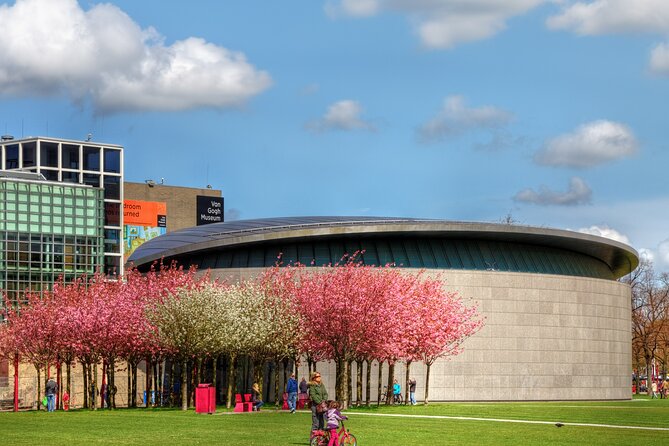
The Van Gogh Museum is most rewarding when you follow the artist’s progress rather than treating the famous paintings as isolated icons. Van Gogh did not begin with the swirling color and bold outlines most people associate with him. His early work is darker, more solemn, and closely tied to rural life.
That change is the thread running through this tour. You see how he studied other artists, tried different subjects, moved between countries, and altered his use of color and paint. I find that approach more useful than a simple parade of greatest hits because it explains why Sunflowers looks so different from The Potato Eaters.
The two-hour length is also sensible. It gives you a guided route through the permanent collection without trying to explain every painting in the building. You will not leave knowing every detail of Van Gogh’s life, but you should have a clearer sense of how his work developed and why the museum’s arrangement matters.
More Museum Tickets in Amsterdam
- Amsterdam: Van Gogh Museum Ticket
★ 4.7 · 52,054 reviews - Moco Museum Amsterdam Entrance Tickets with Banksy & More
★ 4.4 · 10,088 reviews - Amsterdam: The Upside Down Museum Entrance Ticket
★ 4.4 · 9,506 reviews
Meeting at Cobra Café and entering the museum
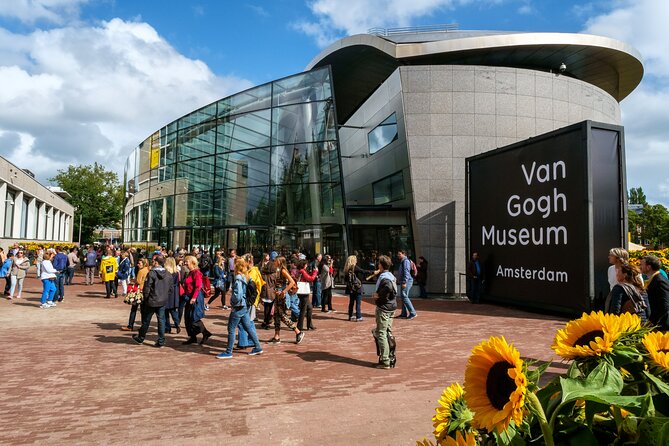
The group meets at Cobra Café, at Hobbemastraat 18, near Museumplein. The tour finishes inside the Van Gogh Museum at Museumplein 6. That arrangement is useful because you do not have to leave the building immediately when the guided portion ends.
Bring your booking confirmation and arrive with enough time to find the meeting point. The tour is offered in English, and the activity is limited to adults aged 18 and older. It is near public transportation, and most people can take part.
Once inside, the wireless headset becomes one of the tour’s most practical features. Museums can be noisy, and guides often have to speak over nearby groups. A headset lets you listen while looking at the art instead of turning your head toward the guide every few seconds. One person specifically found the system helpful while using hearing aids, which speaks well for its usefulness.
Self-portraits: a direct introduction to Van Gogh
The opening section focuses on Van Gogh’s self-portraits. This is a smart beginning because the paintings give you an immediate way to track changes in his appearance, technique, and mood.
Do not expect every self-portrait to look alike. Some are carefully observed, while others reveal a looser touch and stronger color. Seen together, they show an artist using his own face as a repeated subject, partly because he had limited money for models and partly because self-portraiture gave him a steady way to test new methods.
The scheduled time here is about 20 minutes. That is enough for a focused explanation, but it may feel short if self-portraits are your main reason for visiting. One lower-rated experience specifically felt that too much time went to this section. If you already know these works well, you may prefer to use your free museum time afterward for paintings from Arles and Auvers.
The Dutch years and The Potato Eaters
The first-floor section moves to Van Gogh’s early Dutch period. You see works connected to Jean-François Millet and Jules Breton, including Woman Lifting Potatoes, a wall of peasant portraits, and The Potato Eaters.
This is where the tour can correct a common misunderstanding. Van Gogh’s early paintings are not simply rough versions of his later style. They reflect his interest in working people, rural labor, and the moral seriousness of ordinary life. The dark palette and sturdy forms are deliberate. They show an artist trying to make a serious statement through humble subjects.
The Potato Eaters is the key stop. A guide can point out the figures’ hands, the heavy interior, and the unusual lighting around the meal. You may find the painting less instantly pleasing than Sunflowers, but it is vital for understanding the artist’s starting point.
I would pay close attention here to any explanation of Van Gogh’s influences. The references to Millet and Breton help place his work within a wider European art world. You are not just seeing a solitary genius appear from nowhere. You are seeing a young painter learn from artists he admired and adapt those lessons to his own aims.
More Van Gogh tickets and tours:
- Amsterdam: Van Gogh Museum Ticket and City Canal Cruise
★ 4.6 · 3,899 reviews - Amsterdam: Van Gogh Museum Ticket & Canal Cruise
★ 4.5 · 3,304 reviews - Van Gogh Museum Amsterdam Exclusive Tour w/ Reserved Entry
★ 5.0 · 1,760 reviews - Van Gogh Museum Tour Reserved Entry Semi Private
★ 5.0 · 1,437 reviews
Paris from 1886 to 1888: lighter colors and new ideas
The Paris section marks a major shift. Van Gogh moved to Paris between 1886 and 1888, where he encountered new painting styles, brighter colors, and artists who were testing the limits of traditional technique.
The selected works include Self-Portrait with Felt Hat, Still Life with Absinthe, In the Café: Agostina Segatori in Le Tambourin, and Garden with Courting Couples. Together, they show his palette becoming lighter and his brushwork growing more confident.
The café painting and the still life are especially useful for seeing how Van Gogh responded to modern city life. The garden scene brings a different mood, with more open color and movement. A strong guide will connect these works to the artistic changes around him without burying you in names and dates.
This is also a good point to ask questions. The group is small enough that you can raise a hand or speak to the guide without interrupting a huge crowd. Guides such as Martina have used an iPad to show additional images and facts, which can help when a comparison is difficult to make from the museum walls alone.
Arles and the South of France: the famous paintings
For many people, this is the heart of the tour. Van Gogh moved to Arles in 1888, and the museum’s works from this period include Sunflowers, Almond Blossoms, The Bedroom, Japanese print copies, and The Yellow House.
These paintings are famous, but fame can make it easy to look quickly and move on. I like having a guide explain what to watch for: the thickness and direction of the paint, the use of complementary colors, and the way Van Gogh turned ordinary rooms, flowers, and trees into subjects with emotional force.
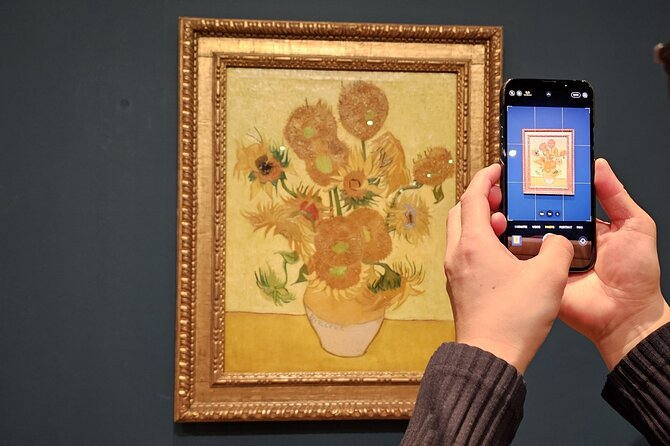
Sunflowers deserves time. From a distance, it can look like a simple arrangement of flowers. Up close, the paint surface becomes part of the subject. Your attention shifts between the flowers, the background, and the separate marks that build the whole image.
The Bedroom is another important stop because it turns a private room into a statement about order, color, and rest. Your guide may help you notice the compressed perspective and the unusual relationship between the furniture and walls. You can then return to it alone later and spend as long as you like.
The Japanese paintings and copies from prints add useful context. They show that Van Gogh was not only looking at European painters. He was also studying Japanese art and using those ideas to rethink outlines, composition, and flat areas of color.
The planned time is about 20 minutes. That is enough for a clear introduction, but you may want to stay longer after the tour, especially if Sunflowers or The Bedroom are priorities. The museum can be crowded, so the headset helps you follow the guide even when the group cannot stand directly in front of every work.
Saint-Rémy-de-Provence and the last creative surge
On the third level, the tour continues with works from Saint-Rémy-de-Provence. The paintings include another Almond Blossoms, Wheatfield with a Reaper, Iris, and Pietà, after Delacroix.
This section is valuable because it prevents Van Gogh’s story from ending with the paintings from Arles. The works here show continued experimentation, not a simple decline. His subjects often carry tension, but his color and brushwork remain forceful.
Iris is a good painting to study closely. The flowers have a strong graphic presence, and the contrast between the iris and its setting gives the image much of its energy. Wheatfield with a Reaper can prompt a discussion of labor, nature, and the symbolic meanings people have attached to Van Gogh’s fields.
The reference to Delacroix is also worth noting. It shows Van Gogh working from an existing artwork and making it his own through color and handling. This is one of the tour’s strengths when the guide explains technique rather than offering only a timeline.
Several guides have been praised for tying Van Gogh’s life to the paintings without turning the visit into a medical biography. That balance matters. You learn about his difficult periods, but you also spend time looking at how the paint works.
Auvers: Tree Roots and Wheatfield with Crows
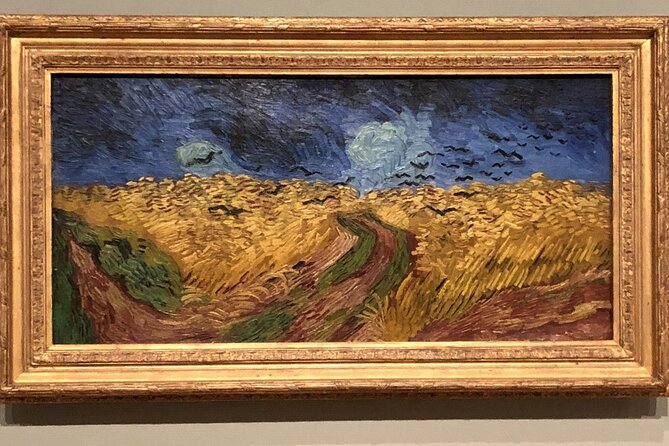
The final part takes you to the Auvers room, with Tree Roots and Wheatfield with Crows. These paintings are among the most emotionally charged works in the museum, and they deserve a thoughtful ending.
Tree Roots is particularly striking because the subject fills the picture with twisting forms. Instead of giving you a neat scene with a clear horizon, Van Gogh makes the ground itself the focus. The paint seems to record movement and pressure.
Wheatfield with Crows is often treated as a final statement, but it is better to look at the painting itself before accepting a fixed story about it. The sky, paths, field, and birds create an uneasy composition, yet the work is also carefully built from color and directional lines.
The scheduled stop is about 15 minutes. That is brief for paintings with this much to discuss, so note anything you want to revisit. Since the tour ends inside the museum, you can return to this room after the guide finishes.
What $77.43 buys you
At $77.43 per person, this is not the cheapest way to enter the museum. The value depends on how much you want help making sense of what you see.
If you already know Van Gogh’s life and can comfortably read museum labels, independent entry may suit you better. You can move at your own pace and spend longer with the paintings that matter most to you.
I think the price is easier to justify if you are visiting once, have limited time, or want a structured explanation of the collection. A good guide brings together biography, artistic influences, paint, and technique in a way that is hard to assemble from labels alone. The group limit also keeps the experience more personal than a large coach-style tour.
Still, the quality depends heavily on the guide. Martina, Claire, Marlene, Kawika, Roland, and Holly are among the guides singled out for strong communication, clear pacing, enthusiasm, and careful answers. One person found the guide disappointing and felt an audio guide would have been better, while another reported that the guide did not arrive at all. Those cases appear to be exceptions within a very high overall rating, but they are worth keeping in mind when paying a premium.
Who should book this museum tour
I would choose this tour if you want to understand Van Gogh’s artistic changes rather than simply photograph the famous pictures. It suits first-time visitors, couples with different levels of interest in art, and anyone who appreciates a guide who can explain technique in plain language.
It is also a good choice for people who find museums tiring or confusing. The route gives you a clear story, and the headset means you do not have to fight for a spot beside the guide.
You may prefer to visit independently if you dislike fixed pacing, want to read every label, or plan to spend most of the day in the museum. The two-hour tour covers selected works, not the entire collection in detail.
Book the morning or afternoon time that leaves room for another hour or more afterward. The guided portion may finish in two hours, but the best value comes from staying inside and revisiting Sunflowers, The Bedroom, The Potato Eaters, or the Auvers works while the ideas are still fresh.
Final call: a strong choice for first-time visitors
I recommend the Van Gogh Museum Amsterdam Small Group Guided Tour for adults who want a clear, well-paced introduction to Van Gogh’s life and artistic growth. The small group, wireless headset, museum entry, and time to continue alone make it more useful than a rushed highlights walk.
The price is fair only if you will use the guide’s expertise. Choose it for context, technique, and a well-organized route. Skip it if you prefer complete freedom or already know the collection well. If you book, arrive ready to look closely, then stay after the tour to make the museum visit your own.
FAQ
How long does the Van Gogh Museum guided tour last?
The guided tour lasts approximately two hours and covers selected works from the permanent collection.
What language is the tour offered in?
The tour is offered in English.
How many people can join the tour?
The group has a maximum of 14 travelers.
Are children allowed on the tour?
No. This activity is available only to adults aged 18 and older.
Can I stay in the museum after the guided tour?
Yes. The tour ends inside the Van Gogh Museum, and you can stay until closing time to explore more of the museum independently.
Are special exhibitions included?
No. Special exhibitions are not included in the guided tour, but you can visit them afterward at your own pace.
More Small-Group Tours in Amsterdam
- Amsterdam: Anne Frank Guided Small Group Walking Tour
★ 4.8 · 2,722 reviews - Amsterdam Small-Group Canal Cruise Including Snacks and Drinks
★ 5.0 · 2,526 reviews - Zaanse Schans Windmills, Clogs and Dutch Cheese Small-Group Tour from Amsterdam
★ 4.5 · 2,369 reviews - Amsterdam: Zaanse Schans 3-Hour Small Group Tour
★ 4.8 · 2,160 reviews
Just added around Amsterdam
- Private sightseeing tour to Bruges and chocolate from Amsterdam★ 5.0 · 11 reviews
- Amsterdam: Rijksmuseum (Private Tour & Priority Access)★ 5.0 · 27 reviews
- Amsterdam: Private Romantic Evening Canal Cruise + Bubbles/Snacks★ 5.0 · 46 reviews
- Amsterdam Private Shopping Experience★ 5.0 · 7 reviews
- Rijksmuseum Amsterdam Private Guided Tour★ 5.0 · 57 reviews
- Amsterdam Rijksmuseum PRIVATE TOUR with a Local Private Guide★ 5.0 · 159 reviews
- Private One way Transfer Amsterdam Airport to Amsterdam★ 3.5 · 42 reviews
- Private Rijksmuseum Tour- The Dutch Masters, Rembrandt & Vermeer★ 5.0 · 54 reviews
Van Gogh Museum Tickets, compared.
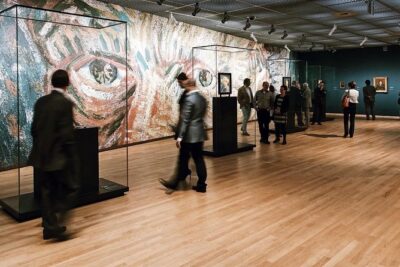
Van Gogh Museum Amsterdam Exclusive Tour w/ Reserved Entry
Read our review →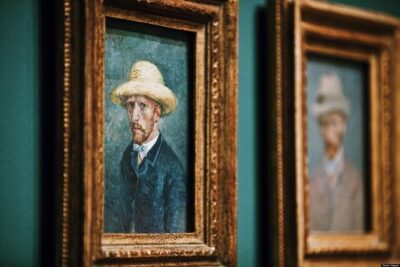
Van Gogh Museum Tour Reserved Entry Semi Private
Read our review →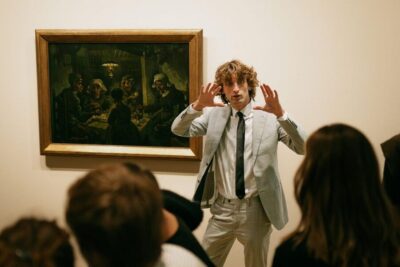
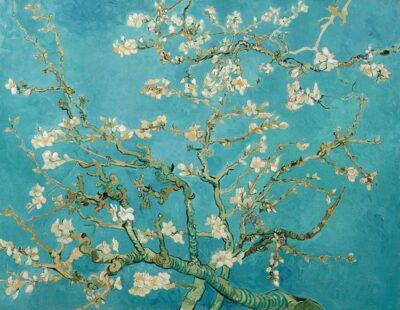
Combo Ticket: Van Gogh Museum Ticket and 1-Hour Canal Cruise
Read our review →
Browse the lists this tour appears in