
Reviewed · WORKSHOPS IN AMSTERDAM
Kintsugi Workshop “The art of Imperfection”
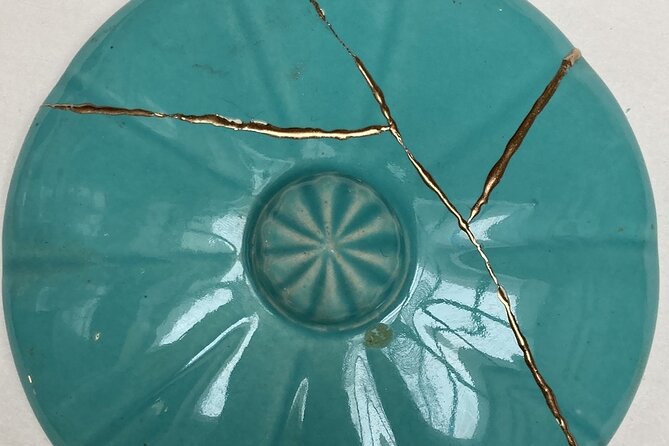
Kintsugi turns a broken plate into a piece with a story. In this two-hour Amsterdam workshop, you break a plate, patiently fit the pieces back together, and trace the cracks with golden leaf glue. The point is not to hide damage, but to make it part of the object.
I like the small group of no more than six, which gives this quiet craft room to breathe. I also like that the host, Annelies, supplies the pottery and materials, so you can focus on the process rather than shopping for a suitable object before you arrive.
The main drawback is the fixed Wednesday afternoon schedule, and the $90.11 price is a serious spend for a two-hour craft session. You should also note that coffee and tea are not included, and the activity is not suitable for children under 10.
Key points to know before booking
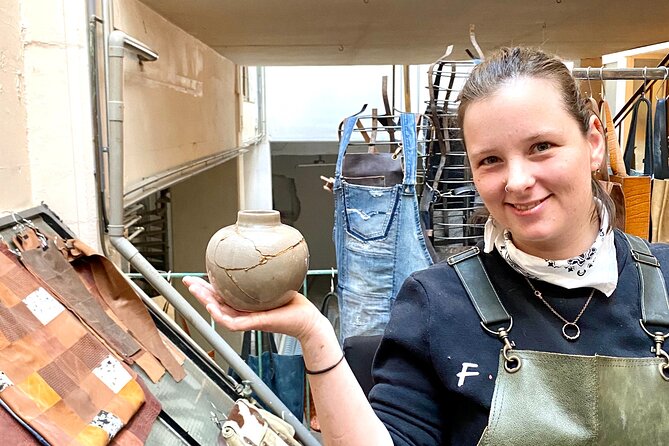
- A hands-on repair session: You break a plate, sort the pieces, reassemble them, and use golden leaf glue to highlight the cracks.
- A very small group: The workshop accepts a maximum of six people, a useful size for personal guidance and a calm pace.
- A thoughtful host: Annelies leads the activity and helps you work through the careful stages of the repair.
- A Wednesday afternoon plan: Sessions run from 2:00 to 4:00 PM during the listed operating periods.
- All materials are supplied: You do not need to bring a plate or buy tools in advance.
- A mindful creative experience: The work rewards patience, fine motor control, and attention more than artistic training.
Why a broken plate is the right place to start
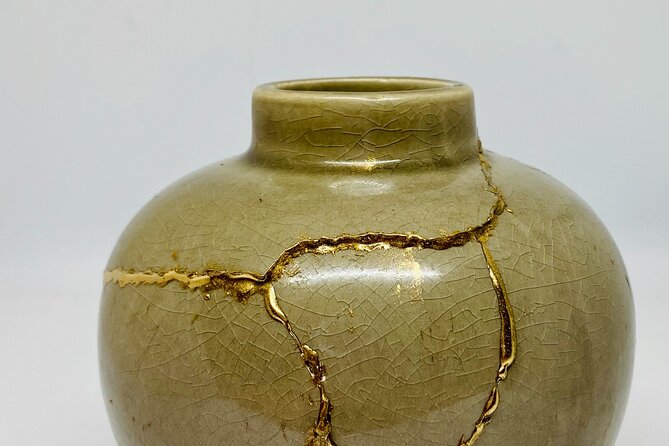
Kintsugi is a Japanese repair tradition associated with the 15th century. Instead of disguising cracks, it draws attention to them with gold. A repaired bowl or plate does not return to its former state. It becomes something different, with the break now part of its character.
That idea gives this workshop more weight than a standard craft class. You are not simply painting a ready-made object or following a quick decorative project. You are working with fragments, making decisions about how they fit, and accepting that the finished plate will show its past.
The workshop uses wabi-sabi, a Japanese view that finds beauty in imperfection, natural materials, and the marks of time. You do not need prior knowledge of Japanese art to understand the appeal. The lesson is direct: a flaw can become a feature when you handle it with care.
The symbolic break at the start may feel unusual. It gives the activity a clear beginning and turns the damaged plate into a small exercise in starting again. If you prefer a purely technical class, this reflective element may feel a little earnest. If you enjoy crafts with a personal meaning, it adds purpose.
More Workshops in Amsterdam
- Amsterdam: Traditional Dutch Syrup Waffle Making Workshop
★ 4.8 · 4,093 reviews - Amsterdam Traditional Dutch Syrup Waffle Making Workshop
★ 5.0 · 960 reviews - Amsterdam: Bols Cocktail Experience and Cocktail Workshop
★ 4.8 · 666 reviews
What happens during the two-hour session
The experience begins with a calm introduction to kintsugi and the ideas behind it. This opening matters because the work is slow by design. You are encouraged to settle in, look closely at the materials, and understand why the cracks will remain visible.
Next comes the most memorable step: breaking a plate. The supplied plate gives you an object to work on without risking a personal favorite from home. It also removes the pressure of repairing something valuable or sentimental.
Once the plate is broken, you patiently bring the pieces together. This is the part that calls for the most care. You need to see how the shards meet, hold them in place, and accept that the fit may not be perfectly neat. The final result depends less on speed than on staying focused.
The golden leaf glue then marks the repaired lines. The gold is not just decoration. It changes the meaning of the crack, making the repair easy to see instead of trying to make the object look untouched.
The supplied information does not promise a finished piece to take home, a particular type of pottery, or a specific drying process. You should ask Annelies about the final handling of your plate if that detail matters to you. The central experience is the act of restoring and transforming the object during the session.
A small group makes the quiet work easier
The limit of six people is one of the strongest practical features. Kintsugi involves small pieces, careful placement, and glue work that benefits from timely help. In a large class, you might spend too long waiting for instructions or feel rushed while others move ahead.
Here, the setting is better suited to questions and close attention. Annelies can help you understand the process and encourage you as the fragments begin to take shape. The personal scale also supports the reflective side of the activity. You have room to concentrate without turning the session into a noisy group event.
A small group does not guarantee that every minute will be one-to-one instruction. You are still completing the work yourself, and patience is part of the lesson. But six is a sensible upper limit for a craft that uses delicate pieces and fine movements.
The setting at Paleisstraat 107 also makes this easy to add to an Amsterdam day near the city center. The meeting point is close to public transportation, though no specific route or station is provided. Plan to arrive with enough time to find the address rather than cutting it close.
The role of Annelies
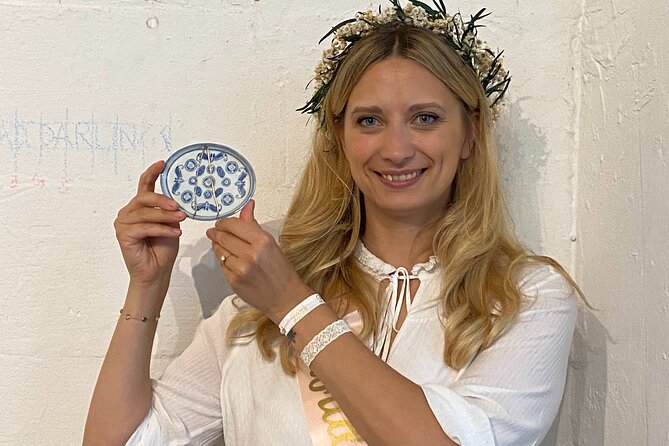
Annelies is the named host connected with this workshop. Her role is important because kintsugi is not the sort of activity you can rush through from a printed instruction sheet. You need someone to explain the stages, watch for mistakes, and help you keep working when the pieces are awkward.
A particularly useful detail is that she provides objects for the activity. You do not have to bring your own broken pottery, and you do not need to worry about ruining a plate that has family value. One participant noted that bringing a personal item could have been fun, but that is not part of the stated arrangement, so check before arriving with one.
The tone appears designed to be welcoming and focused. Annelies has been described as attentive to the concentration involved in the task, and the completed work is treated as a personal result rather than a test. That matters for anyone who feels unskilled at crafts.
You should still expect to do the hands-on work yourself. The appeal lies in learning through the slow process, not in watching an expert repair the plate for you.
Same base, a completely different sort of day:
- Amsterdam: Van Gogh Museum Ticket
★ 4.7 · 52,054 reviews - Amsterdam Classic Saloon Boat Cruise with Drinks and Cheese
★ 5.0 · 31,825 reviews - Amsterdam Luxury Canal Cruise + Unlimited Drinks & Bites option
★ 5.0 · 30,518 reviews - Amsterdam: Heineken Experience Ticket
★ 4.6 · 30,055 reviews
What the workshop teaches beyond pottery
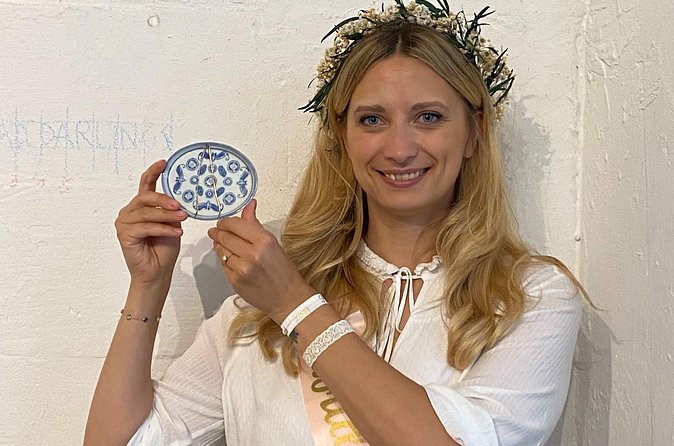
The physical work has a clear practical benefit. Picking up shards, matching edges, and applying glue requires fine motor control and steady attention. The activity can give you a short break from sightseeing that asks you to use your hands rather than your phone or camera.
It also encourages a different pace. Amsterdam offers plenty of fast-moving days, with canals, museums, shops, and meals competing for your attention. Two hours spent fitting broken pieces together creates a useful pause. You are not trying to cover more ground. You are staying with one small task.
The symbolic side may be the main reason to book. Kintsugi treats scars as part of an object’s story, and the workshop connects that idea with fresh starts and resilience. You can take the metaphor seriously, keep it light, or simply enjoy the craft. The experience does not require you to share anything personal with the group.
This is also why the workshop may appeal to couples, friends, and solo participants in different ways. A pair can work side by side without needing constant conversation. A solo participant can concentrate without feeling out of place. A small private group may find the theme gives them something to discuss afterward.
Still, the reflective language will not suit everyone. If you want a fast souvenir-making class or a highly technical ceramics lesson, the focus on imperfection and healing may not be what you had in mind.
Is $90.11 good value for two hours?
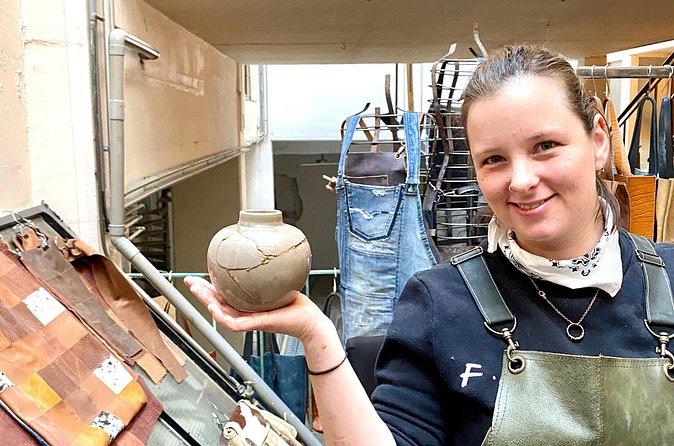
At $90.11 per person, this is not a bargain activity. You are paying about $45 per hour, before considering the value of the supplied materials and the instruction. The price makes most sense if you want a guided experience with a personal result and a quieter mood, not simply two hours of entertainment.
The small maximum group helps justify the cost. A six-person limit allows for more attention than a mass-market craft session, and the host supplies everything needed. You also avoid the cost and hassle of finding a suitable plate, glue, and golden material on your own.
The value is less clear if you mainly want to leave with a polished souvenir. The available details do not confirm the exact condition of the plate at the end, whether it is ready for practical use, or how it is packaged. Ask about those points before booking if the finished object is your main goal.
For a special occasion, a rainy afternoon, or a creative break from museums, the price may feel reasonable. For a family looking for a low-cost activity, it adds up quickly, especially since children under 10 cannot join.
Timing, age, and physical demands
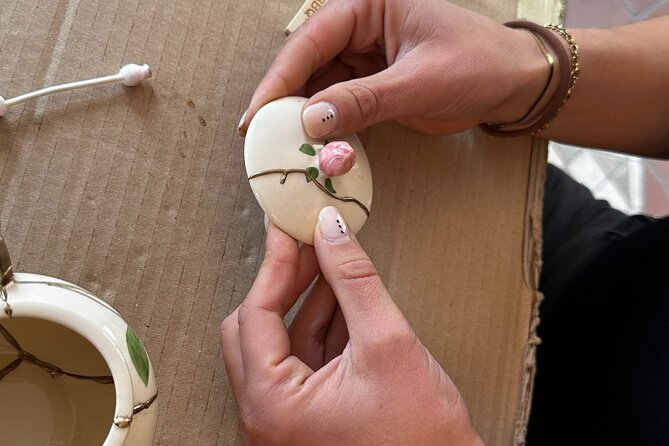
The listed sessions run on Wednesdays from 2:00 to 4:00 PM during the stated operating periods, from November 9, 2025 through January 31, 2026, and again from November 9, 2026 through January 31, 2027. The schedule is narrow, so check the date carefully before arranging the rest of your day.
The activity is suitable for children aged 10 and older, but age alone does not determine enjoyment. A child should be comfortable handling small pieces, listening to instructions, and working slowly. Younger children are not accepted.
A moderate level of physical fitness is requested. The information does not specify standing time, seating, or the exact demands of the room, so anyone with mobility concerns should ask ahead. Service animals are allowed, and the location is near public transportation.
Because the session is offered in English, you should be able to follow spoken instructions in English. The mobile ticket makes entry simple, but you still need to reach Paleisstraat 107 for the 2:00 PM start.
How this fits into an Amsterdam itinerary
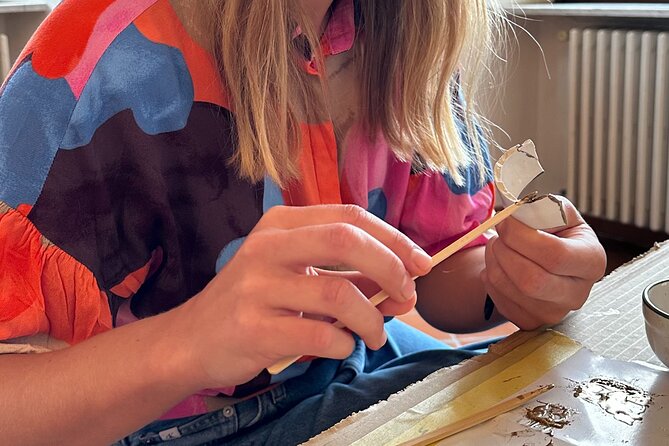
The workshop ends where it begins, at Paleisstraat 107. That makes it easier to plan than an activity with a separate finish point. You can schedule it as a focused afternoon stop rather than setting aside a full day.
Give yourself travel time before the start. The work begins with an introduction, and arriving late could mean missing the explanation before the plate is broken. The two-hour length also leaves room to plan another activity afterward, though you may prefer not to rush straight into a packed schedule.
I would pair it with a flexible afternoon rather than a timed museum entry. The point is to slow down, and watching the clock can work against that. Since coffee and tea are not included, plan a café stop before or after if you want a drink with the experience.
The location is near public transportation, but no exact transit directions are provided. Use the full street address when planning your route, and allow extra time if you are unfamiliar with Amsterdam’s central streets.
Who will enjoy this most
I would recommend the workshop to you if you like making things with your hands, enjoy small groups, or want a thoughtful break from standard sightseeing. It is especially well suited to people who appreciate Japanese design, mindful activities, and objects that show how they were made.
It also works for someone who feels uncertain about art classes. You are not expected to draw, sculpt, or produce a perfect design. The plate is meant to show its cracks, so an uneven repair is not automatically a failure.
Couples and friends may enjoy the shared act of starting with something broken and ending with something changed. Solo participants can benefit from the quiet concentration and the modest group size.
I would be cautious about booking it for anyone who dislikes slow projects, wants a practical pottery class, or expects a low-cost activity. It may also be a poor fit for young children and for anyone who cannot comfortably handle small pieces or follow instructions in English.
Booking and cancellation details
Confirmation is provided when you book, and the ticket is mobile. The activity requires a minimum number of participants, so a cancellation by the operator is possible if that minimum is not reached. In that case, you are offered another date or experience, or a full refund.
You can cancel for a full refund up to 24 hours before the start time. Cancellations and changes made less than 24 hours before the scheduled start are not accepted for a refund. The cut-off uses Amsterdam local time, so do not wait until the last moment if your plans are uncertain.
Should you book the kintsugi workshop?
Book it if you want a calm, personal activity with a clear creative process and a little meaning behind it. The small group, supplied materials, English instruction, and named host Annelies make it a straightforward choice for a focused afternoon in Amsterdam.
Skip it if $90.11 feels too high for two hours, if you want a finished ceramic object with guaranteed practical details, or if your schedule cannot accommodate a Wednesday from 2:00 to 4:00 PM. For the right person, the value is not just the repaired plate. It is the chance to slow down, work carefully, and leave with a visible reminder that damage can become part of the design.
FAQ
Where does the kintsugi workshop begin?
The workshop begins at Paleisstraat 107, 1012 ZL Amsterdam, Netherlands.
Where does the activity end?
The activity ends back at the meeting point.
How long does the workshop last?
The workshop lasts approximately two hours, from 2:00 to 4:00 PM.
On which day is the workshop offered?
The workshop is offered on Wednesdays during the listed operating periods.
Is the workshop offered in English?
Yes. The workshop is offered in English.
Are materials included?
Yes. All materials needed for the workshop are provided.
Are children allowed to join?
Children must be at least 10 years old to take part.
How many people can join?
The workshop has a maximum of six participants.
Is coffee or tea included?
No. Coffee and tea are not included.
Can I cancel for a full refund?
Yes. You can cancel at least 24 hours before the start time for a full refund. Changes or cancellations made less than 24 hours before the start are not accepted for a refund.
Just added around Amsterdam
- Private sightseeing tour to Bruges and chocolate from Amsterdam★ 5.0 · 11 reviews
- Amsterdam: Rijksmuseum (Private Tour & Priority Access)★ 5.0 · 27 reviews
- Amsterdam: Private Romantic Evening Canal Cruise + Bubbles/Snacks★ 5.0 · 46 reviews
- Amsterdam Private Shopping Experience★ 5.0 · 7 reviews
- Amsterdam Rijksmuseum PRIVATE TOUR with a Local Private Guide★ 5.0 · 159 reviews
- Rijksmuseum Amsterdam Private Guided Tour★ 5.0 · 57 reviews
- Private Photo Session in Amsterdam★ 5.0 · 15 reviews
- Private One way Transfer Amsterdam Airport to Amsterdam★ 3.5 · 42 reviews
Workshops in Amsterdam, compared.

Traditional Dutch Syrup Waffle Making Workshop
Read our review →Amsterdam Traditional Dutch Syrup Waffle Making Workshop
Read our review →

3-Course Meal in Historic 1st Class Waiting Rooms
Read our review →
Amsterdam Light Festival Winter Walk with Stroopwafel Workshop
Read our review →
Distilling Class @ Spirited Union Rum Co. (Amsterdam)
Read our review →
Cocktail workshop @ Spirited Union Rum Co. (Amsterdam)
Read our review →
Private Dutch Pancake Cooking Class in an Amsterdam Canal Home
Read our review →Browse the lists this tour appears in