
Reviewed · CITY TOURS
Amsterdam Pedicab City Tour (2 hours)
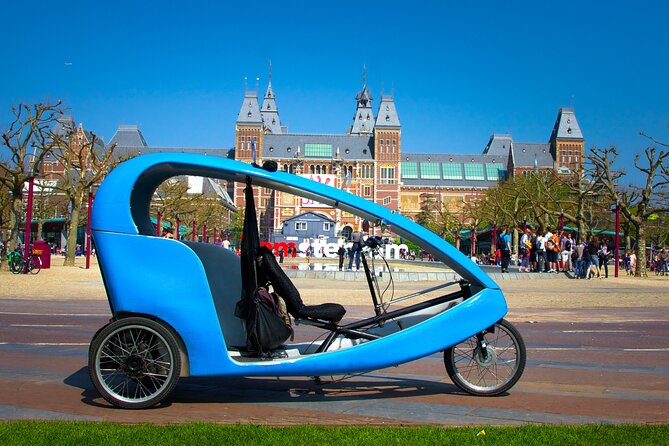
Amsterdam’s blue pedicab gives you a close-up look at the city without asking your feet to do all the work. In two hours, Bram de Haan takes you from Dam Square and Chinatown to the Jewish Quarter, the canal ring, and Museumplein, stopping when a view or story deserves more time.
I like the private format, which lets you ask questions and shape the pace. I also like Bram’s use of old maps, drawings, and family photos to show how Amsterdam changed. The main consideration is the price: $237.65 for up to two people is a serious outlay, and the pedicab has a combined passenger weight limit of 210 kilograms.
Key points at a glance
- Blue pedicab sightseeing: Cover a broad part of central Amsterdam while avoiding a long walking route.
- A true private tour: Only your group rides, with one pedicab available per time slot.
- Bram’s old maps and photos: Historical images help you compare present-day Amsterdam with earlier versions of the city.
- A strong city orientation: See major squares, canals, bridges, museums, and old neighborhoods in one ride.
- Useful in cool or wet weather: Blankets and a waterproof cover can make the open-air ride more comfortable.
- Best for two people: The price makes the most sense for a couple or two companions sharing the pedicab.
A private ride through Amsterdam’s old center
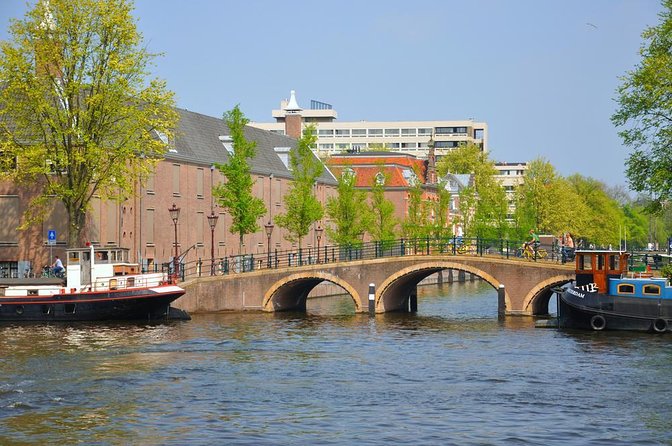
This is less like a standard sightseeing circuit and more like a moving introduction to Amsterdam. You sit in the back of a pedicab while Bram pedals through the old center, using short stops and visual material to explain what you are seeing.
The route covers a lot of ground. You get old defensive structures, Jewish Amsterdam, Chinese Amsterdam, merchant houses, famous bridges, the Amstel, and the museum district. That range is the tour’s biggest practical benefit: you can get your bearings quickly before deciding which places deserve a longer visit on foot.
The pedicab also solves a common Amsterdam problem. The center is easy to explore, but the pavement, bridges, crowds, and long distances between districts can make a full walking tour tiring. Here, you can stay seated for most of the ride and step out when you want photographs or a closer look.
Bram has been praised for punctuality, courtesy, and his personal connection to the city. He also brings visual aids, including historic maps and photographs. Those details matter because Amsterdam can otherwise look like a continuous stretch of pretty canal houses. The images help you see how the city expanded and how certain neighborhoods changed over time.
More City Tours in Amsterdam
- Amsterdam: Relaxed City Highlights Guided Bike Tour
★ 4.7 · 1,069 reviews - Amsterdam: Historic City Sightseeing Canal Cruise
★ 4.5 · 444 reviews - Segway City Tours Amsterdam
★ 5.0 · 280 reviews
What the $237.65 price really buys

The listed price is $237.65 per group of up to two people, not per person. That works out to about $118.83 each if two people share the ride. It is much easier to justify for a couple than for one person traveling alone.
You are paying for privacy, a dedicated guide, private transportation, and a broad route through the city. You are not paying for museum admission, food, or a long series of interior visits. The stops are mainly for views, explanations, and photographs.
I would compare this cost with the price of a private walking tour, not with a large group bike or canal excursion. The pedicab offers more personal attention than a group outing and requires less physical effort than walking. It also takes you along city streets and through areas that a boat cannot reach.
Still, this is not a budget tour. If you enjoy exploring independently and have several days in Amsterdam, you may prefer public transport and free walking routes. If you have only a short stay, are traveling with an older companion, or want a gentle first look at the city, the price may feel more reasonable.
Dam Square, Zeedijk, and Chinatown
The ride begins around Dam Square, the heart of Amsterdam’s old center. You see the Royal Palace, the New Church, and the National Monument, with time for Bram to explain how this area became the city’s starting point.
The stop is listed at only five minutes, so think of it as an orientation rather than a full visit. That is fine here. Dam Square is a useful reference point, but you will likely want to return later if you wish to explore the palace or church interiors.
From there, the route reaches Zeedijk, one of the old dikes around the center. This area includes Amsterdam’s oldest café, known for its original interior and old atmosphere. Bram also shares a darker story connected with the site, giving the stop more substance than a quick photograph.
Chinatown follows. Amsterdam’s Chinese neighborhood is described as the oldest Chinese district on the European mainland, with Chinese restaurants, markets, and a Chinese temple. The five-minute stop will not cover every detail, but it gives you a fast look at a part of the city that many first-time visitors miss.
I like this opening combination because it moves from Amsterdam’s formal civic center to streets shaped by trade, migration, and everyday life. It is a good reminder that the city is more than canals and grand merchant houses.
Nieuwmarkt and the Montelbaanstoren
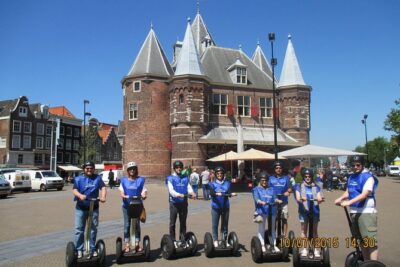
Nieuwmarkt brings you to one of the old center’s key squares. At its center is the former city gate, a reminder that Amsterdam was once a walled, fortified town. The tour allows about ten minutes here, giving Bram more room to explain the square’s past.
Next comes the Montelbaanstoren, an early sixteenth-century watchtower once linked to the city’s defenses. From this point, you can look toward the Oude Waal, where houseboats sit against a backdrop of old canal houses.
These two stops show how Amsterdam worked before it became the open, commercial city you see today. Nieuwmarkt points to the city walls and gates. Montelbaanstoren points to defense, ships, and water routes.
The route moves quickly, so you should not expect a long architectural study at every stop. The value lies in the connections Bram makes between the buildings, waterways, and growth of the city.
A few more Amsterdam half-days worth comparing
- Amsterdam: 2-Hour Canal Cruise incl. Drinks & Dutch Snacks
★ 5.0 · 594 reviews - Amsterdam 2-hour Private Canal Cruise with Live Guide and Drinks
★ 5.0 · 296 reviews - Amsterdam 2-Hour Evening Cruise With Live Guide and Bar
★ 5.0 · 134 reviews - Amsterdam: 2-Hour Sightseeing Tour by Rickshaw
★ 4.7 · 81 reviews
Rembrandt’s house and the old Jewish Quarter

At the Rembrandt House Museum, you look at the exterior of the home where Rembrandt lived during successful years of his career. Museum entry is not included, so plan a separate visit if you want to see the inside.
That distinction matters. The pedicab tour gives you context and a useful first look, but it does not replace a museum ticket. If you are especially interested in Rembrandt, you may want to return when you have enough time for the full museum.
The ride then enters the old Jewish Quarter, or Jodenbuurt. Much of the historic neighborhood was demolished after the Second World War, but synagogues, houses, streets, and other buildings remain. This is one of the more serious parts of the route, and it benefits from a guide who can explain what survived and what disappeared.
The Portuguese Synagogue receives its own short stop. Built in 1675, it is one of the earliest synagogues Jewish people were allowed to build in western Europe and is the largest synagogue in Amsterdam. The tour views it from outside, along with the former synagogues across the street that now form part of the Jewish Museum.
You also pass the National Holocaust Names Monument. Its 102,000 brick stones carry the names of Dutch Jewish victims of the Second World War. The listed stop is only two minutes, so expect a brief pass and explanation rather than a full memorial visit. I would return on foot if this part of Amsterdam is a major reason for your visit.
H’ART Museum and the Magere Brug
The route passes H’ART Museum, formerly the Hermitage Amsterdam. The building began as a large seventeenth-century widow’s care house and later became part of the Russian Hermitage museum system. The stop is brief, but it adds another layer to Amsterdam’s habit of giving old buildings new uses.
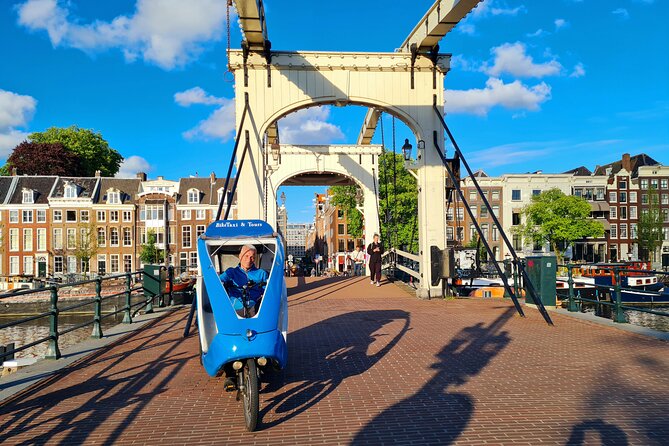
The Magere Brug, or Skinny Bridge, is one of the city’s best-known bridges. From here, you get a broad view along the Amstel, Amsterdam’s main and widest canal. It is also a good place for photographs.
The bridge is especially known for its lights after dark, but this tour is not described as an evening-only experience. You will still get the structure and the river view during a daytime ride. If nighttime lighting is important to you, check the departure time before booking.
Canal houses and the ring district
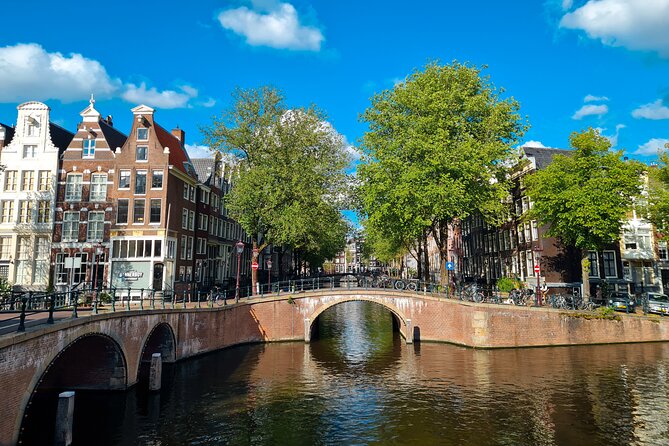
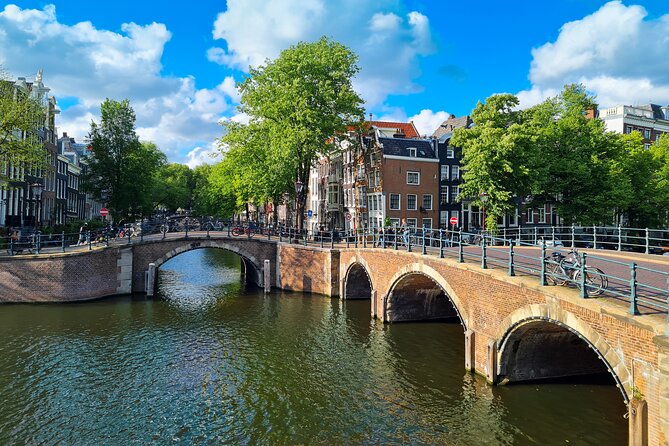
The canal ring is the great half-circle of seventeenth-century expansion around the old center. It is where you see many of Amsterdam’s familiar canal houses, once owned by successful merchants.
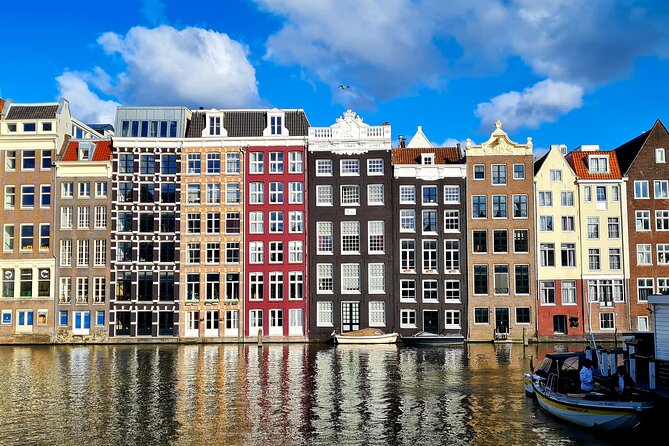
Bram points out that the houses are not identical. Their differences reflect individual owners and changing building periods, while repeated features reveal shared design habits. That kind of explanation helps you read the street instead of simply photographing it.
The ten-minute canal district stop is one of the tour’s most useful sections for first-time visitors. You get a clear sense of how the old center fits inside the later expansion area. You also see why Amsterdam’s shape is so distinctive on a map.
A pedicab is well suited to this part of the city. You can observe the buildings at street level without trying to keep up with a walking group. At the same time, the ride does not give you unlimited time to study every canal. If architecture is your main interest, use this tour as an introduction and return to the canals afterward.
Museumplein and the Rijksmuseum tunnel
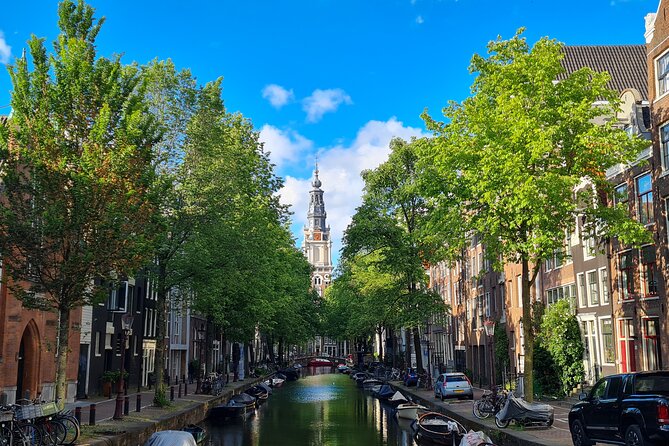
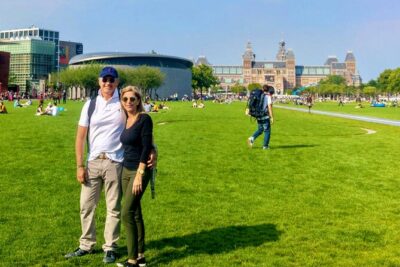
The final major area is Museumplein, the large square beside Amsterdam’s main museum district. You see the Rijksmuseum, the Concertgebouw, the Van Gogh Museum, the Stedelijk Museum, the Moco Museum, and the Diamond Museum.
The tour does not include admission to any of these museums. Instead, Bram uses the square to explain what you are looking at and to help you plan the rest of your stay. That makes this stop especially useful near the start of a visit.
A memorable part of the route is the bicycle tunnel beneath the Rijksmuseum. You pass through the passage and then move toward the square for a view of the museum’s rear. The building was completed in 1885 and designed by Catholic architect Pierre Cuypers.
The tunnel is an example of why the pedicab format works. You get a moving view that is different from the usual approach across Museumplein, and you can see how bicycles form part of the city’s everyday circulation. The route may include street music in the tunnel, though that will depend on who is performing at the time.
Weather, comfort, and practical limits
The pedicab is open to the weather, so dress for Amsterdam rather than for the season printed on your calendar. A July ride can still feel cool, and a December ride can be cold and breezy. Warm layers are sensible.
The guide has provided blankets during chilly rides and a waterproof cover during rain. Those touches help, but they do not turn the pedicab into an enclosed vehicle. Wear shoes and clothing that can handle a wet street if the forecast is uncertain.
Hotel pickup is offered. You should wait in front of your hotel and look for the blue pedicab. The experience is also near public transportation, which is useful if your hotel is not the pickup point or if you need to continue elsewhere afterward.
Only one pedicab is available per time slot, and the activity is private for your group. The vehicle holds up to two people, with a combined passenger weight limit of 210 kilograms. Confirm that this works for your party before you pay.
Most people can participate, but the tour involves getting into and out of the pedicab at stops. The description does not provide detailed accessibility information, so ask the provider directly if you have specific mobility needs.
Who should book this Amsterdam pedicab tour?
I would choose this for two people who want a broad city introduction with little walking. It suits couples, older visitors, and anyone tired from a cruise or long journey who still wants to see a large part of central Amsterdam.
It is also useful on a first day. You can spot the Jewish Quarter, Museumplein, the canal ring, Dam Square, and other areas, then decide where to spend more time on foot. Bram’s maps and old photographs add context you will not get from simply riding around on your own.
I would think twice if you want long interior visits, a low-cost outing, or a physically active bike ride. This is a seated sightseeing tour, not a cycling excursion, and museum entries are not included.
The activity has a 5 out of 5 rating from 22 reviews, with 100 percent recommending it. Those figures point to a clear strength: personal service. Bram is repeatedly praised for his timing, flexibility, historical explanations, photographs, and care in cold or wet weather.
Should you book it?
Book this tour if you want to see Amsterdam’s main sights and less obvious neighborhoods in one private ride, especially if walking is difficult or your time is short. The strongest reason to choose it is Bram’s personal approach, including old maps, family photographs, and the freedom to stop for questions and pictures.
Skip it if $237.65 feels too high for two hours or if you prefer to explore at your own pace. If you do book, reserve early, since only one pedicab is available per time slot and the experience is often booked well ahead. Cancel at least 24 hours before the start time for a full refund, and remember that poor weather can lead to a new date or a full refund.
FAQ
How long is the Amsterdam Pedicab City Tour?
The tour lasts approximately two hours.
How many people can ride in the pedicab?
The pedicab is for up to two passengers.
What is the price?
The price is $237.65 per group of up to two people.
Is the tour private?
Yes. Only your group participates in the activity.
Who is the guide?
The experience is provided by Bram de Haan.
What language is offered?
The tour is offered in English.
Is hotel pickup available?
Yes. Pickup is offered. Wait in front of your hotel and look for the blue pedicab.
Are museum admissions included?
No. The tour views the Rembrandt House Museum, H’ART Museum, and Museumplein sights from outside. Museum admission is not included.
Is food included?
No. Snacks are not included.
What happens if the weather is poor?
The experience requires good weather. If it is canceled because of poor weather, you will be offered another date or a full refund.
What is the cancellation policy?
You can cancel at least 24 hours before the experience start time for a full refund. Cancellations or changes made less than 24 hours before the start time are not accepted for a refund.
Just added around Amsterdam
- Private sightseeing tour to Bruges and chocolate from Amsterdam★ 5.0 · 11 reviews
- Amsterdam: Rijksmuseum (Private Tour & Priority Access)★ 5.0 · 27 reviews
- Amsterdam: Private Romantic Evening Canal Cruise + Bubbles/Snacks★ 5.0 · 46 reviews
- Amsterdam Private Shopping Experience★ 5.0 · 7 reviews
- Rijksmuseum Amsterdam Private Guided Tour★ 5.0 · 57 reviews
- Amsterdam Rijksmuseum PRIVATE TOUR with a Local Private Guide★ 5.0 · 159 reviews
- Private Photo Session in Amsterdam★ 5.0 · 15 reviews
- Private One way Transfer Amsterdam Airport to Amsterdam★ 3.5 · 42 reviews
City Tours, compared.

Amsterdam City Highlights and Hidden Gems – Private & Custom Tour
Read our review →


Browse the lists this tour appears in