
Reviewed · CANAL CRUISES
Amsterdam: Historic City Sightseeing Canal Cruise
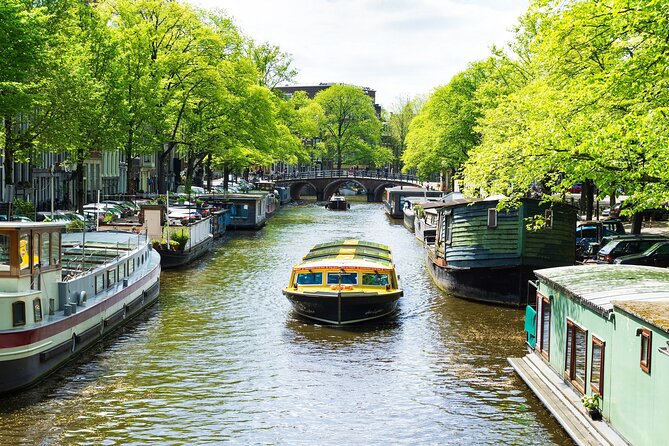
Amsterdam’s canals are the city’s grandest sightseeing route. From a boat, the narrow canal houses, low bridges, churches, houseboats, and busy waterfront fit together in a way they never quite do from street level. This cruise gives you a quick look at more than 400 years of Amsterdam, from the 17th-century canal belt to the modern EYE Filmmuseum.
I like the central meeting point near the Anne Frank House and the fact that the boat reaches both the historic canals and wider waters near the IJ. I also like the price: at about $18.71 per person, it is a sensible way to get your bearings without spending half a day. The main drawback is uneven commentary. Some departures have a funny, informed captain, while others rely on audio that can be hard to hear.
Key points to know before you book
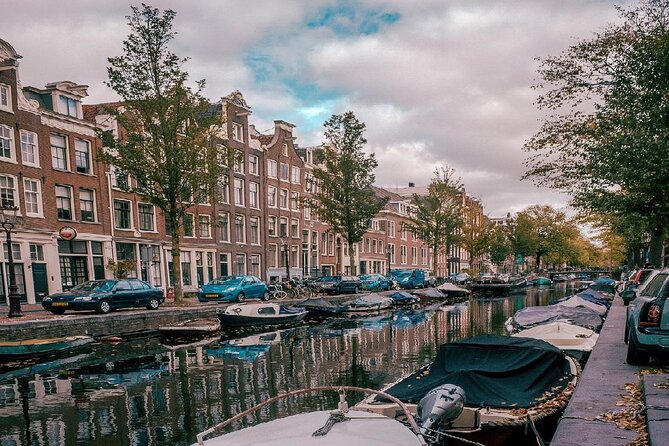
- The Anne Frank House meeting point is easy to combine with sightseeing, especially if you already have a timed museum visit nearby.
- The route covers old and new Amsterdam, including canal houses, Westerkerk, Centraal Station, the IJ, EYE Filmmuseum, the Amstel, and the Stopera.
- A one-hour cruise suits a tight schedule, though one account describes a longer 90-minute ride, so allow some flexibility.
- Commentary may be live or recorded, and sound quality can vary by boat and seat.
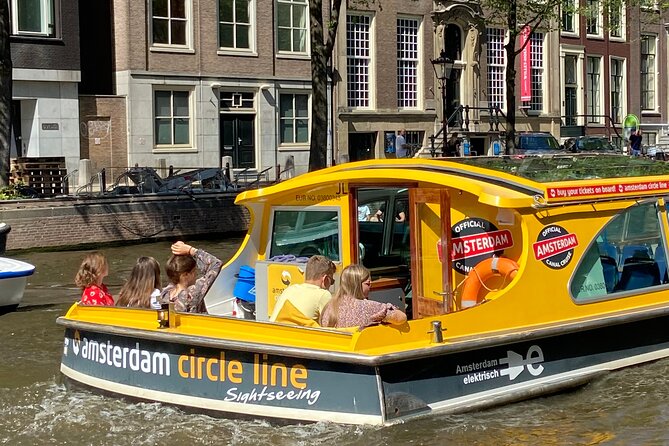
- The boats offer a comfortable way to see the city in poor weather, with indoor seating and, on some boats, outdoor space.
- A maximum of 68 people keeps the experience manageable, but the best views and clearest sound may require a smart seat choice.
Why Amsterdam’s canals are worth seeing by boat
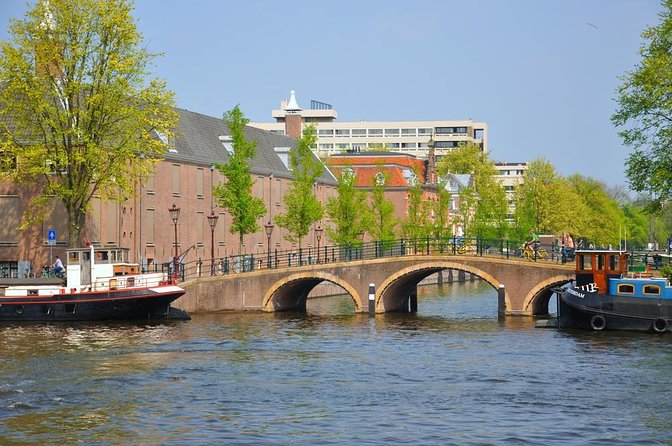
Amsterdam was built around water. The great semicircle of canals was laid out during the 17th century, when the city was expanding rapidly as a trading center. Streets show you individual buildings. A boat shows you the whole system: how the canals meet, how bridges frame the houses, and how the old center opens toward the IJ.
That wider view is the main reason to book this cruise. You pass closely beneath bridges and along the canal walls, then move into broader stretches where the city feels more open. The contrast helps you understand Amsterdam’s shape instead of simply collecting photographs of pretty facades.
The canal ring is UNESCO listed, and the route brings you past buildings from several periods. You see wealthy canal houses, religious buildings, working waterways, former cargo vessels, modern cultural buildings, and the station that links Amsterdam to the rest of the Netherlands.
The experience is also efficient. At roughly an hour, it can fit before dinner, after a museum, or between two timed activities. I would not treat it as a full history lesson or a substitute for exploring on foot. Think of it as a compact orientation ride with a good view.
More Boat Tours in Amsterdam
- Amsterdam Classic Saloon Boat Cruise with Drinks and Cheese
★ 5.0 · 31,825 reviews - Amsterdam Luxury Canal Cruise + Unlimited Drinks & Bites option
★ 5.0 · 30,518 reviews - Amsterdam: Classic Boat Cruise with Optional Cheese & Wine
★ 4.6 · 22,925 reviews
Starting near the Anne Frank House
The departure point in front of the Anne Frank House is one of the strongest practical features. It is in central Amsterdam and easy to recognize, so you are not sent to an obscure dock far from the sights. You can pair the cruise with the Jordaan, Westerkerk, or the Anne Frank House, though the museum itself requires a separate ticket and advance planning.
The Anne Frank House occupies a 17th-century canal building on the Prinsengracht. During the Second World War, Anne Frank and seven others hid in the concealed rooms at the rear of the building. Anne did not survive the war, but her diary was published in 1947, and the Anne Frank Foundation later protected the building from demolition.
From the water, the canal house is part of the city scene rather than a museum interior. That distinction matters. The cruise gives you an outside view and historical context, but it does not include entry to the Anne Frank House. If you plan to visit inside, book that separately and keep your appointment time in mind.
Nearby Westerkerk is another useful landmark. This Reformed church sits beside the Prinsengracht and Keizersgracht at the edge of the Jordaan. Its tower and position beside the canal make it one of the easiest buildings to recognize from the boat.
The houseboat and smaller canals
The Houseboat Museum offers a look at canal life from the inside. It occupies the Hendrika Maria, a former cargo ship built in 1914. The old cargo hold was converted into a compact living space, showing how a boat can become a genuine home rather than just a sightseeing prop.
You may pass the museum or see it identified during the cruise, but the canal ride does not replace a separate visit inside. Still, it adds a useful human detail to the view. Amsterdam’s waterways are not only historic routes. They are also residential spaces.
The boat then reaches smaller waterways such as Leidsegracht and De Beulingsloot. Leidsegracht cuts across the main canal belt, connecting several of the larger canals. De Beulingsloot is one of the oldest and shortest canals in central Amsterdam. These stretches are less grand than the main canal ring, but they help you see how closely the city’s waterways are packed together.
This is where a good captain can make a difference. Guides Robert and Rolif are specifically praised for adding humor, useful facts, and local suggestions. Rolif is also described as speaking several languages. On a strong departure, those small canals become more than scenery. You understand why the city has so many bridges and why navigation here takes care.
Canal houses, bridges, and Amsterdam’s old wealth
The Bartolotti House at Herengracht 170 to 172 is one of the route’s fine architectural details. It was built around 1617 for Willem van den Heuvel tot Beichlingen, who had inherited money from his uncle by marriage, Giovanni Battista Bartolotti, a wealthy merchant from Bologna.
From the water, canal houses often look narrow and elegant. Their depth and layout are harder to understand from the street, and the boat gives you a clean view of the facades. Look for differences in gables, window patterns, decorative stonework, and the way each house meets the canal.
The Melkmeisjesbrug is another small but revealing stop. A bridge has stood here for centuries, and its name comes from the milk market once held nearby. A later restaurant used a milkmaid image as its sign, helping preserve the name.
The current bridge reflects several rebuilding stages. A pedestrian drawbridge was replaced in 1883, then renewed in 1903 and again in 1966. The bridge remained slender so it would fit the surrounding streets. Details like this are easy to miss from land, but they show how the city has kept adapting its canals to changing traffic.
Brouwersgracht marks the northwestern edge of the canal belt and the northern boundary of the Jordaan. It was voted Amsterdam’s most beautiful street in a 2007 poll, and the view from the water makes the praise easy to understand. This is a particularly good place to watch the canal houses, bridges, and houseboats line up in a single frame.
More City Tours in Amsterdam
- Amsterdam: Relaxed City Highlights Guided Bike Tour
★ 4.7 · 1,069 reviews - Segway City Tours Amsterdam
★ 5.0 · 280 reviews - Amsterdam City Highlights and Hidden Gems – Private & Custom Tour
★ 5.0 · 231 reviews - Amsterdam: Explore the City Highlights by Bike
★ 4.8 · 160 reviews
Churches, Centraal Station, and the open IJ
The route includes a church designed by Adriaan Dortsman and opened in 1671. After serious damage in 1822, it was rebuilt in 1826. It later became a concert hall after the Lutherans left in 1935, and it went through further restoration after a 1993 dome fire.
The building’s story reflects Amsterdam’s habit of reusing old spaces. A church can become a concert venue, and a former cargo ship can become a home. From the boat, these buildings are not just old facades. They show how the city keeps finding new purposes for its past.
Amsterdam Centraal is a major change of scale. The station was designed by Pierre Cuypers, who also designed the Rijksmuseum. Cuypers is associated with the decorative design, while railway engineers handled much of the structural work. From the water, the station forms a grand gateway between the historic center and the waterfront.
Beyond the station, the boat reaches the IJ, the body of water that forms Amsterdam’s waterfront. This part of the cruise feels less enclosed than the canal ring. You get a broader view of the city and a useful sense of how Amsterdam connects its old center with its modern waterfront.
The EYE Filmmuseum is especially striking from this direction. Its angular building was designed by Delugan Meissl Associated Architects, also associated with the Porsche Museum in Stuttgart. The complex contains exhibition galleries and several cinemas, including a 300-seat cinema, two 127-seat cinemas, and a smaller cinema.
The shift from old canal houses to EYE is one of the route’s best visual contrasts. You see Amsterdam as a living city, not a preserved museum piece.
The Amstel and the Stopera
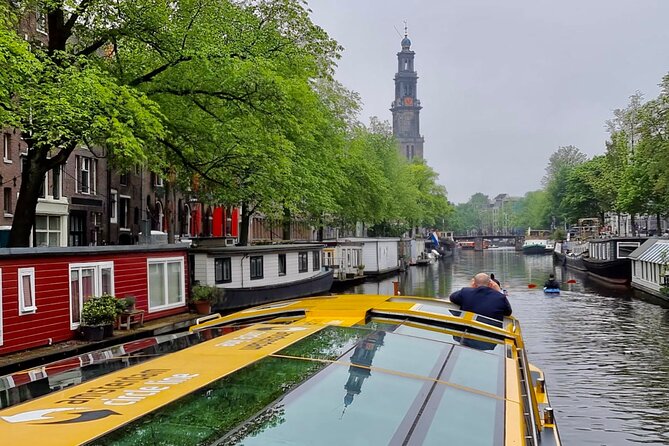
The cruise also reaches the Amstel, the river that gives Amsterdam its name. It flows north through the province of North Holland before reaching the IJ in Amsterdam. The river has long shaped the city, and it remains a setting for major events, including the Liberation Day concert, the Head of the River Amstel rowing race, and the city’s Pride boat parade.
The Amstel gives the ride another change of pace. The canal belt feels ordered and intimate. The river feels wider and more open. From the boat, you can better understand how the original water routes connected Amsterdam with the surrounding region.
Along the river is the former Amstelhof, a classical building from 1681 that became Hermitage Amsterdam. The museum was a branch of the Hermitage Museum in Saint Petersburg and included large exhibition halls, smaller rooms, lecture spaces, offices, and a restaurant.
The Stopera is another major landmark on the Amstel. This large complex houses Amsterdam City Hall and Dutch National Opera and Ballet. It was designed by Wilhelm Holzbauer and Cees Dam.
The name Stopera began as a protest slogan against the opera project. It was not originally a blend of city hall and opera, even though that explanation is often repeated. A good guide may point out this bit of local political history, but the quality of explanation depends on the captain or audio system on your departure.
Live guide or recorded narration?
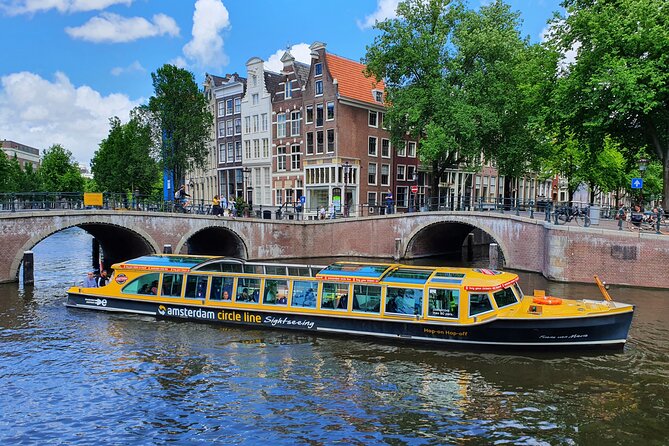
This is the biggest variable. On some boats, the captain gives a warm, funny introduction and points out buildings as you pass them. Robert is praised for showing off the city with energy, while Rolif is described as informative, entertaining, and comfortable with several languages.
Other departures use recorded narration in multiple languages. That can work well when the sound is clear and the timing matches the sights. It is less useful when the voice changes languages without a pause, the volume is low, or the recording discusses a building without the captain pointing it out.
Seat choice matters. Rear seats may offer unrestricted views, but the engine or distance from the speakers can make the narration difficult to hear. I would choose a seat where you can see forward and remain close to the audio system. If the boat has a glass roof or large windows, those give you good views even when rain or wind makes outdoor seating unpleasant.
The varied comments about commentary do not make the cruise a bad buy, but they do set expectations. If you want a detailed architectural lecture, choose a small walking tour or a specialist canal trip. If you want scenery, a basic introduction, and a pleasant ride, this cruise can do the job well.
Price, timing, and who will get the most from it
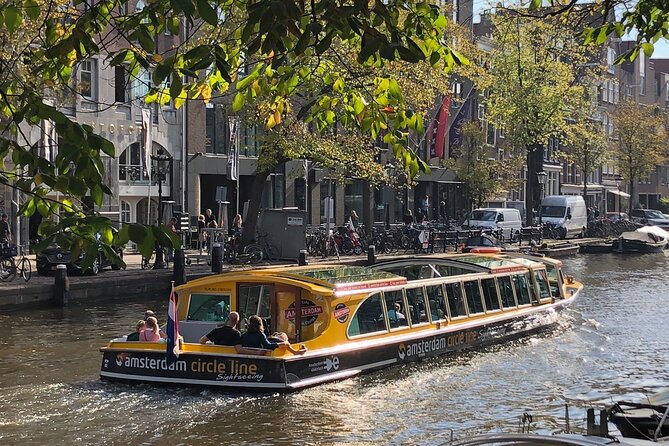
At about $18.71 per person, the cruise offers good value for a central Amsterdam activity. You are paying for a moving view of the canal ring, the old center, the IJ, and the Amstel without needing to plan a complicated route on foot.
The advertised duration is about one hour. One account describes a 90-minute experience, so I would avoid placing a tightly timed museum booking immediately afterward. The cruise is most useful at the start of a short stay, when you want to see the city’s layout before exploring individual neighborhoods.
I would recommend it for:
- A first visit with limited time
- Families who need a seated break from walking
- Solo visitors who want an easy overview
- Anyone interested in Amsterdam’s canals, bridges, and architecture
- People looking for a low-cost activity near the Anne Frank House
The boats can accommodate up to 68 people. That is not an intimate private ride, but it is still a reasonable group size for a standard canal cruise. Service animals are allowed, and most people can take part. The activity is near public transportation, which makes it simple to fit into a day in central Amsterdam.
Cold or wet weather does not automatically ruin the outing. One boat offers the choice of indoor or outdoor seating, and the covered views remain worthwhile. Hot drinks are not guaranteed, so bring suitable layers and do not count on buying a warm drink aboard.
The tour allows free cancellation up to 24 hours before the start time. Changes or cancellations inside that window are not accepted for a refund. Check the exact departure details carefully, especially if your confirmation shows a different dock or if a major canal event is scheduled. A Pride parade once prevented boats from leaving a departure point, and another booking involved a major time change, so it pays to confirm the operating details before setting out.
Should you book this canal cruise?
Book it if you want an affordable, compact introduction to Amsterdam from the water. The route covers more ground than you can comfortably walk in an hour, and the move from the canal belt to the IJ and Amstel gives you a useful sense of the city’s past and present.
Skip it if you need a consistently detailed live lecture or have no patience for recorded commentary. The best experience comes when you get a strong captain such as Robert or Rolif, sit near the speakers, and keep your schedule flexible.
For most first-time visitors, I would place this early in the trip. It gives you the big picture, helps you recognize landmarks later, and leaves plenty of time for the Anne Frank House, the Jordaan, museums, or an evening along the canals.
FAQ
Where does the canal cruise meet?
The meeting point is in front of the Anne Frank House in central Amsterdam.
How long does the cruise last?
The listed duration is approximately one hour. One account describes a 90-minute ride, so allow extra time if you have a later appointment.
What landmarks can I see?
The route includes the Anne Frank House, Westerkerk, the Houseboat Museum, Leidsegracht, De Beulingsloot, Bartolotti House, Melkmeisjesbrug, Brouwersgracht, Centraal Station, the IJ, EYE Filmmuseum, the Amstel, Hermitage Amsterdam, and the Stopera.
Is the commentary live?
Commentary varies. Some departures have a live captain or guide, while others use recorded information in several languages.
How many people can join the cruise?
The maximum group size is 68 people.
Can I cancel for a refund?
You can cancel up to 24 hours before the experience for a full refund. Cancellations and changes made less than 24 hours before the start time are not accepted for a refund.
More Canal Cruises in Amsterdam
- Amsterdam: 75 Minute City Canal Cruise with Audio Guide
★ 4.4 · 17,501 reviews - Amsterdam: City Centre Canal Cruise
★ 4.2 · 12,827 reviews - Amsterdam: City Canal Cruise and Heineken Experience Ticket
★ 4.5 · 5,367 reviews - Amsterdam Canal Cruise in Open Boat with Unlimited Drinks Option
★ 5.0 · 4,976 reviews
More History Tours in Amsterdam
- Amsterdam Food and Cultural Tour with Tastings
★ 5.0 · 2,442 reviews - Amsterdam: Haunted History and Ghost Walking Tour
★ 4.5 · 488 reviews - Amsterdam High-End Dutch Food & History Tour – Up to 8 guests
★ 5.0 · 482 reviews - Amsterdam: Historical Highlights Walking Tour with Tasting
★ 4.6 · 381 reviews
Just added around Amsterdam
- Private sightseeing tour to Bruges and chocolate from Amsterdam★ 5.0 · 11 reviews
- Amsterdam: Rijksmuseum (Private Tour & Priority Access)★ 5.0 · 27 reviews
- Amsterdam: Private Romantic Evening Canal Cruise + Bubbles/Snacks★ 5.0 · 46 reviews
- Amsterdam Private Shopping Experience★ 5.0 · 7 reviews
- Rijksmuseum Amsterdam Private Guided Tour★ 5.0 · 57 reviews
- Amsterdam Rijksmuseum PRIVATE TOUR with a Local Private Guide★ 5.0 · 159 reviews
- Private Photo Session in Amsterdam★ 5.0 · 15 reviews
- Private One way Transfer Amsterdam Airport to Amsterdam★ 3.5 · 42 reviews
Canal Cruises, compared.
Amsterdam Luxury Canal Cruise + Unlimited Drinks & Bites option
Read our review →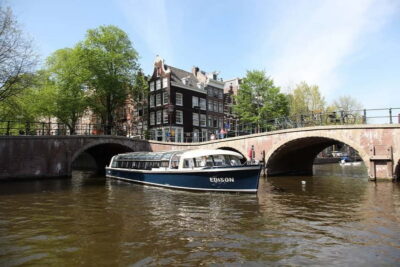
75 Minute City Canal Cruise with Audio Guide
Read our review →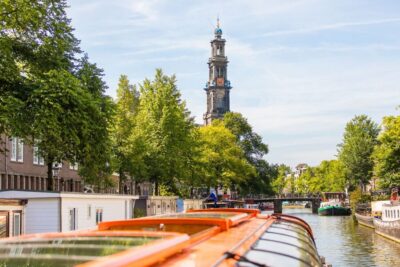
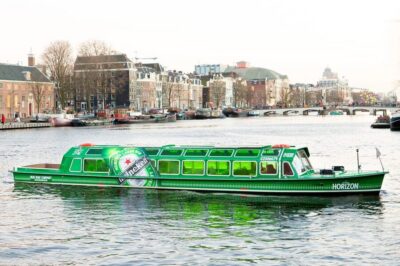
City Canal Cruise and Heineken Experience Ticket
Read our review →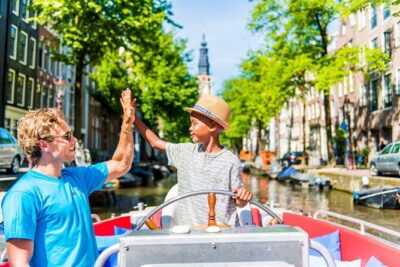
Amsterdam Canal Cruise in Open Boat with Unlimited Drinks Option
Read our review →
Amsterdam Evening Canal Cruise with Live Guide and Onboard Bar
Read our review →
Browse the lists this tour appears in