

Reviewed · VAN GOGH MUSEUM TICKETS
Tour in Spanish: Van Gogh Museum Private Tour
The most useful feature here is the private Spanish-language format. In two hours, your art historian guide connects Van Gogh’s paintings to his life, from his first steps as an artist at 27 to the final years that ended in tragedy. You are not simply moved from famous canvas to famous canvas. The tour also gives time to lesser-known early works and the ideas that shaped them.
I like the reserved priority entry and the close focus on Theo, Vincent’s brother. I also like that the route reaches beyond the familiar sunflowers and self-portraits, covering Brabant, Paris, Arles, Gauguin, and the yellow house. The main consideration is the price: $411 for up to four people is a serious outlay, though it becomes easier to justify with a full group.
Key points at a glance
- Two hours in Spanish: A private art historian leads the visit in Spanish.
- A life story told through paintings: The route follows Vincent from Brabant to Paris, Arles, and his final years.
- Priority museum entry: A reserved ticket and separate entrance help you make the most of a short visit.
- Small private group: The $411 rate covers up to four people, not just one visitor.
- More than the greatest hits: Early works, Dutch influences, Theo, Gauguin, and the story behind Van Gogh’s fame all receive attention.
- Temporary exhibitions included: Your ticket covers access to the museum’s temporary displays as well as its main collection.
Why this private Van Gogh visit feels different
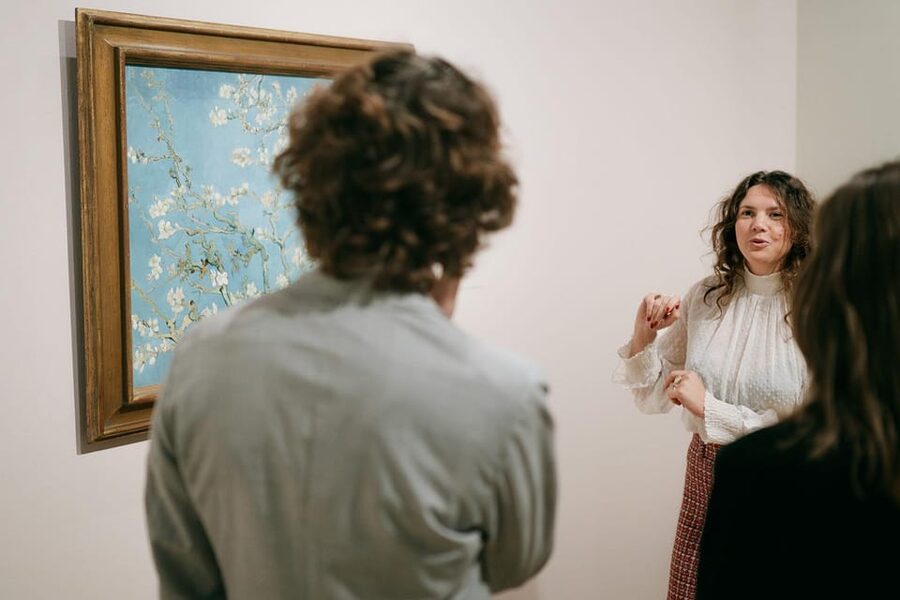
The Van Gogh Museum can be busy, and its collection is large enough to leave you with a pile of beautiful pictures but only a loose idea of how Vincent developed. This tour gives you a thread to follow.
You begin with the artist as a late starter. Vincent did not pick up a brush as a child prodigy. He was 27 when he first committed himself to painting. That fact changes how you read the early works. They are not the polished pictures of an established master. They show a serious, searching artist trying to understand people, work, faith, and poverty through paint.
Your guide then links those early efforts to the art Vincent had studied. Dutch seventeenth-century still-life painting and Rembrandt mattered to him, especially during his formative years in Brabant. This part of the story is easy to skip when you rush toward the famous late paintings, yet it explains why his early work can feel so sober and dark.
A private guide can also adjust the pace. If your group wants more time with a particular painting, you can ask. If you already know the basic story, you can focus on technique, sources, and changes in style instead.
More Museum Tickets in Amsterdam
- Amsterdam: Van Gogh Museum Ticket
★ 4.7 · 52,054 reviews - Moco Museum Amsterdam Entrance Tickets with Banksy & More
★ 4.4 · 10,088 reviews - Amsterdam: The Upside Down Museum Entrance Ticket
★ 4.4 · 9,506 reviews
Meeting by the mirror cube
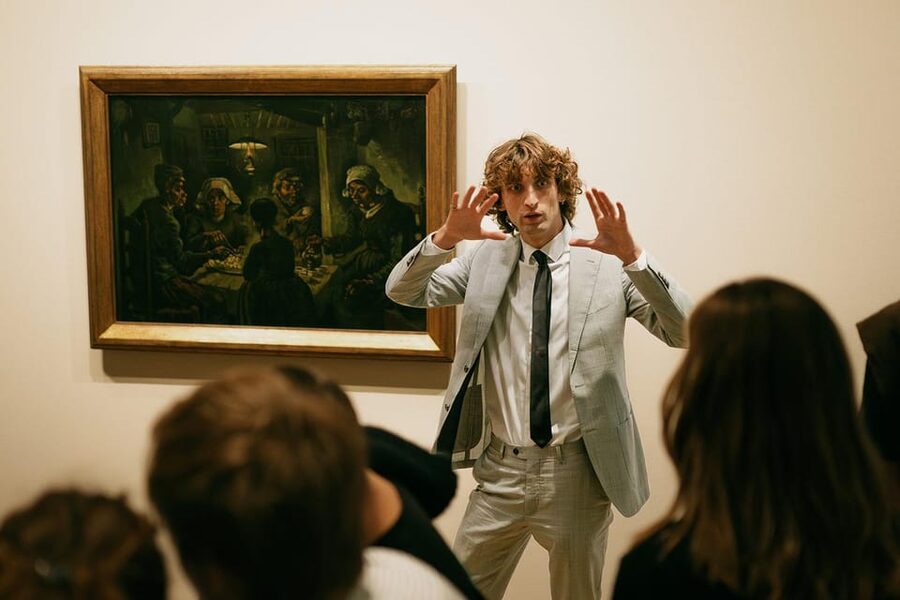
The meeting point is in front of the mirror cube beside the museum entrance. Look for the guide holding a Loving Vincent Tours sign.
That is a useful landmark, but give yourself enough time to find it. Museums in Amsterdam often have several nearby entrances and crowded public spaces around them. The instructions are simple, and the separate entrance for priority ticket holders should help keep the start orderly.
The experience is listed as a private group, so you are not joining a large mixed party. The price covers up to four people, which makes the maths much better for a family or a small group of friends. For one or two people, the cost per person is much higher.
One detail deserves a quick check before booking. The activity is described as Spanish-speaking, and the guide language is listed as Spanish in the practical information. The included-services wording also refers to a French-speaking art historian. Since the central reason to book is the Spanish tour, confirm the language with the provider when you reserve.
Entering the Van Gogh Museum with two hours to use
The visit lasts two hours. That is long enough for a guided selection, but not long enough to study every room at leisure. You should think of this as a focused introduction with expert interpretation, not an all-day museum session.
The priority ticket is valuable here. The experience includes a reserved entry ticket and access through a separate entrance, which cuts down on the time you might otherwise spend waiting. It does not turn the museum into a private space, of course. You will still be visiting a major Amsterdam attraction, but the easier entry gives you more time with the art.
Temporary exhibitions are included. That matters because the museum’s special displays can add context to the permanent collection. The exact exhibition will depend on the date of your visit, so do not book this expecting a particular temporary show unless you check what is on.
A two-hour visit also suits a busy Amsterdam day. You can place it between other museum visits, a canal walk, or time in the nearby Museumplein area. The guide keeps the visit moving, while the private format lets you ask questions without waiting for a whole group to catch up.
Vincent’s first paintings in Brabant
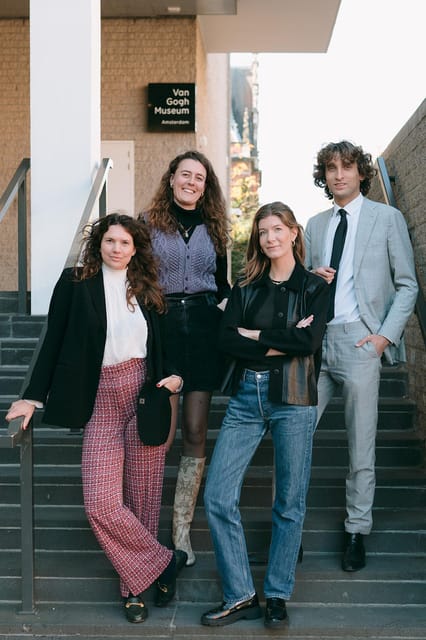
The early section gives the tour its backbone. Vincent’s Brabant years help you see that his work did not begin with swirling skies and bright yellow rooms.
Here you look at the painter’s first concerns: ordinary people, rural work, humble interiors, and the moral weight he attached to everyday life. His early style was far removed from the clear, bright colors most people associate with him. The influence of Dutch masters, especially Rembrandt, helped shape his use of shadow and tone.
I find this part particularly useful if you know Van Gogh mainly through the late paintings. The museum’s early works can surprise you. They are slower, heavier, and less instantly decorative. That is the point. Your guide can show how Vincent built his eye before he changed his color and brushwork.
The discussion of still-life painting also gives you a practical way to look. Instead of asking only what a bowl, vase, or group of objects represents, you can watch how Vincent arranges weight, light, and texture. This makes the early paintings feel like steps in a long experiment, not failed versions of later masterpieces.
More Van Gogh tickets and tours:
- Amsterdam: Van Gogh Museum Ticket and City Canal Cruise
★ 4.6 · 3,899 reviews - Amsterdam: Van Gogh Museum Ticket & Canal Cruise
★ 4.5 · 3,304 reviews - Van Gogh Museum Amsterdam Exclusive Tour w/ Reserved Entry
★ 5.0 · 1,760 reviews - Van Gogh Museum Tour Reserved Entry Semi Private
★ 5.0 · 1,437 reviews
Theo and the family story behind the artist
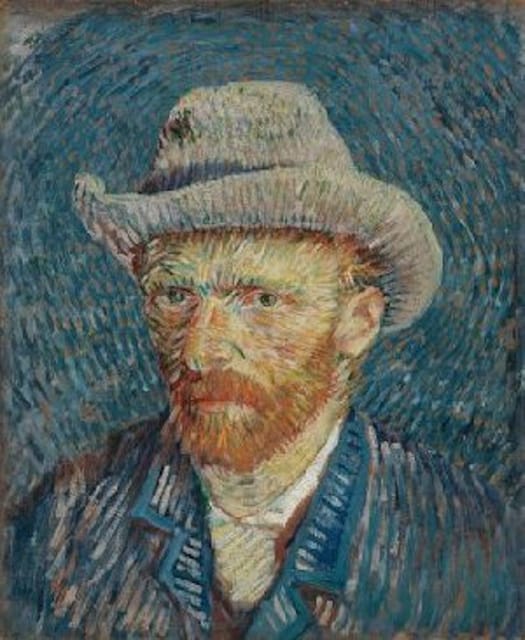
The relationship between Vincent and Theo is central to the experience. Theo offered financial help, encouragement, and steady emotional support while Vincent struggled to find his direction.
That relationship also changes the way you understand Van Gogh’s career. Vincent did not work in isolation, even when he felt isolated. His letters and exchanges with Theo reveal a constant conversation about art, money, ideas, and the practical problems of making a life as a painter.
The tour also asks who helped make Vincent famous after his death. The answer is not just a matter of one artist and one brother. The story includes the family’s dedication and the work of the woman who helped protect and promote Vincent’s art. This gives the usual genius-and-madness story a more human shape. Success came through care, persistence, and family effort as well as talent.
A guide who handles this section well can keep the focus on people rather than turning Theo into a footnote. That is one reason the private format is useful. You can ask about the letters, the family, and the practical support that allowed Vincent to continue painting.
Paris changes Van Gogh’s colors
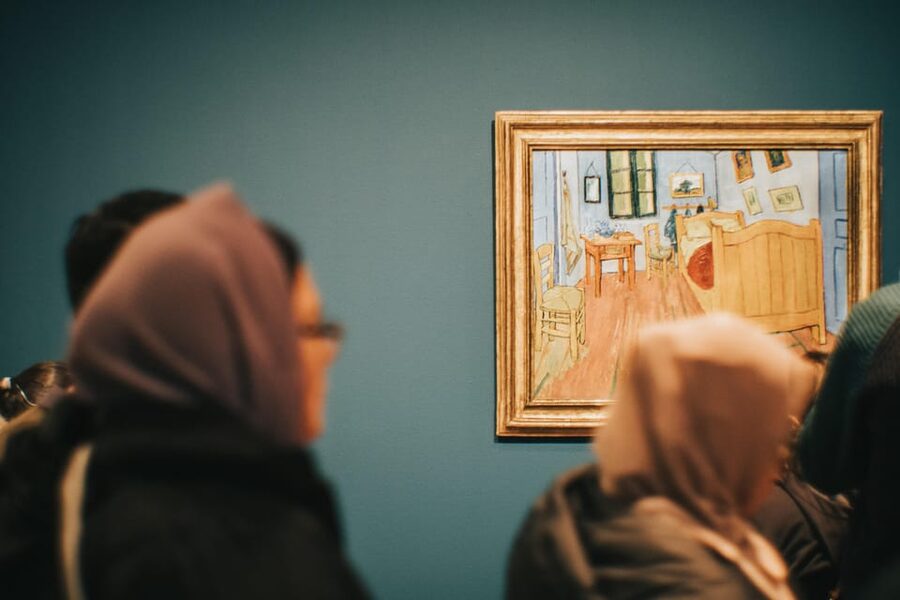
The Paris period marks a sharp turn. Vincent encountered new ideas, new artists, and a lighter approach to color. The tour treats this as a period of experiment rather than a simple jump from dark paintings to bright ones.
You will see how Paris pushed him to rethink what paint could do. Color became more active, and his brushwork grew more energetic. The change was not only technical. Vincent was responding to the city, to fellow artists, and to a changing art world.
This is another point where a guide can help you compare works across rooms. You may notice the difference immediately, but the explanation shows why it happened. The Paris period is a bridge between the restrained early pictures and the intense work that followed in southern France.
If you have already visited other museums devoted to Impressionism or modern painting, this section gives you useful connections. If you are new to art history, it prevents Van Gogh from seeming like a painter who appeared fully formed.
Arles, Gauguin, and the yellow house
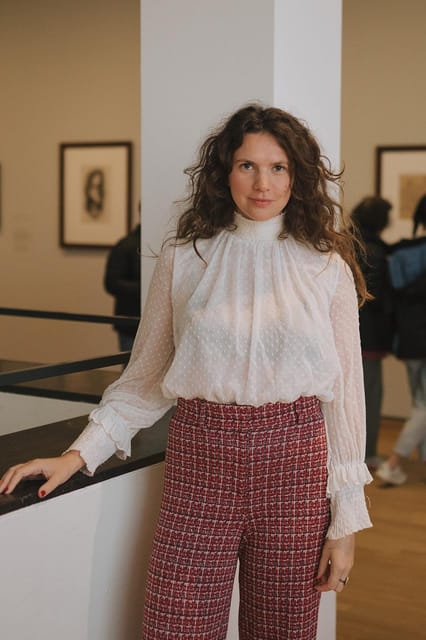
The Arles chapter is likely to be the emotional center of the tour. Vincent moved south in search of stronger light and a working community of artists. He imagined the yellow house as a place where artists could live and paint together.
Paul Gauguin joined him, but the arrangement became tense. Their time together was productive and troubled, and the conflict helps explain what happened before the famous ear incident. The tour makes a point of covering the period leading up to that event rather than treating it as a sensational isolated episode.
This context matters. It is easy to reduce Van Gogh’s life to a list of breakdowns, hospitals, and dramatic stories. A better visit keeps the paintings in view. The color, speed, and emotional force of the Arles work are tied to his ambitions, friendships, conflicts, and inner state.
You will also consider how his mental condition appears in the paintings. That does not mean treating every brushstroke as a medical clue. It means looking at the tension between control and agitation, order and movement, hope and strain. A good explanation leaves room for both the art and the person.
The final years and the danger of a simple story
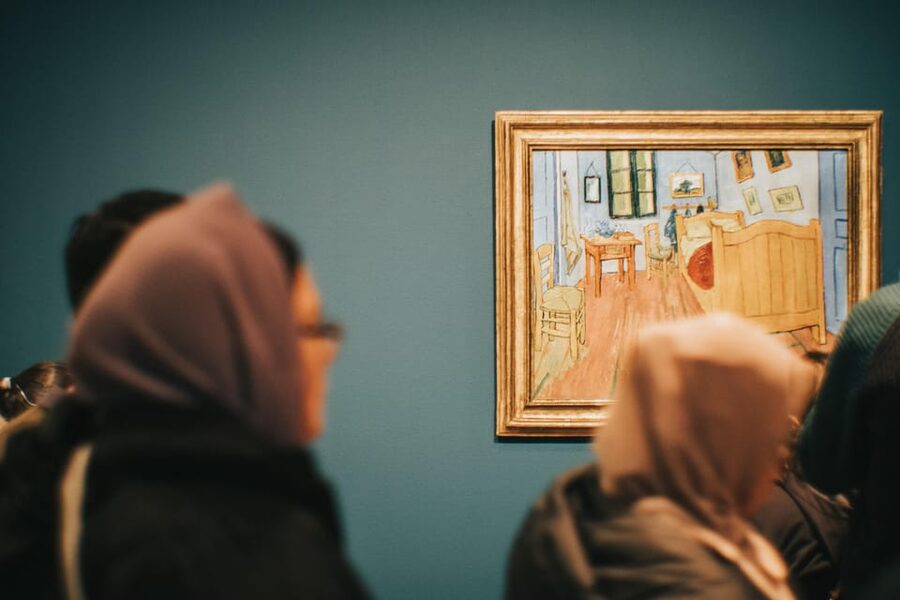
The final part covers Vincent’s last chapter and his death at 37. The subject is difficult, and the value of the tour lies in handling it with care.
Van Gogh’s mental anguish is part of his story, but it should not swallow the rest of it. He was an artist with changing ambitions, close relationships, technical interests, and an intense response to the world around him. The tour connects his inner state to the paintings without claiming that suffering alone created his genius.
That balance is important. You may leave with a more complicated view of the familiar story. Vincent was neither just a doomed madman nor a perfectly clear-eyed hero. He was a working artist whose life included illness, friendship, family dependence, artistic progress, and painful setbacks.
The museum setting makes this section especially powerful because the paintings remain close at hand. You are not hearing a biography in isolation. You are looking directly at the works while considering what was happening in Vincent’s life.
What the guide adds to the paintings
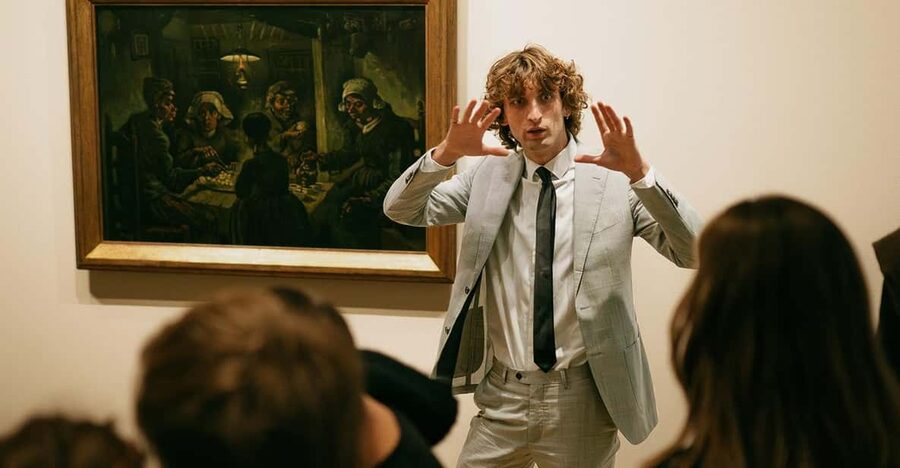
The strongest reason to choose this experience is the guide’s role. The tour is led by an art historian who specializes in Van Gogh, rather than by a general city guide covering a long list of unrelated sights.
A named guide, Aucke, has received especially warm praise for detailed explanations of Vincent’s life and for pointing out the meaning of important paintings. Another guide was described as attentive, kind, and passionate about the artist. Those details matter because museum tours can feel rushed or overly rehearsed when the guide is not engaged with the subject.
The private setup gives you more control. You can ask why a particular work looks so different from an earlier one. You can ask about Theo, Gauguin, the yellow house, or the family member who helped carry Vincent’s work forward. You can also tell the guide if your group wants more biography or more visual analysis.
The tour is listed in Spanish. For Spanish-speaking visitors, that is more than a translation service. It lets you discuss difficult subjects and small visual details in the language that feels most natural. Still, confirm the language before paying because of the conflicting French-language note in the tour details.
Is $411 good value for four people?
The rate is $411 per group of up to four, with the reserved museum ticket included. For four people, that works out to about $103 per person. For two, it is about $206 each, and for one person it is a costly private visit.
I would judge the price by the group, not by the sticker alone. A family of four who wants Spanish commentary, priority entry, and a guide devoted only to them may find the cost reasonable. The same price is harder to defend for a solo visitor who could visit independently and spend longer in the galleries.
The two-hour length also affects value. You are paying for selection and explanation, not maximum time inside the museum. If you want to study every self-portrait, compare every version of a subject, or return to favorite rooms, you may want additional museum time outside the tour if your ticket arrangements allow it.
Free cancellation up to 24 hours before the start and the option to reserve without paying immediately make the booking less rigid. The tour is also listed as wheelchair accessible, which is useful for visitors who need that option.
Who should book this tour?
I would choose this for a small Spanish-speaking group that wants the Van Gogh story organized by an art specialist. It is especially well suited to first-time visitors who want help reading the collection, families who need a clear two-hour plan, and fans who already know the famous works but want more on Brabant, Theo, Paris, Gauguin, and the period before the ear incident.
I would think twice if you prefer to wander alone, read every label, or spend half a day with the collection. You may feel confined by the two-hour structure and the cost of a private guide.
The best approach is to arrive ready with one or two questions. Ask about a painting you already know, then let the guide show how it fits into Vincent’s larger development. That turns the visit from a checklist of famous pictures into a clearer story about how an artist changed.
FAQ
Is the tour conducted in Spanish?
Yes. The practical information lists Spanish as the tour language and describes a live Spanish-speaking guide. One included-services note refers to a French-speaking art historian, so confirm the language with the provider before booking.
How long does the tour last?
The tour lasts two hours.
How many people can join the private tour?
The price covers a private group of up to four people.
What is the price?
The listed price is $411 per group of up to four people.
Is museum entry included?
Yes. A reserved skip-the-line entry ticket is included, with access through a separate entrance.
Are temporary exhibitions included?
Yes. The experience includes access to the museum’s temporary exhibitions.
Where do I meet the guide?
Meet in front of the mirror cube next to the Van Gogh Museum entrance. The guide will hold a Loving Vincent Tours sign.
Can I cancel the booking for a refund?
Yes. You can cancel up to 24 hours in advance for a full refund. You can also reserve now and pay later.
Should you book it?
Book this tour if you want a Spanish-speaking art historian, a private group, and a guided story that reaches beyond Van Gogh’s most famous paintings. The strongest parts are the links between Vincent and Theo, the attention to his early Brabant work, and the careful route through Paris, Arles, Gauguin, and his final years.
The price makes the most sense for four people. If your group is smaller, decide how much you value priority entry, personal questions, and a focused explanation. Confirm the guide language before booking, then bring your curiosity. Van Gogh’s pictures are powerful on their own, but two well-used hours can help you see how the dark early works, bright Paris experiments, and turbulent Arles paintings belong to one long, difficult artistic search.
Just added around Amsterdam
- Private sightseeing tour to Bruges and chocolate from Amsterdam★ 5.0 · 11 reviews
- Amsterdam: Private Romantic Evening Canal Cruise + Bubbles/Snacks★ 5.0 · 46 reviews
- Amsterdam Private Shopping Experience★ 5.0 · 7 reviews
- Amsterdam: Rijksmuseum (Private Tour & Priority Access)★ 5.0 · 27 reviews
- Rijksmuseum Amsterdam Private Guided Tour★ 5.0 · 57 reviews
- Amsterdam Rijksmuseum PRIVATE TOUR with a Local Private Guide★ 5.0 · 159 reviews
- Private Photo Session in Amsterdam★ 5.0 · 15 reviews
- Private One way Transfer Amsterdam Airport to Amsterdam★ 3.5 · 42 reviews
Van Gogh Museum Tickets, compared.
Van Gogh Museum Amsterdam Exclusive Tour w/ Reserved Entry
Read our review →
Van Gogh Museum Tour Reserved Entry Semi Private
Read our review →
Combo Ticket: Van Gogh Museum Ticket and 1-Hour Canal Cruise
Read our review →
Browse the lists this tour appears in