
Reviewed · DIAMOND TOURS
Amsterdam: Royal Diamond Experience
Amsterdam’s Royal Diamond Experience takes you behind the polished shopfront and into the working world of diamonds. In one hour, you’ll hear how Royal Coster Diamonds has welcomed royalty since 1840, watch craftsmen at work, and handle the basics of diamond grading. The private format makes the visit feel personal rather than like a standard museum stop.
I especially like the chance to examine stones closely while a guide explains why some sparkle more than others. I also like the private-room presentation, where the collection becomes more than a row of glittering cases. The main drawback is that the visit ends with an opportunity to buy diamonds, so shoppers who dislike sales discussions should set their boundaries early.
Key points at a glance
- Private access in a 19th-century villa: Visit a private room inside one of Royal Coster Diamonds’ four historic villas.
- A working diamond factory: See cutting and polishing areas, with master craftsmen at work.
- Practical lessons on the 4 Cs: Learn how cut, color, clarity, and imperfections affect a stone’s appearance.
- Royal connections: Hear about Empress Sisi, King Rama V, Prince Napoleon, and other notable visitors.
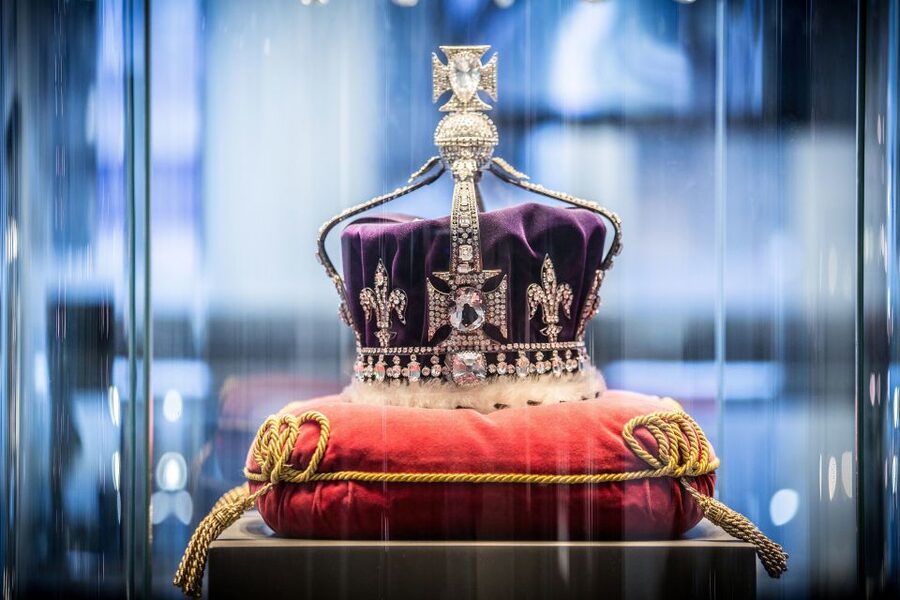
- Historic diamond pieces: See precious objects such as the Koh-I-Noor and a major collection outside Antwerp.
- A small finishing touch: The tour includes a goody bag, and drinks or champagne may be offered, but meals are not included.
Starting at Paulus Potterstraat 2
The experience begins at Paulus Potterstraat 2, 1071 CZ Amsterdam. That puts you at the heart of Amsterdam’s museum district, making this easy to pair with nearby cultural stops.
Allow a little care when you arrive. The front desk and meeting arrangements have caused confusion for at least one participant, who was sent to the wrong place before being redirected. I would arrive a few minutes early, confirm that you are there for the Royal Experience, and ask staff to point you to the correct starting area.
The tour lasts about one hour and finishes back at the same meeting point. That short length is useful in a busy Amsterdam schedule. You can fit it between museums, shopping, or a canal outing without giving up half a day.
The group is private, which matters here. Diamond demonstrations work better when you can ask questions, look through the equipment, and pause over a stone without competing with a large crowd. The format also suits a family or small group with different levels of interest.
More diamond house visits:
- Amsterdam: Diamond Museum Entrance Ticket
★ 3.9 · 460 reviews - Royal Experience – Private Tour in World’s Oldest Diamond Polishing Factory
★ 4.5 · 75 reviews - Operation 45: An Adventure in Diamonds
★ 5.0 · 38 reviews
Amsterdam’s diamond story since 1840
Your guide begins with Royal Coster Diamonds’ long connection to Amsterdam. The company was established in 1840, and its royal guest list includes Empress Sisi, the Viceroy of China, King Rama V, and Prince Napoleon.
This introduction gives the visit useful context. Amsterdam is often associated with canals, museums, and narrow houses, but it also became an important center for diamond craftsmanship. The point is not simply that the company is old. It is that diamond cutting and polishing helped shape part of the city’s international identity.
The royal connections add color, but they should not be the only reason you book. The stronger part of the experience is the link between history and hands-on explanation. You hear about the company’s past, then see how diamonds are examined and worked today.
Guides Angela and Lyanne have both been praised for making the material easy to follow and for adjusting the pace to the people in front of them. That personal approach is useful if you know little about diamonds. You do not need prior knowledge to keep up.
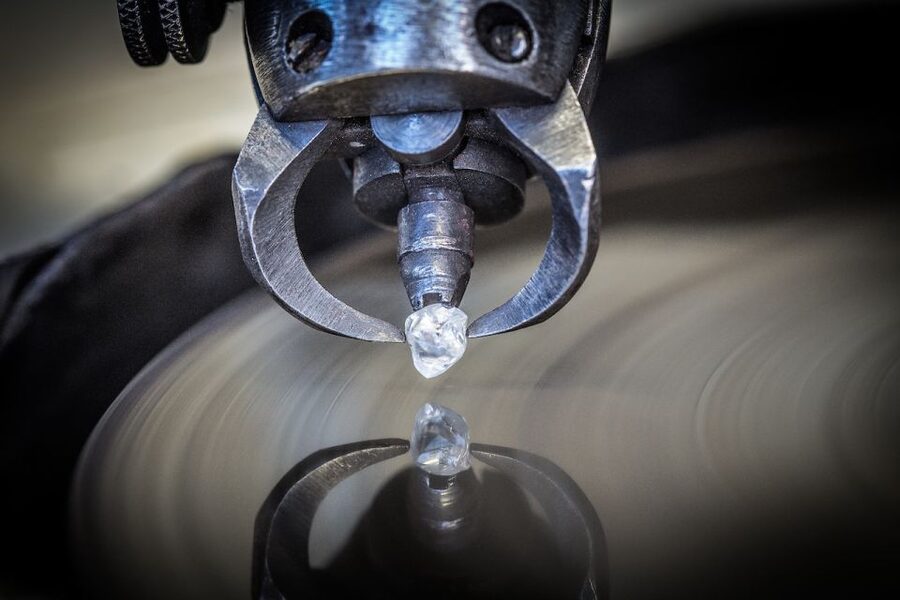
Watching the cutting and polishing work
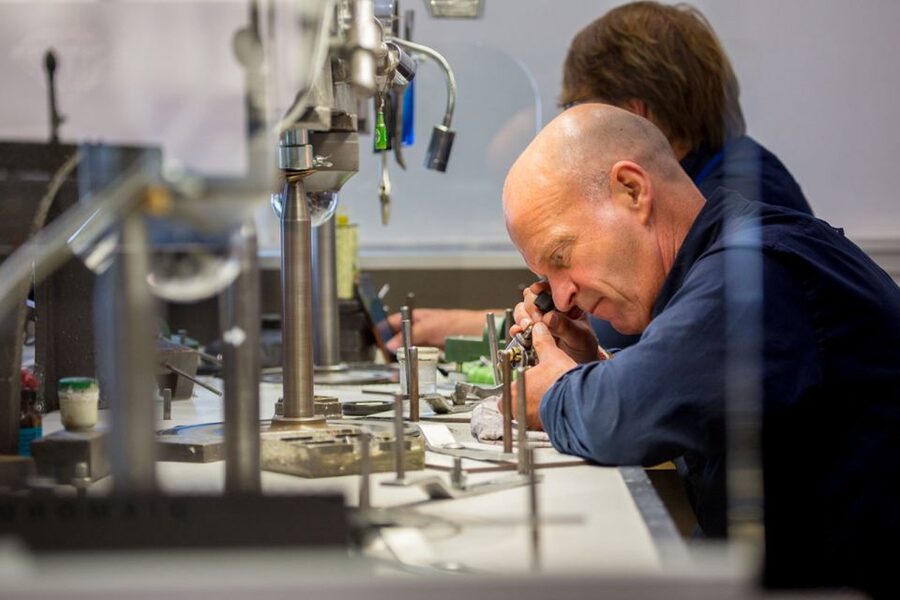
The factory portion takes you into the practical side of the trade. You can see cutting and polishing rooms and watch master craftsmen at work.
This is the part that separates the experience from a simple jewelry display. Finished diamonds can seem almost magical, but the workshop shows the labor behind the sparkle. The stone has to be shaped with care, and small choices affect how it catches light.
You may see the tools and methods used to bring out a diamond’s appearance. The tour does not treat the stone as a finished object that simply arrived in a display case. Instead, you learn how craftsmanship changes what you see.
The factory visit is not a long technical course, and the whole tour takes only an hour. Still, it gives you a useful visual reference. After seeing the work area, the later discussion of cut and clarity makes more sense.
If you are fascinated by craft, this may be the strongest part of the tour. If you mainly want to see famous jewels, the private collection room will likely hold more appeal.
Learning why diamonds sparkle
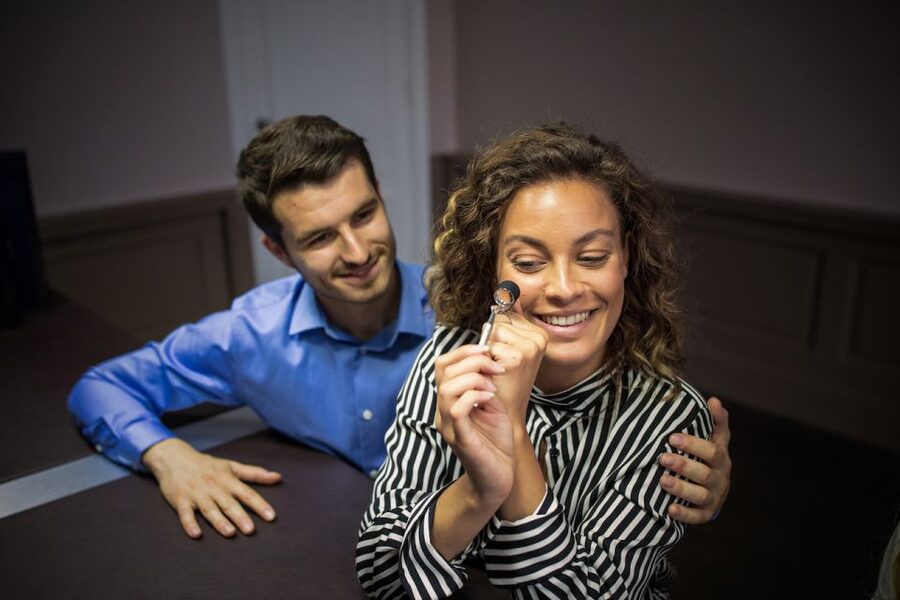
The guide then explains how to assess a diamond. The focus includes the familiar 4 Cs: cut, color, clarity, and carat weight, with particular attention to cut, imperfections, and the way light moves through the stone.
You get the chance to look at diamonds through eyeglasses or magnifying equipment. That small act changes the experience. Rather than hearing that clarity matters, you can inspect a stone and begin to see inclusions for yourself.
The guide explains why some diamonds sparkle more than others. Cut controls how light enters and leaves the stone, while clarity concerns internal and external imperfections. Color also affects grading, and carat describes weight rather than beauty on its own.
This is a practical lesson you can carry into a jewelry shop. A large diamond is not automatically the most attractive one, and a high price does not tell you everything about what you are seeing. The guide helps you separate visual appeal from grading terms.
The presentation can include stones valued from a few hundred pounds to one priced at £79,000. That range makes the grading discussion concrete, but it can also make the buying side of the tour more noticeable. You are learning how diamonds are judged, and you are also being shown products that can be purchased.
A few more Amsterdam half-days worth comparing
- Amsterdam: Van Gogh Museum Ticket
★ 4.7 · 52,054 reviews - Amsterdam Classic Saloon Boat Cruise with Drinks and Cheese
★ 5.0 · 31,825 reviews - Amsterdam Luxury Canal Cruise + Unlimited Drinks & Bites option
★ 5.0 · 30,518 reviews - Amsterdam: Heineken Experience Ticket
★ 4.6 · 30,055 reviews
A private room with royal diamond pieces
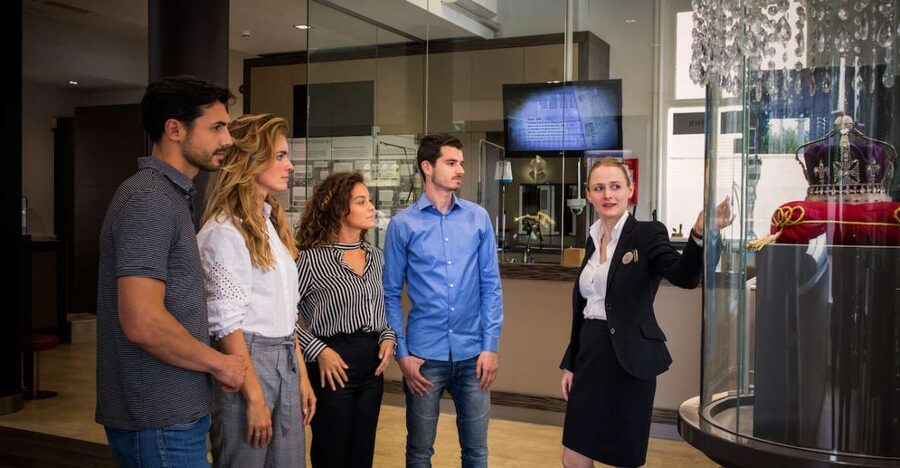
The backstage portion leads to a private room in one of Royal Coster Diamonds’ four monumental 19th-century villas. Here, the guide shows part of the company’s extensive collection and presents historic diamond objects.
The collection is described as the largest outside Antwerp. You can see precious diamond artifacts, including pieces associated with the Koh-I-Noor. The wording matters: this is a presentation of diamond artifacts and royal-related objects, not a promise that you will handle the original Koh-I-Noor itself.
The private room gives the tour a more personal feel than a public exhibition hall. A guide can bring out examples, explain their features, and answer questions at close range. With a private group, you also have more freedom to ask about the details that catch your eye.
I would keep your expectations balanced. This is a commercial diamond house as well as a historic workplace and exhibition space. The collection adds real interest, but the visit is designed to introduce you to the company and its jewelry expertise, not to function as a large independent museum.
The buying conversation
After the educational portion, you can receive personal advice from diamond experts and consider buying a diamond. This is optional, but it is built into the experience.
That can be useful if you are seriously considering a purchase. You have just learned the basic grading terms and seen examples at different values, so you can ask more informed questions. You may also find the chance to compare stones helpful if you are shopping for an engagement ring or another major piece.
If you are not shopping, say so clearly. The visit remains worthwhile as a look at Amsterdam’s diamond trade, but some of the private-room time may shift toward sales. I would treat the purchase discussion as an option, not as an obligation.
The best way to protect your time and budget is to decide before arriving whether you are there to learn, shop, or do both. If you are buying, ask about the grading details and compare what you see with the price. If you are only sightseeing, enjoy the demonstration and politely decline further advice when you are ready.
What the private format feels like
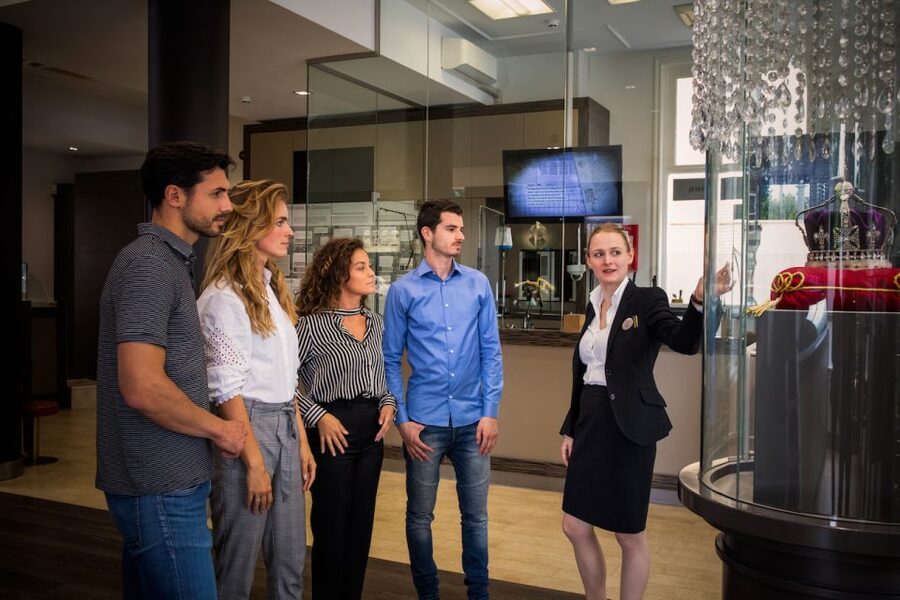
The private group setup is one of the strongest reasons to choose this experience over a more general attraction. You are not simply walking past objects with a recorded explanation. A live guide leads you through the factory, demonstrates the basics, and brings you into a private space.
The guide can adjust explanations to your group. Angela has been described as engaging, helpful, and accommodating, while Lyanne has been praised for her professional and empathetic manner. Those qualities matter in a subject that can quickly become technical or sales-focused.
Families can make good use of the format. A visit with teenagers, for example, can work well because the tour combines history, craftsmanship, science, and valuable objects. Someone interested in fine jewelry may want more detail, while another person can simply enjoy seeing the workshop and royal pieces.
The short length also helps. One hour is enough to give you a clear introduction without demanding a full afternoon. The tradeoff is that you should not expect an exhaustive study of diamond mining, global trade, geology, and jewelry design. The focus stays on Royal Coster Diamonds, Amsterdam’s diamond identity, craftsmanship, and grading.
Languages, access, and timing
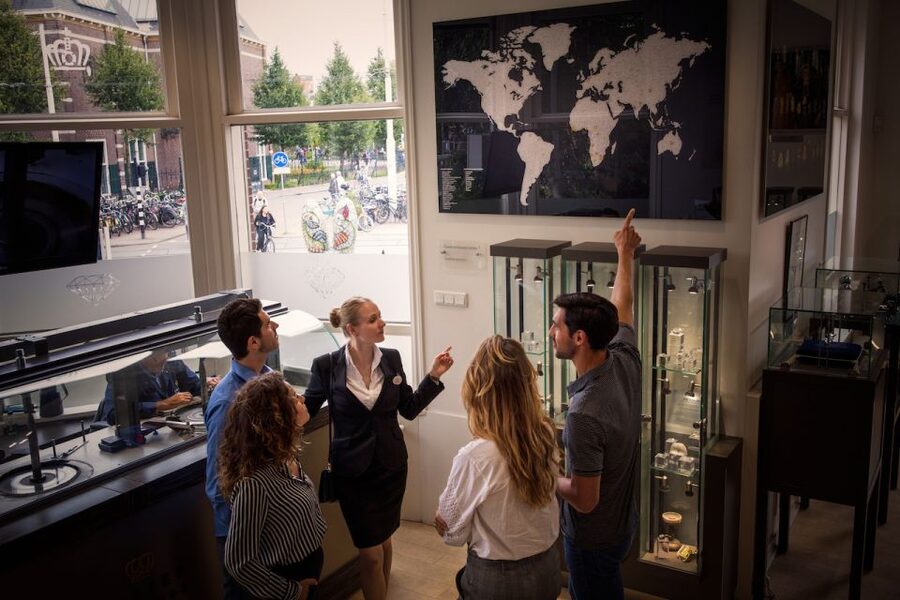
English tours are always guaranteed. The experience is offered in more than 35 languages, but other language requests depend on staff availability. If your group needs a language other than English, confirm it before booking rather than assuming it will be available.
The experience is not suitable for wheelchair users. That is important to check before paying, especially because the tour takes place in historic 19th-century buildings where access can be limited.
The price is listed at $26 per person. For an hour-long private tour, that is a reasonable price if you value the workshop visit, live explanation, close look at diamond examples, and private-room presentation. The included goody bag adds a small extra touch.
Drinks and meals are not included. A glass of champagne may be offered during the visit, but it should not be treated as part of the guaranteed package. Plan to eat and drink elsewhere.
Free cancellation is available up to 24 hours before the start time, and you can reserve now and pay later. Those terms are helpful if your Amsterdam schedule is still changing.
Who should book this Royal Diamond Experience?
I would recommend it to anyone curious about how diamonds are cut, polished, graded, and sold. It is especially suitable for people who enjoy craft demonstrations and want more than a display of finished jewelry.
It also works well for:
- Couples considering a diamond purchase
- Families with teenagers
- Jewelry enthusiasts
- First-time visitors who want an unusual Amsterdam stop
- Small private groups that prefer asking questions at their own pace
I would be more cautious if you want a purely historical museum visit. The royal stories and artifacts are interesting, but the experience also has a clear commercial side.
I would also skip it if you dislike shopping environments or sales conversations. You can decline to buy, but the option is part of the visit and cannot be separated completely from the company’s role as a diamond retailer.
Is the $26 price worthwhile?
At $26 per person, the value comes from the combination of access and attention. You are not paying only to look at diamonds in cases. You are paying for a private guide, a factory visit, a lesson in the 4 Cs, access to a private room, and a close look at selected stones and historic objects.
The price looks strongest when you take advantage of the interactive parts. Ask why one stone sparkles more than another. Look closely at imperfections. Ask how cut changes the appearance. The more you participate, the more useful the hour becomes.
The value is less clear if you only want to see famous diamond artifacts. In that case, the sales component may feel more prominent than the educational one. Still, the workshop and live guide give it more substance than a quick jewelry-store stop.
The 4.5 rating from 139 reviews fits the experience’s strengths: engaging guides, clear explanations, the private setup, the factory work, and the goody bags. The occasional front-desk confusion and the commercial setting are the main points to keep in mind.
Should you book it?
Book the Royal Diamond Experience if you want a short, personal introduction to Amsterdam’s diamond trade. The factory visit and private grading lesson give you something to do, not just something to look at, and the royal artifacts add a memorable historical layer.
I would book it for a small group, a jewelry enthusiast, or a family with teenagers. Arrive early, confirm the meeting point, request English if needed, and decide in advance how you feel about the optional purchase discussion.
Skip it if you need wheelchair access, want a large museum collection without retail elements, or have no interest in diamonds. For everyone else, this is a well-priced one-hour stop that can leave you better able to judge what makes a diamond sparkle.
FAQ
Where does the Royal Diamond Experience start?
It starts at Paulus Potterstraat 2, 1071 CZ Amsterdam. The activity ends back at the same meeting point.
How long does the tour last?
The tour lasts about one hour. Starting times depend on availability.
Is the tour private?
Yes. The experience is offered for a private group with a live guide.
Is an English-language tour guaranteed?
Yes. English tours are always guaranteed. More than 35 languages may be available, but other languages depend on staff availability.
What will I see during the tour?
You will see diamond cutting and polishing areas, master craftsmen at work, part of the diamond collection, and precious diamond artifacts such as the Koh-I-Noor. You will also visit a private room in one of four 19th-century villas.
Is the tour suitable for wheelchair users?
No. The experience is not suitable for wheelchair users.
Can I cancel or pay later?
You can cancel up to 24 hours in advance for a full refund. You can also reserve your place and pay later.
Just added around Amsterdam
- Private full-day customizable tour of the Netherlands from Amsterdam★ 5.0 · 9 reviews
- Amsterdam Essence in German: 90-minute waterway trip★ 5.0 · 11 reviews
- Private Daytrip Giethoorn and Windmills of Zaanse Schans from Amsterdam★ 5.0 · 4 reviews
- Bruges Private Custom Tour from Amsterdam★ 4.5 · 13 reviews
- Private Day Tour: Rotterdam and The Hague. English or Spanish★ 4.5 · 20 reviews
- Private day trip to Bruges from Amsterdam★ 5.0 · 6 reviews
- Private day trip to the Dutch castles from Amsterdam★ 5.0 · 10 reviews
- Private Amsterdam City Highlights Bike Tour (PRIVATE GUIDE)★ 5.0 · 28 reviews
Diamond Tours, compared.

Royal Experience – Private Tour in World’s Oldest Diamond Polishing Factory
Read our review →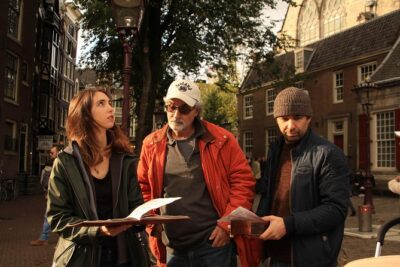

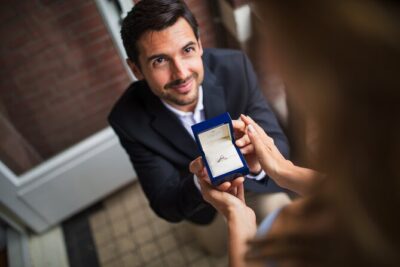
Royal Engagement Experience at Royal Coster Diamonds in Amsterdam
Read our review →Browse the lists this tour appears in